
Katie Britt wins tumultuous Alabama Senate race scrambled by Donald Trump
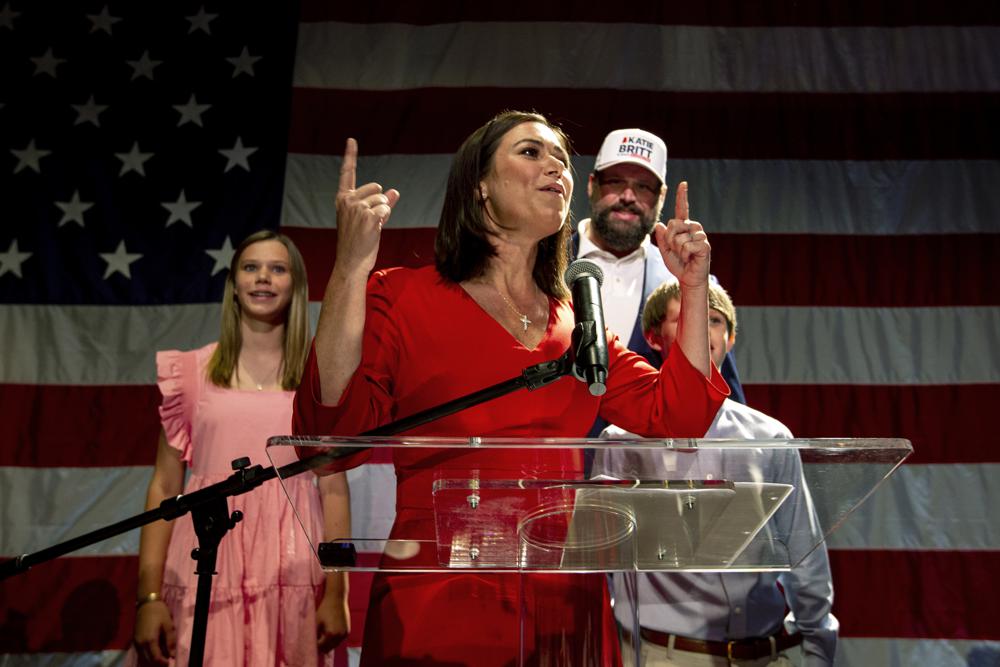
Katie Britt won the Republican nomination for Senate in Alabama Tuesday, defeating six-term Rep. Mo Brooks in a primary runoff after former President Donald Trump took the unusual step of rescinding his initial Brooks endorsement. The loss ends a turbulent campaign that pit Brooks, a conservative firebrand who has spent more than a decade in Congress, against someone who has never held elected office. Brooks ran under the banner “MAGA Mo” and fully embraced Trump’s election lies. But that wasn’t enough for the former president, who initially backed Brooks in the race to replace Britt’s former boss, retiring Sen. Richard Shelby, but then pulled his support as Brooks languished in the polls. The race was among a handful of contests held Tuesday at the midpoint of a primary season that has been shaped by Trump’s effort to influence the GOP. By the time Trump backed her earlier this month, Britt was already considered the favorite in the race. She emerged as the top vote-getter in the state’s May 24 primary, but just missed the threshold that triggered a runoff. Still, Tuesday’s result gives Trump a win at a time when his influence over the GOP has come under scrutiny. The former president has had a mixed record of success in backing candidates this election season, helping lift Senate contenders in Pennsylvania and Ohio while floundering elsewhere, particularly in Georgia. Voters in the one-time Republican stronghold rejected his efforts to unseat the state’s GOP governor and secretary of state, both of whom rebuffed his extraordinary pressure to overturn the results of the 2020 presidential election. And his trouble in the crucial swing state deepened Tuesday as two of his endorsed congressional candidates faltered in their GOP runoff elections. In the 6th District in Atlanta’s northern suburbs, emergency room physician Rich McCormick beat Trump-backed lawyer Jake Evans. And in the 10th District east of Atlanta, trucking company owner Mike Collins bested Democrat-turned-Republican Vernon Jones. Trump persuaded Jones to run for the seat and drop his long-shot bid for governor to clear the field for his chosen candidate, former Sen. David Perdue. Perdue lost to Republican Gov. Brian Kemp, who endorsed Collins. The seat is being vacated by Republican Rep. Jody Hice, who also lost his bid to unseat Republican Secretary of State Brad Raffensperger, another top Trump target. Meanwhile, in Washington, D.C., Mayor Muriel Bowser won the Democratic nomination to serve another term, fending off a pair of challengers amid concerns over rising crime and homelessness. But the Alabama Senate runoff had drawn particular attention because of the drama surrounding Trump’s endorsement and because the winner, who will face Democrat Will Boyd in November, is considered the overwhelmingly favorite in the Republican state. Britt, 40, cast herself as part of a new generation of conservative leaders while disparaging Brooks, 68, as a career politician. If victorious in November, Britt will be the first woman elected to the U.S. Senate from Alabama and one of its youngest members. The state’s previous female senators had been appointed. “Alabama has spoken. We want new blood. We want fresh blood,” she said at her victory party. “We want someone who will fight for Christian conservative values, who will fight for the freedoms and liberties this nation was founded on and will fight for the American dream for the next generation and the next generation.” That argument seemed to resonate with some voters Tuesday. “She’s young. She’s smart,” said 86-year-old Carolyn Bowman. “That’s what we need in Congress.” Brooks, who is known for his bombastic oratory style, described the race as a battle for the soul of the Republican Party, pitting the “true conservative” wing against establishment members of the GOP. He disparaged Britt, 40, as a RINO — the GOP pejorative meaning “Republican in name only” — and maintained he was the only one with a proven conservative record. The founding member of the conservative House Freedom Caucus, Brooks has a history of bucking party leadership and made his opposition to Senate Minority Leader Mitch McConnell a pillar of his campaign, embarking on a “Fire McConnell Tour” of town halls. In his concession speech Tuesday night, Brooks told supporters he respected the race’s outcome. But in a sign of the contentious race, he accused voters of having been seduced by false advertising and congratulated high-dollar donors and “special interest groups” for funding Britt’s campaign. “We are sending to Washington, D.C., the exact opposite of what we need in the United States Senate. But the voters have spoken. They might not have spoken wisely,” he groused. Brooks was initially considered the frontrunner when he announced his Senate candidacy, and Trump quickly offered his support, rewarding an ally who had been an ardent supporter of Trump’s false claims of election fraud. Brooks voted against certifying Democrat Joe Biden’s presidential election victory and delivered a fiery speech at the “Stop the Steal” rally that proceeded the U.S. Capitol insurrection, telling the crowd, “Today is the day that American patriots start taking down names and kicking ass.” But their relationship soured as Brooks struggled to gain traction. Trump eventually pulled his support in March, accusing Brooks — one of the most conservative members in Congress — of going “woke” for saying at a rally that it was time to move on from litigating the 2020 presidential election. Brooks clawed his way into a second-place finish in the May primary and tried once again to get Trump to back him. But Trump instead threw his support to Britt 11 days before the runoff she was widely expected to win. Elsewhere, in Virginia, Republicans chose a pair of Trump-aligned congressional candidates to take on two of the most vulnerable Democrats in the fall. In the coastal 2nd District, state Sen. Jen Kiggans won the Republican race to try to unseat Democrat Elaine Luria, a retired Naval commander and member of the January 6 committee, in the general election. And in central Virginia’s 7th District, Yesli Vega emerged from a competitive six-candidate field to face Democratic Rep. Abigail Spanberger. At the polls Tuesday in Virginia Beach, Nanci
Mo Brooks: I’m ready to fight to save the country I love.
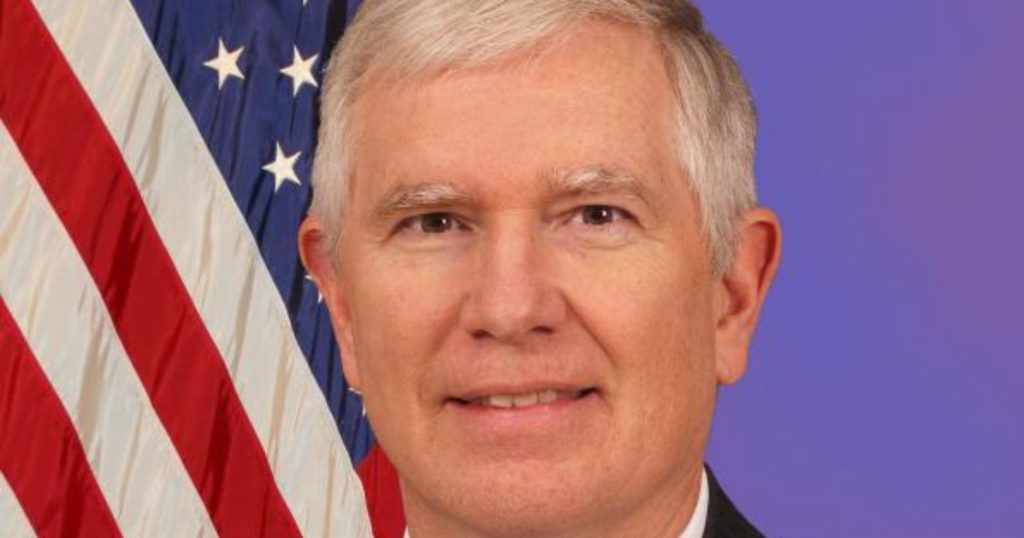
I got into this U.S. Senate race for one reason: I have never before feared for the future of my country like I do today. I think many of you feel the same way. I’ve heard it from thousands of Alabamians while traveling our state. Jim in Muscle Shoals was worried about being able to afford putting enough $4 per gallon gas in his car to get to work. Sarah in Foley was struggling to find baby formula to feed her newborn son. I’ve heard from you, and I feel your pain. Joe Biden has done more damage in his short time in office than any other President in American history. Socialism is on the march, and we find ourselves in a battle for the soul of our nation. During my time in Congress, I’ve had a very simple guiding philosophy: is the vote I’m about to cast going to make Americans’ lives better? Am I being asked to support a bill because it helps a select few of special interest groups or because it helps the people? I’ve taken some bullets during my time in Washington, both figuratively and literally. I was on the ball field in 2017 when a Bernie Sanders supporter shot a number of my colleagues. My name was one of six on the hit list in his pocket. I’ve been called a racist, misogynist, a Klansman, and just about every other name in the book. But I fought. I fought because America is worth fighting for. You are worth fighting for. I never asked for anything in return. I don’t want my name on buildings. I don’t want a seat at the table in some smoky backroom. I just want Alabama and America to be great. I hope that my record reflects some success in that. I’m proud of my A+ ratings from the NRA and Gun Owners of America for defending the Second Amendment. I’m proud of my 100% record of supporting life according to the National Right to Life. NumbersUSA has given me an A+ for putting America First and fighting for a strong border and immigration policies that suit America’s national interest, not the interest of the rest of the world. I’ve been consistently ranked the most conservative Congressman in Alabama according to the American Conservative Union and CPAC. But let me be clear, none of this matters if we lose the country we love. Lobbyists and special interest groups have spent millions trying to buy Senate seats and corrupt the public policy debate in America. They’ve been very active for my opponent in this race. I ask the people to ask why that is? Why are the lobbyists, special interest groups, McConnell lackeys, and Swampers ALL IN against me? Ilhan Omar and AOC have called for me to be expelled from Congress. Adam Kinzinger and Liz Cheney have fought to get me kicked off my committees. And Mitch McConnell has spent over $20 million attacking me, trying to keep me out of the Senate. You’ve seen his work on TV and in your mailbox. It’s disgusting, it’s deceitful, and it’s shameful. But I’d like to think it’s because I’ve made a career of putting America First. I’ve shown I will not waver, and I can’t be bought. I stand for the people, period. While I’m proud of my proven conservative record, there is still unfinished business. America can ill afford a Senator who will be owned by the same America Last forces that have hindered Republicans from any real progress. McConnell and the Swamp believe our Senate seat is for sale. I ask you to show them it’s not. I’ve never before feared for the future of my country like I do today, but I still believe there’s hope. But we are out of time, and we can’t get this wrong. On June 21st, I ask for you to vote for Mo Brooks so we can send a proven fighter to the Senate. I’ve never gone wobbly on you; I’ve never kept quiet or toed the line to get along. I promise that in the Senate, you’ll be proud to know that Alabama has a fighter on the front lines, ready to do not what’s easy but what’s right. I’m ready to fight to save the country I love. I ask that on June 21st, you give me that chance. Mo Brooks is a U.S. Representative for Alabama’s Fifth Congressional District and a U.S. Senate candidate.
GOP, Dem Senate bargainers divided over gun deal details

Democratic and Republican senators were at odds Thursday over how to keep firearms from dangerous people as bargainers struggled to finalize details of a gun violence compromise in time for their self-imposed deadline of holding votes in Congress next week. Lawmakers said they remained divided over how to define abusive dating partners who would be legally barred from purchasing firearms. Disagreements were also unresolved over proposals to send money to states that have “red flag” laws that let authorities temporarily confiscate guns from people deemed dangerous by courts, and to other states for their own violence prevention programs. The election-year talks have seemed headed toward agreement, with both parties fearing punishment by voters if Congress doesn’t react to the carnage of last month’s mass shootings. A total of 31 people were slain at a grocery store in Buffalo, New York, and an elementary school in Uvalde, Texas. An outline of a deal has been endorsed by President Joe Biden, Senate Majority Leader Chuck Schumer, D-N.Y., Senate Minority Leader Mitch McConnell, R-Ky., and House Speaker Nancy Pelosi, D-Calif. Sen. John Cornyn of Texas, a lead GOP bargainer, seemed visibly unhappy as he left Thursday’s closed-door session after nearly two hours, saying he was flying home. “This is the hardest part because at some point, you just got to make a decision. And when people don’t want to make a decision, you can’t accomplish the result. And that’s kind of where we are right now,” Cornyn said. “I’m not frustrated, I’m done,” he added, though he said he was open to continued discussions. Lawmakers have said a deal must be completed and written into legislative language by week’s end if Congress is to vote by next week. It begins a July 4 recess after that. Leaders want votes by then because Washington has a long record of talking about reacting to mass shootings, only to see lawmakers’ and voters’ interest fade quickly over time. Other bargainers seemed more optimistic, saying much of the overall package has been agreed to and aides were drafting bill language. “A deal like this is difficult,” Sen. Chris Murphy, D-Conn., said when the meeting ended. “It comes with a lot of emotions, it comes with political risk to both sides. But we’re close enough that we should be able to get there.” The measure would impose just small-scale curbs on firearms. It lacks proposals by Biden and Democrats to prohibit assault-style weapons and high-capacity ammunition magazines like the ones used in Buffalo and Uvalde, or to raise the legal age for purchasing assault rifles from 18 to 21. Even so, it would be Congress’ most robust move against gun violence since 1993. A ban lawmakers enacted that year on assault weapons took effect in 1994 and expired after a decade. Scores of high-profile mass shootings since have yielded little from Washington but partisan deadlock, chiefly due to Republicans blocking virtually any new restrictions. Federal law bars people convicted of domestic violence against a spouse from acquiring guns, but leaves a loophole for other romantic relationships. Everytown for Gun Safety, which advocates firearms curbs, says 31 states bar convicted domestic abusers from buying firearms, including 19 that cover violent dating partners. Senators have disagreed over how to define such relationships, with Republicans working against a broad provision. Sen. Thom Tillis of North Carolina, the other lead GOP negotiator, said bargainers would use some state statutes as their guide, though their laws vary. “You need to make sure that you’re capturing everyone that actually beat” up their girlfriends, said Murphy, a Democrat. In addition, 19 states and the District of Columbia have “red flag” laws. Cornyn and the other lead bargainer, Sen. Kyrsten Sinema, D-Ariz., represent states that do not, and it is unclear how money in the bill would be divided among them. Senators have not said what the measure’s overall price tag will be, though people following the talks have said they expect it to range around $15 billion or $20 billion. Lawmakers are looking for budget cuts to pay for those costs. Twenty senators, 10 from each party, agreed to the outlines of a compromise measure last weekend. Top bargainers have labored ever since to translate it into details. The framework includes access to the juvenile records of gun buyers age 18 to 20. Both shooters in Buffalo and Uvalde were 18, and both used AR-15 style automatic rifles, which can load high-capacity magazines. The plan also includes added spending for mental health and school safety programs, tougher penalties for gun trafficking, and requirements that slightly more gun dealers obtain federal firearms licenses. Republished with the permission of The Associated Press.
Rand Paul to headline two events for Mo Brooks Friday. Pundits note the future of U.S. Senate leadership is on the line
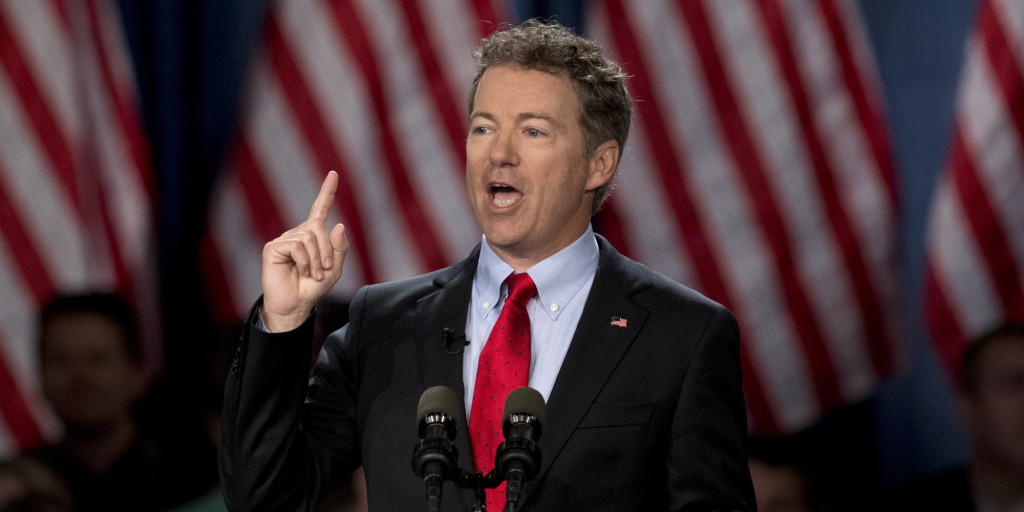
Dr. Rand Paul will be headlining two campaign townhalls in Alabama for Congressman Mo Brooks for U.S. Senate. On Friday, June 17, Sen. Paul and Rep. Brooks will be at the Valley Hotel in Homewood, Alabama at 12 pm. At 3 pm, the duo will head to the Four Points by Sheraton in Huntsville. National media and insiders have noted that the Senate race between Brooks and opponent Katie Britt has become a proxy battle between Mitch McConnell and President Donald Trump supporters within the party. While Trump pulled his endorsement of Brooks and endorsed Katie Britt, it hasn’t stopped Trump-like and Trump-supporting senators Rand Paul and Ted Cruz from going all-in in their support of the firebrand congressman. Meanwhile, McConnell and his team favor Britt, the former president of the Business Council of Alabama and chief of staff to Richard Shelby. Both Paul and Cruz have campaigned on behalf of Brooks. Notably, Brooks’s first endorsement for his campaign was from Paul, back in May 2021. Paul stated, “I’m happy to endorse my friend Mo Brooks today for the U.S. Senate. Mo has proven time and time again he will stand up for liberty and do what he thinks is right. He will join me in fighting to lower spending, cut the size and power of government, curtail foreign aid, and stop our endless wars overseas. Mo will stand for the Bill of Rights and against the entrenched bipartisan power and big spenders in the Senate just as he has done in the House.”
J. Pepper Bryars: Here’s who funded some of those silly Pro-Katie Britt advertisements

My mailbox has been infested the last few weeks with a bunch of silly pro-Katie Britt flyers paid for by a group calling itself “Alabama Christian Conservatives.” Aside from insulting my intelligence with such juvenile propaganda, I found the group’s cynical attempt to exploit my connection to those three words — Alabama, Conservative, and Christian — especially aggravating, and the use of that last one a bit irreverent considering the manipulative language used on the flyers. So, I set out to find out just who the Alabama Conservative Christians really are. And guess what? It’s just a made-up name for a political action committee registered to some guy’s house in Austin, Texas, according to records at the Federal Election Commission (FEC). It received much of the millions it spent on these flyers and other advertisements from another political action committee (PAC), which itself received millions from another PAC, which in turn collected money from yet even more PACs, and so on. In the end, though, the Texas PAC posing as an Alabama Christian organization got most of its money from these guys, who together gave almost $15 million to it and other PACs supporting Katie Britt and opposing Mike Durant and Mo Brooks: And that’s just one money trail that I followed. There are probably more. It’s a shell game that most people aren’t inclined to follow, but the receipts are there and regularly updated for anyone who wishes to look: Step 1: Alabama Christian Conservatives PAC $10.9 million — That’s at least how much money was collected by the Alabama Christian Conservatives PAC since it was founded last September, according to FEC records. Some of the Pac’s money came from relatively small donations for this sort of game, like $50,000 from an Illinois company called Medical Pro and another $50,000 from billionaire private equity investor Marc Rowan (who, as a Jewish resident of New York City, seems an unusual candidate for membership in an organization called the Alabama Christian Conservatives). However, about 96% of the fund came from these three sources: $5.5 million was transferred in from Defend America PAC (this is the fund sponsored by Sen. Richard Shelby). $3 million was transferred in from Alabama’s Future PAC (more on it later). $2 million came from Francisco Collazo, chairman and founder of COLSA, a Huntsville-based engineering and service support company (we’ll see his name again). Of that, about: $3.1 million was spent supporting Katie Britt, That may be a confusing categorization because most of the flyers I received contained pro-Britt language on one side and language critical of her opponents on the other. $464,000 was spent opposing Mike Durant, $252,000 was spent opposing Mo Brooks, $4.7 million was transferred to the Alabama RINO PAC. Step 2: Alabama RINO PAC FEC records show that Alabama Christian Conservatives PAC accounted for 99.9% of all the money in the Alabama RINO PAC’s bank account as of early June. Of that, about: $2.6 million was spent opposing Mike Durant. $790,000 was spent opposing Mo Brooks. And here’s something interesting: both Alabama Christian Conservatives PAC and Alabama RINO PAC are both registered to the same residential address in Austin, Texas. State records show this is also the address of the Burton Strategy Group, and the registered agent is Jeff J. Burton. He’s a political consultant and lobbyist who once worked for the National Republican Congressional Committee. Why transfer money between two PACs that are funded by the same donors, operated by the same person, run out of the same house, and targeting the same race? The shell game continues… Step 3: Alabama’s Future PAC Now, back to Alabama’s Future PAC, which transferred $3 million to the Alabama Christian Conservatives PAC back in early April. Who are they? FEC records show the address of Alabama’s Future is a rented PostNet mailbox next to Winn-Dixie in Rainbow City, Alabama. (That’s a dismal metaphor for our state’s “future,” by the way.) $7.1 million — That’s how much money the Alabama Future’s PAC has collected since it was founded last October, according to the latest FEC records. The money came from just four sources: $3 million came from Great Southern Wood Preserving, Inc. That’s the company owned by Jimmy Rane, the YellaWood guy from Abbeville. $2 million was transferred in from Senate Leadership Fund PAC. That’s the fund affiliated with Sen. Minority Leader Mitch McConnell, R-Kentucky. (By the way, Mitch McConnell? Big Trump supporter there! And he’s funding ads talking about Mo Brooks bailing on Trump? Laughable. Can’t we see we’re getting played?) $2 million came from Francisco Collazo, who also gave $2 million directly to Alabama Christian Conservatives PAC. $100,000 came from Warren Stephens, an investment banker who lives in Little Rock, Arkansas. Of that, about: $3.6 million was spent opposing Mo Brooks, $357,000 was spent supporting Katie Britt, $3 million was transferred to Alabama Christian Conservatives PAC … who sent me those ridiculous flyers. Step 4: Senate Leadership Fund PAC and Defend America PAC These two PACs have spent years collecting millions upon millions from all sorts of sources — from individuals like Marc Rowan and Warren Stephens, from companies like RAI Services, which makes cigarettes (Camel, Newport, Lucky Strike, etc.), and, of course, from other PACs, like those established by FedEx and General Electric. But here’s where you hike this trail for yourself, because it’s virtually endless. Anyone with an internet connection and a healthy level of curiosity can follow these trails by visiting the website of the Federal Election Commission: https://www.fec.gov. Once there, enter some names in the search box and start exploring. One thing will lead to another, and your eyes will be slowly opened to the level of money swamping our democracy. The Game I had to sketch this whole thing out on a legal pad to keep track of who was giving what to who. Here’s a better version: The Opposing View I reached out to Katie Britt’s campaign spokesman for her opinion about this, but he didn’t respond. In all likelihood, however, the Britt campaign didn’t make the rookie mistake of coordinating with the people who designed and launched those advertisements. That’s against the law. And based on what I’ve heard from people who know her, Katie Britt is a serious person, tough and smart,
In a boost, Mitch McConnell backs Senate bipartisan gun deal
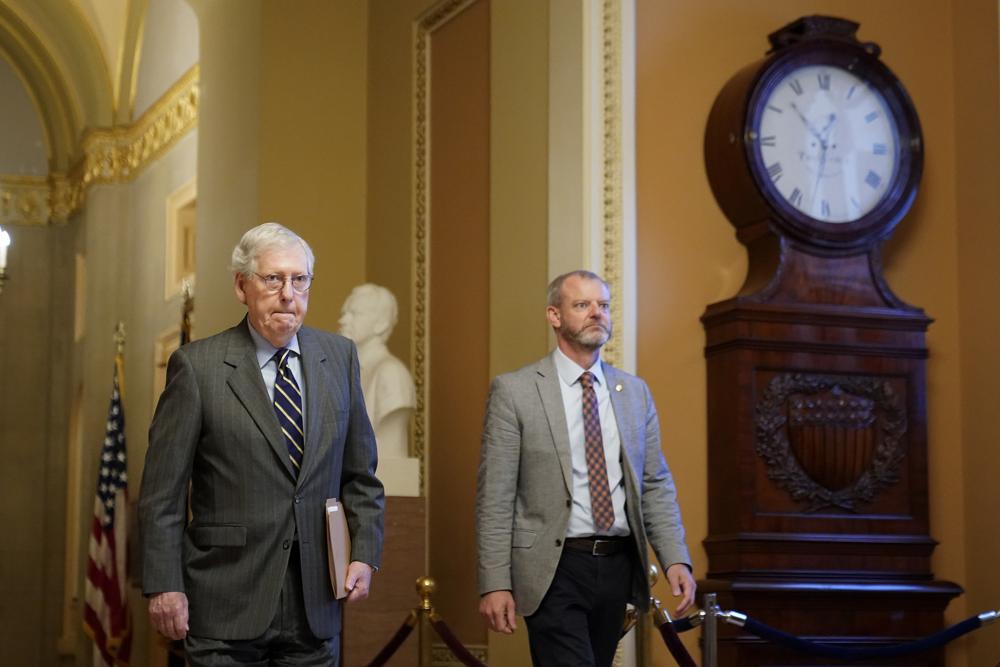
Senate Minority Leader Mitch McConnell announced his support Tuesday for his chamber’s emerging bipartisan gun agreement, boosting momentum for modest but notable election-year action by Congress on an issue that’s deadlocked lawmakers for three decades. The Kentucky Republican said he hoped an outline of the accord, released Sunday by 10 Democrats and 10 Republicans, would be translated into legislation and enacted. McConnell’s backing was the latest indication that last month’s gun massacres in Buffalo, New York, and Uvalde, Texas, had reconfigured the political calculations for some in the GOP after years of steadfastly opposing even incremental tightening of firearms curbs. “If this framework becomes the actual piece of legislation, it’s a step forward, a step forward on a bipartisan basis,” McConnell told reporters. He said the proposal “further demonstrates to the American people” that lawmakers can work together on significant issues “to make progress for the country.” McConnell’s comments were striking, coming five months before midterm elections in which Republicans hope to win control of the Senate and seem likely to win a majority in the House. For years, GOP candidates could risk their careers by defying the views of the party’s loyal gun-owning and rural voters, who oppose moves seen as threatening their ownership and use of firearms. McConnell seemed to suggest that backing this gun measure might even help some Republicans’ prospects in November. While he said senators should take a position “based upon the views of their states,” he said Sen. John Cornyn, R-Texas, a chief architect of the deal, presented GOP polling data at a closed-door senators’ lunch saying support among gun owners for the agreement’s provisions is “off the charts, overwhelming.” The plan would, for the first time, make the juvenile records of gun buyers under age 21 part of required background checks. Money would be sent to states for mental health and school security programs and for incentives to enforce or enact local “red flag” laws that let authorities win court approval to temporarily remove guns from people considered dangerous. Senators and aides hope to translate their broad agreement into legislation in days in hopes that Congress could approve it before leaving for its July 4 recess. Both sides acknowledge that is a difficult process that could encounter disputes and delays. Some Republicans expressed unhappiness with the plan Tuesday, with much criticism aimed at its encouragement of “red flag” laws. Nineteen states mostly dominated by Democrats and the District of Columbia have them, but Republicans have blocked efforts in Congress to pass federal legislation on the subject. “If we’re not going to pass a federal red flag law, and we shouldn’t, why would we incentivize states to do something that we think is a bad idea?” said Sen. Kevin Cramer, R-N.D. “I don’t know what we can do in view of the Constitution,” Sen. Richard Shelby, R-Ala., said of the overall agreement, citing the Second Amendment right to bear arms. Cornyn defended the plan’s “red flag” proposal, saying it would create no national requirements for such laws. He said it gives “every state regardless of whether it has a ‘red flag’ law or not” money for programs aimed at improving public safety and helping troubled people get assistance. Texas does not have a “red flag” law. McConnell made clear he would only go so far in restricting firearms. Asked by a reporter why the federal minimum age is 21 for tobacco sales but 18 to buy rifles, he answered, “Good try.” He added that including state and local juvenile records in background checks for the youngest guy buyers was “a step in the right direction.” The alleged shooters in Buffalo, where 10 people were killed, and Uvalde, where 19 school children and two teachers were slain, were both 18 years old, a common profile for many mass shooters. A final agreement on overall legislation would be expected to receive solid support from Democrats. But it would need at least 10 GOP votes to reach the Senate’s usual 60-vote threshold, and McConnell’s plaudits raised hopes that Republican backing would grow beyond that. The framework also broadens the type of domestic abusers who’d be prohibited from buying guns, require more firearms sellers to conduct background checks, and impose tougher penalties on gun traffickers. The National Rifle Association said Sunday it wouldn’t take a position on the proposal until full legislation is produced. It warned it would oppose “gun control policies” or infringements on people’s “fundamental right to protect themselves.” The pro-gun lobby still has political muscle from its millions of dedicated members, who vote heavily on firearms issues. But GOP support for the new package is the latest threat to its power following recent financial scandals and lawsuits. Approval seems likely by the Democratic-run House, where Speaker Nancy Pelosi, D-Calif., has praised the measure as a first step toward strong restrictions in the future. Senate Majority Leader Chuck Schumer, D-N.Y., said he would schedule votes on the legislation as soon as it is ready. He contrasted recent days’ progress with Congress’ failure to act after a parade of mass shootings in recent decades. “After Uvalde and Buffalo, perhaps this time could be different. To many senators on both sides, this debate certainly feels different,” Schumer said. Congress’ last major gun measure was an assault weapons ban that took effect in 1994 but expired 10 years later. Republished with the permission of The Associated Press.
Senate negotiators announce a deal on guns, breaking logjam
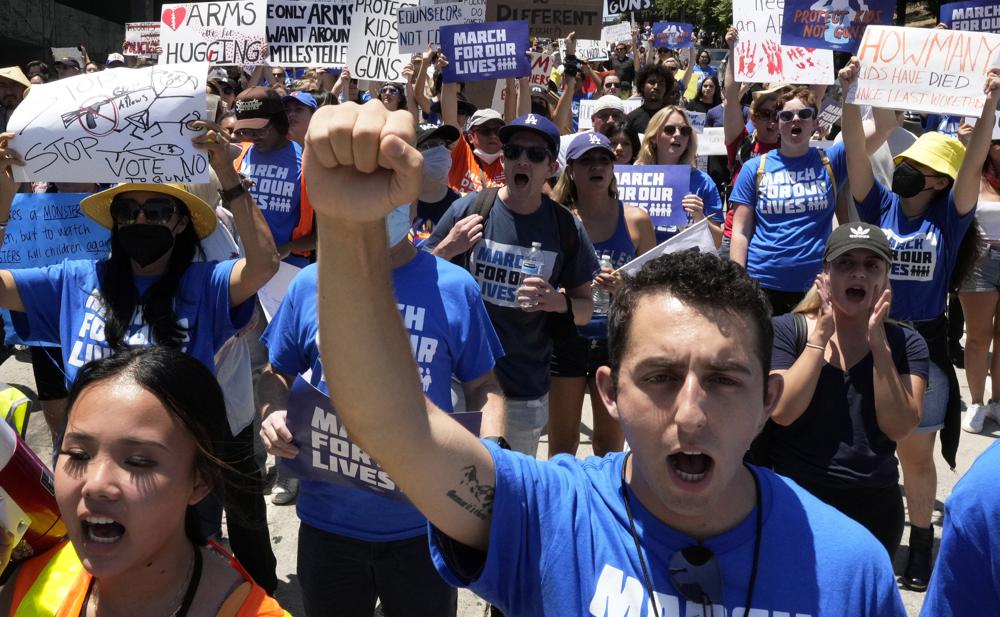
Senate bargainers on Sunday announced the framework of a bipartisan response to last month’s mass shootings, a noteworthy but limited breakthrough offering modest gun curbs and stepped-up efforts to improve school safety and mental health programs. The proposal falls far short of tougher steps long sought by President Joe Biden and many Democrats. Even so, the accord was embraced by Biden, and enactment would signal a significant turnabout after years of gun massacres that have yielded little but stalemate in Congress. Biden said in a statement that the framework “does not do everything that I think is needed, but it reflects important steps in the right direction and would be the most significant gun safety legislation to pass Congress in decades.” Given the bipartisan support, “there are no excuses for delay, and no reason why it should not quickly move through the Senate and the House,” he said. Leaders hope to push any agreement into law rapidly — they hope this month — before the political momentum fades that has been stirred by the recent mass shootings in Buffalo, New York, and Uvalde, Texas. Participants cautioned that final details and legislative language remain to be completed, meaning fresh disputes and delays might emerge. In a consequential development, 20 senators, including 10 Republicans, released a statement calling for passage. That is potentially crucial because the biggest obstacle to enacting the measure is probably in the 50-50 Senate, where at least 10 GOP votes will be needed to attain the usual 60-vote threshold for approval. “Families are scared, and it is our duty to come together and get something done that will help restore their sense of safety and security in their communities,” the lawmakers said. The group, led by Sens. Chris Murphy, D-Conn., John Cornyn, R-Texas, Thom Tillis, R-N.C., and Krysten Sinema, D-Ariz., produced the agreement after two weeks of closed-door talks. The compromise would make the juvenile records of gun buyers under age 21 available when they undergo background checks. The suspects who killed 10 Black people at a grocery store in Buffalo and 19 students and two teachers at an elementary school in Uvalde were both 18, and many perpetrators of recent years’ mass shootings have been young. The agreement would offer money to states to enact and put in place “red flag” laws that make it easier to temporarily take guns from people considered potentially violent, plus funds to bolster school safety and mental health programs. Some people who informally sell guns for profit would be required to obtain federal dealers’ licenses, which means they would have to conduct background checks of buyers. Convicted domestic abusers who do not live with a former partner, such as estranged ex-boyfriends, would be barred from buying firearms, and it would be a crime for a person to legally purchase a weapon for someone who would not qualify for ownership. Congressional aides said billions of dollars would be spent expanding the number of community mental health centers and suicide prevention programs. But they said some spending decisions are unresolved, as are final wording on juvenile records and other gun provisions that might prove contentious. Yet underscoring election-year pressures from Buffalo and Uvalde, the parties’ shared desire to demonstrate a response to those shootings suggested momentum toward enactment was strong. Senate Majority Leader Chuck Schumer, D-N.Y., called the accord “a good first step to ending the persistent inaction to the gun violence epidemic” and said he would bring the completed measure to a vote as soon as possible. Senate Minority Leader Mitch McConnell, R-Ky., who has supported the talks, was more restrained. He praised the bargainers’ work and said he is hoping for a deal that makes “significant headway on key issues like mental health and school safety, respects the Second Amendment, earns broad support in the Senate, and makes a difference for our country.” The agreement was quickly endorsed by groups that support gun restrictions, including Brady, Everytown for Gun Safety, and March for Our Lives, which organized rallies held around the country on Saturday. The National Rifle Association said in a statement that it opposes gun control and infringing on people’s “fundamental right to protect themselves and their loved ones,” but supports strengthening school security, mental health, and law enforcement. The group has long exerted its sway with millions of firearms-owning voters to derail gun control drives in Congress. The agreement represents a lowest common denominator compromise on gun violence, not a complete sea change in Congress. Lawmakers have demonstrated a newfound desire to move ahead after saying their constituents have shown a heightened desire for congressional action since Buffalo and Uvalde, but Republicans still oppose more sweeping steps that Democrats want and Sunday’s agreement omits. These include banning assault-style firearms such as the AR-15 style rifles used in Buffalo and Uvalde or raising the legal age for buying them. AR-15s are popular and powerful semiautomatic weapons that can fire high-capacity magazines and have been used in many of the nation’s highest-profile slaughters in recent years. One of them, the killing of 49 people at the Pulse nightclub in Orlando, Florida, occurred six years ago Sunday. Democrats have also wanted to ban high-capacity magazines and to expand required background checks to far more gun purchases. None of those proposals has a chance in Congress. Highlighting that, the Democratic-controlled House approved sweeping bills this past week barring sales of semiautomatic weapons to people under age 21 and large-capacity magazines and giving federal courts the power to rule when local authorities want to remove guns from people considered dangerous. Currently, only 19 states and the District of Columbia have red-flag laws. Those measures will go nowhere in the Senate, where Republicans can block them. The last major firearms restrictions enacted by lawmakers was the 1994 assault weapons ban, which Congress let expire ten years later. For years, congressional Republicans representing rural, pro-gun voters have blocked robust restrictions on firearms purchases, citing the Constitution’s Second Amendment. Democrats, whose voters overwhelmingly favor gun restrictions, have been reluctant to approve incremental steps that
Once dumped by Donald Trump, Mo Brooks seeks his endorsement again

U.S. Rep. Mo Brooks is asking former President Donald Trump to back him once again in Alabama’s Senate race, a request that comes two months after a feud caused Trump to revoke his endorsement of the congressman. Brooks on Sunday released a statement on Twitter asking “MAGA Nation” to help plead his case for Trump’s endorsement, calling himself the “Trump candidate” in the race. Brooks faces Katie Britt in the June 21 runoff that will decide the GOP nomination for the seat being vacating by retiring Sen. Richard Shelby. “Join me in asking President Trump to #ReEndorseMo so that we can send a message to Mitch McConnell by sending a real America First conservative to the Senate on June 21,” the tweet read. Trump had initially endorsed Brooks last year, rewarding the conservative firebrand who whipped up a crowd of Trump supporters at the Jan. 6, 2021, rally that preceded the U.S. Capitol insurrection. But Trump in March rescinded his endorsement of Brooks, citing his lagging performance and accusing him of going “woke” for suggesting it was time to move on from Trump’s false 2020 election fraud claims. “Very sad, but, since he decided to go in another direction, so have I, and I am hereby withdrawing my Endorsement of Mo Brooks for the Senate,” Trump said in March. Brooks, at the time stinging from Trump’s rebuke, laughed at Trump’s characterization that he was “woke” and said he and Trump fell out because he rebuffed the former president’s entreaties to help overturn the 2020 election. “He wanted the election rescinded and a do-over,” Brooks told reporters in March. “But there’s no legal way to do it.” Making a case that he should return to Trump’s favor, Brooks wrote on Sunday that Trump “gave our campaign the kick in the pants we needed.” Despite losing Trump’s backing, Brooks made his way to a second-place finish in the May primary, edging out “Black Hawk Down” pilot Mike Durant. Brooks had continued to campaign as “MAGA Mo” after losing Trump’s endorsement. Brooks’ plea to Trump comes after he trailed the deep-pocketed Britt in the initial round of voting. Trump so far has not made another endorsement in the race. Sean Ross, a spokesman for Britt, said it “appears that Congressman Brooks’ poor performance in the polls has led him to this new level of desperation, but it’s especially interesting given his frequent flip-flopping.” Republished with the permission of The Associated Press.
Jessica Taylor endorses Mo Brooks for Senate
Jessica Taylor, a former candidate for the U.S. Senate and a Mike Durant surrogate, has endorsed Mo Brook’s candidacy for the same open Senate seat. Taylor endorsed Durant during the primary and was critical of Britt’s campaign, stating that Britt’s TV ads aimed to “destroy the legacy and good name of Mike Durant.” “Katie Britt will be just another cog in Mitch McConnell’s wheel,” Taylor stated in a press release. “She will be a big-spending Republican who continues to cede power to the federal government. Mo Brooks is a true conservative and has proven he’s not afraid to drain the Swamp and has my full endorsement and support.” Brooks thanked Taylor and welcomed her support. “I thank Jessica Taylor for her strong endorsement, and I welcome the support and vote of all Mike Durant voters like her. This is an epic Republican runoff battle that will affect America’s future for years to come,” Brooks stated. “It is the Mitch McConnell Establishment versus the Senator Ted Cruz and Senator Rand Paul conservative and liberty GOP wings. It is David versus the Swamp’s Goliath. It is the Special Interest Machine versus the People.” Brooks continued, “It is anti-MAGA versus MAGA. In sum, if you like how GOP RINOs sunk President Trump’s ship in 2017 and 2018, failing to build the wall or repeal ObamaCare, then you will love Katie Britt because she is wed to those political forces that prevented conservatives from fulfilling our campaign promises on border security, ObamaCare, deficits, and debt.”
GOP primary race for Alabama Senate seat turns bitter
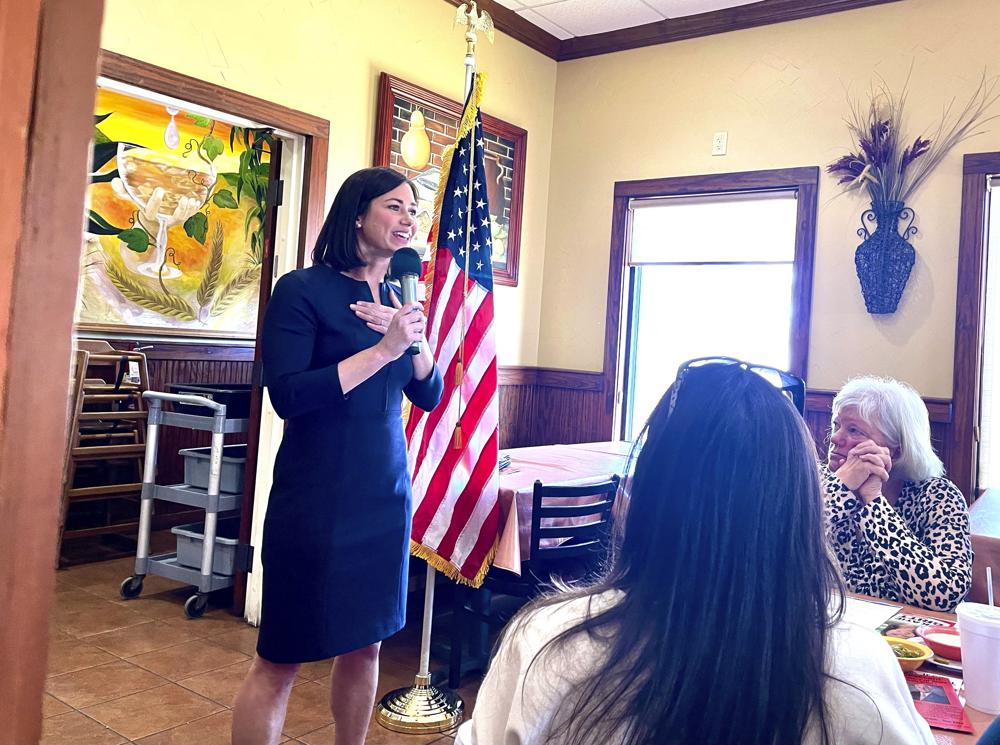
Alabama’s Republican primary for the U.S. Senate seat being vacated by retiring U.S. Sen. Richard Shelby has become a bitter high-dollar contest with the three strongest contenders jockeying for the nomination. The leading candidates are U.S. Rep. Mo Brooks, who won — and then lost — former President Donald Trump’s backing in the race; Katie Boyd Britt, the former leader of Business Council of Alabama and Shelby’s former chief of staff; and Mike Durant, an aerospace company owner best known as the helicopter pilot whose capture during a U.S. military mission in Somalia was chronicled in the “Black Hawk Down” book and subsequent movie. Lillie Boddie, Karla M. Dupriest, and Jake Schafer are also seeking the GOP nomination. Observers say it’s hard to predict whether the nomination will be settled in Tuesday’s primary. The fractured field increases the chances that the race will go to a June 21 runoff, which is required unless one candidate captures more than 50% of Tuesday’s vote. David Mowery, an Alabama-based political consultant, said the race has an up-for-grabs feel. “It’s anybody’s guess as to who’s in first and who’s in second in the runoff,” he said. As for the barrage of negative campaign ads in the primary’s closing days, Mowery said: “The gloves have come off.” The Alabama race is one of several bitterly contested GOP primaries for open Senate seats. Retirements also sparked heated races this season in Pennsylvania, North Carolina, and in Ohio. Trump further scrambled the Alabama race this spring when he rescinded his endorsement of Brooks. Both Britt and Durant have courted Trump’s nod, but he has so far stayed out of the Alabama race. “We look at this country and don’t recognize it right now. Unfortunately, under the Biden administration, every single thing in this nation is moving in the wrong direction,” Britt said during a speech to the Republican Women of East Alabama. Before leading the Business Council, Britt served as chief of staff to Shelby, one of the Senate’s most senior members and a traditional Republican known for his ability to bring home federal projects and funding to his home state. But in speeches Britt, running under a slogan of Alabama First, has leaned away from her hefty Washington resume. She said it’s important voters get to know her and the kind of senator she will be. Her experience, she said, gave her an opportunity to understand how the Senate works. “I can hit the ground running on day one. And for me, Alabama First is not just a slogan. It’s a mission,” she said. Brooks, a six-term congressman from north Alabama, is banking on his long history with Alabama voters to overcome his feud with Trump. “If you’re a conservative Republican, I would submit to you that I’m the only proven conservative in this race. With me, there is no rolling the dice to determine how I’m going to go on major public policy issues,” Brooks said, urging people to look up his ratings from the National Rifle Association, Heritage Action, and other groups. Despite losing Trump’s backing, he continues to run as “MAGA Mo,” invoking Trump’s Make America Great Again slogan, and his campaign website continues to include old video footage of Trump praising the north Alabama congressman. Trump initially endorsed Brooks last year, rewarding the conservative firebrand who whipped up a crowd of Trump supporters at the January 6, 2021 “Stop the Steal” rally that preceded the U.S. Capitol insurrection. “Today is the day that American patriots start taking down names and kicking ass,” Brooks said. But Trump withdrew the endorsement in March after their relationship soured. Trump cites Brooks’ languishing performance and accused the conservative congressman of going “woke” for saying it was time to move on from the 2020 presidential outcome and focus on upcoming elections. Brooks said Trump was trying to get him to illegally rescind the election. Trump has not made a new endorsement in the race. Both Durant and Britt have maintained they are the superior choice for Trump’s backing if the race goes to a runoff. At a speech in Phenix City, a town in the shadow of the U.S. Army’s Fort Benning, Durant pitched himself as the outsider in the race. He began a speech by describing his combat service — which included not just Somalia but Desert Storm and missions in Panama — and then working in the defense industry and founding an aerospace company. “I’m not a politician,” Durant said. “That is what people are tired of. That’s why people want outsiders. That is why people want straight shooters.” Durant said his military experience separates him from those in Washington who “don’t know what they’re talking about” when discussing deploying troops. “This is serious business. We don’t deploy troops, we don’t get in skirmishes, we don’t try to do nation-building unless we truly understand the commitment that we’re about to make, not only financially, but the lives of young men and women, our national credibility, all those things that are on the line.” Durant, a helicopter pilot who was held prisoner after being shot down, is seeking the endorsement of Trump, who once disputed that Sen. John McCain was a war hero because he was held as a POW. “I like people that weren’t captured,” Trump said in 2015. Asked about that, Durant said he thought the divisions between the two were “based on politics, not based on service.” Both Britt and Brooks have criticized Durant for “dodging debates” after his campaign declined three separate dates offered by the Alabama Republican Party. Durant said he is willing to debate but could not make it fit his schedule. Outside groups have pumped more than $20 million into the race to either support or oppose one of the frontrunners. The Super PACS have been responsible for many of the attack ads in the race. Alabama Patriots PAC spent $4 million to support Durant after receiving money from America’s Project, a Virginia-based PAC associated with Jacob Harriman,
Senate bid to save Roe v. Wade falls to GOP-led filibuster
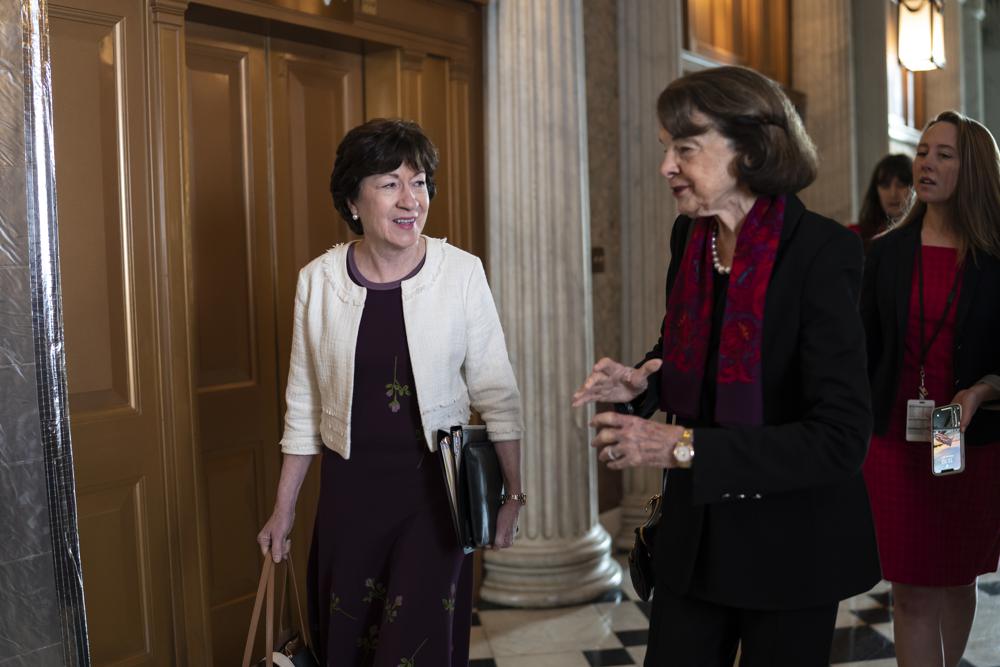
The Senate fell far short Wednesday in a rushed effort toward enshrining Roe v. Wade abortion access as federal law, blocked by a Republican filibuster in a blunt display of the nation’s partisan divide over the landmark court decision and the limits of legislative action. The almost party-line tally promises to be just the first of several efforts in Congress to preserve the nearly 50-year-old court ruling, which declares a constitutional right to abortion services but is at serious risk of being overturned this summer by a conservative Supreme Court. President Joe Biden said that Republicans “have chosen to stand in the way of Americans’ rights to make the most personal decisions about their own bodies, families, and lives.” Biden urged voters to elect more abortion-rights lawmakers in November and pledged in the meantime to explore other ways to secure the rights established in Roe. For now, his party’s slim majority proved unable to overcome the filibuster led by Republicans, who have been working for decades to install conservative Supreme Court justices and end Roe v. Wade. The vote was 51-49 against proceeding, with 60 votes needed to move ahead. Congress has battled for years over abortion policy, but the Wednesday vote to take up a House-passed bill was given new urgency after the disclosure of a draft Supreme Court opinion to overturn the Roe decision that many had believed to be settled law. The outcome of the conservative-majority court’s actual ruling, expected this summer, is sure to reverberate around the country and on the campaign trail ahead of the fall midterm elections that will determine which party controls Congress. Security was tight at the Capitol where Vice President Kamala Harris presided, and it has been bolstered across the street at the Supreme Court after protesters turned out in force last week following the leaked draft. Scores of House Democratic lawmakers marched protest-style to the Senate and briefly watched from the visitor galleries. Harris can provide a tie-breaking vote in the 50-50 split Senate, but that was beside the point on Wednesday. One conservative Democrat, Joe Manchin of West Virginia, voted with the Republicans, saying he supported keeping Roe v. Wade but believed the current bill was too broad. “The Senate is not where the majority of Americans are on this issue,” Harris said afterward. Over several days, Democratic senators delivered speeches contending that undoing abortion access would mean great harm, not only for women but for all Americans planning families and futures. Sen. Catherine Cortez Masto, D-Nev., said that most American women have only known a world where abortion access was guaranteed but could face a future with fewer rights than their mothers or grandmothers. “That means women will not have the same control over their lives and bodies as men do, and that’s wrong,” she said in the run-up to Wednesday’s vote. Few Republican senators spoke in favor of ending abortion access, but they embraced the filibuster to block the bill from advancing. Senate Republican leader Mitch McConnell, an architect of the effort to install conservative justices on the Supreme Court — including three during the Trump era — has sought to downplay the outcome of any potential changes in federal abortion policy. “This issue will be dealt with at the state level,” McConnell said. Some other Republicans, including Sen. John Thune of South Dakota, argue that the House-passed bill is more extreme than Roe and would expand abortion access beyond what is already the law. About half the states already have approved laws that would further restrict or ban abortions, including some trigger laws that would take effect once the court rules. Polls show that most Americans want to preserve access to abortion in the earlier stages of pregnancy, but views are more nuanced and mixed when it comes to late-term abortions. The draft court ruling on a case from Mississippi suggested the majority of conservative justices are prepared to end the federal right to abortion, leaving it to the states to decide. Whatever the Supreme Court says this summer, it will almost guarantee a new phase of political fighting in Congress over abortion policy, filibuster rules, and the most basic rights to health care, privacy, and protecting the unborn. In recent years, abortion debates have come to a political draw in Congress. Bills would come up for votes — to expand or limit services — only to fail along party lines or be stripped out of broader legislative packages. In the House, where Democrats have the majority, lawmakers approved the abortion-rights Women’s Health Protection Act last year on a largely party-line vote after the Supreme Court first signaled it was considering the issue by allowing a Texas law’s ban to take effect. But the bill has languished in the Senate, evenly split with bare Democratic control because of Harris’ ability to cast a tie-breaking vote. Wednesday’s failure renewed calls to change Senate rules to do away with the high-bar filibuster threshold, at least on this issue. The two Republican senators who support abortion access — Lisa Murkowski of Alaska, who faces her own reelection in November, and Susan Collins of Maine — were also no votes, having proposed their own more tailored approach to counter the Supreme Court’s potential action. Both of the Republican senators, who voted to confirm most of former President Donald Trump’s justices, are in talks over alternatives. But Democrats have largely panned the Collins-Murkowski effort as insufficient. “I plan to continue working with my colleagues on legislation to maintain – not expand or restrict – the current legal framework for abortion rights in this country,” Collins said in a statement. Pressure is building on those two senators to join most Democrats in changing the filibuster rules, but that appears unlikely. Five years ago, it was McConnell who changed Senate rules to selectively do away with the filibuster to confirm Trump’s justices after blocking Barack Obama’s choice of Merrick Garland to fill a Supreme Court vacancy at the start of the 2016 presidential campaign, leaving the seat open for Trump to fill after he won
Joe Biden announces heavy artillery, other weapons for Ukraine
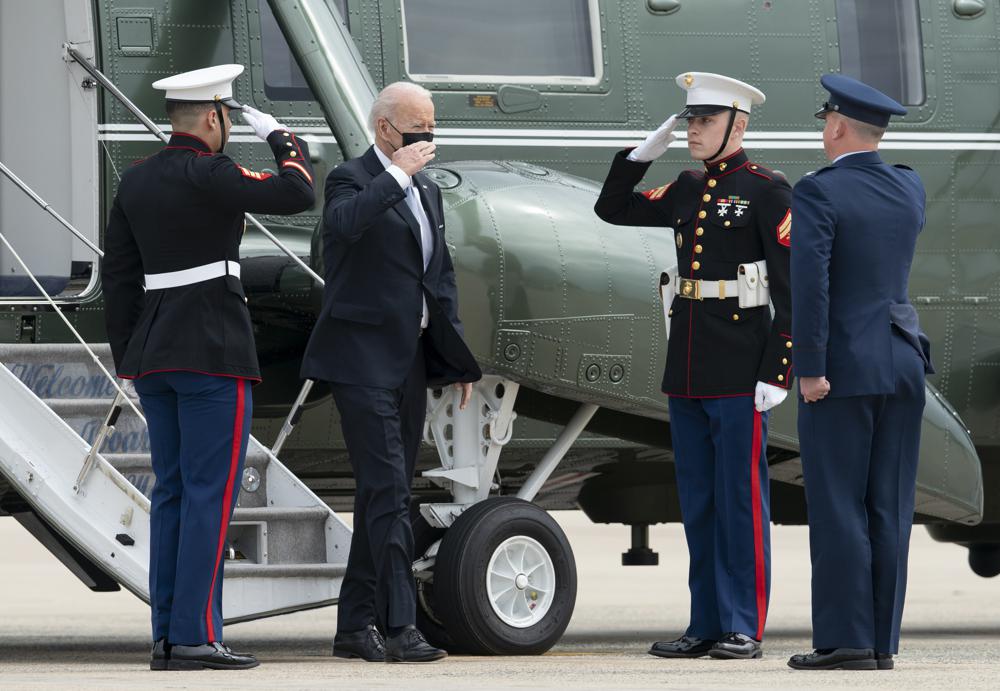
President Joe Biden pledged an additional $1.3 billion Thursday for new weapons and economic assistance to help Ukraine in its strong but increasingly difficult battle against the Russian invasion, and he promised to seek much more from Congress to keep the guns, ammunition, and cash flowing. The latest military aid, Biden said, will be sent “directly to the front lines of freedom.” “Putin is banking on us losing interest,” Biden said. The Russian president is betting that “Western unity will crack … and once again we’re going to prove him wrong.” The new package includes $800 million in military aid for much-needed heavy artillery, 144,000 rounds of ammunition, and drones for the escalating battle in the Donbas region of eastern Ukraine. It builds on roughly $2.6 billion in military assistance that Biden previously approved. There’s also a fresh $500 million in direct economic assistance to Ukraine for government salaries, pensions, and other programs. That raises the total U.S. economic support to $1 billion since Russia’s invasion began nearly two months ago. Ukrainian President Volodymyr Zelenskyy expressed his gratitude to the United States in his nightly address in Ukraine, saying the military aid was “just what we were waiting for.” Earlier in a virtual address to the World Bank meeting in Washington, he said his nation will also need up to $7 billion each month to make up for economic losses. With tens of thousands of buildings damaged and key infrastructure in ruins, Ukraine “will need hundreds of billions of dollars to rebuild,” Zelenskyy said. Biden underscored a need for the United States and Western allies to remain resolved in their support for Ukraine amid signs that Americans may becoming more wary of the war. A poll published Thursday by The Associated Press-NORC Center for Public Affairs Research shows Americans’ desire to get involved has waned somewhat. Some 32% say the U.S. should have a major role in the conflict. That’s ticked down from 40% last month, though it’s slightly higher than the 26% who said so in February. An additional 49% say the U.S. should have a minor role. The president also announced that Russian-affiliated ships would be barred from U.S. ports, though that appeared to be largely symbolic. Russian ships bring a tiny amount of the cargo unloaded in the U.S., and “my guess is that … a decent chunk of that was tankers transporting Russian oil, which is now banned anyway,” said Colin Grabow, a research fellow who studies trade at the Cato Institute. Overall, Biden said that the $6.5 billion in security assistance that Congress approved last month as part of a $13.6 billion package for Ukraine could soon be “exhausted.” With the latest announcement, Biden has approved about $3.4 billion in military aid since Feb. 24. Congress’ overall total also included about $6.8 billion in direct economic assistance to care for refugees and provide economic aid to allies in the region impacted by the war — and additional funding for federal agencies to enforce economic sanctions against Russia and protect against cyber threats. “Next week, I’m going to have to be sending to Congress a supplemental budget request to keep weapons and ammunition deployed without interruption,” Biden said. Congress has signaled it is receptive to further requests and has been expecting there would be a need for further help for the Ukrainians. But the issue could become entwined with partisan fights over pandemic spending and immigration, complicating the pathway. Senate Minority Leader Mitch McConnell, R-Ky., has expressed a willingness to consider more aid for Ukraine in recent weeks. “I think we need to say we want the Ukrainians to win, and we’re prepared to do everything we can to help them win,” McConnell said Monday in Shelbyville, Kentucky. “We want to do more,” House Speaker Nancy Pelosi, D-Calif., told reporters at the Capitol during an appearance with Ukrainian Prime Minister Denys Shmyhal. She said lawmakers would learn more about Biden’s latest funding request “in the next day or so, to be taken up as soon as we can. Next week.” Biden has chosen retired Lt. Gen. Terry Wolff, a National Security Council official during the Obama administration, to oversee the coordination of the security assistance to Ukraine, according to a White House official. The official, who spoke on the condition of anonymity to discuss the yet to be formally announced the appointment, said Wolff was brought to the White House National Security Council team in recent days. Biden spoke on the new assistance and more broadly about the situation in Ukraine, hours after Russian President Vladimir Putin claimed victory in the strategic city of Mariupol. Putin, however, ordered his troops not to risk more losses by storming the last pocket of Ukrainian resistance in the war’s iconic battleground. Biden in an exchange with reporters following his remarks, called Russia’s claim on Mariupol “questionable.” Russian forces have destroyed much of the southeastern port city, which has witnessed some of the fiercest fighting of the war. By Russian estimates, about 2,000 Ukrainian forces remain holed up in a sprawling steel plant, even as Russia continues to pound the industrial site and issue ultimatums for surrender. Biden sought to make clear to Russians that plenty more military assistance for Ukraine would be coming. “Sometimes we will speak softly and carry a large Javelin because we’re sending a lot of those,” Biden said, paraphrasing Theodore Roosevelt and referring to an anti-tank missile system. The new U.S. military assistance is to include 72 155mm howitzers, 144,000 artillery rounds, 72 vehicles used to tow to the howitzers onto battlefields, and over 121 Phoenix Ghost tactical drones, as well as field equipment and spare parts. Pentagon press secretary John Kirby said the drones were developed by the Air Force and fit a specific need of Ukrainian forces in the battle for the Donbas. The drones are produced by a U.S. company, Aevex Aerospace, in a program that began before Russia invaded on February 24. Kirby said the Phoenix Ghost is similar to the armed Switchblade kamikaze drones that the Pentagon
