
Outreach overdrive: University of Alabama robotics team goes the extra mile for young student
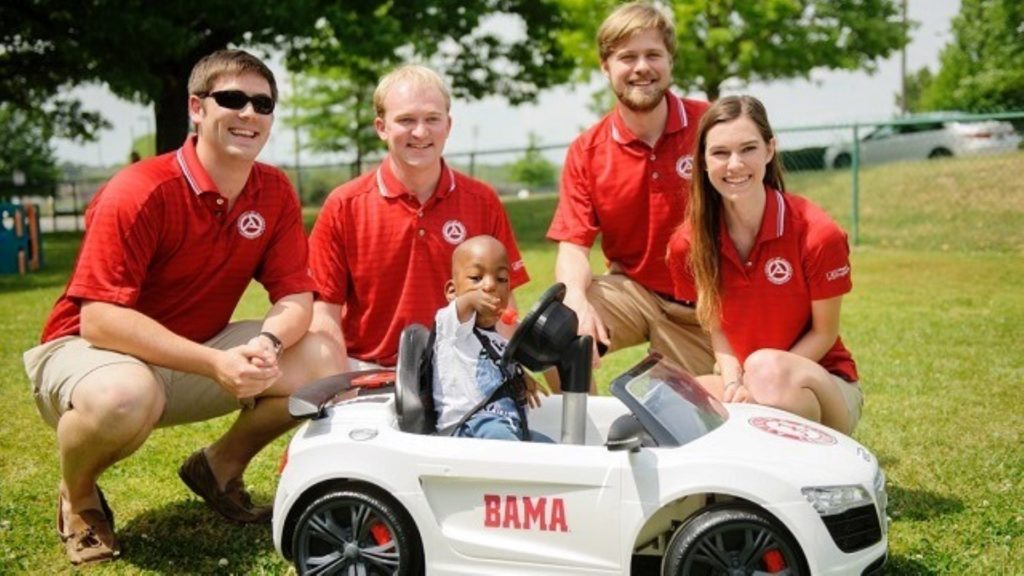
For the past eight years, the University of Alabama’s Astrobotics team has fared well in the various categories of NASA’s annual Robotic Mining Competition. But while it placed first in areas such as team spirit, presentation, communications, mining, autonomy and even first overall for four years, the outreach award proved to be elusive for this competitive team. After not placing in the outreach category last year, the team redoubled its efforts this year. Four members of the 60-person team didn’t just meet the criteria by conducting meaningful outreach to engage others in science, technology, engineering and mathematics (STEM); they decided to go a bit further by changing one boy’s life. Justin is a 5-year-old at the University of Alabama’s RISE school, which works with children with physical disabilities. He was born with a rare condition that resulted in shortened limbs. Justin cannot walk. To get around, he must roll or be pushed in a stroller. Enter Astrobotics. Four team members saw an opportunity to stretch their talents beyond a robotic vehicle fit for Mars — providing Justin with a whole new level of independence in the form of a small car customized to his needs. “From the first time we met Justin, we quickly learned several things,” team member Joseph Kabalin said. “One, he is a very bright kid that could learn to drive the car if we gave him the means to do so. Two, no matter what, we had to make the car work for him, because from the first time we met him he was constantly smiling and excited about the car. And three, we knew that no matter how much we personally gained from this project, nothing could compare to what Justin would gain once we gave him his new car.” The University of Alabama Astrobotics team celebrates its recent win in NASA’s Robotic Mining Competition. (Contributed) The team spent seven months working with Justin and his classmates to develop the control panel, which included a joystick and two push buttons he could easily reach. Team members outfitted an off-the-shelf battery-operated car with these controls, upgraded the battery to provide a longer charge during playtime and even included a parental control system that allows his parents or teachers to remotely control the vehicle from their smartphones. In April, the four members of the robotics team who’d worked on the project presented Justin with a means of independent mobility: an Alabama Audi. Justin now is cruising everywhere in style and, more importantly, on his own. It’s all thanks to the engineering spirit of one team not just looking to win a competition — which it did, finally taking home first place in the outreach category — but looking to make a difference. “Of all the senior projects we had the opportunity to work on, this project was by far the most meaningful and rewarding project we could have chosen. We were given the chance to work with an incredible young boy and the opportunity to change and improve his life through our work,” Kabalin said. This story originally appeared on the nasa.gov website. Republished with permission of Alabama NewsCenter.
University of Alabama robotics team claims third straight victory at NASA competition

For the third consecutive year, a student team at the University of Alabama placed first at a NASA robotics contest. Alabama Astrobotics took the top prize at the NASA Robotic Mining Competition, besting student teams from 45 other institutions in the challenge to build a robot capable of navigating and excavating simulated Martian soil, or regolith. “Winning the NASA Robotic Mining Competition for a third straight year is amazing and humbling,” said team lead Joseph Kabalin, a recent mechanical engineering graduate from Loveland, Ohio. “Our team knows how hard it is to get here and how much work it takes. It was truly a team effort.” The team has more than 60 students from across eight disciplines, including engineering and computer science, and it is the only team to win more than once in the contest’s eight years, placing first four times in 2012, 2015, 2016 and this year. The teams competed at the Kennedy Space Center in Florida. “I am very proud of the team members,” said Dr. Kenneth Ricks, team adviser and associate professor of electrical and computer engineering. “They bought into our process, put their individual needs aside for the good of the team, and dedicated themselves to excellence in every category, which was recognized by the competition judges.” NASA’s Curiosity rover on Mars at “Rocknest,” the spot in Gale Crater where the mission’s first scoop sampling took place. Four scoop scars can be seen in the regolith in front of the rover. A fifth scoop was collected later. The NASA Robotic Mining Competition focuses on related regolith digging operations. (NASA/JPL-Caltech/MSSS) Robots are judged on how much regolith they can dig and deposit into bins as well as their ability to operate on their own, or autonomously. This year, Alabama Astrobotics collected a record amount of regolith, and the robot was the first ever to complete its tasks fully autonomously. The team placed first in five of nine categories that included mining, autonomy, technical presentation, effective use of communication with the robot and outreach project. Alabama Astrobotics placed in the top three of every category, racking up the most points in the contest’s history. In all, the students won $10,000 for use on next year’s robot. The team designed and built a new robot, but stuck with the approach that netted the top prize the past two years. The students improved some of the robot’s mining capabilities, making it lighter and upgrading its ability to operate autonomously, Kabalin said. The robot is called MARTE 2017, which stands for the Modular Autonomous Robotic Terrestrial Excavator 2017, and kept the bucket ladder excavator and an offloading conveyor belt. It also continued to use lidar sensors to scan in 3-D using 16 lasers to measure distance and determine an object’s position. The sensors are a sort of radar that uses light instead of sound. This year the team installed an electronic device called an inertial measurement unit to help make the autonomy more reliable. The technology concepts developed by the collegiate teams for this competition could be used to mine resources on other planets, according to NASA. The team received funding from the Alabama Space Grant Consortium, NASA, Dynetics, Fitz-Thors Engineering, Crank N Chrome, Ion Motion Control, Trailer Store Plus, SolidWorks and the University of Alabama. Republished with permission of Alabama NewsCenter.
Aerojet Rocketdyne to build AR1 rocket engine, add 800 Alabama jobs in expansion

Aerojet Rocketdyne announced plans Monday to expand its presence in Huntsville with a new state-of-the-art manufacturing facility for the company’s AR1 rocket engine and the relocation of engineering, program management, and other jobs. Aerojet Rocketdyne’s overall growth plans for Huntsville call for the California-based company to add 800 jobs to support the U.S. space and defense programs for the next quarter century and beyond. As part of a strategic Competitive Improvement Program, Aerojet Rocketdyne previously selected Huntsville as the home of its Defense division headquarters and its Rocket Shop advanced programs. “We are two years into the first phase of our CIP affordability drive and the consolidation progress, and overhead cost reductions achieved to date have exceeded our expectations,” Aerojet Rocketdyne CEO and President Eileen Drake said. “We intend to build on this success by expanding our CIP-related consolidation efforts so we can deliver the value our customers demand and position our company for further growth.” New rocket engine Aerojet Rocketdyne has been developing the AR1 rocket engine since 2014 as a replacement for Russian engines used on the Atlas V rocket, which is assembled in Decatur by the United Launch Alliance. In addition, the AR1 is being advanced for use on the Space Launch System (SLS), NASA’s Mars rocket now under development at Marshall Space Flight Center in Huntsville. The AR1 production facility in Huntsville will include advanced functions such as additive manufacturing (3-D printing), composites fabrication, and research and development. The company expects the facility to be ready for production in mid-2019. “Huntsville’s legacy in the development of rocket propulsion systems makes it the ideal choice for Aerojet Rocketdyne’s AR1 rocket engine assembly center and its advanced manufacturing and engineering operations,” said Greg Canfield, secretary of the Alabama Department of Commerce. “Aerojet Rocketdyne’s decision to base these cutting-edge activities in Huntsville is a powerful endorsement of the capabilities found there,” he said. The company said it plans to move all Defense-related program management, engineering and support positions to Huntsville by the end of 2018. Some positions at a Gainesville, Virginia, facility that is being closed will also move to Huntsville. “We believe these actions are essential for the performance of our business and the growth of the company. The results from this initiative will benefit our valued employees, customers and shareholders alike,” Drake said. ‘Rocket City USA’ Huntsville officials welcomed the company’s expansion news. “This project is another great example of our effort to diversify Huntsville’s economy with high-quality advanced manufacturing, and yet, Aerojet Rocketdyne is here because of Huntsville’s outstanding role in research and defense technology,” said Huntsville Mayor Tommy Battle. “This project works all facets of our economy by marrying R&D with advanced manufacturing. We are both rocket scientists and rocket builders,” he said. Madison County Commission Chairman Dale W. Strong said, “The announcement by Aerojet Rocketdyne today selecting Huntsville, Alabama, to build their rocket engines reaffirms we are and will continue to be Rocket City USA and our world will be better because of this decision.” Aerojet Rocketdyne has worked with Huntsville-based Dynetics on the AR1 rocket engine project. This story originally appeared on the Alabama Department of Commerce’s Made in Alabama website. Republished with permission of Alabama NewsCenter.
Alabama Congressional members join President at White House for signing of NASA Authorization bill

Several members of the Alabama delegation trekked across town in Washington, D.C. Tuesday morning to join President Donald Trump at a bill-signing ceremony. Alabama Members —Sen. Luther Strange along with Alabama U.S. Reps. Martha Roby, Robert Aderholt, and Mo Brooks — flanked Trump in the Oval Office as he signed the NASA Transition Authorization Act, a $19.5 billion in NASA funding for the 2018 budget year and adds human exploration of Mars as an agency objective. “With this legislation, we support NASA’s scientists, engineers and astronauts and their pursuit of discovery,” Trump continued. “This bill will make sure that NASA’s most important and effective programs are sustained.” Among the policy provisions included are designating the Mission to Mars as the nation’s primary long-term exploration goal and identifying the Space Launch System as the deep space vehicle, which is managed at Marshall Space Flight Center in Huntsville. The bill also calls on NASA to submit a detailed plan for how deep space exploration by astronauts will proceed. “This legislation gives NASA the long-term purpose and stability NASA needs to accomplish its robust missions, including the Space Launch System and Orion Spacecraft,” said Brooks who represents Alabama’s Fifth District, which includes the Marshall Space Flight Center. “In signing this legislation, President Trump demonstrated his strong support for NASA and reaffirmed America’s commitment to human spaceflight and the journey to Mars. These programs play into the strengths of the Marshall Space Flight Center and focus on areas in which Marshall has excelled for more than half a century.” Alabama’s new U.S. Senator Luther Strange echoed Brooks’ support. “Alabamians make crucial contributions to our nation’s space programs,” Strange told Alabama Today. “I was proud today to join the President as he reauthorized funding for NASA, with a special focus on the vital missions of the Marshall Space Flight Center in Huntsville. Together, we will work to keep NASA on the cutting edge of deep space exploration, with Alabamians leading the way. If Alabama’s 2nd District U.S. Rep. Martha Roby, a member of the Commerce, Justice and Science Appropriations Subcommittee, has anything to say about it, NASA will continue to have the resources it needs to operate saying she’s committed “to ensuring NASA has the resources it needs to remain the world’s preeminent space program.” “Alabamians are proud of the key role NASA’s Marshall Space Flight Center in Huntsville plays in the space program,” Roby added. “This bill will ensure important NASA exploration efforts are authorized and properly funded for in 2017, including the Mission to Mars.” The new law is the first NASA authorization to pass both houses of Congress since the NASA Authorization Act of 2010. Watch the bill-signing ceremony below:
Ex-astronaut indicted traffic deaths of 2 girls in Alabama
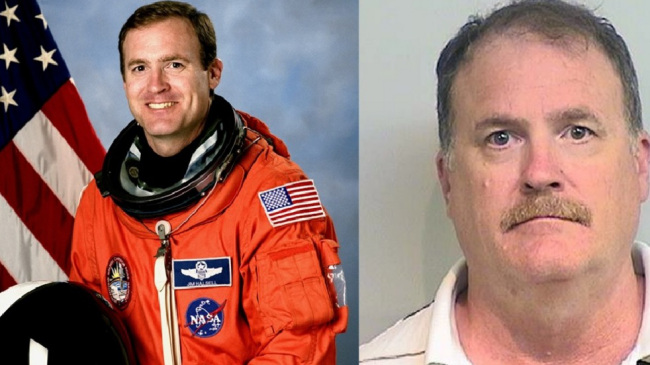
A grand jury in Alabama has indicted a former NASA space shuttle commander on four felony charges in the traffic deaths of two girls killed on a rural highway in June, a prosecutor said Thursday. Grand jurors indicted James Halsell Jr., who turns 60 on Friday, on two counts each of reckless murder and assault, said Tuscaloosa County prosecutor Jonathan Cross. The Huntsville resident was arrested on reckless murder charges after the June 6 wreck that killed 11-year-old Niomi James and 13-year-old Jayla Parler in the west Alabama county. Police reports show investigators believe alcohol and speed could be factors. The reckless murder charges involve the girls’ deaths, Cross said, and the assault charges stem from injuries suffered by the girls’ father, Pernell James of Brent, who was driving, and his female friend, Shontel Cutts. Halsell is free on bond. A lawyer representing him, James Sturdivant, declined comment on the indictment. The girls’ relatives filed two civil lawsuits blaming Halsell for the deaths. Halsell’s attorneys have filed a document in one of those cases saying the driver of the car carrying the girls failed to yield and contributed to the wreck. The girls’ father told investigators he was driving about 65 mph on U.S. 82 when a car traveling “at a very high rate of speed” struck his Ford Fiesta from the rear, crushing the Ford and sending it tumbling across the road, court documents state. A sworn statement by a state trooper said Halsell was driving a rental car at the time and told officers he thought he was on Interstate 20/59, not U.S. 82. Troopers said the girls were ejected. Halsell was driving to his native Louisiana to pick up his son at the time of the crash and was so intoxicated that he asked to see the victims’ bodies, the trooper’s statement said. The girls lived with their mother in Houston and their father, Pernell James of Brent, was returning home from Texas with them and a woman for a summertime visit, according to Brent Mayor Dennis Stripling. Court documents do not indicate that Halsell mentioned his career to officers, and a trooper spokesman has said authorities didn’t realize he was a former astronaut until they saw news reports about the case. An online biography by NASA said Halsell’s career with the space agency included five shuttle flights starting in 1994. He spent more than 1,250 hours in space, serving as commander on three shuttle missions and pilot on two others. After the space shuttle Columbia disaster in 2003, Halsell helped lead NASA’s return-to-flight effort. He retired in 2006 and worked for at least two aerospace companies afterward, including ATK Launch Systems, Utah, according to his NASA biography. Republished with permission of The Associated Press.
Sweet Meteor of Death campaign rolling on empty promises

The Sweet Meteor of Death is not going to upstage this election season. That’s according to the NASA Near Earth Object Program that tracks roughly 15,000 asteroids, comets and gigantic pieces of space rock that pose any kind of threat to the Earth. That may be bad news for 13 percent of American registered voters, who told Public Policy Polling last month that given a choice of Donald Trump, Hillary Clinton or “A giant meteor hitting the Earth,” they’ll take the space rock. In what might be one of the most dark-humor social media movements this election season, the “Sweet Meteor of Death 2016,” as an alternative to Trump or Clinton has caught fire and keeps blazing. Sweet Meteor has several Facebook accounts, the biggest with 85,000 friends, while the Sweet Meteor O’ Death 2106 Twitter account (@smod2016) has 22,000 followers. That doesn’t include countless tweets assigning the #SMOD16 hashtag. There are coffee mugs and T-shirts for sale, and videos and memes galore. There are unconfirmed reports on blogs that Clinton even bought some Sweet Meteor tees. “The Meteor is particularly appealing to independent voters, functionally in a three-way tie at 27 percent, to 35 percent for Clinton and 31 percent for Trump,” PPP reported in its national poll taken June 27-28 of 853 registered voters. Various blogs and accounts indicate some promises of SMOD, including wiping out ISIS, being tough on Putin and Iran, ending world hunger, changing Washington politics. That makes it attractive to several constituencies. NASA is not commenting on Sweet Meteor’s candidacy. In fact, it’s safe to say the space agency is taking a “not with a 10-foot pole” position about talking about it. Fortunately, NASA’s Near Earth Object Program, at NASA’s Jet Propulsion Laboratory in Pasadena, California, looks skyward, through a massive, coordinated coalition of government, university, private and amateur satellites and all-sorts-of-technology telescopes, and sees nothing coming our way anytime soon, according to its website. Among the 15,000 objects zipping around the solar system in the program’s sights are 586 “Potentially Hazardous Asteroids,” or PHAs, which are at least 500 feet in diameter and have orbits that would bring them within about 4.6 million miles of Earth. None are due anytime soon. And none ever has been named SMOD16. As recently as March 22, the last PHA, a comet dubbed P/2016 BA14, about 3,000-feet in diameter, whizzed through the neighborhood, about 2.2 million miles from Earth. That may seem a long way away (about nine times as far away as the moon,) but the NEO Program reported it was the third-closest comet flyby in recorded history. There’s nothing else close to that size on the horizon, but there’s always something out there. Monday, according to the NEO Program, an asteroid about the size of a car is expected to pass inside the moon’s orbit, coming within 164,000 miles of our Big Green and Blue. On Wednesday an asteroid about the size of a jetliner will pass within 2.6 million miles of Earth. And Monday, an asteroid about the scale of a 25-story building will fly within about 4 million miles of Earth-sweet-home. That doesn’t mean there aren’t smaller objects crashing down all the time. The NEO Program reported in 2014 that, in the previous 20-year period, 586 very small asteroids plummeted through the Earth’s atmosphere and burned up in fireballs or explosions, the most notorious being the 2012 Chelyabinsk meteor, a 65-foot wide chunk of space rock that rattled the region of Russia. But that was hardly a Sweet Meteor of Death. In other words, Gary Johnson has a better chance of beating Trump and Clinton.
Daniel Sutter: The space shuttle and the stock market

Last week marked the 30th anniversary of the explosion of the Space Shuttle Challenger, a shared national tragedy, which unfolded on live television. The tragedy reminded us of the dangers of space travel, which had been obscured by NASA’s great safety record. The Challenger disaster also produced a stock market reaction, which illustrates the remarkable role of markets in our economy. It turns out that the New York Stock Exchange (NYSE) quickly and accurately identified the responsible party. The Challenger explosion occurred at 11:39 a.m. ET on Jan. 28, 1986, just 73 seconds after launch from Cape Canaveral. The NYSE was open as events unfolded. As economists Michael Maloney and Harold Mulherin explain in an event study, four major space shuttle contractors stood as potentially responsible parties, in addition to NASA. The contractors were Rockwell International, makers of the shuttle and its engines, Lockheed, with ground support management, Martin Marietta, makers of the external fuel tank, and Morton Thiokol, who made the solid fuel booster. President Reagan appointed a distinguished panel to investigate the disaster’s cause. William Rogers, a former U.S. Secretary of State, chaired a panel including astronaut Neil Armstrong, test pilot Chuck Yeager, and physicist Richard Feynman. The Rogers Commission placed blame on a failure of the O-ring seal of the booster rocket in the subfreezing temperatures on the morning of the launch. The report provides an independent source of truth against which to compare the stock market response. Morton Thiokol manufactured the O-ring. What happened on the stock exchange? As we might expect, all four contractors’ stock prices fell immediately. After 20 minutes, Martin Marietta was down 3 percent, Lockheed was down 5 percent, and Rockwell was down 6 percent. But trading of Morton Thiokol stock had been halted because of excessive sell orders. By day’s end, Thiokol was down 12 percent, while the other contractors had regained much of their losses. The stock market engaged in social learning that day. No one investor possessed all of the information needed to demonstrate Thiokol’s responsibility, and economists Maloney and Mulherin found no evidence of insider trading during the event. And yet the stock market put the pieces together before the close of business January 28. Social learning occurs in markets due to the nature of knowledge in economics. The information relevant for the economy, or running a profitable business, is all about details, which vary from place to place and over time, as economist Friedrich Hayek first recognized. Information of this type is dispersed across the economy, and not the type of knowledge uncovered by economists. We possess the bits of information that determine whether investments, say in electric cars or the new Publix grocery store in Troy, will be profitable. Markets are amazingly efficient at assembling economic information, and putting it in a form to guide decisions by entrepreneurs and investors. The stock market assembles information by providing people an opportunity to profit from what they know. The price of each stock each day provides a lightning summary assessment of the company’s prospects. Anyone with information suggesting that a company is either over- or under-valued can speculate, and will make money if they are right. A person’s speculation adds their information into the mix. The Challenger case further demonstrates how markets help ensure the quality of goods and services. The average quality of a firm’s products is usually hard to observe, but sometimes a highly visible event will signal a problem with product quality or safety. A swift, strong stock market reaction typically ensues. Economists have documented stock price declines after product recalls, airline crashes, and even the fabrication of news stories. People often fear that cost cutting by businesses will compromise product quality and safety. But the linking of stock prices to quality provides even greedy CEOs a reason to care about quality. If cost cutting produces a product recall, crash, or other epic fail, the company’s stock price will tumble. The CEO will then have to answer to the board of directors, stock holders, and stock analysts, and may even lose his job. • • • Daniel Sutter is the Charles G. Koch Professor of Economics with the Manuel H. Johnson Center for Political Economy at Troy University and host of Econversations on TrojanVision. Respond to him at dsutter@troy.edu.
Auburn University signs Space Act Agreement with NASA
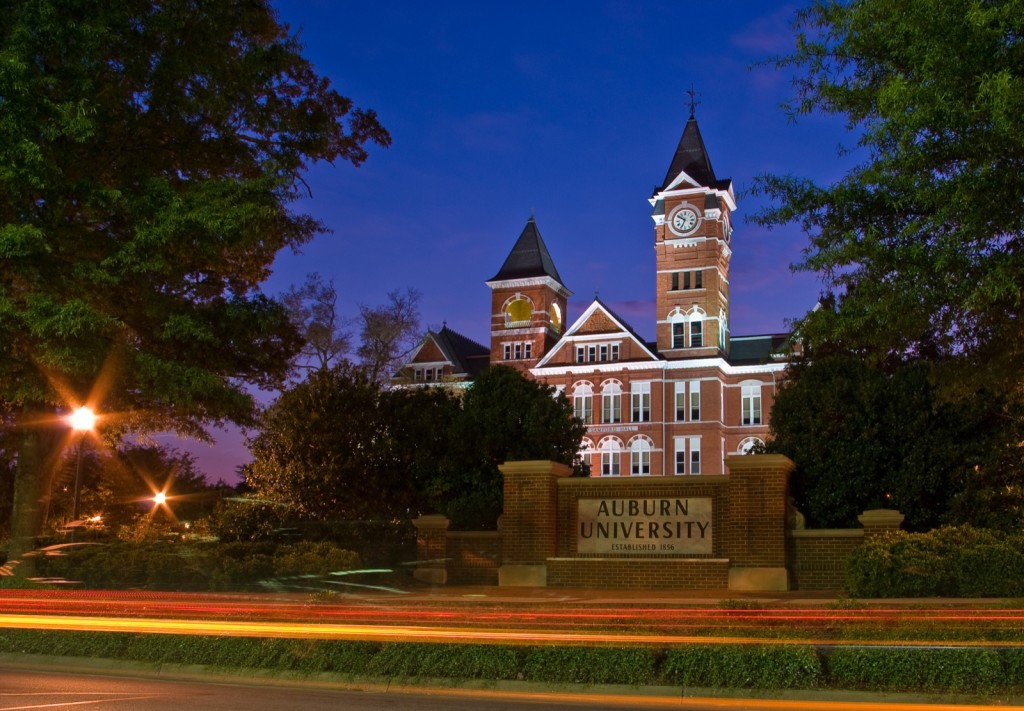
Auburn University has signed a Space Act Agreement with NASA to explore and advance the applications of additive manufacturing, or 3D printing. Multiple news outlets report that the act was signed Thursday by John Mason, Auburn’s vice president for research and economic development, along with Patrick Scheuermann, director of NASA’s Marshall Space Flight Center in Huntsville. The agreement will also allow students to engage in NASA’s missions and opportunities, investigate and develop technologies and share facilities and technical expertise. Mason says the agreement will also allow for more internship opportunities with NASA and GE Aviation. The Marshall Center has used additive manufacturing to build and test rocket engine components and manufacture the first 3D printed parts aboard the International Space Station. These parts are undergoing testing at Marshall. Republished with permission of The Associated Press.
