
Bill to remove marriage licenses passes Alabama Senate
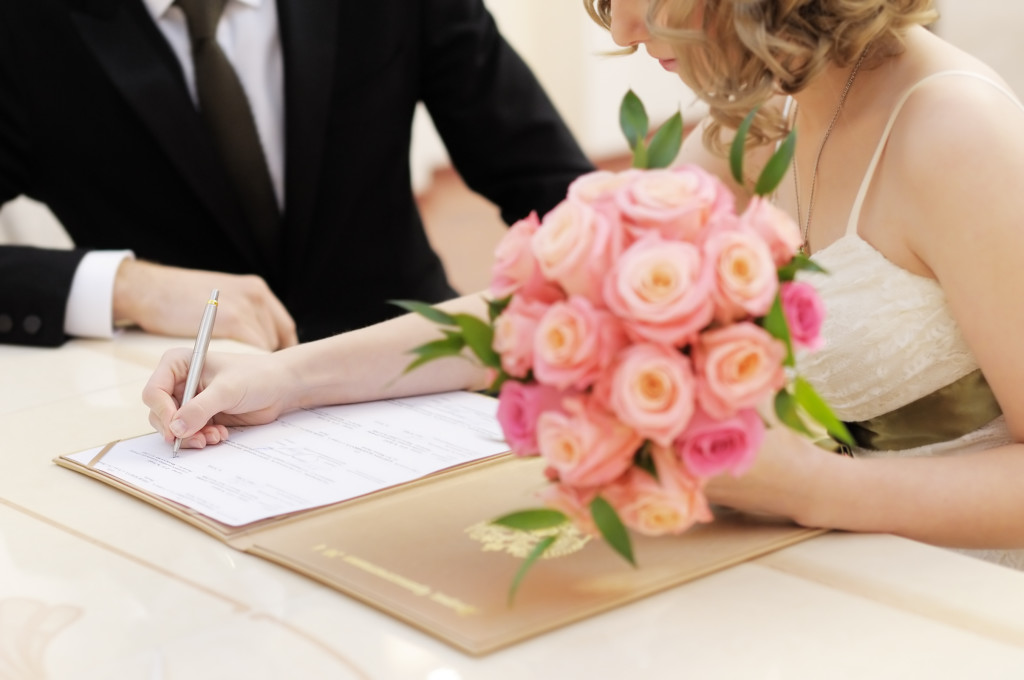
The Alabama Senate approved a bill on Wednesday to remove marriage licenses and begin a new process under which probate judges would accept affidavits from couples as an official record of marriage. Alabama Senators voted 19-1 for the bill, which will now move to the House of Representatives. Under the legislation, the requirement of a ceremony to honor the marriage would be erased. The cost would be the same as the current cost of marriage licenses in the state. The bill’s sponsor, Atmore-Republican Sen. Greg Albritton said the passing of this bill would remove the state from any role in marriage ceremonies, which he believes will properly separate churches and the state. Similar bills have been proposed in the Alabama legislature since the U.S. Supreme Court legalized gay marriage in 2015. Since then, a number of Alabama probate judges have refused to issue marriage licenses to anyone due to their personal religious objections to gay marriage. Alabama probate judges are not required by the current law to issue marriage license and many judges have used the language in the current law to opt themselves out of issuing the licenses. The bill would take away any judgement by probate judges, making the only requirement for a marriage to be official being to submit the correct documents to the probate judge. The documents required would include an affidavit stating that the spouses are 18 years of age or older, or are at least 16 with parental consent, that they are not currently married, and not related by blood or adoption. Albritton’s bill states that the shift would not alter any other aspects of marriage in Alabama, including: divorce, child custody and child support. Sen. Phil Williams, who was the sole ‘no’ vote, stated he voted in that manner because he “feared the change would water down the meaning of marriage”.
Supreme Court permits full enforcement of Donald Trump travel ban
The US Supreme Court on Monday issued an order permitting full enforcement of President Donald Trump’s revised travel ban to go into effect while legal challenges continue to be argued in lower courts. While not a final ruling, the court is allowing the Trump administration enforce a ban on travel to the U.S. by residents of six mostly Muslim countries — Syria, Chad, Iran, Libya, Somalia and Yemen. The only dissent from the court came from Justices Ruth Bader Ginsburg and Sonia Sotomayor who would have left the lower court order in place had they not had the minority opinion on the court. White House Deputy Press Secretary Hogan Gidley responded to the court’s decision and called the ban “lawful and essential to protecting our homeland.” “We look forward to presenting a fuller defense of the proclamation as the pending cases work their way through the courts,” Gidley added. What happens next? Federal appeals courts in San Francisco, California, and Richmond, Virginia, will hear arguments this week on whether the Trump’s third executive order of the travel ban policy is lawful. The Supreme Court noted it expects those lower courts to reach decisions “with appropriate dispatch.” Meaning the case will eventually end up back in the Supreme Court, likely by the end of June.
Alabama AG Steve Marshall urges SCOTUS to protect prayer at public meetings
Alabama Attorney General Steve Marshall wants to protect prayer at public meetings. Marshall joined a coalition of 22 states Wednesday urging the U.S. Supreme Court to protect the practice of lawmaker-led prayer at public meetings. “Lawmaker-led prayer is woven into the fabric of American society dating back to the founding of our Republic,” observed Marshall. “Public prayer is both constitutional and a common practice throughout our country. Today more than 35 states and countless local governments permit lawmakers to offer prayer. I share Justice Scalia’s perspective that “to deprive our society of (this) important unifying mechanism…is as senseless in policy as it is unsupported by law.” The effort stems from a case out of Rowan County, N.C. where a lower court ruled the county board of commissioners were not allowed to give brief invocations. The coalition of states filed the friend-of-the-court brief brief calling on the high court to hear arguments in the case of Lund vs. Rowan County and confirm the constitutionality of public prayer led by lawmakers. Such a decision would alleviate confusion among the lower federal courts and strike down a recent ruling in the Fourth Circuit that the Rowan County Board of Commissioners’ practice of opening its public meetings with a commissioner-led prayer violates the Establishment Clause of the First Amendment. The brief notes that state legislatures, including in Alabama, have opened public sessions with lawmaker-led prayer for much of this country’s history. “Both of Alabama’s legislative chambers have allowed members to offer prayers for more than one hundred years. A member of the House of Representatives, for instance, gave the invocation in the state Senate in 1873. And during the 1875 legislative session, Mr. Nelson and Mr. Wilson, members of the House of Representatives, opened House sessions with prayers.” Alabama filed its brief in support of free expression of faith along with West Virginia, Arizona, Arkansas, Colorado, Georgia, Indiana, Kansas, Louisiana, Michigan, Missouri, Montana, Nebraska, Nevada, Ohio, Oklahoma, South Carolina, South Dakota, Texas, Utah, and Wisconsin, along with the Governor of Kentucky. A copy of the brief is available here.
Donald Trump cries foul on judges, but he’s ahead of Barack Obama
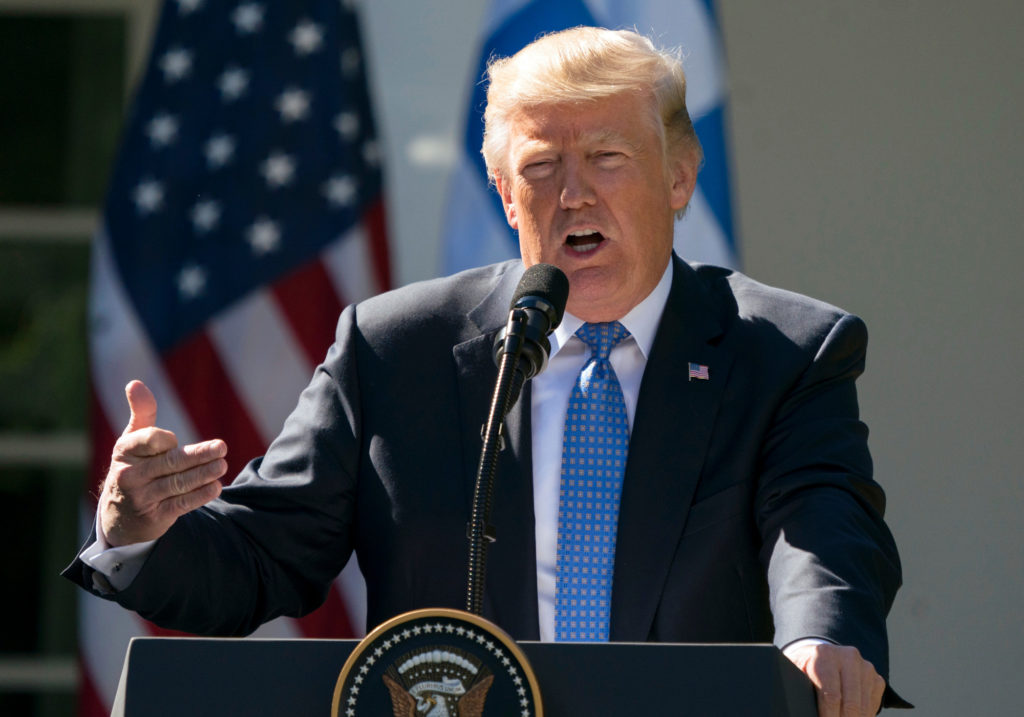
President Donald Trump says Democrats are holding up his judicial nominees, but almost nine months into his presidency, he has had more judges confirmed than President Barack Obama did in the same time period, and his numbers aren’t far off those of other recent presidents. Trump counts the confirmation of Supreme Court Justice Neil Gorsuch as one of his signature achievements. But on Monday he charged that Senate Democrats are holding up confirmation of his other judicial nominees “beyond comprehension.” A top Senate Democrat said claims Democrats are obstructing judicial nominees are false. Speaking in the White House Rose Garden on Monday afternoon, Trump said “something that people aren’t talking about is how many judges we’ve had approved, whether it be the court of appeals, circuit judges, whether it be district judges.” “The Democrats are holding them up beyond anything. Beyond comprehension, they’re holding them up,” Trump said. Earlier in the day, at a Cabinet meeting, Trump said his judicial nominees are “some of the most qualified people ever, and they’re waiting forever on line.” Since taking office in January, Trump has nominated 61 people to federal judgeships, according to information available on the Administrative Office of the U.S. Courts’ website. Approximately 100 more seats are open and awaiting a nominee. Seven of Trump’s judicial nominees, including Gorsuch, have been confirmed by the Senate. According to statistics available online from the Federal Judicial Center, the judicial branch’s research and education agency, Obama had three judicial nominees confirmed at the same point of his presidency, just shy of nine months in, including Supreme Court Justice Sonia Sotomayor. President George H.W. Bush had four confirmed. President George W. Bush had eight. President Bill Clinton, who had a number of nominees confirmed in October of his first year, had nine, including Justice Ruth Bader Ginsburg. And President Ronald Reagan had 13, including Justice Sandra Day O’Connor. Sen. Dianne Feinstein, the top-ranked Democrat on the Judiciary Committee, said in a statement Monday that Obama’s first four appeals court nominees waited an average of 213 days from nomination to confirmation while Trump’s first four appeals court nominees waited an average of 84 days. “Republicans appear to believe they can compensate for their stalled legislative agenda by attacking Democrats with false claims about judicial nominations,” the statement said. White House spokeswoman Kelly Love repeated in a statement Wednesday that Democrats continue to obstruct the confirmation process for judges and also for other presidential nominees. “The President has delivered on his promise to nominate highly qualified judges, starting with Justice Gorsuch. Now, it is time to confirm the outstanding nominees because it’s what the American people deserve,” the statement read. Russell Wheeler, a visiting fellow at the Brookings Institution who studies judicial nominations, said Trump has made many more judicial nominations than Obama in the same window. But Wheeler said it’s too soon to talk about the rate at which Trump’s nominees are confirmed. At the same point in their first terms, Obama had nominated 22 people to federal trial and appeals courts and George W. Bush 59, about the same as Trump, Wheeler said. “I don’t put too much stock in his comments that Democrats are obstructing,” Wheeler said of Trump. Sheldon Goldman, a professor of political science at the University of Massachusetts Amherst who studies judicial selection and confirmation, said he thinks “Trump is doing very well,” in terms of getting his nominees confirmed. He said it “strains credulity” to say Democrats are responsible for any obstruction. Republicans, he said, “hold almost all the cards.” That’s in part because in 2013, then-majority Democrats changed Senate rules so judicial nominations for trial and appeals courts are filibuster-proof, meaning it takes only 51 votes, a simple majority in the 100-member Senate, for confirmation. Republicans currently hold 52 seats. The only thing left for Democrats, Goldman said, is a longstanding Senate tradition that home-state senators must sign off on a judge before a Senate vote. By tradition, senators return a so-called blue slip to sign off on a home-state judicial nominee. Without the blue slip, nominees are not given a vote in the Judiciary Committee. As a result, Democrats only have sway over judicial nominees in states where they hold at least one Senate seat. The Senate’s top Republican, Majority Leader Mitch McConnell of Kentucky, has said the Senate should no longer abide by the tradition. But how to apply the blue slip tradition is up to Judiciary Committee Chairman Charles Grassley, R-Iowa. “Senator Grassley has said that he expects senators and the president to continue engaging in consultation when selecting judicial nominees,” Grassley spokesman Taylor Foy said in a statement. Republished with permission from the Associated Press.
Businesses ask Supreme Court to take gay rights case
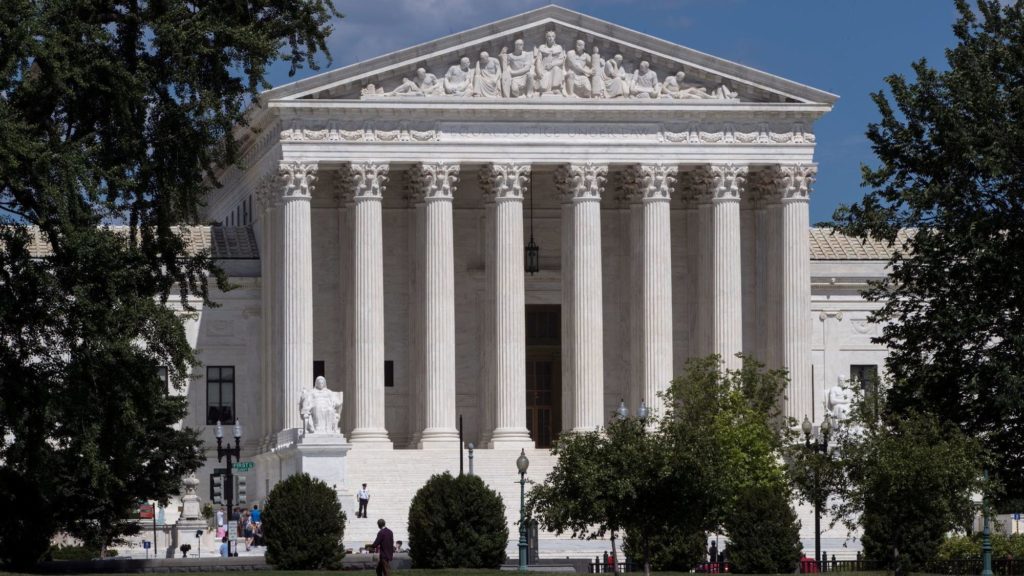
Some of America’s most well-known companies are urging the Supreme Court to rule that a federal employment discrimination law prohibits discrimination based on a person’s sexual orientation, a position opposite of the one taken by the Trump administration. The 76 businesses and organizations – including American Airlines, Apple, eBay, Facebook, Google, Starbucks and Microsoft – filed a brief Wednesday encouraging the high court to take up the issue. They want the court to take a case out of Georgia in which a gay woman who worked as a hospital security officer says she was harassed and punished for dressing in a male uniform and wearing her hair short. Jameka Evans, who worked at Georgia Regional Hospital at Savannah from 2012 to 2013, ultimately left her job and sued. The question in her case is whether a federal law barring workplace discrimination “because of…sex” covers discrimination against someone because of their sexual orientation. The Equal Employment Opportunity Commission under President Barack Obama took the view that it does. But President Donald Trump’s administration has argued that Title VII of the Civil Rights Act of 1964 bars discrimination based on gender but doesn’t cover sexual orientation. The businesses’ court filing says they and their employees would benefit if the court agreed to take the case and rule that Title VII covers sexual orientation discrimination. “Businesses’ first-hand experiences – supported by extensive social-science research – confirm the significant costs for employers and employees when sexual orientation discrimination is not forbidden by a uniform law, even where other policies exist against such discrimination,” the businesses wrote in their brief. The organizations that joined the brief also include two sports teams, the Tampa Bay Rays and the Miami Heat. The case out of Georgia is not unique. Most federal appeals courts in the past have ruled that “sex” means biological gender, not sexual orientation. But a federal appeals court in Chicago, the U.S. Court of Appeals for the 7th Circuit, ruled earlier this year that the law covers sexual orientation. In that case, a gay part-time community college instructor sued after she was repeatedly turned down for a full-time job and her part-time contract was not renewed. The New York-based U.S. Court of Appeals for the 2nd Circuit is also weighing the issue. Last month, the full court heard arguments in a case in which a skydiving instructor, Donald Zarda, claimed he was fired from his job after telling a client he was gay. He sued under the Civil Rights Act, but previous rulings have gone against Zarda, who died in an accident in Switzerland three years ago. A ruling in his case isn’t expected for some time. Republished with permission from the Associated Press.
Supreme Court’s newest justice has an elk as an office mate
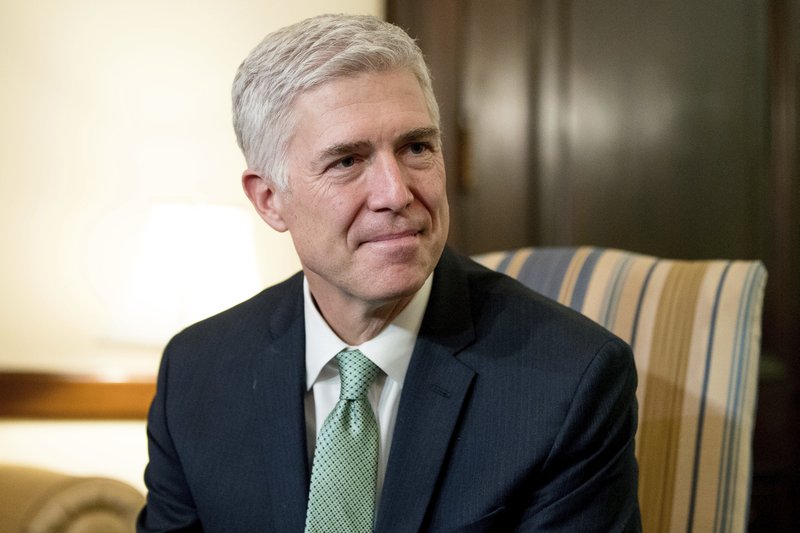
When Justice Neil Gorsuch joined the Supreme Court earlier this year he got Justice Antonin Scalia‘s seat, his office and his elk, Leroy. In recent appearances, Gorsuch has been telling the story of how the elk – actually just its mounted head – came to be his office mate. The story starts more than a decade ago when Scalia shot the elk on a hunting trip and had its head mounted and hung in his Supreme Court office. Gorsuch explained at an event in Washington last week that after Scalia died in 2016 it seemed that the elk was destined “to become homeless.” That’s because the elk head, part of an animal estimated to have weighed around 900 pounds, is “much too much for anyone’s living room wall,” Gorsuch said. “And then someone got the idea that Leroy might make, well, a sort of unusual welcome-to-the-neighborhood gift for the new guy. What a gift,” Gorsuch said. Christopher Scalia, one of the late justice’s nine children and the co-editor of a collection of his father’s speeches published this week, said in a telephone interview that his father shot the Rocky Mountain elk on a hunting trip in Colorado in 2003. Though the justice had other hunting trophies displayed in his home including white tail deer, an antelope or two and a boar’s head, the elk was “way too big for our house,” Christopher Scalia said. So Leroy took up residence at the Supreme Court facing the justice’s desk. “He was proud of it and he enjoyed showing it off,” Christopher Scalia said. Glen Summers, a former law clerk of Scalia’s who was with him when he shot Leroy, said Scalia made a “magnificent, long-range” shot of some 460 yards. It was the only elk Scalia ever killed, he said. As for why the justice called him Leroy, that’s a mystery, Summers said. After Scalia died, Leroy was crated up and sent to Summers in Colorado, he said. And when Gorsuch was nominated to the court, Summers asked what others were also thinking, he said: Would Gorsuch, a fellow conservative and outdoorsman, take Leroy back to Washington? Gorsuch “graciously accepted,” Summers said. So back across the country Leroy went. He was presented to Gorsuch at a reunion of Scalia clerks earlier this year. Gorsuch joked last week that he is actually “delighted to share space with Leroy” and that they “share a few things in common.” “Turns out, we’re both native Coloradans. We both received a rather shocking summons to Washington,” he said. “Neither of us is ever going to forget Justice Scalia.” Republished with permission from the Associated Press.
US Supreme Court weighs case on detention of immigrants
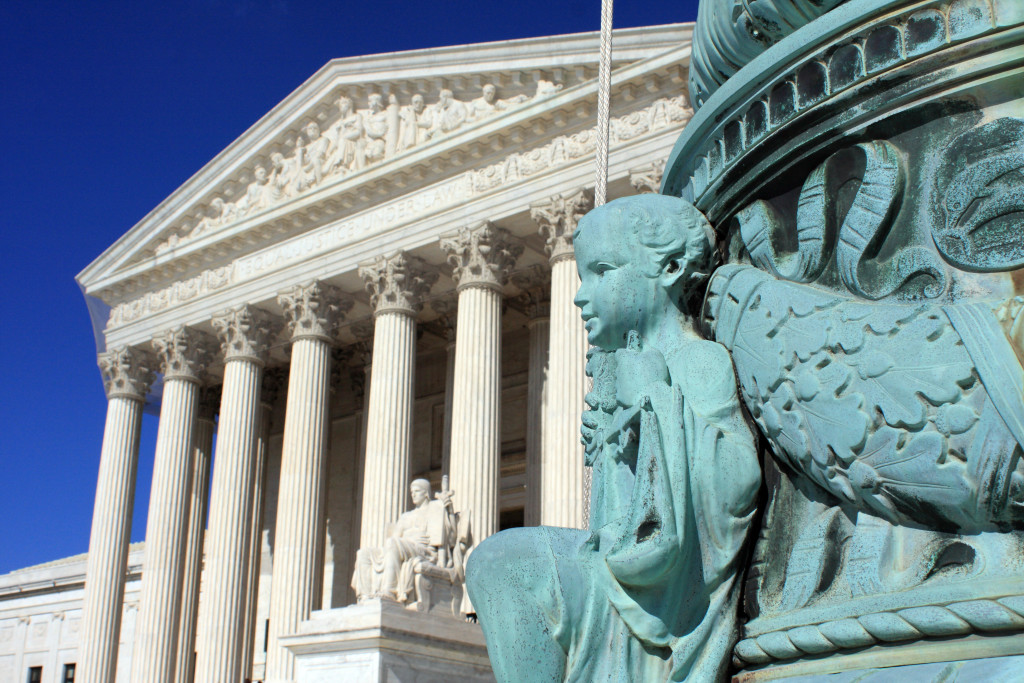
The Supreme Court wrestled for a second time Tuesday with whether the government can indefinitely detain certain immigrants it is considering deporting without providing a hearing. An eight-member court, deadlocked 4-4, didn’t decide the issue last year. Now that Justice Neil Gorsuch has joined the court he will presumably break a tie. But the justices seemed to struggle Tuesday with the issue just as they did when the case was first heard last November. The case the justices were hearing is a class-action lawsuit brought by immigrants who’ve spent long periods in custody. The group includes some people facing deportation because they’ve committed a crime and others who arrived at the border seeking asylum. The San Francisco-based U.S. Court of Appeals for the 9th Circuit ruled for the immigrants, saying they generally should get bond hearings after six months in detention, and then every six months if they continue to be held. The court said the government must show why they should remain locked up. The government disputes that ruling, a position shared by the Obama and Trump administrations. The American Civil Liberties Union, which brought the case on behalf of the immigrants, says about 34,000 immigrants are being detained on any given day in the United States, and 90 percent of immigrants’ cases are resolved within six months. But some cases take much longer. In the case before the justices, Mexican immigrant Alejandro Rodriguez was detained for more than three years without a bond hearing. He was fighting deportation after being convicted of misdemeanor drug possession and joyriding, and was ultimately released and allowed to stay in the United States. The court’s liberal justices suggested sympathy for immigrants like Rodriguez who face lengthy detention. Justice Stephen Breyer said that in most other cases where someone is detained they get a hearing to determine whether they should be freed. “We give triple ax murderers, at least people who are accused of such, bail hearings,” Breyer said. Justice Elena Kagan told the government’s lawyer, Malcolm Stewart, that asylum seekers have some constitutional rights, such as “not to be tortured, not to be placed in hard labor.” She suggested a similar right “not to be placed in arbitrary confinement.” But the appeals court’s decision that a hearing is necessary at six months and every six months thereafter seemed to give other justices pause. Justice Samuel Alito told ACLU lawyer Ahilan Arulanantham that “it’s quite something to find six months in the Constitution.” “Where does it say six months in the Constitution? Why is it six? Why isn’t it seven? Why isn’t it five? Why isn’t it eight?” he asked. A decision in the case, Jennings v. Rodriguez, 15-1204, is expected by June. Republished with permission from the Associated Press.
Supreme Court takes up key case about partisan redistricting
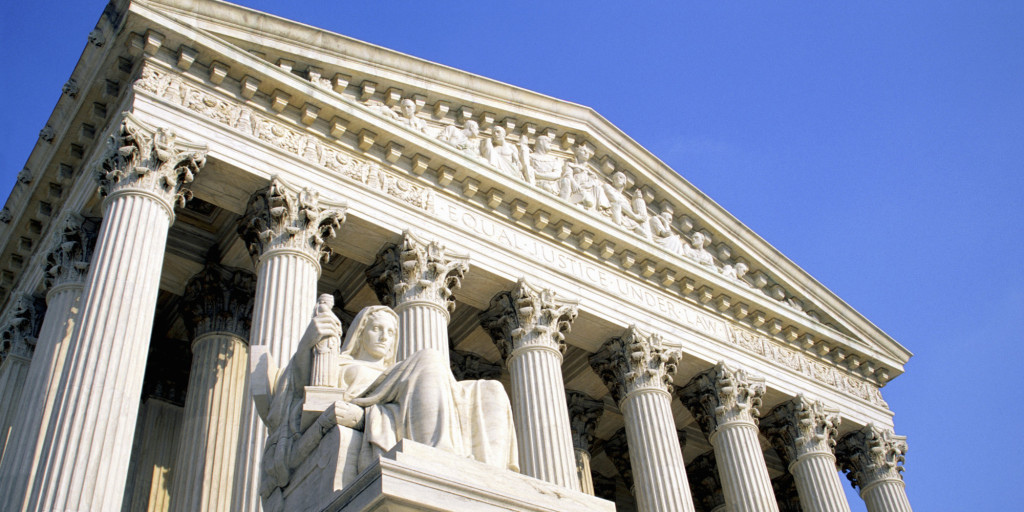
The Supreme Court is taking up a case about political maps in Wisconsin that could affect elections across the country. The justices are hearing arguments Tuesday in a dispute between Democratic voters and Wisconsin Republicans who drew maps that have entrenched their control of the legislature in a state that is otherwise closely divided between the parties. The Democratic challengers are asking the court to declare for the first time that the inherently political process of redistricting can be too partisan. Republicans contend that courts have no business in decisions that should be left to the political branches of government. Courts have struck down districts as racially biased for decades, and other partisan districting lawsuits are moving through the courts in Maryland and North Carolina. The outcome in the Wisconsin case probably rests with Justice Anthony Kennedy. He wrote in 2004 that he had yet to be shown a good way to measure and manage excessively partisan districts. “If workable standards do emerge to measure these burdens, however, courts should be prepared to order relief,” Kennedy wrote in a redistricting case from Pennsylvania, Vieth v. Jubilirer. Paul Smith, the same lawyer who failed to get Kennedy’s vote and thus a majority 13 years ago, is again urging the court to rein in partisan gerrymandering, or drawing districts for partisan gain. This time, Smith said in representing the Wisconsin voters, there are good ways to measure when one party gives itself an unfair edge in creating districts. In Wisconsin, a lower court sifted through evidence showing that Republicans packed Democrats into some districts and spread them out across others to maximize gains for the GOP. In one analysis, Democrats captured far fewer state Assembly seats even when they won roughly the same percentage of the statewide vote as Republicans. The lower court concluded that the districting plans were drawn to discriminate against Democrats, the Republicans’ advantage would endure even in the face of a strong Democratic showing at the polls and the plans could not be explained by other, non-partisan reasons. The state is arguing the justices should put an end to courts’ consideration of partisanship in districting plans and cautioning that far from being manageable, a ruling for the Democratic voters would open the door to a flood of lawsuits that would be based on cherry-picked evidence and hard for judges to manage. The court said it will not provide live audio of the highly anticipated argument, despite a request from several members of Congress to Chief Justice John Roberts. Republished with permission from the Associated Press.
Alabama joins 15-state coalition in amicus brief supporting Donald Trump’s travel ban

A team of state attorneys general submitted an amicus brief to the U.S. Supreme Court on Thursday in support of the Trump administration’s efforts to restrict travel to the United States by providing a 90-day delay of travelers entering America from Iran, Libya, Somalia, Sudan, Syria and Yemen due to national security concerns regarding those countries. Alabama Attorney General Steve Marshall joined 15 other states in the brief the Court to uphold the travel ban to protect American citizens from terrorism. “The President is rightfully exercising his legal authority to restrict the entry of those who may endanger the safety and security of Americans,” said Marshall. “The restricted countries have a strong record of violent acts and terrorism, and it is vital and appropriate that the President’s provisions stand to properly vet travelers from these areas for the protection of our citizens.” The brief relates to an executive order Trump signed March 6, a revision to an earlier travel ban he signed January 27, a week into his presidency. Federal judges subsequently prevented both versions from being fully implemented, dealing a major legal setback to the new administration’s immigration policy. The Trump administration appealed the injunctions to the Supreme Court, which allowed a limited version of the ban to take effect and will hear full arguments in October. Thursday’s amicus brief was filed by the State of Texas and joined by Alabama, Arizona, Arkansas, Florida, Kansas, Louisiana, Missouri, North Dakota, Ohio, Oklahoma, South Carolina, South Dakota, Tennessee, and West Virginia, along with Gov. Phil Bryant of Mississippi.
Judge expands list of relatives exempted from Donald Trump’s travel ban
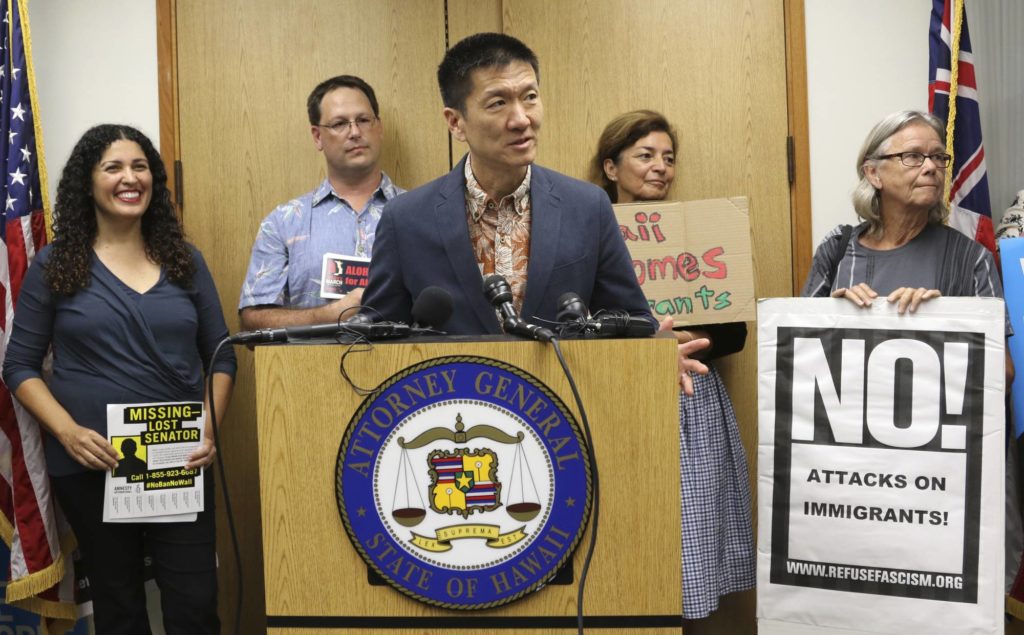
In another setback for President Donald Trump, a federal judge in Hawaii has further weakened his already diluted travel ban by vastly expanding the list of family relationships with U.S. citizens that visa applicants can use to get into the U.S. The ruling is the latest piece of pushback in the fierce fight set off by the ban Trump first attempted in January. It will culminate with arguments in front of the U.S. Supreme Court in October. The current rules aren’t so much an outright ban as a tightening of already-tough visa policies affecting citizens from six Muslim-majority countries: Syria, Sudan, Somalia, Libya, Iran and Yemen. People from those countries who already have visas will be allowed into the country. Only narrow categories of people, including those with relatives named in Thursday’s ruling, will be considered for new visas. U.S. District Judge Derrick Watson on Thursday ordered the government not to enforce the ban on grandparents, grandchildren, brothers-in-law, sisters-in-law, aunts, uncles, nieces, nephews and cousins of people in the United States. “Common sense, for instance, dictates that close family members be defined to include grandparents,” Watson said in his ruling. “Indeed grandparents are the epitome of close family members.” Watson also ruled that the government may not exclude refugees who have formal assurance and promise of placement services from a resettlement agency in the U.S. The U.S. Supreme Court, which last month allowed a scaled-back version of the ban to go into effect before it hears the case in October, exempted visa applicants from the ban if they can prove a “bona fide” relationship with a U.S. citizen or entity. The Trump administration defined “bona fide” relationship as those who had a parent, spouse, fiance, son, daughter, son-in-law, daughter-in-law or sibling already in the U.S. The case came back to Watson when the 9th U.S. Circuit Court of Appeals ruled that he had the authority to interpret the Supreme Court’s order and block any violation of it. Watson’s Thursday ruling broadened the definition of what counts as a “bona fide” relationship to include grandparents and the rest of the wider list of relatives. Hawaii Attorney General Douglas S. Chin, who represents the state as the plaintiff in the case said the court made clear “that the U.S. government may not ignore the scope of the partial travel ban as it sees fit.” “Family members have been separated and real people have suffered enough,” Chin said in a statement. The Supreme Court ruled that workers who accepted jobs from American companies, students who enrolled at a U.S. university or lecturers invited to address a U.S. audience would also be exempt. A relationship created for purposes of avoiding the travel ban would not be acceptable, the justices said. Trump proposed a blanket ban on Muslims during his campaign, but limited it to a handful of countries when he issued his initial travel ban in January, promoting it as a necessary tool for national security and fighting terrorism. It set off massive protests at airports around the country and immediately sparked a sprawling, ongoing legal fight. Courts blocked that first ban as well as a second the Trump administration had retooled, until the Supreme Court partially reinstated it at the end of June. It’s unclear how significantly the new rules have affected or will affect travel. In most of the countries singled out, few people have the means for leisure travel. Those that do already face intensive screenings before being issued visas. Republished with permission of The Associated Press.
Supreme Court ruling in travel ban case leaves many questions

The Supreme Court’s decision to partially reinstate President Donald Trump‘s temporary travel ban has left the effort to keep some foreigners out of the United States in a murky middle ground, with unanswered questions and possibly more litigation ahead. The justices ruled Monday in an unsigned opinion they would hold a full hearing on the case in October. In the meantime, the administration can bar travelers from six majority-Muslim countries from the U.S. if they don’t have a “credible claim of a bona fide relationship” with someone or some entity in the country. It’s unclear what will ultimately constitute a “bona fide relationship,” though the ruling suggested that an American job, school enrollment or a close relative could meet that threshold. Equally unclear is how many foreigners will be affected from the six countries: Syria, Sudan, Iran, Yemen, Libya and Somalia. The ruling was seen as at least a partial victory for Trump in the biggest court case of his presidency. Trump claims the temporary ban is needed to prevent terrorist attacks. Opponents reject that and argue it’s a backdoor way to bar Muslims from entering the United States, as Trump promised in his campaign. The early indications are that the administration will use the decision to take a tough line on travelers from those countries. A senior U.S. official familiar with the situation said the Trump administration has plans in place to relaunch the stalled ban and tourists will be among those kept out. Under these plans, largely orchestrated by White House adviser Stephen Miller, tourists from those countries and any academics, lecturers or others invited to speak or make presentations in the U.S. will be barred. Those groups are regarded as unable to show a substantial and pre-existing tie to a person or institution in the United States. The official who described the plans was not authorized to discuss them publicly by name and spoke on condition of anonymity. But some immigration lawyers and advocates said relatively few people would fall under the ban because these travelers tend to have sufficient relationships with people or institutions in the United States. Jamal Abdi, policy director for the National Iranian American Council, said most Iranians who visit the United States have relatives here or are coming to work or study. He said his group has no idea how the administration plans to judge family relationships and a hard line could mean a significant number of Iranians will be kept out the country for the time being. It could also mean more lawsuits if advocates for immigrants believe the administration is going beyond the Supreme Court’s guidelines in barring visitors to the United States. Like the fate of would-be tourists and scholars, the immediate future for refugees is murky. In its opinion, the court partially reinstated Trump’s temporary prohibition on refugees from any country, using criteria similar to that used in the travel ban. The effect on refugees could be greater because they are less likely to have family, school or business relationships in the United States. Lavinia Limon, CEO of the U.S. Committee for Refugees and Immigrants, said she was dismayed by the ruling, but insisted that her agency has “an existing relationship with incoming refugees, certified and arranged through the Department of State.” “Travel plans are in process, beds have been made and staff around the country plan to meet new Americans at the airports today, tomorrow and in the coming weeks and months,” Limon said. Trump’s initial travel ban caused panic and chaos at airports around the world in late January as it took effect immediately after being signed. Refugees, legal U.S. residents and visa holders were turned back at airports or barred from boarding U.S.-bound planes. A federal court blocked it about a week later. There may be less confusion as the ban is partially reinstated. The administration has revised its travel ban to exclude legal residents and visa holders. Also, the government said last week the ban would go into effect 72 hours after the Supreme Court ruling – which would be Thursday morning in Washington. Republished with permission of The Associated Press.
Travel ban, church-state case await action by Supreme Court
Before taking their long summer break, the Supreme Court justices are poised to act on the Trump administration’s travel ban and a separation of church and state dispute involving a Missouri church playground. But something could overshadow rulings in those high-profile cases: If Justice Anthony Kennedy were to use the court’s last public session on Monday to announce his retirement. Kennedy has given no public sign that he would step down this year and give President Donald Trump his second high court pick in the first months of his administration. Kennedy’s departure would allow conservatives to take firm control of the court. But Kennedy turns 81 next month and has been on the court for nearly 30 years. Several of his former law clerks have said they think he is contemplating stepping down in the next year or so. Kennedy did not address the retirement rumors when he and his clerks gathered over the weekend for a reunion, according to three clerks who were there. The decision to push up the reunion by a year helped spark talk he might be leaving the court. The justices on Monday were expected to decide the case of Trinity Lutheran Church of Columbia, Missouri, which was excluded from a state grant program to pay for soft surfaces on playgrounds run by not-for-profit groups. The case was being closely watched by advocates of school vouchers, who hope the court will make it easier to use state money to pay for private, religious schooling in states that now prohibit it. Missouri has since changed its policy under Republican Gov. Eric Greitens so that churches may now apply for the money. Also expected in the next few days, though there’s no deadline by which the court must decide, was a ruling on whether to allow the administration to immediately enforce a 90-day ban on visitors from six mostly Muslim countries. Justice Neil Gorsuch, Trump’s first Supreme Court nominee, could play a pivotal role in both the travel ban and church playground cases. In all, six cases that were argued between November and April remain undecided. Three of those, all involving immigrants or foreigners, were heard by an eight-justice court, before Gorsuch joined the bench in April. If the eight justices are evenly divided, those cases could be argued a second time in the fall, with Gorsuch available to provide the tie-breaking vote. Republished with permission of The Associated Press.
