
Justices weigh Alabama’s bid to stop redistricting order
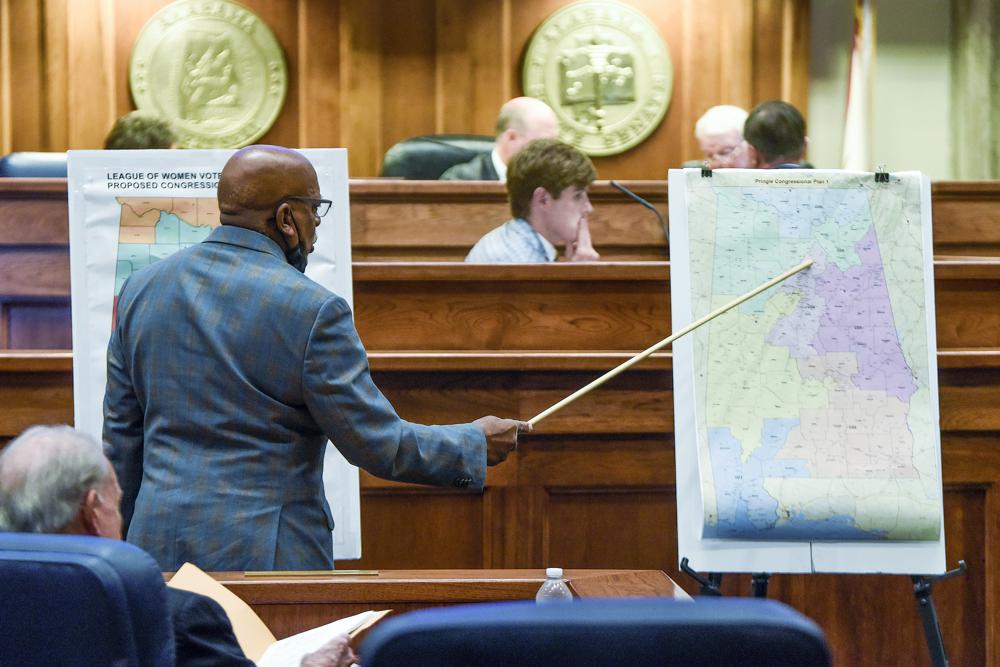
The U.S. Supreme Court is weighing Alabama’s request to freeze a court order requiring the state to draw new congressional lines and create a second district with a significant number of Black voters. Alabama has asked the court to halt an injunction issued by a three-judge panel blocking the use of the current map after the panel found it likely violates the Voting Rights Act. The Alabama attorney general argued the ruling will throw 2022 elections into chaos and require the state to put race above other redistricting criteria. But lawyers for people and organizations that brought the initial lawsuit dispute that and argue the current lines — similar to those in use since the 1990s — do not reflect a state that has grown more racially diverse. “This is very much a textbook case of a Voting Rights Act violation,” said NAACP Legal Defense Fund senior counsel Deuel Ross, whose organization represented the plaintiffs in the case. The three-judge panel last month found Alabama’s map, drawn by the GOP-dominated Alabama Legislature, likely violates the Voting Rights Act because, “Black voters have less opportunity than other Alabamians to elect candidates of their choice to Congress.” The decision cited Section 2 of the Voting Rights Act which prohibits racial discrimination in election procedures. Alabama’s congressional delegation has for years consisted of one Black representative elected from a heavily Black district and six white representatives elected from heavily white districts. The judges added that any “remedial plan will need to include two districts in which Black voters either comprise a voting-age majority or something quite close to it.” U.S. Census numbers show the state has grown racially more diverse since 1990. Black people make up about 27% of the state’s population while white people make up 63% of the population. “We think that Alabama has an obligation to draw fair maps that are reflective of the state’s very rich history of diversity, not just racial diversity, but diversity in terms of representation for everyone,” Ross said. The Alabama attorney general argues the ruling will improperly require states to prioritize race over other redistricting criteria. “The court-ordered redraw marks a radical change from decades of Alabama’s congressional plans. It will result in a map that can be drawn only by placing race first above race-neutral districting criteria, sorting and splitting voters across the State on the basis of race alone,” Alabama Attorney General Steve Marshall wrote in the state’s appeal to the U.S. Supreme Court. Fourteen conservative-led states signed on to a brief in support of Alabama, arguing that the ruling and “absence of clarity no doubt means litigation will ensue across the country over new maps.” Louisiana Attorney General Jeff Landry filed a brief along with attorneys general from Arizona, Arkansas, Georgia, Indiana, Kentucky, Mississippi, Missouri, Montana, Oklahoma, South Carolina, Texas, Utah, and West Virginia. Lawyers for plaintiffs argued Alabama is misrepresenting the ruling as prioritizing race instead of assessing whether an additional majority-Black district could be created consistent with compactness and traditional districting principles. It is unclear when the court will rule but Alabama faces a looming deadline to get new maps in place unless justices intervene. The three-judge panel pushed back the congressional candidate qualification deadline with political parties from Friday until February 11 to allow the Legislature the opportunity to enact a remedial plan. Alabama lawmakers appear to be waiting on the U.S. Supreme Court’s decision. The legislative reapportionment committee has not met since the ruling of the three-judge panel, some members said. “The attorney general has filed motions of stay and of appeal with the Supreme Court and we’re just going to need to see what the outcomes are, Senate President Pro Tem Greg Reed said. The three judges that issued the unanimous ruling consisted of one judge appointed by former President Bill Clinton — Senior U.S. Circuit Judge Stanley Marcus — and two judges appointed by former President Donald Trump — U.S. District Judge Anna Manasco and U.S. District Judge Terry Moorer. Evan Milligan, a Montgomery resident and the lead plaintiff in the lawsuit, said Alabama likely would have lost a congressional seat if not for the population growth of minority groups, including people born in other countries. “To produce maps that undercount the voting strength of the very population that’s contributing to the ability of the state to even have seven congressional districts is even more indefensible to me,” Milligan said. Republished with the permission of the Associated Press.
Paul DeMarco: Significant political implications for court order to redraw Alabama Congressional Districts
This past week a stunning ruling by a three-member panel of the United States 11th Circuit Court of Appeals blocked a redistricting plan drawn up by the Alabama Legislature. The Court ruled that the lawmakers now have until February 11th to draw up a new map that would create two Congressional Districts in Alabama that minority candidates could win in the upcoming 2022 elections. Doing this will be no easy task for legislators without further dividing local communities, possibly pitting incumbents against each other, and trying to get this done in time for this to get approved by the Court with the party primaries in less than just four months. This is not the first time the Courts have forced the legislature to redraw districts, but the current make up of six Republican and one Democratic District has survived twenty years of scrutiny. However, Alabama lawmakers did not help themselves with the lack of transparency in the way they drew the maps this past year. Now Alabama Attorney General Steve Marshall is appealing the ruling to the United States Supreme Court, but there is no guarantee the Court will reinstate the original districts. If the state loses, conservative Alabama may lose a Republican Congressman. And if that happens, look for similar lawsuits in other states with a GOP majority. What we do know for certain is that this ruling could have major political implications not only for the state of Alabama but for the rest of the Nation. Paul DeMarco is a former member of the Alabama House of Representatives.
Matthew Reeves executed for 1996 killing after Supreme Court clears way
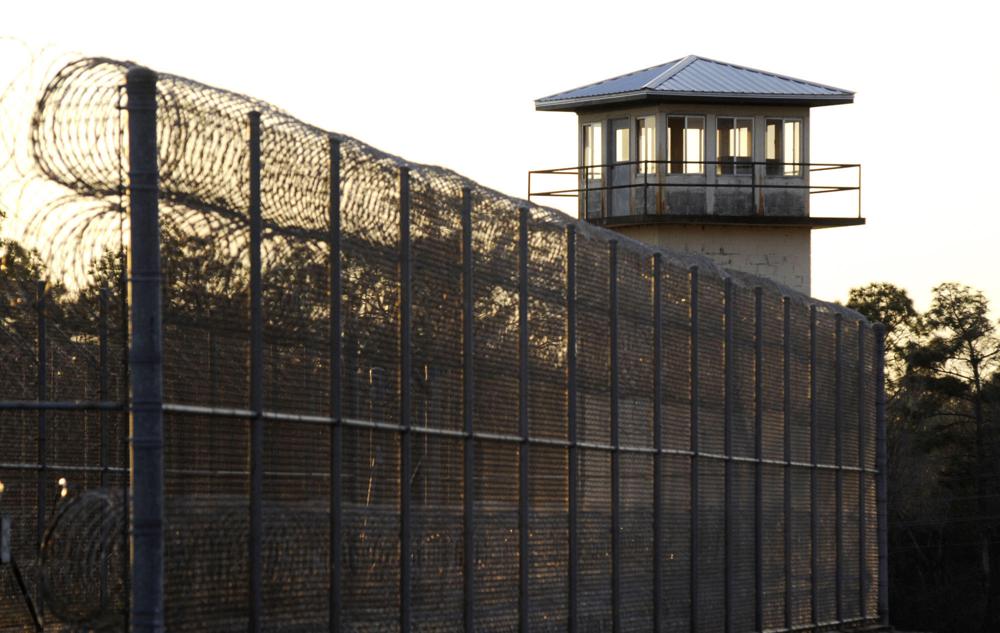
Alabama executed an inmate by lethal injection for a 1996 murder on Thursday after a divided U.S. Supreme Court sided with the state and rejected defense claims the man had an intellectual disability that cost him a chance to choose a less “torturous,” yet untried, execution method. Matthew Reeves, 43, was put to death at Holman Prison after the court lifted a lower court order that had prevented corrections workers from executing the prisoner. He was pronounced dead at 9:24 p.m. CST, state Attorney General Steve Marshall said in a statement. Reeves was convicted of killing Willie Johnson Jr., a driver who gave him a ride in 1996. Evidence showed Reeves went to a party afterward and celebrated the killing. The inmate had no last words. After craning his neck to look around a few times, Reeves grimaced and looked at his left arm toward an intravenous line. With his eyes closed and mouth slightly agape, Reeves’ abdomen moved repeatedly before he grew still.ADVERTISEMENT Gov. Kay Ivey, in a statement, said Johnson was “a good Samaritan lending a helping hand” who was brutally murdered. Reeves’ death sentence “is fair, and tonight, justice was rightfully served,” she added. Prison officials said some of Johnson’s family witnessed the execution. In a written statement, they said: “After 26 years justice (has) finally been served. Our family can now have some closure.” Reeves was convicted of capital murder for the slaying of Johnson, who died from a shotgun blast to the neck during a robbery in Selma on Nov. 27, 1996. He was killed after picking up Reeves and others on the side of a rural highway. After the dying man was robbed of $360, Reeves, then 18, went to a party where he danced and mimicked Johnson’s death convulsions, authorities said. A witness said Reeves’ hands were still stained with blood at the celebration, a court ruling said. While courts have upheld Reeves’ conviction, the last-minute fight by his lawyers seeking to stop the execution involved his intellect, his rights under federal disability law, and how the state planned to kill him. The Supreme Court on Thursday evening tossed out a decision by the 11th U.S. Circuit Court of Appeals, which had ruled Wednesday that a district judge didn’t abuse his discretion in ruling that the state couldn’t execute Reeves by any method other than nitrogen hypoxia, which has never been used. Reeves’ attorneys criticized the Supreme Court’s failure to explain its decision to let the execution proceed. “The immense authority of the Supreme Court should be used to protect its citizens, not to strip them of their rights without explanation,” they said. In 2018, Alabama death row inmates had a chance to sign a form choosing either lethal injection or nitrogen hypoxia as an execution method after legislators approved the use of nitrogen. But Reeves was among the inmates who didn’t fill out the form stating a preference. Suing under the American With Disabilities Act, Reeves claimed he had intellectual disabilities that prevented him from understanding the form offering him the chance to choose nitrogen hypoxia — a method never used in the U.S. — over lethal injection, which the inmate’s lawyers called “torturous.” Reeves also claimed the state failed to help him understand the form. But the state argued he wasn’t so disabled that he couldn’t understand the choice. It was a divided court that let the execution proceed. Justice Amy Coney Barrett said she would deny the state’s request, while Justice Stephen Breyer, who just announced his retirement, and Justice Sonia Sotomayor joined with Justice Elena Kagan in a dissent that said the execution shouldn’t occur. The state had previously asked the 11th U.S. Circuit Court of Appeals to lift a lower court injunction and allow the execution, but the panel on Wednesday had refused. Alabama then appealed, sending the case to the nation’s highest court. Alabama switched from the electric chair to lethal injection after 2002, and in 2018 legislators approved the use of another method, nitrogen hypoxia, amid defense challenges to injections and shortages of chemicals needed for the procedure. The new method would cause death by replacing oxygen that the inmate breathes with nitrogen. A poor reader and intellectually disabled, Reeves wasn’t capable of making such a decision without assistance that should have been provided under the American With Disabilities Act, his lawyers argued. A prison worker who gave Reeves a form didn’t offer aid to help him understand, they said. With Reeves contending he would have chosen nitrogen hypoxia over a “torturous” lethal injection had he comprehended the form, the defense filed suit asking a court to halt the lethal injection. U.S. District Judge R. Austin Huffaker, Jr. blocked execution plans, ruling that Reeves had a good chance of winning the claim under the disabilities law. A defense expert concluded Reeves had a first-grade reading level and the language competency of someone as young as 4, but the state disagreed that Reeves had a disability that would prevent him from understanding his options. An Alabama inmate who was put to death by lethal injection last year, Willie B. Smith, unsuccessfully raised claims about being intellectually unable to make the choice for nitrogen hypoxia. Stavros Lambrinidis, the European Union ambassador to the U.S., had sent a letter both condemning Johnson’s killing and asking the governor Ivey to block the execution.
Alabama’s new congressional districts map blocked by judges
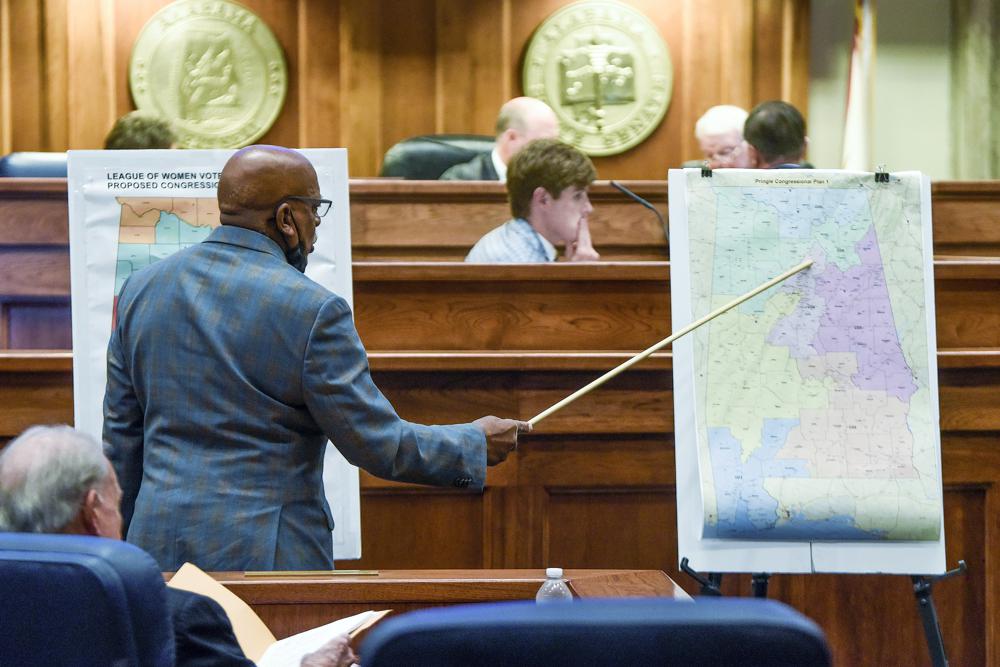
Federal judges on Monday blocked Alabama from using newly drawn congressional districts in upcoming elections, ruling that the state should have two districts — instead of one — in which Black voters are a sizeable portion of the electorate. “Black voters have less opportunity than other Alabamians to elect candidates of their choice to Congress,” the three-judge panel wrote in the 225-page ruling that found plaintiffs are “substantially likely” to prevail on claims that the current districts violate the Voting Rights Act. “We find that the plaintiffs will suffer an irreparable harm if they must vote in the 2022 congressional elections based on a redistricting plan that violates federal law,” the ruling stated. The judges blocked use of the map and stayed the candidate qualification deadline with political parties from Friday until Feb. 11 to allow the Legislature the opportunity to enact a remedial plan. “As the Legislature considers such plans, it should be mindful of the practical reality, based on the ample evidence of intensely racially polarized voting adduced during the preliminary injunction proceedings, that any remedial plan will need to include two districts in which Black voters either comprise a voting-age majority or something quite close to it,” the judges wrote. Alabama Attorney General Steve Marshall’s office said the ruling will be appealed. “The Attorney General’s Office strongly disagrees with the court’s decision and will be appealing in the coming days,” spokesman Mike Lewis wrote in an email. The Alabama attorney general’s office did not immediately respond to an email late Monday seeking comment on the ruling. Alabama’s seven-member congressional delegation consists of six Republicans elected from heavily white districts and one Democrat elected from the only majority-Black district. The Alabama Legislature last year approved congressional district lines that maintain one majority-Black district. About 26% of Alabama’s population is Black, and some lawmakers argued the state should have a second congressional district with a significant African-American population. “It’s past time for Alabama to move beyond its sordid history of racial discrimination at the polls and to listen to and be responsive to the needs and concerns of voters of color. Not ensuring access to the ballot for all of the people and communities in Alabama is holding this state back from realizing its full potential,” Tish Gotell Faulks, legal director for the American Civil Liberties Union of Alabama, said in a statement. Republished with the permission of the Associated Press.
Judge blocks COVID vaccine mandate for Head Start program
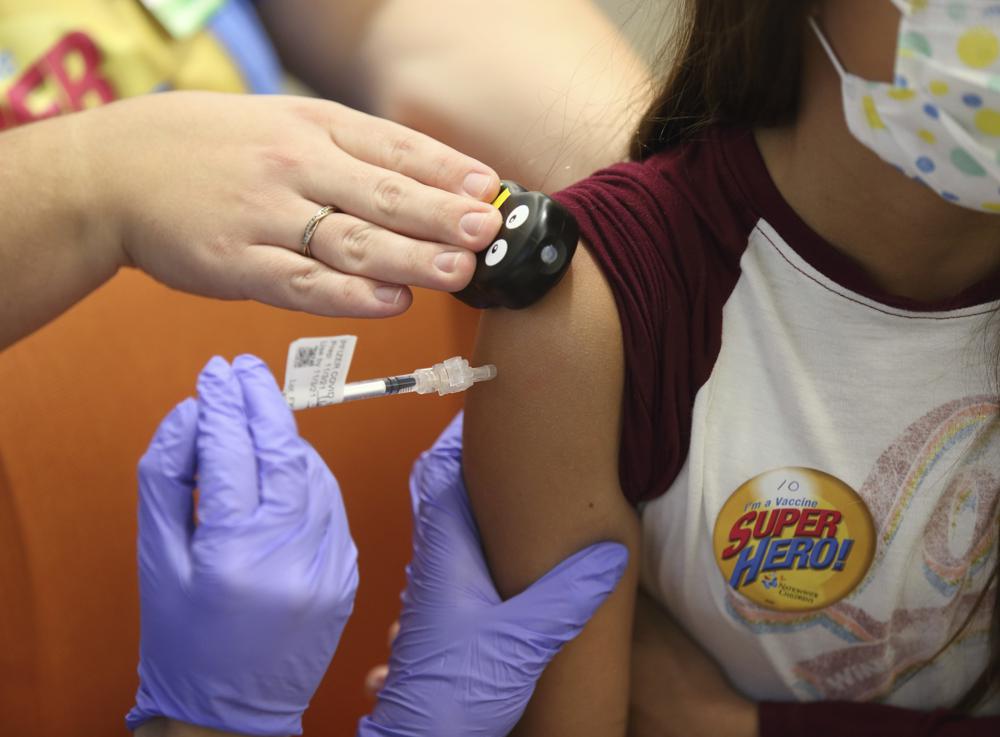
President Joe Biden cannot require teachers in the Head Start early education program to be vaccinated against COVID-19, a Louisiana federal judge ruled Saturday, handing a victory to 24 states that had sued the federal government. U.S. District Judge Terry Doughty wrote that the Biden administration unlawfully bypassed Congress when ordering that workers in Head Start programs be vaccinated by Jan. 31 and that students 2 years or older be masked when indoors or when in close contact outdoors. Head Start is a federally funded program that promotes education for children under the age of 6 who are from low-income families. Doughty, an appointee of then-President Donald Trump, wrote that the separation of powers is crucial to the country’s founding and quoted former President Ronald Reagan, who said, “the nine most terrifying words in the English language are, ‘I’m from the government and I’m here to help.’” “If the Executive branch is allowed to usurp the power of the Legislative branch to make laws, then this country is no longer a democracy — it is a monarchy,” Doughty wrote. Republican attorneys general who were among the 24 states involved in the lawsuit praised Doughty’s decision. “This victory will help ensure that numerous Head Start programs will continue to operate rather than have to fire teachers and cut back services to children,” Alabama Attorney General Steve Marshall said in a news release. “And this win will forestall the nonsensical and damaging practice of forcing masks on two-year-olds.” It was not immediately clear whether the federal government would appeal the decision to the 5th U.S. Circuit Court of Appeals in New Orleans. Doughty’s ruling is similar to a Friday ruling in which a federal judge also blocked the Head Start mandate in Texas. Saturday’s ruling affects Alabama, Alaska, Arizona, Arkansas, Florida, Georgia, Indiana, Iowa, Kansas, Kentucky, Louisiana, Mississippi, Missouri, Montana, Nebraska, North Dakota, Ohio, Oklahoma, South Carolina, South Dakota, Tennessee, Utah, Wyoming, and West Virginia.
AG Steve Marshall files lawsuit to block Head Start vaccine mandate
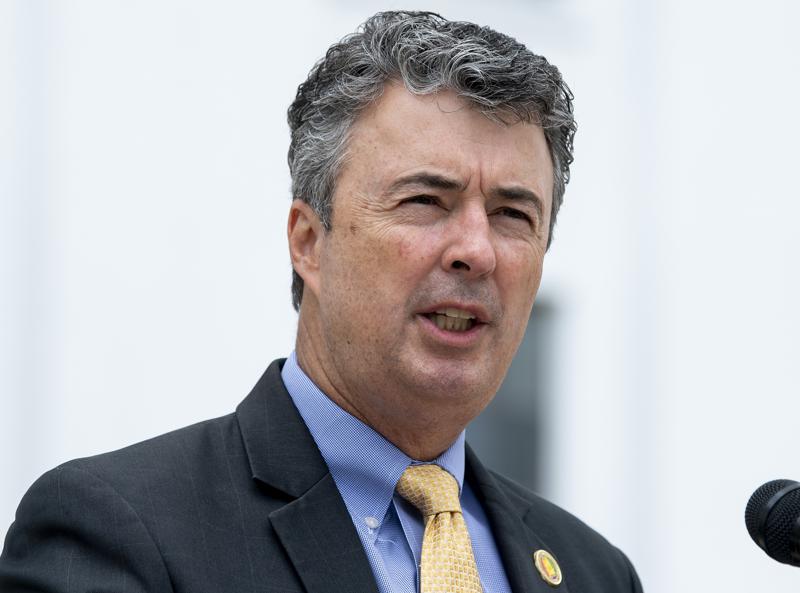
Attorney General Steve Marshall joined 22 other attorneys general and filed a lawsuit to block the Biden administration’s Head Start mandate for program employees to vaccinate against COVID, and for pre-school pupils to wear face masks, or risk losing all federal funding. The lawsuit argues that the mandate conflicts with Alabama’s vaccine passport law and that the U.S. Department of Health and Human Services doesn’t have the legal authority to impose the mandate. The lawsuit was filed in the Western District of Louisiana. Attorney General Marshall joined with Louisiana Attorney General Jeff Landry to bring this action, along with his colleagues from Alaska, Arizona, Arkansas, Florida, Georgia, Indiana, Iowa, Kansas, Kentucky, Mississippi, Missouri, Montana, Nebraska, North Dakota, Ohio, Oklahoma, South Carolina, South Dakota, Utah, West Virginia, and Wyoming. The mandate requires all personnel to be “fully vaccinated” and wear masks at all times, while also requiring students ages two years and older to wear masks. Two of Alabama’s state agencies—the Alabama Department of Human Resources and the Alabama Department of Early Childhood Education—would be affected by the mandate, as would all of Alabama’s Head Start teachers, staff, volunteers, and students. “The Biden administration clearly has no plans to back down from its errant pursuit of nationwide vaccination,” Marshall stated. “Likewise, the State of Alabama has no plans to back down from its righteous pursuit of nationwide injunctions.” Marshall added, “The victims of these mandates will not be ‘the unvaccinated,’ as President Biden would like you to believe. Rather, the harm will be felt by the rural pre-school children who will be left with no place to go if their centers are shut down. A program that the federal government created is at risk of being destroyed by those who claim to care most about its participants.”
Steve Marshall: Vaccine mandate pushback necessary until ‘victory is secured’
Attorney General Steve Marshall issued a statement on the status of the State’s legal challenges to President Joe Biden’s vaccine mandates. In early December, Marshall announced victory over Biden’s federal-contractor vaccine mandate. A federal court granted Alabama’s motion for an injunction against the vaccination requirement. Marshall stated, “On Friday evening, the U.S. Court of Appeals for the Sixth Circuit reinstated Biden’s private-employer vaccine mandate. Within hours of that decision, the State of Alabama—along with dozens of other state and private parties—filed an emergency application with the U.S. Supreme Court, asking the Court to immediately halt the mandate until the Court fully hears the case and issues a final ruling. “At the same time, the U.S. Department of Justice has asked the Supreme Court to take up the healthcare-worker vaccine mandate. Previously, as announced on November 30, the State of Alabama was successful in winning a nationwide injunction against the mandate from a federal district court, which was upheld as to the plaintiff states by the U.S. Court of Appeals for the Fifth Circuit,” Marshall continued. “We are optimistic that the Supreme Court will act swiftly in both cases and agree with the State of Alabama that these vaccine mandates plainly exceed any power given to the federal government by the Congress or the Constitution. “While the private-employer and healthcare-worker vaccine mandates head to the Supreme Court, the State of Alabama has won another victory against the federal-contractor vaccine mandate. Over the weekend, the U.S. Court of Appeals for the Eleventh Circuit denied the Department of Justice’s motion to reinstate the mandate pending appeal, leaving it blocked in Alabama and all other states that are parties in the case. “My office recognizes and fully appreciates the real-life challenges that employees and employers alike are experiencing given the shifting circumstances surrounding these mandates. Rest assured that my team and I will not let up until a full and final victory is secured against them for the people of Alabama,” he concluded.
AG Steve Marshall fights to protect Alabama land from Biden administration ‘overreach’
Attorney General Steve Marshall announced he is leading a national coalition of 18 attorneys general urging the Biden administration not to reverse Trump era definitions of “critical habitat” that may affect property use and value. Marshall’s letter to the U.S. Fish and Wildlife Service and the National Marine Fisheries Service was cosigned by the attorneys general of Alaska, Arizona, Arkansas, Indiana, Kansas, Kentucky, Louisiana, Mississippi, Montana, Nebraska, Ohio, Oklahoma, South Carolina, Texas, Utah, West Virginia, and Wyoming. The issue involves the Endangered Species Act and the federal government’s authority to designate land or water as a “critical habitat” for species the government considers endangered. Property that receives this designation is often subject to strict restrictions which can affect property value and use. In 2017, the Obama administration argued that an area could be a “critical habitat” for a species even if the species could not survive there. In response, Marshall led a group of states opposing that approach, and the Supreme Court held that the Obama administration had overreached. Marshall supported Trump administration reforms that protected species without crippling the rights of landowners. The Biden administration is now considering changing the Trump administration’s definition of “habitat” for use in “critical habitat” designation. In the letter, the group urged the agencies to reject the Biden administration’s efforts to roll back the reformed regulations. Under current rules, an area may be designated as critical habitat only if it currently or periodically has the conditions and resources to support a species, and not just because such conditions could be developed in the future. Furthermore, current rules provide an important balance, providing analysis of the economic impact and whether excluding an area from critical habitat would result in the extinction of a species. Marshall stated, “I will not allow the Biden administration’s misplaced priorities and overreach to destroy the vital progress we have made. If federal bureaucrats are allowed to designate land as critical habitat for species even though that species does not and cannot live there, then there is no limit to the areas they can claim. The results could be devastating for Alabama’s farms, loggers, and miners as well as for landowners throughout our nation.”
A.G. Steve Marshall wins injunction against vaccine mandate
Today, Attorney General Steve Marshall announced victory over President Joe Biden’s federal-contractor vaccine mandate. A federal court granted Alabama’s motion for an injunction against the vaccination requirement. Marshall stated in a press release, “President Biden’s unlawful, unconstitutional, and un-American attempt to force federal contractors and their employees to submit to a COVID-19 vaccination has been stopped due to another successful legal challenge from Alabama.” Marshall filed three legal challenges to President Biden’s vaccine mandates, including against the federal-contractor vaccine mandate on October 29, against the private-employer vaccine mandate on November 5, and against the healthcare-worker vaccine mandate on November 15. All three mandates have now been blocked nationwide by federal courts. “Today’s ruling from the U.S. District Court for the Southern District of Georgia places a nationwide injunction on President Biden’s federal-contractor vaccine mandate and represents the third victory by Alabama and a coalition of states to block enforcement of the President’s tyrannical dictates,” Marshall continued. “President Biden’s lawless and authoritarian vaccine mandate on federal contractors—just as with his vaccine mandates for private employers and healthcare workers—is a contemptible infringement upon individual liberty, federalism, and the separation of powers. The courts have rightfully responded in each case by blocking the enforcement of these mandates.” Gov. Kay Ivey praised the ruling on Twitter. “I’ll call the Biden vaccine mandate nonsense what it is: and that is an un-American, outrageous overreach. This morning we had ANOTHER win in our fight for freedom when a federal judge put a nationwide halt on the federal contractor mandate. Momentum is on our side,” Ivey commented. Attorneys general from Georgia, Idaho, Kansas, South Carolina, Utah, and West Virginia joined the legal challenge.
Former Alabama deputy pleads guilty to child porn charges

A former Alabama sheriff’s deputy indicted earlier this year on multiple child pornography charges has pleaded guilty and will serve one year in custody, prosecutors said Wednesday. Phillip Wayne Humphries, who was a patrol officer with the Jefferson County Sheriff’s Office, pleaded guilty Monday to 25 counts of possession of obscene material depicting a minor, Attorney General Steve Marshall’s office said in a statement. Humphries, 59, of Trussville, will spend one year in a community corrections program in Jefferson County followed by three years on unsupervised probation, the statement said. He also must register as a sex offender. Humphries was arrested on a single charge of possessing obscene material in 2019 when he resigned after coming under investigation. He had worked as a deputy for about two decades. Republished with the permission of the Associated Press.
Steve Marshall celebrates victory; vaccine mandate blocked in federal court
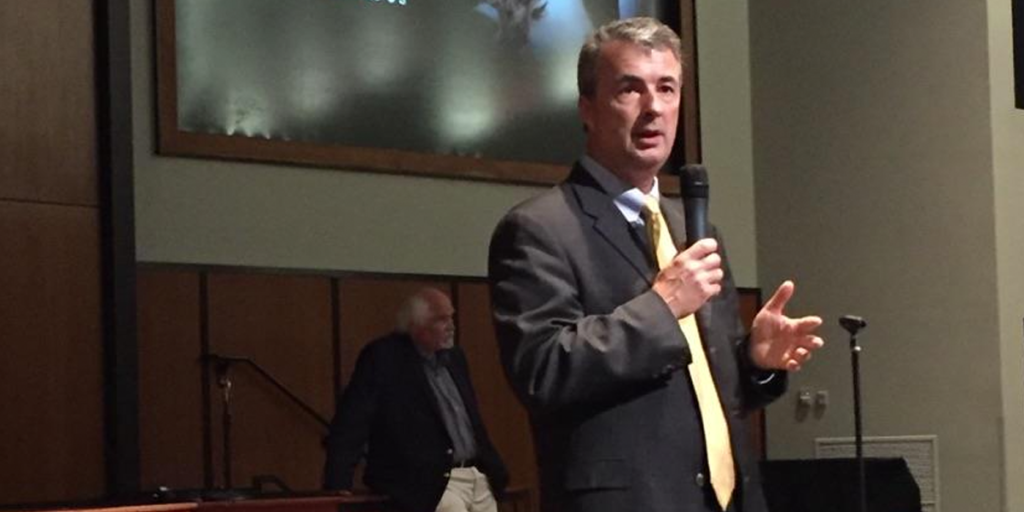
Attorney General Steve Marshall is celebrating a victory today in the lawsuit he filed against the Biden Administration in early November. On Tuesday a Louisiana U.S. district judge blocked a federal COVID-19 vaccine mandate for health care workers, The Advertiser reported. The mandate requires America’s healthcare workers to be vaccinated against COVID-19 or lose their jobs. Marshall joined attorneys general from Louisiana, Montana, Arizona, Georgia, Idaho, Indiana, Kentucky, Mississippi, Ohio, Oklahoma, South Carolina, Utah, and West Virginia. The U.S. District Court for the Western District of Louisiana granted a motion for a preliminary injunction halting the vaccine mandate issued on November 4 through the Center for Medicare and Medicaid Services (CMS). Judge Terry A. Doughty declared that the Biden administration lacked the constitutional authority to issue such a broad decree. Doughty wrote, “If the separation of powers meant anything to the Constitutional framers, it meant that the three necessary ingredients to deprive a person of liberty or property—the power to make rules, to enforce them, and to judge their violations—could never fall into the same hands. If the Executive branch is allowed to usurp the power of the Legislative branch to make laws, two of the three powers conferred by the Constitution would be in the same hands.” Doughty continued, “If human nature and history teach anything, it is that civil liberties face grave risks when governments proclaim indefinite states of emergency. During a pandemic such as this one, it is even more important to safeguard the separation of powers set forth in our Constitution to avoid erosion of our liberties.” Marshall stated in a press release, “President Biden has abandoned persuasion for brute force in launching an unprecedented series of federal mandates aimed at compelling most of the adult population of the United States to get a COVID-19 vaccine, but his unlawful, unconstitutional, and un-American decrees are being met head-on in court by the force of law.” Marshall added, “Each of the Biden administration mandates has distinct and severe legal deficiencies that warrant distinct and severe responses from the states. This is about so much more than vaccines. It’s about planting a flag to say that enough is enough. The federal government’s power is not boundless, but if we are not vigilant to fight here and now, there will be no going back.”
Montgomery faces fine, lawsuit for dropping Confederate name
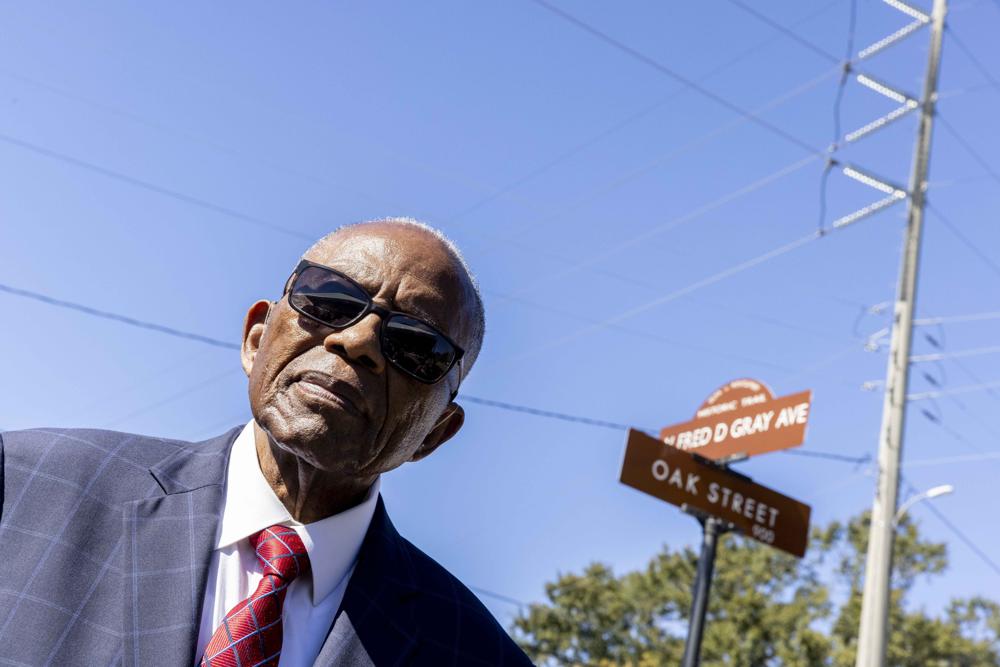
Alabama’s capital city last month removed the Confederate president’s name from an avenue and renamed it after a lawyer known for his work during the civil rights movement. Now the state attorney general says the city must pay a fine or face a lawsuit for violating a state law protecting Confederate monuments and other longstanding memorials. Montgomery last month changed the name of Jeff Davis Avenue to Fred D. Gray Avenue. Gray, who grew up on that same street, represented Rosa Parks and others in cases that fought Deep South segregation practices and was dubbed by Martin Luther King Jr. as “the chief counsel for the protest movement.” The Alabama attorney general’s office sent a Nov. 5 letter to Montgomery officials saying the city must pay a $25,000 fine by Dec. 8, “otherwise, the attorney general will file suit on behalf of the state.” Montgomery Mayor Steven Reed said changing the name was the right thing to do. “It was important that we show, not only our residents here, but people from afar that this is a new Montgomery,” Reed, the city’s first Black mayor said in a telephone interview. It was Reed’s suggestion to rename the street after Gray. “We want to honor those heroes that have fought to make this union as perfect as it can be. When I see a lot of the Confederate symbols that we have in the city, it sends a message that we are focused on the lost cause as opposed to those things that bring us together under the Stars and Stripes.” The Alabama Memorial Preservation Act forbids the removal or alteration of monuments and memorials — including a memorial street or memorial building — that have stood for more than 40 years. While the law does not specifically mention memorials to the Confederacy, lawmakers approved the measure in 2017 as some cities began taking down Confederate monuments. Violations carry a $25,000 fine. Mike Lewis, a spokesman for Alabama Attorney General Steve Marshall, declined to comment on the letter to the city. This is the first time the law is being used regarding a street name change, he said. The all-Republican Alabama Supreme Court in 2019 reversed a circuit judge’s ruling that declared the law an unconstitutional violation of the free speech rights of local communities. Reed said they knew this was a possibility when the city renamed the street. Donors from across the country have offered to pay the fine for the city. He said they are also considering taking the matter to court. “The other question we have to answer is: Should we pay the fine when we see it as an unjust law?” Reed said. “We’re certainly considering taking the matter to court because it takes away home rule for municipalities.” Alabama’s capital city is sometimes referred to as the “Cradle of the Confederacy” because it is where representatives of states met in 1861 to form the Confederacy, and the city served as the first Confederate capital. The city also played a key role in the civil rights movement — including the Montgomery Bus Boycott. The Montgomery County school system has voted to rename high schools named for Davis and Confederate General Robert E. Lee — although the names have not yet been changed. Several cities have just opted to take down Confederate monuments and pay the $25,000 fine. The state recently collected a $25,000 fine after suing officials in Huntsville, where the county removed a Confederate memorial outside the county courthouse last year. Marshall last year issued a video message chiding local officials that they are breaking the law with monument removals. Republished with the permission of the Associated Press.
