
Steve Marshall qualifies for Alabama Attorney General race
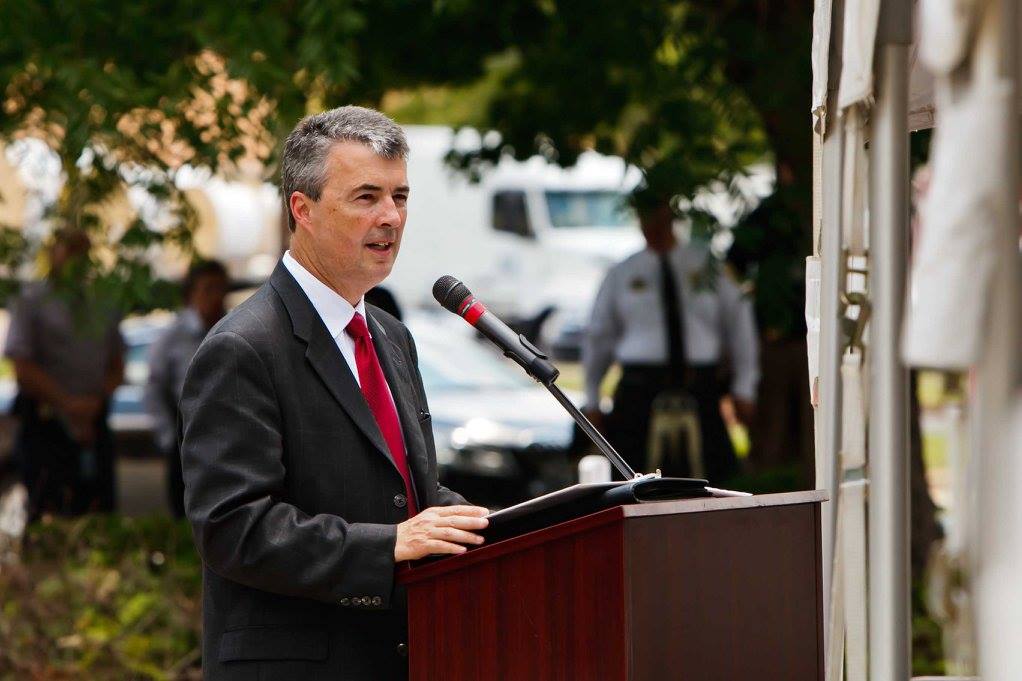
Alabama Attorney General Steve Marshall officially qualified to run for the office Attorney General on Friday. Marshall was appointed in February 2017 by then governor Robert Bentley to replace Luther Strange as Attorney General. “I want Alabama to know that the office of Attorney General will not shy away from any challenges, and will be on the forefront of the major issues that continue to challenge our state,” stated Marshall. According to Marshall’s Facebook, he is looking forward to “four full years standing up for Alabama’s values, solving the opioid crisis, defending faith, fighting federal overreach, and supporting the rights of everyone (including the unborn).” He has also expressed interest in fighting violent crime and human trafficking. Marshal served as district attorney in Marshall County Ala. for 16 years. He built a strong reputation of fighting crime and was instrumental in the passage of state legislation to track the sale of ingredients used to produce crystal meth. Marshall also took a lead role supporting the passage of the Brody Act which has made it possible to prosecute criminals for two crimes if they kill or injure an unborn baby during an attack on the mother. Marshall also serves as co-chair of Governor Kay Ivey’s Opioid Overdose and Addiction Council. Steve and his wife, Bridgette, have a daughter named Faith and currently reside in Albertville, Ala.
AG Steve Marshall investigates Alabama lawmakers’ campaign finances

The Alabama Attorney General Steve Marshall‘s office is investigating the campaign finances of several current and former state lawmakers, according to AL.com’s Kyle Whitmire. This week current and former Alabama lawmakers have received subpoenas from the AG’s office asking them to produce documentation verifying the campaign finance reports they’ve filed in the past are accurate. The investigation comes on the heels of several lawmakers being found guilty of misusing campaign accounts. Including Decatur-Republican and former State Rep. Micky Hamon. In September, Hamon plead guilty on felony charges Monday to devising a scheme to commit mail fraud involving his campaign funds. As a result of pleading guilty to a felony, Hammon was automatically removed from his House seat. According to court documents, Hammon, who had represented the 4th district in the Alabama House since 2002, used campaign money to pay his own personal expenses as part of the scheme. Hammon wasn’t the only lawmaker who spurred the investigation. Former state Rep. Oliver Robinson, who also pleaded guilty last September for bribery, four counts of fraud and tax evasion. Under Alabama law, candidates are are split into two groups: those who have reached the $1,000 threshold and those who have not. Those who have not reached that threshold are not required to file any campaign finance reports until they reach the threshold. Candidates who have exceeded the $1,000 threshold must report all contributions from a single source and all expenditures to a single recipient greater than $100. Up until now, the state has not looked into whether or not officials are itemizing their expenses greater than $100. According to AL.com Alabama Secretary of State John Merrill confirmed that his office has been assisting a state investigation of lawmakers’ campaign accounts. “They have contacted us over a period of months for information to help them in an investigation of expenditures they wanted more information on,” Merrill said. The Attorney General’s office has a standing policy to not comment on ongoing investigations.
State health officials announce Opioid Council report, action plan to fight addiction

A council tasked with fighting opioid addiction in Alabama released its first formal report of its findings along with an action plan on Wednesday. The Alabama Opioid Overdose and Addiction Council, created by Gov. Kay Ivey in August, and its subcommittees have met several times over the past six months to develop the strategic plan “that establishes recommendations for policy, regulatory and legislative actions to address the overdose crisis in Alabama.” “I am thankful for the hard work of the Opioid Overdose and Addiction Council. We must find a solution to the opioid crisis in our state, as this epidemic is literally tearing families apart,” said Ivey. “I look forward to working with the Council and the Legislature to consider these recommendations and to make meaningful reforms which will help us address this problem once and for all.” The council is overseen by Mental Health Commissioner Lynn Beshear, as well as her co-chairs, Attorney General Steve Marshall and Acting State Health Officer Dr. Scott Harris. Beshear said the next step in the plan is to convene the implementation team and to continue to meet quarterly. “Families, healthcare professionals and government officials at every level seek real solutions concerning the impact the opioid crisis has on Alabamians,” said Lynn Beshear, Commissioner, Alabama Department of Mental Health. “The next step in our effort will convene the Implementation Team of the Alabama Opioid Overdose and Addiction Council, as well as quarterly meetings of the full Council to implement researched opportunities. We believe the work of the Council offers preventive strategies, intervention and treatment options, and a community response that addresses this dire need. Working together, it will require organized sustained engagement of citizens and government with healthcare professionals.” According to data from the Centers for Disease Control and Prevention, of Alabama’s 736 reported drug overdose deaths in 2015, 282 were caused by opioids. The data also shows that Alabama doctors in 2012 wrote 1.43 prescriptions for opioid pain relievers per person — a rate higher than any other state. “Opioid addiction and abuse is a tremendous problem that affects Alabama in many different ways. Our hospitals, schools, churches and prisons are all struggling to deal with the problems caused by addiction and by increasing numbers of opioid deaths,” asserted Harris. He continued, “The comprehensive action plan the Council has developed includes improvements to the Alabama Prescription Drug Monitoring Program that make it easier for prescribers to identify opioid abuse and to motivate abusers to find help for themselves, their families and communities. We are encouraged that the Council has offered strategies that have the potential to reverse this crisis that affects so many Alabamians, and appreciate the input of so many individuals to find effective solutions.” “After working with the dedicated people who have given so much of their time and concern to this Council and its subcommittees, I am heartened that we can make progress to fight the terrible blight of opioid abuse in Alabama,” added Attorney General Steve Marshall. The Council’s report presents a four-pronged action plan to address prevention of opioid misuse, intervention within the law enforcement and justice systems, treatment of those with opioid use disorders, and community response that engages the people of Alabama in finding solutions at a local level. Some of the major findings are summarized below: PREVENTION Improve and modernize the Alabama Prescription Drug Monitoring Program so that it will be more user-friendly, and more prescribers will participate and be better informed; the Governor is requested to support a legislative appropriation of $1.1 million to the Alabama Department of Public Health for this; Strengthen prescription data and research capabilities and create a unique identifier for each individual patient; Promote efforts to educate current and future prescribers, better implement current guidelines, adopt guidelines specific to opioid prescribing and impose mandatory opioid prescribing education; Create a website and messaging campaign to reduce the stigma of opioid addiction; and implement an outreach program to teach young people the dangers and to avoid opioids; Create a website and social media campaign to motivate opioid abusers to seek help and to effectively connect them and family members with ways to get help; Create a partnership for the Alabama Department of Mental Health to provide training about addiction to law enforcement agencies and the judiciary. INTERVENTION Advocate legislation in the 2018 session to specifically prohibit trafficking in fentanyl and carfentanil, which is particularly important because vastly smaller amounts of these than other opioids can be deadly; for example, a lethal dose of fentanyl is 1000 times less than that of heroin, and the threshold amounts for the crimes of trafficking in fentanyl and carfentanil would better be measured in micrograms; As overdoses are 50 times greater for those leaving incarceration or other enforced abstinence, establish a process for the Department of Mental Health to reduce the stigma of medication assisted treatment, and begin a pilot program by the Department of Corrections in partnership with the Board of Pardons and Paroles to use naloxone, counseling and life skills to help released inmates remain drug free. TREATMENT AND RECOVERY Promote adequate funding for treatment services and recovery support; Establish collaboration between the Department of Mental Health and recovery support providers to increase access; Support creating two addiction medicine fellowships to train Alabama physicians to recognize and treat substance abuse; Expand access and target effective treatment and prevention programs to areas where there is greater need; Improve education of professionals through continuing education for licensing and expand postsecondary and graduate curriculums. COMMUNITY RESPONSE Increase access to naloxone and maintain a list of participating pharmacies; Prioritize naloxone to law enforcement and for distribution in areas of greatest need; Provide naloxone training for first-responders; Encourage prescribing naloxone for high-risk patients; Have a Community Anti-Drug Coalitions of America program in each judicial circuit and work toward having them at municipal levels; Engage employers, businesses, higher education and private-sector in a network to get resources into communities; Encourage having a Stepping Up Initiative in each county to work with the
AG Steve Marshall warns of Spanish-language scam

Would-be criminals have added a new wrinkle in a long-running scam regarding payment of bills: a second language. The basic deception has remained constant for years – getting an unsuspecting customer to deliver payment to a utility through an untraceable money-pack card. The caller demands payment within a very short time frame, threatening to turn off the power. The call may even spoof the correct name and phone number on the caller ID. But now they are calling Hispanic-owned businesses, and making their threat in Spanish. A recent wave of those Spanish-language calls has prompted Alabama’s attorney general to issue a warning. “Scammers posing as bill collectors are unfortunately very common in Alabama,” said Attorney General Steve Marshall. “These scams take many forms, from claiming to be from the IRS, local law enforcement and even the Attorney General’s Office. In this latest case, the scammers say they are from Alabama Power.” Sometimes, the calls focus on residential customers. This most recent batch of complaints have come from small companies and restaurants, which can be manipulated into giving in for fear of losing business at the last minute. “The best way to handle these calls is to hang up and alert law enforcement,” Marshall said. These crooks typically work from overseas, and target certain area codes for a brief time before moving on. Alabama Power is one of many utilities across North America that have formed an organization to educate customers and lobby for help to prosecute. Utilities United Against Scams has a downloadable resource available to help, called the Consumer’s Guide to Impostor Utility Scams. “Alabama Power will never call you and say your service will be discontinued unless you make an immediate payment over the phone,” said Customer Service Center Manager Tim Bowen. “No employee will ever call and ask you for bank information or a credit card number. No Alabama Power employee will ever come to your door and demand an immediate payment.” Signs of potential scam activity include: Scammers may aggressively tell the customer the utility bill is past due and service will be disconnected if a payment is not made – usually within less than an hour. Scammers may instruct the customer to purchase a prepaid card – widely available at retail stores – then call back, supposedly to make a bill payment to the utility company. When the customer calls back, the caller asks the customer for the prepaid card’s number, which grants the scammer instant access to the card funds. Ways to avoid scams include: Customers should never purchase a prepaid card to avoid service disconnection or shutoff. Legitimate utility companies do not specify how customers should make a bill payment, and will always offer ways to pay a bill, including accepting payments online, by phone, automatic bank draft, mail or in person. If someone threatens immediate disconnection or shutoff of service, customers should hang up the phone, delete the email or shut their door. Customers with delinquent accounts receive advance disconnection notification, typically by mail and included with their regular monthly bill. Companies never send a single notification one hour or less before disconnection. If customers suspect someone is trying to scam them, they should call their utility company at the number on their monthly bill or the company’s website, not the phone number the scammer provides. If customers ever feel that they are in physical danger, they should call 911. Republished with permission from the Alabama NewsCenter.
Federal judge dismisses challenge to Alabama voter ID law
A federal judge has dismissed a lawsuit challenging the constitutionality of Alabama’s voter ID law. U.S. District Judge L. Scott Coogler on Wednesday rejected arguments — by the Greater Birmingham Ministries and the Alabama NAACP — that requiring a photo ID to vote is racial discrimination, denies equal protection and violates the Voting Rights Act, as well as the Fourteenth and Fifteenth Amendments of the U.S. Constitution. The groups had filed a lawsuit against Alabama Secretary of State John Merrill among other former state officials over a 2011 law, House Bill 19, which requires absentee and in-person voters to show photo identification in order to cast a ballot. The suit contended the law had disenfranchised some 280,000 voters and threatened hundreds of thousands more. Judge Coogler noted in his order that it is easy for anyone to get a photo in ID in Alabama, thus the law is not discriminatory. “…A person who does not have a photo ID today is not prevented from voting if he or she can easily get one, and it is so easy to get a photo ID in Alabama, no on is prevented from voting,” Coogler wrote in the order. He also determined “minorities do not have less opportunity to vote under Alabama Photo ID law because everyone has the same opportunity to obtain an ID.” Alabama’s Republican Attorney General Steve Marshall called the decision to dismiss the suit, the right decision. “Today’s decision to dismiss the lawsuit is without a doubt the right decision,” said Marshall. “Alabama’s voter identification law is one of the broadest in the nation with procedures in place to allow anyone who does not have a photo ID to obtain one.” But NAACP Legal Defense and Education Fund President Sherrilyn Ifill said the group is not giving up and is considering its next steps. “We are deeply disappointed by the judge’s ruling dismissing our case before trial,” said Ifill. “Over the course of two years, we have developed a sound case demonstrating that Alabama’s voter ID law is racially discriminatory. We had hoped to present our full case at trial next month. We have no intention of abandoning our commitment to protecting the rights of African-American voters in Alabama, and we are considering our next steps.” View the full court order below:
Steve Marshall appoints new director of Alabama Dept. of Forensic Sciences
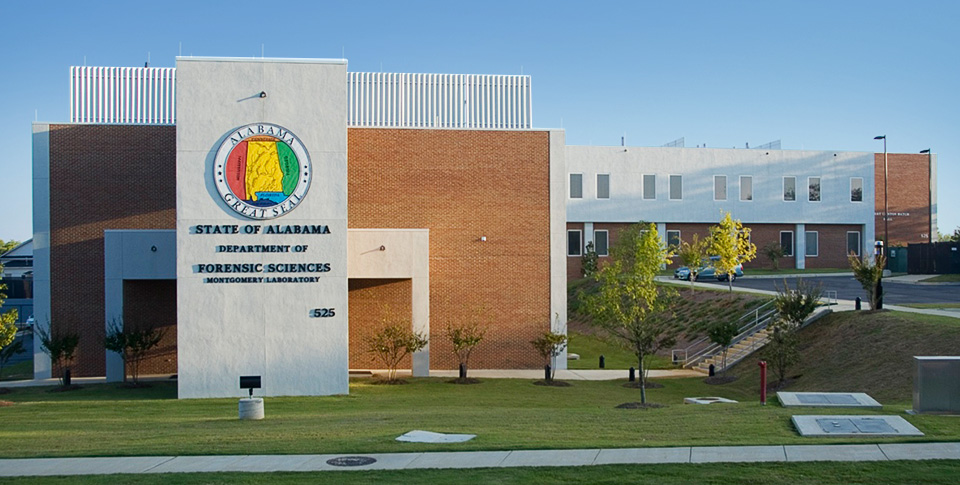
Attorney General Steve Marshall announced on Wednesday the appointment of Angelo Della Manna, of Hoover, Ala., to become director of the Alabama Department of Forensic Sciences (ADFS). Among his official duties, the ADFS director oversees the State’s forensic sciences program, directs the work of agency investigative, scientific and medical personnel at the central office location as well as field offices and labs throughout the state, and is responsible for the overall comprehensive and technical training program for all agency staff. “It is a pleasure to announce the appointment of Angelo Della Manna as director of the Alabama Department of Forensic Sciences,” said Marshall. “Angelo brings to the position considerable experience and leadership as both a veteran of the Alabama Department of Forensic Sciences and a nationally recognized authority in the field of forensic science. His extensive background in the Department of Forensic Sciences will ensure that the vital laboratory and death investigation services provided to state and local law enforcement will continue to be of the highest caliber.” Under state law, the Attorney General appoints the director of the ADFS. He was assisted in his appointment by a screening committee, which is subject to final approval by the State Personnel Board and Governor Kay Ivey. Della Manna expressed appreciation at being selected and looked forward to guiding the state forensics professions in their mission. “I am both humbled and excited to be selected by General Marshall as the next leader of one of the premier forensic science agencies in this country,” said Della Manna. “My staff of forensic science professionals and I will remain focused on the critical role we have in the justice system as the only internationally accredited provider of forensic science services in Alabama, as we collectively strive to help make Alabama safer, each and every day.” Della Manna began his service with the ADFS in 1993 where he worked on over 2,000 complex forensic cases ranging from burglary to capital murder, built a national leading forensic DNA program, assisted the Department in achieving International Laboratory Accreditation for the first time in its history, and secured and managed over $25 million in federal grant awards to-date. He was elected to serve on the FBI’s five-person Executive Board for DNA Analysis methods where he helped draft and implement new Standards for the Forensic DNA community. He also served as vice chair of the Biology/DNA Scientific Area Committee of the National Institute of Standards and Technology (NIST) in developing new scientific standards in forensics. Della Manna holds a bachelor of science degree in chemistry from the University of Toronto and a master of science in forensic science from the University of Alabama at Birmingham. Della Manna replaces Director Michael Sparks who is retiring effective December 31, 2017. His appointment is effective Jan. 1, 2018,
AG Steve Marshall joins coalition supporting Mick Mulvaney’s appointment to CFPB
Alabama Attorney General Steve Marshall has joined with four other attorneys general in sending a letter to President Donald Trump and Attorney General Jeff Sessions declaring their confidence in the President’s authority to appoint his budget chief Mick Mulvaney as interim director of the U.S. Consumer Financial Protection Bureau (CFPB). The CFPB, a controversial government agency, was created in the wake of the 2008 financial crisis to “provide a single point of accountability for enforcing consumer financial laws and protecting consumers in the financial marketplace.” Over the weekend, Richard Cordray, an Obama appointee, resigned as director of the agency and attempted to name his deputy as the acting director, setting the stage for both a political and legal battle over the agency’s leadership. The attorneys general explain in their letter that the CFPB’s deputy director may step in to the director’s role in the absence of an appointed director, but the President clearly has the authority to appoint an acting director under federal law and the Constitution. “This illegal power grab by the last vestiges of the Obama administration must be stopped,” Marshall said of Cordray’s attempt to name his own successor. “The people of the United States voted for a President who would fight for the American people, roll back inefficient regulations, and create jobs. That President is Donald Trump, not the Obama-appointed outgoing director of the CFPB.” The attorneys general note that, “The need for efficient administration within the Executive Branch—particularly for an agency like the CFPB whose actions have significant, national consequences—strongly weighs in favor of [a statutory] interpretation that gives the President authority to designate a temporary Acting Director of the CFPB . . . . Indeed, the opposite result would allow an unelected outgoing agency director to choose a temporary successor who may be at odds with the Executive Branch’s understanding of the agency’s mission and statutory mandate—and thereby continue the CFPB’s practice of overreaching regulation that harms the interests of consumers and small financial institutions.” In addition to Marshall, the letter, which was spearheaded by West Virginia Attorney General Patrick Morrisey, was signed by attorneys general from Arkansas, Oklahoma and Texas.
Alabama AG Steve Marshall urges SCOTUS to protect prayer at public meetings

Alabama Attorney General Steve Marshall wants to protect prayer at public meetings. Marshall joined a coalition of 22 states Wednesday urging the U.S. Supreme Court to protect the practice of lawmaker-led prayer at public meetings. “Lawmaker-led prayer is woven into the fabric of American society dating back to the founding of our Republic,” observed Marshall. “Public prayer is both constitutional and a common practice throughout our country. Today more than 35 states and countless local governments permit lawmakers to offer prayer. I share Justice Scalia’s perspective that “to deprive our society of (this) important unifying mechanism…is as senseless in policy as it is unsupported by law.” The effort stems from a case out of Rowan County, N.C. where a lower court ruled the county board of commissioners were not allowed to give brief invocations. The coalition of states filed the friend-of-the-court brief brief calling on the high court to hear arguments in the case of Lund vs. Rowan County and confirm the constitutionality of public prayer led by lawmakers. Such a decision would alleviate confusion among the lower federal courts and strike down a recent ruling in the Fourth Circuit that the Rowan County Board of Commissioners’ practice of opening its public meetings with a commissioner-led prayer violates the Establishment Clause of the First Amendment. The brief notes that state legislatures, including in Alabama, have opened public sessions with lawmaker-led prayer for much of this country’s history. “Both of Alabama’s legislative chambers have allowed members to offer prayers for more than one hundred years. A member of the House of Representatives, for instance, gave the invocation in the state Senate in 1873. And during the 1875 legislative session, Mr. Nelson and Mr. Wilson, members of the House of Representatives, opened House sessions with prayers.” Alabama filed its brief in support of free expression of faith along with West Virginia, Arizona, Arkansas, Colorado, Georgia, Indiana, Kansas, Louisiana, Michigan, Missouri, Montana, Nebraska, Nevada, Ohio, Oklahoma, South Carolina, South Dakota, Texas, Utah, and Wisconsin, along with the Governor of Kentucky. A copy of the brief is available here.
Steve Flowers: the clock is ticking for Steve Marshall to restore faith in the AG’s office
Jefferson County is transitioning from a Republican to a Democratic county. In the process, they are having an interesting array of intriguing political happenings. You may recall that a few months back I wrote about the indictment of the newly elected Jefferson County District Attorney, Charles Todd Henderson, on perjury charges. To say a lot has happened since then would be an understatement. Dr. Robert Bentley has vacated the governor’s office under a scandalous cloud. Lt. Governor Kay Ivey has ascended to governor, and appears to be the favorite to win election to a four-year term of her own in next year’s upcoming elections. We have had a Special Election to fill the remaining three years of Jeff Sessions’s six-year Senate term. Former Governor Bentley’s appointee, former state Attorney General Luther Strange, was overwhelmingly defeated by former state Chief Justice Roy Moore, and the Ten Commandments Judge is poised to become our junior U.S. Senator. Therefore, that brings me back to Henderson. There is a trial beginning next week regarding the Democrat Henderson. Todd Henderson was a police officer and a youth sports coach that put himself through law school later in life and, ultimately, became a lawyer. He is also a lifelong Democrat. Therefore, when he challenged two-term Republican Jefferson County District Attorney Brandon Falls in the 2016 Election, Henderson won. It was simply another referendum on the party power struggle in our most populous county. The District Attorney race, similarly to all of the judicial races, has become a simple partisan straight ticket voting pattern in imperial Jefferson. Henderson won election in a fair and square unquestionable election. The reason Henderson won was because he was a Democrat and Falls was a Republican. Luther Strange being the Republican Attorney General of course took the Republican mantle and began investigating Henderson to find a way to thwart the Democratic takeover of this powerful post of Jefferson County District Attorney. Strange’s office began investigating Henderson on perjury charges only after he was elected the Democratic nominee. Had Henderson lost to Falls that might have been the end of it. Based on research there has never been anyone in Jefferson County indicted, much less convicted of perjury in a divorce case. But Henderson won. So, on January 13, 2017, just three days before Henderson was supposed to take office, Strange indicted him. When a District Attorney gets indicted, he is immediately suspended from office and the presiding local judge gets to pick who’ll replace him while the indictment is pending. Most folks do not know this, but the recently defeated Falls was well aware of this fact. That is why, according to some, Falls showed up at the judge’s office right after the indictment and made a pitch that he be appointed to fill the position. Just think about that. The voters in Jefferson County had rejected him as their DA with their votes, and he is trying to sneak in the back door as soon as he gets the chance. Fortunately for the voters, the judge was having none of it and appointed Henderson’s chief deputy instead. Now the case is headed to trial and the only way Falls or any Republican can get into the DA office is if Henderson gets convicted. That is because a conviction will remove both Henderson and the judge’s appointment from office, giving Governor Ivey, a Republican, the power to appoint whomever she wants and you can bet it will not be a Democrat. The whole mess stinks to high heaven of political motivation and vindictiveness. Our new Attorney General Steve Marshall, who was not a party to the Strange/Bentley scheme, has the chance to end this chicanery now before the trial starts and restore some faith in the office of Attorney General. The clock is ticking. Marshall, who was appointed by Bentley to fill out the remainder of Luther Strange’s term, is running for a full term. The former Marshall County District Attorney is essentially unknown statewide. Currently, former U.S. Attorney Alice Martin and Birmingham lawyer Chess Bedsole are the frontrunners to win next year’s race for Attorney General. However, if former Attorney General Troy King enters the race, he will win in a cakewalk. See you next week. ••• Steve Flowers is Alabama’s leading political columnist. His weekly column appears in over 60 Alabama newspapers. He served 16 years in the state legislature. Steve may be reached at www.steveflowers.us.
AG Steve Marshall leads fight to keep cross at Pensacola park

Alabama Attorney General Steve Marshall on Tuesday led a coalition of 14 state attorneys general in filing a friend of the court brief supporting the City of Pensacola, Florida’s, right to keep a historic cross on display in a public park. Marshall’s filing was in response to the well-known Bayview Cross in a Pensacola public park that was ordered to be taken down this summer following a controversial ruling where a federal judge decided in favor of a group of people who sued the city who claimed the cross is offensive. In June, federal judge Roger Vinson wrote a 23-page order explaining why he, reluctantly, ruled for the cross to be removed. “After about 75 years, the Bayview Cross can no longer stand as a permanent fixture on city-owned property,” Vinson wrote in his ruling. “I am aware that there is a lot of support in Pensacola to keep the cross as is, and I understand and respect that point of view. But, the law is the law.” He added, “Count me among those who hope the Supreme Court will one day revisit and reconsider its Establishment Clause jurisprudence, but my duty is to enforce the law as it now stands.” The City of Pensacola has since appealed the decision. Marshall’s brief was filed with the 11th U.S. Circuit Court of Appeals in support of the appeal. “The large cross in Pensacola’s Bayview Park is a local landmark dating back more than seven decades,” said Marshall. “The cross is woven into the fabric of Pensacola’s history and its presence in a public park does not violate the First Amendment’s prohibition of the establishment of religion, as opponents have claimed. To continue down the road of the lower court’s reasoning would open the door to challenges of religious symbols on thousands of monuments and memorials on public property across the country.” The 34-foot-tall white concrete cross has stood in the popular Bayview park since 1969, The city spends roughly $233 a year, which comes out to about 0.03 percent of the city’s annual maintenance budget to keep it cleaned, painted, and illuminated at night. On Wednesday, Pensacola Mayor Ashton Hayward wrote an op-ed in the Washington Examiner explaining, the cross has “become a community gathering place, an integral part of my town’s fabric, a symbol to our local citizens — religious and non-religious — of our proud history of coming together during hard times.” According to a press release, Marshall’s brief in the case asserts that the lower federal court ruling against the display of the cross ignores legal precedent protecting the display of historical monuments, including religious symbols, on public property. “States, counties, and municipalities have historically included, or allowed private parties to include, religious texts and symbols on monuments and other displays on public property. The amici States have an interest in maintaining that practice, consistent with a proper understanding of the Establishment Clause,” the brief stated. Alabama was joined by Florida, Georgia, Indiana, Kansas, Louisiana, Missouri, Nebraska, Nevada, North Dakota, Ohio, Oklahoma, South Carolina and Utah in filing the brief.
Steve Marshall announces support for state laws banning sanctuary cities
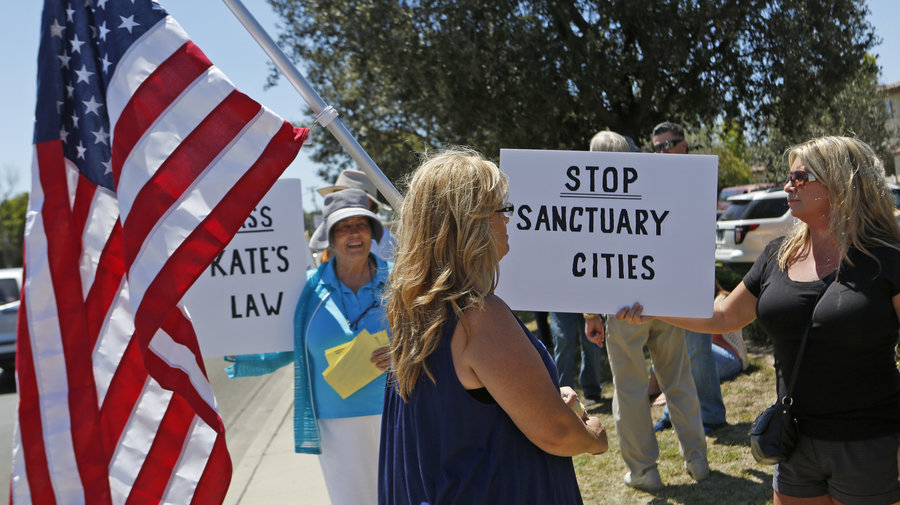
Alabama Attorney General Steve Marshall says he is supporting states’ rights to prohibit sanctuary cities. Marshall joined a coalition of eight state attorneys general in supporting state laws banning sanctuary cities. On Tuesday, Alabama signed onto a multi-state amicus brief siding with Texas as it appeals a federal court ruling blocking the state’s sanctuary cities ban. “When local officials deliberately choose to ignore the law and thereby place their citizens at risk, the result is a breakdown in the rule of law,” said Marshall. “This is precisely what we are witnessing with sanctuary cities and localities which prohibit or impede cooperation between federal and local officials on immigration enforcement. Alabama supports Texas’ sanctuary cities ban because we believe individual states should have the right to prohibit sanctuary cities within their borders.” The eight-state amicus brief opposes a federal court injunction of Texas’s ban on sanctuary cities. Texas law requires local entities and officials to not interfere with federal immigration enforcement. It also places duties and liabilities on certain persons in the criminal justice system, provides civil penalties and creates a criminal offense for violating those provisions. In June, Alabama was also one of ten states defending President Trump’s executive order that directs the federal government to take lawful actions to ensure compliance with laws prohibiting sanctuary cities. Alabama filed the brief with along with Arkansas, Georgia, Louisiana, Missouri, Oklahoma, South Carolina and West Virginia in the U.S. Fifth Circuit Court of Appeals Tuesday evening.
Florida woman guilty of Alabama credit card skimming

A Florida woman was found guilty of helping to orchestrate a multi-state scheme to use skimming devices on gas pumps to steal credit and debit card numbers, Alabama Attorney General Steve Marshall announced Tuesday. Eunises Llorca-Menses, 30, of Naples, Fla. was found guilty by a federal jury Friday on charges of conspiracy to commit wire fraud, wire fraud, and aggravated identity theft in January. She faces a maximum sentence of 30 years in prison. “This conviction should send a strong message to debit card skimmers seeking to target unsuspecting Alabamians: you will be caught and brought to justice,” Marshall said in a statement. On February 15, 2017, Llorca Menses and her co-defendant Reiner Perez-Rives were charged. Perez-Rives pled guilty in July to conspiracy and identity theft charges. As part of the scheme, Llorca-Menses and Perez-Rives, would rent vehicles and travel between Florida, Alabama, Tennessee and Virginia. During their travels, they would visit several gas stations and install a skimming device inside gas pumps. Through the skimming device, they collected gas station customers’ credit/debit card information and used that information to activate or reactivate credit, debit, or gift cards, and make unauthorized ATM cash withdrawals at gas stations and purchases at several places around the Southeast. Law enforcement officials uncovered the elaborate scheme following multiple reports from victims concerning the unauthorized use of their debit cards. Working with financial institutions, the Ozark Police Department, along with state and federal partners, discovered that many of the victims had used their cards at the same gas station in Ozark, Ala. At this station, they found a skimming device with Bluetooth capability installed on a gas pump. The Bluetooth technology allowed the defendants to collect a gas customer’s credit/debit information while sitting up to thirty-feet away from the gas pump. At the time of their arrest on December 21, 2016, Llorca-Meneses and Peres-Rives were found to be in possession of thirty-nine credit/debit cards that had been re-encoded with stolen credit/debit card numbers, along with an additional 317 gift cards. A Wal-Mart gift card that contained the stolen account information from a victim’s Capital One credit card and a key used to gain access to the inside of a gas pump was found in Llorca-Meneses’ purse. Law enforcement also found a homemade device with connectors that matched the connections on the skimming device found in the gas pump in Ozark in their luggage. “It is incredibly difficult for the average person to determine if a gas pump has a skimmer,” stated Acting U.S for the Middle District of Alabama A. Clark Morris. “This is because many are placed inside the gas pump with no visible evidence of tampering. While the crooks may be getting smarter, law enforcement continues to work hard to stay a step ahead. This conviction shows that our office will continue to work with our partners to identify criminals that seek to victimize our citizens.” To avoid becoming a victim of this type of fraud, customers should pay inside the store or use pumps that are visible to store employees and video surveillance cameras. Criminals commonly target pumps that allow them to install skimming devices undetected. This case was a joint investigation involving the Ozark Police Department, the Alabama Attorney General’s Office, the United States Secret Service, and the Baldwin County Sheriff’s Office. Assistant United States Attorney Denise O. Simpson and Assistant United States Attorney Steven Lee prosecuted this case.
