Taylor Dawson: Three reasons why you should care about occupational licensing reform

During my years working in public policy, there have been a handful of issues that have gotten me fired up. Typically when I tell people about them, they have some level of understanding—a state lottery, education and school choice, taxes and budgets, things like that. These days, when I’m asked about the issue I most care about and I say “occupational licensing reform,” I’m often met with blank stares. Once I start explaining the issue, however, people start to understand why it is so important, not just to me, but to all Alabamians. In an effort to prevent more blank stares, here are a few reasons why you should care about occupational licensing reform in Alabama. 1. The costs of licensing end up on the consumer. Think about it—if you have to pay thousands of dollars in educational costs, plus hundreds of dollars in licensing fees to the state, just to do your job, are you going to assume those costs? Of course not! Those fees will be passed on to the consumer of whatever product or service that you are selling. Selfishly, as a consumer—and a frugal one at that—the thought of incurring the cost of someone’s state-issued license is pretty infuriating. Of course, I acknowledge that in certain cases—medical services, for example—there is consumer protection offered by a license that I find to be valuable. In many cases, however, a license does not dictate whether or not someone is qualified to do their job. The beauty of the free market is that if I go to a manicurist, for example, and they do not do a good job, all I have to worry about is a bad manicure. I never have to go back. 2. Individuals shouldn’t have to get permission from the government to do a job that they are trained to do. Sometimes I wonder, “if I had to pay for a license to do my job, would I be doing my job?” Thankfully, that’s a question I’ve never had to ask. I went to college, received a degree in political science and, based on my credentials and experience, was determined to be a good candidate for my job. No license required. In my time talking to folks about this issue, I’ve heard from countless workers who have expressed disdain with the licensing process. Their main complaint is that they’ve already jumped through hoops to become educated for the job, whether that’s through formal education or work experience. A state-issued license, quite frankly, means nothing to me compared to education and job experience. 3. Occupational licensing laws may impede Alabama’s workforce development. A recent study by the Alabama Policy Institute shows that over twenty-one percent of Alabama’s workforce is licensed. The same report estimates that the total initial cost of licensing, excluding educational costs and yearly renewal costs, to be $122 million. If I am looking to get into a licensed field in Alabama, these costs are going to be a major deterrent. Barriers to entry established by occupational licensing laws are shown to disproportionately impact disadvantaged groups in Alabama—the poor, minorities, military families, and people with a record. Alabama took one step toward a solution this year, with the passage and signing of the Military Family Jobs Opportunity Act, which will significantly ease the burden of licensing on military families who have received occupational licenses in other states. Nevertheless, in order to improve economic mobility for Alabama families, there are still changes that need to be made. Here’s what I’m getting at: whether or not you are in a licensed occupation, you should care about occupational licensing reform. As consumers, we should question having to pay more for certain goods and services due to the costs of a license—especially those that have little or nothing to do with public health and safety. As empathetic Alabamians, the idea that the state often forces people to pay for a permission slip to work should inspire us to demand change. Lastly, as voters during a campaign season focused on job growth, we should call on and expect our leaders to carefully examine the burdens of occupational licensing on Alabama’s families. ••• Taylor Dawson is Director of Communications for the Alabama Policy Institute (API). API is an independent, nonpartisan, nonprofit research and educational organization dedicated to strengthening free enterprise, defending limited government, and championing strong families. If you would like to speak with the author, please e-mail communications@alabamapolicy.org or call (205) 870-9900.
Taylor Dawson: What does freedom mean to me?

When most of us think about the Fourth of July, we think about pool parties, cooking out, fireworks, and spending time with friends and family. Others think about our love for America. Some of us even wait all year for an occasion to wear a t-shirt that has the Declaration of Independence printed on it. Is that just me? I can’t hide it—I’m a huge fan of the Declaration of Independence. Almost every time I’ve visited Washington D.C., even if it’s only for a weekend, I make time to visit the National Archives just to see it. It’s not changing, but I still can hardly make it longer than a year without looking at it. When you look at the Declaration of Independence, one of the things you may notice is that most of the text is written in a script that is barely legible. A few words, however, are written in a script that is much clearer and easier to read. Three of those words are “free and independent.” America’s founders risked their lives to create a nation where citizens could truly be “free and independent”. As children, a lot of us learned—when we were told we couldn’t do something—just to say, “it’s a free country! I can do whatever I want!” While that didn’t get me anywhere most of the time, aside from being swiftly sent to my room when I said it to the wrong audience, I’m glad I learned that phrase. I’m glad I grew up declaring that freedom was at the core of my country’s values, whether or not I realized that was what I was doing. So now, as a millennial in the political sphere, I find myself thinking, “what does freedom really mean to me?” Freedom, to me, means the ability to think, speak, worship, work, and make decisions for myself with minimal—if any—government interference. That’s how the founders set up our republic. As a woman, I’m told I have to support certain movements. As a millennial, I’m told I have to vote a certain way. But as an American, I know that I have the freedom to say what I want, believe what I choose, and vote for who and what I think is best, whether others agree with me or not. In some ways, it seems like freedom is losing these days. I sometimes find myself afraid to speak freely out of fear of being shouted down for my opinions. Sure, my freedom to express myself is being respected by the government, and I absolutely respect the freedom of others to disagree with me. But when we see things like Kanye West speaking positively about President Trump on Twitter and causing a media firestorm, or college students and professors being shut down for expressing their opinions, it can be disheartening. While the media and social media often make it look like much of the country is trending toward a departure from freedom, the fight for freedom is going strong. For example, just last week, the United States Supreme Court handed down two decisions that decisively upheld the First Amendment. The decision in Janus v. AFSCME restored free speech rights to millions of government workers, and in NIFLA v. Becerra, the Court ruled that California could not require pro-life pregnancy centers to promote state-provided abortion services to their clients. Additionally, earlier this year right here in our own state, the Foundation for Individual Rights in Education gave Auburn University its highest rating for free speech policies on college campuses. It may seem like freedom is being threatened in America, but in reality, freedom is on the move. Do not get discouraged, as I all too often do. This Fourth of July, embrace the freedom given to us by the founders. Many men and women have fought hard to preserve it. That is why the Alabama Policy Institute exists—to defend and promote your freedom. You have my word that for as long as we can, we will fight for freedom in America and in Alabama. ••• Taylor Dawson is Director of Communications at the Alabama Policy Institute (API). API is an independent, nonpartisan, nonprofit research and educational organization dedicated to strengthening free enterprise, defending limited government, and championing strong families. If you would like to speak with the author, please e-mail communications@alabamapolicy.org or call (205) 870-9900.
Taylor Dawson: Calling all candidates – let’s talk education

You spoke, Alabama. We asked, what issues are important to you and what questions would you ask of your candidates to answer? Since last week was National School Choice Week, let’s explore questions on promoting education and supporting Alabama’s school children. And it probably won’t come as much of a surprise—Alabamians are very vocal on these issues. Here are a few questions posed by our readers, and some background information for candidates to consider when responding. What are your thoughts on school choice? Historically, Alabama has been slow to embrace school choice. The fight for Alabama’s very first piece of school choice legislation, the Alabama Accountability Act in 2013, was one for the ages. When charter schools were authorized within the first few weeks of the legislative session in 2015, I thought that Alabama was finally embracing school choice, until last session when changes to broaden the AAA suffered a massive defeat. If elected, would you support efforts to broaden school choice opportunities for Alabama families? An innovative way other states are allowing parents to have more choice over their child’s education is through Education Savings Accounts (ESAs). Are you a proponent of ESAs? A brief explanation for those who don’t know what ESAs are: ESAs are private accounts managed by the parents of students for use on their child’s education expenses. Under ESAs, funds that the state would spend on a child at their discretion are now up to the parents’ discretion. Do you agree that Alabama should empower families to customize their children’s education based on their specific needs? An Obama-era policy that’s been largely rejected in Alabama is common core standards. What is your opinion on common core? A policy that would allow the federal government to tell our teachers how and what they’re to teach our schoolchildren has been a hot issue in Alabama since it was introduced. A percentage of Alabama’s current system of standards—“College and Career Ready Standards”—are based on common core. There have been multiple attempts to shake these standards, whether through revising them or bucking them completely to revert to the previous standards. Would you encourage action on these standards? The current Secretary of the U.S. Department of Education Betsy DeVos is a proponent of localizing education as much as possible in an effort to give parents more choice. Do you agree? It’s a common opinion among school choice advocates that parents—not government—should determine the best course for their child’s education. In a speech at Harvard University, Secretary DeVos said, “The future of choice does not begin with a new federal mandate from Washington.” One way to allow localities to take ownership of education is through charter schools, which have a proven record of success nationwide and help reduce barriers to school choice. What would you do to encourage local innovation in education and promote growth of charter schools in Alabama? Last year, the Alabama School Board was surrounded by controversy, and they have nobody to blame but themselves. How would you institute accountability with the board? Alabama’s most recent state superintendent held his office for a year before the education establishment forced him out. Under the previous superintendent’s administration, Alabama’s graduation rates were deemed inflated and misreported by federal officials. Throughout the entirety of 2017, the Board seemed to play politics more than they actually made strides for Alabama education. Seemingly as a result of that, two bills have been filed this year to restructure the school board. What would you do to ensure that the board is working for the children? I think we can all agree that we would like to hear from our candidates. In my conversations with candidates this year, I’m going to be asking these questions, and I hope that you will, too. What do you want to talk about next? Let us know on Facebook or Twitter using the hashtag #CandidateCall, or e-mail me at communications@alabamapolicy.org. ••• Taylor Dawson is Director of Communications for the Alabama Policy Institute (API). API is an independent, nonpartisan, nonprofit research and educational organization dedicated to strengthening free enterprise, defending limited government, and championing strong families. If you would like to speak with the author, please e-mail communications@alabamapolicy.org or call (205) 870-9900.
Taylor Dawson: What do you want to hear from your candidates?
Most of the talk I’ve heard this legislative session has been preceded with “well, you know it’s an election year. . .” as if to indicate that we shouldn’t expect too much from our lawmakers in 2018. Rather, our expectations for our elected officials in 2018 should be just as high as usual, if not higher. Many of our elected officials are running for reelection for their current office or entering an election for a new office, and four years have passed since the last time most of them were elected. Before we cast our ballot, it is important for each of us to understand how our candidates will view the issues put before them during their term. API is prepared to ask the tough questions, and we want to know what you will be asking too. Over the course of the next few months through our “Candidate Call” series, we’ll be exploring topics from good governance and fiscal responsibility to education and protections under the first amendment. And we will be proposing questions to candidates on those issues. Here are a few examples of the questions we will be asking. What foundational principles will shape how they will govern and consider policy decisions if they are elected? Hundreds of bills on a wide array of policy issues are introduced each year. While the issues may change, the lens of principle through which we see these issues should not. API views each issue through a lens of strengthening free markets, defending limited government, and championing strong families. How will your candidate use their core convictions to make decisions? What do the candidates think is the best way to see Alabama rise in national education rankings? As I’ve said before, education is one of the most important things our state can give to its schoolchildren. We need candidates who are willing to stand for all students and not be swayed by the direction of the political wind of the moment. Do they support efforts to increase school choice? Will they hold the state school board accountable? How would members of the executive branch work with the legislature and local leaders to ensure fiscal responsibility to taxpayers? For example, take the gas tax. If the gas tax is increased, lawmakers should strongly consider decreasing or eliminating another state tax to make the policy revenue neutral. What is the best way to balance meeting the state’s needs and being responsible with the resources that taxpayers already provide? What qualities are most important for a leader to possess in order to be most effective? Seeing meaningful reforms accomplished in Montgomery will require both sides of the aisle to work together, humility and willingness to consider other perspectives, and wisdom to put politics aside in the best interest of our state’s future. Do they have a record of exhibiting the traits that you want to see in a leader, whether in public office or in another part of their lives? These are just a few examples of the types of questions that we’ll be digging into this year. Send us a message on Facebook, tweet at us using the hashtag #candidatecall, or e-mail me at taylord@alabamapolicy.org to let us know what questions you want candidates to answer. ••• Taylor Dawson is Director of Communications for the Alabama Policy Institute (API), API is an independent, nonpartisan, nonprofit research and educational organization dedicated to strengthening free enterprise, defending limited government, and championing strong families. If you would like to speak with the author, please e-mail communications@alabamapolicy.org or call (205) 870-9900.
Taylor Dawson: It’s time for New Year’s resolutions

Ah, January, the make-or-break month for New Year’s resolutions. Don’t you think that our elected officials—members of the legislature, state school board, executive branch, and others—should adopt some resolutions? I’ve got a few ideas for them. 1. Commit to protecting taxpayers. Want to raise taxes? Meet them with an offset elsewhere. Want to accept additional federal funding? Ask your constituents what they think, and make sure the program for which you’ll be accepting funding won’t put the taxpayers on the hook for an additional financial burden down the road. Want to help more Alabamians find jobs and start businesses? Consider doing something about burdensome occupational licensing restrictions. Fiscal responsibility and standing strong against policies that hurt taxpayers requires resolve, but it isn’t difficult. 2. When we’re talking about matters of education, put schoolchildren first. For the longest time, matters of education in Alabama have been far too political. This year, as we look for a new state superintendent of education and the state school board continues to make decisions on programs and curriculum in our public schools, remember that the needs of our schoolchildren should come first before political games. Children’s education is one of the most important things our state can give them. Their futures deserve to be taken seriously, not sacrificed in the interest of politics. 3. Think long-term. Alabama’s elected officials are historically really good at kicking the can down the road in terms of the problems facing our state. Short-term “fixes,” like the lottery proposal to “solve” the budget “crisis” in 2016, just aren’t going to cut it anymore. Alabama is my home, and it’s a place where I want to raise my children and grandchildren. I don’t think it’s a stretch to say that for those of us who share that sentiment, we’re not too happy with the idea that our future generations might have to be saddled with financial burdens that we created—or allowed to persist—during our time. 4. A year without a scandal would be the dream. I’ve sure had enough for a lifetime. Haven’t you? This is an election year, so I think—or at least I hope—that most folks in public office will use that, if no other reason, to keep their noses clean this year. We’ve all seen and learned that Alabamians are none too fond of scandals. Every state has their problems, so let’s let the national media focus somewhere else for a bit, shall we? And for the rest of us? We should resolve to ask our candidates and elected officials the tough questions, expect more from them, and hold them to the values they claim. ••• Taylor Dawson is Director of Communications for the Alabama Policy Institute (API), API is an independent, nonpartisan, nonprofit research and educational organization dedicated to strengthening free enterprise, defending limited government, and championing strong families. If you would like to speak with the author, please e-mail communications@alabamapolicy.org or call (205) 870-9900.
API presents the 2017 Naughty and Nice List
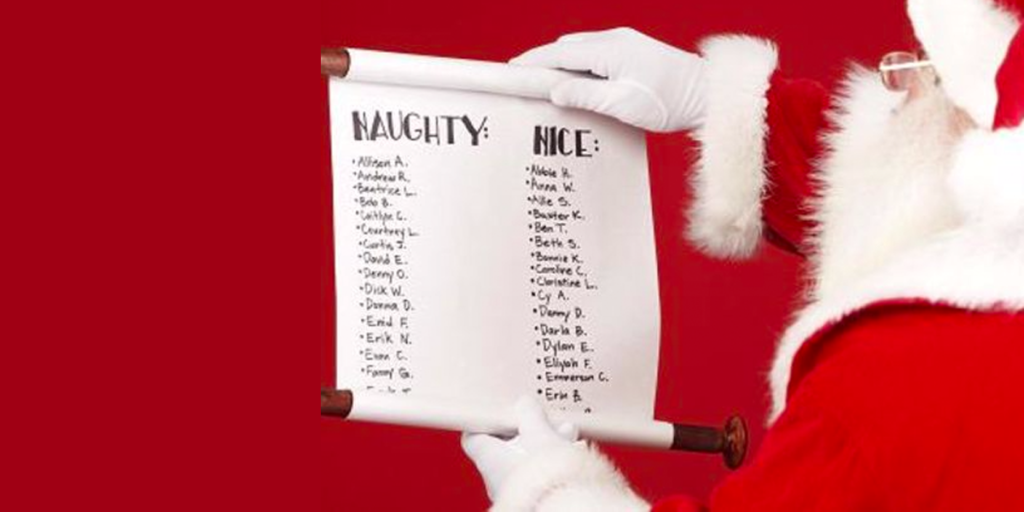
The Alabama Policy Institute staff made a list and we’re checking it twice as we think back on 2017 and what was “naughty” or “nice.” What made your list this year? Nice: The legislature passed four pro-life bills this year… This year, the legislature passed four bills each that aim at protecting the sanctity of life, plus a bill that legalizes midwifery in Alabama. The pro-life bills included a ban on assisted suicide, a provision that ensures the right-of-conscience of health-care providers, a bill that allows adoption agencies to operate and place children under faith-based policies, and a constitutional amendment affirming the right to life of unborn children. It is great to know that our lawmakers are unafraid to stand up for individuals’ rights and the right to life. Naughty: But the legislature did not pass the changes to the Alabama Accountability Act, which would have broadened access to school choice for more of Alabama’s schoolchildren. Amendments to the Alabama Accountability Act (AAA) would have expanded the pool of donors and donations to the AAA, thus enhancing opportunities for children to have school choice who otherwise would have none. In 2016, donations to the AAA dropped from $25.8 million to $19.9 million.* If the system is not funded, schoolchildren will be forced to return to the failing schools they left. These amendments addressed the funding problem, but unfortunately, they did not pass. We’ll try again next time! Nice: Alabama has a female governor! Governor Kay Ivey has faithfully served our state in many different capacities over the course of her career. Now, she’s Alabama’s top-ranking government official. Among other things in her first year, Governor Kay Ivey has met with President Donald Trump to discuss infrastructure, dissolved several Bentley-era task forces, and unveiled a gubernatorial initiative called “Strong Start, Strong Finish,” which focuses on early childhood education, computer science in middle and high school, and workforce preparedness. You go, Gov. Naughty: Unfortunately, the events leading up to her appointment were not the best. I really don’t want to relive the saga of former Governor Robert Bentley and I don’t think that you do either. He used state resources on activities related to his alleged affair. He reportedly asked Alabama’s top cop about arresting his own wife for recording his phone calls. According to testimonials, he threatened state employees. And that’s just the tip of the iceberg. Alabamians have so much to be proud of, but this whole ordeal was particularly embarrassing. Nice: In a recent survey, Alabama ranks fourth in the nation in charitable donations. According to a survey by WalletHub, Alabama is fourth behind a three-way tie of Utah, Georgia, and Wyoming in highest percentage of income donated to charitable causes. That doesn’t come as much of a surprise in a state as conservative as Alabama. The truth is that government aid does not compare to the abilities of individuals who give to private charity. I’m proud to live in a state where people realize the importance of giving. Naughty: The events leading up to the resignation of Superintendent Michael Sentance were an actual debacle… (And even naughtier were several of the school board members) Michael Sentance was hired as the State Superintendent of Education in August 2016. Almost immediately, his tenure was surrounded by controversy, at no fault of his own. While Sentance came to his job with an abundance of fresh ideas from his time working in education in Massachusetts (which ranks 46 places higher than Alabama in overall education) members of the state school board seemingly felt threatened. For months, rumors swirled about the school board taking steps to fire him. In September, he resigned from his post. The search for a new superintendent begins again. When will we put Alabama students above politics? Naughty: But Sentance’s resignation pales in comparison to the fiasco of the U.S. Senate Special Election. This election was one of the ugliest in recent Alabama history. Friends turned into enemies, and you couldn’t turn on the TV or radio without having to endure political ads. In the general election, 21,000 voters were so disgusted with their choice of candidates, they showed up to vote but did not cast a ballot for either one. The Alabama Secretary of State’s office estimates that between $10 million to $15 million were spent to hold the special election, and over $10 million were spent by the two candidates in the general election. In a state as charitable as Alabama, imagine how much could have been done for others with all that money. Nice: Over the last year, Alabama has added a net of close to 30,000 jobs. In the most up-to-date numbers from October 2017, Alabama added 29,400 jobs to its economy since January 2017. Even better news, the unemployment rate is the lowest on record at 3.8%. According to the latest numbers from U.S. News and World Report, Alabama ranks seventh in the nation in poverty. You know what’s a guaranteed way to pull people out of poverty? Having a job. Way to go, Alabama. ••• Taylor Dawson is Director of Communications for the Alabama Policy Institute (API). API is an independent, nonpartisan, nonprofit research and educational organization dedicated to strengthening free enterprise, defending limited government, and championing strong families. If you would like to speak with the author, please e-mail communications@alabamapolicy.org or call (205) 870-9900.
Taylor Dawson: Is the American Dream alive and well in Alabama?

A recent Pew Research study found that over 80% of U.S. citizens believe they’ve achieved the American dream, or at least that they’re on the way to doing so. Only 17% of those surveyed said the American dream is “out of reach” for their family. But what about Alabamians? This high level of satisfaction seems like it might not translate in a relatively poor state like ours. U.S. Census data from 2016 indicates that 17.1% of Alabamians live below the poverty line. Based on that, one could reasonably conclude that because the percentage of those living below the poverty line in Alabama almost matches the percentage of those who believe the American dream is out of reach, affluence—or at least living above the poverty line—is the key to the American dream. But it may not be that simple. As the Pew study revealed, 89% of Americans (and Alabamians are likely no exception) agree that wealth is not central to achieving the American dream. There are two big values, however, that were found to be key to its attainment: enjoying fundamental freedoms and having a strong family life. The Pew research found that a whopping 77% agree that the American dream is tied to “freedom of choice in how to live”, and 70% say having “a good family life” is essential to living the dream. Freedom of religion and freedom of expression, including the freedom of speech and press, are protected by the First Amendment. Their preservation simply requires that the government and fellow citizens allow a person to exercise their faith and speak their mind as they see fit. While the freedoms of religion and speech are paramount, other liberties are also essential to the American dream. A large majority of Alabamians embrace the right of a parent to teach their children as they see fit, the principle of free enterprise to engage in business without overregulation and taxation from the government, and the right of a gun-owner to legally purchase and carry a firearm without being treated like a criminal. Needless to say, the survey’s second most agreed-upon basis for achieving the American dream—having a good family life—is far more personal than the protection of various liberties, but no less important. That’s likely the response of those surveyed because they inherently know what research statistically demonstrates. According to Dr. Pat Fagan of the Family Research Council, adults in intact families are statistically more economically productive, and children from broken families learn less, achieve less academically, and drop out of formal education earlier. While financial freedom can certainly make life easier, the ageless adage that money can’t buy happiness seems to hold sway in the minds of most Americans, as it certainly must in the minds of most Alabamians. When it’s all said and done, affluence takes a back seat to the love and security of family in every estimation, and that reaches far beyond the traditional notion of the American dream. ••• Taylor Dawson is Director of Communications for the Alabama Policy Institute (API). API is an independent, nonpartisan, nonprofit research and educational organization dedicated to strengthening free enterprise, defending limited government, and championing strong families. If you would like to speak with the author, please e-mail communications@alabamapolicy.org or call (205) 870-9900.
Personnel note: Alabama Policy Institute announces staff additions, changes
On Tuesday, the Alabama Policy Institute announced several new hires and changes in staff positions as they prepare to move into the 2018 legislative session and election season. “In order to meet this high demand, API leadership spent the last year carefully and thoughtfully seeking the best individuals with the passion to fight for Alabama to join the API team,” said a press release. Below are the staff additions, changes:
Taylor Dawson: There’s always next year, right?
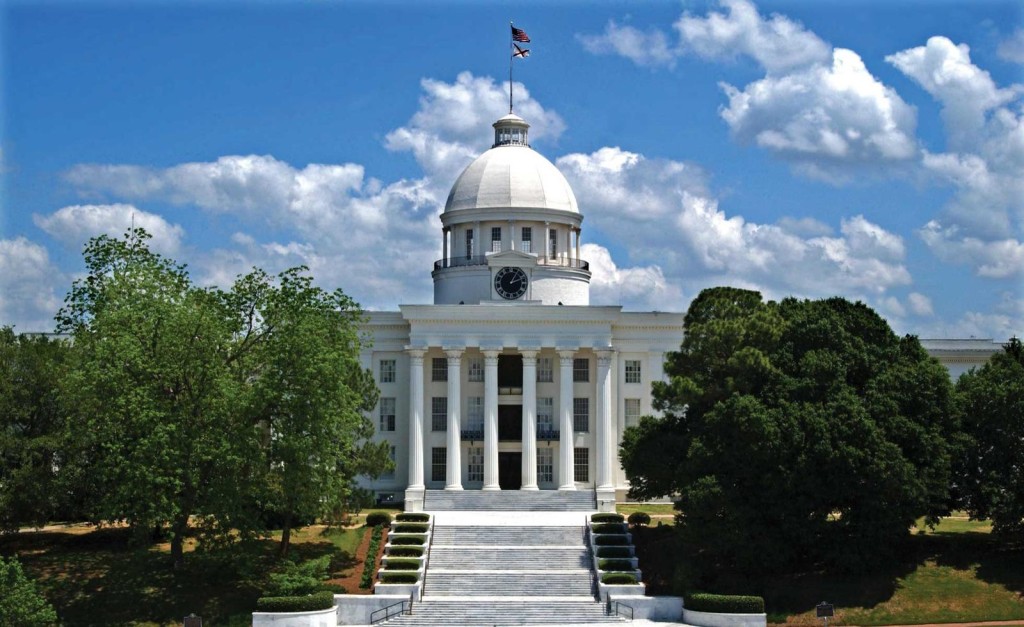
It’s baffling when legislators run for office on a platform of limited government and individual liberty and then use their elected office in the Alabama Legislature to defeat legislation that promotes these principles. Legislation supporting school choice and Second Amendment rights suffered this fate this past legislative session. Don’t blame the Democrats. Enough Republicans joined them to defeat amendments to the Alabama Accountability Act, and a Republican committee chairman in the Alabama House scuttled constitutional carry. Changes to the Alabama Accountability Act Parents with children trapped in failing schools did not have a real school-choice option in Alabama prior to 2013. With the passage of the Alabama Accountability Act (AAA), families zoned for Alabama’s worst-performing schools finally had better opportunities through scholarships and tax credits. After a drop of $5.9 million in scholarship donations through the AAA last year, some lawmakers came to this year’s session prepared to remedy the funding problem. Amendments would have improved the law by raising the limit on tax credits that could be claimed for donating to student scholarships, adding a tax credit for utility tax, allowing estates and trusts to donate, and reserving half of the cumulative cap–which would remain unchanged–on donations for individual donors. In February, these amendments passed by a close margin in the Senate. It wasn’t until the last forty-eight hours of the legislative session that SB 123 hit the floor of the House. Getting the bill to the House floor wasn’t an easy task, but education reforms rarely are. Enough legislators were swayed by the voices of public-education superintendents and the Alabama Education Association (AEA) to kill the bill. The AEA makes no bones about its intent to keep education in Alabama just the way they like it–even if it means children trapped in failing public schools. We should give positive education opportunities to all families, not just families who can afford them. The Alabama Accountability Act needs to be strengthened, and it’s certainly worth another try next session. Constitutional Carry The Second Amendment states, “A well regulated Militia, being necessary to the security of a free State, the right of the people to keep and bear Arms, shall not be infringed.” Although the Supreme Court allows certain types of gun-ownership restrictions, a few of our legislators in Montgomery want our rights to be as free and clear of hindrances as possible. Senator Gerald Allen (R-Tuscaloosa) introduced a bill this session that would allow constitutional carry–otherwise known as permitless carry–in Alabama. After receiving “yea” votes from every Republican legislator to easily pass the Senate, SB 24 died in House committee without making it to the floor for a vote. When a public hearing was held for the bill in a House committee several weeks ago, the pro-permit side was represented entirely by law enforcement, but there was one notable dissenter from that side–Jefferson County Sheriff Mike Hale. Sheriff Hale values the rights of many over the fiscal preferences of few. Paying a fee is a burden on our right to bear a firearm. Those who take issue with constitutional carry justify their defense of permits as being pro-public safety rather than anti-Second Amendment. So, if opponents of constitutional carry are going to market their opposition in the name of safety, why is there a cost associated with getting a permit? Our constitutional right to bear a firearm should not come at a price. This bill’s defeat was not at the hands of the law enforcement officers who were against it. Republican House members killed this bill, and the lawmakers in the Senate who passed the bill by an overwhelming margin should hold the House members from their party accountable for its defeat. At the very least, constitutional carry deserved a vote on the floor of the Alabama House. Now that the 2017 legislative session is over, let’s hope our lawmakers use this break to think about these policies they rejected and come back to Montgomery in 2018, headed into election season, prepared to stand for the principles they claim to support. ••• Taylor Dawson is Communications Director for the Alabama Policy Institute (API). API is an independent, nonpartisan, nonprofit research and educational organization dedicated to strengthening free enterprise, defending limited government, and championing strong families.
Taylor Dawson: It’s time to call for recall in Alabama
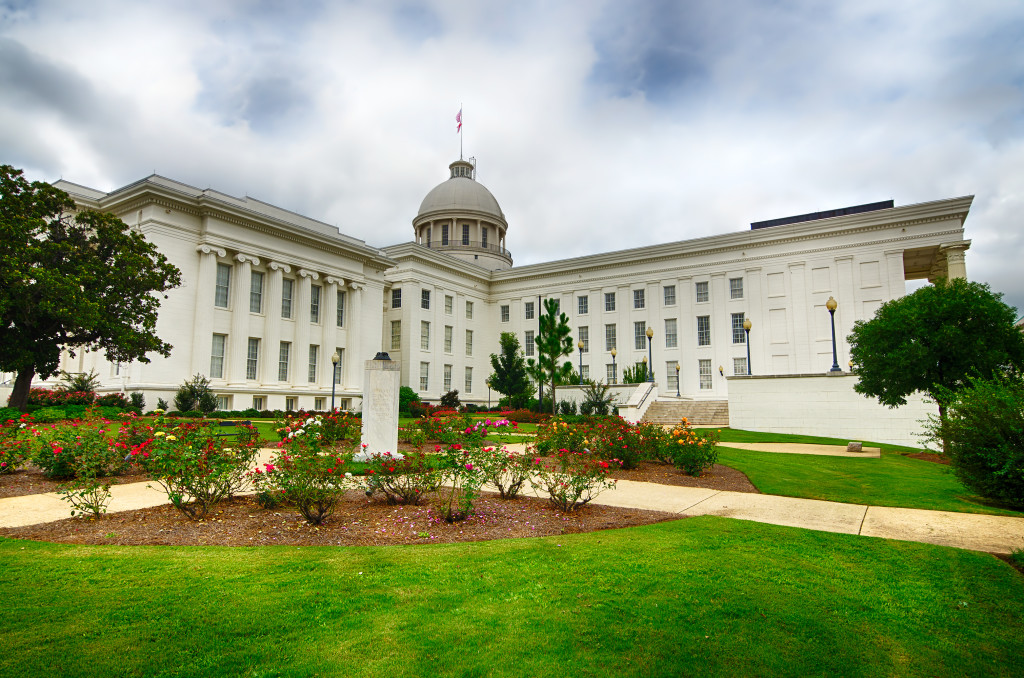
Looking back on the last few days of Governor Robert Bentley‘s s now-infamous administration, I can’t help but think, “It never should have gotten this far.” But it did. At least part of that should be credited to the fact he knew there wasn’t anything the people of Alabama could do to him politically once he won his second term in office. Bentley’s pride was unflagging even during his farewell speech. As a result, Alabamians’ already-damaged trust in state government took a nosedive over the last year. Recall is a simple idea. An elected official behaves in such a manner that he or she can no longer uphold the requirements of the office. A group of voters initiate a petition to get that official’s name on a special-election ballot to be “recalled” from office. If enough signatures are collected, voters head to the polls and either vote “yes” or “no” to having the official removed from his or her post. If you’re looking for a recall law in Alabama, look no further than Dothan (Ala. Code § 11-44E-168). Literally, look no further. The citizens of Dothan can recall their officials. Nobody else in the state can. Representative Will Ainsworth attempted to remedy this problem last year with HB 501, which would have established a recall process in Alabama. It passed out of House committee but never received a floor vote in the House. Imagine that–legislators won’t bring a bill to the floor that would provide a mechanism to hold them accountable to voters throughout their terms. Most recall legislation, including the legislation that was proposed in Alabama last session, requires a high threshold to initiate the recall process, an even higher voter threshold to have the official recalled, and oversight throughout by the Secretary of State. Rest assured, this is not something that can happen on a whim. Of the nineteen states that do have recall provisions, most of them allow for recall of any elected official–including state legislators–only making an exception for members of the judiciary. Alabama doesn’t necessarily have to go that far. At the very least, Alabama should have a provision that allows voters to recall an official who was elected statewide (governor, lieutenant governor, attorney general, etc.). Bentley has demonstrated, single-handedly, why we need a recall process. Do any of us really want to go through another season of watching a politician unable to serve because of a personal scandal? When Alabamians put our trust in an elected official, we need to have accountability tools available more often than every four years. We can talk about the negative impacts of Bentley’s yearlong distraction, or we can insist on being able to do something about it in the future. ••• Taylor Dawson is Communications Director for the Alabama Policy Institute (API). API is an independent, nonpartisan, nonprofit research and educational organization dedicated to the preservation of free markets, limited government, and strong families. If you would like to speak with the author, please e-mail communications@alabamapolicy.org or call (205) 870-9900.