
Terri Sewell applauds new special master drawn congressional maps
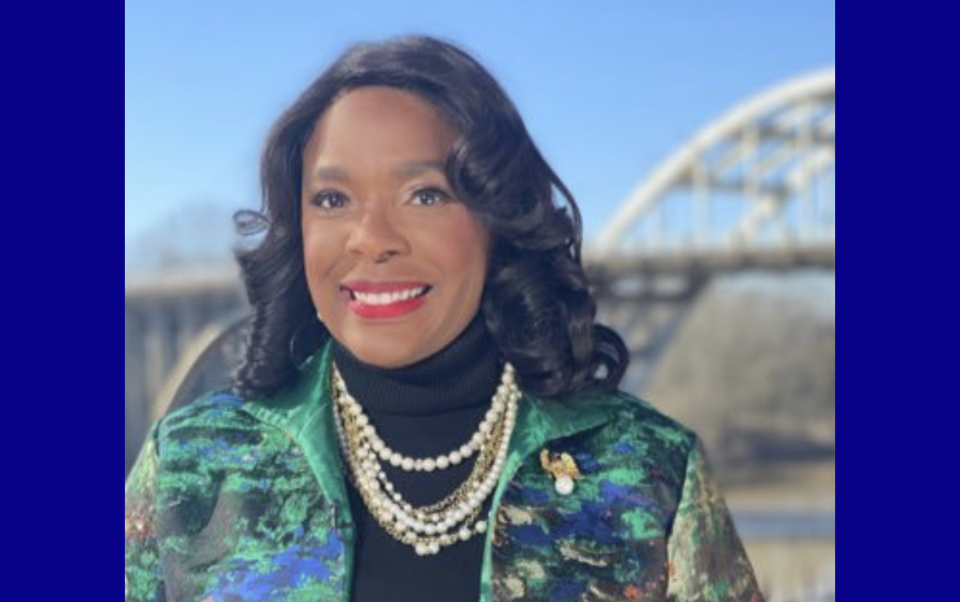
On Monday, the proposed remedial Alabama congressional redistricting maps were released by Special Master Richard Allen. The three maps were filed with the three-judge panel in the ongoing voting rights case – Allen versus Milligan. Congresswoman Terri Sewell – Alabama’s only Democratic member of the congressional delegation – applauded the new maps. “Today, despite the relentless efforts by state officials to delay, obstruct, and defy, we are one step closer to having fair congressional maps in the State of Alabama,” Rep. Sewell said in a statement. “I applaud the special master for submitting three strong proposals which prove what we have long known to be true; the creation of two districts where Black voters can elect a candidate of their choice was possible from the very beginning.” “I look forward to the adoption of one of these proposals and I remain ready and eager to continue representing the great people of Alabama’s 7th Congressional District,” Sewell concluded. All three maps create two majority-minority districts. All three are variations on the same general theme: · The maps divide Mobile County into a majority White section that remains in Alabama’s First Congressional District and a majority Black section that is moved into Alabama’s Second Congressional District. · The maps divide the Wire Grass community between the First and Second Congressional Districts. · The maps stretch a redrawn First Congressional District from the Mississippi line in Mobile County to Baldwin County across Mobile Bay and then along the Florida line all the way to the Georgia line. · The Second congressional district would stretch from downtown Mobile to Montgomery and all the way to the Georgia line. · The Second and Seventh Congressional Districts would both be majority minority. · Congressman Barry Moore (R-AL02) and Congressman Jerry Carl (R-AL01) would both live in the same district. If both seek a third term, there is a strong likelihood that they could face each other in the 2024 Republican primary on March 5. “The three remedial plans submitted to the United States District Court for the Northern District of Alabama by the Special Master represent a chance to restore the power of the vote for Black Alabamians, and all Alabamians,” said Alabama House Minority Leader Anthony Daniels (D-Huntsville. “All three maps place the majority of the City of Mobile in a proposed Congressional District 2. This is a clear rejection of the State’s attempts at subversion, and a rebuke of the manner in which the legislative majority twisted our shared history into a shield for discrimination.” Rep. Jerry Carl was less than enthusiastic by the news. “Today, a federal court released three proposed maps that will split south Alabama into two different congressional districts. Once again we have seen activist judges overstep their roles,” Carl said on Twitter. The three-judge panel will consider which of three maps to adopt on October 3. The state of Alabama has previously objected to dividing Mobile County and the Wiregrass region, arguing that the two communities of interest should not be divided. Both Jefferson and Tuscaloosa Counties were divided in the 2012 maps, the 2021 maps, and the July map prepared by the Legislature in a special session. The three special master maps also divided Jefferson and Tuscaloosa Counties into different districts, and there has been no objection by the state or the court to dividing those communities of interest along racial lines. The Alabama Attorney General’s office has asked the U.S. Supreme Court to put a stay on the three-judge panel redistricting so that the state can once again present its case to the Supreme Court. The Court has agreed to hear the state’s emergency appeal. Milligan and the other plaintiffs have asked the court to reject the state of Alabama’s request for a stay on the new districts. They argue that both the 2021 map and the July map violate the Voting Rights Act of 1965. The three-judge panel rejected Alabama’s request to hold up the redistricting. Democrats and their civil rights group allies hope that they can use the courts as a tool to flip as many as 15 congressional districts from Republican to Democratic, thus likely regaining control of the U.S. House of Representatives no matter what happens with the Senate or the presidential election next year. Qualifying for Congress with the two major parties begins in mid-October and ends on November 10, with both major party primaries being held on March 5. To connect with the author of this story or to comment, email brandonmreporter@gmail.com.
Rep. Terri Sewell announces $23.8 million to address blocked crossings and improve railroad infrastructure
On Monday, Congresswoman Terri Sewell (D-AL07) announced a $23.8 million grant to alleviate blocked railroad crossings and improve rail infrastructure and safety in Alabama’s Seventh Congressional District. “Today marks a major step forward in our fight against blocked railroad crossings in Alabama’s 7th Congressional District,” said Rep. Sewell. “This funding from President [Joe] Biden’s Bipartisan Infrastructure Law represents a critical part of our long-term strategy to alleviate blocked railroad crossings and will go a long way in improving the quality of life for those living in and around Birmingham. Securing this funding was truly a team effort, and I want to thank the City of Birmingham and our local leaders for their hard work in developing such a strong proposal and Norfolk Southern for their significant financial commitment to this project. I was so proud to advocate for this funding at the federal level and will continue working with our state and local partners to address blocked railroad crossings.” The funding comes from the Consolidated Rail and Infrastructure Safety and Improvements (CRISI) grant program through the U.S. Department of Transportation’s (DOT) Federal Railroad Administration (FRA). The grants are divided into two. The City of Birmingham was awarded an $8 million grant to alleviate dangerous blocked railroad crossings, while the Alabama Department of Transportation (ALDOT) was awarded $15.8 million for track and bridge improvements in the Black Belt and Central Alabama. “I want to thank the Alabama Department of Transportation for their work putting together this proposal,” said Sewell. “We know that the Black Belt is in dire need of infrastructure investments, and this project will make a big difference!” Darrell O’Quinn is a member of the Birmingham City Council. “It’s hard not to get a little emotional thinking about what this will mean for the residents of this area,” said Councilman O’Quinn. “This is an opportunity to drastically improve the quality of life for so many of my neighbors. I’d like to take a moment and thank our partners at Norfolk Southern, who own the rail corridor in question. They have been a tremendous partner in moving this initiative forward and will be committing $1.5 million in funding to this initial planning and engineering grant. It’s the largest financial commitment they’ve made to a project of this type, ever. My office has remained in close contact with their representatives over the last several years, and we could not have gotten to this point without their dedication to improve the lives of those living near their tracks.” In Birmingham, the $8 million CRISI grant will improve two segments of Norfolk Southern’s railway line. The money will be used to develop plans for various track, bridge, signal, and road realignments to reduce blocked crossings and improve community access. This will include grade separations and the closure of multiple crossings. In the Black Belt, the $15.8 million CRISI grant will go to ALDOT for final design and construction activities to complete various track-related and bridge improvements on two short-line rail lines within the state, the Eastern Alabama Railway (EARY) and Meridian & Bigbee Railroad (MNBR). The project will improve system and service performance by increasing maximum allowable speeds on both rail corridors, enhancing storage capacity, and improving safety. These grants are part of the $1.4 billion announced by the Biden Administration. This money is part of President Biden’s Bipartisan Infrastructure Law. Rep. Sewell was the only member of Alabama’s Congressional Delegation to vote in favor of the Bipartisan Infrastructure Law. Almost all of this money comes from deficit spending as the national debt has soared past $33 trillion. Sewell is in her seventh term representing Alabama’s Seventh Congressional District. To connect with the author of this story or to comment, email brandonmreporter@gmail.com.
Terri Sewell commemorates the 60th anniversary of the 16th Street Baptist Church bombing
Today is the 60th anniversary of the bombing of the 16th Street Baptist Church in Birmingham that killed four little girls during the height of the Civil Rights Movement. Congresswoman Terri Sewell (D-AL07) spoke on the floor of the U.S. House of Representatives to commemorate this tragic incident of domestic terrorism. “I rise today to commemorate the 60th anniversary of the bombing of the 16th Street Baptist Church in Birmingham, Alabama in 1963, and to honor the lives and legacies of Four Little Girls killed in such a heinous attack,” said Rep. Sewell. “60 years ago, as parishioners of the 16th Street Baptist Church prepared for Sunday service, 19 sticks of dynamite placed by Ku Klux Klan members exploded. As the interior of the walls of the church caved in, over 100 churchgoers rushed for safety. Though most of the congregation escaped, under the debris lay the bodies of Addie Mae Collins, Denise McNair, Carole Robertson, and Cynthia Morris Wesley, as well as Sarah Collins Rudolph, who was injured but ultimately survived. “Tragically, the brutality did not stop after the bombing. When African American communities across the State of Alabama took to the streets to demand justice, they were met with unspeakable violence at the hands of law enforcement,” said Sewell. “Within a few hours, Johnny Robinson and Virgil Ware, ages 16 and 13, were killed in clashes between protesters and the police.” “Despite the horrific nature of this attack, it took over 34 years before the perpetrators faced justice,” Sewell continued. “In 2013, Mr. Speaker, I was honored that my very first bill I passed in this body awarded the Congressional Gold Medal, the highest civilian honor we can give, to the Four Little Girls posthumously to ensure that their lives were never forgotten.” “While we will never recover the lives lost or the injuries suffered, we know that their sacrifice was not in vain,” said Sewell. “Indeed, the loss of the Four Little Girls changed America forever, bringing into clarity our nation’s storied history of racially motivated violence and galvanized the Civil Rights Movement. It was their memory that inspired generations of freedom fighters to build a world where the color of your skin does not determine the value of your life. It was their memory that burned in the minds of the Foot Soldiers as they fought to pass the Civil Rights Act of 1964 and the Voting Rights Act of 1965. And it was their sacrifice that brought our nation closer to realizing its highest ideals of equality and justice for all.” “Without the influence of the Four Little Girls, I not only question where America would be, but where I would be,” Sewell added. “60 years after their passing, I get to walk the halls of Congress as Alabama’s first Black Congresswoman. I do so because of their sacrifice and because they cannot. Their premature and senseless death serves as a constant reminder that every battle, every gain in the fight for civil rights has come at a high cost, paid for by the sacrifice of others.” Dr. Martin Luther King Jr. described the bombing as one of the most vicious, tragic crimes ever perpetrated against humanity, The story of the 4 Little Girls was made into a Spike Lee documentary in 1997 by the same name. Terri Sewell represents Alabama’s Seventh Congressional District. To connect with the author of this story or to comment, email brandonmreporter@gmail.com.
Steve Flowers: Alabama is in for a congressional shakeup

Being elected to Congress is like having a guaranteed job for as long as you want. They serve two-year terms, and the reelection rate is 96%. All you have to do is vote the party line and not commit murder, and you are there for life. The path to reelection to most political offices is to have money and name identification, and this is especially true in Congressional races. All seven of our congressmen are considered in safe seats. We have six Republicans and one lone Democrat in our Alabama delegation to the Potomac. The districts as currently drawn are designed for six Republicans and one Democrat. A three-judge federal panel made up of two Republican-appointed judges and one Democrat appointee judge made the decision over two years ago that Alabama should have a second Black Democratic seat. They hung their hat and robe on the fact that one Black Democratic seat is not sufficient in Alabama, given that one seat comprises only 14% of the black population and Alabama has a 27% Black population. Thus, Black Democrats should have two rather than one Democratic seat in the Heart of Dixie. This decision has been upheld by none other than the United States Supreme Court. Therefore, folks, it is about to happen. My prediction over a year ago was that the Courts or their appointed cartographer would draw a second minority district. I further continue with my prognosis that the Court will act very soon, probably within the next few weeks, to ignore the legislature’s partisan plan in favor of the Milligan/Plaintiffs Plan. The result will be the new Congressional lines for the next decade. The Milligan/Plaintiffs Plan is perfectly drawn and expertly designed to comply with the Court’s decree. This plan creates a second minority district centered around all of Montgomery, the Black Belt, and the Black voters in Mobile. The new second minority district will appropriately be Alabama District 2. The old Second District that Republican Barry Moore sits in will be dissolved. The Whites in the five Wiregrass counties will be sent to the Mobile/Baldwin Republican district held by Jerry Carl. Under the Milligan/Plaintiffs Plan, Congresswoman Terri Sewell’s district is beautifully drawn for her. It is essentially the same as her current district. It will be 55% Black. The new Second District will be 50% Black. The Republicans will contest this new district and may prevail. However, the odds favor a Black Democrat. My guess is when the dust settles in November 2024, Alabama’s Congressional makeup will be five Republicans and two Democrats. This change has been brewing for over a decade. Black voters have argued that having a Black population of 27% calls for two seats under the Voting Rights Act of 1965. Finally, after the 2020 census, Black plaintiffs sought relief from our federal courts. It was clear that the growth in the Black population in the Montgomery area would allow for a congruent, clearly defined second minority district. When you include Montgomery with the 12 rural overwhelmingly Black and Black Belt counties and draw in most of the Black voters in Mobile, it becomes possible. The three-judge panel agreed and gave the state a two-year reprieve because the 2022 elections based on the 2020 census were already ongoing. You could tell from the original decision to stay the case due to the timing of the 2022 elections that the Supreme Court was interested in revisiting this Alabama scenario. They did, and they ruled and sent it back to the three Alabama judges to uphold. The three-judge panel is going to rule on the final district lines any day now. The lines that the Judges deliver to Alabama soon will favor a second minority district for our state. This Supreme Court case is far-reaching. It will also change the partisan makeup of other Southern states like Louisiana, Georgia, and North Carolina. The Supreme Court knew what they were doing. They knew they were using Alabama as a guinea pig and plowing new ground in the South under the Voting Rights Act. Our Alabama Congressional delegation is looking at a shakeup in 2024. However, it will not affect our power and influence in the U.S. House. Our three Republican powers in Congress, Robert Aderholt, Mike Rogers, and Gary Palmer, will be unaffected, and our two Republican newcomers, Jerry Carl and Dale Strong, will have enhanced Republican districts. Terri Sewell will be entrenched as a Democratic leader in the House. See You next week. Steve Flowers is Alabama’s leading political columnist. His weekly column appears in over 60 Alabama newspapers. Steve served 16 years in the state legislature. Steve may be reached at www.steveflowers.us.
Rep. Terri Sewell says redistricting decision is another victory for Black voters
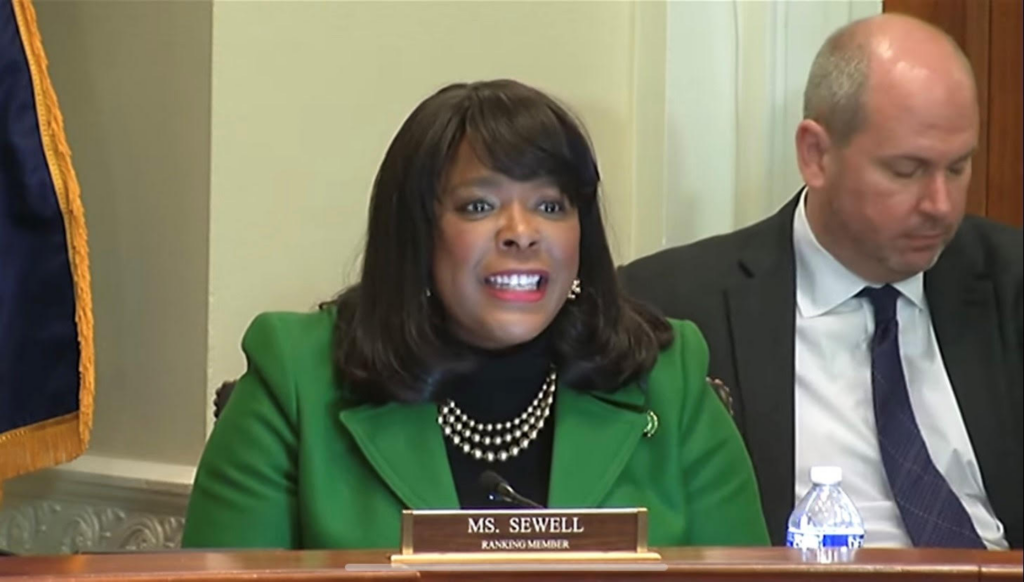
On Tuesday, the federal three-judge Eleventh Circuit Court of Appeals judges panel released a 196-page ruling tossing out Alabama’s partisan congressional redistricting map passed along partisan lines in a July special session of the Alabama Legislature. Congresswoman Terri Sewell (D-AL07), who represents Alabama’s only majority-minority congressional district, released a statement following the federal court decision striking down the Alabama State Legislature’s 2023 Congressional Map and Appointing a Special Master to draw Alabama’s congressional districts. “Today’s decision is yet another victory for Black voters in Alabama and for the promise of fair representation,” Rep. Sewell said. “By appointing a special master to fairly redraw Alabama’s congressional map, the court has rejected the state legislature’s latest attempt to dilute the voices and voting power of African Americans all across our state.” “While we were outraged by the Alabama State Legislature’s open defiance of the Supreme Court’s original order to create two majority-minority districts, I am nonetheless grateful that a federal court has now intervened to protect the voices of Alabama’s Black voters,” Sewell concluded. “The Voting Rights Act of 1965 is indeed alive and enforceable!” The ruling means that a special master will draw up new congressional redistricting maps after both the 2021 and 2023 maps prepared by the Republican-dominated Alabama State Legislature have been set aside by the three-judge panel. Most legal observers expect that the state of Alabama will appeal this ruling. As of press time, there has been no comment from Alabama Attorney General Steve Marshall’s office. The Alabama Republican Party expressed their disappointment in the decision in a statement. “While we respect the Court, we are disappointed in its decision, and we trust that the State will ultimately prevail in this litigation,” the ALGOP said. The Special Master is expected to draw the state’s new Congressional Districts maps by September 25. Major party qualifying for the 2024 election begins in October. Congress members do not have to live in the district in which they run, but they are required to live in the state. The major party primaries will be held on March 5. Alabama is currently represented in the U.S. House of Representatives by six Republican White men and one Democratic Black woman – Sewell. The special master does not have to worry about the compactness of the districts, keeping communities of interest together, or avoiding placing two or more congressional incumbents in the same district. The state could still contest the special master’s map. To connect with the author of this story or to comment, email brandonmreporter@gmail.com.
Alabama WIC Program seeks public comment about 2024 State Plan

On Friday, the Special Supplemental Nutrition Program for Women, Infants, and Children (WIC) in the Alabama Department of Public Health (ADPH) announced it is seeking public comment on the plan and what WIC could do better in 2024. WIC provides nutrition education and supplemental foods and serves pregnant, postpartum, and breastfeeding women, infants, and children up to age five whose family income is up to 185 percent of the federal poverty level. Special emphasis is placed on the participation of infants, children, and high-risk pregnant women. The federal WIC Program regulations require that each state agency establish a procedure under which members of the general public are provided an opportunity to comment on the development of the state agency plan for the coming year. The Alabama WIC Program’s 2024 State Plan of Program Operations may be reviewed online between September 1- 15, 2023. Members of the public are invited to submit their written comments via email by September 15, 2023. Comments can also be mailed to: Alabama Department of Public Health WIC Program, Attention Allison Hatchett The RSA Tower, Suite 1300 201 Monroe St. P.O. Box 303017 Montgomery, Ala. 36130-3017 Thursday was the 59th anniversary of the Supplemental Nutritional Assistant Program (SNAP) program. “For 59 years, SNAP has served as the first line of defense against hunger and food insecurity for low-income children and families,” Congresswoman Terri Sewell (D-AL07) said on Twitter. “I will always fight to preserve and protect SNAP benefits for those who rely on them!” Both SNAP and WIC are federal nutrition assistance programs for low-income families managed by the states. Both programs have income requirements, but WIC also has categorical requirements that limit who can participate. SNAP gives qualifying participants an Electronic Benefits Transfer (EBT) card, which works like a debit card and automatically loads a certain dollar amount onto it each month. The state determines how much benefit to give based on household size and income. SNAP can be used to purchase most foods, including fruits and vegetables, meat, dairy products, bread, cereal, and snacks. SNAP can also be used to buy seeds or plants that will grow into food. SNAP cannot be used for alcohol, tobacco, supplements, most live animals, or pet food. WIC participants receive a WIC card similar to a SNAP EBT card. However, instead of providing a monthly dollar limit participants can spend up to, it authorizes them to purchase certain foods the program has approved. These can include fruits and vegetables, meats, cereals, dairy products, and infant formula, among other things. Benefits expire on the last day of the month. In addition to this direct food assistance, WIC can also connect people with nutrition education and breastfeeding support. These services can help families squeeze the most value out of their WIC benefits. Generally, those who qualify for SNAP have gross incomes less than 130% of the poverty line, and net income may not be more than 100% of the poverty line. There are exceptions for the elderly or disabled. People may also be deemed categorically eligible if they qualify for another government assistance program, like Temporary Assistance for Needy Families (TANF) or Supplemental Security Income (SSI). Generally, you cannot have more than $2,750 in countable resources or $4,250 if at least one household member is over 60 or disabled to qualify for SNAP. Your home does not count against SNAP eligibility. WIC is open to pregnant, postpartum, and breastfeeding women and households with infants or children under five. Eligibility lasts only as long as the household meets at least one of these criteria. To qualify for WIC, you must have an income equal to or less than 185% of the poverty line. You may also qualify automatically if you’re eligible for SNAP, Medicaid, or TANF. To connect with the author of this story or to comment, email brandonmreporter@gmail.com.
Steve Flowers: Summer Political Happenings
As the long, hot summer ends and Labor Day approaches, let’s take a look back at what occurred over the last three summer months politically. First of all, it was one of the hottest summers on record. Temperatures soared into the hundreds as early as late June. On one of those late June days, one of the hottest political events of the year occurred. The annual Tomato Sandwich Lunch event hosted by Alabama Agriculture Commissioner Rick Pate was the biggest yet. The twentieth annual Tomato Sandwich Lunch held at the Ed Teague Arena near the Garrett Coliseum was a must-be event for Alabama political elite. The Tomato Sandwich Lunch promotes produce from local farmers and encourages people to eat Alabama-grown products. Alabama-based vendors donate all of the food for the event. Commissioner Rick Pate was a master host to over 500 attendees. In attendance were U.S. Senator Katie Britt, State Treasurer Young Boozer, and Lt. Governor Will Ainsworth. PSC member Jeremy Oden came from Cullman, and State Board of Education President Wayne Reynolds came from Athens. State Judges in attendance were Supreme Court Judge Greg Cook, Criminal Appeals Court Judge Bill Cole, and Civil Appeals Court Judges Matt Friday and Bill Thompson. Legislators spotted were State Senators Josh Carnley and Will Barfoot, as well as Representatives Jerry Starnes, Margie Wilcox, Van Smith, and Ed Oliver. There were dozens of local County Commissioners from all over the state. Many of the state’s most prominent lobbyists were there, along with many of the Governor’s Cabinet members. Alabama Power Government Affairs guru Houston Smith and Alfa Executive Director Paul Pinyan were prominent. In fact, most of Alfa’s governmental affairs folks were at this very fun and political event. During the summer, everybody and their brother, or at least everyone who ever won a 4-H speaking contest, entered the race for the Republican nomination for President. There must be 20 people running against Donald Trump for the GOP nomination. This is just what Trump was hoping for. It splinters the anti-Trump vote to such a degree that it virtually assures him the nomination. During the summer, the U.S. Supreme Court decided that Alabama’s Congressional districts were gerrymandered to keep Black voters from being able to elect a second Black Democrat to Congress. Alabama currently has six white Republican Congressmen and one Black Democratic Congresswoman, Terri Sewell. In July, former Alabama Supreme Court Justice Mike Bolin won a special election to fill a seat on the five-member Jefferson County Commission. His election was like manna from Heaven for the Jefferson County Republican Party. The commissioner, who departed this important seat, was a Republican. The commission had a three to two Republican majority. Therefore, it was an important election for the state’s largest and most important county. Mike Bolin had just retired from the Alabama Supreme Court after 18 years on the state’s high tribunal. He had been Probate Judge of Jefferson County for 16 years prior to his service on the Supreme Court. He only retired from the Supreme Court due to a state law that prevents judges from running for reelection after age 70. Bolin is Jefferson County through and through and one of the most respected gentlemen and public servants in Jefferson County and Alabama. The imperial county of Jefferson is fortunate that Judge Mike Bolin was available and ready to serve. His swearing-in ceremony occurred on a sweltering hot July 31. The large Jefferson County Courthouse commission chambers was overflowing. It was a congregation of who’s who of Jefferson County politics. Hope you had a good summer. Happy football season and happy Labor Day! See you next week. Steve Flowers is Alabama’s leading political columnist. His weekly column appears in over 60 Alabama newspapers. He served 16 years in the state legislature. Steve may be reached at www.steveflowers.us.
Billy Taylor: Federal legislation needed to prevent corporate hospitals from raising the cost of care

The exorbitant cost of health care is a well-known issue for countless families across the country. Patients, health care professionals, and lawmakers alike need to work overtime to bring problematic practices in our healthcare system to light. When it comes to lowering healthcare costs, ensuring fair medical billing must be part of the discussion. In recent years, there has been an uptick in major hospitals acquiring independent community health care practices. When looking closer at this trend of consolidation of medical practices, a concerning pattern emerges new corporate hospital owners will raise the cost of care even though there is no change in services delivered. The vehicle to increase patient expenses? Tacking on hospital facility fees. These high prices are problematically added to medical invoices by hospitals when services are administered at so-called hospital outpatient departments, which are facilities owned and operated by big hospitals. More times than not, these extra charges are added without the knowledge of the patient. Our neighbors, family members, and friends need to be aware of this issue, as do our elected leaders who are in positions of power to address it. In Alabama, it is no secret that many of our communities deal with critical health issues. An array of chronic health conditions exist across Alabama, with concerning projections showing that the total cost of managing chronic disease in our state will be a whopping $671 billion from 2016-2030. With this outlook in mind, any opportunity to lower healthcare costs should be a top priority when our leaders come to the policymaking table. For these reasons, I urge my federal representatives, Senator Katie Britt, Senator Tommy Tuberville, Congresswoman Terri Sewell, and the entire Alabama delegation, to support legislation that would make a meaningful impact on health care costs for state residents. Fortunately, there are measures before Congress right now that would ensure fair hospital billing and implement site-neutral payments to benefit both patients and taxpayers supporting the Medicare program. The Site-based Invoicing and Transparency Enhancement Act (SITE) in the Senate and the Facilitating Accountability in Reimbursements Act (FAIR) in the House of Representatives would be crucial steps towards ensuring medical bills are more reasonable – regardless of where care is delivered. Site-neutral billing is a solution that would prevent hospitals from charging exorbitant prices for medical procedures. This would also benefit the Medicare program by ensuring costs remain consistent across the board. I am encouraged to see the significant bipartisan momentum to address these facility fees through the SITE and FAIR Acts. The potential impact of the site-neutral payment reform legislation is significant, with projections indicating a possible reduction of $153 billion in Medicare spending and a corresponding decrease of $94 billion in healthcare costs for Medicare beneficiaries. The site-neutral savings go even further by reducing national health expenditures by as much as $672 billion. With high inflation and everyday expenses growing daily, that money can go back into the pockets of hard-working Americans. Something as critical as health care for ourselves and our loved ones should not be an uphill financial battle. Surely, fair medical billing is something all of our elected leaders can get behind in Washington to make an impact on the daily lives of every American. Making meaningful changes to bring healthcare costs down often seems insurmountable. But it all starts with small steps, and fair billing reform is part of the way forward. Billy Taylor is the Founder and CEO of Hometown Lenders.
Tommy Tuberville to hold informational session on service academies in Homewood today
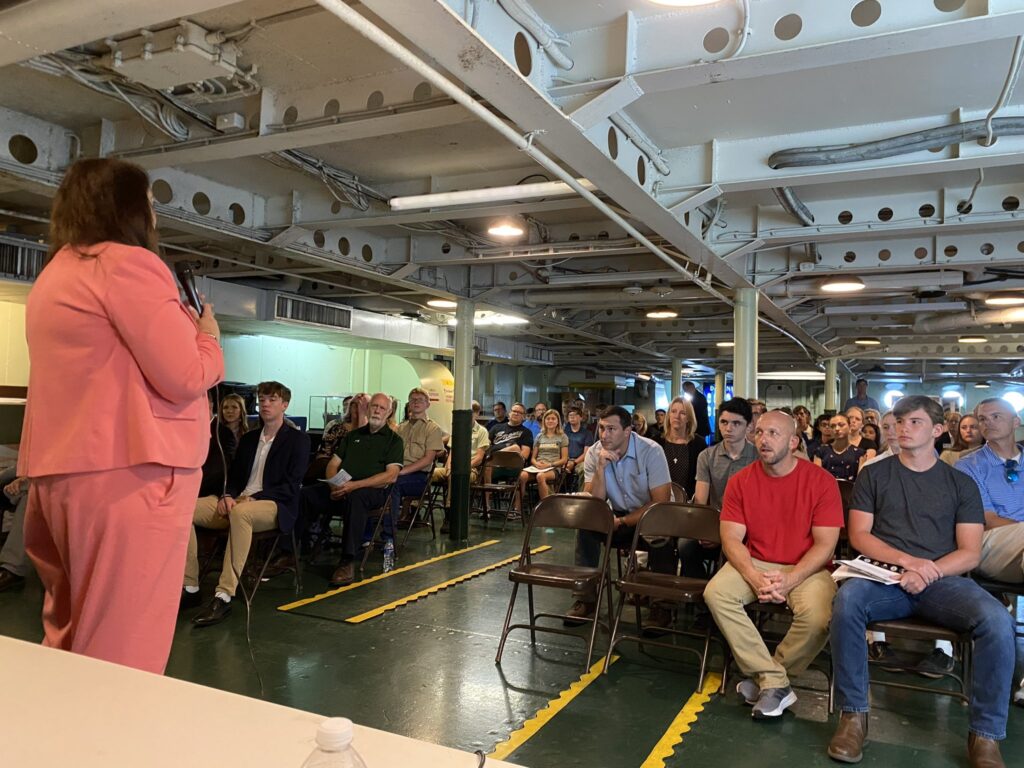
U.S. Senator Tommy Tuberville, along with Sen. Katie Britt, Congressman Jerry Carl, and Congresswoman Terri Sewell, will be hosting an informational session about attending one of the four service academies in Homewood on Tuesday night. Sen. Tuberville wrote on Twitter: “Interested in applying to a U.S. Service Academy? This week my office will be hosting three info sessions across the state. August 22 – Homewood August 24 – Troy August 27 – Montgomery Sen. Tuberville has been hosting service academy informational sessions throughout the month of August. Some of the dates have changed since the publication of an earlier press release. The events have already been held in Madison and Mobile. Congressman Jerry Carl (R-AL01) wrote on Twitter, “My team and I joined staff from the offices of @SenTuberville & @SenKatieBritt to host a U.S. Service Academy info session at the Battleship. We had a great turnout, and I’m so encouraged for the future of our country!” The Homewood event will be at the Homewood Public Library—Round Auditorium at 6 pm on Tuesday, August 22. Both U.S. Senators and all seven Alabama Congress members can make appointments to the nation’s service academies: Army (Westpoint), Navy (Annapolis), Air Force (Colorado Springs), and Merchant Marine. Acceptance to a service academy means four years of the highest quality college instruction without debts and a career serving the nation in the armed forces. With increasing threats from Russia, China, Iran, and North Korea, recruiting the best and the brightest to serve as officers in America’s armed forces. To be eligible to receive a service academy appointment, applicants must: · Be a United States Citizen at the time they enter the Service Academy and a legal resident of Alabama; · Be at least 17 years of age but not yet 23 by July 1 of the year they are admitted to the Service Academy (the upper age limit is 25 for Merchant Marine Academy); · Meet the minimum requirements of the Academy to which they are applying. The last date to submit the application is Monday, October 16, 2023. To connect with the author of this story or to comment, email brandonmreporter@gmail.com.
Rep. Terri Sewell celebrates one-year anniversary of Inflation Reduction Act
On Wednesday, Congresswoman Terri Sewell (D-AL07) celebrated the one-year anniversary of the Inflation Reduction Act. Sewell said that the Biden Administration’s landmark legislation continues to deliver for Alabama families. Sewell claimed that over the last twelve months, the investments in the Inflation Reduction Act have lowered costs for Alabamians while creating new jobs, combating climate change, advancing environmental justice, and reducing the deficit. Sewell was the only member of Alabama’s congressional delegation to vote in favor of the bill. “One year ago, President (Joe) Biden signed into law a historic piece of legislation that is bringing down costs for Alabama families, growing the middle class with new clean energy and manufacturing jobs, and making the largest investment to fight climate change in our nation’s history,” said Rep. Sewell. “I was proud to be the only member of the Alabama delegation to vote in favor of the Inflation Reduction Act, and I’m even prouder today as it continues to deliver for our families, our communities, and our planet. We’re already seeing the investments from the Inflation Reduction Act lay the foundation for decades of economic growth and cost savings, and soon our provisions to cap prescription drug costs will provide even more breathing room for Alabama families.” Sewell said that many of the Inflation Reduction Act’s responsible, pro-growth policies are already at work for Alabamians right now, with even more progress on the way. Sewell said that the legislation lowered costs for Alabama families by: · Thanks to the Inflation Reduction Act, the 31,000 people who signed up for a marketplace plan in Alabama’s 7th District are saving an average of $740 on their health care premiums this year. · Caps insulin prices for seniors and other Medicare beneficiaries at $35/month, saving about 3,800 people in Alabama’s 7th District who use insulin an average of $400 annually. · An estimated 367,000 Alabamians will save an average of $360 on prescription drugs every year when the $2,000 cap on annual out-of-pocket pharmacy costs for Americans with Medicare goes into effect in 2025. · Allows Medicare to finally negotiate prescription drug prices starting in 2026, slashing prices and saving taxpayers nearly $100 billion over the next eight years. · Unleashes the power of cleaner, cheaper energy to save families hundreds of dollars on their energy bills every year and provides thousands of dollars in discounts to help families upgrade to more efficient appliances and vehicles. Sewell said that the legislation is growing the middle class by: · Delivers a clean energy future, with over 170,000 new jobs and $278 billion in new investments already announced in 44 states, including 400 clean energy jobs and $205 million in investments ri Alabama’s 7th District. · Lays the foundation for the future of our economy with historic investments in clean energy and American manufacturing that are projected to create millions of jobs and reduce carbon pollution by 40 percent by 2030. · Gives more Americans a path to the middle class by expanding workforce training and registered apprenticeship programs to create good-paying jobs that don’t require a college degree. Sewell said that the legislation promotes tax fairness and reduces the deficit: · Achieves hundreds of billions of dollars in deficit reduction without a penny in new taxes on families making under $400,000 annually. · Ensures billion-dollar corporations are contributing to the communities they rely on with a 15% minimum tax for large corporations. · Gives the IRS the resources they need to take on wealthy tax cheats while improving services for families, reducing average wait times from 27 minutes to 4 minutes. Republicans strongly disagree with Sewell and the Democrats on the benefits of Biden’s massive increases in government spending. They argue instead that the Inflation Reduction Act, the administration’s Infrastructure Bill, and the American Rescue Plan, along with the 2022 and 2023 spending bills cumulatively, have added $4 trillion to the national debt, increased the dependency of the American people on big government, and made the energy grid less reliable going forward. “The American people are taxed to death,” U.S. Senator Tommy Tuberville (R-Alabama) said. “We have got to figure out a pathway to reduce spending.” “We cannot live with $32 trillion in debt.” Republicans argue that government spending has increased inflation resulting in most Americans seeing their purchasing power decline and big-ticket items like new homes and new cars becoming increasingly unaffordable for more Americans. They argue that the headlong pursuit of “clean energy” has contributed to inflation and will instead lead to much more expensive energy and more Americans struggling to pay for their power bills. “A significant factor of increased inflation is energy,” Congressman Gary Palmer (R-AL06) said in a press release. “Millions of American households are struggling to make ends meet because of President Biden’s highly inflationary energy policies. Republicans warn that the trillions added to the national debt will, in the long run, increase the chances of an economic crisis and threaten the United States’ financial solvency moving forward. Sewell is in her seventh term representing Alabama’s Seventh Congressional District. To connect with the author of this story or to comment, email brandonmreporter@gmail.com.
Mid-Alabama Republican Club discusses congressional redistricting issue
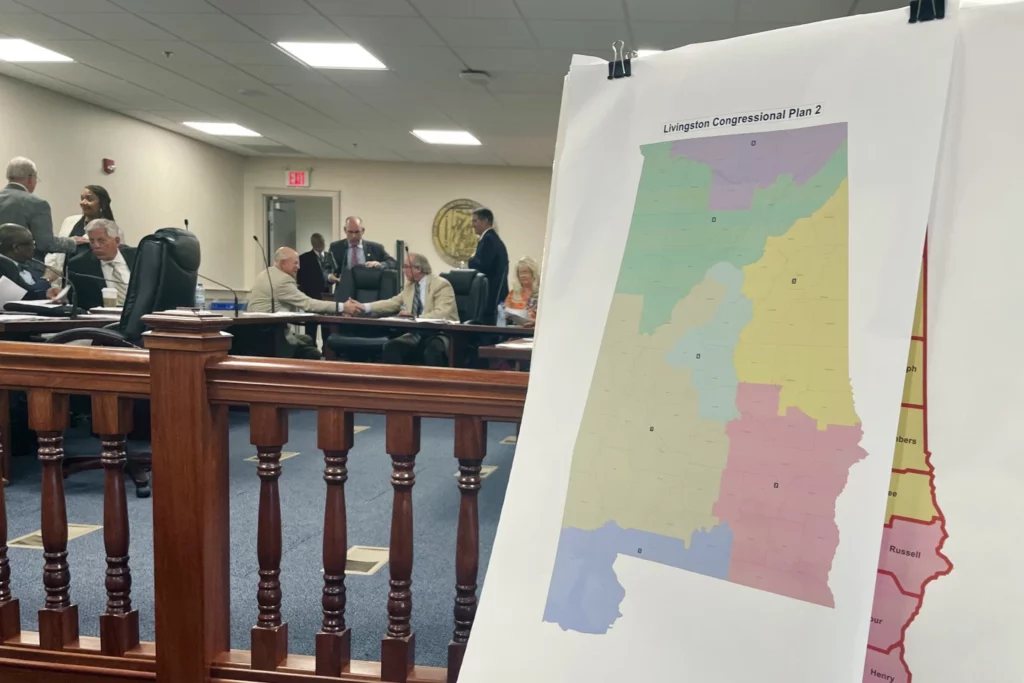
On Saturday, attorney Bert Jordan briefed the influential Mid-Alabama Republican Club (MARC) on the pending federal litigation over Alabama’s disputed congressional redistricting. On Monday morning, the State of Alabama will defend a congressional redistricting plan passed by the Alabama Legislature in July’s second 2023 special session. Plaintiffs have challenged that plan as violating Section 2 of the Voting Rights Act of 1965. Hoover City Councilman John Lyda is the President of MARC. “Burt Jordan has practiced law here for 43 years,” Lyda said. “His law firm, Wallace, Jordan, Ratliff, & Brandt, represents the City of Hoover, and I am very grateful for that.” Lyda said Jordan represented Perry Hooper Sr. in his disputed Chief Justice of the Alabama Supreme Court race in 1992. He has been counsel for the Alabama Republican party. He also served as County chairman from 1995 to 1999. Jordan criticized the media coverage, particularly that of al.com in this case, as inaccurate. “I know al.com could do a better job,” he stated. “In early 2022, a U.S. District Court consisting of three judges issued an injunction because the 2021 Congressional redistricting likely violated section 2 of the Voting Rights Act,” Jordan said. “Section 5 was struck down in 2012 in a decision by Chief Justice John Roberts. John Roberts has received a lot of criticism for that decision.” Jordan explained that in 1982, the City of Mobile’s city council districts were upheld by the Supreme Court. The city had three council districts that were voted on city-wide, but no Black representative had been elected to the council, even though the city was 33% Black. The Supreme Court found that the Mobile redistricting did not violate Section 2 because there was no intent to prevent a Black person from being elected. It just hadn’t happened. Following the Mobile decision, Section 2 of the VRA was rewritten by Congress from showing intent to a results outcome. Jordan explained 27% of Alabamians are Black. The plaintiffs argue that based on the results test, then two out of the seven congressional districts should be majority Black. “Nothing in this section establishes a right to have members of a protected class elected in numbers equal to their proportion in the population,” Jordan stated. Jordan said that a key Supreme Court decision here was Thornburg v Gingles. “The Gingles factors: First, the minority group must be sufficiently large and geographically compact to constitute a majority in a reasonably configured district. Second, the minority group must show that it is politically cohesive. Third, the minority must demonstrate that the White majority votes sufficiently as a bloc to enable it……..to defeat the minority’s preferred candidate. Finally, a plaintiff who demonstrates the three preconditions must also show, under the “totality for the circumstances,” that the political process is not “equally open” to minority voters.” Jordan said that the Court ruled that the 2021 Alabama congressional redistricting was “likely a violation of section 2 of the voting rights act. That is why we are where we are today.” Jordan explained that there are three separate lawsuits challenging the 2021 congressional redistricting that have all been wrapped together into one suit. Those plaintiffs are Milligan from Montgomery, Castor from Mobile, and state Senator Bobby Singleton from Hale County. “They say that the Legislature’s remedial plan does not comply with Section 2 of the Voting Rights Act,” Jordan said. “It comes down to the racial composition of (Congressional) District 2. The complaint of the plaintiffs is that (the remedial congressional redistricting map passed by the Legislature in July) is not going to remedy the problem.” The Legislature increased the number of Black voters in CD2 to almost 40%. Jordan said that Milligan and the other plaintiffs will argue that “the Legislature did not produce two majority Black Districts”; thus, that violates the results test of Section 2 of the VRA. “The way the state is defending this is important,” Jordan said. “The state is defending this on the grounds that it united the Black Belt and is preserving communities of interest while minimizing the number of county splits. The counterpoint is this, as seen from Terri Sewell, is that Alabama has defied the Supreme Court.” “The Supreme Court has ruled that the 2021 redistricting likely violated Section 2,” Jordan said. “There has never been a final ruling. The state is arguing that there has never been a final judgment, only a preliminary ruling, so the burden of proof is still on Milligan, Castor, and Singleton.” “We don’t know how that will play out exactly,” in the hearing on Monday, Jordan said. “There will be a lot of legal discussion between the judges and the attorneys.” Jordan said that the VRA had been misused at times in the past for gerrymandering. “One of the ways that it was misused was in drawing bizarrely shaped districts such as North Carolina District 12 (in 1990),” Jordan said. That redistricting snaked through multiple counties in North Carolina, connecting communities of color into a majority Black district. One consequence is that it made it easier for Republicans to win the neighboring districts. The Supreme Court rejected the gerrymandered District 12, Jordan explained. Jordan said that that decision was then used as a precedent in a 1990s case that he and Ferris Stephens brought challenging what was then Alabama state board of education district 4, where Jefferson County was in a school district with just the Black neighborhood of Tuscaloosa connected by a narrow lasso. The Court overturned the school board redistricting because it violated the North Carolina District 12 decision. Jordan said that Singleton has presented a map to the Court where Jefferson County is kept as a whole but is connected with Bibb to Hale and Perry Counties in the Blackbelt. Jordan said that this is dilution and thus would not pass legal scrutiny. Jordan said that the Court has declined to eliminate partisan gerrymandering. “The Supreme Court ruled in 2019 that it couldn’t resolve partisan gerrymandering because it can’t make the decision on what is too much and what is fair,” Jordan said. “There is a lot of elite thinking that partisanship is distasteful. It may be, but it may be the best thing that
Rep. Terri Sewell, Chairman Steven Horsford, and Congressional Black Caucus issue statement on Amicus Brief objecting to Alabama Congressional Map
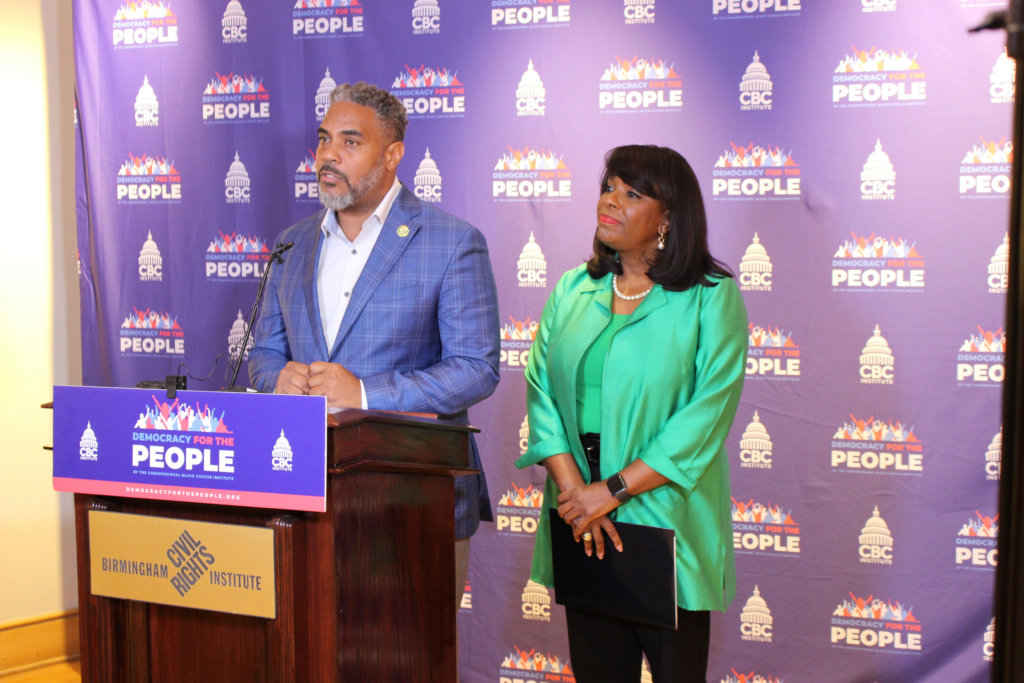
Last week, Congresswoman Terri Sewell (D-AL07), Congressional Black Caucus (CBC) Chairman Steven Horsford (NV-04), and members of the Congressional Black Caucus commented on their amicus brief filed by the CBC in the Northern District of Alabama. The CBC is upset that the Alabama Legislature failed to submit a new congressional map with two majority Black districts in July’s special session, so they have filed the amicus brief supporting Milligan and the other parties challenging the state’s congressional redistricting. “In defiance of the U.S. Supreme Court’s ruling in Allen v. Milligan, the Republican-controlled Alabama State Legislature has yet to redraw its congressional district map to include a second majority Black district—falling far beneath the goal set by the highest court in the land,” the CBC members said in a statement. “Instead of creating a second district where Black voters would have an opportunity to elect a Black-preferred candidate in compliance with the U.S. Supreme Court ruling, the Alabama State Legislature chose to again put forth a map that robs Black voters of their fundamental rights at the ballot box.” “Therefore, the Congressional Black Caucus filed an amicus brief in the United States District Court in the Northern District of Alabama objecting to the newly enacted congressional district map because we will not stand by and allow improper, racially discriminatory maps to stand without challenge,” the CBC Congressmembers concluded. Horsford came to Birmingham on Friday for a Congressional Black Caucus Institute (CBCI) event, the same day that former President Donald Trump came to Alabama. The CBCI hosted a mobilizer training session to educate participants on effective community mobilization, grassroots efforts, and impactful communication techniques to drive social change. Following the training, Sewell and Horsford hosted a panel discussion with Miles College President Bobbie Knight, Lawson State Community College President Cynthia Anthony, Interim Special Assistant to the President for Strategic Planning and Initiatives at Alabama A&M University Jackie Robinson, III, Community Activist Dee Reed, and Birmingham Urban League President and CEO William Barnes. The conversation was moderated by journalist Roland Martin and focused on pressing issues of democracy and racial equity, including attacks on Black history, the erosion of affirmative action, the state of voting rights, and the critical role of HBCUs in shaping our path forward. The Congressional Black Caucus claims that having only one majority Black district in Alabama – where 27% of the voting population is Black – violates the Voting Rights Act of 1965. The three-judge panel in Atlanta will hear both party’s cases later this month. It is likely that whichever side loses at the Eleventh Court of Appeals will ask the U.S. Supreme Court to intervene in the case. Many national pundits and legal scholars have to this point, questioned the Republican-controlled State Legislature’s congressional map. To connect with the author of this story or to comment, email brandonmreporter@gmail.com.
