
Alabama receives $100K Farm to School grant to buy more local produce
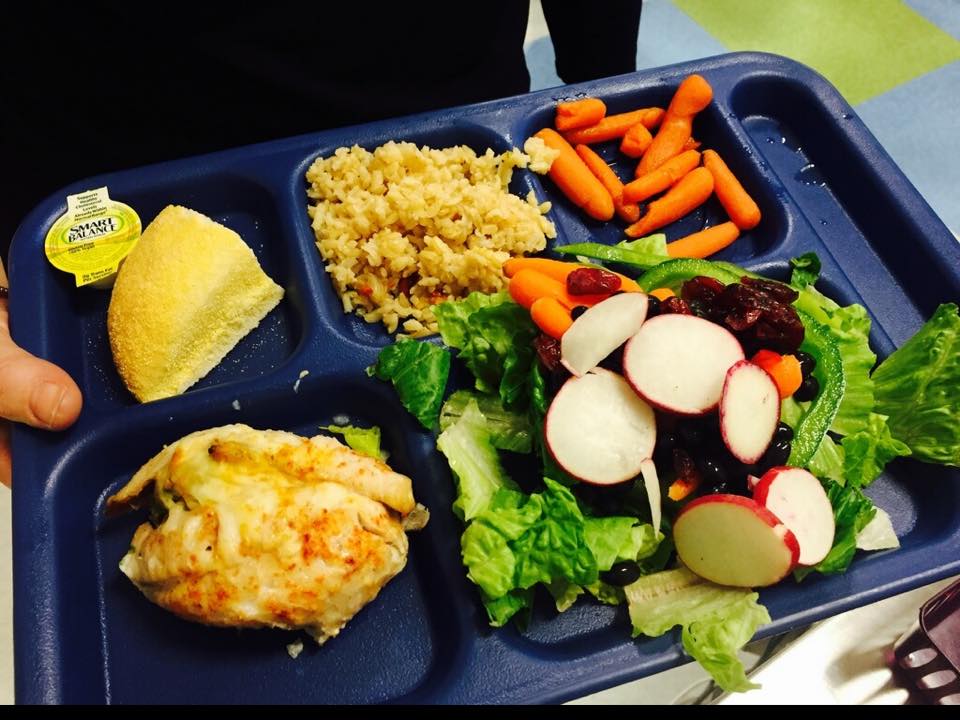
Alabama students will be seeing more locally grown produce on the school menus next school year thanks to a newly awarded $100,000 grant from the U.S. Department of Agriculture (USDA). Designed to increase the availability of local foods in schools, USDA Farm to School grants can help farm to school programs get started or expand existing efforts. “Increasing the amount of local foods in America’s schools is a win-win for everyone,” said USDA Secretary Sonny Perdue. “Our children benefit from the fresh, local food served in their meals at school, and local economies are nourished, as well, when schools buy the food they provide close to home.” The state’s Farm to School Cooperative — a coalition of state and community partners including the Alabama Department of Education, the Foodbank of North Alabama/Farm Food Collaborative, the Alabama Farmers Federation, Feeding the Gulf-Coast Food Bank, food hubs, Druid City Garden Project, and EAT South — was one of 65 projects recipients from across the country of the USDA’s 2017 Farm to School Grant. The co-op encourages schools to serve fresh, locally grown fruits and vegetables to students, implement hands-on education in school gardens, and provide nutrition and agriculture education. Specifically, the state will use grant funds to assist farmers with GAP certification, revise the Alabama farm to school website, develop a state-wide promotional campaign, and support school garden curriculum development. The Tuscaloosa-based Druid City Garden Project, part of the coalition, will utilize funds to facilitate building mobile cooking units for schools to engage students in cooking demonstrations with produce grown in school gardens. “The Alabama Farm to School Collaborative provides farmers an opportunity to develop relationships with the students in their local schools districts,” commented Alabama Agriculture Commissioner John McMillan. “Not only do the students enjoy locally grown food, but now they can make a connection to the person who grew it for them.”
Robert Aderholt applauds new trade emphasis in USDA reorganization

The Trump Administration is rolling out an extensive reorganization of U.S. Department of Agriculture (USDA), the first since 1994, that will streamline the department, create a new undersecretary position, and place new emphasis on trade and its important within the global economy. Recently confirmed Agriculture Secretary Sonny Perdue made the announcement Thursday. “Our plan to establish an undersecretary for trade fits right in line with my goal to be American agriculture’s unapologetic advocate and chief salesman around the world. By working side by side with our U.S. Trade Representative and Secretary of Commerce Wilbur Ross, the USDA undersecretary for trade will ensure that American producers are well equipped to sell their products and feed the world,” Perdue said in a press release. Alabama 4th District U.S. Congressman Robert Aderholt, Chairman of the House Appropriations Agriculture Subcommittee, applauded the USDA’s announcement. “America’s strength lay not just in our ability to protect our allies but also to feed them. I have long said that Americas strength might lay not just in our military capabilities but in the fact that we have one of the strongest agricultural economies in the world,” Aderholt said in a statement. “Realizing the strength of our farmers comes through trade. Quite frankly, our farmers and ranchers can compete with any country in the world if we are given a level playing field. An Under Secretary of Trade whose whole mission is to ensure that we have open markets, to provide proteins, and produce, will only make our rural economy that much stronger.” The creation of the undersecretary position was mandated in the 2014 Farm Bill, but ignored by the Obama Administration. Aderholt says he’s encouraged by the Trump Administration’s decision to make the position a reality. “I am encouraged that one of Secretary Perdue’s first acts is to establish this new Under Secretary,” Aderholt added. “This position will raise the profile of the American economy’s agricultural sector and focus on promoting American goods overseas.” The USDA reorganization will also elevate the Rural Development agencies to report directly to the secretary of agriculture in recognition of the need to help promote rural prosperity. “The economic health of small towns across America is crucial to the future of the agriculture economy. It is my commitment to always argue for the needs of rural America, which is why we are elevating Rural Development within USDA,” said Perdue. “No doubt, the opportunity we have here at the USDA in rural development is unmatched.” Watch Perdue’s announcement below:
Martha Roby: Latest Cabinet picks encouraging for veterans, farmers
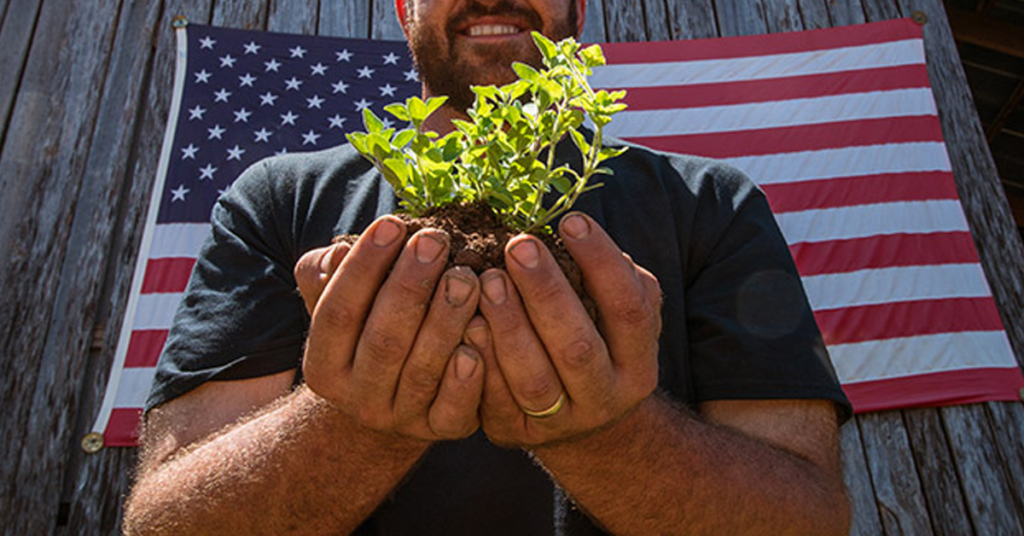
President Donald Trump continued to fill out key administration posts over the last week, including two positions that will have a significant impact on our district and state: Secretary of Agriculture and Secretary of Veterans Affairs. Former Georgia Governor Sonny Perdue has been nominated to serve as the next Secretary of Agriculture, which I believe is a strong selection that is good for Alabama. Agriculture is our state’s largest industry, and the policies carried out by the U.S. Department of Agriculture (USDA) affect Alabama farmers in meaningful ways. Gov. Perdue was raised on a farm and built his career working in the agriculture industry. As the former governor of neighboring Georgia, Gov. Perdue brings valuable understanding of Alabama-produced commodities from peanuts and cotton to poultry and forestry. He’s been a longtime friend to farmers, and a friend of farmers is a friend of mine. It won’t be long until Congress begins crafting a new farm bill. As we do, I’m eager to work with Gov. Perdue to ensure that USDA programs and services adequately address the needs of farmers and rural communities in Alabama. For Secretary of Veterans Affairs, President Trump has tapped Dr. David Shulkin, who currently serves as VA Under Secretary for Health. Some criticized this nomination because, as a current VA official, Dr. Shulkin isn’t viewed as the “outsider” that many expected from the Trump Administration. I understand these concerns, and certainly no one has been more vocal than me about the need to clean house at the VA. However, it is important to remember that Dr. Shulkin is relatively new. He came in from the private sector to replace those who were dismissed in the wake of the national wait time scandal, so it’s not fair to pin all of the problems on him. I have met with Dr. Shulkin in my office and worked with him on VA reform legislation. He is a physician with a great deal of experience managing a large health care network. I believe he truly wants to reform the system, and we owe it to him to give him a chance to lead. Alabama’s 2nd District has one of the highest concentration of veterans in the country. We’ve made significant progress improving the Central Alabama VA that serves our area, but much more work remains. It is important for me to have relationships with top VA officials so that we can turn their attention to problems in Alabama when action is needed. Cabinet posts like Agriculture and Veterans Affairs might not come with the same fanfare as more visible roles like Secretary of State or Secretary of Defense, but they are critical posts for issues impacting those I represent. I look forward to working with both Gov. Perdue and Dr. Shulkin for the benefit of Alabama farmers and veterans. ••• Martha Roby represents Alabama’s Second Congressional District. She lives in Montgomery, Alabama with her husband Riley and their two children.
Ag. Sec. Tom Vilsack takes job with dairy industry after leaving USDA

Former Agriculture Secretary Tom Vilsack is taking a job at the U.S. Dairy Export Council. The group is a nonprofit that promotes dairy products. An announcement Tuesday said Vilsack will help “develop a long-term vision for building sales and consumer trust in U.S. dairy.” Vilsack is entering the private sector after decades in public service. Before he was appointed agriculture secretary in 2009, he was Iowa’s governor for eight years. He also served in the Iowa state senate and as mayor of Mount Pleasant, Iowa. He was also on Democrat Hillary Clinton‘s vice presidential short list. She chose Virginia Sen. Tim Kaine instead. Vilsack was President Barack Obama‘s longest-serving Cabinet secretary. He left that position Friday, a week before Donald Trump takes office. Republished with permission of The Associated Press.
Parents, save up: Cost of raising a child is more than $233K

Expecting a baby? Congratulations! Better put plenty of money in your savings account. The Department of Agriculture says the estimated cost of raising a child from birth through age 17 is $233,610, or as much as almost $14,000 annually. That’s the average for a middle-income couple with two children. It’s a bit more expensive in urban parts of the country, and less so in rural areas. The estimate released Monday is based on 2015 numbers, so a baby born this year is likely to cost even more. It’s a 3 percent increase from the prior year, a hike higher than inflation. Since 1960, USDA has compiled the annual report to inform – and probably terrify – budget-preparing parents. State governments and courts also use the information to write child support and foster care guidelines. The main costs include housing, food, transportation, health care, education, clothing and other miscellaneous expenses. Things to know about how much it costs to raise a child: HOUSING IS EXPENSIVE Up to a third of the total cost is housing, accounting for 26 to 33 percent of the total expense of raising a child. USDA comes up with those numbers by calculating the average cost of an additional bedroom – an approach the department says is probably conservative, because it doesn’t account for those families who pay more to live in communities that have better schools or other amenities for children. — URBAN VS. RURAL DIFFERENCES The cost of raising a child varies in different regions of the country. Overall, middle-income, married-couple families in the urban Northeast spent the most ($253,770), followed by those in the urban West ($235,140) and urban South ($221,730). Those in the urban Midwest spent less ($217,020), along with those in rural areas ($193,020). USDA estimates the annual housing cost per child in urban areas is $3,900, while it’s $2,400 in rural areas. There were also differences depending on income. Lower-income families are expected to spend around $174,690 per child from birth through 17; higher-income families will spend a whopping $372,210. The average middle-income family earns between $59,200 and $107,400 before taxes. — CHILD CARE COSTS HAVE RISEN After housing, child care, education and food are the highest costs for families. For a middle-income couple with two children, food costs make up about 18 percent of the cost of raising a child. Child care and education costs make up 16 percent. Education costs have sharply risen since 1960, when USDA estimated that those expenses were around 2 percent of child-rearing expenses. The report says this growth is likely due to the increased number of women in the workforce, prompting the need for more child care. The numbers don’t even include the annual cost of college, which the government estimates is $45,370 for a private college and $20,090 for a public college. — OLDER KIDS ARE MORE EXPENSIVE New parents may flinch at the costs of diapers and baby gear, but it’s going to get worse. While a child costs around $12,680 when he or she is between 0 and 2, a teenager between 15 and 17 costs around $13,900 annually. USDA says food, transportation, clothing and health care expenses all grow as a child ages. Transportation costs are highest for the oldest children, perhaps because they start driving, and child care and education costs are highest for six and under. — MORE KIDS, LOWER COSTS There is some good news for big families. Families with three or more children spend an average of 24 percent less per child. USDA says that’s because children often share bedrooms in bigger families, clothing and toys are handed down and food can be purchased in larger and more economical packages. Also, private schools and child care providers may offer sibling discounts. In contrast, one-child households spend an average of 27 percent more on the single child. Republish with permission of The Associated Press.
Bradley Byrne applauds USDA’s new relending program to reduce rural poverty
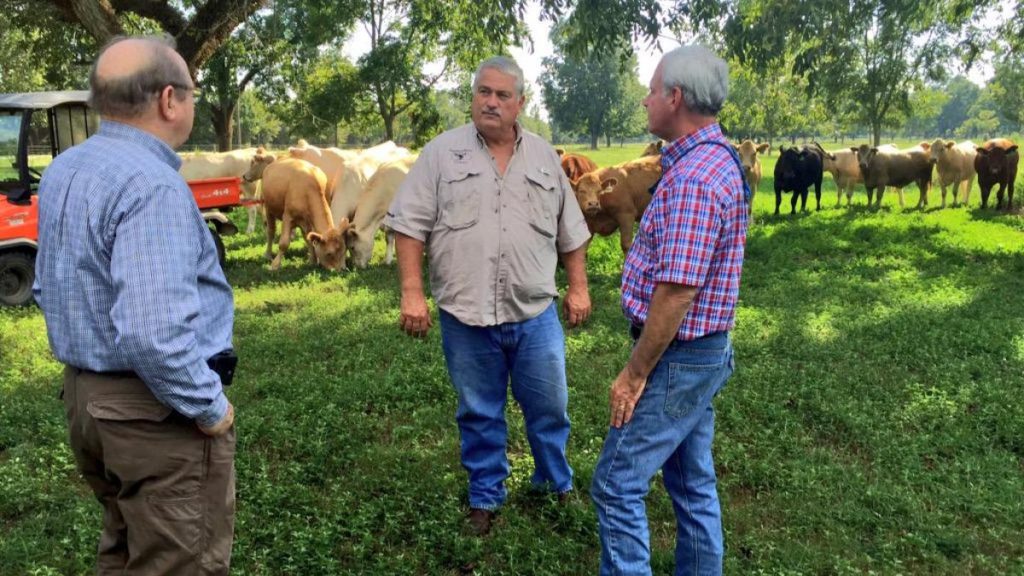
U.S. Agriculture Secretary Tom Vilsack on Thursday unveiled an innovative partnership of the U.S. Department of Agriculture Rural Development with community development organizations from across the country, providing $401 million of Community Facilities program funds to recipients with a track record of successful programs to help reduce poverty in some of the nation’s poorest and most isolated rural communities. Twenty-six community development organizations were approved to draw upon the funding to provide long-term, low-interest financing to be “re-lent” to local entities to build, acquire, maintain, or renovate essential community facilities. The funds also may be used for capacity building and to finance essential community services, such as education, health care, and infrastructure. “This effort builds on our commitment to lifting up the economic prospects of communities that have not benefited from the revitalization of rural America,” Vilsack said. “By engaging with local and national partners, private-sector financial institutions and philanthropic organizations, USDA will inject a game-changing level of investment capital to reduce poverty in targeted rural areas where the capacity for growth has not been realized.” United Bank, based in Atmore, Alabama, has been selected to serve as a lender in the program. United Bank’s loan totals $40 million, which will now be re-loaned to local communities. This is the largest Community Facilities Relending Program loan in the United States. Alabama 1st District U.S. Congressman Bradley Byrne, who represents Atmore, applauded the new initiative. “I applaud the efforts of the United States Department of Agriculture to help our rural communities in Southwest Alabama,” said Byrne in a news release. “These rural communities face many distinct challenges, and this loan program will allow them to make critical investments in infrastructure to improve the quality of life for local residents.” “I’m especially pleased a local bank, United Bank in Atmore, has been selected to serve as the community lending institution, and I look forward to following the impact the program has on Alabama’s rural communities.” Public bodies, community-based nonprofit corporations, and federally recognized tribes are eligible to apply for the loan program. Funds from the loan program can be used on a range of essential community facilities or equipment including healthcare facilities, town halls, courthouses, child care centers, fire departments, police vehicles, libraries, food pantries, and more. Atmore’s specific funds will be available to counties in Southwest Alabama and Northwest Florida.
USDA describes $328M oil spill restoration plan for Gulf

The U.S. Department of Agriculture says it’s focusing conservation programs along the Gulf of Mexico in a $328 million plan to help recovery from the 2010 oil spill. Undersecretary Robert Bonnie says the agency will use that focus through 2018 as it helps coastal producers plan improvements to improve water quality and improve coastal ecosystems under several Farm Bill programs. Louisiana State University AgCenter Associate Vice President Rogers Leonard says the oil spill tie-in is a new twist to existing programs, and will bring in a broader audience. Gulf Coast farmers will be interested in the amount of money available, he said. Bonnie described the plan Monday at a Mississippi timber plot where the owner has worked with USDA’s Natural Resources Conservation Service to help improve downstream water quality. Republished with permission of the Associated Press.
USDA approves disaster aid for farmers in 25 Alabama counties
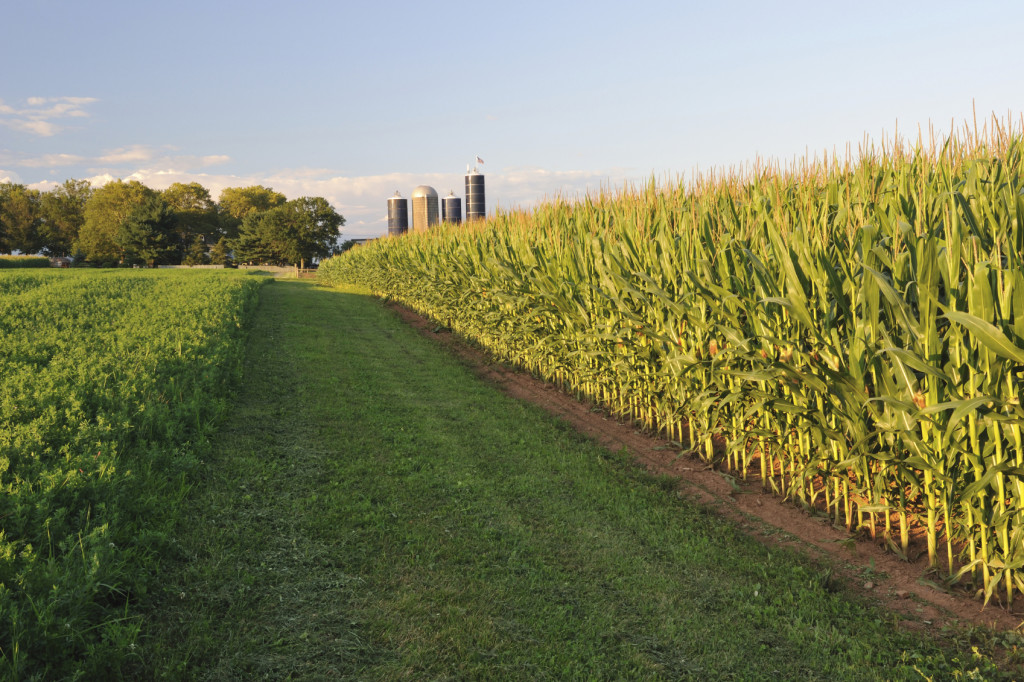
Farmers in 25 Alabama counties are eligible for emergency loans because of excessive rainfall, wind and flooding this year, Gov. Robert Bentley‘s office announced. The United States Department of Agriculture approved the counties for a Secretarial Natural Disaster Designation, allowing farmers to be considered for help from the USDA-Farm Service Agency. The severe weather caused extensive damage to many crops during the 2015 growing season, according to a news release from the governor’s office. Bentley sent a letter to Agriculture Secretary Thomas Vilsack on Nov. 12 asking for the assistance. Today, Vilsack formally designated 13 counties as primary natural disaster areas, as well as 12 contiguous counties. The counties are: Baldwin, Barbour, Butler, Bullock, Chambers, Coffee, Conecuh, Covington, Crenshaw, Dale, Elmore, Escambia, Geneva, Henry, Houston, Lee, Lowndes, Macon, Monroe, Montgomery, Pike, Randolph, Russell, Tallapoosa and Wilcox. Farmers in those counties have 8 months to apply for emergency loans. The applications will be evaluated individually based on direct production losses. Republished with permission of the Associated Press.
Daniel Sutter: The Supreme Court, raisins, and economic freedom

The past week witnessed a number of momentous decisions by the U.S. Supreme Court. One case involving raisins struck a blow for economic freedom. The case highlights how some public policies, by design, benefit some Americans at the expense of others. Horne v. Department of Agriculture involved what are known as U.S. Department of Agriculture (USDA) marketing orders. The California Raisin Marketing Order required farmers to turn over a portion of their crop each year to the USDA, sometimes without any compensation. Marvin and Laura Horne refused to hand over part of their raisin crop in 2002 and 2003, and were fined almost $700,000. The Supreme Court ruled that confiscation of raisins was a taking of property protected by the Fifth Amendment, so the USDA must compensate the Hornes. The above facts suggest that marketing orders punish farmers, but they actually artificially inflate prices of farm products. The USDA determines how many raisins to keep off the market each year to sustain high prices. The higher prices generally more than compensate farmers for surrendering part of their crop. The USDA enabled raisin growers to realize the dream of many businesses of establishing a successful cartel. A cartel refers to a group of businesses coordinating to act like a monopolist, reducing output to increase profit. Such collusion is both illegal under antitrust laws and extremely difficult to achieve and maintain without government help. The lure of profit usually leads individual businesses or farmers to cheat on any cartel agreement. The USDA enforced production limits through the marketing order. Uncle Sam had maintained numerous cartels at the expense of consumers. Marketing orders or price support programs have boosted the prices of many crops, including dairy products, corn, wheat and rice. In addition, the Interstate Commerce Commission and Civil Aeronautics Board maintained cartels in trucking, railroads, and airlines until deregulation in the 1970s. The Raisin Marketing Order illustrates several inconvenient truths about many government economic policies. First, government’s economic acts ultimately involve coercion, in this case the confiscation of raisins. Government can spend money because it taxes, which people pay because of threats of fines or imprisonment for nonpayment. Regulation also involves coercion: people get building permits, for instance, because of the threat to forcibly halt building if the permit is not obtained. Coercion makes justification of the government’s acts important. Our criminal justice system relies on coercion for arrest and imprisonment, plus to collect the taxes to pay for the police officers, courts and prisons. Clearly coercion can be justified, but proponents should have a good reason for coercing their fellow Americans. Government sometimes does nothing more than take from one group to give to other Americans. The Raisin Marketing Order was meant to enrich raisin growers at the expense of consumers. The use of coercion to transfer wealth, I think, requires a really good justification. Again this is possible; most Americans support transfer programs to help out the less fortunate. Other times politicians try to pass off wealth transfers as serving some larger purpose. Some claim, for instance, that farm programs ensure a supply of food for our nation, but this ignores that many crops are supplied without marketing orders or price supports. Finally, the Raisin Marketing Order wasted resources. Farmers used land, tractors, water and labor to grow raisins that the USDA did not let people consume. These resources could not consequently be used to produce other goods and services. So not only do consumers have to pay more for raisins, our economy is poorer as well. It would be cheaper for the USDA to simply send raisin farmers a check and let all of the raisins go to the market. Unfortunately the Supreme Court’s decision in Horne did not declare policies intended to enrich some Americans at the expense of others unconstitutional, but merely requires compensation to farmers for crops taken. Nonetheless, the ruling eliminates one tool for government meddling in markets, and thus increases our economic freedom. Daniel Sutter is the Charles G. Koch Professor of Economics with the Manuel H. Johnson Center for Political Economy at Troy University and host of Econversations on TrojanVision. Respond to him at dsutter@troy.edu and like the Johnson Center on Facebook.
I’m a conservative, and I think it’s time we take the politics out of food stamps: guest opinion
Over my coffee yesterday morning I read the AL.com reader comments on a post about food stamps. I can’t help but take a moment to weigh in on the flawed argument that embarrassing those who need government assistance is how we address the ever-growing reliance on much-needed support. To understand my thoughts on the issue, though, I think it’s important you know who I am and where I came from. The short version: I know too well about poverty and hard times because I saw it firsthand growing up and again when I left home for college with very little money of my own. I am one of three kids of a mother who had us all between the ages of 16 and 20. My mother and stepfather spent most of my life working minimum-wage jobs at places like Pizza Hut, Walmart and grocery stores. I know about the shame and stigma of food stamps because my parents struggled to get on and off of them for years. This was back when food stamps resembled coupon books rather than debit cards. When we were off them my stepfather — one of the kindest, hardest-working men I’ve ever met — would often work two to three jobs at once. When I left for college, I rode 300 miles on an overnight Greyhound bus alone to get to orientation. I became the only child in my family who graduated high school and the first in my extended family to go to a four-year university. I worked odd jobs from day one, until a part-time job counting cars on the side of the road led to a full-time job in transportation statistics. Shame isn’t the answer. Those who need help are often already ashamed to ask for it, and those who are abusing the system are beyond shame. I write this to give context to my beliefs before anyone of you says that since I’m Republican or, worse, a tea-party Republican, I must not get it. I’ve heard it all before: I must have no heart. I can’t possibly understand. I’m mean and cruel and out of touch. The fact is I do know. I do get it. My first two decades spent in and around the cycle of poverty convinced me that we need to do better. That requires an honest conversation without partisan politics and name calling. We’ve got to look for solutions to strengthen families and encourage them to do more and to do better. Just because I’m Republican, I don’t want people to starve and be homeless any more than I believe that all Democrats think people should have everything handed to them. This rhetoric on both sides keeps us from crafting local, state and federal policies and encouraging the community action that would make a real difference in those who need temporary aid. We need comprehensive welfare reform. Period. Anyone who says what we’re doing now is working isn’t paying attention. According to a 2013 Cato report that analyzed U.S. Department of Agriculture data related to food stamps, “roughly 48 million Americans receive (such) benefits, costing taxpayers more than $78 billion per year.” Yet according to the USDA, nearly 18 million American households remain “food insecure.” This means an estimated 18 million American households have inconsistent access to food and don’t eat regularly. This fact should lead to a heartbreaking wake up call that we need to do better. Shame isn’t the answer. Those who need help are often already ashamed to ask for it, and those who are abusing the system are beyond shame. When you and everyone you know have a government-issued cell phone, food stamps and other government assistance, you’re not worried about shame. Children are brought up only knowing that they live in a system that provides barely enough to get by. What I long for is a world where the cycle of poverty isn’t accepted and repeated generation after generation. Those who live like this are what most people think of when they think of welfare. Instead, we need to return to what welfare (in all of its many forms) was intended to be: a stop-gap for those who hit a rough time and need help to get back on their feet. Today’s letters were related to food stamps, but food stamps are just a symptom of a bigger problem. We need to promote community education projects for those vulnerable to continued use of government assistance to learn healthy financial management and strategies to break the cycle. We need people in our communities to answer pleas for help with more than a free phone or food stamps. We need to promote job training and dropout prevention programs that will help those who want to help themselves. We need to elect men and women who know that the government isn’t the answer. Our welfare problem is bigger than food stamps; it goes to the core of what we want our nation to be. An honest discussion is the only way to address our real problems and open the door to the American Dream for everyone. This column appeared first on AL.com. Apryl Marie Fogel is a new Alabama resident who works as a conservative political activist.
