
Richard Shelby places friendly wager on Peach Bowl

In advance of Saturday’s Peach Bowl College Football Playoff Semi-final game between the #1-ranked University of Alabama Crimson Tide and the #4-ranked University of Washington Huskies, two Senators have made a friendly playoff bet, with the wager being hometown eats. Alabama’s senior U.S. Sen. Richard Shelby and Washington’s Democratic Sen. Maria Cantwell announced a the friendly bet — should the Huskies win, Shelby will provide two racks of ribs from Dreamland BBQ in Tuscaloosa, Ala. for Cantwell’s office. Should the Crimson Tide win, Cantwell has promised to deliver salmon to Shelby’s office. Shelby is confident in a Crimson Tide victory, accrediting the team’s assumed preparation to famed football coach Nick Saban. “These two teams should be extremely proud of their accomplishments so far in the season,” said Shelby. “I have no doubt that Coach Saban will have our team prepared and that they will represent our state well during this match-up. I’m pleased to enter into this friendly wager with my colleague, and I’m confident that the Crimson Tide will prevail and take us into another national championship game.” Cantwell hopes Shelby’s wrong. “This will be one of the best games of the year,” said Senator Cantwell. “There’s no doubt that Alabama has a powerhouse program, but I’ll be cheering the Dawgs on to victory.” The Chick-Fil-A Peach Bowl, will take place on Saturday, December 31, at 3:00 p.m. ET in Atlanta, Ga.
Bradley Byrne: A recap from the road
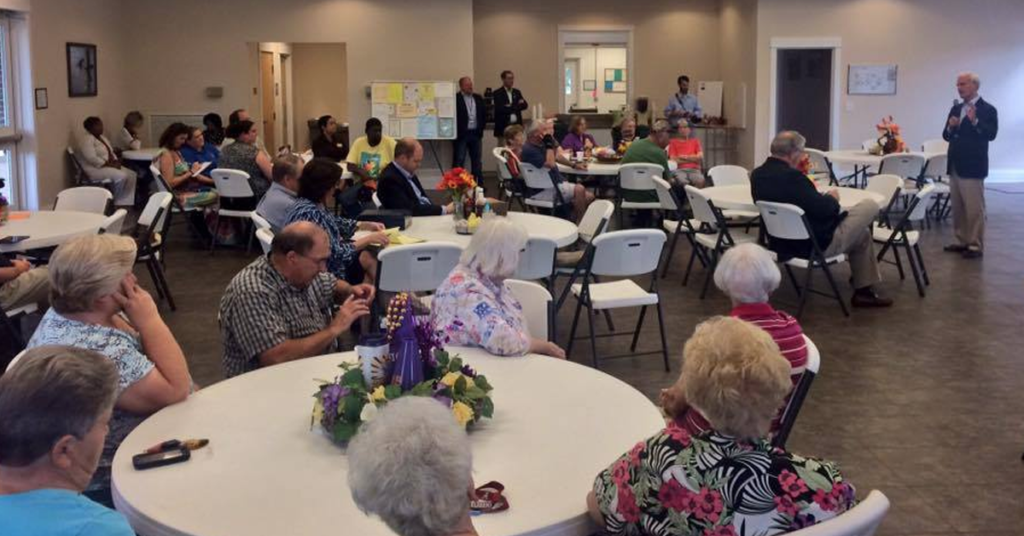
What do dehydrated fruits and vegetables, a new workforce training center, six town hall meetings, and the University of Alabama have in common? They were all a part of my busy week on the road in Southwest Alabama. Some of my most valuable time is spent traveling across the First Congressional District talking directly to the people I represent in Congress. With the House out of session until after the upcoming election, there have been many great opportunities to listen to the ideas and concerns of my constituents. I kicked things off Monday morning with a visit to Spring Hill College in Mobile to speak with students, tour the campus, and meet with President Christopher Puto. Spring Hill is an important part of the education system in Southwest Alabama, and its impact is felt all across the United States. Next, I headed to Mobile’s Providence Hospital to meet with community partners who serve those with Alzheimer’s disease and dementia. We had an important conversation about the ways federal policy can help those with Alzheimer’s, as well as family caregivers. I finished the day with a Veterans Town Hall Meeting at Battleship Memorial Park. I heard from a number of veterans who are still frustrated with the quality of care they are receiving from the Department of Veterans Affairs (VA). I outlined my support for the new VA clinic in Mobile and explained why I believe every veteran should be given a card to receive care from private doctors and hospitals in their local community instead of being forced into the failed VA bureaucracy. On Tuesday morning, I headed to Foley to celebrate the grand opening of Bon Secour Valley Ingredients. The new operation will bring a state-of-the-art fruit and vegetable dehydration and roasting facility to Baldwin County. This is just the latest in a long line of businesses George Woerner and his family have brought to our area. After having lunch with some members of the Gulf Coast News Today team in Summerdale, I headed up to Flomaton in Escambia County for a town hall meeting. We discussed a range of topics including health care, immigration, and the role of the media in politics. On Wednesday, I headed up to Clarke County for a number of meetings and events. I started off in Grove Hill with a visit to Clarke County High School. I enjoyed speaking with some of their students and checking out the new Clarke County Regional Workforce Training Center. Next, I held a town hall meeting in Jackson. Before the meeting, I had the opportunity to honor Jackson Mayor Richard Long for his over 20 years of service to the local community. His work has made a huge impact. Next, I went over to McIntosh in Washington County for a town hall meeting. At both the town halls in Jackson and McIntosh, I took questions on Social Security, foreign policy, religious freedom, and more. On Thursday, I held two more town hall meetings, in Mobile County’s Turnerville community and Uriah in Monroe County. Questions at these meetings covered everything from the presidential election to Obamacare to workforce training. I wrapped things up in Tuscaloosa on Friday with a visit to the University of Alabama. As our state’s only member on the House Education and the Workforce Committee, I believe it is important to understand the challenges and opportunities facing all of our institutions of higher education. Needless to say, it was a busy but successful week on the road. • • • Bradley Byrne is a member of U.S. Congress representing Alabama’s 1st Congressional District.
Autherine Lucy Foster joining Alabama Educator Hall of Fame
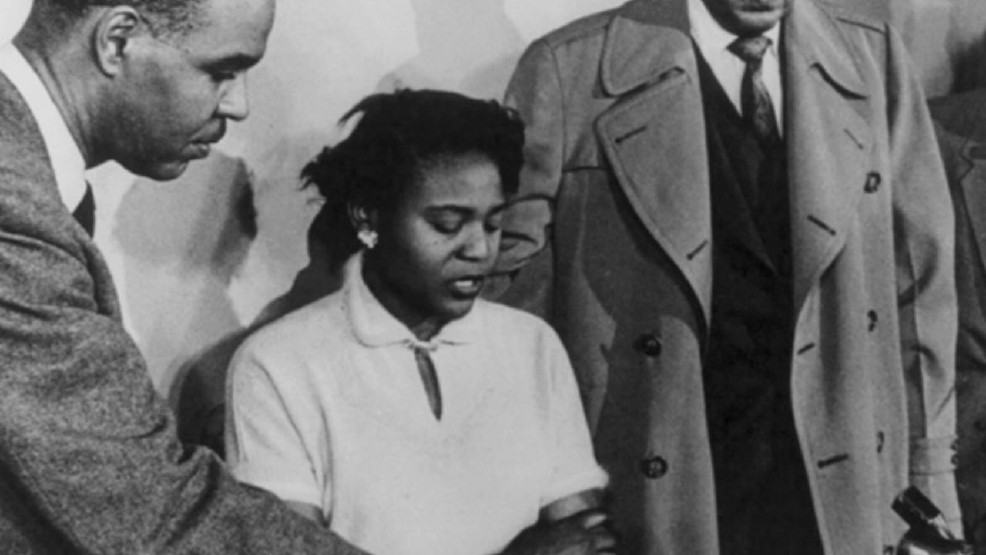
The first black person to attend the University of Alabama, Autherine Lucy Foster, is among four people who are being honored as the newest members of the university’s Alabama Educator Hall of Fame. The group will be honored at a ceremony Saturday night at NorthRiver Yacht Club in Tuscaloosa. Foster became the first black person to attend Alabama in 1956. Campus riots broke out and the university removed her. Foster’s expulsion was reversed in 1988, and she graduated from Alabama with a master’s degree in elementary education in 1992. The other honorees are being inducted posthumously. They include former Alabama educator professor Adolph Crew; former state school board president Ethel Hall; and Judy Merritt, who was the first woman to serve as a college or university president in Alabama.
White Alabama student suspended over Facebook slur, threat to kill black student
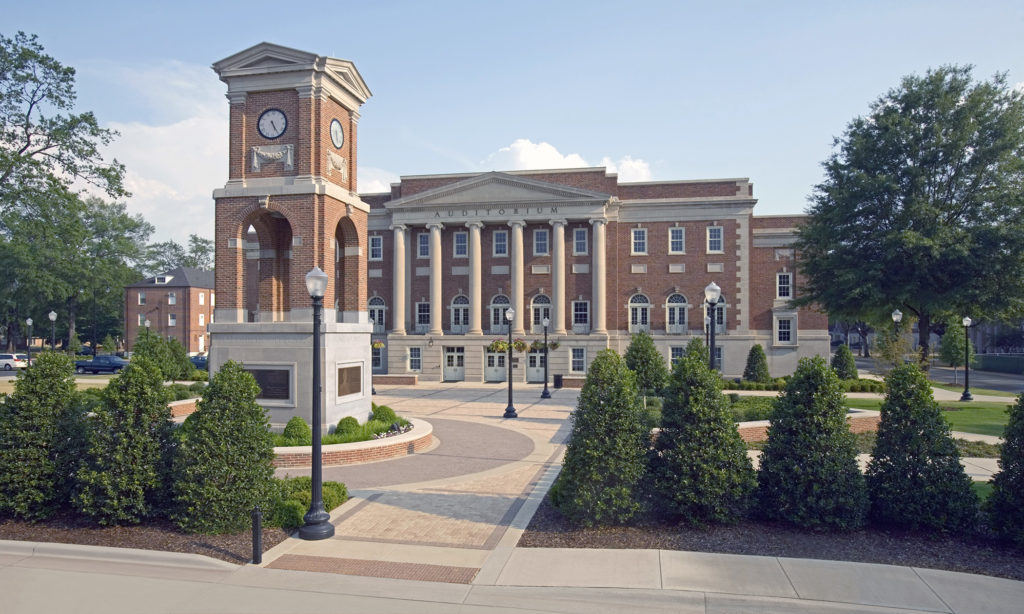
A white University of Alabama student has been suspended and removed from campus after he was accused of threatening to kill a black student in a Facebook post. Citing court records, Al.com reports that 20-year-old Ryan J. Parish was arrested Friday by university police officers and charged with harassing communications, a misdemeanor. The court documents say Parish threatened a black student, Jamal Commander, on the Alabama Student Ticket Exchange Facebook group last week, calling him a racial slur and saying “I’ll kill you.” The university released a statement on Facebook shortly before Parish’s suspension: Commander told WBRC-TV that he was threatened after expressing his support for those who stayed seated during the national anthem at a recent football game. “That was the main thing for me, it wouldn’t have been as crazy if he would have just called me the “N” word because that happen daily. We’re in Alabama,” Commander says. “Even in this day and age, it makes me sad. There isn’t any anger there, that phase in gone already.” It is unclear whether Parish has an attorney. Republished with permission of the Associated Press.
Suspected Baton Rouge shooter was former University of Alabama Dean’s list student
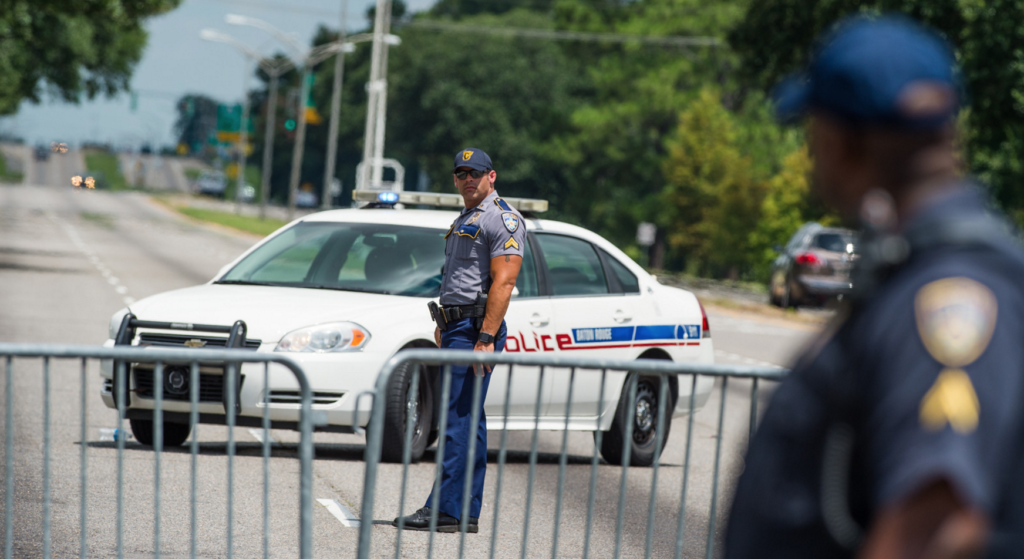
The gunman who shot and killed three Baton Rouge law enforcement officers and wounded three others Sunday morning has a tie to Alabama. University of Alabama spokesperson Chris Bryant confirms Gavin Long attended the school in 2012 for one semester. He was named to the school’s Dean’s List that spring. Bryant said the UAPD never had any interactions with Long while he attended the school. Long, a former Marine from Kansas City, Missouri, turned 29 on Sunday, the same day he opened fire on the police officers. He was shot and killed at the scene of the shooting.
Alabama CEO returns to Earth’s highest mountain for climb

An Alabama-based CEO expects to return to the Earth’s highest mountain for a second time this month after a massive earthquake stopped his initial climb. Kent Stewart, 59, will be traveling to Nepal in late April to climb Mount Everest, the Al.com reported. Stewart’s Birmingham-based Reli Title handles residential and commercial real estate transactions throughout Alabama and parts of Tennessee and Florida. In 2014, Stewart trained to climb Everest, but he canceled after controversy struck following an avalanche killed 16 people at the mountain. He also made an attempt in 2013, but didn’t make it to the top. Stewart got into mountaineering after he climbed Mount Kilimanjaro with his wife, Julie, and the pair went on to climb five of the “Seven Summits” – the highest point on each continent. Kent Stewart climbed the sixth, and all that’s left is Everest. “There’s more difficult mountains, but my goal from the very beginning was the climb the seven summits,” Stewart said. “I don’t have any plans to climb again after Everest if I complete it. I don’t know what I’ll move onto, but it probably won’t be mountaineering. It didn’t start out as a love of climbing. It started out as, and has remained, a personal challenge.” If Stewart reaches the top this time, Stewart will plant flag for the University of Alabama – his alma mater. Stewart said he’s learned from his previous attempt and feel confident. He’s learned how to keep his energy up and what to expect on certain difficult sections of the mountain. Stewart leaves in late April and is attempting the summit in a 30-day period, while most climbers take six to nine weeks. He’ll post updates when he can on his Facebook and Instagram. The damage to Everest was just a tiny fraction of the damage last year’s earthquake caused – the quake killed more than 8,000 people and decimated countless villages in Nepal, many of which are too remote for many rescue efforts. Some of the Sherpas Stewart got to know saw their villages obliterated by the quake. After his return last year, Stewart and his wife raised money through the Seven Summits Foundation, which the couple started after they first started climbing to help regions near the seven mountains. Last year, the Foundation raised about $87,000 to go toward rebuilding the remote villages in Nepal. There’s more to be done and it’s still accepting donations, but Stewart said the support so far has made a tremendous difference. “I’m in contact with my friends there, and they report that the village is almost back to normal,” Stewart said. Republished with permission of the Associated Press.
Alabama House approves resolution celebrating Harper Lee
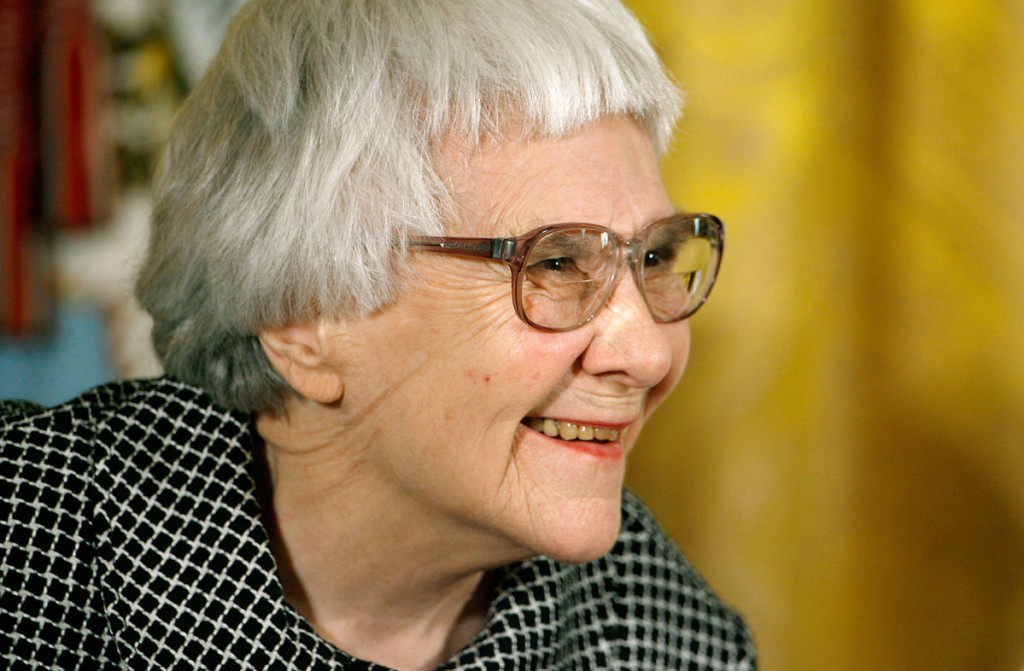
On Tuesday, the Alabama House of Representatives unanimously approved SJR62 from Sen. Hank Sanders (D-Selma), and co-sponsored by all other Senators, “mourning the death and celebrating the life and legacy of Nelle Harper Lee.” Lee was born in Monroeville and attended Huntingdon College and the University of Alabama before moving to New York City where she worked as an airline reservation agent while writing on the side. Lee composed her classic novel “To Kill A Mockingbird” only three years before the movie adaptation hit the silver screen in 1960, winning multiple Academy Awards. Despite the success of the book and film, Lee preferred to “surround herself in quiet solitude rather than notoriety.” The resolution further notes Lee’s 1961 Pulitzer Prize for Fiction, her 1999 award for Best Novel of the Century and her 2007 Presidential Medal of Freedom, among others. Not mentioned in the resolution is Lee’s invaluable contribution to the American masterpiece “In Cold Blood” by Truman Capote. Lee and Capote were childhood friends and, together, took thousands of notes and interviewed countless sources in researching the book. Lee published her second novel “Go Set A Watchman” in 2015. Though proclaimed a sequel to her first novel, the second was based off of her first draft from “To Kill A Mockingbird.” The resolution goes on to call Lee “a native Alabamian loved by many throughout the world” and her memory “deeply cherished in the hearts and minds of all those who were fortunate enough to know her, as well as her many fans.”
Roll Tide — Alabama Senate passes resolution commending university’s football victory
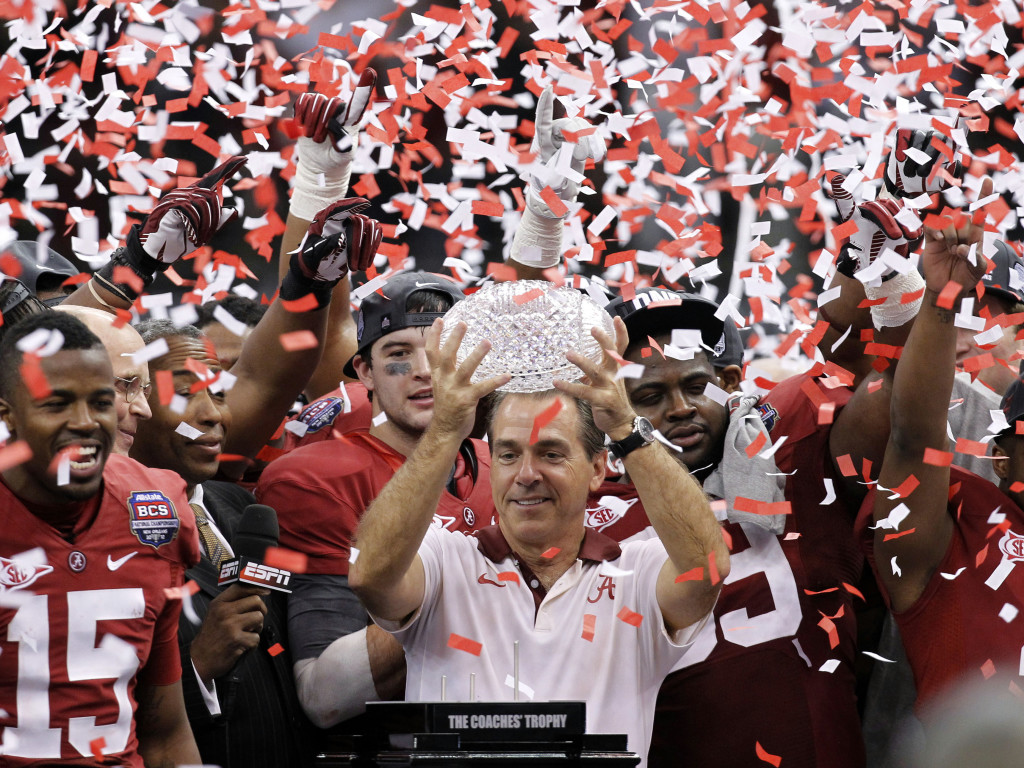
The Alabama Senate Tuesday passed SJR4, which sought to “most highly commend” the University of Alabama football team on winning the 2015 National Football Championship game in January. The resolution, which was unanimously resolved by both Houses, states that the Crimson Tide “showed incredible resourcefulness and resilience” in its 16th championship victory and earned “the right to be proclaimed the number one football team in the nation.” Citing that the victory “was truly a team effort.” A copy of the resolution will be presented to the university for display.
Jeb Bush cancels plans to tailgate in Tuscaloosa
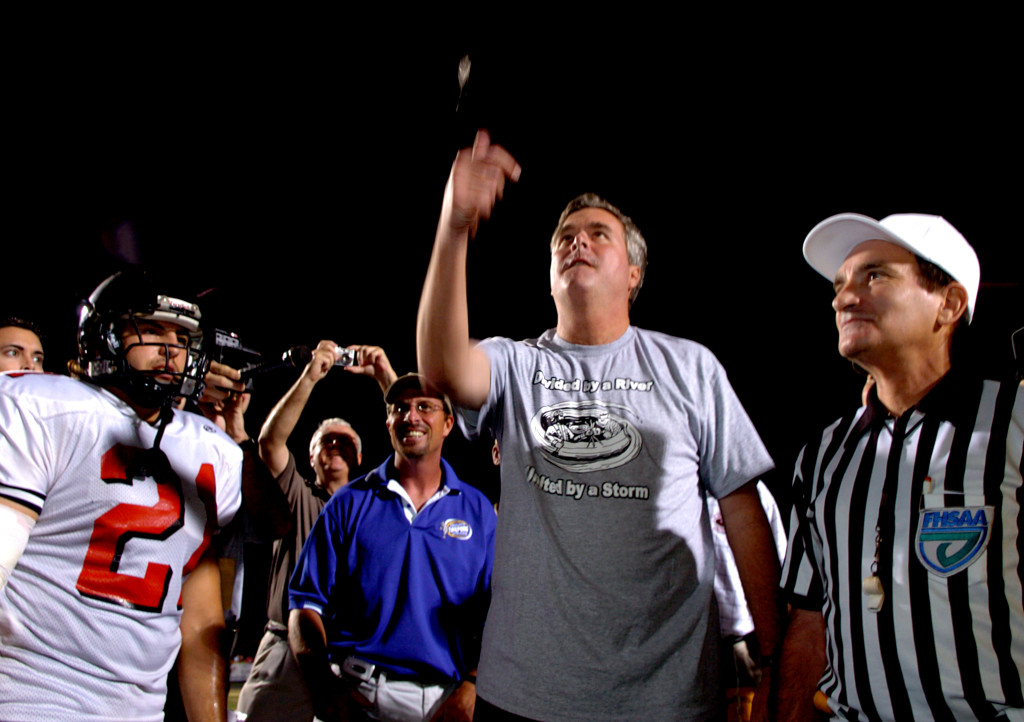
The Republican presidential campaign of former Florida Gov. Jeb Bush said Monday he won’t be on hand for an upcoming tailgate in Tuscaloosa, after all. Bush had earlier announced plans to take in the Saturday SEC matchup between LSU and ‘Bama on the campus of University of Alabama. Alabama Secretary of State John Merrill issued a memo welcoming to Bush to the Yellowhammer State, and expressing his gratitude that more candidates – Republican and Democratic – were stopping by on the campaign trail. The moves comes amid a shift in the Bush campaign toward a humbler, “pared down” approach since its fundraising momentum began to slow down this summer. Bushworld was criticized in some quarters for its high “burn rate,” or ratio of spending to contributions. The tailgate outreach was part of Bush’s effort to make gains in the new so-called “SEC Primary,” in which a new bloc of Southern states will hold their primaries on the same day, March 15. “When this many presidential candidates are choosing to visit and re-visit Alabama, it is proof the SEC Primary is working,” Merrill said. “The main goal of this effort is to create an environment that forces candidates to appeal to an even larger and more complete constituency than they currently do, and I am proud to see our state receiving the attention it deserves.”
Energy group launches emissions testing at University of Alabama
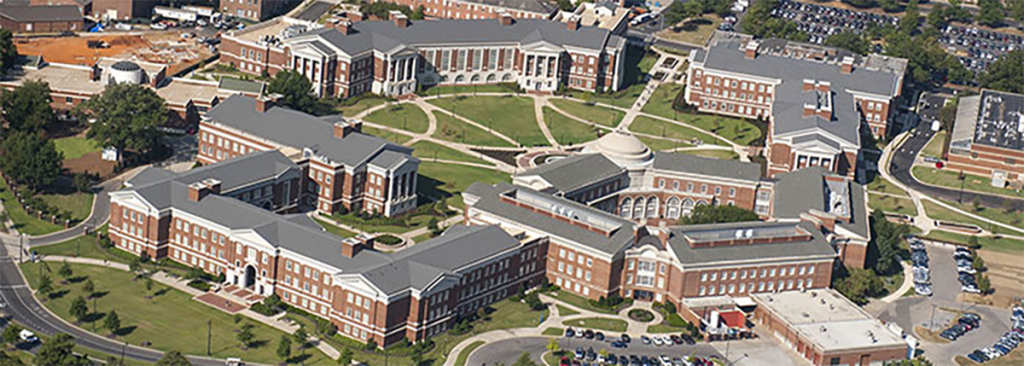
The Partnership for Affordable Clean Energy, or PACE, announced Wednesday it has teamed up with the University of Alabama Student Government Association to provide emissions testing for UA students’ cars free of charge. The pro-traditional energy consortium – which bills itself as a “coalition of working people, business owners, environmentalists, and trade organizations who are fighting for fair, responsible energy policies” – is calling its new initiative PACECAR. The effort allows students and faculty to test their cars for excessive levels of emissions for free. If their vehicles are found to be in need of repair, the PACECAR program will give vouchers for repairs up to $250. Registering with the program also makes them eligible for free tuition for the next semester. The testing takes place in UA’s automotive garage facilities. According to PACE executive director Lance Brown, it has so far been a resounding success. “The reception from students was very positive and they welcomed the chance to learn more about their vehicle’s emissions profile and earn a chance to win tuition,” said Brown in a recent statement. “We expect our numbers to increase on future testing dates as more students learn about the program.” University officials concurred Wednesday. “The University of Alabama is committed to environmental stewardship, and we are always open to projects that empower our students and faculty,” said Deborah Lane, Associate Vice President for University Relations. “We are proud to support this joint effort between the Student Government Association and PACE to provide free vehicle emissions testing for those who call our campus home.” At this juncture, four dates are planned for the Fall and Spring semesters.
Daniel Sutter: Will public universities privatize?
Many government services have been privatized over the past forty years, from whole enterprises like British Airways to simply contracting with private businesses for services like trash collection and operating cafeterias. My corner of the world, public universities, has witnessed only service privatization, but this may change. And in contrast with cases where conservative politicians have driven privatization, I suspect that a public university will decide to go private. Declining state appropriations for higher education represents the driving factor here. Speculation by higher education observers centers on three leading state universities, Michigan, Virginia, and Colorado, which currently receive 10% or less of their operating budgets from state appropriations. (To be clear, none of these universities have privatization plans today.) A university receiving 10% of its budget from the state would only have to cut costs by 5% and increase other revenues by 5% one time to take state funding to zero. I suspect that administrators can imagine how they might make such cuts and revenue increases. State appropriations to higher education have been falling as a share of government spending and university budgets for 50 years. For instance, the University of Michigan received 80% of its budget from the state in the 1950s. State appropriations fell from 46% to 36% of public university budgets nationally between 1977 and 1996. Appropriations have declined another 16% nationally since 2008 (25% here in Alabama), according to data from Illinois State University. State appropriations now provide less than 20% of the budgets of Troy University and the University of Alabama. Universities remain under state control despite diminishing financial support. For example, Governor Scott Walker and state legislators cut appropriations to the University of Wisconsin by $250 million this year, but also froze university tuition and revoked state law protection for faculty tenure. Eventually administrators and faculty at some state university will decide that state funding is not worth the control, and elected officials will jump at the chance to cut the remaining spending. Reduced state support has coincided with a rapid increase in tuition. Net tuition (posted tuition minus university scholarships and financial aid) at public universities has increased 54% faster than inflation over the past twenty years. State appropriations cannot be blamed for all of this, since net tuition has increased 29% faster than inflation at private universities. The relative quality of flagship state universities has also declined. Fifty years ago, Michigan, Virginia and Wisconsin, along with the Universities of California at Berkeley, Minnesota, Illinois, and North Carolina were among the nation’s top twenty universities. Only one public university made the U. S. News and World Report top twenty in 2014. Federal student aid and Medicaid have dramatically shaped state budgeting since 1965. Medicaid operates under a matching grant formula, under which states receive between $1 and $3 from the Federal government for every $1 they spend on Medicaid. But if states reduce spending on higher education and let tuition rise, many students will receive more Federal aid for students. Lawmakers can bring more federal dollars to their states by shifting appropriations from higher education to Medicaid. Over the last fifty years, Washington has asserted increasing control over state universities. Eligibility for Federal student aid requires compliance with U.S. Department of Education regulations and maintenance of regional accreditation. Any new tax dollars for higher education seem likely to come from Washington as well. President Obama’s free community college plan would rely on Federal dollars. Federal control, I think, is bad for higher education. Competition is the greatest force for ensuring performance, and state-run universities will naturally compete. North Dakota has increased higher education appropriations by 26% since 2008, using oil revenues to gain a competitive edge for the state’s universities. State control allows for experimentation and diversity, which is particularly valuable in scholarly fields. Our state universities have provided millions of people access to a quality education at an affordable price. But state lawmakers providing less funding while insisting on as much control as ever seems unsustainable. Our public universities appear destined to become “state” in name only. Daniel Sutter is the Charles G. Koch Professor of Economics with the Manuel H. Johnson Center for Political Economy at Troy University and host of Econversations on TrojanVision.
LSU Administrator top choice for new University of Alabama president
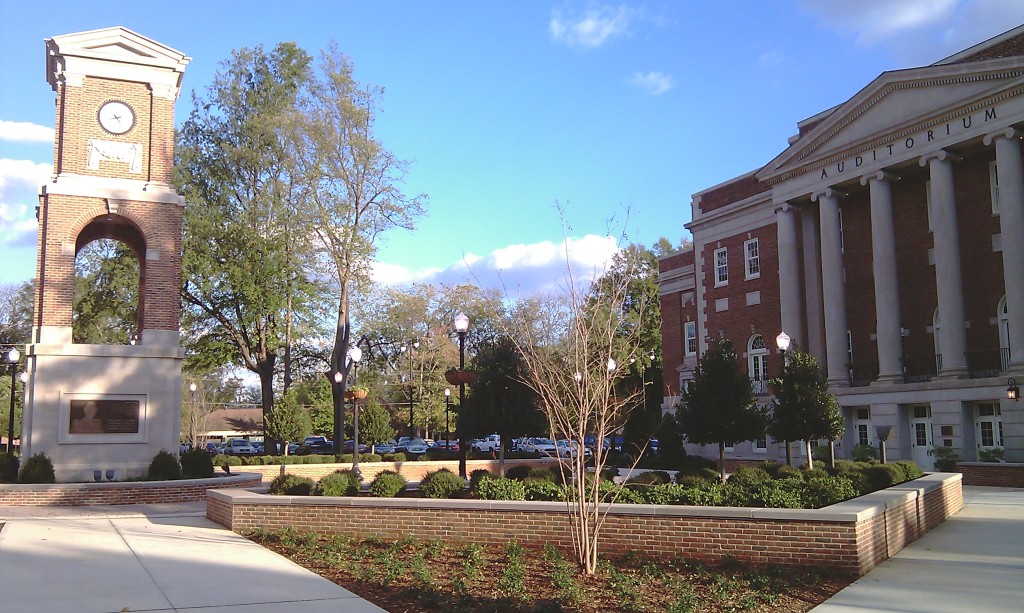
Trustees are selecting a new president for the University of Alabama. The board’s agenda for Thursday includes consideration of Stuart Bell as the successor to Judy Bonner. Bell is currently the provost and executive vice president at Louisiana State University. Alabama system Chancellor Robert Witt is recommending him for the top job in Tuscaloosa. Bell has said he’s excited about the possibility and looks forward to discussing the position with trustees. He would start at Alabama next month if approved. Bell was the only person recommended for the presidency following a four-month search by an advisory committee. He has three engineering degrees from Texas A&M University and previously taught engineering at Alabama. Bonner is retiring after less than three years. She’s the first woman to hold the presidency at Alabama. Republished with permission of the Associated Press.
