
House passes bill to help VA fill critical job openings with support of entire Alabama delegation
While partisan politics undeniably has its place in the nation’s capital, on Friday members of the U.S. House of Representatives put aside political bickering in order to support an issue everyone agrees on — taking better care of America’s veterans. With the support of the entire Alabama delegation, the House unanimously passed H.R. 1367 in hopes of improving the Department of Veterans Affairs’ (VA) ability to recruit and retain high-quality health care providers and other professionals. The department has tens of thousands of vacant positions, and the bill would help strengthen the VA’s ability to identify staffing shortages, recruit employees to fill vacant positions, quickly on-board new hires, and retain high-performing workers across the country. Additionally, it contains provisions that would improve leadership and accountability throughout VA system, while helping increase the number of veterans in the federal workforce. Also included in the bill, was an amendment added by Alabama-Democrat 7th District U.S. Rep. Terri Sewell. The amendment encourages the VA Secretary to select eligible employees for its Fellowship Program who represent rural areas in order to alleviate the systemic burdens of rural healthcare workforce shortages. “In return for their service, our country has a sacred obligation to care for our veterans and military families,” said Sewell. “Today’s bipartisan support for legislation that strengthens VA hiring practices is an important step towards providing more responsive, more effective healthcare for our nation’s heroes.” Approximately 25 percent of America’s veterans live in rural communities and comprise nearly 11 percent of the adult rural population. Rural veterans account for 36 percent of all VA enrollees, making Sewell’s amendment particularly pertinent. “My amendment helps to ensure that veterans who are serviced by rural VAs have access to healthcare experts with cutting edge experience in the public and private sectors,” Sewell continued. “On top of long driving distances and minimal access to care, workforce shortages make it harder for our rural veterans to get the help they need, when they need it. I want to thank my colleagues on both sides of the aisle for their support, and I look forward to continuing our work to ensure that our nation keeps its promise to the men and women who serve our country.”
Bradley Byrne: Taking better care of our veterans
I’ve held over 75 town hall meetings since being elected to Congress, and these meetings allow me to get a feel for what issues are most important to the people I represent. At every single town hall meeting, I get at least one question about problems at the Department of Veterans Affairs (VA). We have all read different stories about the VA in the newspapers – stories about secret wait lists, VA employees stealing drugs, veterans dying while waiting for care, and doctors overprescribing pain medication. During my town hall meetings, veterans stand up and put a real, human face on the horrible problems at the VA. I have seen veterans literally break into tears when talking about the lack of timely care or bureaucratic roadblocks. The stories are heartbreaking. Our veterans deserve better than this. The culture of complacency and lack of accountability at the VA is simply unacceptable. Now, I know not everyone who works in the VA system is a bad actor. There are certainly people who work tirelessly day in and day out to serve our veterans. Unfortunately, their stories are overshadowed by the widespread challenges. Ultimately, I think we need to fundamentally reconsider the way we care for our nation’s veterans. These men and women have put their lives on the line to protect our freedoms, and we should do everything we can to ensure they receive the care they deserve. I recently introduced H.R. 1032, the Full Choice for Veterans Act. This short, two-page bill would change the law to ensure every veteran eligible for VA care is also able to seek medical care from private doctors, specialists, and hospitals in their local community. In other words, my bill would give veterans access to private, local medical care instead of forcing them into the broken VA system. Giving veterans the choice of private care will allow them to receive more timely access to better care. Congress passed a law a few years ago to create a similar program, known as the Veterans Choice Program. Sadly, the VA put up restrictions that created confusion and greatly limited veterans access to private care. My bill would do away with those restrictions and open the program up to all veterans eligible for VA care. By doing this, I think we will see two major benefits. First, we will get better and timelier care for our veterans in their local communities instead of forcing them to drive out of the way to a VA hospital or clinic. Second, we will save taxpayer money by cutting back on the bloated VA bureaucracy. Giving veterans greater access to private medical care is something President Trump talked about repeatedly on the campaign trail, and I hope I can work with his Administration to actually give veterans the choices they deserve. President Donald Trump’s pick to lead the VA, David Shulkin, was recently confirmed by the Senate, and I stand ready to work with him and his team to succeed where his predecessors have failed in changing the culture of complacency at the VA. Until the system changes, I will also continue working to ensure the current VA system works for our veterans. If you, or someone you know, is having a hard time navigating the bureaucracy at the VA, I hope you will encourage them to contact my office at 251-690-2811. My staff and I stand ready to help. There is no group more deserving of timely care and treatment than those who have served our country. By giving them greater choices and access to private care, I think we can do right by our veterans. • • • Bradley Byrne is a member of U.S. Congress representing Alabama’s 1st Congressional District.
Donald Trump hosts candidates for key Veterans Affairs post
President-elect Donald Trump met Tuesday met with candidates for his unfilled Cabinet positions, including prospective hires to run the Department of Veterans Affairs, a beleaguered agency that the Republican businessman has vowed to overhaul. Vice President-elect Mike Pence met with members of his incoming national security team a day after acts of violence rocked the world. At Mar-a-Lago, Trump’s palatial Florida estate, was slated to meet with Luis Quinonez, who runs a company with military and health care ties and is said to be under consideration for VA secretary. He also is set to meet with Toby Cosgrove, the CEO of the Cleveland Clinic, who was a top contender to replace Eric Shinseki when he resigned at the VA in 2014. Cosgrove later withdrew from consideration. Trump repeatedly pledged during the campaign to fix the woes at the department and said he would “take care of great veterans.” But he also came under scrutiny for being slow in paying out money raised for veterans groups and for suggesting that “strong” veterans don’t need treatment for mental health problems. Others said to be considered for the post include former Massachusetts Sen. Scott Brown, Florida Rep. Jeff Miller and Pete Hegseth, an Army veteran and former CEO of Concerned Veterans for America. Trump is also considering Jovita Carranza, who worked in President George W. Bush‘s administration, as his choice for U.S. trade representative. She served as deputy administrator of the Small Business Administration under Bush. With just a handful of Cabinet posts to fill, Trump is facing some criticism for a lack of diversity in his senior team, which currently includes no Hispanics. The National Association of Latino Elected and Appointed Officials said Tuesday that it was “deeply concerned” at the lack of Hispanics considered for top jobs. Carranza was a member of Trump’s Hispanic advisory council during the campaign. Pence, meanwhile, met in Washington with former Texas state official Susan Combs, who served both as state agriculture commissioner and comptroller. Trump also needs to fill the Agriculture Cabinet slot. Transition officials did not immediately confirm if Combs is up for that post. Earlier Tuesday, Trump was back on Twitter striking out after Bill Clinton told a suburban New York City newspaper this month that Trump “doesn’t know much. One thing he does know is how to get angry, white men to vote for him.” The Bedford-Pound Ridge Record Review also reported that Clinton claimed that Trump called him after his election victory over Hillary Clinton. “Wrong, he called me (with a very nice congratulations),” Trump tweeted. The president-elect added that Clinton is the one who “‘doesn’t know much’… especially how to get people, even with an unlimited budget, out to vote in the vital swing states (and more).” The Clinton campaign, he said, “focused on the wrong states.” Clinton later responded on Twitter, writing, “Here’s one thing @realDonaldTrump and I can agree on – I called him after the election.” The tweets come after a rattling day of violence around the world – with Trump appearing to jump ahead of investigators to blame Islamic terrorists for deadly incidents in Turkey and Germany and vowing anew to eradicate their regional and global networks. Pence met with retired Lt. Gen. Mike Flynn, the incoming National Security Adviser; retired Gen. John Kelly, Trump’s nominee for head of Homeland Security; retired Gen. James Mattis, the pick for Defense Secretary; and Rex Tillerson, the head of Exxon Mobil and the intended nominee for Secretary of State. Aides said the meeting was planned before the acts of violence, though they would be discussed. Republished with permission of The Associated Press.
Martha Roby applauds U.S. House passage of VA reform legislation

A bill that would create greater accountability measures on Department of Veterans Affairs workers and enhance protection for whistleblowers who expose wrongdoing passed the U.S. House of Representatives on Wednesday. The H.R. 5620: VA Accountability First and Appeals Modernization Act, would allow the VA secretary more flexibility to fire, demote or otherwise punish mid-to-lower level employees for misconduct or poor performance, according to a release sent out by the bill’s co-sponsor Alabama 2nd District U.S. Rep. Martha Roby. According to Roby, the current accountability measures only apply to senior managers and not rank-and-file employees. Roby said the legislation will make a difference in improving care for veterans. “The Central Alabama VA was home to some of the worst abuses nationwide,” explained Roby in a release. “Because of the corruption and misconduct we exposed, the director became the first senior manager fired for cause under the new VA accountability law. That was certainly needed, but it didn’t go far enough.” “I’ve said all along that the blame for what happened does not rest with one person alone. There has been a culture of complacency at the VA throughout the ranks because mid-to-lower level employees know they can almost never be fired. This reform bill changes that by finally giving the VA Secretary the authority to swiftly fire, demote or otherwise punish employees for poor performance or misconduct.” Working with whistleblowers and the press, Roby helped expose major instances of malfeasance and mismanagement that resulted in the Central Alabama VA director being the first senior manager in the country fired under the reform law enacted in 2014. However, that law only allowed the Secretary to deal with senior leaders, not mid-to-lower level employees. Wednesday’s bill would expand those measures down the ranks to ensure all employees can be held accountable for misconduct or poor performance in the treatment of veterans. Roby also lauded the whistleblower protections contained in the bill, calling the treatment of her sources “a disgrace.” “The bill also enhances protections for whistleblowers, and I cannot emphasize enough how important that is. If it weren’t for the brave whistleblowers who told me the truth, who knows if we’d have ever gotten to the bottom of the problems in Central Alabama,” said Roby. “And, the way they were treated was a disgrace. There need to be real consequences for intimidating or retaliating against whistleblowers, and this bill delivers just that.” In summary, H.R. 5620 does the following: Authorizes the Secretary of Veterans Affairs to fire, or demote any VA employee for performance or misconduct. Employees would be afforded due process, including an expedited appeal to the Merit Systems Protections Board; Authorizes the Secretary to reduce a senior manager’s pension if they are convicted of a felony related to their job. Enhances protections for whistleblowers by providing additional reporting mechanisms and mandating that any supervisor found to have retaliated against a whistleblower be suspended or terminated, with the possibility of bonus recoupment. Improves the VA’s appeals process by giving veterans more options and better clarity for pursuing an appeal.
Martha Roby ‘not amused’ by VA secretary’s Disney comments
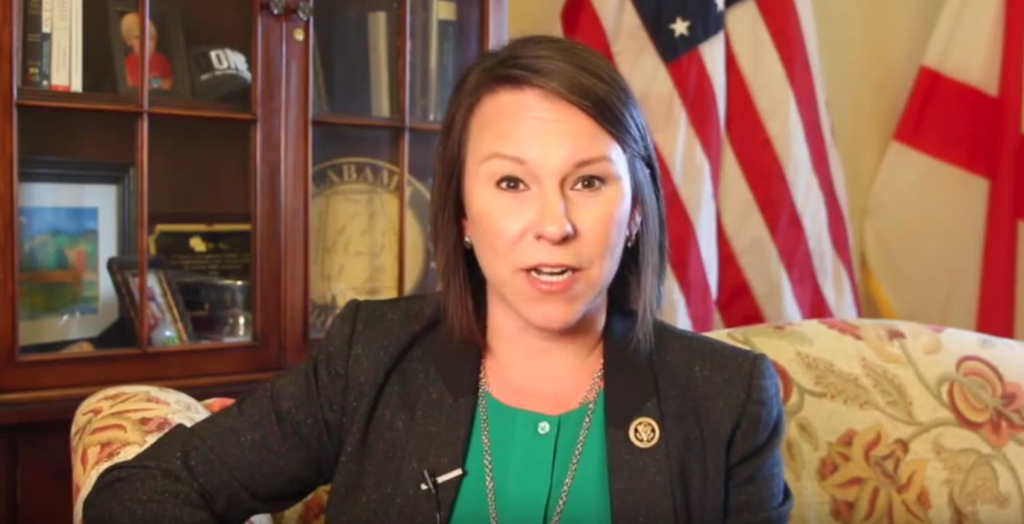
When Veterans Affairs Secretary Robert McDonald compared wait times for veterans’ medical treatment to the lines at Disney theme parks, Republican U.S. Rep. Martha Roby was “not amused.” Roby is sick and tired of vets — particularly in Alabama, where care was recently reported to be among the worst in the U.S. — being left sick and tired at the hands of the VA. “Comparing the wait times veterans experience for health care to lines at Disneyland is beyond absurd, and I’m really not amused,” said Roby. “Wait times do matter, and the VA shouldn’t be able to hide them.” “This is exactly why my bill makes VA Medical Center performance data public on the federal register. By requiring key VA health metrics to be published for everyone to see we can ensure that severely failing facilities receive the attention and corrective action they require.” Roby referred to her proposed VA Medical Center Recovery Act, which passed the House in February but has not been taken up by the Senate. The bill currently sits on the Committee on Veterans’ Affairs. Roby has a history of taking up veterans’ causes, not only by introducing the above legislation but by working with whistleblowers who revealed massive systemic problems in the Central Alabama VA. “Sometimes I wonder, what would have happened if our courageous whistleblowers hadn’t stepped up? Or if the reporters we worked with didn’t think it was a story?” asked Roby. “What if the truth about the missing X-rays, the manipulated pulmonology records, or the crack house never came out?” “What if we hadn’t exposed all that? Would our veterans in Central Alabama still be subject to the worst health care in the country? Would we even know?”
VA Secretary Robert McDonald: Disney doesn’t measure wait times, neither should VA

Veterans Affairs Secretary Robert McDonald compared the length of time veterans’ wait to receive health care from the VA to the length of time people wait for rides at Disneyland, and said that Disney doesn’t keep track of wait times, so Veterans Affairs shouldn’t either as it’s not a valid measure of one’s overall experience. “When you got to Disney, do they measure the number of hours you wait in line? Or what’s important?” McDonald asked reporters Monday during a Christian Science Monitor breakfast. “What’s important is, what’s your satisfaction with the experience? And what I would like to move to, eventually, is that kind of measure.” The comparison brought swift disapproval from Republicans and veterans organizations alike who were none too pleased with Secretary McDonald’s analogy in light of the scandal that exploded two years ago when it was revealed that the VA was attempting to cover up long wait times. Republican Presidential front-runner Donald Trump took a moment to try to gain political traction, saying he would “take care” of America’s vets. Obama’s VA Secretary just said we shouldn’t measure wait times. Hillary says VA problems are not ‘widespread.’ I will take care of our vets! — Donald J. Trump (@realDonaldTrump) May 23, 2016 Wisconsin Republican and U.S. Speaker of the House Paul Ryan ripped into McDonald with a series of tweets saying unlike Disneyland, the VA “is not make-believe.” This is not make-believe, Mr. Secretary. Veterans have died waiting in those lines. https://t.co/OxfT3AYzTi — Paul Ryan (@SpeakerRyan) May 23, 2016 The happiest place on earth? Secretary McDonald compares #VA lines to #Disneyland. Seriously. https://t.co/SmvIKqxGKW — Paul Ryan (@SpeakerRyan) May 23, 2016 There’s no Fast Pass at the #VA. #Veterans seeking medical attention don’t have that luxury. https://t.co/SmvIKqxGKW — Paul Ryan (@SpeakerRyan) May 23, 2016 Concerned Veterans for America called the remarks offensive. “It also shows that he doesn’t even view long wait times and secret wait lists as real problems in need of a fix,” said John Cooper, a spokesman for Concerned Veterans for America. “To compare veterans’ experiences waiting weeks and months for care to tourists waiting in line to see Mickey Mouse demonstrates just how out of touch the secretary is with the struggles many veterans deal with while waiting for care at the VA.” McDonald’s controversial comment was in response to a question as to why the VA won’t publish the average time a veteran has to wait from the day he or she calls and asks for an appointment, known as the “create date.” Instead, the VA publishes its average wait times based on the “preferred date,” or the day a VA scheduler actually puts an appointment time on the books. McDonald went on to explain that the “create date” was not a “valid” measure of the VA’s success.
Bradley Byrne: Opioid crisis requires a serious response

I recently saw a local news story about a young 18-year-old boy from Southwest Alabama who struggled with prescription drug abuse. He talked about how it started out small with just a few pain pills but his addiction spiraled out of control until he was seriously ill. Thankfully this young man was able to seek treatment from a local drug abuse program, and now he is preparing to apply to college. Sadly, not every person who struggles with prescription drug abuse is so fortunate. Studies show that approximately 46,000 Americans die because of a drug overdose each year, and young Americans are disproportionately impacted. That adds up to over 130 deaths a day. It is safe to say our nation is facing a serious epidemic when it comes to prescription drug abuse, and the real issue is with opioids. An opioid is a type of narcotic derived from the opium poppy, which includes drugs such as morphine, codeine, hydrocodone, and oxycodone. Opioids are also found in heroin, and many people who struggle with prescription drug abuse ultimately find themselves using heroin. This makes the epidemic even worse. Overwhelmingly, the people who struggle with opioid addiction are not bad people or looking to break the law. The addiction often develops after someone is correctly prescribed pain medicine in response to an injury. In many of the stories I have heard, the addiction develops after a young athlete gets injured playing sports. The opioid epidemic is real, and it is serious. The epidemic doesn’t discriminate about who it affects. It has hit rural areas and urban cities. It impacts the young and the old. It doesn’t care about skin color. Americans from every walk of life have experienced this heartbreaking epidemic one way or another. In the House of Representatives, we have made it a top priority to address the opioid epidemic, and we are committed to doing so in a bipartisan fashion. Just a few weeks ago, the House passed a package of 18 bills designed to address different aspects of the opioid epidemic with large bipartisan votes. A few of the bills would help veterans who are struggling with opioid abuse. It isn’t uncommon for a veteran to come back from combat with serious injuries that require pain medicine. These bills require the Department of Veterans Affairs to bring their pain management guidelines up-to-date while also strengthening education and training for medical professionals. Another bill would create an interagency task force to update medical standards for doctors and create a path forward for pain management. The key is to find ways to treat those with chronic pain while reducing the likelihood of addiction to develop. The Good Samaritan Assessment Act would reform our “good Samaritan” laws to make sure people are protected if they seek medical care for someone who has overdosed on illegal drugs. Yet another bill is designed to study and improve treatment options for babies impacted by prescription drug abuse while they are still in the womb. This is a serious issue that hits our nation’s most vulnerable. The Senate has passed their own opioid legislation, and a Conference Committee will work out the differences between the House and the Senate proposals and get a bipartisan bill to the President’s desk. At the end of the day, the epidemic is too serious for us to just sit back and hope things get better. We must act to stop opioid abuse and ensure that people get the treatment they need. This is an issue where we can come together — as Republicans and Democrats — to address an issue that impacts every single community in the United States, and that is exactly what we are doing. • • • Bradley Byrne is a member of U.S. Congress representing Alabama’s 1st Congressional District.
Martha Roby: Ensuring proper mental health, substance abuse treatment for veterans

The Veterans Affairs saga has had many chapters over the last two years, both on the national and local level. Sensational incidents like missing X-rays, manipulated waiting lists, and a veteran being taken to a crack house grabbed headlines and helped us build the case for overhauling the Central Alabama VA. However, many might not remember that the very first “red flag” indicating there could be a big problem at the Central Alabama VA was a May 2014 report showing that 52 percent of mental health patients waited more than 14 days for a doctor visit. That alarming statistic was emblematic of how the Department of Veterans Affairs has struggled in recent years to keep up with the rising need for mental health care and substance abuse treatment for veterans. There are several reasons why: increased demand from veterans returning from war, a national shortage of mental health professionals and an ongoing prescription drug abuse epidemic. We have made progress combatting these problems. Congress has boosted funding for mental health services and enacted legislation making it easier for the VA to attract mental health professionals. The VA has rightly focused its attention on making sure veterans seeking immediate mental health treatment are seen right away. In Central Alabama, the latest reports show the average VA wait time for a mental health appointment is down to five days. While I’m glad progress is being made, I believe we can do better. I also believe that we owe it to our veterans to look beyond traditional means and bring all available resources to bear in ensuring access to proper mental health care and substance abuse treatment. That’s why this past week I introduced the “Protection and Advocacy for Veterans Act.” This bill would engage our proven Protection and Advocacy agencies to directly investigate the quality of mental health care and substance abuse treatment provided to veterans and to advocate for patients who receive inadequate care from the VA. For 40 years, Protection and Advocacy agencies in Alabama and around the country have provided a critical service by monitoring the quality of care in state-operated hospitals, clinics, psychiatric wards, prisons, and other facilities. They have the authority to inspect medical records, provide recommendations to health care providers, and – when necessary – take legal action on behalf of patients. Americans’ right to mental health care largely stems from Alabama’s famous Wyatt v. Stickney court case, the landmark 1972 ruling that established baseline care requirements for people with mental illness. The expertise Protection and Advocacy agencies have gained ensuring those rights in state facilities could be put to use helping veterans who need mental health care or substance abuse treatment at the VA. We still have a long way to go in improving health services for veterans. That’s why it remains a top priority for me in Congress. • • • Martha Roby represents Alabama’s 2nd Congressional District. She lives in Montgomery, Alabama, with her husband, Riley and their two children.
Bradley Byrne: What I’m hearing in southwest Alabama
“What are you hearing?” That is probably the most common question I get whether I’m visiting a local business or just stopping by the grocery store. People want to know what my constituents and their neighbors are worried about. One of the best ways I hear the concerns of my constituents is by holding town hall meetings. These meetings aren’t formal events, and they certainly don’t include long speeches. In fact, I don’t even make opening comments. I simply get right into taking questions and listening to concerns from my constituents. Over the last two year years, I have held over 60 of these town hall style meetings. From Gulf Shores to Chatom to Monroeville, I’ve held meetings in every corner of the First Congressional District. I’ve also held town hall meetings on Facebook and over the phone in order to connect with people who may not be able to stop by in person. Just last week, I held town hall meetings in Tillman’s Corner and Magnolia Springs. We had really great turnout for each of the meetings, so I thought I would share some of the top concerns I heard. The number one topic at both meetings was issues with the Department of Veterans Affairs (VA). Our area is home to over 52,000 veterans, and far too many of them are being left behind by the VA’s bureaucracy. These concerns just further motivate me to take power away from the VA and instead allow veterans to receive care from doctors and hospitals in their local community. If you or someone you know is having problems with the VA, my office may be able to help. Please contact my Mobile office by phone at (251) 690-2811 or send me an email online at Byrne.House.Gov. My staff and I work for you. Last week, I also heard from a large number of people who are frustrated with President Obama’s decision to bring 10,000 Syrian refugees into the United States. This plan is severely flawed and puts the American people at great risk. That’s why I have introduced a bill that would stop the Syrian refugee program altogether by defunding it. Border security and illegal immigration was another hot topic. People are simply outraged that our nation’s immigration laws are not being enforced, and I am just as frustrated as everyone else. We need to boost border security and start enforcing our immigration laws. People need to know that there are clear consequences to entering our nation illegally. I also received a lot of questions about the rising costs of healthcare. I hear far too often from individuals who had their health care plans cancelled or have seen their deductibles rise due to Obamacare. This is why I am leading the charge in Congress to repeal Obamacare once and for all. The law is clearly not working because it is actually making health care more expensive. It must go. As with most of my town hall meetings, I heard a number of concerns about federal spending. We are on a dangerous path if we don’t reform our nation’s spending priorities. We must reform our nation’s welfare programs to cut down on fraud and abuse in the system. The goal of our welfare programs should be to help bring people out of poverty, not to incentivize them to stay there. So that’s what I’m hearing. A lot of people are simply frustrated with the direction our country is headed. I don’t blame them because I am too. We must restore people’s confidence in America again, and we do that by first listening to their concerns. That has always been and always will be my top priority. • • • Bradley Byrne is a member of the U.S. Congress representing Alabama’s 1st Congressional District.
Martha Roby: Strides taken at VA, but long road remains
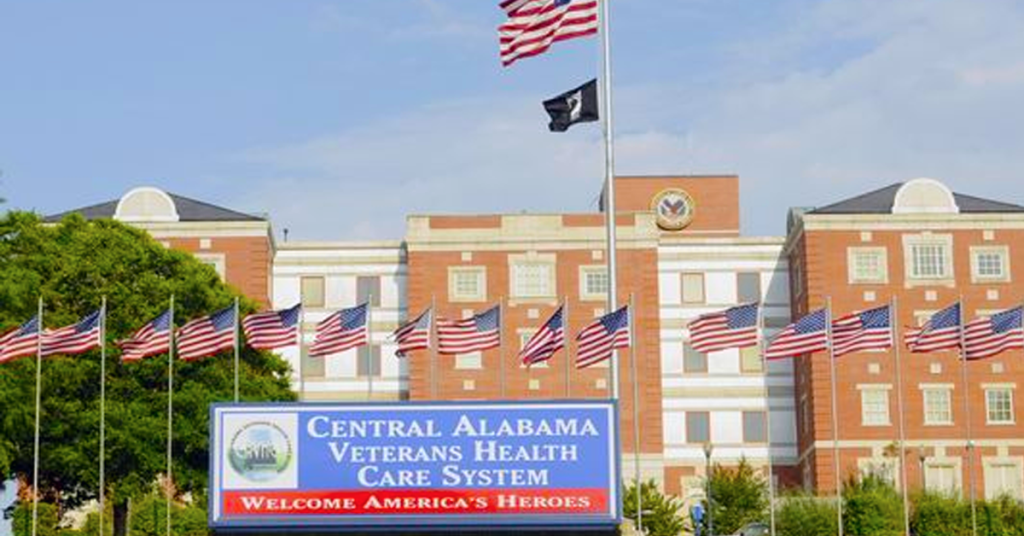
This past week marked one year since the director of the Central Alabama Veterans Healthcare System (CAVHCS) was removed from his post when a pattern of gross mismanagement and systemic malfeasance was exposed. Weeks later he would become the first VA official in the country fired under our new VA accountability law. Deputy VA Secretary Sloan Gibson visited CAVHCS at my request for an update on progress made over the past year to improve what have been some of the worst VA medical centers in the country. I wanted him to see that, while some strides have been made to fix this broken system, major issues still remain. We had a productive meeting, and I appreciate how responsive Mr. Gibson and Southeast Regional Director Tom Smith have been to my concerns. One of the biggest contributors to the long wait times at CAVHCS has been the serious shortage of medical staff. There wasn’t a funding issue, but rather a management and human resources breakdown. Recently, steps have been taken to hire more doctors, nurses and medical support staff, which is certainly promising. But, as I told Mr. Gibson, we need that to start translating into better access to care. The fact is we still have more than 4,000 veteran patients who have waited longer than 90 days without an appointment. That’s unacceptable, and I’m going to keep pushing VA leaders to improve until we make this right. One issue we discussed at length was repairing CAVHCS’ relationships with local hospitals and other health providers. Why is that important? Well, the vast majority of that 4,000 number I mentioned comes from those who have been referred to outside physicians but are awaiting appointments. I believe the future of veterans health care will rely less on actual VA facilities and more on partnerships with outside medical providers for services. We have amazing doctors, hospitals and other providers in Alabama that are eager to play a larger role in caring for vets, and the money is there to do it. The problem is CAVHCS has had trouble in the past keeping up with payments on contracts, so many local providers are naturally hesitant. Mr. Gibson and Mr. Smith expressed great interest in working with me to bridge that gap and build a network within Alabama’s medical community that will improve access and enhance care for veterans. Above all, we badly need a permanent director at the Central Alabama VA who is both empowered and driven to make the necessary changes. After a year, it looks like we are close to having that person. I will keep you updated on these developments as we move forward. Martha Roby represents Alabama’s 2nd Congressional District. She is currently serving her third term.
Martha Roby, “tired of asking” for veteran care reform, calls for VA “takeover” of failing medical centers
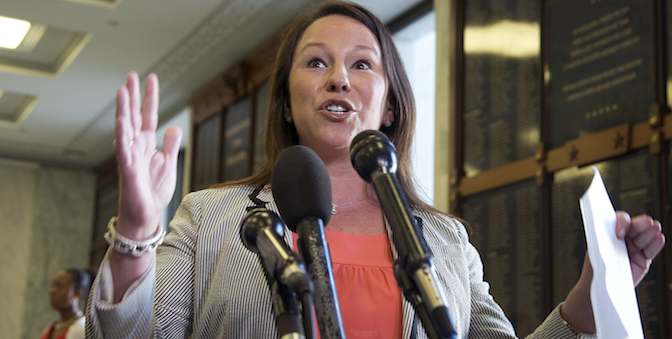
On Tuesday, U.S. Rep. Martha Roby introduced a bill that would force the federal Veterans’ Administration to do something she has asked them to do for a long time: intervene when regional medical centers show they are unable to adequately care for American military veterans. Roby’s new proposal — H.R. 3234, dubbed the “Failing VA Medical Center Recovery Act” — calls for a “rapid response team of managers and medical professionals” to deploy to failing centers directly. “I believe the problem is we have been depending on a broken bureaucracy to fix itself,” said Roby in a prepared statement Monday. “I believe it’s time to change that by breaking through the bureaucracy to get results on behalf of our veterans.” “This is the ‘anti-bureaucracy.’ This is the team no complacent VA employee wants to see coming because they know that the status quo is about to get shaken up.” Roby represents Alabama’s 2nd Congressional District, where the state’s VA medical centers in Montgomery and Tuskegee have been identified as the nation’s worst and second worst, respectively. The third-term Republican said she will not allow inefficiencies in the “sprawling VA bureaucracy” that provides poor service to veterans stand any longer. “The determination of a failing medical center will be based on data, not the Secretary’s whim or what media attention it is garnering,” Roby said Monday. “My bill sets up an automatic trigger that compels the VA to act under the law. “I’m glad the [Veterans’ Affairs] Secretary [Robert McDonald] used his authority to take control of the situation in Phoenix. But, why not Montgomery? Why not Tuskegee? Why not come and take control of the worst and second worst situation in the country, especially after we have repeatedly asked and pleaded him to do so? “I’m tired of asking, and that’s why my bill requires the VA to step in and take charge.” See Roby’s House floor speech where she formally introduced the bill below.
U.S. House of Representatives: July 27-31

The U.S. House of Representatives came back in session Monday for its final week before a month-long August recess. On Monday, the House is in session and will consider a whopping 17 bills under suspension of the rules. Over half of these bills come from the Homeland Security Committee. A full list of bills can be found here. While not a part of the official House schedule this week, looming in the legislative shadows of Capitol Hill is the pending expiration of federal highway programs and funding. Two weeks ago, the House of Representatives passed an extension bill to provide highway funding through Dec. 18 in order to provide more time for the two chambers to come to an agreement on a full highway bill. However, last week and over the weekend, the Senate took under consideration a multiyear highway bill, putting the upper chamber at odds with the lower chamber as the debate over how to extend funding for the program, and for how long persists. The current authorization expires on Friday. Other legislation on the floor for a vote this week includes: H.R. 427: the Regulations from the Executive in Need of Scrutiny (REINS) Act. This bill aims to increase transparency in the federal regulatory process. The bill would modify the federal rule-making process by preventing “major rules” — those generally having an annual economic impact greater than $100 million — from being implemented unless Congress enacts legislation approving them. This legislation passed the House previously both in 2011 and 2013, but has no chance to pass the Senate and is strongly opposed by President Obama. Alabama co-sponsors: Rep. Bradley Byrne (AL-1), Rep. Martha Roby (AL-2), Rep. Mike Rogers (AL-03) Rep. Mo Brooks (AL-5) H.R. 1994: the VA Accountability Act. The bill expands the ability of the Veterans Affairs (VA) Department to fire or demote VA employees based on performance or misconduct. It also includes provisions to protect VA whistleblowers against retaliation by supervisors Alabama co-sponsors: Rep. Martha Roby (AL-02) H.R. __: VA Budget and Choice Improvement Act. This legislation has yet to be assigned a bill number, but is written to address a $2.5 billion gap in the VA budget. The shortfall is the result of higher-than-anticipated demand for veterans health services and a lack of flexibility to shift money within the overall VA budget, according to the VA. To cover the gap, the VA has asked Congress to allow the VA to divert $3 billion from the “Choice Program,” an emergency fund set up in the wake of last year’s wait-times scandal to subsidize non-VA care for veterans and help reduce the time it takes to get medical appointments. FY2016 National Defense Authorization Act (NDAA). While not officially on the schedule, there has been time set aside to consider a potential conference report that House and Senate conferees are currently working on as differences in the two chambers respective NDAAs remain unresolved.
