
Federal court hearing on redistricting case set for today
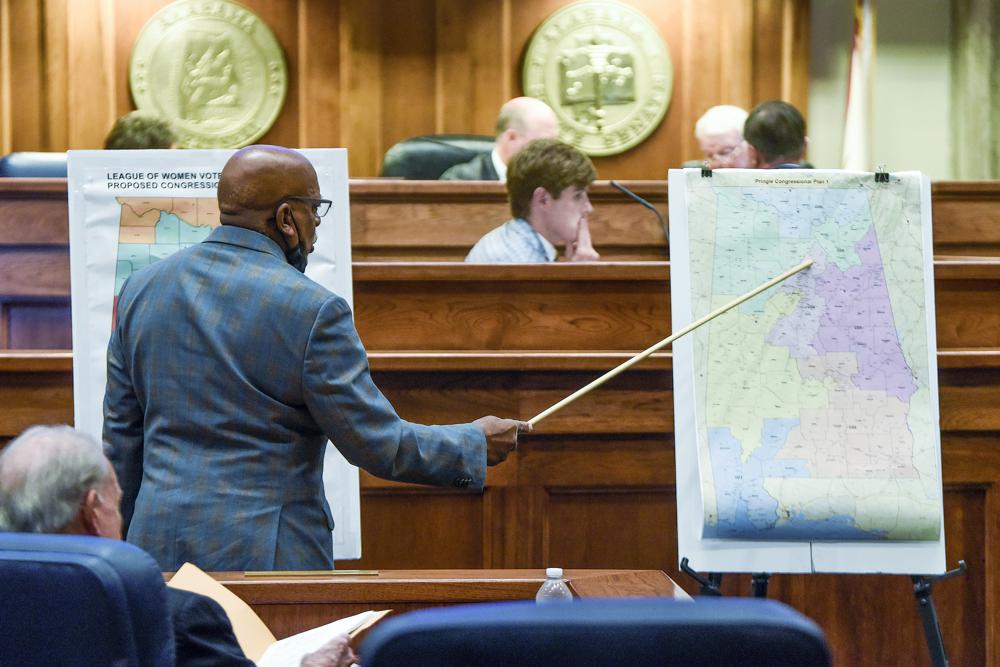
The entire political world in Alabama will be watching Monday to see what the court does with Alabama’s disputed redistricting case. A hearing is scheduled for Monday, August 14, in federal court at 9:00 a.m. CDT at the Hugo L. Black United States Courthouse in Birmingham. The hearing will focus on whether the map recently passed by the Alabama State Legislature complies with section two of the Voting Rights Act of 1965. Civil rights groups sued the state challenging the redistricting map that the Legislature passed in 2021. A three-judge panel of the Eleventh Circuit Court of Appeals in Atlanta ordered a halt to the 2022 election over concerns the map violated the 58-year-old Voting Rights Act. The U.S. Supreme Court intervened at the request of the state and allowed the election to proceed with the 2021 map. In June, the Supreme Court ruled in a 5 to 4 ruling that the congressional map likely violated the VRA and referred the case back to the three-judge panel. The Legislature was given until July 21 to submit a new map. The parties that sued the state and Alabama Democrats had wanted the Legislature to submit a map with two majority-minority districts. The Legislature, voting along party lines, refused and instead introduced and passed a controversial new map that simply increased Alabama’s Second Congressional District from 30% Black to 39.9%. That map kept the Gulf Coast, the Wiregrass, and Montgomery County whole; but was denounced by Democrats. The civil rights groups suing the state in federal court in Allen versus Milligan are asking the court to reject this new map. Members of the Alabama House Democratic Caucus, including House Minority Leader Anthony Daniels (D-Huntsville), will be outside the courtroom on Monday to issue their response following the conclusion of Monday’s hearing. Joining Daniels will be Caucus Chair Barbara Drummond (Mobile), Caucus Policy Chair Adline Clarke (Mobile), Caucus Secretary/ Treasurer Kelvin Lawrence (Hayneville), Rep. Patrice McClammy (Montgomery), Rep. Phillip Ensler (Montgomery), Rep. Chris England (Tuscaloosa), Rep. Patrick Sellers (Birmingham), Rep. Rolanda Hollis (Birmingham), Rep. Curtis Travis (Tuscaloosa), Rep. Napoleon Bracy (Mobile), Rep. Tashina Morris (Montgomery), Rep. A.J. McCampbell (Demopolis), and Rep. Sam Jones (Mobile) to comment on the court proceeding. “As we gather for the August 14th federal court hearing in Birmingham, Alabama, surrounded by the hallowed sites of the Civil Rights movement, we are reminded that this moment is inseparable from that struggle,” Daniels said. “We hope and pray that this court hearing, this next step, is a step forward on a continued path towards fair representation for all.” The Alabama House Democratic Caucus endorsed a redistricting plan, proposed by the Milligan and Caster plaintiffs, that would have created two majority Black congressional districts while respecting traditional redistricting guidelines. That map was rejected by the Republican supermajority and largely excluded from consideration during the legislative process. The major party primaries are on March 5, with candidate qualifying opening on October 16, so knowing where the congressional district lines are for that pending election is of some importance. To connect with the author of this story or to comment, email brandonmreporter@gmail.com.
Redistricting plan goes to a conference committee
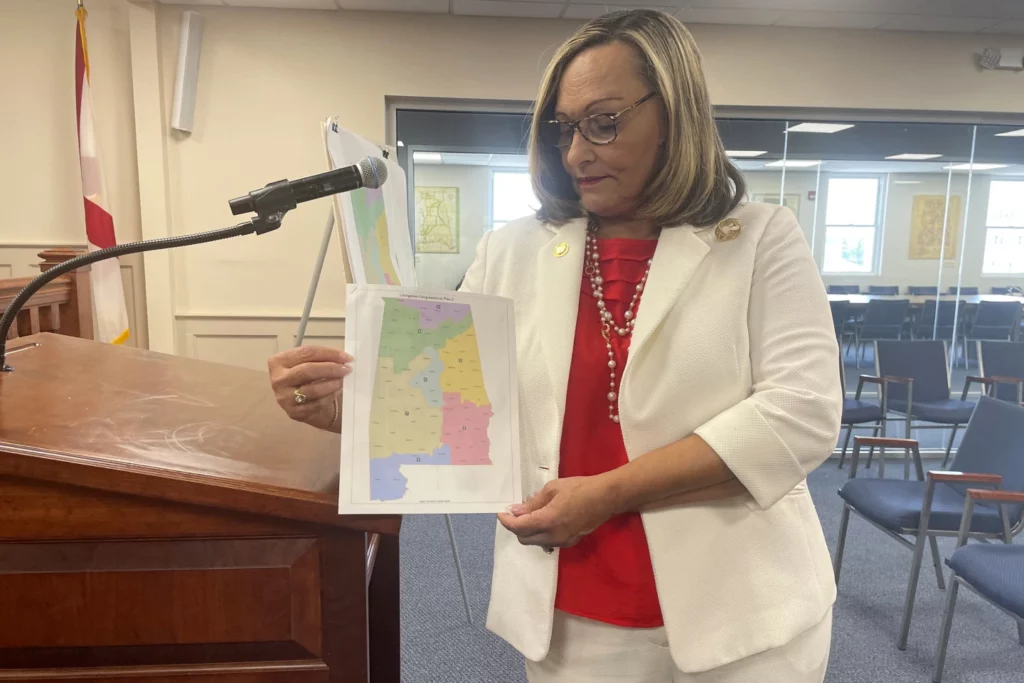
On Friday, the Alabama House of Representatives passed a Republican congressional redistricting plan that it hopes will comply with the Voting Rights Act of 1965. The Alabama Senate voted 30 to 0 to non-concur with the House plan. The redistricting plan has been referred to a conference committee to produce a compromise version that is acceptable to both Houses of the Legislature. For redistricting to pass out of the Legislature, the six-member conference committee has to reach a compromise. Then both Houses of the Legislature must vote to concur with the findings of the conference committee. Senate Bill 5 is sponsored by State Senator Steve Livingston (R-Scottsboro). The bill was carried in the House of Representatives by State Representative Chris Pringle (R-Mobile). Both Livingston and Pringle have introduced competing versions of the redistricting bill. The version of the bill that passed in the House is the Pringle version, the community of interest plan. Pringle’s plan would redraw Alabama’s Second Congressional District, currently represented by Congressman Barry Moore (R-AL02), to increase the Black voting age population in CD2 from 30% of the population to over 42%. Senate Democrats have introduced multiple plans that would produce two majority-minority districts. Livingston’s competing plan passed out of the Senate on Wednesday. Pringle says that his plan’s CD2 would meet the Supreme Court’s ruling that the state provides an opportunity for Blacks to pick a candidate of their choice. Democrats disagree. “You are giving me an opportunity to lose,” said Senate Minority Leader Bobby Singleton (D-Greensboro). “There ain’t no opportunity there for Blacks or Democrats in that district,” said Sen. Rodger Smitherman (D-Birmingham). Democrats maintain that it is necessary for there to be two majority-minority congressional districts for Black voters to have an opportunity to choose their own representation. They also maintain that that is what the court intended. Sen. Merika Coleman (D-Birmingham) said, “I contend that for African Americans to choose the candidate of their choice that we have to have a majority of African-Americans.” “It is irresponsible for the legislature to do what it is doing,” Coleman said. “The court ordered two districts that have 50% African Americans.” “The three-judge panel said that a proper remedy could consist of two majority-minority districts or quite close to it,” said Rep. Artis “A.J.” McCampbell (D-Livingston). The House of Representatives passed SB5 76 to 26. The Senate, in their own debate on redistricting, then voted 30 to 0 to concur with the House version of SB5 and go to a conference committee. Senate President Pro Tempore Greg Reed (R-Jasper) appointed Sens. Livingston, Smitherman, and Clay Scofield (R-Guntersville) to the conference committee. Speaker of the House Nathaniel Ledbetter (R-Rainsville) appointed Pringle, Chris England (D-Tuscaloosa), and Chris Sells (R-Greenville) to the conference committee. Both Houses of the Legislature will return on Friday afternoon, presumably to vote on the conference committee report. To connect with the author of this story or to comment, email brandonmreporter@gmail.com.
Alabama House advances tax rebates of $210 per taxpayer

The Alabama House of Representatives on Thursday unanimously approved a one-time rebate that would give $210 to single people and $420 to married couples. Alabama Gov. Kay Ivey and lawmakers proposed rebates to return money to taxpayers as the state sees a rare $2.8 billion education budget surplus but have quibbled over the amount. The proposed rebates are half the amount that Ivey proposed in her State of the State address earlier this year, but double what was approved in the Alabama Senate. “This will cover 1.9 million tax filers in the state, so it’s a lot of people that will benefit from this, certainly under the House bill, a lot more significantly than they would have under the Senate version,” Republican Rep. Danny Garrett, chairman of the House education budget committee, said. Representatives voted 101-0 for the legislation that now moves to the Alabama Senate. While the bill advanced without a dissenting vote, some lawmakers argued that the money will not go to those who need it the most — people who don’t file tax returns because they earn too little or are living off retirement benefits. The rebates would only go to people who filed tax returns for 2021. “That $420 will not make a difference in my life, but for that person that may be living from day-to-day on nothing but a Social Security retirement — that $210 or $420 will make a big difference,” said Rep. A.J. McCampbell, a Democrat from Livingston. Garrett said he understood the concerns, but said the legislation is essentially a refund to people who paid taxes. House Minority Leader Anthony Daniels, D-Huntsville, said he would have preferred the state to target the rebates to the people in the most financial need. But Daniels said he is glad the House increased the size of the rebate over the Senate proposal. The rebates would cost the state an estimated $546 million. Republished with the permission of The Associated Press.
House passes legislation making it illegal for persons under 21 to possess or purchase vape products
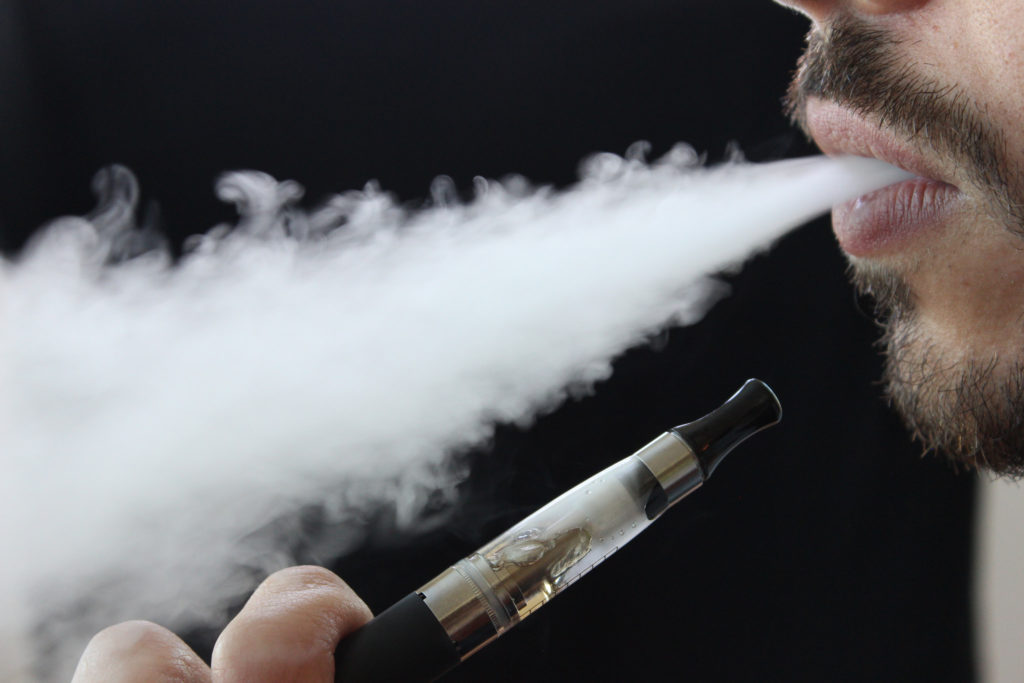
On Tuesday, May 16, the Alabama House of Representatives passed legislation to prevent children from being able to buy vape products. The bill bans the sale of vapes to anyone under 21. It also established the Alcohol Beverage Control Board as the agency tasked with enforcing these regulations. House Bill 319 (HB319) is sponsored by State Representative Barbara Drummond. “This is another bite at the vaping apple,” Drummond said. “The purpose of this bill is to protect young people under 21 from vaping,” Drummond said. “This makes it illegal to purchase, possess, or transport any vaping products.” HB319 expands the definition of electronic nicotine delivery systems to include vape products that do not contain nicotine. Drummond explained that her previous legislation was difficult to enforce. “We will now have an opportunity for ABC to help,” Drummond said. “I have gotten 1200 vaping violations this year.” “There will be consequences for those kids that are continually vaping in our communities,” Drummond added. Drummond asked that the body adopt the substitute version of the bill prepared by the House Judiciary Committee. Rep. A.J. McCampbell (D-Livingston) said, “I am glad to know that we are going to have something out there, and I look forward to voting for it.” “Our children are exposed to a lot of things that frankly they should not be exposed to,” McCampbell said. Drummond said, “This is for the health of our young people.” “We did not have the enforcement,” in my previous bill Drummond said. Under existing law, there is no fee for a permit to distribute tobacco, tobacco products, electronic nicotine delivery systems, e-liquids, or alternative nicotine products. This bill would require a one-time application fee and an annual permit fee for the distribution of those products and would provide for the distribution of those fees. “We do not get any money from this industry now,” Drummond explained. “I have worked with more groups on this piece of legislation.” Drummond said, “I am only concerned with young people 21 years and younger.” McCampbell said, “You have evolved from one level of understanding and moved to another level of understanding on this topic.” Rep. Mark Shirey said, “We are going to have some long-term health problems from vaping.” Drummond explained that the bill creates “a graduated penalty process for those young people who vape and who continue to vape, especially on school campuses.” The House voted to adopt the committee substitute. Rep. David Faulkner brought an amendment to the bill as substituted. “It has how the fees should be collected and how the fees should be distributed,” explained Faulkner. “On the punishment on sellers, it makes this penalty a ‘shall’ so they will receive that punishment. It is not an issue of ‘may.’” Drummond said. “I think this will be a great amendment, and I appreciate you working with me.” Rep. Napoleon Bracy asked, “Can you tell me a little about the penalties? The penalties are enforced by the ABC Board?” “Yes, that is correct,” Faulkner said. “It is a graduated penalty. So on a first violation, a $500 fine, or subsequent $700, then $1000. Eventually, you will lose your permit.” The amendment was adopted on a vote of 101 to 0. Rep. Curtis Travis said, “It is a major problem for school systems. Thank you for bringing this bill.” Rep. Ron Bolton said, “I want to thank you for bringing this bill and the bipartisan way that you worked on it.” HB319 passed the Alabama House of Representatives 100 to 1. It now goes to the Senate for their consideration. Vape industry representatives have contacted Alabama Today and expressed their unhappiness with the definitions in the bill. Additionally, they insist that their products are far safer than smoking and that further cracking down on vape products in Alabama will only lead to products being brought across state lines. HB319 has been referred to the Senate Judiciary Committee, which meets next on Wednesday at 8:30 a.m. in Room 325 of the Statehouse. The committee agenda has not been posted as of press time. Tuesday will be day 24 of the 2023 Alabama Regular Legislative Session. To connect with the author of this story or to comment, email brandonmreporter@gmail.com.
House passed legislation to expand the scope of practice of optometrists
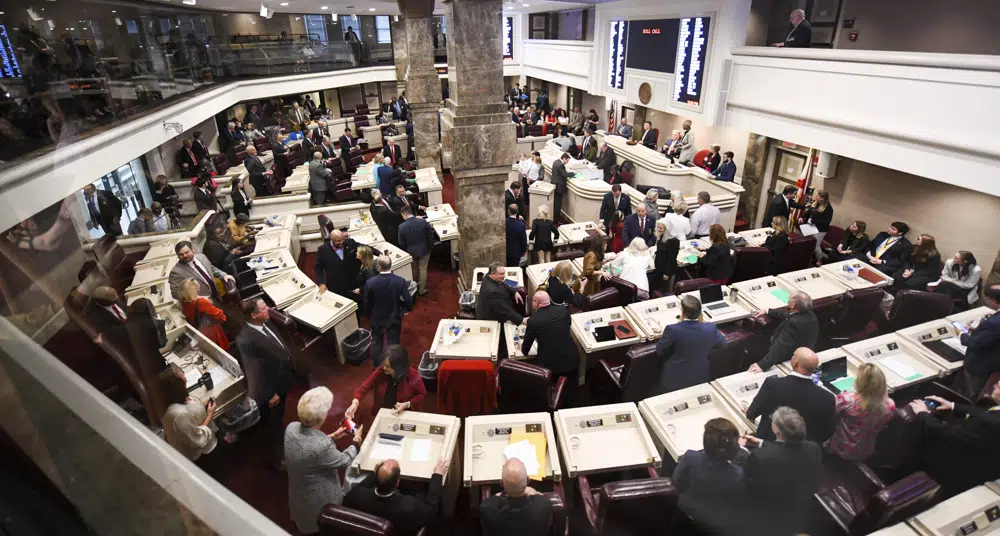
On Tuesday, the Alabama House of Representatives passed legislation that would expand local optometrists’ services. House Bill 349 (HB349) is sponsored by State Representative Danny Garrett. “1995 was the last time we expanded our optometry law in terms of scope of practice,” Garrett said. “A lot of things have changed since 1995. Nobody had smartphones then?” Garrett said that many things have also changed in optometry over the last 28 years. “What this bill does is very strictly limited,” Garrett said. “It allows optometrists to perform three procedures they are already trained to do.” Followers of the Alabama Legislature know that optometrists and ophthalmologists have been fighting for decades over the scope of practice that the state of Alabama will allow trained optometrists to do. “I have been carrying this legislation for seven years,” Garrett said. Garrett explained that this was also about giving citizens access to healthcare as 57 counties have an optometrist practicing there, but only 23 counties have an ophthalmologist. “This is a turf thing,” for the ophthalmologists Garrett said. “We haven’t seen an increase in ophthalmologists in Alabama. I have never seen a plan to expand ophthalmology in Alabama.” Garret explained that this legislation would not allow optometrists to make injections in the eyeball or perform eye surgeries. Rep. Mark Shirey is an optometrist. “We have to be trained under an ophthalmologist,” Shirey said. “The vaccines were suggested by the ophthalmologists.” Rep. Thomas Jackson said, “I have to drive 102 miles to see an ophthalmologist even though we have several optometrists who practice in Thomasville and Clarke County.” House Minority Leader Anthony Daniels said, “I have been here ten years dealing with the scope of practice, and I have not seen any expansion of access to ophthalmologists.” “When you compare this with other states, this is actually the most restrictive bill to expand the scope of practice, and they are still not satisfied,” Daniels said. “We have groups out there who are opposed to things just to be opposed to it.” “I have heard more from the opposition than I have heard in the last eight months,” Daniels continued. “There are always going to be fear tactics used. This is just how some of these folks operate.” “If you are not going to recruit more specialists to the state of Alabama, then these are the things that we are going to look at to provide access,” Daniels said. “I think it is a great piece of legislation. It is more restrictive than what I expected, but it is a start.” Daniels said that the procedures, including corrective lasers, are fairly simple. “I might be able to do that, not that I am seeking to expand the scope of practice to myself,” Daniels said, “The insurance companies that provide the malpractice insurance are not coming out against this. That they are not opposing this legislation makes me wonder what is the real issue here.” “The optometrists will tell you that there are six or seven procedures that ought to be on here,” Garrett said. “This would just allow optometrists to do what they are trained to do it, albeit on a very restricted basis.” Rep. Barry Forte said, “I represent District 84. I represent a lot of poor folks. I have one constituent; she is over 70 years old, and she has to go all the way to Dothan to get this procedure on her eyes. She is 50 miles from Dothan. She has to pay somebody to drive her all the way to Dothan to get this procedure. She lives only half a mile from the doctor’s (optometrist) office. This is the best bill I have ever seen.” Rep. Danny Crawford explained that he had to go out of state for an eye procedure because his optometrist wasn’t allowed to treat the problem. Crawford said, “It (the procedure) took ten minutes. I had to go out of state.” Rep. A.J. McCampbell said, “You may not be able to see if you wait for five or six weeks, as Rep. Crawford said. I have people who struggle to go to the grocery store. It takes my people an hour drive to get medical procedures done that they need.” The House passed HB349 83 to 6. The legislation now goes to the Senate for their consideration. Thursday will be day 20 of the 2023 Alabama Regular Legislative Session. To connect with the author of this story or to comment, email brandonmreporter@gmail.com.
Demopolis healthcare school cause for disagreement

In her annual State of the State address, Alabama Governor Kay Ivey proposed building a boarding school for 14- to 17-year-old students interested in pursuing a career in the healthcare field. That school was to be in Demopolis. Few were aware of the proposal before the governor referenced it in her speech. The healthcare school has become a point of contention in the debate around the education budget package. The budget that passed the Alabama Senate on Thursday replaced the $30 million line item in the governor’s supplemental appropriation request with a $500,000 study by an outside firm to determine the feasibility and the best location for the new boarding school. “It is sad that even very progressive areas are doing everything they can to try to kill our area,” State Rep. A.J. McCampbell told Alabama Today. “The school would be a game changer for our area.” “We have a hospital,” McCampbell explained, working with the University of Alabama Birmingham hospital system. Alabama Today asked McCampbell if the Demopolis hospital was having difficulty hiring nurses. “It is hard to get RNs, even CNAs,” McCampbell said. McCampbell said that the new healthcare schools are teaching people across healthcare. “Not just doctors, but also CNAs and LPNs,” McCampbell said. State Senator Bobby Singleton attempted to restore some of that funding with an amendment on the floor of the Senate. “There is real desire for health care workers,” Singleton said. “There is a need to get LPNs pushed out to the state.” Singleton claimed that the school would allow “young people in high school to get some experience, and they will matriculate into the healthcare profession, particularly in rural areas.” Singleton’s amendment was voted down in a 20 to 8, with only Democrats voting in favor. “I would like to thank this body for telling little babies in West Alabama that they don’t mean anything,” Singleton said after losing the vote, “Thank you; this is why we will always be number 50.” The State of Alabama started the Alabama School of Fine Arts for students with a gift and particular interest in music, art, dance, etc., in Birmingham in 1971. That was followed by the Alabama School of Math and Science in Mobile in 1989 and the Alabama School of Cyber Technology and Engineering in 2018. All of these are in major cities. Demopolis would be different from that kind of city experience. The population of Demopolis peaked at over 7,700 in 1980 but has declined from 7,483 in the 2010 census to just 6,763 in the most recent census estimate – a 10.6% decline. Just 18,741 people live in Marengo County (2022 census estimate). That is down from 20,955 in 2010 and 25,477 in 1977. The 2023 Alabama Regular Legislative Session has been remarkable for its bipartisanship. Most bills are passing the House of Representatives with 100 or more votes, and it has been rare for more than three senators to vote against a bill in the Senate. There was partisan disagreement on this amendment in the Senate as well as Democratic opposition in the Alabama House of Representatives to a bill that would make it a crime in Alabama for someone to take pay for helping people fill out their ballot or to hand out absentee ballot applications. Tuesday will be day 19 of the 2023 Alabama Regular Legislative Session. To connect with the author of this story or to comment, email brandonmreporter@gmail.com.
Alabama House passes bill to cut back ‘good time’ incentives for inmates
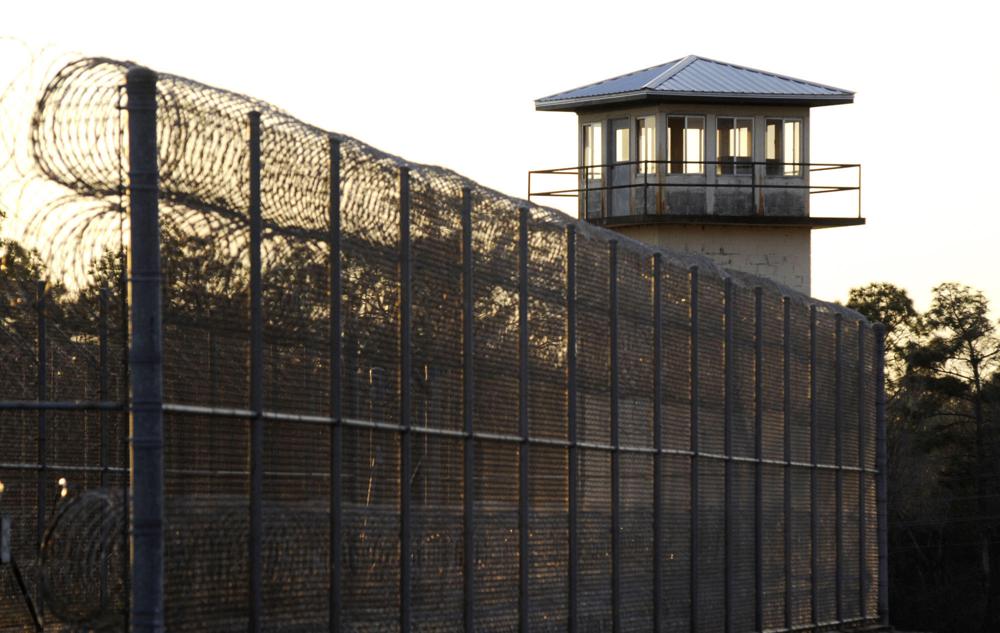
On Tuesday, the Alabama House of Representatives voted to pass legislation that would decrease the amount of time inmates of Alabama’s prisons can get reduced from their sentences for good behavior while incarcerated. It also further limits which prisoners are eligible for good time incentives. Senate Bill 1 (SB1) – the Deputy Brad Johnson Act – is sponsored by State Sen. April Weaver. The legislation was carried in the House by State Rep. Russell Bedsole. SB1 is titled in remembrance of Bibb County Sheriff’s Deputy Brad Johnson – who was gunned down by a dangerous felon released by the Alabama Department of Corrections (ADOC) on good time. Bedsole – a Shelby County Deputy – said that passage of SB1 would make Alabama communities safer. “We know that we can’t totally solve crime in our communities. Just incarceration alone is not the answer.” SB1 reduces the number of reductions in sentences served that a prisoner can earn for good behavior, further limits the number of prisoners eligible for good time incentives, and requires ADOC to make reports on the application of good time incentives. “The reporting will come back to the legislature,” Bedsole explained. “We are not putting a mandate on them to go out and buy new reporting software.” House Minority Leader Anthony Daniels said that the abuses in the system occurred during the previous ADOC leadership. “It is not fair to hold the current leadership responsible for the failings of the past leadership,” Daniels said. State Rep. Phillip Pettus told Bedsole, “I appreciate what you have done on this. I hope that we don’t have another picture up here of another law enforcement officer up here.” State Rep. John Rogers called the bill “Overkill.” Rogers said the real problem is the lack of rehabilitation of prisoners in ADOC custody. “You have countries all over the world that rehabilitate prisoners, but we do not do it here in Alabama,” Rogers said. “Why would you punish the entire system? I hope that you pull this bill.” “You have got one guard for every 200 prisoners,” Rogers said. “We have had four women get pregnant in prison in a women’s prison. How does a woman get pregnant in all women’s prison?” “We need new prisons, but you have to have money to pay guards a decent wage,” Rogers said. Bedsole said, “Did you know that a person who commits a murder in prison can still get good time?” Rep. Christopher England said, “For 100 and some years, Democrats controlled the Legislature. You know one thing that Democrats absolutely screwed up? Prisons and justice. Then Republicans got in there. For six years, we created class D felonies – everybody doesn’t like that now – Community corrections, drug courts, and we worked on releasing prisoners. You know what happened? Crime went down, and the number of prisoners went down. We had a horrible tragedy happen in Marshall County (the Jimmy Spencer slayings of three people while on parole). In November 2019, we reformed the parole system. Now we aren’t letting anybody out. The new Republicans that are here have completely unraveled how we deal with prisons. The prison population has also skyrocketed. You know what also happened: crime skyrocketed. Now it has gotten to the opposite extreme where we don’t let anybody out. The parole board is only giving parole to ten percent of prisoners eligible for parole.” “You know what else has happened – crime has gone up,” England said. “We need all the space and resources we can get, and we are wasting it on people who are no danger to the community.” England said that releasing prisoners on parole where they are under supervision is better than waiting for the end of their sentence and then releasing them with no supervision requirements. “Over 90% of the people that go into the prison system get out,” England said. “Would you rather them get out with supervision or with no supervision?” Rep. A.J. McCampbell said, “As a former law enforcement officer, we recognize that every day we are putting our lives on the line. I hate what happened to Officer Johnson. I really do.” “We have got a lot of calamity and failure of our whole (prison) system,” McCampbell continued. “We don’t have any real solutions.” “It is unreal how many people have been denied,” McCampbell said. “Parole is supposed to be at a time where we have an opportunity to look at people while they are out in the community.” “The mistreatment that they receive in these institutions dehumanizes these people,” said Rep. Mary Moore. Bedsole said that SB1, “Revises our good time statute that has been in place since 1980. We are changing the amount of good time days we are offering. We are lowering them.” After a lengthy debate, the House of Representatives passed SB1. As it has already passed the Senate, it now has gone to the Governor’s office for her consideration. According to the synopsis, SB1 would, “Reduce the amount of correctional incentive time a prisoner receives; to require a prisoner to remain in a certain classification for a longer period of time before moving up to a higher classification; to provide for additional circumstances in which a prisoner may be required to forfeit his or her correctional incentive time; and to require the Department of Corrections to provide annual reports to the Legislature, the Governor, and the Attorney General regarding correctional incentive time. Thursday will be day 10 of the 2023 Alabama Regular Legislative Session. The Alabama Constitution limits the Legislature to no more than thirty legislative days during a regular session. To connect with the author of this story or to comment, email brandonmreporter@gmail.com.
Ten more pre-filed bills to watch
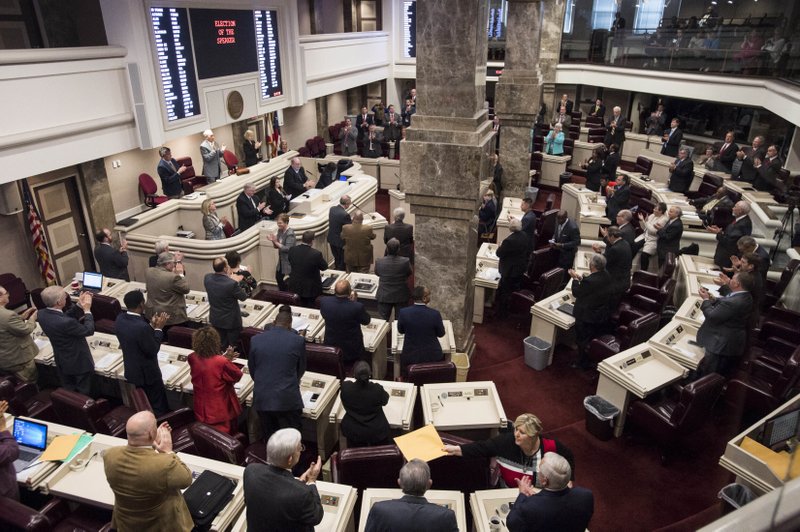
Last week, Alabama Today looked ahead at the coming 2023 Alabama Regular Legislative Session. We looked at ten of the more interesting of the 36 bills that had been pre-filed at that time. Since then, 22 more bills have been pre-filed by legislators. As more bills have been pre-filed, we look at ten more bills that could become law this year. House Bill 34 was introduced by Rep. Tracy Estes (R-Winfield). HB34 would provide that it is unlawful to discharge a firearm on school property. Under existing law, it is already unlawful to discharge a firearm into an occupied or unoccupied school building. This bill would make a person who shoots or discharges a firearm into an occupied school bus or school building guilty of a Class B felony. A person who shoots or discharges a firearm into an unoccupied school bus or school building shall be guilty of a Class C felony. House Bill 40 was introduced by Rep. Jim Hill (R-Odenville). Under existing law, retired justices and judges may be called to active duty status and are compensated for their service. This bill would provide that retired justices and judges receive per diem, mileage, and be provided court-supportive personnel. This bill would require retired justices and judges to complete at least six hours of approved continuing legal education annually. House Bill 31 was sponsored by Rep. Artis “A.J. McCampbell (D-Livingston). Under existing law, a public K-12 school or school district determined to have poor performance is labeled by the State Superintendent of Education as failing to make adequate progress or as a failing school under the school grading system. Also, under existing law, the Alabama Accountability Act of 2013 provides financial assistance through an income tax credit to a parent who transfers a student from a failing public school to a nonfailing public school or nonpublic school of the parent’s choice. HB31 would change the designation of a failing school to a fully supported school and the designation of a nonfailing school to a non-fully supported school for the purposes of school grading and the Alabama Accountability Act of 2013 and would require the State Board of Education to reflect those changes in terminology when amending or adopting rules. House Bill 43 is sponsored by State Rep. Pebblin Warren (D-Tuskegee). Under existing law, a child six years of age on or before December 31 is entitled to admission to the first grade in public elementary schools, and a child five years of age on or before September 1 is entitled to admission to the local public-school kindergarten. HB43 would allow a child who becomes six years of age between September 1 and December 31 to be admitted to the first grade as long as they have completed kindergarten or otherwise demonstrates first-grade readiness. This mandatory kindergarten bill has passed the House of Representatives in the past two years but failed in the Senate. This bill would also allow a child under five years of age on September 1 to be admitted to public kindergarten under certain circumstances. House Bill 46 is sponsored by Rep. Allen Treadaway (R-Morris). This bill would permit any individual retired under the Employees’ Retirement System, who was classified as a law enforcement officer, to perform duties as a school resource officer without suspension of his or her retirement allowance. House Bill 36 was sponsored by Rep. Terri Collins (R-Decatur). Under existing law, the Solid Waste and Recyclable Materials Management Act regulates the disposal and recycling of solid waste and recyclable materials. This bill would define “advanced recycling” as a manufacturing process to convert post-use materials such as plastics into recycled products. This bill would specify that advanced recycling at an advanced recycling facility would not be considered solid waste disposal or incineration under the solid waste act. Term in the definition of solid waste. This bill would also define “mill scale and slag” and include the term in the definition of solid waste. House Bill 38 was also sponsored by Rep. Hill. Under existing law, a judge must sentence an offender convicted of a nonviolent offense pursuant to the presumptive sentencing standards. This bill will allow a judge to deviate from the presumptive sentencing guidelines if a defendant is convicted after requesting a trial. House Bill 28 is sponsored by Rep. Chris England (D-Tuscaloosa). Under existing law, persons with a lawful pistol permit may possess their gun on school property. This bill would remove this exemption so that even a person with a concealed carry permit may not carry a gun on school grounds. House Bill 45 is sponsored by Rep. Jeremy Gray (D-Opelika). This bill would create the Sudden Cardiac Arrest Prevention Act. It would require the State Board of Education to adopt certain guidelines to inform and educate student-athletes, parents, and coaches about the signs and symptoms of sudden cardiac arrest. This bill would require each student-athlete and his or her parent or guardian to provide written acknowledgment of receipt of information about sudden cardiac arrest before the student may participate in any athletic activity. HB45 would require a student who passes out, faints, or exhibits symptoms of sudden cardiac arrest to be pulled from the athletic activity and would prohibit the student from returning to the athletic activity until an appropriate medical professional provides written clearance for their return. This bill would require each coach of an athletic activity to receive annual training relating to sudden cardiac arrest and would provide that a coach may be suspended if he or she does not complete the necessary training or if he or she fails to pull a student from an athletic activity for fainting or exhibiting symptoms of sudden cardiac arrest. This bill would protect a coach from liability related to a student who exhibits symptoms of sudden cardiac arrest unless the coach is reckless or grossly negligent. House Bill 25 was introduced by Rep. Parker Moore (R-Decatur). Under existing law, when an offender has previously been convicted of any three or more felonies or has been previously convicted of two or more Class A or Class B felonies and subsequently commits a Class D felony, he or she is sentenced as if he or
Alabama House approves controversial anti-riot legislation
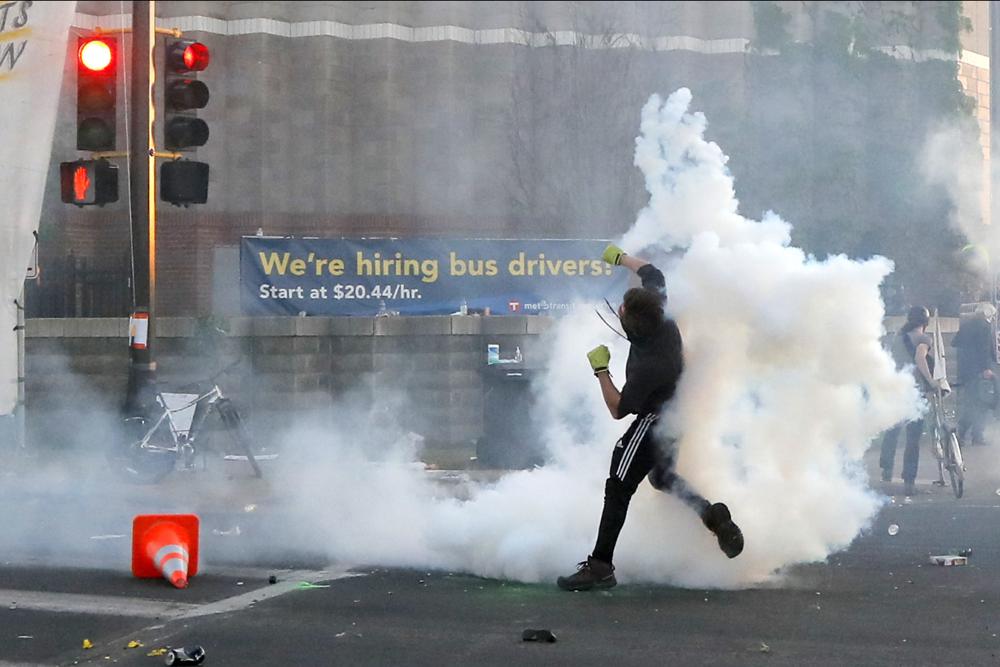
The Alabama House of Representatives approved legislation Tuesday that would create a new definition of a riot and provide tougher penalties for people who participate in one. Republicans supporting the bill said it is needed to quell violent protests that have caused injuries and property damage. But critics argued that it would have a chilling effect on protests and that a loose definition of rioting could allow an officer to make arrests based on presumptions — and prejudices — about the people involved. Legislators voted 75-27 for the bill that now moves to the Alabama Senate. Rep. Allen Treadaway, a retired Birmingham assistant police chief, proposed the bill after a summer protest turned violent in Birmingham in the wake of George Floyd’s killing by police in Minneapolis. “What I observed then was very disturbing to many of us who watched these protests across the country play out. What I saw was individuals coming into these cities, planting incendiary devices, gasoline, sledgehammers, and bricks,” said Treadaway, a Republican from Morris. The bill, as approved by the House, defines a riot as “the assemblage of five or more persons engaging in conduct which creates an immediate danger of and/or results in damage to property or injury to persons.” Attending such a gathering after an order from police to disperse would be a misdemeanor punishable by a mandatory 30 days in jail. Several lawmakers who are Black expressed concern that the bill’s definition of a riot is subjective. They said an officer could make arrests based on his or her presumptions about the people involved. “The definition doesn’t require you to do anything. The perception of the person is in the eye of the beholder,” said Rep. Chris England, a Democrat from Tuscaloosa. Rep. A.J. McCampbell, a Democratic lawmaker from Gallion, said a police officer could look at a group of young Black men and “subjectively say they are looking like they are going to cause a riot.” McCampbell, a former police officer, referenced instances both past and recent where Black people were treated differently by police. He wore a shirt with a photo of civil rights protesters being attacked by police in 1965 in Selma. He described a recent video from New Jersey that showed a Black teen being handcuffed after a mall fight with a white youth, who was directed to sit down on a couch. “And you tell me I don’t have reason to be worried about a riot bill. Laws, if they are applied justly and equitably, are the best thing that we can have. But when you are born Black, that equality fails to be something that you can expect,” McCampbell said. Republished with the permission of the Associated Press.
Steve Flowers: Incumbency prevails in 2022 State House races
Folks, believe it or not, we are closing in on six months before next year’s election year. The primary election is set for May 24, 2022. In Alabama, all our major constitutional officers are on the ballot next year. The governor’s office is the premier race in the state, and that coveted and powerful post is set for its four-year quadrennial run. Therefore, this big political year is referred to as the gubernatorial year. Those of us who follow Alabama politics have been salivating with anticipation for a cavalcade of great races. However, the power of incumbency has devasted the big year into a yawn. All the major state offices are held by popular incumbents, who are either running unopposed or have minimal opposition. The consolation prize was that there would be the legislative races. After all, this is where the real power in the state rests. You can simply look at where the special interest and PAC money is spent to verify that fact. However, the omnipotent power of incumbency has also encroached on those races. The Alabama House of Representatives has 105 members. There are 77 Republicans and 28 Democrats. The large majority of incumbents are running for reelection – both Republicans and Democrats. The overwhelming majority of these incumbents will have no opposition. However, in the House, there will be some major changes in leadership because of retirement or moving on to new posts. Speaker of the House Mac McCutcheon is not running for reelection. This has created an interesting and spirited race within the Republican Caucus ranks for Speaker. In addition, Victor Gaston of Mobile, who is Speaker Pro Tem, is also retiring. Bill Poole of Tuscaloosa, who chaired the powerful House Ways and Means Education Budget Committee, has left the House to be the State Finance Director. House Rules Committee Chairman Mike Jones of Andalusia is running for the open Senate seat of retiring Senator Jimmy Holley. Two of the freshman House members are running for statewide office. Wes Allen of Troy is running for Secretary of State, and Andrew Sorrell of Tuscumbia is running for State Auditor. In addition, Connie Rowe of Jasper is leaving the House to become an administrative assistant to Lt. Gov. Will Ainsworth. Some of the veteran House members who are choosing to hang up their legislative cleats include Howard Sanderford of Huntsville, Mike Ball of Huntsville, K.L. Brown of Jacksonville, Kerry Rich of Marshall, Allen Farley of Jefferson, Harry Shiver of Baldwin, Mike Holmes of Elmore, and Becky Nordgren of Etowah. The most noteworthy retiree may be Representative Steve McMillan of Baldwin County, who is retiring after serving close to 43 years in the House. Steve has been a quiet yet very effective voice for the people of Baldwin County. They all will be missed. Some of the high profile and powerful members of the House, who will return for another four years with no or token opposition, are Steve Clouse of Ozark, Nathaniel Ledbetter of Dekalb County, and Danny Garrett, Jim Carns, David Wheeler, and David Faulkner of Jefferson. Danny Garrett has ascended to Chairman of the House Ways and Means Education. Other leaders returning are Chris Pringle, Reed Ingram, Randall Shedd, Tracy Estes, Chris Sells, David Standridge, Ginny Shaver, Jim Hill, Alan Baker, Joe Lovvorn, Chris Blackshear, Kyle South, Paul Lee, Jeff Sorrells, Rhett Marques, Steve Hurst, Joe Faust, and Margie Wilcox. The Democratic leadership will remain intact. There is an illustrious array of House Democratic leaders, including Anthony Daniels, Chris England, Laura Hall, Peb Warren, Barbara Boyd, A.J. McCampbell, Berry Forte, Dexter Grimsley, Thomas Jackson, Kevin Lawrence, Mary Moore, Juandalynn Givan, and veteran John Rogers. Two of the Democratic House veterans from Jefferson County, Louise Alexander and Merika Coleman, are both running for an open Jefferson County Senate Seat, leaving both their House seats up for grabs. There may be an increase in the number of females in the House of Representatives. It has already begun with the election of Cynthia Almond of Tuscaloosa, who was elected without opposition to replace Bill Poole. In addition, Patrice Penni McClammy won the Montgomery District 76 seat of her late father, Thad McClammy. She won with no opposition. See you next week. Steve Flowers is Alabama’s leading political columnist. His weekly column appears in over 60 Alabama papers. He served 16 years in the state legislature. Steve may be reached at www.steveflowers.us.
Database will track officer complaints, disciplinary action

Alabama will create a database to track disciplinary actions and excessive force complaints against law enforcement officers, a measure aimed at weeding out “bad apples” in the profession. Alabama Gov. Kay Ivey on Thursday signed the bill to create a state database to track law enforcement officers’ employment history, disciplinary actions, use of force complaints, and reassignments for cause. Nationwide, there have been calls for greater transparency in policing following the high-profile shootings and deaths of unarmed African Americans with states taking a variety of actions. Former Minneapolis police officer Derek Chauvin was convicted Tuesday in the death of George Floyd, whose killing sparked nationwide protests. Democratic Rep. A.J. McCampbell, a former police officer, sponsored the Alabama bill and said it was aimed at preventing bad actors from moving “from one city to the next city.” “We have great officers. But it’s just like any other profession, you have great actors and you have bad actors. This is an opportunity to weed out the bad actors,” McCampbell, D-Demopolis, said. McCampbell said the governor had helped work on the legislation. The House of Representatives approved the bill 95-4 vote. The Senate approved the bill on a 26-0 vote. The database would not be public. It would be for law enforcement use only, including for police agencies to review a job candidate’s background. “It would make it more difficult for someone who has got a checkered past to hop from law enforcement agency to law enforcement agency. It builds a database so we can sort of weed out the bad apples that everyone continues to talk about,” state Rep. Chris England, D-Tuscaloosa, said Wednesday during a news conference of the Alabama House Democratic Caucus. Former President Donald Trump in June signed an executive order to encourage better police practices and establish a database to track officers with excessive use-of-force complaints. While Alabama lawmakers approved the database creation with few dissenting votes, other policing bills have stalled in the GOP-dominated Legislature. A bill that would establish uniform procedures for the release of police body cameras and dash-camera footage has not gotten a committee vote. Bills that would track officer-involved shootings and mandate uniform investigative procedures also stalled in past years. The Alabama Senate has approved a bill that would require police to collect racial data during traffic stops — a measure intended to prevent the targeting of minority motorists — but the bill has not gotten a vote in the Alabama House. “We support law enforcement. However, we strongly believe law enforcement should be held to a higher standard and their actions should be fair and responsible,” England said. Republished with the permission of the Associated Press.
