
Rep. Barry Moore urges USDA to help restore Chinese poultry market access
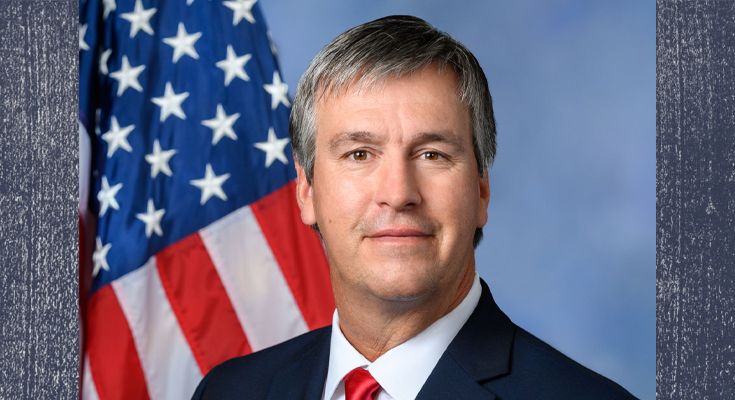
Last week, Rep. Barry Moore, Rep. Abigail Spanberger (R-Virginia), and 41 Members of Congress, including House Agriculture Committee Chairman Glen Thompson, led a letter to Agriculture Secretary Tom Vilsack and U.S. Trade Ambassador Katherine Tai urging the General Administration of Customs China (GACC) to engage with the United States Department of Agriculture (USDA) Animal Plant and Health Inspection Service (APHIS) and to honor their 2020 trade agreement by restoring market access to states who followed agreed upon Highly Pathogenic Avian Influenza protocols. These affected states include 158 poultry processing and cold storage facilities and represent 43 percent of boiler production in the United States. “Poultry producers are under pressure not only to protect animal health but market health, too. American producers bet on reliable trading partners, and China is not holding up their end of the deal,” said Rep. Moore. “I urge Secretary Vilsack and Ambassador Tai to engage with their Chinese counterparts and encourage them to honor the 2020 agreement and restore American market access.” Congressman Glenn Thompson is the Chairman of the House Committee on Agriculture. “Trade is one of our most valuable tools to stimulate the economy, and China’s disregard for existing regionalization protocols is negatively impacting our poultry industry,” said Rep. Thompson. “Our nation’s growers follow long-standing guidelines to ensure the health and safety of poultry products. The Biden Administration must engage with the GACC to uphold our trade agreements and reopen this critical export market for U.S. poultry.” Commercial Poultry in Alabama generates more than $15 billion in revenue annually. It accounts for 65.6% of annual farming revenue in the state and employs more than 86,000 Alabama workers on farms, processing plants, and allied industries. The U.S. shipped about $732 million worth of broilers to Chinese buyers in 2020. That’s about 21% of total U.S. exports worldwide. Many of those chickens were raised in Alabama. In 2021, China imported $3.1B in Poultry Meat, becoming the world’s largest importer. China imports Poultry Meat primarily from Brazil ($1.27B), the United States ($908M), Thailand ($327M), Russia ($250M), and Argentina ($137M). Cutting off that market, especially with high input prices for feedstuffs and energy, could negatively impact Alabama poultry farmers. Barry Moore is in his second term representing Alabama’s Second Congressional District. To connect with the author of this story or to comment, email brandonmreporter@gmail.com.
Katie Britt wins tumultuous Alabama Senate race scrambled by Donald Trump
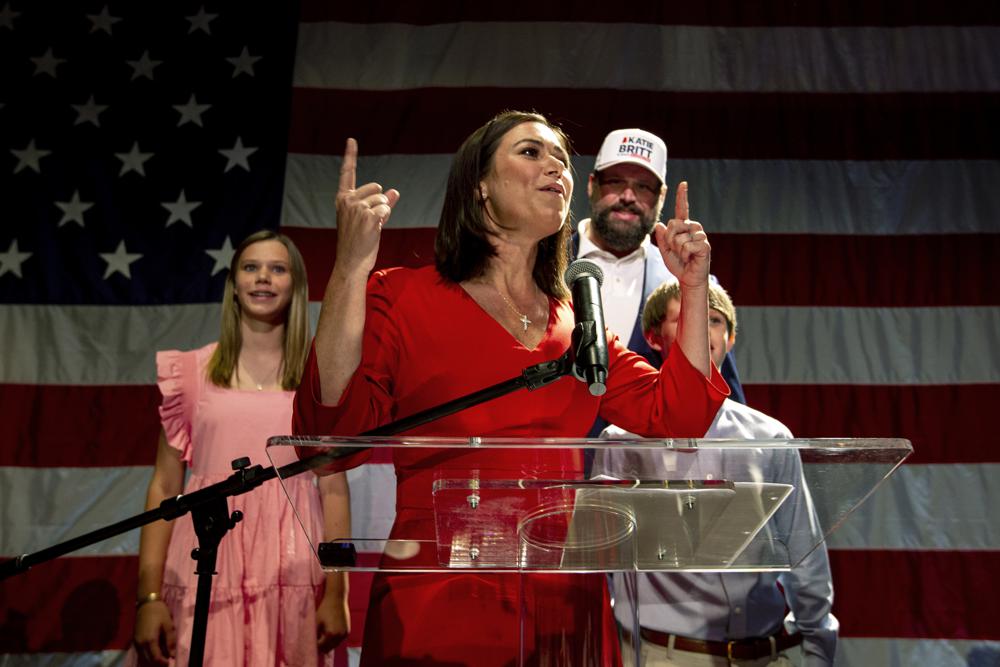
Katie Britt won the Republican nomination for Senate in Alabama Tuesday, defeating six-term Rep. Mo Brooks in a primary runoff after former President Donald Trump took the unusual step of rescinding his initial Brooks endorsement. The loss ends a turbulent campaign that pit Brooks, a conservative firebrand who has spent more than a decade in Congress, against someone who has never held elected office. Brooks ran under the banner “MAGA Mo” and fully embraced Trump’s election lies. But that wasn’t enough for the former president, who initially backed Brooks in the race to replace Britt’s former boss, retiring Sen. Richard Shelby, but then pulled his support as Brooks languished in the polls. The race was among a handful of contests held Tuesday at the midpoint of a primary season that has been shaped by Trump’s effort to influence the GOP. By the time Trump backed her earlier this month, Britt was already considered the favorite in the race. She emerged as the top vote-getter in the state’s May 24 primary, but just missed the threshold that triggered a runoff. Still, Tuesday’s result gives Trump a win at a time when his influence over the GOP has come under scrutiny. The former president has had a mixed record of success in backing candidates this election season, helping lift Senate contenders in Pennsylvania and Ohio while floundering elsewhere, particularly in Georgia. Voters in the one-time Republican stronghold rejected his efforts to unseat the state’s GOP governor and secretary of state, both of whom rebuffed his extraordinary pressure to overturn the results of the 2020 presidential election. And his trouble in the crucial swing state deepened Tuesday as two of his endorsed congressional candidates faltered in their GOP runoff elections. In the 6th District in Atlanta’s northern suburbs, emergency room physician Rich McCormick beat Trump-backed lawyer Jake Evans. And in the 10th District east of Atlanta, trucking company owner Mike Collins bested Democrat-turned-Republican Vernon Jones. Trump persuaded Jones to run for the seat and drop his long-shot bid for governor to clear the field for his chosen candidate, former Sen. David Perdue. Perdue lost to Republican Gov. Brian Kemp, who endorsed Collins. The seat is being vacated by Republican Rep. Jody Hice, who also lost his bid to unseat Republican Secretary of State Brad Raffensperger, another top Trump target. Meanwhile, in Washington, D.C., Mayor Muriel Bowser won the Democratic nomination to serve another term, fending off a pair of challengers amid concerns over rising crime and homelessness. But the Alabama Senate runoff had drawn particular attention because of the drama surrounding Trump’s endorsement and because the winner, who will face Democrat Will Boyd in November, is considered the overwhelmingly favorite in the Republican state. Britt, 40, cast herself as part of a new generation of conservative leaders while disparaging Brooks, 68, as a career politician. If victorious in November, Britt will be the first woman elected to the U.S. Senate from Alabama and one of its youngest members. The state’s previous female senators had been appointed. “Alabama has spoken. We want new blood. We want fresh blood,” she said at her victory party. “We want someone who will fight for Christian conservative values, who will fight for the freedoms and liberties this nation was founded on and will fight for the American dream for the next generation and the next generation.” That argument seemed to resonate with some voters Tuesday. “She’s young. She’s smart,” said 86-year-old Carolyn Bowman. “That’s what we need in Congress.” Brooks, who is known for his bombastic oratory style, described the race as a battle for the soul of the Republican Party, pitting the “true conservative” wing against establishment members of the GOP. He disparaged Britt, 40, as a RINO — the GOP pejorative meaning “Republican in name only” — and maintained he was the only one with a proven conservative record. The founding member of the conservative House Freedom Caucus, Brooks has a history of bucking party leadership and made his opposition to Senate Minority Leader Mitch McConnell a pillar of his campaign, embarking on a “Fire McConnell Tour” of town halls. In his concession speech Tuesday night, Brooks told supporters he respected the race’s outcome. But in a sign of the contentious race, he accused voters of having been seduced by false advertising and congratulated high-dollar donors and “special interest groups” for funding Britt’s campaign. “We are sending to Washington, D.C., the exact opposite of what we need in the United States Senate. But the voters have spoken. They might not have spoken wisely,” he groused. Brooks was initially considered the frontrunner when he announced his Senate candidacy, and Trump quickly offered his support, rewarding an ally who had been an ardent supporter of Trump’s false claims of election fraud. Brooks voted against certifying Democrat Joe Biden’s presidential election victory and delivered a fiery speech at the “Stop the Steal” rally that proceeded the U.S. Capitol insurrection, telling the crowd, “Today is the day that American patriots start taking down names and kicking ass.” But their relationship soured as Brooks struggled to gain traction. Trump eventually pulled his support in March, accusing Brooks — one of the most conservative members in Congress — of going “woke” for saying at a rally that it was time to move on from litigating the 2020 presidential election. Brooks clawed his way into a second-place finish in the May primary and tried once again to get Trump to back him. But Trump instead threw his support to Britt 11 days before the runoff she was widely expected to win. Elsewhere, in Virginia, Republicans chose a pair of Trump-aligned congressional candidates to take on two of the most vulnerable Democrats in the fall. In the coastal 2nd District, state Sen. Jen Kiggans won the Republican race to try to unseat Democrat Elaine Luria, a retired Naval commander and member of the January 6 committee, in the general election. And in central Virginia’s 7th District, Yesli Vega emerged from a competitive six-candidate field to face Democratic Rep. Abigail Spanberger. At the polls Tuesday in Virginia Beach, Nanci
What to watch in Alabama Senate runoff, DC mayor’s race

The two Republican candidates in Alabama’s U.S. Senate primary runoff on Tuesday can each boast that at one point, they had Donald Trump’s endorsement in the race. Trump first backed U.S. Rep. Mo Brooks in the spring of 2021. That endorsement stood for nearly a year until Trump rescinded it as the conservative firebrand languished in the polls. The former president took his time in issuing a second endorsement, supporting Katie Britt in the race only after she emerged as the top vote-getter in the state’s May 24 primary. In other races Tuesday, Washington, D.C., Mayor Muriel Bowser is facing voters amid growing concerns about crime. Runoffs in Georgia will resolve close contests in several congressional races and a secretary of state nomination, while primaries in Virginia will set up competitive congressional contests for the fall. Arkansas is holding primary runoffs for several legislative races. What to watch in Tuesday’s primaries: ALABAMA The Senate runoff will decide the GOP nominee for the seat being vacated by 88-year-old Republican Sen. Richard Shelby, who announced his retirement in February 2021 after serving six terms. Two months later, Trump announced his endorsement of Brooks, rewarding the six-term congressman who had objected to the certification of the 2020 presidential election and spoke at the “Stop the Steal” rally that preceded the January 6 insurrection at the U.S. Capitol. But Trump soured on Brooks as the primary campaign progressed, growing unhappy with his showing in the race and some of his comments urging the party to move on from the former president’s fixation on his 2020 election defeat. He pulled his endorsement last March. Britt, Shelby’s former chief of staff and a former leader of a state business group, won the most votes in last month’s primary, capturing nearly 45% of the ballots compared to Brooks’ 29%. Britt had needed to earn more than 50% of the vote to win outright and avoid a runoff. Another top candidate, Mike Durant, best known as the helicopter pilot who was held captive in Somalia during the 1993 battle chronicled in the book and film “Black Hawk Down,” finished in third place and failed to advance to the runoff. Brooks has been backed by Texas Sen. Ted Cruz and Kentucky Sen. Rand Paul, both of whom campaigned with him. Britt comes into Tuesday’s runoff with a fundraising advantage and a shiny new endorsement from Trump, which came a couple of weeks after the primary. The former president, who has a mixed record of success in backing winning candidates in this year’s midterm elections, waited to make an endorsement to help stave off the embarrassment of backing a losing candidate in a high-profile race. The winner of the GOP race will face Democrat Will Boyd in November, though Democrats have found limited success in the deep-red state in the last 20 years. GEORGIA A Democratic contest for secretary of state headlines the Tuesday runoffs in Georgia, while Republicans will settle three congressional nominations. State Rep. Bee Nguyen, backed by Democratic gubernatorial nominee Stacey Abrams, is trying to defeat former state Rep. Dee Dawkins-Haigler in the secretary of state’s race. The winner will face Republican Secretary of State Brad Raffensperger in the fall. Raffensperger beat back a challenge in his May 24 primary from U.S. Rep. Jody Hice, who was endorsed by Trump. Trump made Raffensperger a top target for rebuffing his efforts to “find” enough votes to overturn Joe Biden’s win in the state’s 2020 presidential election. In congressional runoffs, Vernon Jones, a Trump-backed candidate and former Democrat, is competing against trucking company owner Mike Collins for the Republican nomination for the 10th Congressional District seat east of Atlanta. Collins was endorsed by Republican Gov. Brian Kemp, who also won his primary over a Trump-backed challenger. In the 6th District in Atlanta’s northern suburbs, emergency room physician Rich McCormick is trying to hold off Trump-backed lawyer Jake Evans. That race has revolved around accusations by each candidate that the other is insufficiently conservative. The Republican winners in the 6th and 10th are heavy favorites in the November election over their Democratic opponents. Republicans also have high hopes of knocking off 30-year Democratic Rep. Sanford Bishop in southwest Georgia’s 2nd District. The GOP is choosing between former Army officer Jeremy Hunt and real estate developer Chris West. VIRGINIA In Virginia, voters will be picking Republican nominees to take on Democratic U.S. House incumbents in two of the most highly competitive districts in the country. In the coastal 2nd District, which includes the state’s most populous city, Virginia Beach, four military veterans are competing for the GOP nomination. With a big fundraising lead and the backing of the Congressional Leadership Fund, a super PAC dedicated to electing House Republicans, state Sen. Jen Kiggans is widely seen as the front-runner. The winner will face Democrat Elaine Luria, a retired Naval commander and member of the January 6 committee, in the general election. In central Virginia’s 7th District, six candidates are jockeying to take on Democratic Rep. Abigail Spanberger, a former CIA officer. WASHINGTON, D.C. Bowser, the two-term mayor of Washington, D.C., is trying to fend off challenges from a pair of Council members as the district contends with rising crime rates and homelessness concerns. Bowser has had a tumultuous second term that saw her repeatedly face off against Trump and walk a public tightrope between her own police department and a vocal coalition of activists led by Black Lives Matter. She is campaigning on the need for proven leadership and her history as one of the faces of Washington’s ongoing quest for statehood. Her primary challengers are Robert White and Trayon White, who are not related to each other. Both accuse Bowser of favoring developers as spiraling costs of living drive Black families out of the city and of mishandling public safety issues amid rising rates of violent crime, like a Sunday night shooting that left a 15-year-old boy dead and a police officer and at least two other adults wounded. The Democratic primary essentially decides the mayoral race in deeply blue Washington, D.C. Robert White has a history of successful insurgent campaigns, having unseated an entrenched incumbent for an at-large
Growing number of Democrats call on Joe Biden to reverse plan to end Title 42
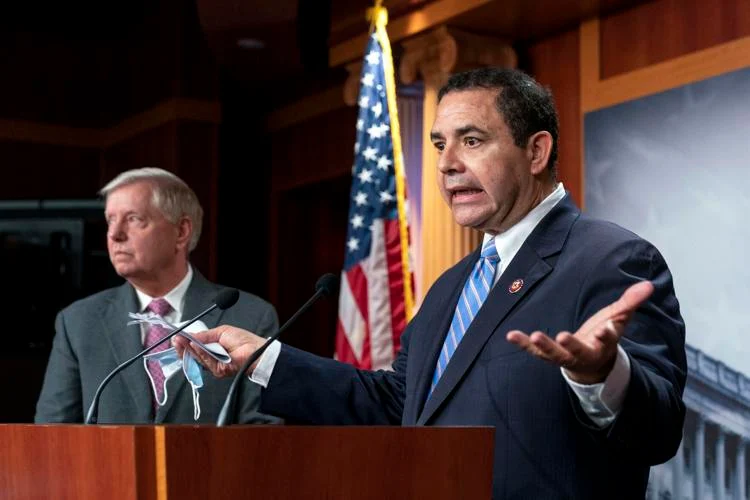
A Democratic governor and several Democrats in Congress are calling on President Joe Biden to reverse the U.S. Centers for Disease Control and Prevention’s decision to end Title 42. Title 42, a public health authority that enables federal agents to quickly expel illegal immigrants during a public health emergency, has been in effect since March 2020. On April 1, the CDC announced it was terminating it on May 23. U.S. Rep. Henry Cuellar, a Democrat from the border town of Laredo, Texas, told Fox News Sunday that Biden was listening to immigration activists, not border communities or their representatives such as himself. “But my question is, who’s listening to the men and women in green and in blue?” he asked, referring to Customs and Border Protection and Border Patrol agents. “And more importantly, who’s listening to the border communities, the sheriffs, the landowners, the rest of the people that live on the border?” he asked. Cuellar is facing a tough runoff election May 24 and, if he wins, a tough general election in November. “How can we have the federal public emergency extended to July 15 and say there’s a pandemic going on in the United States, but at the border, everything’s fine, and just let people into the United States,” he said, adding, “Those are mixed messages.” He also addressed the administration’s mixed messages when it comes to mandates. “How can you ask for international travelers to make sure … they’re vaccinated or even show their COVID-19 negative tests if they fly in?” Cueller asked, referring to vaccine mandates imposed on legal travelers when no such requirements exist for those who’ve entered the U.S. illegally and are then released into the U.S. by the Biden administration. Cuellar also posted pictures of existing overcrowded holding facilities at the border with Title 42 in place. “Title 42 is critical to ensuring the health and safety of migrants, law enforcement, and border residents,” he said. Democratic Nevada Gov. Steve Sisolak wrote Biden late last week expressing concerns about Title 42 ending. He asked him “to reconsider any intentions of undoing Title 42 until there is a comprehensive plan for how the United States can avoid the humanitarian crisis this policy change would spark.” The CDC issued a statement on April 1 announcing it was ending Title 42 due to “an increased availability of tools to fight COVID-19 (such as highly effective vaccines and therapeutics)” and said, “suspending the right to introduce migrants into the United States is no longer necessary.” Instead, the Department of Homeland Security was implementing “appropriate COVID-19 mitigation protocols, such as scaling up a program to provide COVID-19 vaccinations to migrants and prepare for resumption of regular migration under Title 8,” the CDC said. But on April 12, Health and Human Services Secretary Xavier Becerra announced he was renewing the national public health emergency order “as a result of the continued consequences of the Coronavirus Disease 2019 (COVID-19) pandemic.” He said the public health emergency “exists and has existed since January 27, 2020, nationwide,” and was renewed by the Trump and Biden administrations eight times. Set to expire April 15, it was renewed effective April 16 for an additional 90 days. Arizona Democratic U.S. Sen. Krysten Sinema argues extending the public health emergency “proves the need to delay lifting Title 42 to protect the health and safety of Arizona communities and migrants.” In a statement, she said she would “keep pushing for transparency and accountability from the administration to help secure the border, keep Arizona communities safe, and ensure migrants are treated fairly and humanely.” Earlier this month, she joined a bipartisan effort to prevent Title 42’s end until after the national public health emergency order ends. Sen. Mark Kelly, D-Ariz., the lead Democratic cosponsor, filed the Public Health and Border Security Act of 2022. Joining him as Democratic cosponsors were Sinema and Sens. Joe Manchin from West Virginia, Jon Tester from Montana, and Maggie Hassan from New Hampshire. U.S. Rep. Jared Goldman, D-Maine, was the lead Democratic cosponsor of the companion bill in the House. Joining him were Democratic cosponsors, Reps. Tom O’Halleran and Greg Stanton of Arizona, Chris Pappas of New Hampshire, Stephanie Murphy of Florida, Abigail Spanberger of Virginia, and Tim Ryan of Ohio. The bill isn’t likely to pass the House even if it were to pass the Senate. So far, 22 states have sued to stop the administration from halting Title 42 in two separate lawsuits. Unless the Biden administration is stopped by the courts, DHS announced last month measures it was putting in place to prepare for up to 18,000 people a day expected to enter U.S. custody once Title 42 is lifted. This estimate is in addition to the roughly 2 million people who were apprehended or encountered by Border Patrol agents in Biden’s first year in office while Title 42 was in place. All encounter numbers exclude “gotaways,” those who evade capture and don’t surrender at ports of entry. Republished with the permission of The Center Square.
