Five members of Alabama delegation receive award for conservative excellence
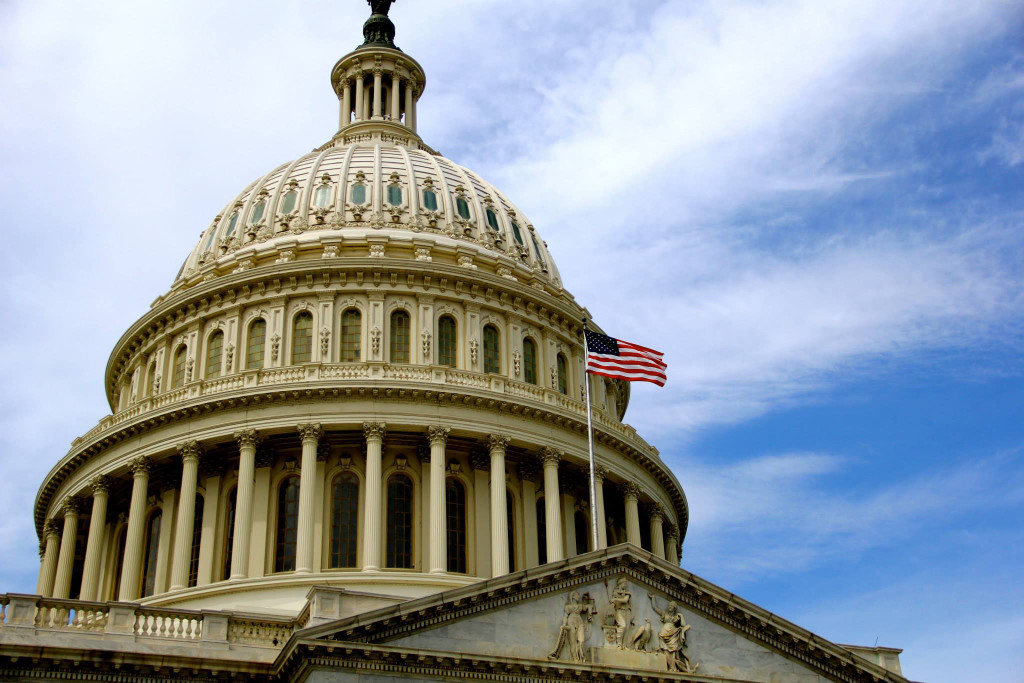
The American Conservative Union Foundation (ACUF) on Monday released its 47th Annual Federal Ratings of Congress. Five members of the Alabama delegation were awarded the ACUF’s Award for Conservative Excellence based on their voting records. Annually the ACUF — the sister organization of the American Conservative Union (ACU), the nation’s original conservative organization. For more than fifty years the ACU has educated and activated the conservative movement through its ratings programs, policy centers and educational events such as the Conservative Political Action Conference (CPAC), the largest annual gathering of conservatives in the nation — produces a scorecard for members of both the U.S. Senate and House of Representatives based on their voting records. All members of Congress are issued a score while only members who received a score of 80 percent or higher receive an award. Awards were presented to — 1st District U.S. Rep. Bradley Bryne (92.15%); 4th District U.S. Rep. Robert Aderholt (83.6%); 5th District U.S. Rep. Mo Brooks (90.13%); 6th District U.S. Rep. Gary Palmer (100%); as well as former U.S. Sen. Luther Strange (81.82%) for his brief stint in the U.S. “In the 2017 session, we saw Republicans come together to pass the most important corporate tax reform in decades, confirm a true conservative in Neil Gorsuch to the Supreme Court, and repeal the Obamacare individual mandate,” said ACU Chairman Matt Schlapp. “But conservatives must not rest on their laurels. This is not the time for four corners defense. Congress must pass a rescissions bill to eliminate wasteful spending in the omnibus and finally confirm highly qualified presidential nominees to critical positions.” This year some of the key issues ACU Foundation scored include: confirmation of Neil Gorsuch to the Supreme Court repeal of Obamacare passage of comprehensive tax reform defunding of Planned Parenthood repeal of Dodd-Frank and key presidential nominations to cabinet positions. Widely regarded as the “gold standard” of conservative scoring, the ACU “Ratings of Congress” evaluated 21 key votes in the U.S. Senate and 25 key votes in the U.S. House of Representatives. The bills are selected cover a variety of issues and are designed to reflect how each individual views the role of government in another individual’s life. Some of the bill topics included are social and cultural, fiscal and economic, and national security. This year marks the ACU’s 47th year of rating key votes in Congress. Read each member’s individual score and breakdown below:
5 Alabama delegation members noted for conservative records
The Washington, D.C.-based American Conservative Union, the oldest active conservative lobbying and activism organization in the United States, has released its 44th annual congressional scorecard. It ranks all members of the 114th Congress based on their votes concerning a cross-section of issues important to pro-business, traditionalist influencers. “For 44 years, our ACU Ratings have been considered the gold standard in determining a member of Congress’ courage to stand up to big government liberals and to stand strongly in favor of policy positions important to conservatives,” said ACU Chairman Matt Schlapp, a former aide to the George W. Bush administration and Koch Industries. “Our award-winning senators and congressmen are fighting to protect the rights and freedom of all Americans by honoring President [Ronald] Reagan’s three-legged stool of economic, national security, and cultural conservative issues.” The Alabama delegation scored higher on the ACU’s scale — where 100 is “most conservative” and zero is “most liberal” — than most other states’ by far. Members whose voting records rank in the top 20 percent, a score of 80 and above, were awarded the the ACU Award for Conservative Achievement. Sen. Jeff Sessions was rated the most conservative of all Alabama members with a 96 rating, up from 88 a year ago. Sen. Richard Shelby posted an 88 this year, up from last year’s 76. The House delegation was especially interesting, because it gave a look into the political calculus Alabama members use to legislate while stumping for re-election on a near-constant basis. U.S. Rep. Bradley Byrne nearly aced the ACU exam on his first try: The freshman scored a delegation-best 88. U.S. Rep. Mike Rogers jumped 24 points from last year to achieve an 84, while U.S. Rep. Mike Rogers finished out the top three by holding steady at 84. U.S. Rep. Martha Roby, whose district includes parts of centrist-leaning Montgomery, scored 56, down from last year’s 64; U.S. Rep. Robert Aderholdt scored a 61, slightly down from 67; and U.S. Rep. Gary Palmer as a freshman was not scored. All are Republicans. Democrat Terri Sewell, who largely ignores the group’s advocacy, scored an 8, down from last year’s 12.5. Here’s a list of some of the key votes scored by ACU, according to its website: In favor of HR 7 (Roll Call 30) Taxpayer Funding of Abortion. This bill would have permanently prohibited the use of federal funding, facilities or staff to provide abortion coverage and services with exceptions for rape and incest and to save the life of the mother. Opposing HR 3590 (Roll Call 38) Federal Land Use. The DeFazio amendment would have defeated the purpose of a bill to open more federal land for recreational hunting, fishing and shooting by requiring a lengthy environmental review of each area of land affected. In favor of H Con Res 96 (Roll Call 175) Conservative Budget. The Woodall amendment to the budget bill presented a conservative alternative that would have balanced the budget in four years by freezing domestic spending at $60 billion below current levels, reformed entitlement programs, and eliminated wasteful programs. Brooks/Roby/Sewell voted against it. In favor of HR 4435 (Roll Call 231) Defense Spending. The McKinley amendment to the National Defense Authorization bill bars the use of federal funding to conduct climate change assessments and reports. In favor of HR 4745 (Roll Call 290) Housing Programs. The Schock amendment to the Transportation and Housing Appropriations bill to reduce the power of the HUD Secretary to hand out Section 8 vouchers above the authorized limit, in some cases valued at $4,000 a month, while keeping others on a waiting list for any type of affordable housing. In favor of HR 5016 (Roll Call 425) Second Amendment. The Massie amendment to the Financial Services Appropriations bill that would prohibit the District of Columbia from taking any action to prevent law-abiding citizens from possessing, using or transporting a firearm. Opposing HR 5272 (Roll Call 479) Immigration. This bill reverses President Obama’s executive order deferring action on some illegal immigrants but not others. The full list of scored votes is available here.