
Mitch McConnell and other Republican Senators denounce White nationalism after Tommy Tuberville’s refusal to denounce White nationalists as racists
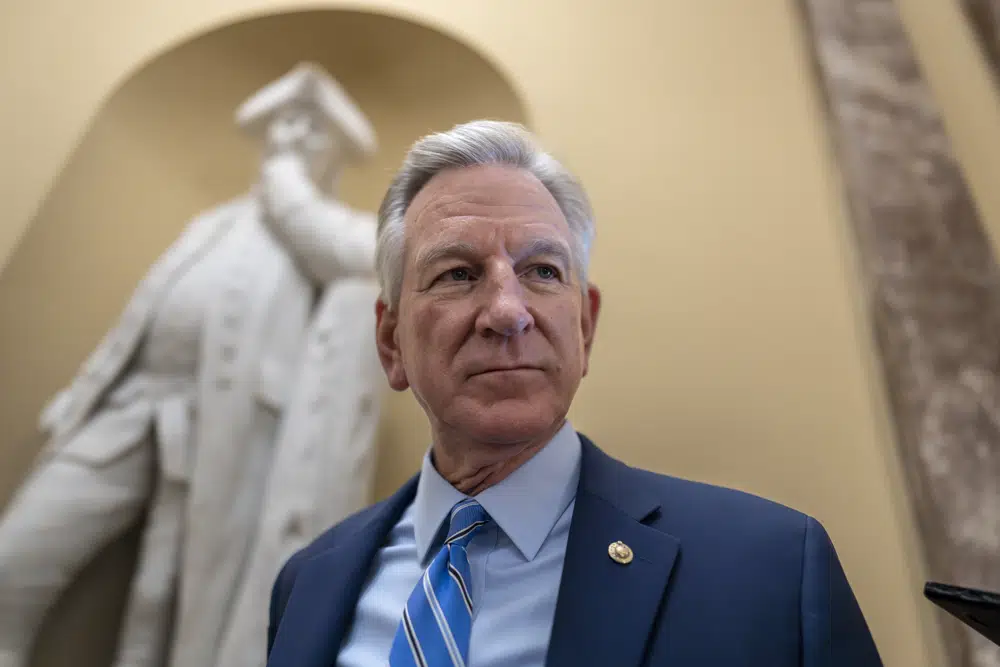
U.S. Senator Tommy Tuberville (R-Alabama) is being widely criticized for his comments on White nationalists in a recent CNN interview. On Tuesday, U.S. Sen. Mitch McConnell (R-Kentucky) responded, saying there is no place for White nationalists in the military or the country. “White supremacy is simply unacceptable in the military and in our whole country,” McConnell told reporters. The number two Republican in the Senate, Minority Whip John Thune (South Dakota), said there’s no room for white nationalists in the GOP or the military. “I just think there isn’t any place for it,’ Thune said. “We are a country obviously that has built around a set of principles that’s welcoming.” “Ethnic nationalism is un-American, and I think it would be problematic in the military,” said Sen. Marco Rubio (R-Florida). “My definition of a White nationalist is someone that believes that America belongs to white people. That’s not American, that’s un-American, and that would be a problem in the military,” “White supremacy and racism have absolutely no place in our country. Period. The end,” Sen. Katie Britt (R-Alabama) told reporters. This controversy began during an NPR interview in Alabama when Tuberville was asked if White nationalists should be able to serve in the military. “Well, they call them that. I call them Americans,” Tuberville answered. Tuberville followed those comments with an interview Monday on CNN. CNN host Kaitlan Collins said a White nationalist is “someone who believes that the white race is superior to other races.” “Well, that’s some people’s opinion,” Tuberville responded. “My opinion of a White nationalist, if someone wants to call them a White nationalist, to me, is an American. It’s an American. Now, if that White nationalist is a racist, I’m totally against anything that they want to do because I am 110 percent against racism.” Tuberville said White nationalism is “just a cover word for the Democrats now where they can use it to try to make people mad across the country.” Senate Majority Leader Chuck Schumer (D-New York) chastised Tuberville for his opinion, “The senator from Alabama is wrong, wrong, wrong. The definition of White nationalism is not a matter of opinion. “For the Senator from Alabama to obscure the racist nature of white nationalism is indeed very, very dangerous,” Schumer said. “He is fanning the flames of bigotry and intolerance.” “I don’t think Senator Tuberville is in any way racist,” said Sen. Mitt Romney (R-Utah) when asked about Tuberville. “I am totally against anything racist,” Tuberville emphasized. “My opinion of a White nationalist, if you want to call them that, is an American.” Tuberville chastised Democrats for dividing this country and making it weaker. This is not the first gaffe that Tuberville has made on the national stage. Tuberville was criticized in October when he seemed to be saying those Americans who want reparations for slavery are responsible for committing crimes. “They’re not soft on crime. They’re pro-crime. They want crime,” Tuberville said of Democrats. “They want crime because they want to take over what you got. They want to control what you have. They want reparations because they think the people that do the crime are owed that. Bulls**t. They are not owed that.” Tuberville was in Nevada campaigning for GOP Senate candidate Adam Laxalt. Laxalt lost to incumbent Sen. Catherine Cortez-Masto 48.9 to 48.0% a month later. Tuberville has also been widely criticized for his hold on military promotions over the Pentagon’s controversial abortion policy. Tuberville has refused to vote yes on unanimous consent to the promotions over his opposition to the Biden administration’s efforts to thwart pro-life state laws for military members and their families. Despite the criticism from Washington, the Hill reports that Tuberville remains overwhelmingly popular in Alabama, with a commanding majority of Alabamians holding favorable views of the senior Senator from Alabama. To connect with the author of this story or to comment, email brandonmreporter@gmail.com.
Democrats kept the Senate this year, but 2024 may be harder
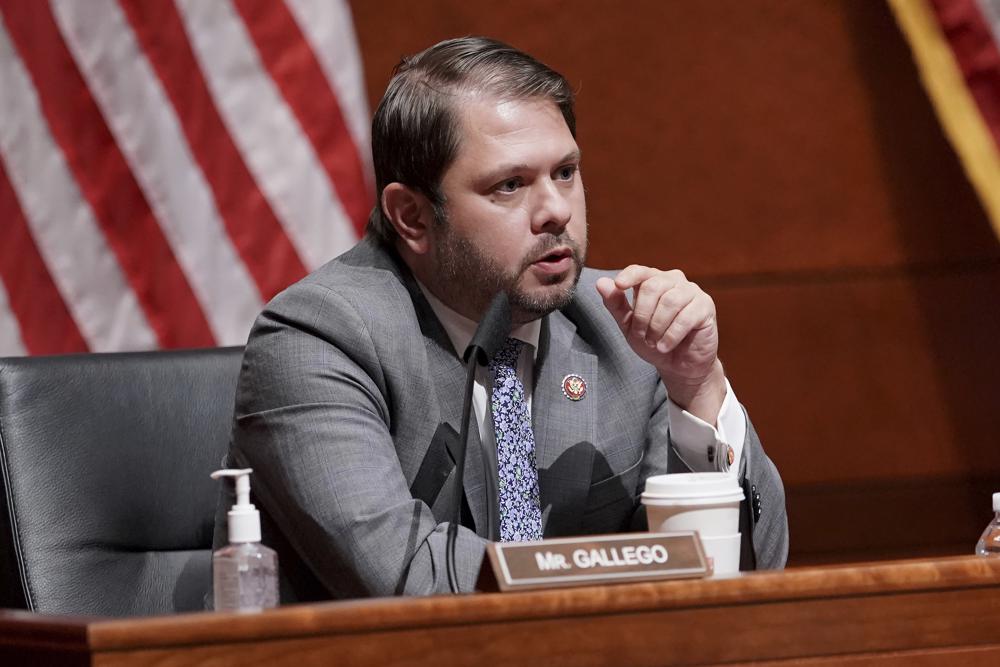
Democrats celebrating a successful effort to keep control of the U.S. Senate this year will soon confront a 2024 campaign that could prove more challenging. The party enters the next cycle defending 23 seats, including two held by independents who caucus with Democrats. That’s compared with just 10 seats that Republicans hope to keep in their column. Adding to the potential hurdles is that some 2024 contests are in states that have become increasingly hostile to Democrats, including Montana, Ohio, and West Virginia. Other Democratic-held seats are in some of the same hotly contested states that were at the center of this year’s midterms, such as Pennsylvania, Arizona, and Nevada. And while Democrats carried each of those races, they did so at great cost and with sometimes narrow margins. In Nevada, for instance, Democratic incumbent Sen. Catherine Cortez Masto won by less than 1 percentage point, or about 9,000 votes. For now, both parties insist they’re laser-focused on coming out on top in the December 6 Senate runoff in Georgia. But Democrats who are on the ballot in 2024 know that they could face fierce headwinds and are studying the results of this year’s election when the party outperformed expectations. For Nevada Sen. Jacky Rosen, a Democrat facing her first reelection campaign, that means staying focused on kitchen table issues and touting legislation like the infrastructure law and gun violence legislation signed by President Joe Biden. “We know that races are always close,” Rosen said in an interview. “We never take anything for granted.” The dynamics of the next Senate campaign could be influenced by a variety of outside factors, particularly the presidential election and the attention it generates. Biden, who turned 80 this month, has said his “intention” is to run for reelection and that he will make a final decision early next year. Former President Donald Trump has already announced a third White House bid, and multiple other Republicans are lining up to launch campaigns. The eventual nominee in each party could have a profound impact on down-ballot races, including those for Senate. But perhaps the biggest question for Senate Democrats seeking reelection will be who Republicans nominate as their opponents. The GOP lost several Senate elections this year, including those in Arizona, Pennsylvania, and Nevada, after Trump-backed candidates struggled to raise money and connect with a broader, more moderate range of voters during the general election. In Nevada, the Republican field to challenge Rosen has not begun to shape up but is expected to attract several contenders. One name receiving attention is Sam Brown, a former U.S. Army captain who was awarded a Purple Heart after being severely wounded in Afghanistan. Brown ran for Senate this year and put up a strong challenge in the Republican primary before losing to Adam Laxalt, who lost in the general election to Cortez Masto. Richard Hernandez, who was Brown’s campaign adviser, said, “He has committed to his supporters that he will never stop fighting for their issues, but he has not made any decisions as to whether that involves a future run for office.” Also in the southwest, Arizona Sen. Kyrsten Sinema, a centrist Democrat, will be up for reelection. The race, like other recent statewide contests in Arizona, is expected to be very competitive. But Sinema is likely to first face a well-funded primary challenger after angering much of the Democratic base by blocking or watering down progressive priorities like a minimum wage increase or Biden’s big social spending initiatives. She has not said whether she plans to run for reelection. Sinema’s most prominent potential primary challenger is U.S. Rep. Ruben Gallego, who has a long history of feuding with Sinema. Gallego has not announced his plans for 2024 but has made it no secret that he’s thinking about challenging Sinema. He even raised money on the prospect he might oppose Sinema. An independent expenditure group is also raising money, saying it will support grassroots organizations committed to defeating Sinema in a Democratic primary. Republicans hope a bruising Democratic primary might give them an opening to win the seat after losing Senate races in Arizona in three consecutive elections. Sinema is among a trio of moderate Senate Democrats who have sometimes used their leverage in an evenly divided chamber to block or blunt some of Biden’s plans and nominees. They will also be among the party’s most vulnerable incumbents in 2024. The other two senators, Joe Manchin of West Virginia and Jon Tester of Montana, will be running as Democrats in states that Trump handily carried in 2020. Manchin has already drawn a GOP challenger in U.S. Rep. Alex Mooney, who declared a week after winning reelection that he was setting his sights on higher office. Manchin has not yet said whether he’ll run for reelection. Republicans see Tester, a three-term senator, as vulnerable, and the opportunity to run for the seat could draw a fierce primary contest between former Interior Secretary Ryan Zinke and Rep. Matt Rosendale. Zinke, who won a House seat in this year’s midterm elections, said he will decide whether to run next year, and Rosendale declined to answer. Tester has not announced if he will seek another term but has said he anticipates 2024 will be just as tough as his last race in 2018, when he beat Rosendale in a close contest. In Pennsylvania, Democratic U.S. Sen. Bob Casey has not said whether he intends to run for a fourth term. Casey easily won reelection in 2018, but Pennsylvania has been competitive for Republicans, including in this year’s Senate race won by Democrat John Fetterman. One potential Republican challenger whose name has been floated in Pennsylvania is former hedge fund CEO David McCormick, who narrowly lost the Republican primary in this year’s race to celebrity heart surgeon Dr. Mehmet Oz. McCormick advisers declined to comment on that prospect. Conservative activist Kathy Barnette, who finished a close third in the Republican primary, didn’t respond to messages about whether she’s considering a 2024 campaign. Wisconsin, which saw Republican Sen. Ron Johnson narrowly win reelection this year, is also expected to have
Several U.S. Senate and House races remain too close to call as vote counts trickle in

Two days after Election Day, several races are still too close to call, leaving the fate of the U.S. House and Senate hanging in the balance. FiveThirtyEight currently has 210 Republican House seats compared to 200 for Democrats, leaving both short of the 218 needed to control that chamber. The House is still leaning toward Republicans, though, with expected House Speaker Rep. Kevin McCarthy, R-Calif., declaring Republican control. Nancy Pelosi has not publicly weighed in, even as many wait to see if she will retire from leadership. In fact, some races are separated by only a handful of votes. Outspoken supporter of former President Donald Trump, Rep. Lauren Boebert, R-Colo., is leading her opponent by fewer than 400 votes at time of publication. Arizona, California, Nevada, and other states also have close House races. Control of the Senate is still undecided and may come down to a Dec. 6 Georgia runoff between Republican Herschel Walker and Democrat Raphael Warnock. Arizona’s Senate race is not called, though Democrat Mark Kelly leads Republican Blake Masters roughly 51.4% to 46.4%. The Arizona Secretary of State’s website indicates 100% of precincts reporting, but Maricopa County is still reportedly working through hundreds of thousands of mail-in ballots turned in on Tuesday. In Nevada’s uncalled Senate race, Republican Adam Laxalt leads Democrat Catherine Cortez Masto 49.4% to 47.6%, with 83% reporting. Gubernatorial races are tight as well. The closely watched governor’s race in Arizona has Republican Kari Lake behind Democrat Katie Hobbs by about 13,000 votes as counts continue Thursday. Overall, election night disappointed many Republicans who hoped for the “red wave.” “So after all the analysis, it is clear the most likely case is both houses of Congress will go Red and the mega states of TX and FL go redder,” Matt Schlapp, chair of the Conservative Political Action Committee, wrote on Twitter. “We lost too many close races, but all in all, I go back to VA very pleased.” Former President Donald Trump has taken criticism after many of the candidates he backed did not fare well, but he pushed back against those critiques in a string of posts on Truth Social Wednesday and Thursday. “Incredible how dishonest the Fake News Media is,” he wrote. “The Failing New York Times has gone crazy. So many of the people I Endorsed went on to victory on Tuesday Night, nobody was even close, and they literally make up a story refusing to write the facts, and only quoting enemies and losers. Almost all of the people I endorsed WON, yet if you read the story from two Trump hating writers (who only do as they are told!), you would not even recognize the truth.” Speaking at a press conference Wednesday, President Joe Biden said he always expected Democrats to do “fine” and wants to work with Republicans going forward. “While we don’t know all of the results yet – at least, I don’t know them all yet – here’s what we do know,” he said. “While the press and the pundits are predicting a giant red wave, it didn’t happen. And I know you were somewhat miffed by my – my [sic] optimism, but I felt good during the whole process. I thought we were going to do fine. “The American people have made clear, I think, that they expect Republicans to be prepared to work with me as well,” he added. Republished with the permission of The Center Square.
Joe Guzzardi: Pro-Environment platform a mid-term winner

The latest mid-term election polling shows that Republicans and Democrats are dead even. In January, the same polling firm Statista had the GOP ahead by four points. Other polls like 538.com indicate more or less the same outcome. But if voters have learned anything since the 2016 and 2020 elections, it would be to distrust polling firm projections. Results from 2020 polls favored Democrats, with Susan Collins (R-Maine), Lindsey Graham (R-S.C.), Joni Ernst (R-Iowa), Thom Tillis (R-N.C.), and Steve Daines (R-Mont.) as likely losers. But Collins, 6.5 points behind, or so said the pre-election pollsters, won by 8.6 points. The other five candidates that the prognosticators wrote off as doomed won handily. Pollsters have an explanation to defend their theory that congressional Democrats might still retain the majority, despite record inflation, rising crime rates, a botched Afghanistan withdrawal, student debt forgiveness, billions of dollars squandered in support of what’s become an endless Russia-Ukraine war, and an open border. It is that the GOP has nominated poor candidates in key swing states. Among the races, pollsters are tracking most closely are Blake Masters in Arizona vs. incumbent Mark Kelly, Herschel Walker in Georgia vs. incumbent Raphael Warnock, Adam Laxalt in Nevada vs. incumbent Catherine Cortez Masto, and Mehmet Oz vs. John Fetterman in Pennsylvania, where incumbent Republican Pat Toomey is retiring. A state official who has no congressional voting record, Fetterman proudly notes that his wife’s family overstayed their visas, at which time their immigration status converted to unlawfully present, a clue that he favors more immigration. Fetterman’s website says he supports a “humane” immigration system, a vapid remark which confirms that he endorses Biden’s status quo. The GOP challengers, all within striking distance, may be getting short shrift from pollsters. The candidates were persuasive enough to capture primary nominations; they’re not too tongue-tied to debate. More important, going into the general election, the GOP has as much fodder – listed above – and primo debate material as any high-office challengers in history, thanks mostly to President Biden’s slipshod governance, and the incumbents’ whole-hearted endorsement of it. On the key open borders issue, Masters, Walker, and Laxalt have the benefit of launching an offensive against their opponents’ immigration voting records. Their rivals, Kelly, Warnock, and Cortez Masto are, like Fetterman and Biden, all-in on open borders. A review of the incumbents’ immigration votes found that each has consistently voted against reducing amnesty fraud, against curbing illegal immigrants’ rewards, against ending unnecessary employment visas, against stricter border enforcement, and against more rigorous interior enforcement. Stumping on reducing immigration can be problematic since such a focused campaign would trigger untruthful but potentially damaging racist allegations. A winning campaign would include linking immigration to unsustainable population growth, an indisputable fact that the Census Bureau confirms. Census Bureau data predicts that by the mid-21st century, the U.S. population will increase to more than 400 million from its current 333 million, a greater than 20 percent increase. More than half of that growth will be attributable to immigration and births to immigrants. For comparison’s sake, the Center for Immigration Studies’ researchers, based entirely on the Census Bureau’s American Community Survey and the Current Population Survey Annual Social and Economic Supplements, found that in 2017 there were 35.8 million legal and illegal immigrants living in the U.S. who arrived from 1982 to 2017. Further, these immigrants had 16.9 million U.S.-born children and grandchildren. In total, immigration added 52.7 million people to the U.S. population between 1982 and 2017, accounting for a little over 56 percent of population growth during this 35-year time period. For the nation’s population to increase by more than 65 million people, as the Census Bureau predicts, in less than 30 years, creates a grave danger that will exacerbate existing environmental problems like water shortages and land lost to urban sprawl. Opinions about immigration and its effects often differ. But sentiments about the environmental future Americans want to ensure for their children and grandchildren are consistent. Americans want open spaces and nature’s bounty to remain for future generations to enjoy, a goal that ever-more immigration makes impossible. To win and to prove the pollsters wrong again, the GOP platform must emphasize immigration’s harmful, unwanted consequences of unchecked population growth and the environmental degradation that accompanies it. Joe Guzzardi is a nationally syndicated newspaper columnist who writes about immigration and related social issues. Joe joined Progressives for Immigration Reform in 2018 as an analyst after a ten-year career directing media relations for Californians for Population Stabilization, where he also was a Senior Writing Fellow. A native Californian, Joe now lives in Pennsylvania. Contact him at jguzzardi@pfirdc.org.
Lindsey Graham unveils nationwide abortion ban after 15 weeks

Upending the political debate, Republican Sen. Lindsey Graham introduced a nationwide abortion ban Tuesday, sending shockwaves through both parties and igniting fresh debate on a fraught issue weeks before the midterm elections that will determine control of Congress. Graham’s own Republican Party leaders did not immediately embrace his abortion ban bill, which would prohibit the procedure after 15 weeks of pregnancy with rare exceptions, and has almost no chance of becoming law in the Democratic-held Congress. Democrats torched it as an alarming signal of where “MAGA” Republicans are headed if they win control of the House and Senate in November. “America’s got to make some decisions,” Graham said at a news conference at the Capitol. The South Carolina Republican said that rather than shying away from the Supreme Court’s ruling this summer overturning Roe v. Wade’s nearly 50-year right to abortion access, Republicans are preparing to fight to make a nationwide abortion ban federal law. “Oh, no, no, no, no, no, no, we’re going nowhere,” the senator said while flanked by female advocates from the anti-abortion movement. “We welcome the debate. We welcome the vote in the United States Senate as to what America should look like in 2022.” Reaction was swift, fierce, and unwavering from Democrats who viewed Graham’s legislation as an extreme example of the far-right’s hold on the GOP and as a political gift of self-inflicted pain for Republican candidates now having to answer questions about an abortion ban heading toward the midterm elections. “A nationwide abortion ban — that’s the contrast between the two parties, plain and simple,” Senate Majority Leader Chuck Schumer said. Sen. Patty Murray, a Democrat from Washington who is in her own fight for reelection, said Republicans “want to force” women to stay pregnant and deliver babies. “To anyone who thought they were safe, here is the painful reality,” she said. “Republicans are coming for your rights.” The sudden turn of events comes in a razor-tight election season as Republicans hoping to win control of Congress are struggling to recapture momentum, particularly after the Supreme Court’s landmark decision sparked deep concerns among some voters, with signs of female voters peeling away from the GOP. In a midterm election where the party out of the White House traditionally holds an advantage, even more so this year with President Joe Biden’s lackluster approval ratings, the Democrats have regained their own momentum pushing back the GOP candidates in House and Senate races. Tuesday’s announcement set up an immediate split screen with Biden and Democrats poised to celebrate their accomplishments in a ceremony at the White House after passage of the Inflation Reduction Act and Republicans forced to answer for Graham’s proposed abortion ban. “This bill is wildly out of step with what Americans believe,” White House press secretary Karine Jean-Pierre said in a statement. “While President Biden and Vice President [Kamala] Harris are focused on the historic passage of the Inflation Reduction Act to reduce the cost of prescription drugs, health care, and energy – and to take unprecedented action to address climate change — Republicans in Congress are focused on taking rights away from millions of women,” Jean-Pierre said. Graham’s legislation has almost zero chance of becoming law, but it elevates the abortion issue at a time when other Republicans would prefer to focus on inflation, border security, and Biden’s leadership. The Republican bill would ban abortions nationwide after 15 weeks of pregnancy, except in cases of rape, incest, or risk to the physical health of the mother. Graham said it would put the U.S. on par with many countries in Europe and around the world. In particular, Graham’s bill would leave in place state laws that are more restrictive. That provision is notable because many Republicans have argued that the Supreme Court’s ruling leaves the abortion issue for the states to decide. But the legislation from the Republicans makes it clear states are only allowed to decide the issue if their abortion bans are more stringent. Senate Republican leader Mitch McConnell, who is one seat away from majority control, declined to embrace Graham’s legislation. “I think every Republican senator running this year in these contested races has an answer as to how they feel about the issue,” McConnell said. He said most GOP senators prefer having the issue dealt with by the states rather than at the federal level. “So I leave it up to our candidates who are quite capable of handling this issue to determine for them what their response is.” The Democratic senators most at risk this fall and other Democratic candidates running for Congress appeared eager to fight against Graham’s proposed nationwide abortion ban. Sen. Catherine Cortez Masto, a Nevada Democrat, tweeted that Graham “and every other anti-choice extremist can take a hike.” Her Republican opponent, Adam Laxalt, has during his campaign insisted that abortion is protected in the state constitution, which it may no longer be under this bill. In Colorado, another Democrat up for reelection, Sen. Michael Bennet, tweeted: “A nationwide abortion ban is outrageous. ” Bennet pledged “to defend a woman’s right to make her own health care decisions, no matter what ZIP code she lives in. We cannot afford to let the Republicans take back the Senate.” His opponent in Colorado, Republican Joe O’Dea, who supports putting abortion access that had been guaranteed under Roe v. Wade into law, agreed, in part: “A Republican ban is as reckless and tone deaf as is Joe Biden and Chuck Schumer’s hostility to considering any compromise on late-term abortion, parental notification or conscience protections for religious hospitals.” The races for control of Congress are tight in the split 50-50 Senate, where one seat determines majority control, and in the House, where Speaker Nancy Pelosi can afford to lose only a few seats. Pelosi called Graham’s bill the “clearest signal of extreme MAGA Republicans’ intent to criminalize women’s health freedom in all 50 states and arrest doctors for providing basic care. Make no mistake: if Republicans get the chance, they will work to pass laws even more
Donald Trump campaigns in battleground Michigan amid book fallout

Trump reveled in the crowd of several thousand, packed shoulder-to-shoulder in a cavernous airport hangar, mostly without masks.
