
New study reveals Alabama has 5th highest incarceration rate in the world
The Prison Policy Initiative released a new report in May comparing the incarceration rate of each American state to countries around the world, and the Yellowhammer state came in fifth place overall. Fifth place, compared to the entire world; yikes Alabama. Oklahoma topped the list with 1,079 inmates per 100,000 of populous in their state but Alabama was not far behind, reporting 946 people imprisoned per 100,000 people in the state; the U.S. national average is 698 per 100,000. But the Yellowhammer state was not the only one with higher ratings, a total 23 states in the nation were reported to have rates over the national average, giving them the highest incarceration rates in the world. The report then compared these numbers to other nations around the world, where even places like Slovakia, Argentina, Australia and the Ukraine had less than 200 people per 100,000 incarcerated. “If we imagine every state as an independent nation…every state appears extreme,” said the report. “Massachusetts, the state with the lowest incarceration rate in the nation, would rank 9th in the world, just below Brazil and followed closely by countries like Belarus, Turkey, Iran, and South Africa.” “States like Alabama, with incarceration rates even higher than the U.S. average, compare even worse. Next to other stable democracies, Alabama is off the charts,” the Prison Policy Initiative explained. The prison system in Alabama is long overdue for an overhaul, the state prison system houses nearly twice the inmates it was designed for. Prison officers and inmates have been killed and injured in a series of violent crimes behind bars, and with several reports this year of Sheriff’s stealing and pocketing hundreds of thousands of dollars meant for inmates food rations, it’s a wonder we’re not talking about this issue. In 2014, the Southern Poverty Law Center (SPLC) and the Alabama Disabilities Advocacy Program filed a lawsuit against the Alabama Department of Corrections (ADOC) to end the poor conditions in the state prison system, including the understaffing of both correctional and mental health workers. According to the SPLC, as of January 2018, the state still hadn’t come up with an acceptable remedy to address the “horrendously inadequate” and unconstitutional mental health care and staffing needs of the ADOC. “As Gov. Kay Ivey and ADOC Commissioner Jeff Dunn have both recognized, the constitutional violations of how the state treats prisoners developed over a generation. It will be difficult, and likely costly, to fix them. But ADOC has to fix them,” said Maria Morris, senior supervising attorney for the SPLC, and lead litigator in the case. Ivey responded by adding an additional $51 million to the ADOC budget earlier in 2018.
Legislative committee delays prison medical, mental health care contract

A legislative committee Thursday morning delayed a contract for prison medical and mental health services for the Alabama Department of Corrections (ADOC) after new objections were raised this week that the vendor is involved in a bribery case in neighboring Mississippi. The Legislative Contract Review Committee delayed the proposed $360 million contract with Wexford Health Sources, who has been named in a suit brought forth by the Mississippi Attorney General Jim Hood to recoup funds and damages related to bribery charges that sent the former Mississippi Corrections Commissioner, Chris Epps, to jail for 20 years. “There are just some questions floating around out there,” Vestavia Hills-Republican state Rep. Jack Williams, chairman of the Joint Legislative Contract Review Permanent Joint Legislative Oversight Committee, told the AP. “I held it up in order to give the governor’s office time to evaluate these others concerns that have been raised primarily from the state of Mississippi.” The contract review committee is unable to permanently stop the contract, but they are able to delay it for 45 days, at which time they’re able to send it to Gov. Kay Ivey for further consideration.
$300 million to corrupt firm? Auditor Jim Zeigler says no

Alabama is no stranger to political corruption charges. The state has seen elected officials at every level of government charged and found guilty of crimes. In what some perceive as a tone-deaf move, the state is moving forward to contract with Wexford Health Sources — a company that has found itself in the middle of a bribery case in neighboring Mississippi. Wexford has been named in a suit brought forth by the Mississippi Attorney General Jim Hood to recoup funds and damages related to bribery charges that sent the former Mississippi Corrections Commissioner, Chris Epps, to jail for 20 years. And now, the Alabama Department of Corrections (ADOC) will bring a contract — for prison medical and mental health services — with Wexford to the to the legislature’s Contracts Review Committee on March 1 for approval. The contract, effective April 1, 2018 states Wexford “will provide comprehensive healthcare including both medical and mental health care and management services to State inmates in accordance to applicable laws” through Sept. 30, 2020 for a sum of $360,471,062. [Copy of DOC-Wexford contract] Alabama Today reached out to Bob Horton, Public Information Manager at the State Department of Corrections, for comment on Monday, regarding the contract but has yet to hear back from him. But according to the Associated Press, Horton claims Wexford had not been accused of any wrongdoing when the state decided to sign a contract with them. “When the pick was made that ‘Wexford Health has not been accused of any wronging and the department is confident the review committee selected the right company for the health care contract,” Horton told the AP. On Tuesday, State Auditor Jim Zeigler requested the committee order “the maximum delay allowed by law” on the proposed contract. Zeigler says considering the fact Alabama is under federal court order to improve poor prison conditions for inmates, it would irresponsible to enter into a contract with the company without knowing the court’s final decision in the case. “The State of Alabama has been found liable in a federal lawsuit concerning prison mental health,” Zeigler said in a statement. “We are now awaiting the court’s final decision on the remedies to be required. To enter into the proposed contract now without knowing what the federal court will require is irresponsible.” Zeigler continued, “If this committee orders the maximum delay allowed by law, it will give me time to reason with the Department of Corrections to wait to see what steps will be ordered by the court in this matter. Allowing this contract to go forward without knowing what the court will require is simply premature.” Wexford complaint in Mississippi:
Alabama Senate approves General Fund budget, prison funding boost

The Alabama Senate on Tuesday passed a $2 billion FY19 General Fund budget. Senators voted 26 to 2 for the budget that appropriates funds for functions of government, debt service, and capital outlay for fiscal year ending September 30, 2019. Answering Gov. Kay Ivey‘s January request, the budget allocates a $3.2 million increase to the Alabama Law Enforcement Agency (ALEA) to fund a new class of 30 state troopers. It also provides an $8 million increase for the Department of Mental Health, as well a a $4.7 million increase for the Alabama Department of Economic and Community Affairs (ADECA). “This budget protects the taxpayers of Alabama, while ensuring that the core functions of state government are adequately funded,” said Montrose-Republican and the bill’s sponsor, State Senator Trip Pittman, Chairman of the Senate Finance and Taxation Budget Committee. “We have prioritized targeted increases for state troopers, prisons, and the Department of Public Health, and level-funded nearly every other state department and agency.” The spending plan also sends an additional $51 million to the Alabama Department of Corrections (ADOC). The allocation of funds follow U.S. District Judge Myron Thompson ruling last year to a federal lawsuit, which declared Alabama’s prison system has failed to provide mental health care to the state’s prison population and is in violation of the Eighth Amendment’s prohibition on cruel and unusual punishment. “Given the severity and urgency of the need for mental-health care explained in this opinion, the proposed relief must be both immediate and long term,”U.S. District Judge Myron Thompson wrote in his 302-page decision. Anniston-Republican and Senate Pro Tem Del Marsh said it’s a good budget that lives within Alabama’s fiscal means without raising taxes. “This is a good general fund budget, we were able to fully fund state agencies, hire new state troopers, provide much needed money to address mental health in our prisons, and pay back debt to the Alabama Trust Fund,” said Marsh. “Although the past few budgets have been lean, through conservative fiscal practices and living within our means we have been able to come out of those years and pass a robust budget without having ever raised new taxes on hard working Alabamians.” The bill now moves to the state House of Representatives for consideration.
Alabama’s prison system back on trial this week
Alabama’s prison system is back on trial this week. The trial marks the latest stage in a lawsuit the Southern Poverty Law Center (SPLC) and the Alabama Disabilities Advocacy Program filed in 2014 against the Alabama Department of Corrections (ADOC) to end the poor conditions in the state prison system, including the understaffing of both correctional and mental health workers. According to the SPLC, the state has yet to come up with an acceptable remedy to address the “horrendously inadequate” and unconstitutional mental health care and staffing needs of the ADOC. The SPLC will argue just that in its closing arguments scheduled for Wednesday, Jan. 24 at 3 p.m. They follow weeks of testimony outlining ADOC’s plans to increase mental health and correctional officer staffing, raise personnel pay, and enhance outreach to potential new hires. Alabama legislators have requested $80 million over the next year and a half to address the issues plaguing the ADOC. But according to the SPLC, that amount does not address the current shortfalls, nor does it take into consideration decades of inadequate funding. “As Gov. Kay Ivey and ADOC Commissioner Jeff Dunn have both recognized, the constitutional violations of how the state treats prisoners developed over a generation. It will be difficult, and likely costly, to fix them. But ADOC has to fix them,” said Maria Morris, senior supervising attorney for the SPLC, and lead litigator in the case. “ADOC needs to be fast, creative and aggressive in figuring out how to come into compliance with the Constitution,” Morris added. “The recent budget request for ADOC covers little more than the expected increase in the system’s health care costs, and does nothing to address correctional staff shortages or the unconstitutional level of care.” Responding to the federal lawsuit in June 2017, the U.S. District Court issued a 302-page ruling declaring that Alabama’s prison system has failed to provide mental health care to the state’s prison population and is in violation of the Eighth Amendment’s prohibition on cruel and unusual punishment. “Given the severity and urgency of the need for mental-health care explained in this opinion, the proposed relief must be both immediate and long term,”U.S. District Judge Myron Thompson wrote in his decision. State officials denied providing inadequate mental health treatment, but the judge cited evidence to the contrary from inmates and prison officials. One inmate killed himself days after testifying, prompting the state to agree to new suicide prevention methods while the trial continued. The judge acknowledged that the department blames lack of funding, but said money alone couldn’t make up for such poor treatment, and sweeping change is required. Alabama’s state prison system houses nearly twice the inmates it was designed for. Prison officers and inmates have been killed and injured in a series of violent crimes behind bars.
Cam Ward and Matt Fridy: A positive note in prison debate
The news surrounding the Alabama corrections system seems to be one negative story after another with much of the focus on the need for reform and consolidation in the system as well as higher quality of service and better outcomes. Much of this is true and is a result of inadequate funding, not because of poor leadership or management. In fact, we would argue that ADOC has some of the best leadership under Commissioner Jeff Dunn and his team that we have had in some time. They are tackling the bigger problems and looking for ways to solve them in the face of many challenges. However, not everything at ADOC is bad news, in fact there is one diamond among the rough that Dunn and his team have recognized as an example of how corrections could be run with the appropriate funding and dedication to positive outcomes for those leaving the system and returning to their local communities. The Alabama Therapeutic Education Facility in Columbiana, Ala. will have been open for ten years this coming March and have worked with almost 7,000 ADOC inmates who participated in an innovative six month rehabilitation program at the facility. The program is a partnership between the GEO Group as well as ADOC and the Alabama Department of Post Secondary Education. Here the participants come from DOC facilities all over the state and enter into a six month evidence based program of drug rehabilitation, education and an opportunity for a vocational degree in five different trades and crafts via our community college system. We have toured the ATEF and it is in fact a model of what we as legislators would like to see across the state of Alabama. Why? What are the results from almost ten years at this unique medium security facility? According to the Alabama Department of Corrections this past July, over those ten years, the ATEF has an average recidivism rate of 15%. To put that into context, the state of Alabama’s recidivism rate is 35% (per ADOC) and the national average is 76%. In fact, a U.S. Bureau of Justice study stated that within five years of release, 76% of inmates leaving state facilities are rearrested. The challenge we have in Alabama and will continue to have, is adequate funding for proven programs such as ATEF. However, with a commitment from the Ivey Administration, the ADOC, ALDPSE and the legislature, the teaching and the treatment and the vocational degrees for participants going back to their local communities can continue and will at ATEF. Alabama should be looking for ways to fully utilize ATEF and expand this model with proven results into other areas of our state’s corrections system. Simply put, the results speak for themselves and if we dedicate funding to expanding a program with a 15% recidivism rate, numerous lives will be improved and the state will see the benefits for decades to come. ••• Cam Ward is a Republican member of the Alabama Senate. He has represented District 14 since 2010. Matt Fridy is a Republican member of the Alabama House. He has represented District 73 since 2014.
Personnel note: ADOC promotes Lagreta McClain, Chadwick Crabtree to warden
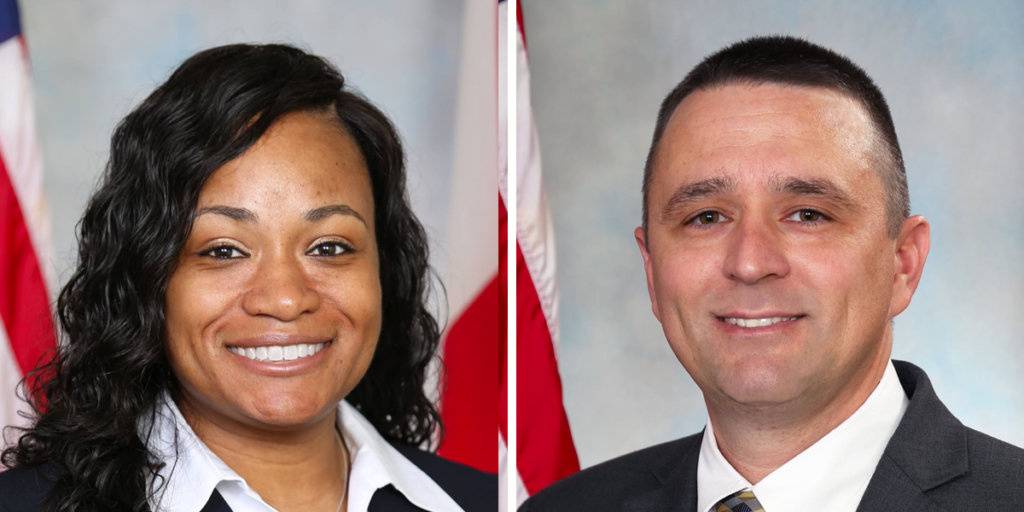
The Alabama Department of Corrections (ADOC) on Thursday announced the promotions of two new wardens within the state’s prison system. Effective Friday, Dec. 1, Largreta McClain will be the Warden I at Tutwiler Prison for Women in Wetumpka and Chadwick Crabtree will be the Warden I at Birmingham Community Based Facility. Following a brief assignment at the Holman Correctional Facility, McClain worked at the Easterling Correctional Facility just short of 10 years before transferring to Tutwiler at the rank of sergeant. She continued to progress in her career and received a promotion to captain in 2015. “It is such an honor to have the opportunity to recognize someone that has worked so hard and is so deserving of a promotion,” said Deputy Commissioner of Women’s Services Wendy Williams. “Warden McClain has prepared herself for this opportunity and she is ready to take on this leadership role at Tutwiler.” Crabtree spent the majority of his career at the Limestone Correctional Facility before his promotion to lieutenant and subsequent assignment to the Decatur Community Based Facility in 2011. He was promoted to captain in 2016 and accepted an assignment to the Birmingham Community Based Facility. “I am very grateful for this opportunity and I look forward to working closely with the staff, volunteers and the community,” said Crabtree. “Our efforts will be focused on providing a safe work environment for our employees and delivering effective reentry services to those in our custody who are preparing to leave the prison system.”
Manufacturing jobs on rise in Dothan area

Manufacturing jobs are on the rise in southeast Alabama. The Dothan Eagle reports that Houston County experienced a 21 percent increase in manufacturing jobs within the past year. It topped all other counties in Alabama by a substantial margin. Greene County experienced the second-largest increase at 15.5 percent. In the past year, Houston County’s unemployment rate fell from 6.1 percent to 4.2 percent. About 1,400 more jobs exist in the area. Dothan Area Chamber of Commerce president Matt Parker says the biggest percentage of growth occurred in the 22- to 24-year-old sector. He attributed that success to partnerships with Alabama Industrial Development Training, the Alabama Department of Commerce, Dothan Area Career Center and Wallace Community College and investments in programs like Southeast Alabama Works and K-12 programs. Republished with permission from the Associated Press.
Alabama Senate approves plan to build up to three new prisons
The Alabama Senate on Thursday approved a state prison construction plan, taking significant steps to solve the long-standing crisis in Alabama’s prisons. After nearly three hours of debate, Senators voted 23-11 for Senate Bill 302, which authorizes a $350 million state bond issue to build one new prison and renovate others. Gov. Robert Bentley, a strong advocate for prison reform, calls the vote a “step in the right direction” even though it differs from his original proposal of $800 million. “Today Alabama took a step in the right direction to solve a decades old problem facing the Alabama Department of Corrections,” said Bentley in a news release. “I commend the Alabama Senate for their work on the passage of the Prison Transformation Initiative.” He continued, “I understand this bill is a work in progress and my ultimate goal remains the same, and that is to have safe and modern facilities that solve the persistent overcrowding of our prisons that will protect our law enforcement officers and inmates, as well prepare the inmates to successfully transition back into our communities. If we are to truly transform the person, we must first transform the system. As this legislation moves to the House, I look forward to working with House members to pass the Alabama Prison Transformation Initiative.” Currently, Alabama’s prisons house far more inmates than originally intended, with the prisons at over 170% of capacity. The proposal passed Thursday, sponsored by Alabaster-Republican state Senator Cam Ward authorizes the Department of Corrections to enter lease agreements with counties to finance and construct the facilities, and establishes clear criteria for how Corrections will award the lease agreements. As the second-largest expenditure in the state’s General Fund, the budget for all non-education state spending, the prison system is a significant and persistent fiscal strain on the state. For the current fiscal year, Corrections alone costs the state $496 million and consumes 22% of the General Fund budget. “The state prison system is close to exploding the state budget,” said Ward. “We have numerous prisons that were built before the Vietnam War and some pre-date World War Two. The upkeep alone for these facilities is a bleeding hole in our budgets.” “This plan will dramatically increase safety for our inmates and our correctional officers,” Ward added. “There have been too many instances over the past year of officers being assaulted and, in some cases, killed. The dormitory-style of housing at some of our prisons is particularly dangerous. Modern, cell-block facilities with high-tech cameras and better lines-of-sight will save lives.” Senate Bill 302 now moves to the Alabama House of Representatives for consideration.
