
Alabama leaders commemorate Victory over Japan Day
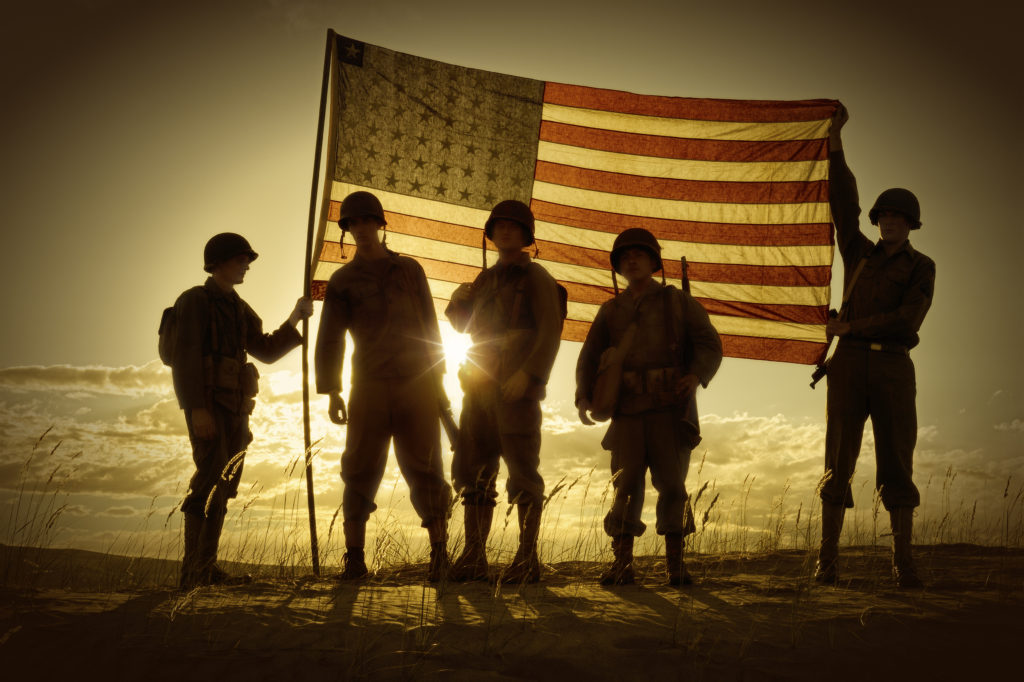
On September 2, 1945, representatives of the Empire of Japan formally surrendered to the U.S. and the Allies aboard the Battleship U.S.S. Missouri, formally ending World War II. The United States was forced into World War II on December 7, 1941, when the Japanese bombed the U.S. Navy base at Pearl Harbor. The Allies had defeated Nazi Germany months earlier. German Chancellor Adolf Hitler was dead, and the Nazi leadership was in custody: but Japan fought on alone, still holding large portions of China, Korea, Indochina, and Formosa (today Taiwan). On August 6 and 9, the U.S. dropped atomic bombs on the Cities of Nagasaki and Hiroshima. On August 15, Japan announced its surrender, with the formal signing of the surrender paper coming on September 2. General Douglas MacArthur signed the surrender papers on behalf of the Allies. This date is remembered in the U.S. as Victory over Japan Day (VJ-Day). The British commemorate August 15 as Victory over Japan Day. U.S. Senator Tommy Tuberville (R-Alabama) remembered the veterans who won World War II. “On September 2, 1945, Japan officially surrendered aboard the U.S.S. Missouri, ending one of the bloodiest wars in history,” Sen. Tuberville wrote on Twitter. “78 years later, we remember the courage, selflessness, and sacrifices of all our World War II veterans.” Congressman Barry Moore (R-AL02) acknowledged the historical significance of the date on Twitter. “On this 78th Anniversary of the Victory over Japan, we celebrate the Japanese surrender to allied forces, marking the end of World War II,” Rep. Moore said on Twitter. “Let us never forget those who sacrificed everything to defend our country and protect our freedom.” Sen. Katie Britt (R-Alabama) also honored the World War II vets. “Today, we remember the service and sacrifice of the heroic Americans who won the victory in the Pacific and brought an end to the largest war the world has ever seen,” Sen. Britt wrote on Twitter. World War II was the largest, bloodiest war in the history of the world and second only to the Civil War in American deaths. To connect with the author of this story or to comment, email brandonmreporter@gmail.com.
Ex-Arkansas Gov. Asa Hutchinson launches GOP 2024 bid, calls on Donald Trump to drop out
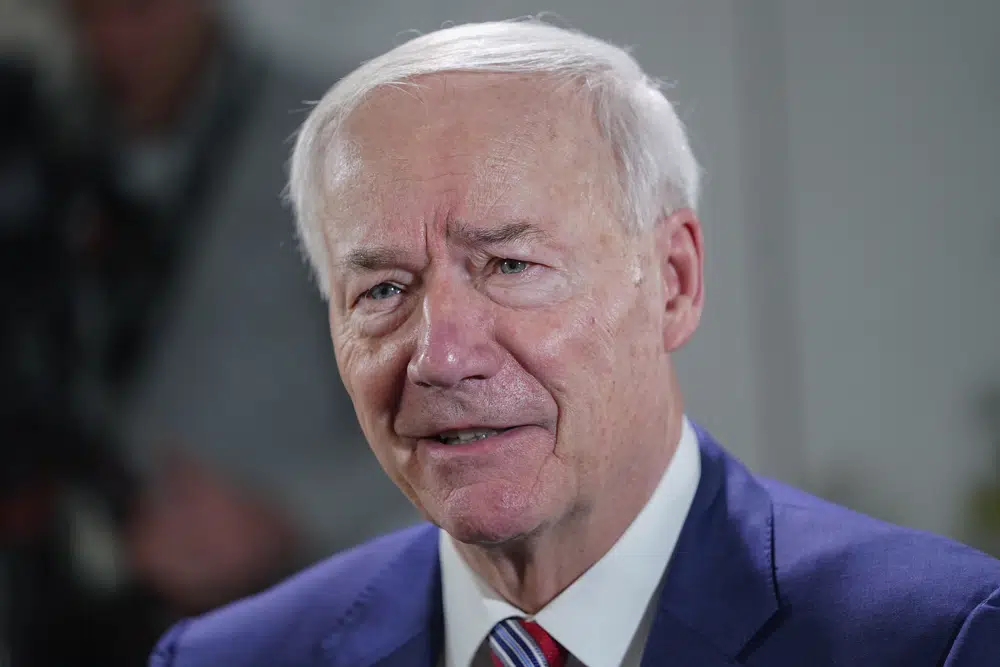
Asa Hutchinson, who spent two terms as governor of Arkansas, will seek the Republican presidential nomination, positioning himself as an alternative to Donald Trump just days after the former president was indicted by a grand jury in New York. In an interview that aired Sunday on ABC’s “This Week,” Hutchinson said Trump should drop out of the race, arguing “the office is more important than any individual person.” “I’m running because I believe that I am the right time for America, the right candidate for our country and its future,” he said. “I’m convinced that people want leaders that appeal to the best of America and not simply appeal to our worst instincts.” Hutchinson is the first Republican to announce a campaign after Trump became the first former U.S. president to face criminal charges. His candidacy will test the GOP’s appetite for those who speak out against Trump. Others who have criticized Trump, including former Maryland Gov. Larry Hogan, have opted against a campaign, sensing the difficulty of prevailing in a primary. And in a sign of Trump’s continued grip on the Republican base, most in the party — even those considering challenging him for the nomination — have defended him against the New York indictment. That, at least for now, leaves Hutchinson as a distinct outlier among Republicans. In addition to Trump, Hutchinson joins a Republican field that also includes former U.N. Ambassador Nikki Haley and entrepreneur Vivek Ramaswamy. Florida Gov. Ron DeSantis is expected to jump into the race in the summer, while U.S. Sen. Tim Scott of South Carolina, former Secretary of State Mike Pompeo, and former Vice President Mike Pence are among those considering bids. Hutchinson, 72, left office in January after eight years as governor. He has ramped up his criticism of the former president in recent months, calling another Trump presidential nomination the “worst scenario” for Republicans and saying it will likely benefit President Joe Biden’s chances in 2024. The former governor, who was term-limited, has been a fixture in Arkansas politics since the 1980s when the state was predominantly Democratic. A former congressman, he was one of the House managers prosecuting the impeachment case against President Bill Clinton. Hutchinson served as President George W. Bush’s head of the Drug Enforcement Administration and was an undersecretary of the Department of Homeland Security. As governor, Hutchinson championed a series of income tax cuts as the state’s budget surpluses grew. He signed several abortion restrictions into law, including a ban on the procedure that took effect when the U.S. Supreme Court struck down Roe v. Wade last year. Hutchinson, however, has said he regretted that the measure did not include exceptions for rape or incest. Hutchinson earned the ire of Trump and social conservatives last year when he vetoed legislation banning gender-affirming medical care for children. Arkansas’ majority-Republican Legislature overrode Hutchinson’s veto and enacted the ban, which has been temporarily blocked by a federal judge. Trump called Hutchinson a “RINO” — a Republican In Name Only — for the veto. Hutchinson’s successor, former White House press secretary Sarah Huckabee Sanders, has said she would have signed the legislation. Hutchinson, who signed other restrictions on transgender youth into law, said the Arkansas ban went too far and that he would have signed the measure if it had focused only on surgery. Hutchinson endorsed Sanders’ bid for governor. Sanders hasn’t publicly endorsed Trump or anyone else yet in the 2024 presidential race. She has avoided direct criticism of her predecessor, even as she split from him on several policies. Among the bills she’s signed since taking office is legislation intended to reinstate the ban on gender-affirming care for minors that Hutchinson opposed by making it easier to sue providers of such care. She’s also dissolved five panels Hutchinson had formed to advise him on the state’s response to the COVID-19 pandemic, saying she wanted the state to focus on other health challenges. Although he has supported Trump’s policies, Hutchinson has become increasingly critical of the former president’s rhetoric and lies about the 2020 presidential election. He said Trump’s call to terminate parts of the Constitution to overturn the election hurt the country. Hutchinson also criticized Trump for meeting with white nationalist leader Nick Fuentes and the rapper Ye, who has praised Adolf Hitler and spewed antisemitic conspiracy theories. Hutchinson has contrasted that meeting to his own background as a U.S. attorney who prosecuted white supremacists in Arkansas in the 1980s. An opponent of the federal health care law, Hutchinson, after taking office, supported keeping Arkansas’ version of Medicaid expansion. But he championed a work requirement for the law that was blocked by a federal judge. During the COVID-19 pandemic, Hutchinson tried to push back against misinformation about the virus with daily news conferences and a series of town halls he held around the state aimed at encouraging people to get vaccinated. Hutchinson infuriated death penalty opponents in 2017 when he ordered eight executions over a two-week period, scheduling them before one of the state’s lethal injection drugs was set to expire. The state ultimately carried out four of the executions. The former governor is known more for talking policy than for fiery speeches, often flanked by charts and graphs at his news conferences at the state Capitol. Instead of picking fights on Twitter, he tweets out Bible verses every Sunday morning. Hutchinson, who graduated from the evangelical college Bob Jones University in South Carolina, said in the ABC interview that he considers himself part of the evangelical community. “I believe that the evangelical community understands that we need to have a leader that can distance themselves from some of the bad instincts that drive Mr. Trump,” he said. “And I hope that we can do that in the future.” Republished with the permission of The Associated Press.
Will Sellers: A birthday no one celebrates
One hundred years ago this month, delegates from various parts of the old Russian Empire met in Moscow to create the Union of Soviet Socialist Republics. The world would never be the same. Prior to this declaration, an internal conflict pitted a variety of groups with differing political ideologies against each other. At the cost of more than 10 million dead, the communists emerged as the victor. Under Vladimir Lenin, they consolidated power to create the first communist state, an experiment that would fail almost 70 years later. The political theories of Marx and Engels, as interpreted by Lenin, were applied in ways that were never intended and created an economy devoid of practical experience. As pointy-headed intellectuals, Marx and Engels theorized an idea of history that saw capitalism losing steam as workers gained power and created a totally egalitarian society. These theories made for interesting discussion among academics and theorists but should never have been taken seriously as a basis for government. It would be akin to founding a new political system based on a combination of Aesop’s fables and Mother Goose. But Lenin, as an idealist, believed the doctrine, and it became, for him, a religion based on a binary concept of society as either capitalist or socialist. If the end of history was the decline of capitalism, why not accept the inevitable, skip a few steps, accelerate the process, and embrace a form of socialism that was bound to occur anyway? This belief set the stage for the most brutal concentration of power that left countless millions dead, all in the name of achieving a workers’ paradise. If you must break eggs to make an omelet, then to create a communist society, you had to murder upwards of 60 million people. But, thought Lenin and his successors, the achievement was worth the sacrifice…of someone else. As with many other utopian dreams, nothing was based on any rational experience. Lenin failed to consider human nature and that various groups might take exception to his goals and objectives. In a modern contorted version of the divine right of kings, Lenin’s anointed vision served as the basis of his ideas and could not be questioned. Anyone standing in the way was banished, if not summarily executed. Rather than advancing, history was retreating. Consider the sharp contrast with the founding of the United States. Here, the experience of colonists formed the basis of America. Rather than discard the English system of government, we embraced what worked, modified faulty systems, and exchanged only the King and Parliament for a President and Congress. Unlike the British experience as conveyed to the new world, Russia never really experienced an Enlightenment that supported liberty and freedom. Indeed, Russia is a sad history of a firm dictator issuing decrees without any thought of getting consent, much less considering the consequences to his subjects. Lenin and his ilk easily slid into this role, but initially, with peasants experiencing freedoms they’d never possessed, there was a certain euphoria about this new state. They subscribed and could see that their lives might be improved. And, with any change or conversion, the newness creates an excitement that something different is happening. Peasants previously under the yoke of their masters were liberated, and their labor marshaled to support the new system. But this did not last forever. Once they tasted a little freedom, they wanted more. But with all things being equal and scarce, freedom was apportioned and limited. Working for the common good was a great motivating factor and created an initial enthusiasm. But in the USSR, under communism, the common good was decided by others. Any sense of individuality, creativity, or ambition was subjected to state control, reducing liberty to the lowest common denominator. People from other countries flocked to see this new workers’ paradise where greed, profit, and selfishness were eliminated and subjugated to a new vision. But just like Russia under the Tsars, what people saw was filtered and limited; the reality was much different. The USSR would have its apologists who would celebrate the collective factories and farms and dream of a new world order. But under the surface, all dissent was barred, fear ruled the day, and any disagreements were met with severe punishment and, in many cases, disappearance and death. Once Lenin died, and Joseph Stalin muscled his way to the top, a killing machine that far surpassed anything seen before assassinated all rivals, banished dissidents to Siberia, and systematically starved untold millions. But elite intellectuals who knew no distinction between theory and practice praised Stalin’s achievements. The USSR was on the cusp of something great, and people across the world were invited to get on board. But then, Stalin allied himself with Adolf Hitler, which ended most optimism about the future of Stalin’s regime. And even when Stalin joined the Allied cause, the reports of the brutality of the Red Army, not only to the Nazis but to their own soldiers were unbelievable. After the war, the rest of the world knew something was wrong when Soviet prisoners of war committed suicide when faced with repatriation. During his concert in Moscow, Paul Robeson was shocked when he learned of Stalin’s elimination of intellectuals. Other activists also realized the workers’ paradise was a myth. After visiting the USSR, United Auto Workers union leader Walter Reuther saw clearly that the American labor movement needed to stay clear. To his credit, he disabused any labor leaders of any miracle in the USSR. He saw firsthand the exploitation of the Soviet workers and anchored labor to a democratic society. Ronald Reagan would be criticized for calling the USSR an “evil empire” and was deemed by detractors to have an inordinate fear of communism. As president, Reagan would pursue an aggressive policy of luring the USSR into a competition they could not win. The Berlin Wall fell soon after, the USSR dissolved, and Reagan’s critics were silenced when his assessment was vindicated. The birth 100 years ago of
Will Sellers: A Veterans Day to remember
America’s Veterans Day is recognized in other English-speaking countries as Remembrance Day. With the 80th anniversary this month of both the Battle of El Alamein and the North Africa “Torch” Landings, the observance has an added meaning. Eighty years ago, for all intents and purposes, the outcome of World War II hung in the balance. On all fronts, the Axis forces were advancing while the Allies suffered setbacks in almost every theater of combat. But momentum began to shift; if November 1942 began with pessimism and despair, it ended in a cautious optimism that the Allied cause had commanders who could win. In an amazing feat of coordination and cooperation, the Allied forces, under the command of Gen. Dwight D. Eisenhower, made five surprise amphibious landings on North African beaches hundreds of miles apart. This would be America’s initial entrance into the European phase of the war. Most of the American troops boarded vessels in the United States and steamed away without being detected. The North Africa landings would raise the profile of Gen. George Patton and set in motion the liberation of the Vichy French colonies. While the initial resistance to the landings came from French troops, they were persuaded to surrender and join the Allied cause. This disrupted the French chain of command and caused the Nazis to realize the fickle commitment of Vichy France. Even more significantly, to prevent the repurposing of the French Fleet as Nazi vessels, the entire French Navy was scuttled. The landings in French North Africa were the beginning of the gradual pacification of Axis hegemony. Prior to the landings, the Italians, and later the Nazis, were doing their best to prevent the British from controlling North Africa from Libya to Egypt. When the Italians were within a whisper of losing their toehold, Adolf Hitler sent reinforcements in the form of Erwin Rommel. His active duty in the desert would earn him the sobriquet “Desert Fox.” So even before the Torch landings, the British were directly engaged with Rommel and his Afrika Korps. And, for the most part, the Nazis were on the offense, pushing the British almost to Cairo. Tired of organized retreats, Winston Churchill sacked one commanding officer and, through circumstances, identified Gen. Bernard Montgomery to lead the British 8th Army. Montgomery, too, would make his mark in the desert. While the desert war was frustratingly slow, Montgomery took his time to build up his troops, making sure he had the necessary supplies and, by surprise, took the offensive. Rommel, on the other hand, was having a hard time acquiring the supplies necessary to keep his troops fed and his equipment serviceable. The British enjoyed significant naval resources to limit shipping in the Mediterranean, and the Royal Air Force had almost complete air superiority. Waiting for the best time to engage allowed Montgomery to build up his resources and served to diminish Nazi supplies and troop morale. Eighty years ago, when Montgomery did attack, he caught the enemy by surprise. Rommel had returned to Germany to fully recover from an illness, but his forces were no match for the well-supplied British joint operations. Superiority in tanks, aircraft, and armor-piercing artillery, ground the Nazi war machine down into a full retreat. Having to fight a defensive battle, Rommel turned to land mines to prevent British tanks and troops from attacking his flanks. As a countermeasure, Polish engineers developed an electronic mine detector that allowed minefields to be cleared in record time. This Polish invention allowed Allied troops to surreptitiously cut paths through minefields, which further surprised the Afrika Korps. Montgomery’s victory at El Alamein caused Churchill to famously remark that while the battle was not the beginning of the end, it was “the end of the beginning.” From this point on, the British would win battle after battle, pursuing the Nazis from North Africa to Sicily and, eventually, to Rome. As we celebrate our Veterans Day, the British will honor their war dead on Remembrance Day. At El Alamein, there will be a remembrance, as well, for it was 80 years ago that the might of the British Empire asserted itself and started the roll-up of Nazi forces in Europe. There is a cemetery at El Alamein for all the Commonwealth soldiers who died there. It is beautiful in its simplicity, and the symmetry of the marble headstones is a stark reminder of the cost of war. To walk through the graves and read the short phrases on each marker is a moving and somber experience. There is a quiet reverence to be on hallowed ground. There are countless markers of teenagers who died for their country, but the most sobering headstones of all simply read, “Known but to God.” In past years, families of the dead would gather to remember their sons, brothers, and husbands who made the ultimate sacrifice. Like so many other war cemeteries, it is the last touchstone many families have, and their trek to El Alamein is a pilgrimage to remember. Years ago, a father asked that his family spread his ashes at the tomb of his only son. While frowned upon, I am told this was not an infrequent occurrence. At the Commonwealth cemetery, there is an old Egyptian warden who keeps watch over the graves. His English is slight, but he takes his job seriously and guides families to the graves of their relatives in a most reverent and respectful manner. Of all the times in the Middle East when a tip or baksheesh might be in order, he refuses all gratuities and, completely against type, acts insulted at the offer. Remembering veterans this month is a good time to remember that 80 years ago in North Africa, American troops first engaged the enemy, and the British soundly defeated the Desert Fox while paving the way for ultimate victory. The cemetery at El Alamein reminds us of sacrifice and provides an object lesson in the cost of freedom. Will Sellers is a graduate of Hillsdale College
Will Sellers: The perpetual winner
In the blood sport of electoral politics, losers are forgotten and rarely rewarded; in British politics, even winners experiencing their peak of success can be defeated. As a result, dealing with the humiliation of loss and muddling through toward future success is perhaps the hallmark of a successful leader. Winston Churchill’s come from behind win 70 years ago this month ranks among history’s greatest political resurrections, but this accomplishment, improbable as it was at the time, is sweeter when understood in the context of his catastrophic loss some six years earlier. It is almost unthinkable that a world leader at the absolute apex of power and influence could lose a popular election. Few analogies can give full scope of how a politician could see his political fortunes fall only a few weeks after achieving victory over the Nazis. Churchill’s misfortune, though, was not a slow stumble, but, rather, a rapid free-fall that ended in a dramatic landslide defeat. Few sports figures, military leaders, or business titans have ever seen their fortunes turn sour so fast. To have celebrated the emancipation of Europe with the royal family at Buckingham Palace and then losing a national election less than two months later seems too fantastic to be true. Parliamentary elections are, after all, a referendum on party leadership, and no analysis, regardless of how keen and cross tabbed, could reach a conclusion other than the British people had soundly and firmly rejected their victorious wartime leader. Many would have considered this defeat an omen that it was time to quit and head home, and it would have been easy for Churchill to exit the public stage and use his international popularity to personal advantage. That he remained in Parliament as leader of the Conservative Party reveals the unique character of someone who in his own times and in his own words never accepted defeat and never gave up. And so it was from 1945 to 1951 that Sir Winston practiced what he preached and staunchly opposed the socialism of Labour Party Prime Minister Clement Atlee. Churchill would use his time in opposition to advocate for a more aggressive approach against Soviet encroachment in Europe. He recognized the dangers and influence of communism and the devastating impact any alliance with Russia caused adjacent countries. His Iron Curtain speech, delivered at Missouri’s small Westminster College, served as a wake-up call that while victory against Adolf Hitler and his fascist allies was secured, the dark cloud of Soviet Communism had taken its place and must also be parried. The Atlee government pursued policies of nationalizing industries and advocated a more robust role for government in commerce and trade. Creating a national health system was a part of a cradle-to-grave welfare state implemented by the Labour Government. These changes were dramatic, and, while initially well-received, as nationalization moved forward to encroach on private industries and as more benefits for workers were added, the costs of this change skyrocketed. Opposing the move toward a more collective state, Churchill accurately predicted that the resulting costs would not be sustainable and over time, the inefficiencies of nationalization would lead to subsidies necessary to prop up government-owned companies and their employees. The austerity occasioned by the War continued to support the Atlee government policy of nationalization and social benefits. While benefits and conditions for workers did improve, the lives of middle-class families were mired in stagnation as most of the increased tax burden fell firmly upon their shoulders. Gradually, the Labour Party suffered from a leadership drain as infirmities, age, and resignations over policy disagreements took their toll. Proposed budgets continued to require sacrifices, but, unlike in wartime when an objective to rationalize the austerity is clear, there seemed no end to financial hardship and struggle. When an election was called in October of 1951, Atlee ran on his record of advocating for a demand economy and expanding the welfare state with a vague reference to creating a “just society.” Churchill’s conservatives challenged the nationalization of industries and promised to repeal acts to control the steel and coal industries. Without directly challenging the welfare state, the conservatives messaged their belief in traditional British values and the need for these traditions to be respected and restored. When the election results were tallied, the conservatives achieved a majority of just 17 seats, but it was enough to return Churchill as prime minister. So, roughly six-and-a-half years after leading the allies to victory in World War II and suffering a subsequent agonizing electoral defeat, Winston was back. At 77-years-old he was once again resident of Number 10 Downing Street and would continue for almost four years. He would be the first of Elizabeth II’s 14 prime ministers and would help her develop and transition as an effective monarch. Churchill decided not to change the national health system. It had worked for several years, people expected the benefit, and altering it would be a distraction from Churchill’s main focus of foreign affairs. As for domestic policy, he initiated an aggressive home-building program, worked on improving safety in industries, and expressed grave concern about immigration. To his regret, he would preside over the wanning of the Empire and witness British colonies gain independence or dominion status by revolting. Expressing great concern over growing militarization, Churchill was horrified at the destructive power of the hydrogen bomb. After Stalin’s death, he attempted to assert British power by forcing a summit with the United States and Soviets, but Secretary of State John Foster Dulles was not in favor of it, and with Churchill in declining health, the possibility of rapprochement with Russia was never realized. Churchill would resign as prime minister in 1955 at age 81. Countless books and articles explore the Churchill legacy, but perhaps his greatest attribute is that he followed on his own advice and never gave up, gave in, or considered quitting; even in the face of public humiliation, he continued to fight. Will Sellers is a 1985 graduate of Hillsdale College and
Will Sellers: 75 years after ending World War II: Celebrating a lasting peace
Seventy-five years ago today, the guns of World War II fell silent and the lights, a barometer of civilization, began to once again chase the darkness from the world.
Martin Dyckman: Paul Ryan, Mitch McConnell — why are you enabling Donald Trump?
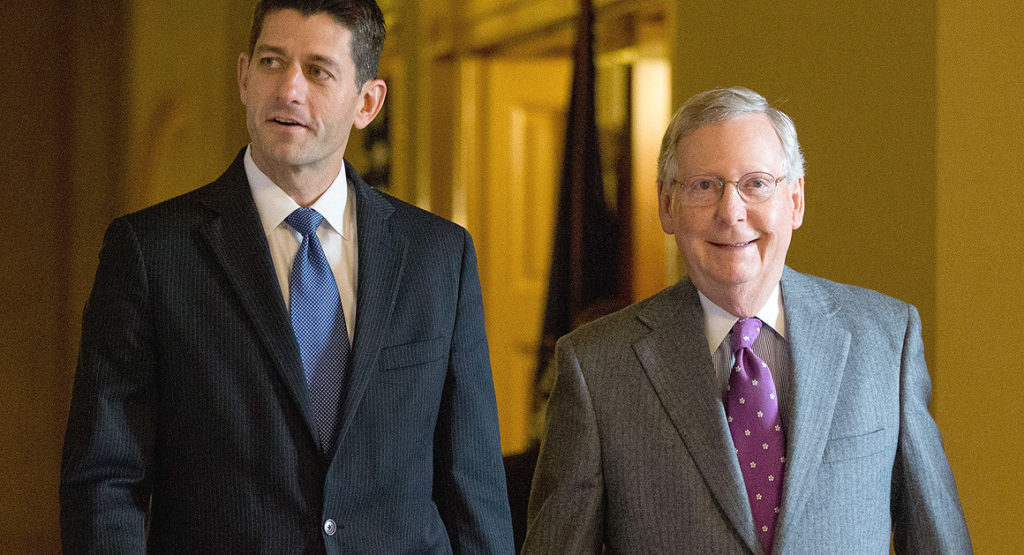
An open letter to House Speaker Paul Ryan and Senate Majority Leader Mitch McConnell: Gentlemen: It was wisdom rather than whim that guided the founders of our nation in separating the powers of government with a system of checks and balances. As James Madison remarked in The Federalist 47, “the accumulation of all powers … in the same hands, whether of one, a few or many … may justly be pronounced the very definition of tyranny.” Their faith in the future is being put to the test by current events in Washington that prompt me to ask: Have you lost your minds? Are you as irresponsible as the madman in the White House? Why are you defaulting on the duty of the Congress to defend our democracy? Why are you enabling Mr. Trump’s excesses? I’m writing this letter Jan. 30, the anniversary of two world-changing events. One was the birth of President Franklin D. Roosevelt, who greatly honored the office that you are allowing the current occupant to disgrace. The other was that of Adolf Hitler attaining the chancellorship of Germany in 1933, despite not having won a majority in any election. A month and a half later, Dr. Paul Joseph Goebbels, Hitler’s new propaganda chief, warned German newspapers against publishing criticism that could be used, as The Associated Press paraphrased it, “by oppositionists to the government’s detriment.” “The press must be the keyboard on which the government can play,” he said. “Criticism will be allowed, but it must be expressed so that no enemy of the government at home or abroad may be enabled to seize upon such criticism to the government’s detriment. Cooperation between the government and the press is our aim.” I don’t have to tell you what happened soon after to the German press. Well, sirs, it hasn’t taken nearly that long for Mr. Trump’s propaganda minister, Steve Bannon, to tell The New York Times to shut up, for the president himself to indulge himself in infantile Twitter messages attacking the Times and other great newspaper, The Washington Post; for a committee chairman in your Congress to lecture the media on its duty to be the government’s mouthpiece; and for Kellyanne Conway, who is apparently the junior propaganda minister, to say that reporters who criticize Trump ought to be fired. Doesn’t any of that concern you? I have specific concerns about what Trump is doing and what you are not doing. A case in point is your reported assurance that Mr. Trump’s great wall will be built, at extraordinary expense to the public in one form or another of direct or indirect taxation. That wall will be as abject a failure as France’s Maginot Line, and the only beneficiaries will be wall builders in the United States and tunnel builders in Mexico. The latter, as you should know, already have expertise in smuggling narcotics and people under our existing defenses. As deep as you build a wall, people will find ways around it. We have a long and essentially unguarded coastline. The Canadian border is open. Visas can easily be overstayed. The wall would be a failure not only practically but in the moral sense as well. History will come to regard that wall and its builders with the same contempt deservedly directed at the Soviet Union and its puppets in the former East Germany. My second issue is your timid acceptance of the catastrophic incompetence and cruelty with which the president issued his executive orders against Muslim immigrants last Friday. That he picked Holocaust Remembrance Day to do so is an irony almost too painful to bear. The agencies that would have to carry out his abuse of executive power (and what has become of the distaste you expressed when President Obama exercised his?) were neither consulted nor forewarned in time to avert massive confusion at airports. Decent people holding legitimate green cards were treated as criminals. Families were sundered. And why were only certain countries singled out, excluding those where, by remarkable coincidence, Mr. Trump has been doing business? Why are people from Iraq subject to his ban when those from Saudi Arabia, the country of origin of most of the 911 terrorists, are not barred? Don’t these inconsistencies bother you? Are you unconcerned by his unconstitutional preference for immigrants of one religion over all others? Are you not frightened — frankly, I’m terrified — that he is excluding the Chairman of the Joint Chiefs of Staff and the Director of National Intelligence from the regular meetings of the National Security Council? And that in their place, he is installing his far-right adviser, Steven Bannon? It would seem that he wants to hear only from those who would inform and flatter his biases. In my opinion, the Congress should without delay provide by legislation for the permanent, full NSC membership of those officials, and find a way to keep the dangerous Mr. Bannon at a distance. In my view, and that of others among whom we share concerns, you have decided to tolerate and even enable the administration’s dangerous conduct because of the short-term benefits that might accrue to the Republican Party. Yes, you might attain some policy goals that the candidate who won the popular vote would have blocked. But you are deluding only yourself if you think all this will rebound to the long-term benefit of your party. When America comes to its senses, the people will hold you along with Trump responsible for all the damage that needs to be undone. The greater the harm, the more you’ll be blamed for it. Sincerely, Martin A. Dyckman ___ Martin Dyckman is a retired associate editor of the Tampa Bay Times. He lives in Asheville, North Carolina.
Martin Dyckman: Cowards who stand aside
“Once to every man and nation “Comes the moment to decide “In the strife of truth with falsehood “For the Good or Evil side ….. “Then it is the brave man chooses, “While the coward stands aside” The American poet James Russell Lowell wrote those words in 1844 during the intensifying crisis over slavery. They speak to us again. Donald Trump is a uniquely evil candidate for president. It is indeed a moment to decide. Evil? I don’t wield that adjective casually. Trump’s gross sense of sexual entitlement, as he boasted in the Billy Bush tape, isn’t even the worst of it. We already knew about that aspect of his sleaziness, a misogyny bordering on perversion. But just as it appeared it couldn’t get any lower than that, it did. The cornered hyena struck back by threatening to prosecute and imprison his opponent if he wins. And that didn’t end with the debate. He’s been feeding it like raw meat to his howling mobs, reveling in their chants of “Lock her up.” There has never been anything like that in American politics. It’s what foreign tyrants like his darling Vladimir Putin do — that is, when they’re not simply killing their rivals. It’s what Fidel Castro, Adolf Hitler, Josef Stalin and Augusto Pinochet did to theirs. The list is long: Zimbabwe, Iran, North Korea, Turkey and others. “Republicans should not be okay with @realDonaldTrump threatening to jail his opponent after the election,” wrote Arizona Republican Sen. Jeff Flake. “That is not who we are.” Flake was an early and honorable critic of his party’s putrid nominee. He didn’t wait for the sewer to overflow. But far too many other Republicans still pretend for public consumption that Trump is fit to be president. They are the cowards who stand aside. That Trump is morally and mentally unfit and unworthy in every respect for the presidency is only part of the problem. The other is that he has laid bare and energized the ugly underside of American society. We host a virulent racism rooted in the original national sin of slavery. There is angry intolerance for the diversity reflected in our founding motto, e pluribus Unum — from many, one. There is hostility especially to the give-and-take political process upon which our democracy depends. Not all Trump supporters harbor these hatreds, but those who do will not fade away with his defeat. He seems, in fact, to be setting himself as up as a third force in American politics, subsuming the Tea Party in an authoritarian movement that most of us hoped could never happen here. The Republican Party bears enormous blame for this. Although conscientious Republicans were instrumental in passing the Civil Rights and Voting Rights acts of the 1960s, it was a series of their presidential candidates — Goldwater, Nixon, Reagan — who exploited Southern resentment to infect their party with racism and move it far to the right. There has been an endless parade of Republican politicians making their way into government by denouncing the very same political system at whose trough they feed. This is the paranoia upon which Trumpism feeds. Who in the GOP spoke out to denounce Trump in the four years he spent subverting President Obama‘s administration with the birther myth? I can remember only Colin Powell defending the president’s legitimacy. Other Republicans were happy to see someone with Trump’s celebrity doing their dirty work for them. Now they are shocked — shocked! — that someone so vile is their nominee. Give credit to those who refused, early and honorably, to wallow in the sewer. They include the former presidents Bush, Jeb Bush and his friend and adviser Mac Stipanovich, Sen. Lindsey Graham, and others who couldn’t stomach Trump’s demonization of Hispanics and Muslims, and also marked him — accurately—as not conservative. The good news, according to USA Today, is that more than a fourth of elected top Republicans — governors and members of Congress — are now refusing to endorse his candidacy. But the bad news is that nearly three of four of these so-called leaders still refuse to repudiate his candidacy despite his contempt for women and his threat to become a tyrant. Denouncing his gross behavior and his dirty mouth isn’t enough. He is unfit in every way for any office, let alone the highest in the land. No politicians who pretend otherwise are fit for office themselves. As has been written, Marco Rubio would rather debase himself — and his office — than risk alienating the Tea Partiers who put him into the Senate. It figures. He’s been nothing but an opportunist throughout his career, which has been defined by winning offices he hasn’t earned and puts to no good use. Rubio is hardly alone, of course, in putting his own welfare ahead of his country’s. Rubio and all other Trump apologists deserve to be defeated, every one of them. For our country’s sake, they must be. For the Republican Party’s own sake, they must be. The cowards should be pushed aside. ___ Martin Dyckman is a retired associate editor of the newspaper now known as the Tampa Bay Times. He lives in suburban Asheville, North Carolina.
Martin Dyckman: Donald Trump’s America on trial in modern day ‘Judgment at Nuremberg’
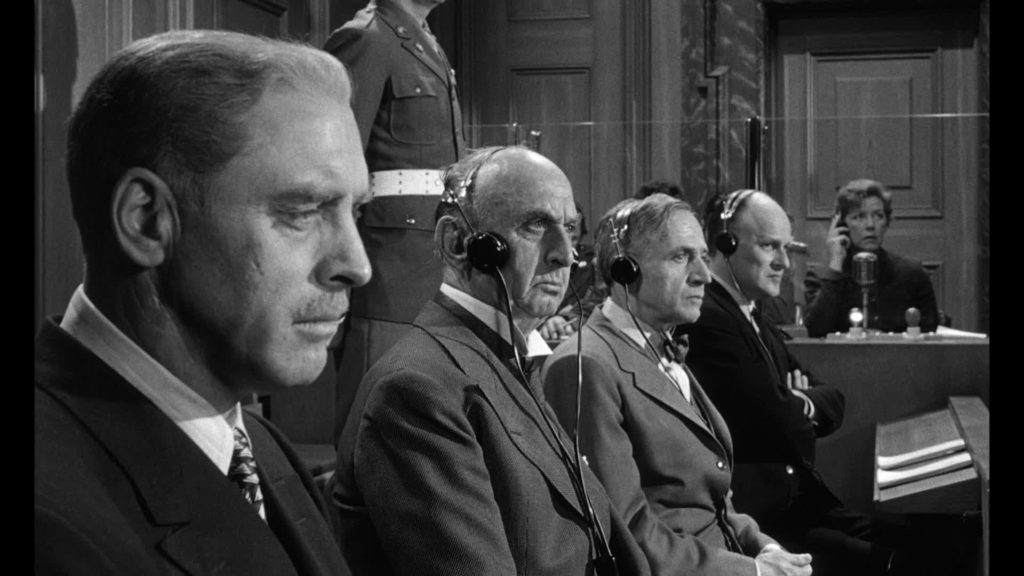
Above all, there was fear: fear of today, fear of tomorrow … fear of our neighbors, and fear of ourselves … Only when you understand that, can you understand what Hitler meant to us: “Lift your heads. Be proud to be German. There are devils among us: Communists, liberals, Jews, Gypsies. Once these devils will be destroyed, your misery will be destroyed.” Those words are from the 1961 film Judgment at Nuremberg. They address an eternal question: Why do good people do terrible things? The speaker, Ernest Janning, played by Burt Lancaster, is a former German judge on trial before an Allied tribunal for crimes he committed in service to the Third Reich. He had been a decent man, widely respected for his legal acumen and his integrity. Now, over the objection of his defense attorney, he insists on testifying for the prosecution. He is explaining why he conducted a show trial of an elderly Jewish man falsely accused of sexual relations with a Gentile woman, and why he determined to convict him and sentence him to death even before hearing any testimony … It was because the future of Germany was at stake. And if a few minorities had to suffer, so be it. The screenplay was closely modeled on actual events, including a Nazi show trial, and on the excuses that “good” Germans gave for their participation. Turner Classic Movies showed the film the other night (Aug. 11). Whether the scheduling had to do with the current election campaign I don’t know. But the timing couldn’t have been better. Comparisons with Adolf Hitler and Nazi Germany should be made rarely lest they trivialize those monstrosities. But there is much — too much — about Donald Trump and his campaign that resembles them. Only the targets of Trump’s demagoguery are different. The methods are the same. He cannot tell a truth if there’s a lie to be told. He peddles fear and capitalizes on hate. He whips his crowds into froths of rage against Hillary Clinton and against reporters whose lives, too, he puts in danger by targeting them at his rallies. The Secret Service had to see to the safety of one of them. All across our country — in schools, on streets, at public meetings, and even from pulpits — Trump’s venom is being echoed in denunciations and harassment of Americans because of their religious faith. In New York City Saturday, an imam and his assistant were murdered execution-style on a city street. The motive remains unknown, but it would surprise no one if it turns out to be a hate crime. The message of Judgment at Nuremberg is not that such things happen. It is, rather, in the question that Ernest Janning asks during his confession: “What of those of us who knew better? We who knew the words were lies, and worse than lies. Why did we sit silent? Why did we take part? Because we loved our country … “And then, one day, we looked around … and found that we were in an even more terrible danger.” We should take that scene as a parable for what’s happening in the United States of America right now. We are in terrible danger — though it appears to be diminishing — of debasing our country and endangering the world with the most unprepared, unsuited and unworthy person who has ever sought the presidency. “I think he’s mentally unstable., I think he’s dangerously unqualified,” says former Sen. Gordon Humphrey of New Hampshire, the latest prominent Republican to put country above party. That’s what John McCain should be doing too. But McCain still pretends that Trump is fit for the presidency. If Trump’s death threat against Clinton didn’t shock McCain’s conscience, what could? Surely McCain knows better. Surely, so do Paul Ryan, Mitch McConnell, and other Republicans who have mortgaged their reputations to the delusion that Trump would be better than Clinton. Or is it just because they crave to share in the power of a Trump presidency? Do they miscalculate, as so many Germans once did, that they could control the monster they are making? If the polls are correct, Trump will lose. But the dangerous hatreds he deliberately inflames will continue to fester. We will all be the losers for that. And those who know better but who continue to support him, with endorsements or money or even with just their silence, will have lost more than an election. They will have forfeited the respect of people who once admired them. ___ Martin Dyckman is a retired columnist and editorial writer for the newspaper now known as the Tampa Bay Times. He lives in suburban Asheville, North Carolina.
Martin Dyckman: A European perspective on Donald Trump

“Associate yourself with Men of good Quality if you Esteem your own Reputation; for ‘tis better to be alone than in bad Company.”– George Washington‘s 56th rule of civility and decent behavior. A recent cruise in the Baltic Sea took us to eight northern European nations where we were impressed yet again with how much alike all the world’s people are. But there is a dark side to that. In 1932, amidst a grave worldwide depression, Americans elected President Franklin D. Roosevelt, a decent man who told us we had nothing to fear but fear itself. At almost the same moment, the people of Germany — perhaps the most advanced nation in Europe — got Adolf Hitler. When we toured Berlin and beheld a friendly and prosperous city with an enviable quality of life, the hideous events of the Nazi era seemed almost improbable. A visit to the impressive Jewish Museum Berlin is the antidote to selective memory. To see the exhibits of Jewish life in Germany in the millennium before the Shoah, one first must pass the exhibits dedicated to the Holocaust. Nothing is held back Yes, the people who did that were decent and highly civilized by all the standards of their times. I have never thought that what happened there could not happen here in similar circumstances. And now it is happening here. A man who emulates Adolf Hitler in significant ways is poised to be the nominee of a once great, now degraded political party, and could become president of a nation whose proudest boast is to be the leader of the free world. If you doubt the parallels, read the British historian Alan Bullock‘s magisterial biography, “Hitler: A Study in Tyranny.” Like Hitler, Donald Trump inflames the latent, and not so latent, prejudices of a substantial element of the populace. The targets are different, but not the hate-filled rhetoric. Like Hitler, Trump is capitalizing on the public’s justifiable dissatisfaction with the apparent political paralysis in Washington. Hitler’s promise to end a similar situation and make government function again was his primary issue in the pivotal 1932 campaign that he won with only a plurality. Like Hitler, Trump spews hate at people — not just journalists but critics in his own adopted party — who oppose or criticize him. Like Hitler, he would tame and muzzle the judiciary. Could any threat be clearer? Like Hitler, Trump has no coherent policy positions — other than bigotry — and is conspicuously disinterested in the details of how government works. He would have his vice president do all the real work. Nothing in the Constitution contemplates that. No president has been so blissfully ignorant and lazy. Many industrialists and politicians in Germany rationalized that Hitler, their inferior in every respect but cunning, could be put to their use. They learned better, to their sorrow. Rick Scott, Paul Ryan and the other opportunists scurrying aboard Trump’s ship figure they can use him too. Ryan, for one, claims to believe that Trump would promote the congressional Republicans’ entire far right agenda. Can’t they see that Trump will do only that which promotes himself? They don’t love their country half as much as they hate Democrats in general and Hillary Clinton in particular. They would sooner see America ruined than muddle along, if not prosper, under Clinton. Why do I say that? It’s because Trump’s presence would defile an office in which almost every occupant has tried to project the senses of dignity and responsibility that are so grossly lacking in that vulgar, thuggish, bombastic, bullying, fundamentally amoral man. Trump as a successor to George Washington? Abraham Lincoln? Teddy Roosevelt? FDR? George H.W. Bush? It makes one want to vomit. Vladimir Putin likes Trump. The bloodstained boy dictator of North Korea likes him. David Duke, the professed Nazi and Ku Kluxer, likes him. What company you keep, Speaker Ryan. Welcome to the sewer, Governor Scott. Where is your integrity, Mel Sembler? Have you forgotten the Holocaust? The foreign dictators relish the prospect of someone so unfit, unprepared, unworthy and amoral defiling the White House. They figure that America would become a laughing stock, an irrelevancy, a faded former power in the hands of such an unfit, unprepared, unworthy person. You have to wonder, though, whether they weigh the risk of such a thin-skinned, irascible bully’s finger on the nuclear button. Trump’s apologists argue that he can’t be compared to Hitler because he has never had a perceptible, consistent ideology and lacks the organized cadres — the Hitler Youth, the brownshirts — who put the muscle and murder into Hitler’s campaigns. But he does have an ideology. It’s his Id, his ego, the persistent, insatiable promotion of himself, his greed. No one could be more dangerous. And he has the brownshirts too, lacking only similar organization. The people harassing Muslims and other foreigners, roughing up protesters at Trump rallies, bedeviling journalists with unspeakably anti-Semitic emails and telephone calls, are their equivalent. And, as in Germany, their vocal and physical violence is provoking the opposition into replying in kind. Two wrongs make no ri0ght. Clinton is far from a perfect candidate but, as intellectually honest conservatives have observed, the country would survive her. That it would survive Trump is far too great a risk for any honest patriot to want to take. ___ Martin Dyckman is a retired associate editor of what is now the Tampa Bay Times. He lives in Asheville, North Carolina.
Dear Jeb Bush: What are you going to do about Donald Trump?
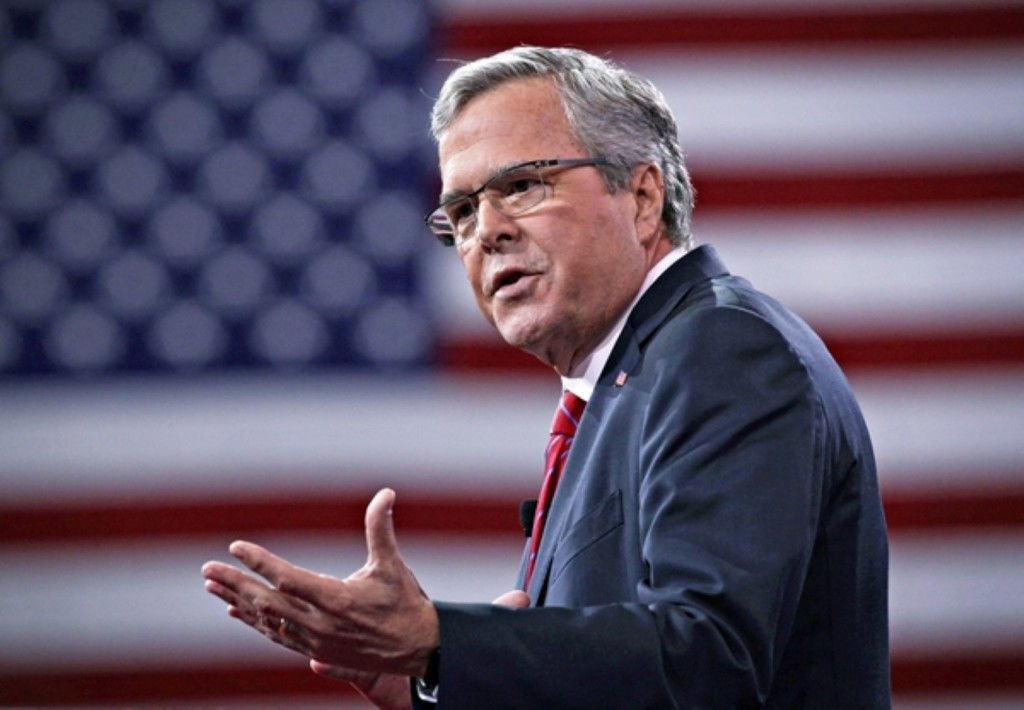
Dear Governor Jeb Bush: At one time, while you were still running for president, you were asked an interesting question: “If you could go back in time, and ‘take out’ Hitler, would you?” You answered, as most of us would, with a resounding “Yes.” It’s 2016, and I’ll spare you any comparisons between the Republican nominee for President, Donald Trump, and Adolf Hitler. I won’t conflate Trump’s brand of authoritarianism with National Socialism (Nazism), fascism, or any other identifiable political ideology. I won’t read aloud passages from “The Rise and Fall of the Third Reich,” as my husband, chillingly, has begun to do. And, unlike Trump himself, I certainly won’t advocate violence against anyone. But I will draw your attention to the recent election in Austria, where a candidate peddling false nostalgia in a rapidly changing world was “very narrowly defeated.” Washington Post columnist Carl Bildt invokes the writings of political philosopher Karl Popper, warning that the “strain of civilization that can occur when change is seen as too rapid, and the lure of a return to the tribe makes itself felt.” And I’d be remiss as a citizen if I didn’t ask you — and the other leaders of the party formerly known as Republican — what are you going to do about Donald Trump? I know, Governor Bush, you saw the same neon light that I did, splitting the night, flashing its warning. Thankfully, you were not silent. You have announced you will boycott the Republican National Convention this summer in July. So why have you gone silent again now? Trump’s authoritarianism is dangerous. It’s an interaction between a charismatic figure who simplifies politics and policies in a deliciously irresistible way, and followers who care less about policy and more about what Trump represents. Trump exudes nostalgia for the old order: the white, male, hierarchical order; the order in which being rich bestows instant authority, and an extra measure of citizenship; the order in which Dad’s word was law and was never questioned at home; where might ultimately made right — and the mighty didn’t apologize for it; where white men were safe and secure and free to pursue their work unfettered by those who didn’t belong. Those pesky others are excluded from this particular brand of nostalgia, because nostalgia, by definition, is a Big Lie. It conveniently leaves out the bad stuff: women being beaten in their own homes; black people hung from trees. At Trump rallies, the Ones-Who-Don’t-Belong are chased out violently. With Trump’s approval: “I’d like to punch him in the face, I’ll tell you.” “In the good old days, this doesn’t happen, because they used to treat them very, very rough.” “I love the old days. You know what they used to do to guys like that when they were in a place like this? They’d be carried out on a stretcher, folks.” “If you see somebody getting ready to throw a tomato, knock the crap out of them, would ya? Seriously. Just knock the hell out of them.” Here is a man who clearly understands the tremendous power he has over his followers: “I could stand in the middle of 5th Avenue and shoot somebody and I wouldn’t lose voters.” He is a nightmare come true for America, a Philip Roth novel horrifyingly brought to life. Trump has created an in-group based on the worst imaginable unifiers: racism, sexism, xenophobia, and religious bigotry. Worse, he’s given these views legitimacy by using “economic dissatisfaction” as a pretext for mob rule. Who is going to counter that, if not you, Governor Bush? You know better. Your family knows better. As a member of the opposite political party, I nevertheless once had hope in your dad’s moderation; his kinder, gentler ambitions, even when — in a near-Trumpian manner — he expressed his love for your children as “the little brown ones.” I forgave him. I believe you have, as well. Be clear. I’ve been a vocal critic of Bush-brand education reform since its inception. And I thank God for the liberty to write my opinions about those policies. That’s why I’m pleading with you now to do whatever you can to preserve the fundamental values of this nation, even if it means shelving your presidential ambitions. Create a third party. Run a top-of-the-ticket slate and show this nation what conservatism really is — and is not. Let the down-ballot Republicans stay where they are and support who they will. Now is the time for you to slaughter the Southern strategy chickens that have come home to roost. It’s time to rip out the GOP’s harvest of thorns and sow anew. Will you expose this neon god for the dangerous fraud that he is? Or, with apologies to Paul Simon, are we just echoes in the wells of silence? ___ Julie Delegal, a University of Florida alumna, is a contributor for Folio Weekly, Jacksonville’s alternative weekly, and writes for the family business, Delegal Law Offices. She lives in Jacksonville, Florida.
Bob Driver: Adolf Hitler and Donald Trump (a comparison)

Donald Trump, who may very well become our next president, is being accused of Hitlerism. By the time this column appears, the charges may have been dismissed. Or confirmed. Whichever way it goes, it behooves all of us to think about Hitler and Trump, and how they compare. For younger readers and those who may have heard vague reports about World War II and other related events, a little history: Adolf Hitler was a German soldier and political activist who climbed to power in Germany in the 1920s and 1930s. His National Socialist (Nazi) Party took full control in 1933. In September 1939, Germany invaded Poland, which triggered the beginning of World War II. Not long afterward, Hitler invaded the Soviet Union. Bad move. Within a few years the USA, United Kingdom, Russia and other Allied nations reduced Germany to a bombed-out starving wasteland. Enough history. Let’s see how, or whether, Donald Trump and Adolf Hitler resemble each other: WEALTH. Trump was born with a platinum spoon in his mouth. Initially, Hitler was poor as a church rat but later enjoyed many creature comforts. At his death, he owned an extensive underground bunker in Berlin. SPEAKING STYLE. Hitler was a dynamic orator. His high-pitched voice and passionate utterances excited his followers and drove them to the edge of madness, especially when he revealed that most of Germany’s (and the universe’s) woes could be blamed on the Jewish people. He was a student of government and politics, and easily listed dozens of twisted reasons why he should lead Germany. Donald Trump also speaks in a penetrating, passionate manner to his overflow crowds, most of whom would cheer themselves hoarse even if Trump uttered nothing more than “Fish for sale!” Rather than referring to specific facts to support his beliefs, he relies on repetition of a few mostly inflammatory thoughts. He also uses various insults to thwart anyone who disagrees with him. This sets him far above Hitler, who dealt with opponents by having them shot. PHYSICAL ATTRIBUTES. Hitler was not much to look at. He was fairly short, and seldom smiled. It was rumored that he was born with only one testicle. If true, this did not keep him from scaring the tar out of thousands of more fully equipped males in Germany and elsewhere. Trump’s most notable physical deficiency is a paucity of hair on the forward half of his scalp. He also has a habit of pursing his lips and defiantly tilting his chin upward, much like the Italian fascist dictator Benito Mussolini did in his Roman balcony harangues. ROMANCE AND MARRIAGE. Hitler didn’t have much luck with the ladies. He is believed to have connected with several young women, but the hookups did not endure, partially because a number of the women committed suicide. Hitler’s longest romance was with blond Eva Braun. They did not marry until late April 1945 when Russian troops were turning Berlin into a morgue. Two days after the wedding ceremony, Adolf and Eva killed themselves. Their bodies were burned. Donald Trump’s personal life has been somewhat cheerier. He has married three attractive women (although not all at the same time). They have given him five children, all of whom reportedly think highly of their father. RELIGIOUS BELIEFS. The Donald (as Trump’s many friends sometimes call him) is a (non-devout) Presbyterian, reflecting his Scottish roots. He has maintained good relations with other religious adherents, until recently when he uttered some unkind words about militant Muslims. Hitler’s thoughts about religion were vague, except for his lifelong anti-Semitic fervor. He liked to think of a heaven where everyone resembled Norse gods and goddesses and was enraptured by the music of Richard Wagner. Hitler did not believe in an eternal hell. Instead, he created it on earth, to the tune of 29 million victims of Nazi ambitions. IMMIGRATION POLICIES. Hitler did not welcome newcomers to Germany unless they were Aryan, enjoyed book-burning and wept copiously as they sang “Deutschland Uber Alles” while smashing the windows of Jewish shopkeepers. Hitler’s final solution to the presence of unwanted citizens was to emigrate them to concentration camps. As I write these words on Dec. 9, Donald Trump is saying various things about U.S. immigration and anti-terrorism policies. They can be summed up as “Send the illegal bad guys back to where they came from, and don’t let Muslims inside our land until they are officially purified.” CONCLUSION. All aspects considered, I’d much rather have Donald Trump in the White House than Adolf Hitler. However, this should not be considered my endorsement of Trump, except to say I hope he stays in the race until the very end. Rightly or wrongly, Trump is the personification of the First Amendment – freedom of speech – at a time when many in our land want to bend it, cripple it or shut it down. Bob Driver writes for Tampa Bay Newspapers. He is a former editorial page editor for the Clearwater (Florida) Sun. For more state and national commentary visit Context Florida.
