
Amazon threat causes shakeout in the health care industry
Amazon.com Inc. is casting a long shadow over the health care industry. The prospect of the giant internet retailer entering the business is beginning to cause far-reaching reverberations for a range of companies, roiling the shares of drugstore chains, drug distributors and pharmacy-benefit managers, and potentially precipitating one of the biggest corporate merger deals this year. On Oct. 26, the pressure was plain to see. A report that Amazon had received pharmacy-wholesaler licenses in a dozen states triggered a fast and steep sell-off that wounded the likes of McKesson Corp., AmerisourceBergen Corp. and Cardinal Health Inc. And late in the day, shares of Aetna Inc. surged after a Wall Street Journal report that it’s in talks to be taken over by CVS Health Corp. for more than $200 a share. CVS and Aetna have held discussions about a potential deal, according to people familiar with the matter who asked not to be identified. Representatives for both companies declined comment. Executives in the drug industry say that Amazon could use its expansive online reach and its logistical muscle to threaten companies that ship and sell medicines to consumers and cut pricing deals with drugmakers. “Size and scale-wise, they can disrupt anywhere they want to disrupt,” said Chip Davis, president of the Association for Accessible Medicines, a trade group for generic medication. Competitive Squeeze A deal for Aetna could conceivably move CVS further away from the business of brick-and-mortar retail drugstores and deeper in health services such as pharmacy benefits, where it already has a sizable presence. Aetna and CVS would create a health-services giant and a bigger competitor for UnitedHealth Group Inc., which is the largest U.S. health insurer and has its own clinics and a pharmacy-benefits unit. The presence of Amazon is already being felt by retailers and companies that sell drugs over the counter. The head of Bayer AG’s consumer-health business said the wider shift to online shopping by U.S. consumers was hurting its business. Erica Mann, the division’s chief, dubbed it the “Amazon effect,” saying buyers are looking for value. At the same time, the pecking order in the health-supply chain is beginning to shift. Earlier in October, insurance giant Anthem Inc. said it was cutting ties with Express Scripts Holding Co. after a long dispute over pricing, and starting its own pharmacy-benefits manager in 2020. A bulked-up CVS and Anthem’s new venture could raise the pressure on Express Scripts, which has touted its independence. Any tie-up of Aetna and CVS would follow a pair of failed mergers among health insurers. The deals would have reduced the ranks of big U.S. health insurers from five to three, a prospect that led the Justice Department to oppose both prospective tie-ups. If the Aetna deal happens, “CVS would have a dominant position” in the drug-benefits business, said Michael Rea, founder of Rx Savings Solutions, which has an app that helps patients find low-cost drugs. Pharmacy Threat Analysts have speculated that Amazon could soon enter the business of selling prescription drugs, threatening to disrupt retail drugstores, drug wholesalers and the pharmacy-benefits management business. While Amazon has never publicly commented on its plans, CNBC reported that the internet giant could make a decision by Thanksgiving about selling drugs online. The network didn’t name its sources. McKesson slid 5.2 percent at 4 p.m. in New York, while AmerisourceBergen shares fell 4.2 percent and Express Scripts sank 3.7 percent following the report on Amazon’s state licenses by the St. Louis Post-Dispatch. Bloomberg News confirmed that Amazon has obtained wholesale-pharmacy licenses in at least 13 states: Nevada, Idaho, Arizona, North Dakota, Oregon, Alabama, Louisiana, New Jersey, Michigan, Connecticut, New Hampshire, Utah and Iowa. An application is pending in Maine. Some of the licenses were obtained late last year and some this year. Amazon declined to comment. The licenses could be part of Amazon’s business-to-business sales effort, which would include sales to hospitals, doctors and dentists. Amazon on Tuesday announced “Business Prime Shipping,” which brings the quick delivery associated with Amazon household orders to workplaces. The Seattle company launched Amazon Business in 2015, offering tractor parts, latex gloves, file folders and millions of other products needed in factories, hospitals, schools and offices. Businesses are shifting their supply shopping online from less-efficient methods such as browsing print catalogs, faxing orders and telephoning sales representatives. Online business-to-business sales – a broad category that includes pens and paper for the office as well as lab equipment and parts used in factories – will grow to $1.2 trillion in 2021 from $889 billion this year, according to Forrester Research Inc. McKesson CEO John H. Hammergren said the wholesaler doesn’t “take the entry of any competitor lightly,” but the company already has a large online order operation similar to what Amazon does logistically. “To some extent, we were Amazon before it was cool to be Amazon.” Republished with permission from the Alabama NewsCenter.
Aetna pullout shows Obamacare on life support
While Republicans rewrite the Affordable Care Act in Washington, the immediate future of the law has grown hazier with the nation’s third-largest health insurer saying that it will completely divorce itself from state-based insurance exchanges. Aetna says it won’t sell individual coverage in Nebraska and Delaware next year after projecting a $200 million loss this year. The insurer had already pulled out of several states after losing about $450 million in 2016. The exchanges are a pillar of the federal law because they allow millions of people to buy coverage with help from income-based tax credits. But insurers like Humana, and now Aetna, have been fleeing that market. Others like the Blue Cross-Blue Shield carrier Anthem say they are wary of returning without guarantees of at least one key financial support. Every exchange had at least one insurer offering coverage for 2017, but a growing number were down to only one. Insurance experts expect holes to develop in 2018 with the coverage growing so thin. Customers may be able to find individual insurance coverage off the exchanges, but those marketplaces offer the only way for people to get tax credits to help pay the premium. About 12 million people bought coverage through the exchanges for this year. Most used tax credits to help buy coverage. Among the states in trouble for next year is Iowa. Aside from Aetna, Wellmark Blue Cross and Blue Shield also said it will leave that state’s individual market after only a year on it. Another insurer, Medica, said earlier this month that its “ability to stay in the Iowa insurance market in any capacity is in question at this point.” Earlier this year, Humana’s decision to leave the exchanges temporarily left 16 Tennessee counties with no on-exchange coverage options for 2018. But BlueCross BlueShield of Tennessee recently said it would fill that void. Insurers are in the middle of figuring out their prices and coverage plans for 2018. The departure of competitors from a market could play a role in their decisions because that may swamp them with a wave of new customers, some of whom likely have expensive medical conditions. The ACA prevents insurers from rejecting patients based on their health. “All it takes is one insurance company to exit, and that can create panic for other insurers and they pull out too,” said Cynthia Cox, a health insurance expert for the nonprofit Kaiser Family Foundation, which studies health care. “Insurers don’t want to be the last one holding the bag.” But she also noted that an insurer doesn’t have to worry as much about pricing too high and losing business if it has no competitors in a market. Republished with permission of The Associated Press.
Barack Obama administration confirms double-digit premium hikes
Premiums will go up sharply next year under President Barack Obama‘s health care law, and many consumers will be down to just one insurer, the administration confirmed Monday. That’s sure to stoke another “Obamacare” controversy days before a presidential election. Before taxpayer-provided subsidies, premiums for a midlevel benchmark plan will increase an average of 25 percent across the 39 states served by the federally run online market, according to a report from the Department of Health and Human Services. Some states will see much bigger jumps, others less. Moreover, about 1 in 5 consumers will have plans only from a single insurer to pick from, after major national carriers such as UnitedHealth Group, Humana and Aetna scaled back their roles. “Consumers will be faced this year with not only big premium increases but also with a declining number of insurers participating, and that will lead to a tumultuous open enrollment period,” said Larry Levitt, who tracks the health care law for the nonpartisan Kaiser Family Foundation. Republicans pounced on the numbers as a warning that insurance markets created by the 2010 health overhaul are teetering toward a “death spiral.” Sign-up season starts Nov. 1, about a week before national elections in which the GOP remains committed to a full repeal. “It’s over for Obamacare,” Republican presidential candidate Donald Trump said at a campaign rally Monday evening in Tampa, Florida. Trump said his Democratic rival, Hillary Clinton, “wants to double down and make it more expensive and it’s not gonna work. … Our country can’t afford it, you can’t afford it.” He promised his own plan would deliver “great health care at a fraction of the cost.” The new numbers aren’t too surprising, said Sen. Orrin Hatch, R-Utah, who chairs a committee that oversees the law. It “does little to dispel the notion we are seeing the law implode at the expense of middle-class families.” HHS essentially confirmed state-by-state reports that have been coming in for months. Window shopping for plans and premiums is already available through HealthCare.gov. Administration officials are stressing that subsidies provided under the law, which are designed to rise alongside premiums, will insulate most customers from sticker shock. They add that consumers who are willing to switch to cheaper plans will still be able to find bargains. “Headline rates are generally rising faster than in previous years,” acknowledged HHS spokesman Kevin Griffis. But he added that for most consumers, “headline rates are not what they pay.” The vast majority of the more than 10 million customers who purchase through HealthCare.gov and its state-run counterparts do receive generous financial assistance. “Enrollment is concentrated among very low-income individuals who receive significant government subsidies to reduce premiums and cost-sharing,” said Caroline Pearson of the consulting firm Avalere Health But an estimated 5 million to 7 million people are either not eligible for the income-based assistance, or they buy individual policies outside of the health law’s markets, where the subsidies are not available. The administration is urging the latter group to check out HealthCare.gov. The spike in premiums generally does not affect the employer-provided plans that cover most workers and their families. In some states, the premium increases are striking. In Arizona, unsubsidized premiums for a hypothetical 27-year-old buying a benchmark “second-lowest cost silver plan” will jump by 116 percent, from $196 to $422, according to the administration report. But HHS said if that hypothetical consumer has a fairly modest income, making $25,000 a year, the subsidies would cover $280 of the new premium, and the consumer would pay $142. Caveat: if the consumer is making $30,000 or $40,000, his or her subsidy would be significantly lower. Dwindling choice is another issue. The total number of HealthCare.gov insurers will drop from 232 this year to 167 in 2017, a loss of 28 percent. (Insurers are counted multiple times if they offer coverage in more than one state. So Aetna, for example, would count once in each state that it participated in.) Switching insurers may not be simple for patients with chronic conditions. While many carriers are offering a choice of plan designs, most use a single prescription formulary and physician network across all their products, explained Pearson. “So, enrollees may need to change doctors or drugs when they switch insurers,” she said. Overall, it’s shaping up to be the most difficult sign-up season since HealthCare.gov launched in 2013 and the computer system froze up. Enrollment has been lower than initially projected, and insurers say patients turned out to be sicker than expected. Moreover, a complex internal system to help stabilize premiums has not worked as hoped for. Nonetheless, Obama says the underlying structure of the law is sound, and current problems are only “growing pains.” The president has called for a government-sponsored “public option” insurance plan to compete with private companies. Republicans, including Trump, are united in calling for complete repeal, but they have not spelled out how they would address the problems of the uninsured. Clinton has proposed an array of fixes, including sweetening the law’s subsidies and allowing more people to qualify for financial assistance. The law makes carrying health insurance a legal obligation for most people, and prohibits insurers from turning away the sick. It offers subsidized private plans to people who don’t have coverage through their jobs, along with a state option to expand Medicaid for low-income people. Largely as a result, the nation’s uninsured rate has dropped below 9 percent, a historically low level. More than 21 million people have gained coverage since the Affordable Care Act passed in 2010. Republished with permission of the Associated Press.
Hillary Clinton questions plans for health insurers to merge
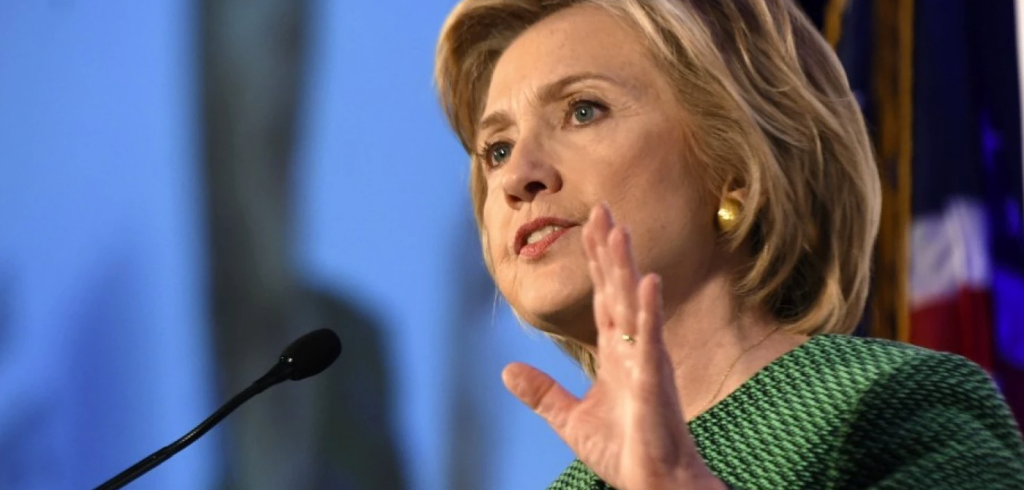
Hillary Rodham Clinton warned Wednesday that two major health insurers preparing multibillion dollar acquisitions could tip “the balance of power” too far away from consumers. The Democratic presidential candidate said in a statement she had “serious concerns” with the proposed acquisition of Cigna by Blue Cross-Blue Shield insurer Anthem, and plans by Aetna to acquire Medicare Advantage coverage provider Humana. Clinton said the planned merger between Anthem and Cigna could raise market concentration in New Hampshire – home of the nation’s first presidential primary – to “excessive levels.” She said both deals would concentrate competition in other U.S. markets. Anthem plans to buy Cigna for $48 billion, while Aetna wants to acquire Humana for about $35 billion in a wave of consolidation within the health insurance industry. Before the deals can close, the Justice Department must decide whether the mergers would make the companies so dominant that they could create a competitive imbalance. That review is expected to last several months. Clinton said she is skeptical that consumers would benefit because “too often the companies end up pocketing profits rather than passing savings to consumers.” Clinton said if elected she would strengthen the antitrust enforcement arms of the Justice Department and the Federal Trade Commission and appoint “aggressive regulators” to address concentration in the health care industry and other sectors. Republished with permission of The Associated Press.
