
Donald Trump’s attacks seen undercutting confidence in 2020 vote

It was a startling declaration about one of the pillars of American democracy, all the more so given its source. The president of the United States last week publicly predicted without evidence that the 2020 presidential election would be “the most corrupt election in the history of our country.” “We cannot let this happen,” Donald Trump told an audience of young supporters at a Phoenix megachurch. “They want it to happen so badly.” Just over four months before Election Day, the president is escalating his efforts to cast doubt on the integrity of the vote. It’s a well-worn tactic for Trump, who in 2016 went after the very process that ultimately put him in the White House. He first attacked the Republican primaries (“rigged and boss controlled”) and then the general election, when he accused the media and Democratic rival Hillary Clinton’s campaign of conspiring against him to undermine a free and fair election. “The process is rigged. This whole election is being rigged,” he said that October when polls showed him trailing Clinton by double digits as he faced a flurry of sexual misconduct allegations. Then, as now, election experts have repeatedly discredited his claims about widespread fraud in the voting process. In a country with a history of peaceful political transition, a major-party candidate’s efforts to delegitimize an election amounted to a striking rupture of faith in American democracy. But to do the same as president, historians say, is unprecedented. “Never,” said presidential historian Douglas Brinkley when asked whether any past U.S. president had ever used such language. “What you’re seeing is someone who’s an autocrat or a dictator in action.” This year, Trump has seized on efforts across the country to expand the ability of people to vote by mail. It’s a movement that was spurred by the coronavirus, which has infected more than 2.4 million people in the U.S. and killed more than 125,000 nationwide. The virus is highly contagious and especially dangerous for older people, who typically vote in higher numbers and have been advised by federal health authorities to limit their interactions with others. There is no evidence of widespread voter fraud through mail-in voting, even in states with all-mail votes. Trump and many members of his administration have themselves repeatedly voted via absentee ballots. But that hasn’t stopped Trump from accusing Democrats of trying to “rig the election by sending out tens of millions of mail-in ballots, using the China virus as the excuse for allowing people not to go to the polls.” “People went to the polls and voted during World War I. They went to the polls and voted during World War II. We can safely go to the polls and vote during COVID-19,” he said in his Phoenix speech. Trump’s complaints come as he has been lagging in both internal and public polls. The criticism is seen by some as part of a broader effort by Trump to depress turnout by making it harder for people, especially in cities, to vote safely, and to lay the groundwork for a potential challenge to the results in November if he loses. Trump and his campaign vociferously deny this. Julian Zelizer, a presidential historian at Princeton University, said Trump may be trying to preempt the sting of a humiliation if he fails to win a second term. But Zelizer said Trump also appears to be “setting up the foundation for taking action.” “What I do think is very realistic is a replay of 2000,” he said, referring to the legal saga in which the Supreme Court stepped in to resolve a dispute over which candidate had won Florida. Republican George W. Bush‘s ultimate win in the state gave him a general election victory over Democrat Al Gore. If this year’s election is close, Zelizer said, Trump could turn to the courts “and wage a political campaign to say this is being stolen and tie up efforts to count the votes.” Brinkley was even more alarmist, questioning whether Trump would vacate the office if he lost. “Trump is laying down his markers very clearly that he’s not going to leave the White House. I think that he’s just setting the stage,” Brinkley said, to say “‘I’m not leaving. It was a fraudulent election.’” Even barring such an extreme move, Brinkley said the president’s rhetoric undermines public confidence in the electoral system. “It creates mayhem and it breaks the heart of what a democracy is.” Americans already have widespread concerns about the security and integrity of elections. A February poll from The Associated Press-NORC Center for Public Affairs Research found that only about one-third have high confidence that votes in the 2020 election will be counted accurately. Americans’ support for mail-in voting has jumped amid concerns over the virus, with 6 in 10 now saying they would support their state allowing people to vote by mail-in ballot without requiring a reason, according to an April survey. Democrats are far more likely to support it than Republicans, a partisan split that has emerged since 2018, suggesting Trump’s public campaign may be resonating with his GOP backers. White House officials and Trump’s campaign say he has raised the issue because Democrats are trying to use the virus as an excuse to tilt voting rules their way. “I think the president is only talking about this because Democrats have been going around to try to change rules in their favor under the guise of the virus. … This isn’t a fight he picked,” said Trump campaign political adviser and senior counsel Justin Clark. “The coronavirus does not give us an excuse to radically alter our way of voting.” Officials noted Trump has voiced support for the use of absentee ballots when voters have a legitimate reason, although he has not said whether that includes fear of contracting the virus. “Imposing a new voting system in a hurried fashion ahead of November only exacerbates the real, underlying concerns about the security of voting by mail without the proper safeguards,” said White
Iowa swung fiercely to Donald Trump. Will it swing back in 2020?
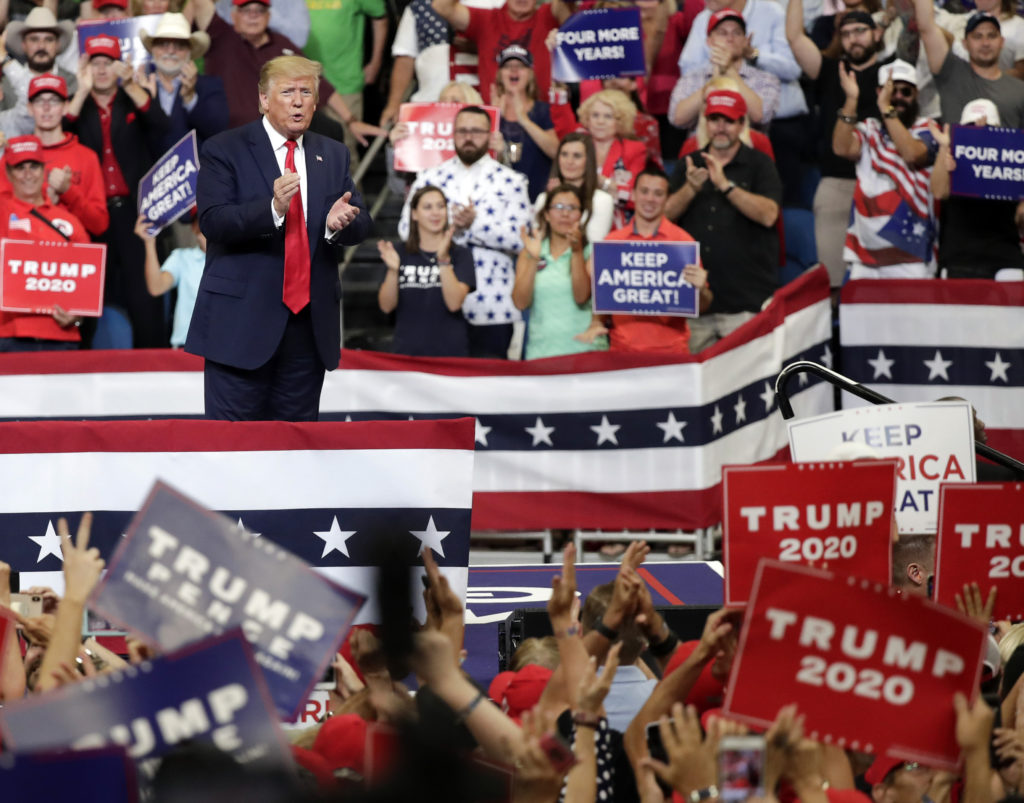
Few states have changed politically with the head-snapping speed of Iowa. Heading into 2020, the question is whether it’s going to change again. In 2008, its voters propelled Barack Obama to the White House, as an overwhelmingly white state validated the candidacy of the first black president. A year later, Iowa’s Supreme Court sanctioned same-sex marriage, adding a voice of Midwestern sensibility to a national shift in public sentiment. In 2012, Iowa backed Obama again. All that change proved too much, too fast, and it came as the Great Recession punished agricultural areas, shook the foundations of rural life and stoked a roiling sense of grievance. By 2016, Donald Trump easily defeated Hillary Clinton in Iowa. Republicans were in control of the governor’s mansion and state legislature and held all but one U.S. House seat. For the first time since 1980, both U.S. Senate seats were in GOP hands. What happened? Voters were slow to embrace Obama’s signature health care law. The recession depleted college-educated voters as a share of the rural population, and Republicans successfully painted Democrats’ as the party of coastal elites. Those forces combined for a swift Republican resurgence and helped create a wide lane for Trump. The self-proclaimed billionaire populist ended up carrying Iowa by a larger percentage of the vote than in Texas, winning 93 of Iowa’s 99 counties, including places like working-class Dubuque and Wapello counties, where no Republican since Dwight D. Eisenhower had won. But now, as Democrats turn their focus to Iowa’s kickoff caucuses that begin the process of selecting Trump’s challenger, could the state be showing furtive signs of swinging back? Caucus turnout will provide some early measures of Democratic enthusiasm, and of what kind of candidate Iowa’s Democratic voters — who have a good record of picking the Democratic nominee — believe has the best chance against Trump. If Iowa’s rightward swing has stalled, it could be a foreboding sign for Trump in other upper Midwestern states he carried by much smaller margins and would need to win again. “They’ve gone too far to the right and there is the slow movement back,” Tom Vilsack, the only two-term Democratic governor in the past 50 years, said of Republicans. “This is an actual correction.” Iowans unseated two Republican U.S. House members — and nearly a third — in 2018 during midterm elections where more Iowa voters in the aggregate chose a Democrat for federal office for the first time in a decade. In doing so, Iowans sent the state’s first Democratic women to Congress: Cindy Axne, who dominated Des Moines and its suburbs, and Abby Finkenauer, who won in several working-class counties Trump carried. Democrats won 14 of the 31 Iowa counties that Trump won in 2016 but Obama won in 2008, though Trump’s return to the ballot in 2020 could change all that. “We won a number of legislative challenge races against incumbent Republicans,” veteran Iowa Democratic campaign consultant Jeff Link said. “I think that leaves little question Iowa is up for grabs next year.” There’s more going on in Iowa that simply a merely cyclical swing. Iowa’s metropolitan areas, some of the fastest growing in the country over the past two decades, have given birth to a new political front where Democrats saw gains in 2018. The once-GOP-leaning suburbs and exurbs, especially to the north and west of Des Moines and the corridor linking Cedar Rapids and the University of Iowa in Iowa City, swelled with college-educated adults in the past decade, giving rise to a new class of rising Democratic leaders. “I don’t believe it was temporary,” Iowa State University economist David Swenson said of Democrats’ 2018 gains in suburban Des Moines and Cedar Rapids. “I think it is the inexorable outcome of demographic and educational shifts that have been going on.” The Democratic caucuses will provide a test of how broad the change may be. “I think it would be folly to say Iowa is not a competitive state,” said John Stineman, a veteran Iowa GOP campaign operative and political data analyst who is unaffiliated with the Trump campaign but has advised presidential and congressional campaigns over the past 25 years. “I believe Iowa is a swing state in 2020.” For now, that is not a widely held view, as Iowa has shown signs of losing its swing state status. In the 1980s, it gave rise to a populist movement in rural areas from the left, the ascent of the religious right as a political force and the start of an enduring rural-urban balance embodied by Republican Sen. Chuck Grassley and Democratic Sen. Tom Harkin. Now, after a decade-long Republican trend, there are signs of shifting alliances in people like Jenny O’Toole. The 48-year-old insurance industry employee from suburban Cedar Rapids stood on the edge of the scrum surrounding former Vice President Joe Biden last spring, trying to get a glimpse as he shook hands and posed for pictures. “I was a Republican. Not any more,” O’Toole said. “I’m socially liberal, but economically conservative. That’s what I’m looking for.” O’Toole is among those current and new former Republicans who dot Democratic presidential events, from Iowa farm hubs to working-class river towns to booming suburbs. Janet Cosgrove, a 75-year-old Episcopal minister from Atlantic, in western Iowa, and Judy Hoakison, a 65-year-old farmer from rural southwest Iowa, are Republicans who caught Mayor Pete Buttigieg’s recent trip. If such voters are a quiet warning to Trump in Iowa, similar symptoms in Wisconsin and Michigan, where Democrats also made 2018 gains, could be even more problematic. Vilsack has seen the stage change dramatically. After 30 years of Republican dominance in Iowa’s governor’s mansion, he was elected in 1998 as a former small-city mayor and pragmatic state senator. An era of partisan balance in Iowa took hold, punctuated by Democratic presidential nominee Al Gore’s 4,144-vote victory in Iowa in 2000, and George W. Bush’s 10,059-vote re-election in 2004. After the 2006 national wave swept Democrats into total Statehouse control for the
Joe Henderson: Conservatives bashing ‘Hollywood’ depends on which actors do the talking
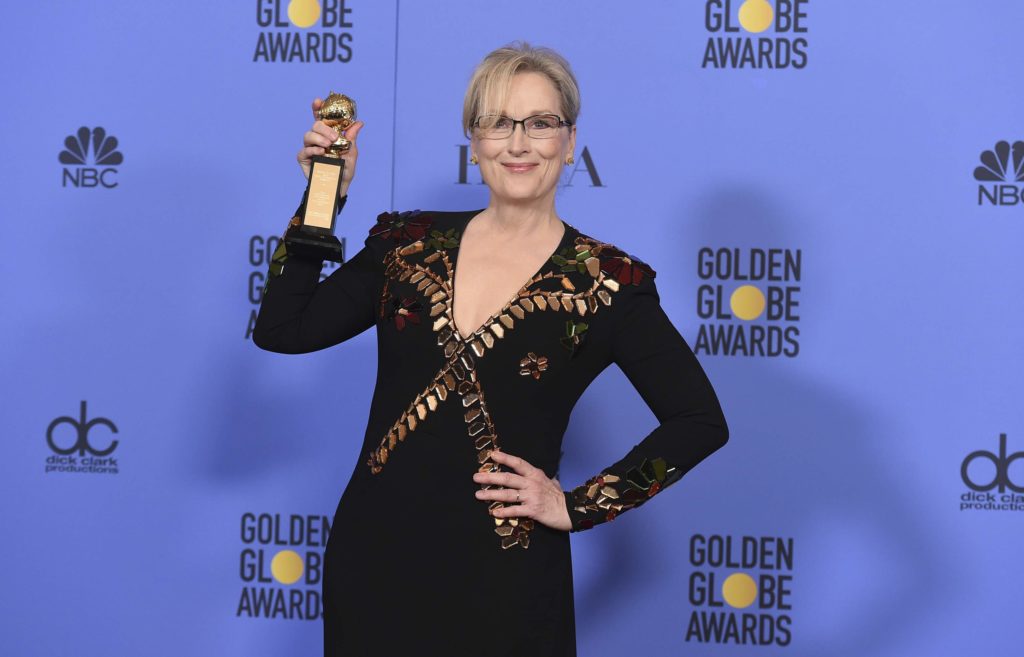
Meryl Streep must have known what she was in for when she spoke out against Donald Trump at the Golden Globe Awards on Sunday night. Conservatives were outraged that, during her acceptance speech for a lifetime of excellence in Hollywood, she referenced Trump’s mocking of a disabled reporter during the campaign. Trump, indeed, emphasized the “bully” part of his public “pulpit” many times during his successful bid for the White House. Streep used her pulpit to call him out. “And this instinct to humiliate, when it’s modeled by someone in the public platform, by someone powerful, it filters down into everybody’s life because it kind of gives permission for other people to do the same thing,” she said to a nationwide audience. Trump responded, as he does, with a tweet, calling her “overrated” (he’s wrong) and a “Hillary flunky.” That was the bugle charge for his supporters to trot the same “Hollywood elite” rap they use whenever someone in Streep’s position takes advantage of a moment to espouse a personal view. Meghan McCain, daughter of U.S. Sen. John McCain, took to Twitter herself to note: “This Meryl Streep speech is why Trump won. And if people in Hollywood don’t start recognizing why and how — you will help him get re-elected.” Maybe. We’ll see how it looks in four years. While we wait, though, it’s worth examining that whole “Hollywood elite” business. I mean, didn’t Ronald Reagan come out of Hollywood? I seem to recall an appearance by Clint Eastwood with an empty chair at the 2012 Republican convention in Tampa. I think he qualifies as Hollywood upper crust. Didn’t Arnold Schwarzenegger make a few big movies before becoming the governor of California? Jon Voight? I remember talking to with him at that GOP convention. He is conservative to the core. When he served as president of the NRA, Charlton Heston wrote the 11th Commandment when he challenged Democratic presidential candidate Al Gore to pry his gun “from my cold, dead hands.” John Wayne was Republican. Loved him in “The Alamo.” Fred Thompson? Before he became the GOP senator from Tennessee, he was in “Die Hard 2” and “Crimson Tide.” Bob Hope? Republican. Chuck Norris? Republican. Vince Vaughn? Republican. Cary Grant, Jimmy Stewart, Sly Stallone. GOP-times-three. There are plenty more examples. Google tells a different tale than what conservatives were sharing on social media Monday. To be fair, Hollywood — like all of California — trends liberal. No one is saying otherwise. Liberals got a good laugh at Eastwood because what he did during the convention was, well, ridiculous. They laughed at Reagan, too, but I think the Gipper won that round. I don’t think anyone dared laugh at John Wayne. You can laugh at Chuck Norris if you want; I’ll call him sir. Back to Ms. Streep. She is an amazing actress and for Trump to say otherwise, especially in the way he did, simply proved her point about his bullying tactics. But the same conservatives who say they don’t care what Hollywood folk say about anything would have stopped traffic to listen if Reagan, Eastwood or any of those others I mentioned were doing the talking. ___ Joe Henderson has had a 45-year career in newspapers, including the last nearly 42 years at The Tampa Tribune. He has covered a large variety of things, primarily in sports but also hard news. The two intertwined in the decadelong search to bring Major League Baseball to the area. Henderson was also City Hall reporter for two years and covered all sides of the sales tax issue that ultimately led to the construction of Raymond James Stadium. He served as a full-time sports columnist for about 10 years before moving to the metro news columnist for the last 4 ½ years. Henderson has numerous local, state and national writing awards. He has been married to his wife, Elaine, for nearly 35 years and has two grown sons — Ben and Patrick.
Donald Trump opponents try to beat him at the Electoral College
Grassroots campaigns have sprung up around the country to try to persuade members of the Electoral College to do something that has never been done in American history — deny the presidency to the clear Election Day winner. Activists are circulating online petitions and using social media in hopes of influencing Republican electors to cast their ballots for someone other than President-elect Donald Trump and deprive him of the 270 Electoral College votes needed to become the next occupant of the White House. “Yes, I think it’s a longshot, but I also think we’re living in strange times,” said Daniel Brezenoff, who created a petition in favor of Hillary Clinton and is asking signers to lobby electors by email or phone. “If it was ever plausible, it’s this year.” Trump has won 290 electoral votes to Clinton’s 232, with Michigan undecided, but Clinton is on pace to win the popular vote by at least 1 million ballots. Trump’s opponents are motivated by the outcome of the popular vote and by their contention that the businessman and reality TV star is unfit to serve as commander in chief. Just one elector so far has wavered publicly on supporting Trump. Texas Republican Art Sisneros says he has reservations about the president-elect, but not because of the national popular vote. He told The Associated Press he won’t vote for Clinton under any circumstance. “As a Christian, I came to the conclusion that Mr. Trump is not biblically qualified for that office,” he said. He said he has heard from ecstatic Clinton supporters and even supportive Republicans, but also from outraged Trump backers writing “threatening and vile things.” Sisneros signed a state party pledge to support the GOP’s standard-bearer, but that was before Trump was the official nominee. He said one of his options is to resign, allowing the state party to choose another elector. Electors are chosen by party officials and are typically the party’s most loyal members. Presidential electors are not required to vote for a particular candidate under the Constitution. Even so, the National Archives says more than 99 percent of electors have voted as pledged throughout the nation’s history. Some state laws call for fines against “faithless electors,” while others open them to possible felony charges, although the National Archives says no elector has ever been prosecuted for failing to vote as pledged. In North Carolina, a faithless elector’s vote is canceled, and he or she must immediately resign and be replaced. Layne Bangerter and Melinda Smyser, two of Idaho’s four Republican electors, said they have been flooded with emails, telephone calls and Facebook messages from strangers urging them to reconsider their vote. “It’s just not going to work,” Bangerter said. “I hope it dies down, but I don’t see that happening.” The volume and tone of the messages caught the attention of Idaho’s secretary of state, who urged the public to remain civil as electors prepare to cast their ballots on Dec. 19 while meeting in their states. Republican Party officials in Georgia and Michigan said their electors also have been bombarded with messages, and Iowa reported increased public interest in obtaining contact information for electors. Michael Banerian, 22, one of Michigan’s 16 Republican electors, said he has received death threats from people who do not want him to vote for Trump. But he said he is undeterred. “It’s mostly just a lot of angry people who don’t completely understand how the process works,” said Banerian, a political science major at Oakland University. P. Bret Chiafalo, a Democratic elector in Washington state, said he and a small group of other electors from the party are working to contact their Republican counterparts and ask them to vote for any GOP candidate besides Trump, preferably Mitt Romney or John Kasich. Under the Constitution, the House — currently under Republican control — decides the presidency if no candidate reaches the required electoral vote majority. House members choose from the top three contenders. This isn’t the first time electors have faced pressure to undo the results of Election Day. Carole Jean Jordan, a GOP elector from Florida in 2000, recalled the “unbelievably ugly” aftermath of the recount battle between George W. Bush and then-vice president Al Gore, a dispute that ended with the U.S. Supreme Court leaving Bush’s slim margin intact and handing him the presidency. Jordan said Florida’s electors were inundated with nasty letters from people saying they should not vote for Bush. Police kept watch over her home until the electors convened in Tallahassee to cast their votes. They stayed at the same hotel, guarded by security officers who also escorted them to cast their ballots at the state Capitol. Republished with permission of the Associated Press.
Day after debate, Donald Trump, Hillary Clinton square off again at roast
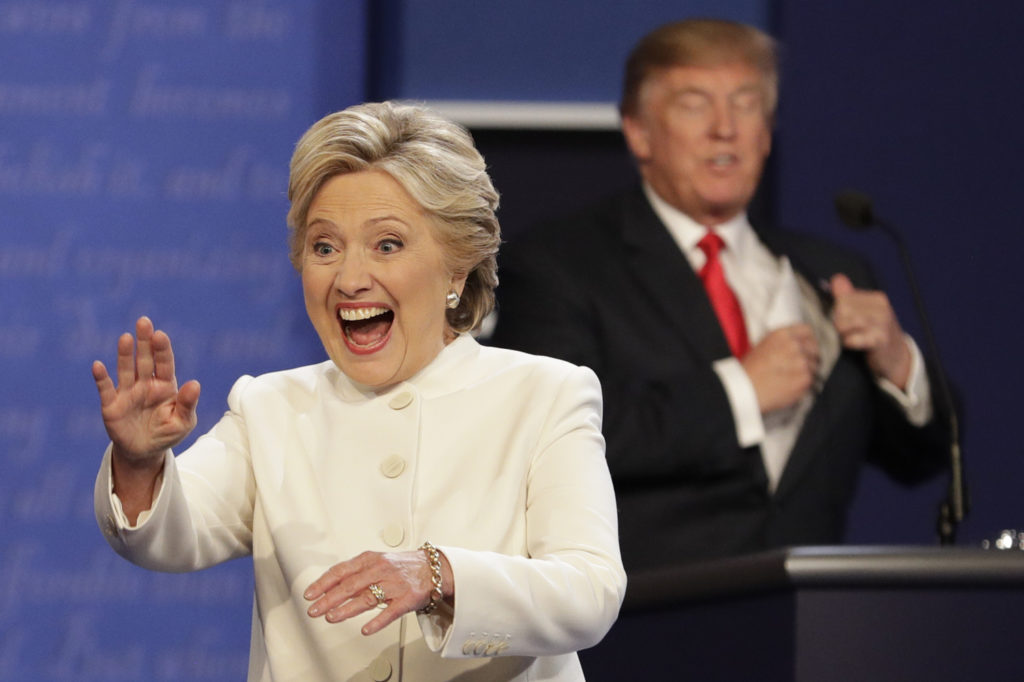
Bitter presidential rivals Hillary Clinton and Donald Trump have one more face-to-face showdown before Election Day. And they’re supposed to make it funny. The venue just 24 hours after their third and final debate is the annual Alfred E. Smith Memorial Foundation Dinner in New York, a white-tie gala that every four years becomes a showcase for presidential politics. Tradition dictates that the candidates deliver humorous remarks poking fun at each other and themselves, a jovial custom that seems hard to envision amid such an ugly campaign. Trump regularly calls Clinton, “Crooked Hillary,” mocks her stamina and says he’d put her in jail if he wins the presidency. Clinton says he lives in his own reality, is running a “hateful, divisive campaign” and lacks the temperament to be president. They will sit just one seat apart for the evening, with New York’s Cardinal Timothy Dolan acting as the only buffer. “I certainly expect that the dinner will be what it’s always been: an opportunity for two candidates to put aside partisan politics for the evening,” said Joseph Zwilling, the spokesman for the Archdiocese of New York, which hosts the dinner. “I anticipate that we will have good humor and civility that this dinner has been always been known for.” The unprecedentedly bitter campaign between Clinton and Trump could threaten the ecumenical goodwill that has defined previous roasts. Since 1960, at least one of the major party nominees has appeared at nearly every election year dinner, which is traditionally the last time the nominees share a stage before voters go to the polls. Four years ago, President Barack Obama and Mitt Romney set aside their differences to trade (mostly) warm jokes. Romney, scanning the well-heeled crowd in the gilded Waldorf-Astoria ballroom, joked that the event’s white-tie attire finally gave him a chance to publicly don what “Ann and I wear around the house.” Obama, meanwhile, used his speech that year to look ahead to an upcoming debate on foreign policy, previewing his argument by saying “Spoiler alert: we got Bin Laden.” Trump will speak first Thursday night, then Clinton. Neither campaign opted to preview their candidate’s remarks and aides for both declined comment on the evening other than to confirm that each nominee will be there. The evening might feel familiar to Trump, who infamously glowered through Obama’s jokes at his expense during the 2011 White House Correspondents Dinner and is not known for being self-deprecating. Last weekend, he tweeted that he did not appreciate Saturday Night Live’s portrayal of him in a sendup of the candidates’ performances in the second presidential debate. This is the first time that both party’s nominees hail from New York State as a crowd of about 1,500 gathers for the distinctly Gotham event, held each October. Attendees pay between $3,000 and $15,000 to attend the dinner, which raises about $5 million to provide services for impoverished children, Zwilling said. The dinner is named after the former New York governor, who was the first Catholic to receive a major party nomination for president when he unsuccessfully ran in 1928. And fittingly for an event named after a man nicknamed “The Happy Warrior,” the occasion has produced dozens of memorable presidential jokes. In 2000, then-Texas Governor George W. Bush gazed upon the glitzy gathering and declared: “This is an impressive crowd, the haves and the have-mores. Some people call you the elite. I call you my base.” That same year, Vice President Al Gore touted his campaign trail ability to weave in stories “of real people in the audience and their everyday challenges.” “Like the woman here tonight whose husband is about to lose his job,” Gore continued. “She’s struggling to get out of public housing and get a job of her own. Hillary Clinton, I want to fight for you.” And in 2008, John McCain joked about the exalted manner in which the media venerated Obama, noting that “‘Maverick’ I can do, but ‘Messiah’ is above my pay grade.” But he wound down his remarks with a note of grace that, to this point, has been largely absent from the 2016 campaign. “I can’t wish my opponent luck,” McCain said, turning toward Obama, “but I do wish him well.” Republished with permission of the Associated Press.
Updates from the 1st presidential debate

The Latest on the first of three presidential debates between Democrat Hillary Clinton and Republican Donald Trump (all times EDT): 10:45 p.m. Both candidates concluded the first presidential debate by saying they will accept the outcome if the other wins. Hillary Clinton spoke directly to viewers and said, “It’s not about us, it’s about you.” Donald Trump initially dodged the same question, saying he would make a “seriously troubled” America “great again.” He added: “I’m going to be able to do it. I don’t believe Hillary Clinton will.” But Trump finished his answer by saying that if Clinton wins, “I will absolutely support her.” ___ 10:43 p.m. Hillary Clinton is punching back at Donald Trump’s assertions that she doesn’t have the “stamina” to be president. Trump has questioned whether Clinton has the physical fitness to be president and he repeated the criticism to her directly during the debate. Clinton’s response? Trump shouldn’t talk about stamina until he’s tried out the busy schedule she kept up as secretary of state. Trump didn’t answer moderator Lester Holt’s original question about his past comments that Clinton doesn’t have the “presidential look.” Clinton suggested the remarks were about gender, and she reminded the crowd of Trump’s past comments calling women “pigs” and other derogatory names. ___ 10:42 p.m. Donald Trump says NATO needs to “go into the Middle East with us” to combat the Islamic State group. And he is taking credit for NATO focusing resources on combating terrorism. In fact, the alliance agreed in July to contribute aircraft and conduct training in Iraq and has increased intelligence coordination there. And NATO set up an anti-terrorism program in 2004 — years before Trump criticized them as a presidential candidate. Earlier this year, Trump criticized NATO for not focusing on terrorism. He said that afterward, he saw an article reporting that NATO was opening a new, major anti-terrorism division. He said Tuesday that NATO’s action was “largely because of what I was saying, and my criticism of NATO.” ___ 10:40 p.m. Donald Trump is avoiding a specific declaration on how he would use nuclear weapons if he’s elected president. The Republican nominee said during the first presidential debate that he “would not do first strike” because “once the nuclear alternative happens, it’s over.” That statement suggests he would not authorize a nuclear attack unless the U.S. was struck first. But in the same answer Trump said he “can’t take anything off the table.” He mentioned adversary nations such as North Korea and Iran. President Barack Obama has considered changing existing policy to state clearly that the United States would not deploy nuclear weapons without first being attacked by nuclear weapons. But he met resistance and has elected not to make such a shift. ___ 10:38 p.m. Hillary Clinton is accusing Donald Trump of being too easily provoked to keep the United States from going to war — perhaps even one involving nuclear weapons. Trump says: “I have much better judgment than she does. I have much better temperament.” That drew laughs from some in the debate crowd, and prompted Clinton to exclaim: “Woo! OK!” Clinton then pivoted to policy, defending the U.S.-led war in Afghanistan. Clinton said Iran was “weeks away” from a nuclear bomb when she became secretary of state — and says the Obama administration thwarted that progress. She continued that Trump didn’t have “good judgment or the right temperament” because he could take the country to war over small issues, like being mocked on Twitter. ___ 10:35 p.m. Donald Trump is continuing to insist he opposed the Iraq War before the U.S. invasion despite evidence to the contrary. Trump says during the debate that he “did not support the war in Iraq,” calling that charge “mainstream media nonsense.” But there is no evidence Trump expressed public opposition to the war before the U.S. invaded. Trump was asked in September 2002 whether he supported a potential Iraq invasion in an interview with Howard Stern. Trump briefly hesitated, then responded: “Yeah, I guess so.” Presented with the comment during the debate, Trump responds: “I said very lightly, I don’t know, maybe, who knows.” He’s also telling reporters to call Fox News host Sean Hannity to confirm private conversations he said they had about the war. Hannity is a top Trump supporter. Clinton voted in favor of the invasion in 2002 while she was a New York senator. She has since said it was a mistake. ___ 10:27 p.m. Donald Trump is interrupting the moderator of the first presidential debate to insist he has the best temperament for the office. Trump repeatedly made the assertion after clashing with moderator Lester Holt over his early support for the Iraq War. Then he segued to his temperament. “I think my strongest asset by far is my temperament,” Trump said. “I know how to win.” Clinton and her allies have repeatedly hit Trump over his temper and inability to take criticism. ___ 10:23 p.m. Hillary Clinton says one key to fighting terrorism in the United States is working closely with Muslims living here. Clinton says Donald Trump has “consistently insulted Muslims abroad, Muslims at home.” She says Muslim people can provide information that law enforcement may not be able to obtain anyplace else. Both candidates were asked to explain how they would combat terrorism in the U.S. Clinton says her plan includes an intelligence surge to obtain “every scrap of information” and to “do everything we can to vacuum up intelligence from Europe, from the Middle East.” ___ 10:20 p.m. Hillary Clinton says defeating the Islamic State group and taking out its leaders would be a top priority as president. Clinton says she’s hopeful the Islamic State group would be pushed out of Iraq by the end of the year. She says the U.S. could then help its allies “squeeze” the terrorist group in Syria. Clinton says she would do everything possible to take out the group’s leaders, and make that one of her administration’s organizing principles
Hillary Clinton VP search focus is Tim Kaine, Tom Vilsack, Tom Perez
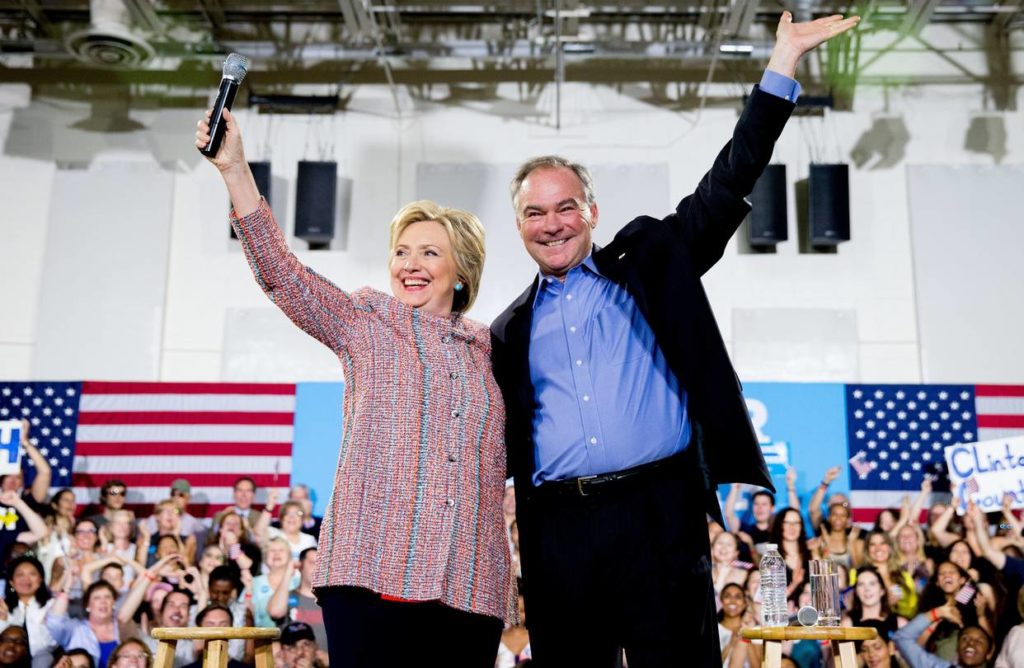
Hillary Clinton‘s vice presidential search is centering on three main contenders, with an announcement expected as soon as Friday as the Democrat prepares for her party’s national convention next week in Philadelphia. Clinton’s campaign has focused in recent days on Virginia Sen. Tim Kaine, a former governor, mayor and one-time Catholic missionary fluent in Spanish; Agriculture Secretary Tom Vilsack, an ex-Iowa governor and longtime Clinton ally; and Labor Secretary Tom Perez, a progressive champion who would be the first Hispanic on a major-party ticket, according to the Associated Press, which cites Democrats familiar with the search. The Democrats cautioned that Clinton had not yet reached a final decision and was weighing a number of factors, including the person’s readiness to be president, personal compatibility and ability to help her administration govern. Massachusetts Sen. Elizabeth Warren, a favorite of liberals, remains in the mix and offers the campaign a fundraising juggernaut and the tantalizing prospect of an all-female ticket. But Warren is not expected to be the final choice, the AP reported, citing Democrats familiar with the process. They spoke to AP on condition of anonymity to describe private discussions about the search process. Clinton’s choice will be the culmination of a closely held search for a running mate, run by a small group of longtime advisers and confidantes. Preparing for a showdown with Republican presidential nominee Donald Trump, Clinton has sought to project an inclusive campaign aimed at “breaking down barriers and building bridges” to mobilize the diverse coalition of voters who twice elected President Barack Obama. Clinton is expected to announce her decision during a two-day campaign swing in Florida later this week. The vice presidential rollout could come at either a Friday rally at the Florida State Fairgrounds in Tampa or at a Saturday rally at Florida International University in Miami, where two-thirds of the student body is Hispanic. Following next week’s Democratic National Convention in Philadelphia, the newly minted ticket is expected to embark on a campaign bus tour, reminiscent of the “First 1,000 Miles” convoy that took Bill Clinton, Al Gore and their spouses across eight states after the party’s 1992 convention. Trump’s choice of Indiana Gov. Mike Pence, a conservative former congressman, for the GOP ticket was not viewed as requiring her to choose a specific running mate in response, according to the AP, citing Democrats familiar with the process. Campaign officials declined to comment. Kaine has been considered a leading contender for weeks based on his broad experience in Virginia, a presidential battleground state, as governor, senator and mayor of Richmond. He also served as chairman of the Democratic National Committee and as a lawyer working on fair housing and civil rights issues. Vilsack, the longest-serving member of Obama’s Cabinet, has known Clinton for many years — his late brother-in-law worked with her in the early 1970s — and she was among his most prominent surrogates in his come-from-behind gubernatorial victory in 1998. Perez, meanwhile, is highly regarded by the White House for his policy chops and could potentially galvanize Latinos who have been turned off by Trump’s harsh rhetoric about Hispanics. The son of immigrants from the Dominican Republic, Perez played a behind-the-scenes role as a federal prosecutor, a top aide to the late Sen. Ted Kennedy and the head of the Justice Department’s civil rights division. Both Vilsack and Kaine have been through the process before. Vilsack was among the final group considered by John Kerry in 2004 and Kaine was vetted by Obama’s team four years later. If either Vilsack or Perez were selected, they would be required to resign from Obama’s Cabinet. Clinton’s decision will be steeped in her personal experience. She was involved in her husband’s selection of Gore in 1992 and has the unique vantage point of having seen up close the various roles played by the vice president. In an interview this week with Charlie Rose of CBS News, Clinton said her main criterion was “would this person be a good president? You know, I am afflicted with the responsibility gene and I know what it’s like being president.” Quizzed on potential running mates, Clinton noted that Kaine had “never lost an election” and was a “world-class mayor, governor and senator.” She said Warren had “put the agenda of inequality front and center.” Clinton also praised retired Adm. James Stavridis, a former NATO supreme allied commander, calling him “exceptional.” Other possible choices include Housing Secretary Julian Castro, Colorado Gov. John Hickenlooper, Ohio Sen. Sherrod Brown and New Jersey Sen. Cory Booker. Clinton met with Castro, Hickenlooper and Warren at her Washington home on Friday. Republished with permission of the Associated Press.
Darryl Paulson: Candidate’s running mate rarely affects outcome of presidential election
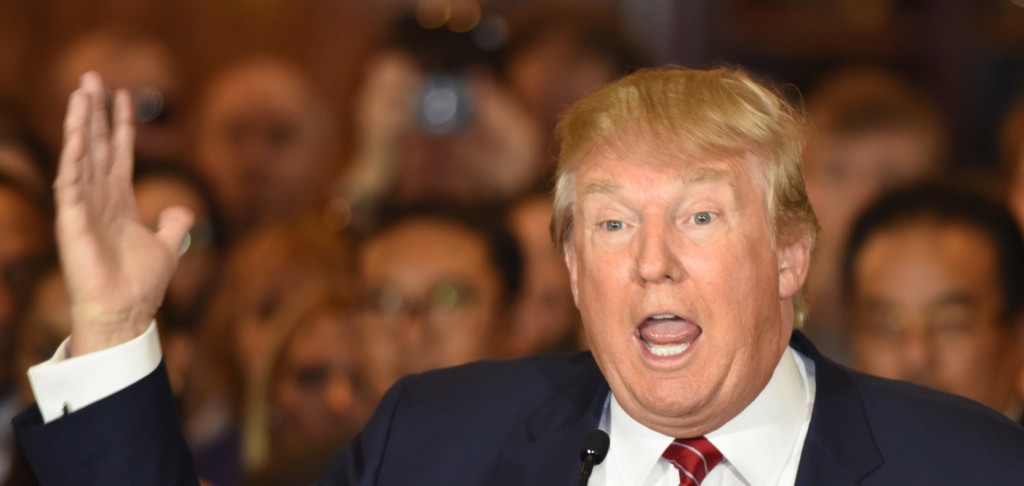
The national conventions are less than three months away and, as the nomination phase comes to a close, attention will gravitate toward potential vice presidential candidates. Let’s focus on the factors that have been used in selecting vice presidents. Most conventional wisdom is wrong. To begin with, most people and many presidential candidates select a vice president who they believe will help them win the election. Few vice presidents have had any effect on the election results. Jack Kemp did not help carry his home state for Bob Dole and Paul Ryan did not win Wisconsin for Mitt Romney. On the Democratic side, Sen. Lloyd Bentsen was not able to carry Texas for Michael Dukakis, nor did John Edwards help the Democrats win South Carolina or other southern states. One of the few times a vice president actually helped a president carry a state was in 1960 when John F. Kennedy picked Sen. Lyndon Johnson as his running mate. If Kennedy had not won Texas, Richard Nixon would have won the presidency. In like fashion, vice presidents are sometimes selected to provide regional balance, although there is no evidence that this helps. When Bill Clinton of Arkansas picked fellow southerner Al Gore as his vice president, many thought this unbalanced regional ticket was crazy. When the Clinton-Gore team captured the electoral vote of four southern states, something that Democrats had been unable to do in recent presidential elections, Clinton’s choice looked like genius. In addition to regional balance, vice presidents are sometimes selected to provide ideological balance. With increased polarization in recent years, this is becoming a less important factor. In 1976, Ronald Reagan announced Sen. Richard Schweiker of Pennsylvania as his vice presidential choice prior to the convention. Reagan hoped to alleviate the fears of some that he was too conservative and needed a moderate to balance the ticket. More importantly, Reagan hoped that picking Schweiker would convince some Pennsylvania delegates to support his candidacy over incumbent Gerald Ford. The pick of Schweiker did not help Reagan and Ford went on to win the nomination. Many Democrats in 2016 see Hillary Clinton as too conservative and too establishment and have urged her to choose a progressive as vice president. In addition to Bernie Sanders, other progressive names being floated are Sen. Sherrod Brown of Ohio and Sen. Elizabeth Warren of Massachusetts. A vice president is sometimes selected to stimulate participation by a particular group. Walter Mondale selected Geraldine Ferraro to get more women to vote. That pick didn’t provide much help. Mondale won only his home state of Minnesota and the District of Columbia against Reagan. Vice presidents have been picked to add gravitas to the ticket. Concerns about Reagan’s limited government experience led him to pick George Herbert Walker Bush as his vice president. Bush had been a member of Congress, the U.S. ambassador to the United Nations and to China, head of the Republican National Committee and head of the CIA prior to his selection. Bush’s son, George W., picked Dick Cheney as his vice president to add heft to his ticket. Cheney had served as Chief-of-Staff to Ford, been a member of the House, and served as Secretary of Defense for George W’s father. In fact, Cheney headed George W’s vice presidential selection team and concluded he was the best candidate. Do any of these factors help a presidential candidate win? The answer is no. A study by two political scientists, Bernard Grofman and Reuben Kline, analyzed 11 presidential elections between 1968 and 2008 and found the net effect of a vice president was 1 percent at most. If Clinton is the Democratic nominee, she may pick a progressive or choose someone like Secretary of Housing and Urban Development Julian Castro. Although not well known, Castro’s youth and Hispanic background might help stimulate Hispanic turnout. If Trump is the GOP nominee, it is easier to put together a list of people he would not select than those he would. There is little chance that “lying Ted,” “little Marco,” or “low energy Bush” would want to join forces with Trump. Gov. Scott Walker of Wisconsin is one possibility since he dropped out of the nomination race early before Trump had the opportunity to insult him. Chris Christie is another option because he was the first major candidate to endorse Trump after Christie withdrew. Another option is Florida Gov. Rick Scott. Florida is a “must win” state and Scott endorsed Trump as a “businessman outsider who will shake up the status quo in Washington.” Although most of the factors in the vice presidential selection process have been shown to have little impact, there are two general rules that no president should ignore. First, pick someone you feel comfortable working with. Second, and most important, pick someone who is ready to be president. Nothing else matters. *** Darryl Paulson is Professor Emeritus of Government at USF St. Petersburg.
Darryl Paulson: Voters don’t understand or like the Electoral College
Here are a few basic facts about the electoral-college system. First, very few voters understand how it works. Second, most voters hate the system. Third, the system is almost impossible to change. Those who drafted the Constitution had little trust in democracy. James Madison, in The Federalist Papers, wrote that unfettered majorities tend toward “tyranny.” John Adams, signer of the Declaration of Independence and second President, noted that “Democracy never lasts long. It soon wastes, exhausts, and murders itself. There never was a democracy that did not commit suicide.” Reflecting their distrust of democracy, the drafters of the Constitution wanted to create a process where the president would be indirectly selected. Direct election was rejected because they believed that most voters were incapable of making a wise choice. Voters would likely vote for a well-known person, especially one from a voter’s home state. A Committee of Eleven was appointed and they recommended a compromise where each state would appoint presidential electors equal to the number of representatives and senators. The electors would cast a vote for president and vice president. The candidate with the most votes would be president and the candidate with the second highest vote would be vice president. The compromise was accepted and Alexander Hamilton described the electoral-college plan “if the manner of it be not perfect, it is at least excellent.” The compromise worked until the 1800 presidential election when electors cast an equal number of votes for Thomas Jefferson, who the Anti-Federalists wanted to be president and Aaron Burr, who they wanted as vice president. After 36 ballots, the House selected Jefferson as president. The 12th Amendment, adopted in 1804, separated the electoral vote for president and vice president. There is little doubt that Americans hate the Electoral College system and prefer the direct election of the president. The system has allowed the election of four presidents who lost the popular vote, but won the electoral vote. In 1824, Andrew Jackson won the popular vote, but lost when the House selected John Quincy Adams. In 1876, Samuel Tilden won the popular vote by a quarter million votes, but lost the electoral vote to Republican Rutherford B. Hayes. In 1888, Grover Cleveland received more popular votes but lost to Republican Benjamin Harrison. Finally, in 2000, Democrat Al Gore won the popular vote, but lost the election when Florida’s electoral votes were awarded to George W. Bush. Another complaint about the electoral college is that the winner-take-all feature does not reflect the popular will. A candidate with a plurality of the popular vote would win all of a state’s electoral votes in a three or four person race. Critics contend that the system discourages candidates from campaigning in states that they are sure to win or lose. No sense wasting time and money campaigning in those states. Instead, all of the attention is focused on a half-dozen competitive states like Florida and Ohio. If no candidate gets a majority of the electoral votes (270), the election is thrown into the House of Representatives. Each state, regardless of population, gets one vote. The least populated state has one vote; the most populated state gets one vote. If a state delegation’s vote is equally split, they get no vote until the deadlock is broken. Although reforms of the system have been pushed, the likelihood of reform is small. Small states, which have disproportionate power under the plan, are not likely to give up that power to support direct election. Supporters of direct election argue that it is the most democratic, which is precisely why the drafters of the Constitution dismissed it. Supporters also argue that it would force candidates to conduct national campaigns since every vote would matter. Critics of direct election argue that it would create gridlock in close elections. Imagine having to review over 100 million votes in a close election to see if they should be counted or dismissed. Would voters have confidence if a candidate won by a few thousand votes? What does the electoral-college system tell us about 2016. Hillary Clinton is a flawed candidate seeking a third consecutive win for Democrats, something that is difficult to do. However, we know that Republicans are not happy with either Donald Trump or Ted Cruz. The possibility of a contested convention further muddies Republican chances. A look at the electoral-college maps shows that Democrats usually win fewer states than Republicans, but they win the states with large numbers of electoral votes. While the electoral-college map of America looks overwhelmingly red, it is likely the Republicans will end up feeling blue. Larry Sabato, of the University of Virginia, projects that in a Clinton-Trump election, Clinton is likely to win 347 electoral votes to Trump’s 191. If so, an easy Clinton victory means there will be no pressure to reform the electoral-college system. *** Darryl Paulson is Professor Emeritus of Government at USF St. Petersburg.
Presidential Primary Brief: 357 days until Election Day
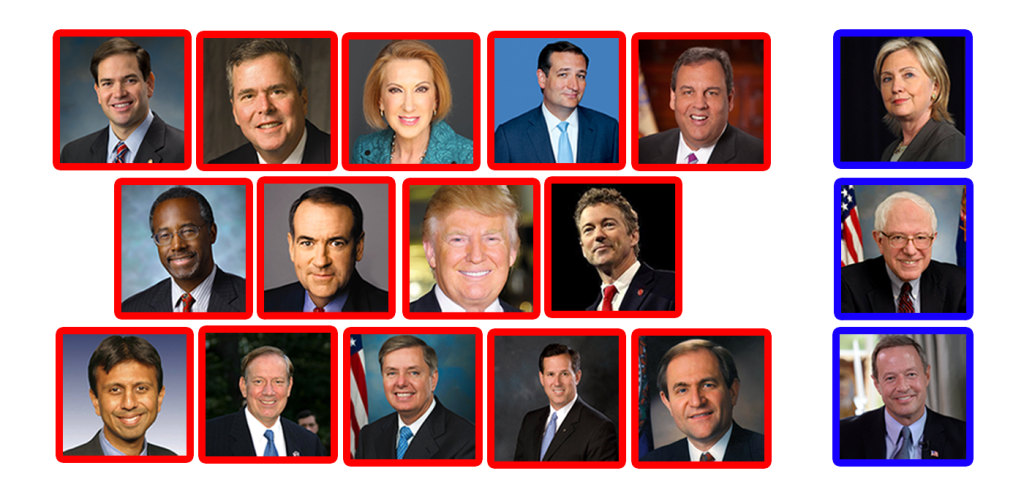
104 days until AL Presidential Primary 357 days until Election Day Convention Dates: Republican July 18-21 2016, Democratic July 25-28 2016 Weekly Headlines: Al Gore declines to endorse Hillary Clinton for President Postal workers union backs Bernie Sanders Fack Check: The second Democratic debate Press Clips: Bush urges U.S. declaration of war against ISIL (Politico 11/15/15) Republican presidential contender Jeb Bush said on Sunday, in the aftermath of the terrorist attacks on Paris, the U.S. should “declare war” on the Islamic State, which is blamed by the French for the deadly attacks. “We should declare war, and harness all of the power that the United States can bring to bear, both diplomatic and military, of course, to be able to take out ISIS,” the former governor of Florida said on NBC’s “Meet the Press,” charging the Obama administration viewed the fight against the Islamic State of Iraq and the Levant as a “law enforcement exercise. Debate exposes Clinton’s Wall Street underbelly (Politico 11/15/15) The widespread expectation was that Saturday evening’s Democratic debate would revolve around the Paris attacks. But it turned out Wall Street policy ended up driving the most striking moments here — painting a picture of a party animated most by its antipathy toward big banks, but divided over how to handle them. Accordingly, a discussion of bank regulation led to the sharpest clashes between the candidates — not to mention accusations of dirty tactics — and it was Hillary Clinton’s relationship with the financial community she once represented that provided perhaps the most memorable, and questionable, moment of the evening, when she invoked the terrorist attacks of September 11. Rubio, Kasich are biggest threats to win 2016 presidential election, AP survey of Democratic insiders says (NewsDay 11/14/15) Bring on Donald Trump, and Ben Carson, too. That’s what Democratic insiders are saying about the Republican outsiders who sit solidly atop preference polls in the race for the GOP nomination for president. They are far more worried about GOP candidates who have experience in office, with Marco Rubio cited most often as the strongest potential competition for their overwhelming choice for the Democratic nomination, Hillary Rodham Clinton. Clinton proposes $30B aid plan for coal communities (Politico 11/12/15) In a move that could help stem the Democrats’ declining fortunes in coal country, Hillary Clinton Thursday unveiled a $30 billion package of proposals to insulate coalfield workers and their families from economic upheaval amid a transition to cleaner sources of energy. The plan comes as Clinton and Bernie Sanders, her top challenger in the Democratic presidential primary, have both sought an edge with aggressive policies to confront climate change. But they acknowledge that doing so will require dramatically reducing consumption of coal, which has helped drive economies in key swing states including Ohio, Pennsylvania and Colorado, and elsewhere around the country. Takeaways from the Republican debate (CNN 11/11/15) As the first primaries creep ever closer, candidates are feeling the pressure to rise above the pack and prove their electoral viability. Each candidate came in with different marks to hit. Jeb Bush needed a game-changing performance. Marco Rubio and Ted Cruz wanted to maintain their momentum. And Rand Paul wanted to get into the act. Here’s how they fared: Kasich faces conservative backlash over debate performance (Politico 11/11/15) John Kasich, already on the ropes in the GOP primary with his low polling numbers, is now confronting the fallout from the fourth Republican debate, with conservative media thrashing the Ohio governor for soft positions on immigration and bank bailouts. Kasich has made no bones about his strain of compassionate conservatism that can ring hollow to evangelical voters and those looking for a true political outsider. Western Illinois University Predicts a Bernie Sanders Victory in 2016 (NBC Chicago 11/11/15) The results are in for one Illinois university’s famous mock presidential election, but the clear winner may surprise some. Western Illinois University’s mock election predicted a landslide victory for Democratic candidate Bernie Sanders, with running mate Martin O’Malley, in 2016. The predicted Sanders-O’Malley ticket garnered 404 electoral votes to Jeb Bush-Marco Rubio’s 114 votes. In the popular vote, Sanders earned 741 votes (49 percent) to Bush’s 577 (38 percent). Rubio on Bush criticism: ‘If we’re attacked, we’re going to respond (Politico 11/11/15) The tension between Marco Rubio and Jeb Bush may have been muted during Tuesday night’s debate, but that doesn’t mean it’s over. During back-to-back morning show appearances Wednesday to tout his strong debate performance, Rubio addressed the report that Bush’s super PAC would be spending $20 million for an assault on his campaign. “Obviously if we’re attacked, we’re going to respond. But ultimately we can’t control other people’s campaigns if they decide that attacking us is the way forward, they have a right to make that decision,” Rubio said on “The Today Show.” “It’s wrong. It’s not going to change my campaign.”
Bernie Sanders has most to prove as Democrats gather for 2nd debate

Vermont Sen. Bernie Sanders faces the biggest test yet of his insurgent presidential campaign on Saturday night, when he faces off with Democratic front-runner Hillary Rodham Clinton in the party’s second primary debate. His goal is clear: Reset a contest that increasingly looks like little more than a march to the nomination for Clinton. That effort will be complicated by fresh terrorist strikes that have captured the world’s attention. Despite Sanders’ focus on domestic issues, national security and foreign policy will play prominent roles in the debate, with the string of deadly attacks in Paris that killed more than 120 people front and center. All the candidates quickly denounced the attacks in statements on Friday night. Party officials said the forum will continue as planned. Foreign relations is an area where Clinton, a former secretary of state, is in the strongest position to talk about the attacks and the U.S. effort to dismantle the Islamic State group. But her tenure is tied to that of Obama, who’s struggled to contain the threat from Islamic militants in Syria and associated terror attacks across the globe. Clinton’s husband, former President Bill Clinton, accompanied her to Des Moines on Saturday but will not be in the hall for the debate, spokesman Angel Urena said. A spate of good news for Clinton since the party’s first debate a month ago has helped her rebuild a lead in the early voting states, an uptick that comes amid other signs the party is coalescing behind her. An Associated Press survey of superdelegates published Friday found that half of the Democratic insiders are publicly backing Clinton. Sanders may have inadvertently facilitated some of her progress in the first debate, when he seemed to dismiss the controversy over her use of a private email account and server by saying Americans are tired of hearing about her “damn emails.” Since then, he’s given her no more passes. Though careful never to mention Clinton by name, Sanders has drawn a series of contrasts with the former secretary of state on issues that include her backing of the war in Iraq, trade and the minimum wage. Sanders’ advisers say he plans to discuss the email issue only if the moderators of the debate in Des Moines, Iowa, bring it up. That could be a signal to organizers that he’s is open to the topic. “He’s definitely going to cut a harder contrast on core issues,” said Larry Cohen, a senior adviser to Sanders. “But it’s not going to be over personal style.” The problem for Sanders is that Clinton agrees with him on some of the core domestic issues of his campaign, having shifted to the left in recent weeks to oppose construction of the Keystone XL pipeline and the Trans-Pacific Partnership trade deal. “It’s really tough for him,” said Gina Glantz, manager of Bill Bradley‘s 2000 presidential campaign, which posed a primary challenge to then-Vice President Al Gore. “He’s in a difficult position where his current arguments aren’t enough to get beyond his core voter.” While Sanders aides bragged about their candidate’s lax preparation for the last debate, they shuttled him to his campaign headquarters in Burlington, Vermont, for mock sessions before this match-up. Clinton, too, has kept her schedule relatively clear over the last several days, leaving plenty of time for rehearsals. “They are absolutely prepared for the fact that Bernie’s going to come out swinging,” said Maria Cardona, a Democratic strategist who worked for Clinton’s failed 2008 White House campaign. “The question is how it’s going to happen.” Clinton supporters say their candidate will remain focused on laying out her vision for the future rather than striking back at Sanders. Her campaign has about $15.2 million in television advertising planned through mid-February, compared with a $3.2 million Sanders ad buy that ends next week, according to Kantar Media’s CMAG advertising tracker. The Service Employees International Union, an influential force in Democratic politics, is expected to issue their endorsement on Tuesday, according to people knowledgeable about the union’s process. Clinton has been backed by more than 72 percent of members in all their internal polling, including the most recent survey conducted a few weeks ago. Her team is hoping to notch another win after a series of strong moments since the first debate. Clinton has benefited from Vice President Joe Biden‘s decision to forgo a run and well-received testimony before a Republican-led congressional panel investigating the deadly 2012 attacks in Benghazi, Libya. They’re also trying not to alienate the Sanders backers whose support they’ll need should Clinton win the nomination. “As a front-runner your job is to do no harm,” said Cardona. “She’s going to want to be a comfortable home for the Bernie supporters toward the end of this process.” Sanders, too, may face tougher attacks. Former Maryland Gov. Martin O’Malley, who’s struggled to break 5 percent in national preference polls, has questioned Sanders’ commitment to the Democratic Party and President Barack Obama, still a popular figure among Democrats. A more aggressive tone would mark a shift for a race that has so far been notable for its civility. Democrats have spent months boasting about the substantive tone of their contest, attempting to set-up a favorable early contrast with the often carnival-like insults of the crowded Republican primary. Their bragging may come to an end after Saturday night. Republished with permission of the Associated Press.
Presidential Primary Brief: 400 days until Election Day
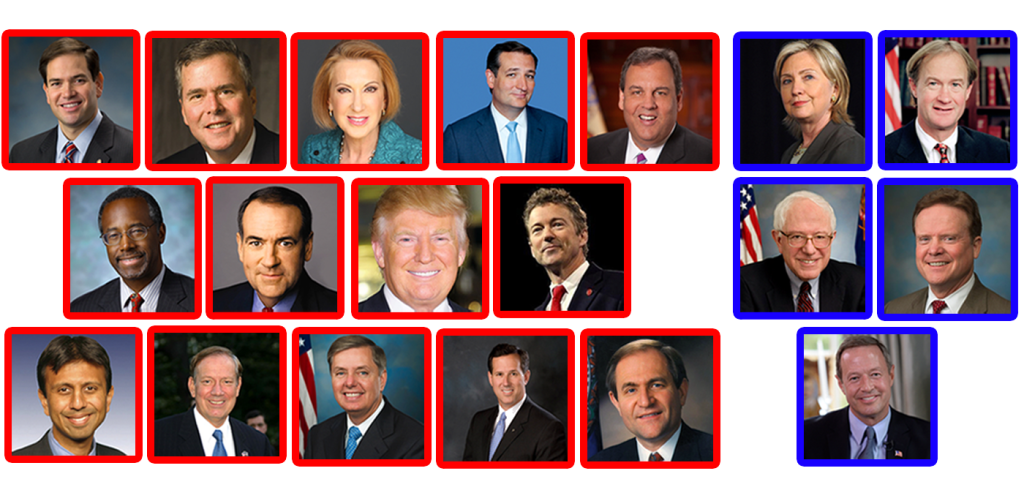
146 days until AL Presidential Primary 400 days until Election Day Convention Dates: Republican July 18-21 2016, Democratic July 25-28 2016 Weekly Headlines: Nation’s largest teacher’s union endorses Clinton for President Poll: While Clinton struggles with ‘liar’ tag, voters find Biden ‘honest’ GOP voters prefer fresh ideas to experience Press Clips: Clinton raises $28M but Sanders’ haul is too close for comfort (Politico 9/30/15) Democratic front-runner Hillary Clinton’s campaign barely outpaced Bernie Sanders’ in the third quarter of 2015, a surprising development that shows the insurgent candidate’s strength while the former secretary of state struggles. Clinton’s operation raised more than $28 million in the third quarter after a grueling fundraising schedule, compared with about $26 million for the Vermonter — who raised his money largely from online donations, and few in-person fundraising events. Al Gore blames the 2016 election craziness on television (The Atlantic 10/1/15) Americans have sought technological explanations for their politics longer than they’ve been Americans. It’s no coincidence that the First Amendment guarantees the freedom of assembly, religion, and “the press,” which, in the 1790s, meant the freedom to operate a discrete technology. And surveying today’s deeply divided political parties, Americans still do the same. Many have blamed not only Citizens United for the strangeness of the 2016 president election, but also the Internet and social media. After all, Donald Trump runs a thoroughly unfiltered Twitter account, and Ezra Klein has written about how Fox devoted more coverage to Bernie Sanders once it discovered how well stories about him did on Facebook. Rand Paul raises just $2.5 million in third quarter (Politico 10/1/15) Sen. Rand Paul will report raising just $2.5 million in the third quarter of this year, Paul’s campaign confirmed Thursday. That haul is a precipitous drop from the $7 million that the campaign raised during the April-June fundraising period. The number comes as the Paul campaign has struggled with lackluster polling numbers, and disarray in both his campaign operation and in some of the super PACs that have supported his run. Forbes’ 2016 Presidential Candidate Wealth List (Forbes 9/29/15) Forbes put together the definitive wealth list of the 2016 presidential candidates. Looking at both major parties, we have come up with net worth estimates for the 20 top Republican and Democratic contenders. Beyond Donald Trump, whose $4.5 billion net worth dwarfs the rest combined, we find that several candidates are worth more than $30 million, including Lincoln Chafee, Hillary Clinton, and Carly Fiorina. At the same time, we found that only three of them aren’t millionaires (Bernie Sanders, Marco Rubio, and Martin O’Malley). Jeb Bush calls for ending crude oil export ban (CBS News 9/29/15) The former Florida governor is calling for ending the 1970s-era law prohibiting the U.S. from exporting crude oil at a time when domestic petroleum production has grown rapidly over the past decade. Calling it a “once-in-a-generation opportunity,” Bush said in a piece posted today on the website Medium that reversing the export ban and widening U.S. natural gas markets would benefit U.S. consumers with lower energy costs, create a new manufacturing sector and generally fuel more rapid growth in the nation’s economy. Jeb Bush on gun violence, “Stuff happens” (Politico 10/2/15) A day after a massacre on a U.S. college campus, Jeb Bush said “stuff happens” but that does not mean gun restrictions should be tightened. “We’re in a difficult time in our country and I don’t think more government is necessarily the answer to this. I think we need to reconnect ourselves with everybody else. It’s very bad to see,” the former Florida governor said. Then he added: “Look, stuff happens and the impulse is always to do something and it’s not necessarily the right thing to do.” From healthcare to taxes: The 2016 election and its impact on small business (HuffPo 10/2/15) While small businesses are a major source of employment in America and huge contributors to the nation’s GDP, when it comes to the election, so far they’ve been a bit of a non-‐story. Small businesses need the right mix of leadership, policy and support to thrive. There are about 28 million small businesses spread across America, each with its own set of agendas and priorities, so it is almost impossible to lump them all into the same bucket. None-the-less it’s a critical voting bloc for any presidential candidate. Koch brothers, other 2016 mega donors warm to Carly Florina (Reuters 10/4/15) Carly Fiorina has emerged as the Republican candidate of the moment in conservative fundraising circles, drawing the notice of the billionaire Koch brothers and other wealthy donors who could instantly remake her shoestring presidential campaign. Fiorina’s show-stealing performance in a Republican presidential debate last month, and her subsequent surge in the polls, has prompted industrialists Charles and David Koch to take a “serious look” at the former Hewlett-Packard chief executive, according to three sources close to the brothers. Club for Growth warns fiscal conservatives about Kasich’s ‘mixed record’ (Politico 10/1/15) A new white paper by the conservative group the Club for Growth concludes that Ohio Gov. John Kasich’s economic record should make fiscal conservatives nervous. “While there are pro-growth steps along the way in his political career, there are enough big government missteps to send a clear warning to fiscal conservatives,” the paper concludes.
