
Lawmakers approve expansion of private school scholarship program
Alabama lawmakers approved on Wednesday an expansion of a scholarship program aimed at helping low- and moderate-income students attend private schools. The House of Representatives voted 75-22 for the bill that would expand income eligibility and make other changes to increase the number of students participating in the program. The measure now goes to Gov. Kay Ivey. The bill advanced as Republicans across the country have championed various forms of so-called “school choice” legislation, ranging from vouchers to scholarship programs, to provide public support for private school or other alternative school options. “More children will have access to it,” Republican Rep. Terri Collins, of Decatur, said of the legislation during debate. Republican Sen. Donnie Chesteen, the bill’s sponsor, estimated last week that the number of students participating in the program could increase from about 3,000 to 4,400 with the changes. The existing program, known as the Alabama Accountability Act, gives tax credits for donations to organizations that provide the scholarships. Scholarship priority is given to students zoned to attend schools labeled as “failing” because they are in the lowest 6% of test scores. It also gives tax credits to help families transfer out of schools that have been designated as “failing.” The approved legislation raises the income cap for new scholarships from $55,500 for a family of four to $75,000. It expands eligibility to also include students with Individualized Education Programs because of a diagnosed learning disability or other condition. The bill raises the maximum scholarship to $10,000 per student. It would also provide more money for the program by gradually raising the annual cap on the tax credits from $30 million to $40 million and eventually up to $60 million. It would also do away with the label of “failing” school and replace it with “priority” schools. Schools would be given that label based on receiving a D or F on state report cards instead of just test scores. Republicans created the Alabama Accountability Act in 2013, pushing through the bill via conference committee during a chaotic legislative night. “I always have a bad taste in my mouth about this bill,” Democratic Rep. Laura Hall, of Huntsville said. Republished with the permission of The Associated Press.
Grades are out on Alabama schools

The annual chance-for-success index from Education Week was released Tuesday with Alabama schools ranking near the bottom. This index looks at criteria around early foundations, school years, and adult outcomes for students and is the first of three measures Education Week uses to create their annual Quality Counts rankings. While the average grade for a state is a C, Alabama schools received a C minus, giving them a ranking of 45 of 51, which is in keeping with US News & World Report’s ranking of 47. In early foundations, the state received a B minus (ranked 39th), a D plus for school years (45th), and a C for adult outcomes (42nd). With a score of 73.4, the state is up 3.2 points over last year, when Alabama received a score of 70.2 (also a C minus). Statewide, things are looking better. District-level grades for the 2017-18 school year were up over those of 2016-17, bringing Alabama schools to an overall B grade, up from a C plus the previous year. Alabama Superintendent Eric Mackey stated in a prepared release, “Overall, we are pleased with the academic growth that we see across the state. It is a testament to the dedication of our teachers, principals, and all those who support their work that student performance continues to rise. As state superintendent, I am grateful for these hardworking individuals in our local schools who improve the trajectory of children’s lives every day. We believe that our best days and highest levels of achievement lie ahead of us, not behind, and we look forward to working with our state policymakers and lawmakers in 2019 to make sure that we are providing ever better resources and supports for our schools.” Five years ago, Alabama introduced the Alabama Accountability Act, a tax-credit scholarship program that serves low-income students and those from failing schools. While data shows that test results are similar for students taking advantage of this program and students in district schools, there is not a continuity of data between public and private schools, making comparison difficult. AL.com reports that suggestions to make these comparisons more useful would require legislative action.
Rachel Blackmon Bryars: Alabama board of education member says school choice is trying to ‘destroy a whole race of people’
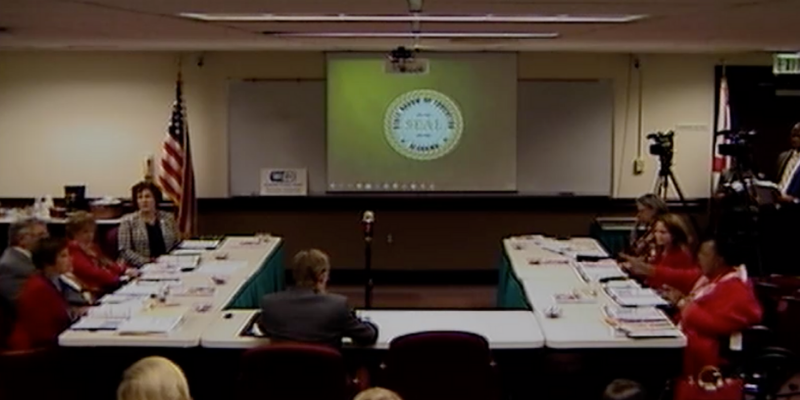
Alabama board of education member Ella Bell, D-Montgomery, spoke out during a work session Thursday claiming that Alabama’s landmark tax credit scholarship program for low income families was part of an effort to “destroy a whole race of people.” “They took money from the poorest counties in the state to send kids to private school,” Bell claimed, after accusing the program of “stealing” from the state. “That’s just awful.” Trouble is, that’s just not true. The small yet popular program created by the Alabama Accountability Act only amounts to one half of one percent of the state’s multi-billion-dollar education trust fund – a fund that has grown well beyond the minuscule cost of providing the scholarships, according to state budget data. And more than 80 percent of the parents who received scholarships last year from the two largest providers are minorities, according to a report. All made at or below 185 percent of the federal poverty level when they applied, as required by law, which is also the eligibility requirement to receive free or reduced priced lunches. Disabled veteran Dalphine Wilson of Montgomery, who is African-American, is one of those parents. The single mother of two uses the scholarships to send her children to private school instead of the city’s troubled public school system. Wilson’s children dropped to one knee in protest during a recent Montgomery County School Board meeting after its members approved a resolution demanding a repeal of the scholarship program. Her daughter wept after the meeting, afraid she’d lose her scholarship. Her son asked if they could leave Alabama. “Parents deserve a choice,” said Wilson, 44, who applied for scholarships after seeing what she described as the “overwhelming” and chaotic culture in her daughter’s elementary school classroom. “And your choice should not be, ‘Gosh, I really hope my child can get into a magnet school, and if they can’t, their only option is this failing school that is under state intervention.’” She said if anyone is stealing, it’s those who want to take away the scholarships. “Why rob us of a choice?” Wilson asked. Ryan Cantrell, a school choice advocate in Montgomery who was an aide in the State Senate when the act passed in 2013, said the program was specifically designed to provide parents like Wilson with a choice that was once only available to higher income families. “We’re talking about families who absolutely had no other option,” he said. “For the life of me, I don’t understand how an elected official could consciously vote to take that away from a low-income child. It boggles the mind.” Cantrell said the “heart of the problem” is that opponents of the scholarship program are primarily concerned with the public education system itself, not the students it was established to serve. “We are so focused … on the adults in the room, and our education system is not built to serve adults,” he said. “Our education system is built to serve students, and whatever it is that works for kids ought to be what we’re doing.” Cantrell also disproved Bell’s claim that the program has been “stealing” from public school systems. On the contrary, he said, public schools have more funding and less students now than when the scholarship program began. Montgomery’s school system, for example, has seen its funding increase by more than $8 million, up 5 percent since 2014, even while the overall student population has decreased by more than 7 percent, according to Cantrell. During the board meeting, Bell also said the program “is absolutely horrifying to me because already I’m black and I grew up in Montgomery County 70-years ago and I know all the tricks.” But the scholarships aren’t a trick. They’re a lifeline, a choice, for thousands of kids who otherwise wouldn’t have one. Alabama shouldn’t allow that choice to be taken away because of past wrongs. The plain fact today is that the Alabama Accountability Act is a tiny fraction of our state’s education budget, it gives low-income families a sometimes life-altering choice, and almost all of the students receiving scholarships are minorities. We should all be proud of that. Because in the end, this is about what we believe education dollars are for – the system or the student. Please call your state legislator and local school board member today and let them know what you think. ••• Rachel Blackmon Bryars is a senior fellow at the Alabama Policy Institute. Contact her at rachel@alabamapolicy.org.
Alabama Education Association calls for end to state’s ‘Failing Schools List’
The Alabama Education Association (AEA) — statewide professional organization that represents public school employees in the state of — is asking state lawmakers to repeal the Alabama Accountability Act (AAA), a law that allows parents to transfer students from schools that have been placed on the state’s “Failing Schools List” to other schools not on that list. The AEA published their call to lawmakers in the latest edition of the Alabama School Journal. The issue: the AAA creates a refundable income tax credit to reimburse Alabama taxpayers who are the parents of students enrolled in or assigned to attend a failing K-12 public school to offset the cost of transferring the student to a non-failing public or nonpublic school of the parents’ choice. The AEA says this is taking money from cash-strapped, failing schools. “Since its inception in 2013, the Alabama Accountability Act (AAA) has directly siphoned more than $140 million from Alabama’s cash-strapped K-12 classrooms,” wrote the AEA. “The mounting reports of ineffectiveness of the program come as no surprised to education officials who correctly warned of the AAA’s flaws in 2013.” “AEA encourages educators to share the data list in the chart [above] with all concerned citizens… talk to your community leaders about the financial losses to your school district due to the AAA,” the AEA added in the article.
Alabama editorial roundup: Sept. 21 edition

Recent editorials from Alabama newspapers: ___ Sept. 15 The Dothan Eagle on an evaluation of the Alabama Accountability Act: As Dothan school officials wrangle over strategies to reshape the city school system to make better use of the funds available for education, an interesting report has emerged from the University of Alabama’s Institute for Social Science Research. The Institute performed an evaluation of the Alabama Accountability Act, the 2013 law that established a mechanism to compensate parents of children zoned for “failing” public schools with $3,500 tax credits to help offset the cost of sending those children to private school. The study evaluated the academic achievement test outcomes of the 2016-2017 recipients of AAA scholarships compared to their counterparts in public school. Not to put too fine a point on it, the study found no discernible improvement in academic performance of the students in private school with AAA scholarships. With such results, it’s a wonder there’s not a procession of taxpayers descending on the state house with torches. Under the Alabama Accountability Act, the state spends $30 million from the Special Education Trust Fund each year to send a small collection of students to private school because they’re zoned for public schools deemed as “failing.” It was a dubious plan from the start, but academic test results aren’t the sole determining factor when weighing whether to move a student from a failing school. Still, these findings suggest that the $30 million in taxpayer funds spent on AAA scholarships might be better spent in an effort to improve public schools attended by hundreds of thousands of Alabama schoolchildren. Alabama lawmakers must revisit this boondoggle at the first opportunity. Online: https://www.dothaneagle.com/ ___ Sept. 14 The Gadsden Times on the new iPhone: The numbers differ microscopically according to who’s doing the polling, but the verdict is quite consistent. Nearly 80 percent of Americans own (and presumably use) smartphones. Of course The Outline, a digital media company that bills itself as “focused on power, culture and the future,” proclaimed earlier this year on its website that old-school flip phones are “this year’s hottest cultural trend.” It detailed how some people are seeking to make a socio-political protest statement — at least one described it as an effort to “keep a shred more of my sanity” — by ditching their smartphones, while others (actor Daniel Day-Lewis and famous person Kim Kardashian-West were singled out) just want to “look cool.” A lot of what we do now is aimed at smartphone users because of the initial percentage we cited and the fact that we’re a for-profit operation. Still, we’ve had the same interactions with folks who get so lost in those little screens that their minds aren’t in any solar system receiving frequencies from Earth. So it’s hard not to offer at least a tiny “hooray” to people who buck the trend (although those of you who have clung stubbornly to your taped-together units from the last decade will eventually have to replace them with 4G models as carriers phase out 3G service). The reason we’re addressing smartphones is that what essentially is Super Bowl Sunday in that world occurred this week when Apple had its annual unveiling of new products, including three iPhones, at its headquarters in Cupertino, California. (Hold your fire, Android users, we know you’re there, but Apple’s good at this particular P.R. moment.) The one that’s drawn the most attention is the iPhone XS Max, which has a whopping 6.5-inch display and sells for an equally whopping price ($1,099 for a 64GB model that won’t hold the average elementary school student’s photos; it jumps to $1,249 for 256GB and $1,499 for 512GB). The XS Max is 3.05 inches wide, 6.2 inches tall, .30 of an inch deep and weighs just 7.34 ounces, so it’s not like those inclined to shell out that much cash will wind up toting around a tablet. (The screen goes from edge to edge.) Apple also is reacting to the ubiquity of smartphones that we cited (a survey by ReportLinker found that 75 percent of Americans never switch theirs off) and the reality that they’re used for far more than making phone calls (it’s still the No. 1 activity, according to the ReportLinker survey, but at just 37 percent). The original iPhone had only a 3.5-inch screen, not suitable for streaming “Stranger Things” or a “Mission Impossible” flick. As for the price — the other new iPhones aren’t cheap either, especially compared to Android alternatives — it’s a question of the bottom line. Even though Apple’s offerings still top the smartphone sales list and overall iPhone sales actually increased by 3 percent in the first quarter of this year, the company and investors are worried that things are flattening. So Apple hopes enough people will be captivated by the siren’s lure of “newer and flashier” so it can make a big score. However, analysts believe that lure isn’t as strong anymore, and people have taken to leaving well enough alone and not upgrading their phones as often. Smartphone users certainly are ardent. Perhaps they’re becoming a bit more choosy and much wiser shoppers. Online: https://www.gadsdentimes.com/ ___ Sept. 13 The TimesDaily on Relay for Life: Those who are involved in Relay for Life do heroic things every year. The American Cancer Society (ACS) uses Relay for Life to increase awareness of cancer, and to raise funds for groundbreaking cancer research, critical care services, and prevention initiatives. Every person who participates in a Relay for Life event can take pride in knowing they are helping ease the pain and suffering for millions of cancer victims. More than a fundraiser, Relay for Life is a life-changing event for all participants. It’s an opportunity to learn about caregivers who devote their time to helping those with cancer. It’s a time to hear inspirational stories about the survivors who want to share their hope. It’s a time to reflect upon the determination and drive of those struggling to overcome this terrible disease. … It
New IRS rules may hurt Alabama’s private school scholarship program
Advocates of a state-supported private school scholarship program are concerned that donations could drop under proposed new IRS rules. The program, known as the Alabama Accountability Act, gives donors an income tax break for donations to groups that provide private school scholarships. Currently, donors get a dollar-for-dollar reduction on their state income tax bill, and can also claim a federal tax deduction. The rules proposed last week would end the ability for large donors to claim the federal tax deduction in addition to the 100 percent tax credit. Lesley Searcy of the Alabama Opportunity Scholarship Fund – which provides scholarships to 1,600 children- said many of the affected donors “are the very ones who support our students.” The program provides private school scholarships for nearly 2,000 children across the state. Republished with permission from the Associated Press.
API presents the 2017 Naughty and Nice List
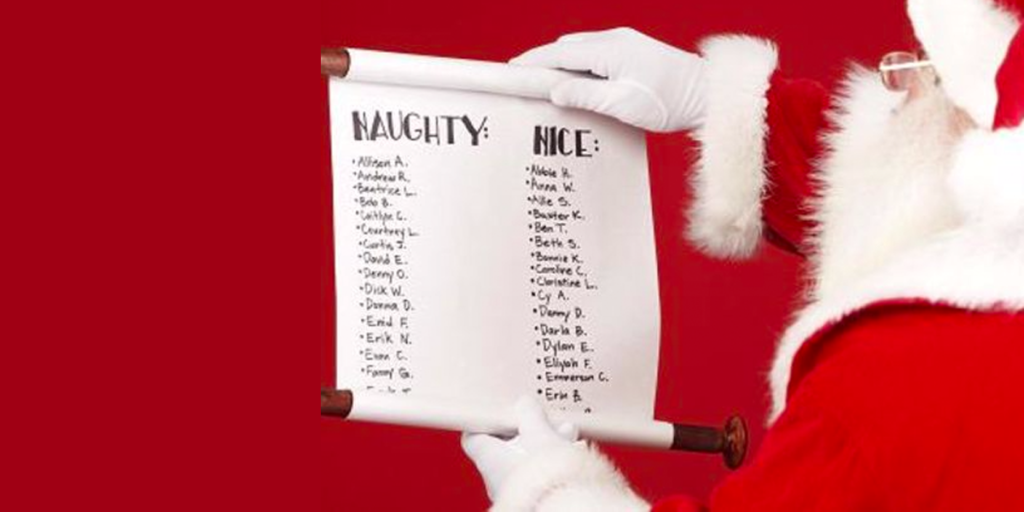
The Alabama Policy Institute staff made a list and we’re checking it twice as we think back on 2017 and what was “naughty” or “nice.” What made your list this year? Nice: The legislature passed four pro-life bills this year… This year, the legislature passed four bills each that aim at protecting the sanctity of life, plus a bill that legalizes midwifery in Alabama. The pro-life bills included a ban on assisted suicide, a provision that ensures the right-of-conscience of health-care providers, a bill that allows adoption agencies to operate and place children under faith-based policies, and a constitutional amendment affirming the right to life of unborn children. It is great to know that our lawmakers are unafraid to stand up for individuals’ rights and the right to life. Naughty: But the legislature did not pass the changes to the Alabama Accountability Act, which would have broadened access to school choice for more of Alabama’s schoolchildren. Amendments to the Alabama Accountability Act (AAA) would have expanded the pool of donors and donations to the AAA, thus enhancing opportunities for children to have school choice who otherwise would have none. In 2016, donations to the AAA dropped from $25.8 million to $19.9 million.* If the system is not funded, schoolchildren will be forced to return to the failing schools they left. These amendments addressed the funding problem, but unfortunately, they did not pass. We’ll try again next time! Nice: Alabama has a female governor! Governor Kay Ivey has faithfully served our state in many different capacities over the course of her career. Now, she’s Alabama’s top-ranking government official. Among other things in her first year, Governor Kay Ivey has met with President Donald Trump to discuss infrastructure, dissolved several Bentley-era task forces, and unveiled a gubernatorial initiative called “Strong Start, Strong Finish,” which focuses on early childhood education, computer science in middle and high school, and workforce preparedness. You go, Gov. Naughty: Unfortunately, the events leading up to her appointment were not the best. I really don’t want to relive the saga of former Governor Robert Bentley and I don’t think that you do either. He used state resources on activities related to his alleged affair. He reportedly asked Alabama’s top cop about arresting his own wife for recording his phone calls. According to testimonials, he threatened state employees. And that’s just the tip of the iceberg. Alabamians have so much to be proud of, but this whole ordeal was particularly embarrassing. Nice: In a recent survey, Alabama ranks fourth in the nation in charitable donations. According to a survey by WalletHub, Alabama is fourth behind a three-way tie of Utah, Georgia, and Wyoming in highest percentage of income donated to charitable causes. That doesn’t come as much of a surprise in a state as conservative as Alabama. The truth is that government aid does not compare to the abilities of individuals who give to private charity. I’m proud to live in a state where people realize the importance of giving. Naughty: The events leading up to the resignation of Superintendent Michael Sentance were an actual debacle… (And even naughtier were several of the school board members) Michael Sentance was hired as the State Superintendent of Education in August 2016. Almost immediately, his tenure was surrounded by controversy, at no fault of his own. While Sentance came to his job with an abundance of fresh ideas from his time working in education in Massachusetts (which ranks 46 places higher than Alabama in overall education) members of the state school board seemingly felt threatened. For months, rumors swirled about the school board taking steps to fire him. In September, he resigned from his post. The search for a new superintendent begins again. When will we put Alabama students above politics? Naughty: But Sentance’s resignation pales in comparison to the fiasco of the U.S. Senate Special Election. This election was one of the ugliest in recent Alabama history. Friends turned into enemies, and you couldn’t turn on the TV or radio without having to endure political ads. In the general election, 21,000 voters were so disgusted with their choice of candidates, they showed up to vote but did not cast a ballot for either one. The Alabama Secretary of State’s office estimates that between $10 million to $15 million were spent to hold the special election, and over $10 million were spent by the two candidates in the general election. In a state as charitable as Alabama, imagine how much could have been done for others with all that money. Nice: Over the last year, Alabama has added a net of close to 30,000 jobs. In the most up-to-date numbers from October 2017, Alabama added 29,400 jobs to its economy since January 2017. Even better news, the unemployment rate is the lowest on record at 3.8%. According to the latest numbers from U.S. News and World Report, Alabama ranks seventh in the nation in poverty. You know what’s a guaranteed way to pull people out of poverty? Having a job. Way to go, Alabama. ••• Taylor Dawson is Director of Communications for the Alabama Policy Institute (API). API is an independent, nonpartisan, nonprofit research and educational organization dedicated to strengthening free enterprise, defending limited government, and championing strong families. If you would like to speak with the author, please e-mail communications@alabamapolicy.org or call (205) 870-9900.
Taylor Dawson: There’s always next year, right?
It’s baffling when legislators run for office on a platform of limited government and individual liberty and then use their elected office in the Alabama Legislature to defeat legislation that promotes these principles. Legislation supporting school choice and Second Amendment rights suffered this fate this past legislative session. Don’t blame the Democrats. Enough Republicans joined them to defeat amendments to the Alabama Accountability Act, and a Republican committee chairman in the Alabama House scuttled constitutional carry. Changes to the Alabama Accountability Act Parents with children trapped in failing schools did not have a real school-choice option in Alabama prior to 2013. With the passage of the Alabama Accountability Act (AAA), families zoned for Alabama’s worst-performing schools finally had better opportunities through scholarships and tax credits. After a drop of $5.9 million in scholarship donations through the AAA last year, some lawmakers came to this year’s session prepared to remedy the funding problem. Amendments would have improved the law by raising the limit on tax credits that could be claimed for donating to student scholarships, adding a tax credit for utility tax, allowing estates and trusts to donate, and reserving half of the cumulative cap–which would remain unchanged–on donations for individual donors. In February, these amendments passed by a close margin in the Senate. It wasn’t until the last forty-eight hours of the legislative session that SB 123 hit the floor of the House. Getting the bill to the House floor wasn’t an easy task, but education reforms rarely are. Enough legislators were swayed by the voices of public-education superintendents and the Alabama Education Association (AEA) to kill the bill. The AEA makes no bones about its intent to keep education in Alabama just the way they like it–even if it means children trapped in failing public schools. We should give positive education opportunities to all families, not just families who can afford them. The Alabama Accountability Act needs to be strengthened, and it’s certainly worth another try next session. Constitutional Carry The Second Amendment states, “A well regulated Militia, being necessary to the security of a free State, the right of the people to keep and bear Arms, shall not be infringed.” Although the Supreme Court allows certain types of gun-ownership restrictions, a few of our legislators in Montgomery want our rights to be as free and clear of hindrances as possible. Senator Gerald Allen (R-Tuscaloosa) introduced a bill this session that would allow constitutional carry–otherwise known as permitless carry–in Alabama. After receiving “yea” votes from every Republican legislator to easily pass the Senate, SB 24 died in House committee without making it to the floor for a vote. When a public hearing was held for the bill in a House committee several weeks ago, the pro-permit side was represented entirely by law enforcement, but there was one notable dissenter from that side–Jefferson County Sheriff Mike Hale. Sheriff Hale values the rights of many over the fiscal preferences of few. Paying a fee is a burden on our right to bear a firearm. Those who take issue with constitutional carry justify their defense of permits as being pro-public safety rather than anti-Second Amendment. So, if opponents of constitutional carry are going to market their opposition in the name of safety, why is there a cost associated with getting a permit? Our constitutional right to bear a firearm should not come at a price. This bill’s defeat was not at the hands of the law enforcement officers who were against it. Republican House members killed this bill, and the lawmakers in the Senate who passed the bill by an overwhelming margin should hold the House members from their party accountable for its defeat. At the very least, constitutional carry deserved a vote on the floor of the Alabama House. Now that the 2017 legislative session is over, let’s hope our lawmakers use this break to think about these policies they rejected and come back to Montgomery in 2018, headed into election season, prepared to stand for the principles they claim to support. ••• Taylor Dawson is Communications Director for the Alabama Policy Institute (API). API is an independent, nonpartisan, nonprofit research and educational organization dedicated to strengthening free enterprise, defending limited government, and championing strong families.
Del Marsh: Why I fight for school choice

With the election of President Donald Trump, school choice has been at the front of every discussion affecting education policy in the United States. I am pleased to say that the Alabama Legislature has been opening up choice for students and parents long before it was part of the national discussion. I am proud to have introduced sweeping legislation that allows the creation of public charter schools and the Alabama Accountability Act (AAA), which makes it easier for parents to send their children to different schools when they have no option. Let me be clear, the school choice discussion is not an attack on teachers, support staff, and administrators. I truly believe that on the whole we have some of the best teachers in the country who show up every day and work hard and follow their passion for educating children. I do have a problem with those special interest groups who are more interested in maintaining a status quo in education that favors them rather than actually doing anything make sure our schools and children are consistently improving and growing as students. With every reform I have promoted, I have welcomed any and all interested parties to help craft legislation so that it meets the needs of everyone involved. Many of the organizations entrusted to represent the values of our professional educators have little interest in assisting with reforms of any kind and work overtime to kill any change no matter how positive it may be to parents or students. Especially if those changes involve giving parents a choice. Recently I filed SB123 in the Alabama Senate to amend the Alabama Accountability Act. The AAA provides parents of children in failing schools the ability to transfer to non-failing schools. The most popular is through the use of a refundable income tax credit made by Alabamians to a Scholarship Granting Organization (SGO), which in turn pays the tuition for children in a failing school to attend a non-failing or private school. Survey after survey shows a majority of Americans support school choice. Those with means exhibit school choice by moving to areas where their public schools excel or pay for a private school, as I am sure the directors and bureaucrats of those opposed already do. However, for far too many, access to a quality education is solely determined by their ZIP code. The Alabama Accountability Act is a success. Ask the parents. Ask the children. Now, in a small effort to modify the bill at the cost of zero dollars to the this year’s education budget, the entrenched special interest groups who have overseen Alabama’s slide into the bottom of nearly all education achievement rankings want to deny the thousands of parents and children on waiting lists a choice, and force them to stay in schools they do not want to be in. They want children in foster homes to lose their scholarships if they are moved to a new home by the system. That is unconscionable. It is wrong. It is immoral. I do not support school choice to make teachers look bad, nor do I support school choice to so that anyone may profit from it. I support school choice for the parent who wants their child to have a better life that starts with quality education and for the student who is looking for a hand up to get where they want to go in life. Even if only one child is able to achieve their potential and realize their dreams because they were able to improve their situation, it will be well worth the vicious political attacks launched by the defenders of the status quo. I want every Alabamian to have a quality education. I agree with President Trump that for some, it is in public schools, for others, it is in private schools and home schooling. But only the parent knows best, and I trust them over Montgomery bureaucrats and lobbyists. ••• Anniston-Republican Del Marsh is a member of the Alabama Senate since 1998, representing the 12th District. He serves as the Senate President Pro Tempore.
Alabama announces failing schools across state

A whopping 75 schools across the Yellowhammer State have been classified as “failing” according to a long-awaited report by the Alabama State Department of Education (ALSDE) that was released Thursday morning. The list is released under the state’s new Alabama Accountability Act, which requires the ALSDE to designate schools in the bottom 6 percent of standardized test scores as failing. Students in failing schools have the option to transfer to other public schools if those schools will accept them. Families are eligible for a tax credit, and taxpayer-backed scholarships, to help pay for private education as well. Families in the failing schools also have priority for the scholarships, but others may also obtain them. Below is the full list of the 2017 failing schools:
William J. Canary: Observing National School Choice Week

More than 1,000 students, parents, educators, and legislative and business leaders, observed National School Choice Week at the Alabama Capitol on Tuesday. People from across Alabama assembled to support school choice that gives parents the opportunity to benefit their children and communities. School choice is a tool not only for parents and their children but also for business because today’s students are tomorrow’s leaders and employees. The Business Council of Alabama supported the Alabama School Choice Coalition rally and supports scholarships, fully funded volunteer pre-kindergarten for all Alabama 4-year-olds, and charter schools. Alabama’s school choice opportunities began in 2013 with passage of the Alabama Accountability Act that includes giving children who attend under-performing schools the opportunity to attend schools of their choice. The Parent Refundable Tax Credit program gives parents whose child is zoned to a failing school the opportunity to receive a tax credit to transfer their child to a nonfailing public or private school. The Tax Credits for Contributions to Scholarship Granting Organizations program allows low-income students who are zoned to failing public schools to receive scholarship to attend schools of their choice. Last year’s School Choice and Opportunity Act created an application process for local school boards to establish up to 10 new or conversion public charter schools. This year we support efforts to take a fresh look at teaching and ways to reward our valuable teachers. We in the business community continue to pledge to be partners with education because we all have a stake in the future. • • • William J. Canary is president and CEO of the Business Council of Alabama
Joe Morton: Alabama children’s education path clearly is before us

The Business Education Alliance of Alabama unites business and education with dual goals of providing the best education opportunities and skills training available for Alabama’s students and encouraging growth for teachers. The BEA helps provide tools that prepare students for the competitive 21st Century workforce. We at the BEA are pro-business and pro-education because both communities have a shared goal of propelling Alabama into a position of national and international leadership in economic development and education excellence. Recently the TimesDaily and the Decatur Daily encouraged the Alabama Education Association to right its ship, as it likely will. All Alabama education organizations with a goal of uplifting children and supporting professional teachers are invited to work with the BEA towards creating an education system that does not keep children hostage to the past. The BEA works to unite, not divide, business and education so that students and parents are better served and our economy is improved. We are committed to providing accurate and unbiased information to leaders in both the public and private sectors to better determine and implement the best public policies for our state. For example, our August 2015 report, “Teachers Matter: Rethinking How Public Education Recruits, Rewards, and Retains Great Educators,” is a blueprint for reaching the next level. Within the last several years, the forward-looking Alabama Legislature has passed important and effective new education tools that will help Alabama’s students see a brighter future that will uplift them, their families, and the businesses which employ them. One vision was to allow parents to take charge of their children’s educations and create a pathway for students to escape the limited education opportunities within their zip code. Change began in 2013 with passage of the important Alabama Accountability Act. With this law, Alabama joined 12 other states on a new path toward education modernization and excellence. The law provides the opportunity for low-income students to apply for tax credit scholarships that are funded by individual or corporate taxpayers and administered by scholarship-granting organizations. Virtually all of the scholarships in 2014 went to children who qualified for free or reduced-price lunches. In 2015, the Legislature followed up with a public charter school law that local school systems may use to create innovative options and best serve students whose needs are currently unmet. The law allows local school boards to develop public charter schools to help all students. And legislators have made wise investments in high quality pre-Kindergarten, Dual Enrollment, Advanced Placement, Distance Learning, and Career Tech, which prepare students for success on the front end and ensure pathways to college and careers on the back end. These are examples of Alabama’s wishes enacted through our elected officials who see an Alabama moving toward a quality 90 percent high school graduation rate, skilled training for those who do not want to attend traditional college, and education funding free of systemic and crippling proration. Alabama must continue to recruit the jobs of tomorrow that will hire skilled and educated students. To do that, Alabama must concentrate on all students meeting high standards and at a minimum graduating from high school career- and or college-ready. With skilled and educated graduates, Alabama employers can be guaranteed the trained and effective workforce they need in order to remain here, for Alabama’s economy to grow, and for the Education Trust Fund to prosper. Former Alabama State Superintendent of Education Joe Morton, Ph.D., is chairman and president of the Business Education Alliance of Alabama.
