
Longtime educator Jimmy Baker appointed chancellor of Alabama’s community college system

The Alabama Community College System board of trustees voted Wednesday to appoint interim chancellor Jimmy H. Baker as the official chancellor, effective April 1. “As we searched for a permanent replacement, we realized we could never find a chancellor who would be more experienced or prepared than Jimmy Baker,” board vice president Al Thompson said. Baker, who has served as acting chancellor for more than six months, will replace Mark Heinrich who officially submit his resignation last month following a long-term illness kept him away from the job. “Jimmy Baker has done a tremendous job of leading the system during the chancellor’s absence and has been far more than a place-holder,” Thompson added. Baker began his K-12 education career as a teacher and coach at Daleville High School. He quickly moved up in the ranks in education administration, first being named superintendent in Daleville, later becoming superintendent for Coffee County, and then assistant superintendent for finance at the state Department of Education. Baker served as state finance director from 1995 to 1999 under former Gov. Fob James. Baker has a wide array of experience, with responsibilities that have included: that included purchasing, contracting, information technology, insurance and bonds, overseeing budgets and financial reports for the state education office, local school systems and the community college system. Baker was one of seven applicants the board reviewed for the position. “Jimmy Baker understands the important work of community colleges from virtually every angle – from administering the schools and teaching the students, to hiring them when they graduate,” said Milton Davis, a member of the board of trustees who chaired the personnel committee that led the chancellor search. “He brings a unique perspective, and he knows that ultimately the work of our community colleges is about ensuring the success of our students, the success of our businesses, and the success of our state. Baker became chief of staff at the community college system in January 2016 and was named acting chancellor in August, after Heinrich developed severe complications from shingles. “I am honored to be in this position,” Baker said in a news release. “Alabama has no greater asset than its community college system, and we are uniquely positioned to ensure our students have the skills they need to meet their goals. While we will continually adapt and upgrade our programs, our basic mission remains the same. We want to provide our students opportunities for success, whether they want to work toward a four-year degree, to get a good job, or to upgrade their skills.”
State’s 2-year colleges, 4-year universities sign agreement letting students move in ‘reverse’
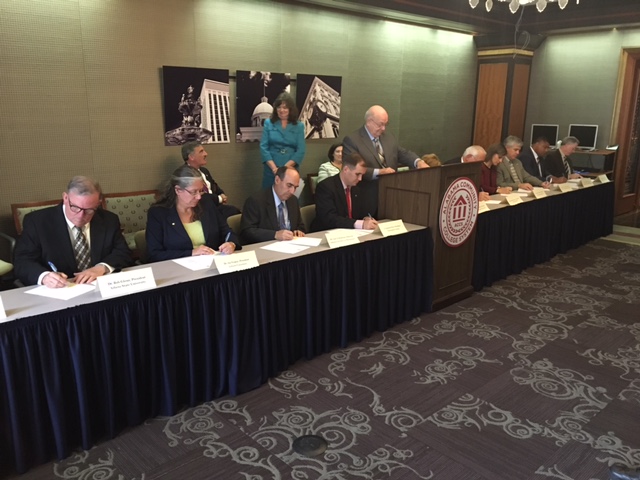
After graduating high school, many students use a community college or another two-year college as a stepping-stone to a four-year college and a bachelor’s degree. Sometimes, after actually transferring to a four-year school, those same students find life gets in the way and they have to leave school before they have the chance to finish the degree, with nothing to show for their hard work except a headache and student loans. But educators in Alabama have a solution to help give credit to these students where credit is due. Officials of the Alabama Community College System (ACCS), public universities across the state, and Huntingdon College gathered Wednesday to announce a new agreement that will allow students to transfer credits from four-year institutions back to a two-year institution in order to complete a degree. “Many people understand that you can take courses at community colleges, transfer those credits to a university, and apply them toward a four-year degree,” said Jimmy Baker, acting chancellor of the ACCS. “Our new agreement makes it possible for students to transfer credits in the other direction, too, helping them to attain a recognized credential they can use in the workplace or as they further their education.” Commonly known as “reverse transfers” this process has been, theoretically, possible for several years at some institutions, but technical difficulties often got in the way. The new agreement was reached with support of the National Student Clearinghouse to ensure a seamless transition for students wishing to go back to community college to complete an associate’s degree. “This agreement exemplifies the way that Alabama’s educational institutions can work together for the greater good,” said Lineville-Republican Sen. Gerald Dial. “It demonstrates our collective commitment to giving our students every opportunity to succeed.” In helping students get degrees from two-year colleges, the reverse transfer agreement will improve completion rates, which is a major objective at all levels of education. Presidents and/or designees from all of the institutions in the Alabama Community College System, every public four-year university, and Huntingdon College signed the agreement. To be eligible for a reverse transfer, students must have earned at least 25 percent of the credits they need for a degree from a community college and have earned at least three semester hours from the four-year institution as part of the overall associate degree requirements.
Community college system hires ‘game-changer’ Jeff Lynn to lead workforce development

The Alabama Community College System (ACCS) announced Wednesday the hiring of Jeff Lynn to lead its workforce development program. Formerly executive director of Louisiana’s LED FastStart, a customized workforce development program, Lynn joined the ACCS on Oct. 3. “Jeff Lynn is the Warren Buffett of workforce development,” said Jimmy Baker, acting chancellor of the Alabama Community College System in a press release. “He is great at what he does, and he is known for getting results. We are thrilled to welcome him to Alabama and eager for him to hit the ground running.” In his new role with the ACCS, Lynn will work with the members of the system as well as private and public employers and regional workforce development councils to ensure the programs offered by Alabama’s community colleges are aligning with what is needed in the workplace. Additionally, he is expected to build “advanced manufacturing training centers” to prepare workers for high-tech jobs across the state. “Workforce development is a multi-tiered collaborative effort,” Lynn explained. “Our success depends on our ability to work together to meet the collective needs of our state — residents who need good jobs, employers who need skilled workers, and communities that need business and industry in order to thrive. We must listen to the needs of our industries and provide world-class workforce solutions.” Though he has spent the last several years in Louisiana, Lynn is a graduate of Auburn University and has earned acclaim for his workforce development programs in Georgia’s Quick Start, part of the Technical College System of Georgia. Having previously worked with companies like Kia Motors, GM, Ford, Honda, Siemens, Toyo Tires North America, Sasol, Northrop Grumman, Lockheed Martin, IBM, GE Capital, and CenturyLink, Lynn is uniquely equipped to assist ACCS in training workers for the types of automotive and aerospace jobs that are becoming more and more plentiful in the Yellowhammer State.
Jimmy Baker appointed acting chancellor of Alabama’s two-year college system
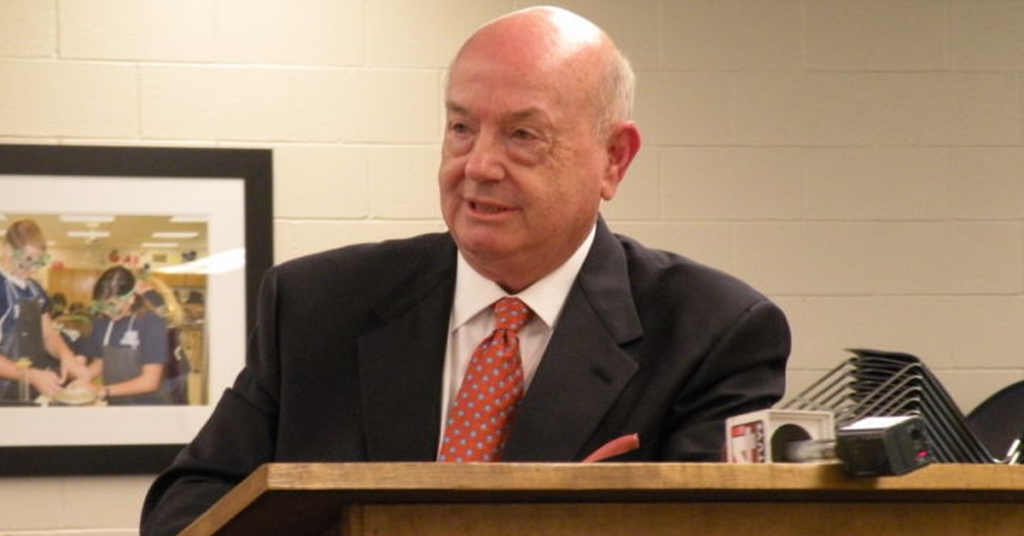
Jimmy Baker has been appointed acting chancellor of the Alabama Community College System. Baker’s promotion from chief of staff to chancellor is only temporary and comes in the wake of Chancellor Mark Heinrich‘s request for a leave of absence to be treated for shingles. “My prognosis for a full recovery is yet to be determined and no time frame for my return can currently be medically determined,” Heinrich wrote in the letter Tuesday. “At this time, the combination of the medication therapy and the symptoms of this severe health condition have simply rendered me incapable of performing my duties and responsibilities as chancellor.” The state’s two-year system’s board of trustees approved the leave request and promotion during a meeting at John C. Calhoun Community College in Tanner on Wednesday. “During his absence, and through these weeks, there have been so many situations that have come up this week that are too important not to be handled properly by the office of the system,” said board of trustees’ vice president Al Thompson. “We hope this will be short term, but I think it’s very necessary to provide proper leadership.”
Alabama legislative agenda preview: Feb. 2 – Feb. 5, 2016

With the first day of Alabama’s Legislative Session about to get under way, legislators have a slew of hefty proposals before them, including bills concerning a state lottery, gun laws, a teacher pay raise, and the always daunting task of balancing the state budget. Legislators will hear from the Alabama Community College System Tuesday for another round of Education Trust Fund Budget concerns. Legislators will also hear from the Legislative Fiscal Office and Finance Department before the start of Tuesday’s 2016 Session. Legislators will hear from a variety of committees on Wednesday, starting with the Senate Judiciary Committee at 9 a.m. Later that day, legislators will hear from the Agriculture, Forestry and Conservation Committee to discuss Senate Bill 58, sponsored by Sen. Tom Whatley (R-Auburn). The bill would specify that the regulation of seeds would be overseen by the Board of Agriculture and Industries and the Commissioner of Agriculture and Industries. The committee would also discuss Senate Bill 62, also sponsored by Whatley, which would authorize the use of bait in the hunting of whitetail deer and feral swine. The Education Policy Committee will also address legislators on Wednesday to discuss Senate Bill 60, sponsored by Sen. Rusty Glover (R-Mobile), which would terminate Common Core curriculum and have the state revert back to “prior courses of study.” Legislators are also scheduled to hear from the Senate Committee on Finance and Taxation Education on Wednesday, though the topics of discussion were unavailable.
Alabama community colleges to seek funding hike

An electronics instructor at Northwest-Shoals Community College recently retired. One of his former students who works in private industry in Huntsville applied for the teaching position. “He would have had to take a $50,000 pay cut,” Northwest-Shoals President Humphrey Lee said. The man didn’t take the job and the school has “put a patch on” the position, getting other instructors to fill in until, hopefully, more money is available. Struggles to recruit and keep instructors for high-tech programs were highlighted in last week’s Alabama Community College System’s board meeting. It’s also part of the reason why the board is asking for a nearly 25 percent increase in funding in 2017. “We are literally losing our faculty members at two or three a month because they can go to (private industry) at $30,000 or $40,000 a year more,” said Mark Heinrich, chancellor of the 25-school system. Klauber said finding welding instructors is a challenge. “You’re never going to be able to keep up with what some of the top-end welders make (in the private sector),” he said. “But we at least need to be competitive enough to make the argument that it’s worth it to teach. “At this point, I can’t even make that argument.” Because salaries are based on a state-set scale, individual colleges don’t have the flexibility to pay instructors more. The Alabama Community College System board approved a request for $428.6 million in state funding for the next fiscal year. Lawmakers begin the 2016 Legislative session and budget-making process Feb. 2. The board is requesting: $2 million to “provide supplements to instructors in high-wage, high-demand technical fields of study to aid in recruitment and retention.” $1.5 million for increased health and retirement benefits costs. $35.8 million to initiate a 10 percent cost-of-living adjustment, including associated fringe benefits. $50 million for facility renovations and upgrades to instructional equipment. Community college faculty and staff haven’t received a cost-of-living raise since 2007, Heinrich said. “We’re just not very competitive anymore, and we desperately need a correction on that,” he said. Lee said in some cases, K-12 salaries are higher than what community colleges offer. While officials do expect there to be more money available for education in the 2017 budget, it will be divided between community colleges, K-12 and four-year universities. Sen. Trip Pittman, R-Daphne, who is switching from chairing the Senate Education Budget committee to the General Fund committee, called the 25 percent funding increase “optimistic,” and said agencies often ask for more than they know they’ll receive. About possible cost-of-living raises, Pittman said lawmakers will find out during the session if those are possible for educators in the state. “If there is one, I think the two-year schools should be a part of it,” he said. They weren’t included in the most recent raise for K-12 teachers. Lee said the colleges must lay out their needs, which also include repairs for buildings that are more than 50 years old. “What’s the saying, ‘You have not because you ask not.’ So, we’re asking,” Lee said. Republished with permission of the Associated Press.
William Canary, Jimmy Parnell: Alabama agriculture and Alabama business promote skilled worker training, tax credits

The Business Council of Alabama and the Alabama Farmers Federation are teaming up to encourage support for the new Career-Technical Dual Enrollment Program with tax credits for scholarships for eligible high school students who enroll in college-level career-tech courses at Alabama community colleges. The benefits include well-trained employees for business, agribusiness, agri-science, manufacturing, production, automotive assembly, mechanical production, and other highly skilled vocations. While contributions to two-year colleges have been tax deductible, for the first time contributions are also eligible for a tax credit in the calendar year of the donation. The BCA and ALFA support the Alabama Future Workforce Initiative career-technical dual-enrollment program that provides an opportunity for high school students to earn both high school and college credits for approved courses at 23 Alabama community colleges. Donations support scholarships for tuition, fees, books, and supplies. It’s an excellent way for business to help Alabama’s future workforce get a head start on a skilled career and contribute to an employer’s success. Students can enroll in nearly 100 high-wage, high-demand programs such as manufacturing, welding, allied health, diesel mechanics, construction, aviation maintenance, advanced manufacturing technology, and industrial engineering, skilled occupations that are useful on the farm and in manufacturing, production, and service industries. This year the Legislature appropriated $10.2 million for dual enrollment scholarships for students who attend public, private, parochial or church schools, and home schools. But this is the first year that businesses and individuals have been able to add to the appropriation with donations. Business and personal contributions can be earmarked for a program at eligible two-year schools through the Alabama Community College System. Contributions eligible for a tax credit of up to 50 percent of the donation. What better way to help create a skilled employee and help Alabama’s standard of living by donating to the career-tech, dual-enrollment program through the Alabama Community College System. William J. Canary is president and CEO of the Business Council of Alabama, the state’s foremost voice for business. Jimmy Parnell is president of the Alabama Farmers Federation, the voice of Alabama agriculture since 1921, and president of ALFA Insurance.
