
State launches summer literacy pilot program to prevent dreaded ‘summer slide’

Earlier this year, Gov. Kay Ivey announced the addition of the Alabama Summer Achievement Program (ASAP) to her already thriving “Strong Start, Strong Finish” initiative in effort to prevent the backsliding that often occurs over the summer for children in low-income families. Children can fall behind an average of two months in reading and math during the summer, in what is known as the summer slide, and these learning losses are cumulative. Summer learning programs are a proven, critical tool for reducing the achievement gap between low-income students and their more affluent peers. Children with access to books over the summer see significantly higher gains in reading abilities from spring to fall. The program will ensure that students who are reading below grade proficiency in grades 1-3 will have a chance to catch up over the summer through a six week program. On Thursday, Ivey, in conjunction with Montgomery Public Schools, the Alabama Department of Early Childhood Education, the Alabama State Department of Education, and the Alabama Reading Initiative announced the pilot of ASAP at four local Montgomery public schools: Dannelly, Fitzpatrick, Highland Avenue, and E.D. Nixon elementary schools. Under the direction of the Alabama Reading Initiative and with support from the Alabama Department of Early Childhood Education, ASAP will provide students entering kindergarten through fourth grade more than seventy hours of reading and literacy instruction over six weeks. “Too many children lose ground academically over the summer months. Without access to the enriching activities available to more affluent peers, research shows that children from low-income families lose as much as three months of reading comprehension skills over the summer,” Ivey said. “Studies show that summer learning programs can produce statistically significant gains in reading performance.” Program details This highly structured research-based initiative will be taught by qualified, effective pre-K and elementary teachers, reading coaches and literacy specialists. The program will run from June 11 through July 24 from 8:00 a.m. to 12:00 p.m., Monday through Friday. Breakfast and lunch will be provided at no cost, and bus transportation will also be provided to children attending their zoned school location. Each school will also be served by a principal, site coordinator, nurse, secretary, custodian and security guard. Teachers will provide developmentally appropriate, project based learning experiences to enhance children’s early literacy abilities and foster a love of learning. Teachers, coaches, and specialists will also receive quality professional development and onsite support, including training in social-emotional learning. Additionally, children will be actively engaged in developmentally appropriate: Whole group literacy instruction: oral language, vocabulary, listening comprehension Small group reading instruction: phonemic awareness, phonics, fluency Independent reading practice: reading comprehension, reading/writing workshop Handwriting and spelling instruction One-on-one reading intervention: differentiated reading instruction Support for the program Governor Ivey strongly supported funding increases for the Alabama Reading Initiative, State Department of Education, and Department of Early Childhood Education in the 2019 Education Trust Fund budget. The 2019 Education Trust Fund is the largest investment in education in a decade. “Research shows that children who participate in Alabama First Class Pre-K are better prepared for school,” Early Childhood Education Secretary Jeana Ross said. “We are proud to collaborate with Montgomery Public Schools and the State Department of Education to provide the nation’s highest quality pre-K experience to children who have not had this opportunity, working together to ensure more of Montgomery’s children are school ready.” Children who are eligible to attend Kindergarten in the 2018-2019 school year, whether they did or did not attend pre-K or Head Start, are encouraged to apply for First Class Pre-K with ASAP this summer. “Governor Ivey’s ‘Strong Start, Strong Finish’ education initiative is a smart, comprehensive approach to improving student achievement. A key component of that initiative, the Alabama Summer Achievement Program, addresses some very real circumstances that negatively impact some of our most vulnerable communities,” added State Superintendent Eric Mackey. “Much needed summertime learning opportunities are a ‘win-win’ for all involved. We should take advantage of any opportunity to help even the playing field, and give our students the support they need to succeed academically.” Registration for ASAP is now online. Participation is limited. Those interested sign-up here “ASAP.”
Women of Influence: Department of Early Childhood Education Secretary Jeana Ross
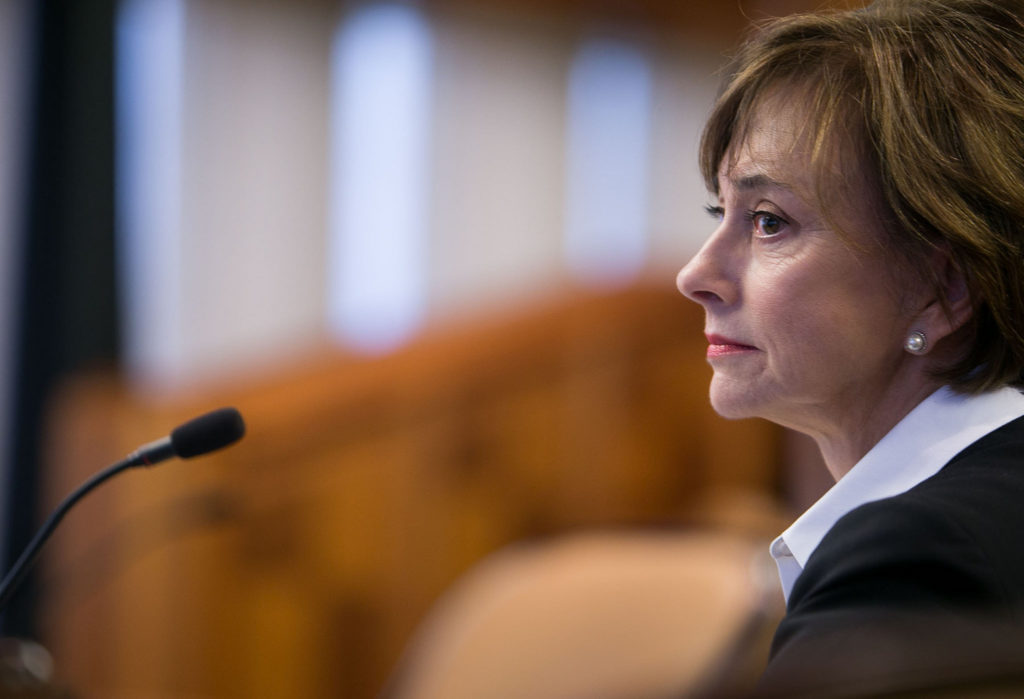
Few women in education have worked as long, and as hard to advance the education of young children in Alabama as Jeana Ross. A Guntersville native, Ross earned her Bachelors degree in Early Childhood Education from the University of Alabama in Birmingham, and her Master’s in educational leadership from the University of Alabama. She began her career in the Jackson County school system in 1975, teaching second and third grades. From there, she taught in the Guntersville education system, continuing her work with children in kindergarten through the third grade, and became one of the first kindergarten teachers in Alabama Public Schools, a full-day program. “My love for children’s curiosity and delight of discovery created a strong desire to always participate in and facilitate the pure joy of learning,” Ross told the U.S. Department of Education in an interview. When she started her own family, Ross chose to take a break from her career, and focussed on raising her two sons. In 1997 she jumped back in to the workforce, full speed ahead. Starting back as a preschool teacher, Ross was given the opportunity to write school readiness standards for the Marshall County school district. With her focus now turned on developing other children throughout the state; she quickly advanced to a leadership position, coaching pre-k teachers, and building pre-k programs in school systems across the state. In 2008 she became the Director for Educational Services in the Boaz City School Systems, implementing and evaluating Early childhood education programs. From 2010-2011 she served as the Assistant Principal at Madison City Schools, until she was appointed by then Governor Robert Bentley to lead the Alabama Department of Early Childhood Education. Through Ross’s leadership, the department has made leaps and bounds. Turning the state’s fragmented early childhood education programs into award winning, nationally recognized curriculums. Under her watchful eye, the program has experienced the most growth in its history; growing from 211 classrooms to more than 900 classrooms located in all 67 counties in the state. Her department has also been responsible for writing and receiving over $100 million in federal grant awards for education. The program has also received national recognition, with Alabama being one of only four states in the nation to be recognized by the National Institute for Early Education Research (NIEER) for meeting all 10 of the NIEER quality benchmarks. As a member of Governor Kay Ivey‘s cabinet, she is also a leader of the Children’s Policy Council, the Children First Trust Fund, and the Head Start Collaboration Office, and a founding member of the Office of School Readiness Advisory Board and Evaluation Task Force. Ross has always held a special interest, and love for children from low-income and has secured over $7.5 million in grant funds over the course of her career to offer quality services to low income and at-risk children and families. Through her efforts, the Alabama Department of Early Childhood Education has experienced tremendous growth, in numbers, and in the quality of the programs offered. Ross is an expert leader and educator, spending over two decades advancing the Alabama education system, and improving the lives of the children she encountered along the way. In spite of her busy schedule, Ross was kind enough to take some time, and answer some of Alabama Today’s questions on her life, work, and influences. How have other women influenced your success? I have been greatly influenced by the effort of devoted educators, many of whom are women, who work regardless of pay or recognition every day to teach children and champion their right to reach their greatest potential. These women are examples of selflessness and responsiveness that provides children powerful opportunities to find purpose and experience success that impacts their entire life through an excellent education. An incredible mother and two dear grandmothers, true examples of graciousness, humility, love and determination continue to inspire me. What shaped your desire to work in education, and then in government? A love for a child’s curiosity and delight of discovery created a strong desire to always participate in this pure joy of learning and to protect it as much as possible. What has been your favorite area of service, and what is your favorite thing about that position? My opportunity for service from the first was centered around early learning and has remained my favorite area of concentration. The first five years are the most important in a child’s development. It is during these years that a foundation is established that shapes a child’s future health, skills and abilities. A position at the state level that enables me to be part of an amazing team of experts that with great energy and enthusiasm effect change and creates a system of support for the early years is a much-appreciated responsibility. Have you read any books that have shaped your perspective on life? The Bible is the book that has most shaped my perspective on life. It has given me understanding of purpose, knowledge of truth and acceptance of my limitations. It provides guidance and strength to continually improve and persevere in serving others. What advice would you give to young women who want to pursue careers as educators, or serve in state government? Surround yourself with positive and innovative people that value authentic collaboration and strategic risk-taking. Never under estimate the power of communication and honesty. How do you spend your (rare) free time? During rare free time, I enjoy entertaining, gardening and reading and most of all being with family.
Alabama to add 107 new First Class Pre-K classrooms in 2018-2019 school year

The Alabama Department of Early Childhood Education and Governor Kay Ivey on Monday announced the state’s First Class Pre-K program will add 107 classrooms to 33 counties this fall. The new classrooms will expand access to Alabama’s high-quality, voluntary pre-kindergarten program to 18,864 children in the 2018-2019 school year, with more than 1,040 classrooms in all 67 counties that will serve 32 percent of eligible four-year-olds statewide. “Having a strong start to one’s educational journey is critical to having a strong finish when it comes time to enter the workforce,” said Ivey. “Alabama’s voluntary First Class Pre-K program is, without question, the best in the nation. I am proud that we can increase the reach of this important educational opportunity, and I look forward to continuing to work with the Legislature to further expand the availability of voluntary Pre-K.” This year the Alabama Legislature approved an $18.5 million expansion for First Class Pre-K, increasing the 2019 program budget to $96 million. This is the program’s largest ever single-year increase. In addition to funding new classrooms throughout the state, the Department of Early Childhood Education will continue to ensure pay parity for all First Class Pre-K teachers with the same 2.5% cost of living raise as K-12 public school teachers in the upcoming school year. Monday’s announcement comes one week after Alabama First Class Pre-K was recognized by the National Institute for Early Education Research for having the highest-quality, state-funded voluntary pre-k program in the nation. “First Class Pre-K is a nationally-recognized program of excellence,” said Jeana Ross, Secretary of Early Childhood Education. “The program framework encompasses all aspects of the highest quality early learning experiences that ensure school readiness for children, and this emphasis on quality impacts student outcomes far beyond kindergarten.” Despite the additions, there are still 39,453 eligible Alabama children who do not have access to First Class Pre-K. A list of all classrooms can be found at: https://children.alabama.gov/parents-families/findprek/
New study finds First Class Pre-K attendees more advanced than peers
A new study released on Tuesday, on behalf of the Alabama Department of Early Childhood Education found children in Alabama who voluntarily participated in the First Class Pre-K program are more likely to be competent in reading and math than their peers. “These findings prove that what we are doing in Alabama is working. Our First Class Pre-K program is second to none and our students are benefitting,” said Gov. Kay Ivey. “Now we must work to take the methods of instruction in Pre-K and implement them into kindergarten, first, second and third grade classrooms. Success breeds success and a strong educational foundation is the basis for the success of all Alabamians in the future.” The study also concluded that the program was notably effective with minority students and students from low-income families. “The latest analysis of the First Class Pre-K program provides the clearest evidence to-date that participation in Alabama’s high-quality, voluntary First Class Pre-K program is helping students succeed throughout their time in school, what is most exciting about this report is how the lessons learned in Alabama’s First Class Pre-K are persistent in every grade and in every race and ethnic group, with the most profound impact demonstrated by some of the state’s most vulnerable children,” added secretary of the Alabama Department of Early Childhood Education, Jeana Ross. The study, titled “Achievement Gap Closure and Gains Associated with Alabama’s First Class Pre-K,” was conducted by the University of Alabama at Birmingham and the Public Affairs Research Council of Alabama. The research team also observed that attendance in Alabama’s First Class Pre-K program: Narrowed the gap in reading proficiency by 28 percent for all children in poverty; 32 percent for White children in poverty; 31 percent for Hispanic children in poverty; and, 26 percent for Black children in poverty. Narrowed the gap in math proficiency by 57 percent for all children in poverty; 71 percent for Hispanic children in poverty; and, 37 percent for Black children in poverty. Increased reading proficiency for children in poverty by 12 percent overall; 25 percent for Hispanic children in poverty; 23 percent for Black children in poverty; and, 3 percent for White children in poverty. Increased math proficiency for children in poverty by 13 percent overall; 17 percent for Hispanic children in poverty; 16 percent for Black children in poverty; and, 10 percent for White children in poverty. The Alabama First Class Pre-K program is located in 941 classrooms across the state. The National Institute for Early Education Research has named the program the nation’s highest quality pre-k program for the past eleven years.
Three Alabama women receive prestigious early childhood mental health endorsement
Thursday, Joy Winchester, Nicole Harrington-Ryans and Christal Coker were given the honor of being some of the first early childhood education professionals in the nation to earn an Early Childhood Mental Health Endorsement (ECMH-E). These three Alabama women received the endorsement for their special insight and expertise concerning infant and early childhood mental health principles, and their ability to apply this knowledge to their work with families and children within the state. First 5 Alabama is currently one of only four state associations in the United States that offer the ECMH-E. Including the three Alabama specialists earning this endorsement this year, only eleven professionals in the nation have received the endorsement. Originally organized in 2017, First 5 Alabama endeavors to provide training opportunities to individuals who care for children and families from birth through age five. “First 5 Alabama is proud of the accomplishments of our recent endorsed professionals,” stated Betsy Prince, the chair of First 5 Alabama. “Their outstanding work and the work of the Association stands to enhance programs of care, intervention and prevention of mental impairments in infancy and early childhood.” The endorsement is only granted through proper documentation and verification of the required education, in-service training, work, and reflective supervision experiences. More about each of the women: Joy Winchester lives in Montgomery, Ala. and is the current Coordinator for Early Learning Best Practice with the Alabama Department of Early Childhood Education supporting the Alabama Voluntary Pre-k classrooms statewide. Winchester has spent twenty-four years in the field of early childhood education and has served in numerous positions from assistant teacher to director in a variety of classrooms. She now serves the Alabama Department of Early Childhood Education supporting teachers with methods for building a strong resilient classrooms, challenging behaviors, dual language learner support and advocates the importance of high quality early childhood education. Nicole Harrington-Ryans lives in Tuscaloosa, Ala. and serves children and families as the Disabilities Coordinator for Head Start Community Service Programs of West AL. Mrs. Ryans has provided mental health procedures and techniques for over 11 years for those who have received services from Head Start, Early Head Start, and Early Intervention. Mrs. Ryans looks forward to her continued education as a Mental Health Consultant. Christal Coker lives in Mobile, Ala. and is a family and community engagement specialist with the B.E.S.T. Early Head Start program. She holds an Educational Specialist degree from Mississippi State University, a Masters degree in Child and Family Studies from the University of Southern Mississippi, and a Bachelors of Arts from Mississippi University for Women. Ms. Coker has been assisting children birth to six years of age and their families for seven years and has worked in various mental health and child advocacy settings.
Alabama receives $6.6 million grant to support early childhood learning program
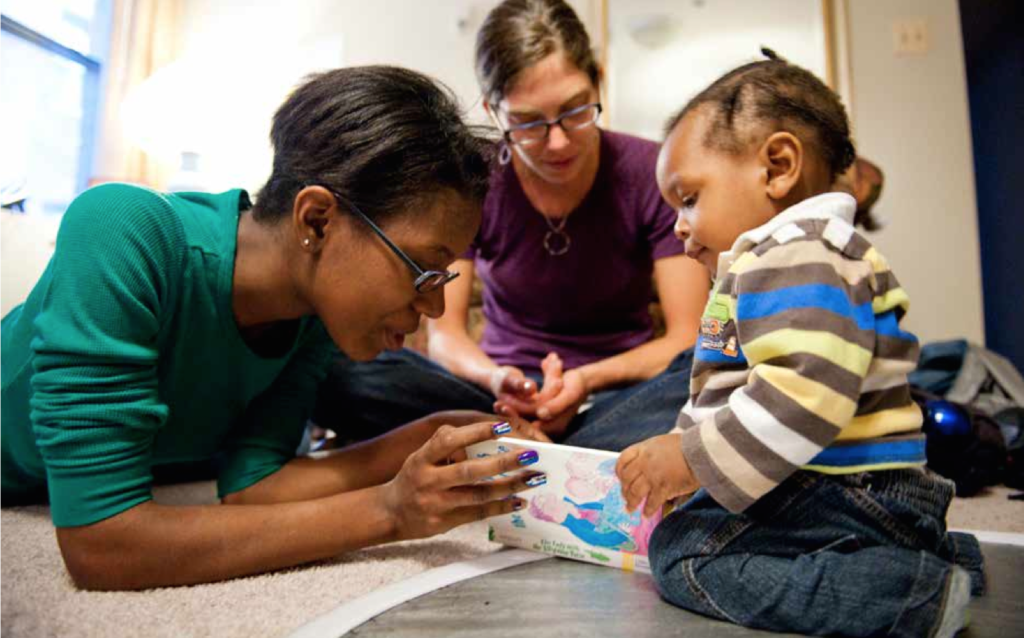
Pregnant women and families — particularly those considered at-risk — in the Yellowhammer State will continue to reap the benefits of a federal program that provides necessary resources and skills to raise children who are physically, socially, and emotionally healthy and ready to learn, thanks to a newly awarded grant. The State of Alabama was awarded a $6,593,481 federal grant this month to continue to provide voluntary, evidence-based Home Visiting services through the Maternal, Infant, and Early Childhood Home Visiting (MIECHV) program. The MIECHV program funds scheduled visits by nurses and other health workers to help at-risk new parents and families with health, education, and parenting problems. The visits have been tied to improved academic outcomes for children, better economic opportunities for families, as well as a decline in child abuse. Ahrough its First Teacher Home Visiting program, the Alabama Department of Early Childhood Education allocates MIECHV funding to eligible Home Visiting programs that provide support to parents with young children up to kindergarten entry. Currently, MIECHV supports Home Visiting services for more than 1,500 families in 43 counties across the state. These families are enrolled in one of three early learning Home Visiting programs, Home Instruction for Parents of Preschool Youngsters (HIPPY), Parents as Teachers or Nurse Family Partnership. “Home Visiting programs have played an essential role in helping families across the state learn how to be more engaged in their child’s life during their child’s critical early years,” said Jeana Ross, the secretary of the Alabama Department of Early Childhood Education. “This grant will help ensure that more Alabama families will be able to receive developmentally appropriate resources and support in their own homes to help them provide more early learning opportunities for their children.” Click here to see a map of First Teacher Home Visiting sites in Alabama.
7 Alabama schools chosen to pilot early education program

Alabama is launching a pilot program to help improve student success by aligning effective teaching strategies and improving collaboration among educators , Governor Kay Ivey announced on Monday. “A strong start in the early years of a child’s education ensures a strong finish in their later educational endeavors. Whether a student will find success in school and the workforce is traditionally evidenced in their performance by third grade,” Ivey said. Five Alabama school systems, with a total of seven individual schools, will serve as pilots for the Alabama Pre-K-through-Third-Grade Integrated Approach to Early Learning program. The selected schools are: Barkley Bridge Elementary School (Morgan County) Kinston Elementary School (Coffee County) New Brockton Elementary School (Coffee County) Pleasant Grove Elementary School (Cleburne County) Skyline School (Jackson County) Wetumpka Elementary School (Elmore County) Zion Chapel School (Coffee County) The new program is a joint partnership between the Alabama Department of Early Childhood Education and the Alabama State Department of Education. Each participating school will receive a $15,000 grant for each classroom to purchase age-appropriate classroom materials and improve early learning experiences. Based on research from Harvard University, the University of Washington and others, the program creates a structure for aligning and coordinating academic standards, instructional practices, professional development and developmentally appropriate classroom assessments from pre-k to the third grade. “Children have the most potential for growth from pre-K to third grade, and we are delighted to partner with the Alabama State Department of Education to create new opportunities for local schools to support students during their critical early years of learnings,” commented Jeana Ross, Secretary of the Department of Early Childhood Education. “This approach to early learning combines best practices from our programs to better support strong teaching, student achievement and student success for all students.” Schools participating in the program will also gain access to early childhood education specialists who will help pre-k to third grade teachers implement evidence-based instructional practices. “If we haven’t given our students a strong learning foothold by the third grade, they will be fighting an uphill battle for the rest of their educational careers; this program addresses that truth head-on,” Ivey concluded.
Bentley Administration announces creation of Children’s Cabinet
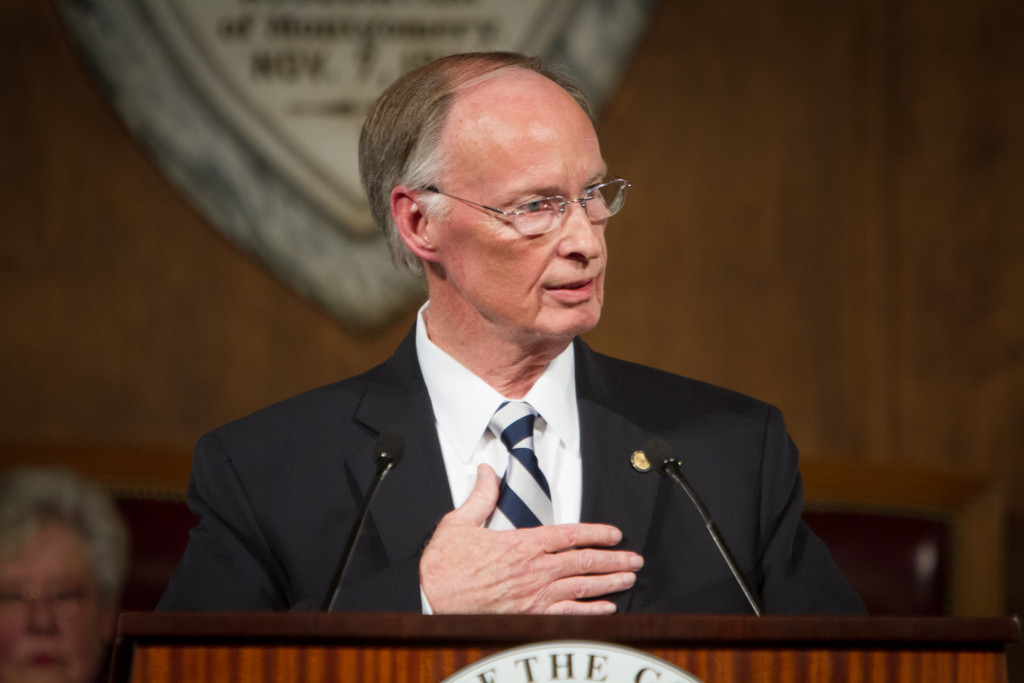
Alabama Governor Robert Bentley announced Tuesday afternoon the creation of the Alabama Children’s Cabinet. The Cabinet will include members of existing state agencies who will work together to “maximize efficiency in the use of state resources, reduce duplication of services and create a greater return of state tax dollars,” according to a press release from the governor’s office announcing the new body. “Alabama’s children are our future, and we must ensure that their needs are being met just as we do with adults,” said Bentley at the announcement of the Cabinet’s creation. “Whether it is education, health care, nutrition programs, or other needs, children need someone to advocate for what is best for them. We have put together a great group of individuals, already working hard on children’s issues, that has the knowledge and experience necessary to improve the lives of the children of Alabama. The Children’s Cabinet will be an important group dedicated to Alabama’s children” This group will work to develop measures of accountability to improve effectiveness in achieving positive outcomes for children. — Gov. Robert Bentley (@GovernorBentley) April 12, 2016 We’ve put together a great group of individuals that have the knowledge & experience necessary to improve the lives of Alabama children. — Gov. Robert Bentley (@GovernorBentley) April 12, 2016 The Cabinet will consist of the director, or an appointed delegate from the State Department of Education, Alabama Department of Human Resources, Alabama Medicaid Agency, Alabama Department of Public Health, Alabama Department of Mental Health, Alabama Department of Early Childhood Education, Alabama Department of Youth Services, Alabama Department of Rehabilitation Services, Alabama Department of Child Abuse and Neglect Prevention, and the Governor’s Office of Minority Affairs. The Cabinet, created by Executive Order 17, is created effective immediately, and must meet monthly, and is given authority to develop its own rules. According to the governor’s office, the members of the Children’s Cabinet will receive no additional compensation for the position.
Pre-K advocates call for additional $20 million in funding
The Alabama School Readiness Alliance Pre-K Task Force (ASRA) has released its 2016 legislative request for First Class Pre-K funding. The increase would nudge the state’s funding for its “high-quality, voluntary pre-kindergarten” program from $48.5 million to $68.5 million, with a goal to have the program fully funded by 2020. According to a news release, only 20 percent of Alabama’s 4-year-olds have access to the First Class program and the increase in funding would provide an additional 210 classrooms and help to enroll about 3,800 additional students. “We still have a long-way to go before every family that chooses to enroll their child in the state’s high-quality, voluntary First Class Pre-K program will have an opportunity to do so,” Mike Luce, vice chairman of Harbert Management and a co-chairman of ASRA’s Pre-K Task Force, said in the release. “Alabama’s economy is improving and new revenue is expected to be available to fund education priorities. We encourage lawmakers to appropriate some of this increased revenue into expanding access to First Class Pre-K program.” The task force consists of 51 members, all prominent leaders from the business, education, civic, medical, legal, philanthropic, military and child advocacy communities, and first proposed expanding access to Pre-K programs in 2012. Now entering the fourth year of a 10-year campaign to incrementally increase funding until the program is fully funded, the state must appropriate the additional funding if it is going to meet the task force’s target. Last year, the First Class Pre-K system received an increase in funding of $10 million to bring its total funding to $48.5 million. The increase allowed the program to 6 percent more four-year-old students. Further, Gov. Robert Bentley announced more than 200 grants for the program last year, allowing it to reach an additional 3,600 students. A priority of the Bentley administration has been to ensure that all students have access to the program by 2019. Currently, there are no bills slated to come before the legislature addressing Alabama’s Pre-K programs. Alabama’s First Class Pre-K program is managed by the Alabama Department of Early Childhood Education and has been ranked No. 1 in the country for quality by the National Institute for Early Education Research, despite only 20 percent of eligible children having access to the program. The entire recommendation can be viewed at alabamaschoolreadiness.org/recommendations.
