
J. Pepper Bryars: I earn a six-figure income, so why did the government just give me $750 in food stamps?

Two of my children recently received something in the mail called a Pandemic Electronic Benefit Transfer debit card, known as a P-EBT, each loaded with $375. The accompanying letter explained that the money was for school children in grades K-12 who were enrolled in the National School Lunch Program — free and reduced lunch — during the 2020-2021 school year but who missed those meals while schools were closed due to COVID-19. But here’s the problem: my income exceeds the eligibility ceiling for such a thing, and even so, my children weren’t actually enrolled in the program during the 2020-2021 academic year… because they weren’t even enrolled in public schools at all! They attended a private school, and we packed or paid for their lunches ourselves. I smelled the stench of government waste, followed it back to its source, and this is what I found: In early May of 2020, P-EBT cards began being mailed to thousands of eligible students in Alabama, according to a news release from the Alabama Department of Human Resources, which oversees the distribution of the cards with assistance from the Alabama Department of Education. The state announced last April that a second round of benefits would be issued, and advisories posted in June, August, and December stated additional funds would be distributed across the state. A spokesman for the Alabama Department of Human Resources told me that 460,958 students received more than $144,279,786 in benefits for the 2019-2020 school year. For the following school year, 2020-2021, he said that 477,172 students were issued $326,682,316 in benefits, and when the summer months were added, the total for the year increased to 503,040 students and $507,913,066 in funds. That’s a little more than $652 million in benefits distributed across 19 months. So how did $750 of that end up in my mailbox? Records provided by the Department of Human Resources show that Conduent State & Local Services of Washington, D.C., was issued a contract to manage distribution of the cards. While records show various costs for the contract, past, and potential, the department’s spokesman told me that it cost approximately $11 million to distribute the cards. But the data — the actual names of those who are eligible and the amount of the financial benefit they should receive — came from the Alabama Department of Education. Now, remember back to the spring and summer of 2020. We didn’t know how bad the pandemic was, how long it would last, and what we needed to prepare for. People were hoarding toilet paper. It was crazy out there. And against that backdrop, school officials were trying to not only get meals to those who had already signed up for the free and reduced lunch program but the thousands more who signed up since the pandemic began. I spoke with the director of the Alabama Department of Education’s Child Nutrition Program and the department’s spokesman. They both described a chaotic and confusing process of collecting and sorting through those existing and incoming accounts while at the same time navigating the process of moving to a new student data management system. Records show that during the 2020-2021 school year, 347,663 students in Alabama’s public schools were enrolled in the free and reduced lunch program. But as the Department of Human Resources spokesman stated, 477,172 students were provided with P-EBT benefits for that year, and a total of 503,040 when you count the summer. That’s a pretty big difference, somewhere between 129,509 and 155,337 students. And if each of those received the $375 that my children did (which all depends on how long each student’s school was closed), that’d be anywhere between $48 million and $58 million. Officials said that some of the difference can be explained by counting the private schools that are enrolled in the free and reduced priced lunch program, residential childcare institutions, and those who were added to the program during the effort to provide meals to families during the pandemic, though all were still required to meet eligibility requirements. It’s just not clear what those numbers are, precisely. It was a “pretty messy situation” the Alabama Department of Education’s spokesman said, while the department’s Child Nutrition Program director said some of the numbers required “finagling.” To be charitable, that was a sign of the times in 2020. People did their best with the challenges they faced and the resources and information they had. Elaine Waxman, a senior fellow at the Urban Institute, studied the national program and explained in a Washington Post story that states were faced with a massive knowledge management problem. “Centralized databases for this kind of information were very uncommon, and departments of education were not set up to collect and monitor these types of data,” Waxman said. I cut through my P-EBT cards with a pair of scissors and mailed them back to the distributor with a note explaining that my children weren’t eligible. The spokesman for the Alabama Department of Education said he hoped others in my shoes would do the same. While I share his hope, I’m not very confident about that, especially since the total at the grocery store check-out has increased 7.5% due to inflation in the last year alone. One of the arguments conservatives make against big government programs is that they’re simply too big for anyone to manage properly — regardless of their experience, resources, or intent. You can add the P-EBT program to the long line of evidence for that argument. Still, the federal government has extended the program, and state officials told me that they’re currently exploring the option, though no decision has been made. First, the program should be paused, if not stopped altogether. The list of eligible students from 2020-2021 cannot be trusted as the basis to distribute so much money. Secondly, the solution to feeding students who are enrolled in the free and reduced lunch program is to KEEP SCHOOLS OPEN. We can forgive the mistakes of the past, especially since it was a crisis. But education is supposed to be about learning. And we can start by learning
Health officials recommend all Alabama students wear masks

Alabama public health officials are recommending that all students and teachers wear masks in the classroom because of a surge in COVID-19 cases, a spokesperson said Wednesday. The Alabama Department of Public Health will recommend universal masking in schools due to the high levels of COVID-19 in the state, department spokesperson Ryan Easterling said. The recommendation will be included in the “school toolkit,” suggesting guidelines to mitigate pandemic risk. “Schools can choose to follow guidelines or not. However, these guidelines represent the best evidence available to protect students, teachers, and staff by reducing the transmission of COVID-19, along with disease, potential hospitalization, and risk of death from this virus,” Easterling wrote in an email. The U.S. Centers for Disease Control and Prevention on Tuesday recommended indoor masks for all teachers, staff, students, and visitors at schools nationwide, regardless of vaccination status. The recommendation comes amid a sharp uptick in COVID-19 fueled by the highly contagious delta variant of the virus. Some Alabama school systems have announced they will require students and teachers to wear face masks indoors following new federal guidelines to curb the spread of COVID-19. The Birmingham, Huntsville, Bessemer, and Opelika school systems are among those that have said that masks will be required indoors. A spokesperson for the Alabama Department of Education said Tuesday that mask mandates will be a local decision unless they get specific new guidance from state officials. “Due to the upward trend of COVID transmission and the current local positivity rate, this decision is in the best interest of our students and staff at this time,” Opelika City Schools Superintendent Mark Neighbors said in a statement. However, state education officials so far are not requiring face coverings. “For the coming school year, face masks are not mandated in Alabama schools. That will remain the case unless there is specific guidance from the Alabama Department of Public Health (ADPH) to suggest otherwise,” spokesperson Michael Sibley said Tuesday. “However, local superintendents and school boards can determine for themselves if they want to enforce masking. That would be a local decision.” State Health Officer Scott Harris said earlier this week that the state was waiting for the new CDC guidance before issuing their recommendations to school systems. “The issue of masks in schools is like everything else — highly controversial. They really shouldn’t be,” Harris said. A spokesperson for Alabama Gov. Kay Ivey last week told reporters that she was opposed to requiring masks in schools. Her office has not commented on the new CDC guidelines, but in an opinion piece published Tuesday by The Washington Post, Ivey promoted vaccinations over masks and distance learning. “Here is the truth: Closing businesses will not defeat covid-19. Wearing masks will not defeat covid-19. And keeping our students from in-classroom learning will not defeat covid-19,” Ivey wrote. Alabama has seen a sharp increase in the number of COVID-19 cases. The number of people in state hospitals has risen to more than 1,000, the most the state has seen since winter when there were 3,000 people hospitalized at the pandemic’s peak. Republished with the permission of the Associated Press.
Alabama wants more money for school security, transportation, nurses
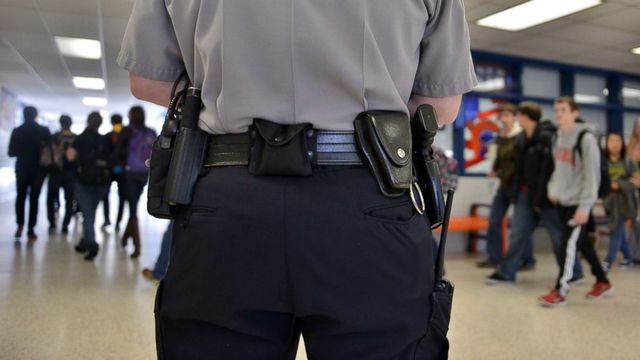
The Alabama Department of Education wants more money for school security and other programs next year. The Montgomery Advertiser reported that State Schools Superintendent Eric Mackey said Thursday he wants more money for reading and math programs, as well as for pre-kindergarten special education. Mackey said additional funding is also needed for transportation and school nurses. Mackey told the state board of education that the $30 million for school nurses would not add one nurse in Alabama. He said state funding for the nurses would free up local money for other programs. Mackey has not put together a formal budget request yet. He says the proposals came from priorities recommended by school board members and superintendents. The legislature reconvenes in March and will consider a new education budget. Republished with permission from the Associated Press.
Montgomery’s Zestlan Simmons named 2018 Alabama Teacher of the Year
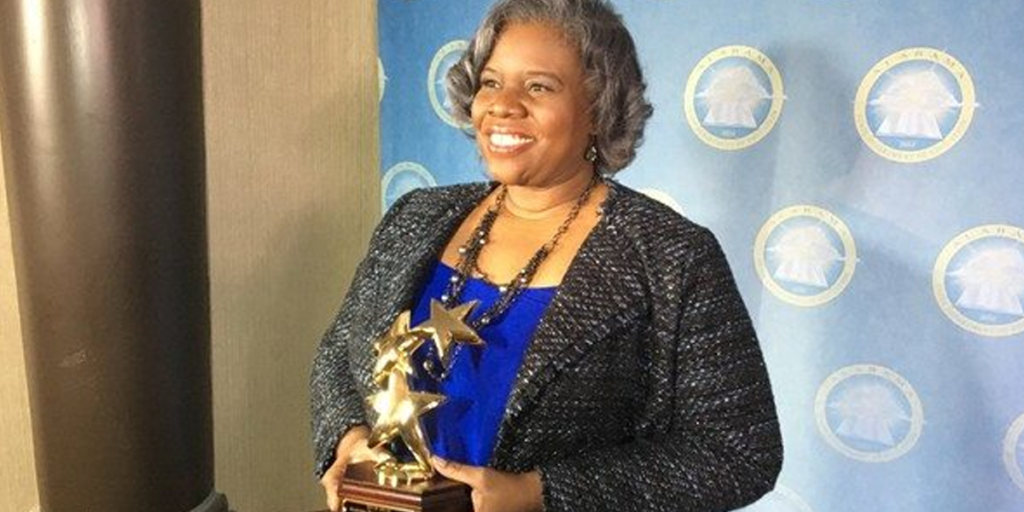
The Alabama State Department of Education (ALSDE) has named a Montgomery County school teacher who makes it her personal mission to engage and efficiently develop daily the academic skills of all students as its 2018 Teacher of the Year. Zestlan Simmons, who teaches English at Booker T. Washington Magnet High School will serve as the state’s ambassador for public education and the teaching profession. Simmons, who was recognized by the National Math and Science Initiative as the AP English Teacher of the Year, automatically becomes Alabama’s nominee for National Teacher of the Year. “This is truly a great honor and I am thankful for this wonderful opportunity to represent our Great State as the 2018-2019 Alabama Teacher of the Year,” said Simmons. “Students must have supportive learning environments and they must be encouraged to achieve at all levels – utilizing their local communities and digital learning opportunities to connect to the world.” Simmons was announced as Teacher of the Year during a celebration honoring the 12 semi-finalists and 4 finalists who were nominated for the coveted title at the RSA Plaza Terrace in Montgomery, Ala. Interim State Superintendent of Education Ed Richardson said it is an honor to join in the recognition of exemplary educators who transform classrooms and our society. “Teachers of the Year are world changers – they ensure the future prosperity of our great nation,” Richardson said. “These educators have shown our students a brilliant example of excellence.”
Alabama creates training program to fight cyber bullying

The Alabama Department of Education and the Alabama Attorney General’s office have joined together to fight cyber bullying and other concerns in the cyber world. While social media and other online resources offer unbelievable learning opportunities for students in today’s society, they come with some very real risks including: cyber bullying, inappropriate connections, and securing personal data. According to a 2016 WalletHub study, Alabama was ranked number eight in the nation for states with the biggest bullying problems, and was the fifth highest ranked state in the nation for percentage of high school students who attempted suicide. Which is one of the many reasons why the Alabama Department of Education and the Attorney General’s office have created a training program to help both teachers and parents fight against the dangers of cyber bullying. “Modern technology, in the right hands, brings the world to our children’s front door and enables them to live and learn limitlessly. However, as parents, educators, and law enforcement, we all have a unique responsibility to keep them safe,” said Ed Richardson, Interim Alabama State Superintendent of Education. “All those involved have a shared vision of keeping our children shielded from the ills of society. This training will assist in that effort.” The training for parents will include: understanding how quickly children can be contacted by non-age appropriate predators online working cell phone applications and formats (SnapChat, Instagam, etc.) and other less known video chatting platforms used to lure students indicators that a student may be a victim, and how to respond in that event laws pertaining to the cyber world, and much more. Investigators will also train school faculty and staff members on how important the school environment is when dealing with online issues and how to develop policies that address the issues before they start. When to contact law enforcement, preserving evidence for law enforcement, and how to make a report for law enforcement will be covered as well. “We have been working together for several months to develop cyber training that helps parents and teachers determine if children are being targeted and how to report it to law enforcement. Our training is focused on protecting our children and our schools,” said Attorney General Steve Marshall. Training will be conducted by seasoned veterans in law enforcement who are skilled in cyber world safety issues. They are: Sterling “Jake” Frith – Frith is a Special Agent in the Investigations Division of the Alabama Attorney General’s Office, responsible for Computer Forensics and Cybercrimes. Before coming to the AG’s office, Agent Frith served with the Prattville Police Department and Baldwin County Sheriff’s Office. He began working in the cyber realm 8 years ago, with 18 years in Law Enforcement. Agent Frith is a Certified Ethical Hacker, Certified Hacking Forensic Investigator, Access Data Certified Examiner, Seized Computer Evidence Recovery Specialist and an Open Source Practitioner. He has over 600 hours of training in cyber crimes and cyber forensics to go along with his experience. Agent Frith has an Undergraduate Degree in Criminal Justice and a Graduate degree in Information Security and Assurance. Agent Frith serves as a member of the Internet Crimes Against Children Task Force, the United States Secret Service Electronic Crimes Task Force, and the Federal Bureau of Investigation’s Cybercrime Task Force. Robert “Bobby” Moore – Moore is a Special Agent in the Investigations Division of the Alabama Attorney General’s Office. S.A. Moore has over 10 years of experience as a law enforcement professional, with a majority of his experience as an investigator assigned to handle Cyber and White Collar Crimes with a focus on sexual crimes against children that involved technology. S.A. Moore is also a certified digital forensics examiner, holding the Certified Computer Forensics Examiner, Access Data Certified Examiner, and Certified Fraud Examiner certifications related to digital forensics and fraud investigation. He holds degrees from The University of Southern Mississippi – Undergraduate in Accounting and Finance and Graduate Degrees in Criminal Justice with a focus on Cyber Criminology. He has taught courses in digital forensics and cyber-related crime for Troy University, Auburn University at Montgomery, The University of Mississippi and Loyola University of New Orleans.
Kay Ivey signs bill requiring emergency notification system for schools

On Thursday, Governor Kay Ivey announced she recently signed has signed a bill requiring the Alabama Department of Education (ALSDE) to develop and implement an electronic notification system that will share emergency information between schools and the state. House Bill 89, requires ALSDE to implement the system by October 1, 2017, which would allow emergency information to be shared with local schools, local school systems, the department, and the Governor. “As a former school teacher, I know the importance of keeping everyone informed of what is going on in our schools. This notification system is a much needed source of information to clarify the sometimes murky communications in times of emergency,” Ivey said in a press release. “I appreciate Representative Alan Baker for his hard work and leadership sponsoring this legislation.” Sponsored by Brewton-Republican Rep. Alan Baker, the bill saw overwhelming support in both chambers and passed unanimously in the Alabama Senate. “As students are engaged in the educational process, whether attending school or in transport by bus, their safety is of utmost importance. I applaud Governor Ivey for her strong support of education with an emphasis on school safety,” Baker said. The intent of the bill is that all local schools and local school systems use the electronic notification system as a means to input specific information relating to school delays, early releases, shelter-in-place information, and other emergency-related information to improve communications on all levels.
State taking control of Montgomery schools

The state is taking control of the troubled public school system in Alabama’s capital. The state school board voted unanimously Thursday to clear the way for a state takeover of Montgomery’s public school system. The move means the Alabama Department of Education will intervene is as many as roughly two dozen failing schools. Local officials will continue overseeing schools that are doing better. The Montgomery Advertiser reports that State Superintendent Michael Sentance addressed the gap in financial terms. He says top schools often spend about $20,000 more annually on teachers than failing schools. He says beginning teachers often are hired at poorly performing schools. The state takeover is expected to last three to five years. Republished with permission of The Associated Press.
State board votes to intervene in Montgomery County schools

The state school board voted unanimously Thursday to intervene in the Montgomery County school system because of concerns about academic and financial performance. Superintendent Michael Sentance said in a press conference after the vote that too many of the system’s schools were “at a low level and staying at a low level.” “It’s my personal belief that a capital city school system should be a shining example of what public education should be in the state. It should be a model,” Sentance said. State law allows the Alabama Department of Education to take over school systems because of problems with academics or fiscal management. Sentance said Thursday said there were concerns with both aspects of the Montgomery system. The state has intervened in several school systems in the past, including Selma and Birmingham. What state intervention might look like depends on the school system and reason for the intervention. In Selma, the state placed the school superintendent on leave and assigned someone to assume his duties. Sentance, said he didn’t know what all would happen in Montgomery, but said he envisions a collaborative process. One issue he said they will address is making sure classroom teachers have adequate knowledge in their subjects. “We have to raise the understanding of content with a lot of teachers in schools, starting with elementary on up. We would be coming in with some ideas how to do that,” Sentance said. Intervention does not automatically bring more money. The state could help the system with grants and will provide additional personnel. Montgomery County is a large school system that included a mixture of high-performing magnet schools — which skim off the best students and boast some of the highest test scores in the country — and high-poverty schools with low test scores. Sentance said the state will only get involved in schools that are struggling. The system had 10 schools labeled as “failing” for being in the bottom 6 percent of standardized test scores. Sentance said many more are chronically struggling, enough to trigger the state intervention option. The state board vote is the first step in the intervention process and sends a notice to the local system about the board’s intent to intervene. The local system has 21 days to respond to the intervention notice and could propose its own plan to address the problem. The state board will vote in February on whether to proceed. Some Montgomery school officials said Thursday that they welcome the move. Montgomery County Board of Education President Robert Porterfield said the state can bring needed resources to help do what is “best for children.” “There is a great heart here to improve schools,” Sentance said. State Board member Ella Bell, who represents much of Montgomery, said she thought the county schools had been suffered from “historic neglect” and a chronic underfunding because of the county’s low tax support for schools. “This is the first time the state has ever, ever reached out to bring children of color, our poor white children, up to a level of prominence with all the other school children in this state,” she said. Republished with permission of The Associated Press.
Alabama ACT scores steady, still lag behind national average
Alabama high school graduates maintained steady scores on the ACT college admission test but lagged behind the national average. The Alabama Department of Education on Wednesday released scores for 2016 public school graduates. The average composite score in Alabama was 18.7. That compares to the national average of 20.8. Interim State Superintendent of Education Dr. Philip Cleveland said he was pleased with the growth in scores while also noting there was room for improvement. Alabama now requires all high school juniors to take the ACT. Scores typically go down when more students are tested, not just the ones planning on attending college. More than 50,000 Alabama public school students took the ACT in 2016, compared to about 33,000 in 2012. Republished with permission of The Associated Press.
Latest bills to hit Alabama Legislature address Common Core, alcohol and tax breaks

With the 2016 legislative session under way, a slew of bills have been filed and are making the rounds through various committees of the Alabama Legislature. Several of those bills are aimed at tackling House and Senate Republicans’ recently announced legislative agendas, including bills to add Alabama’s status as a “Right to Work” state to the state’s Constitution (HB37), a bill declaring the sell of fetal tissue illegal (HB45), tax credits for state ports (HB34) and small businesses (HB36) and a bill aimed at providing broadband Internet to rural areas of the state (HB41). Rep. Alan Boothe (R-Troy) has filed HB46, which will allow Alabama distilleries to sell up to 750 milliliters, commonly referred to as a “fifth,” to customers for off-premise consumption annually. The bill comes after the Alabama Alcohol Beverage Study Commission made several recommendations a few weeks ago to put the state on an even keel with other states. Rep. Bill Poole (R-Tuscaloosa) has offered a bill, HB47, that would allow for warrantless arrests of people found trespassing on school property in “certain conditions.” Current law states that officers may arrest citizens without a warrant in multiple cases, including if the officer has “reasonable cause to believe” a felony or misdemeanor has been committed. This bill simply adds trespassing on educational premises to that clause. In the Senate, Sen. Rusty Glover (R-Mobile) has filed a bill, SB60, which will repeal Common Core curriculum standards in the state and revert back to Math and English courses used before the adoption of the new standards. Further, the bill would restrict the Alabama Department of Education from “adopting or implementing” any national standards or “requiring the use of any assessments” associated with a national program. Contrary to the call in Glover’s bill, Senate Pro Tem Del Marsh (R-Anniston) stated during Wednesday’s agenda announcement that curriculum decisions should be left up to the state school board and, should the repeal get through committee, there is likely not enough votes to pass it. The legislature will reconvene Tuesday at 9 a.m. when those bills which have made it through committee, including two child abuse sentencing bills addressed in the Senate Judiciary Committee Wednesday, will inch closer to seeing their day on the floor.
State Department of Education seeks increase of $300 million for K-12 budget

Tommy Bice, state Superintendent of the Alabama Department of Education, laid out his department’s budget needs for the upcoming year to the Alabama House Ways and Means Committee and the Senate Finance and Taxation Committee on Tuesday. Bice boasted that Alabama’s graduation rate has climbed steadily from 75 percent in 2012 to 89 percent in 2015 and 70 percent of Alabama students are considered “college and career ready.” A 90 percent goal is set for Alabama’s college and career ready standards and, if met, the “economic output would be $430 million higher” and “Education Trust Fund revenues would be increased by $22 million.” Currently, more than $1 billion in local funding is paying for instructional services, instructional support services, operation and maintenance services, transportation, and general administrative services. By contract, federal funds for those services come out to $446.6 million. A document handed out during the budget hearing noted the disparity of per pupil spending in various counties across the state: In Homewood City, $4,859 is being spent per pupil while only $82 is being spent per pupil in Coosa County. The department’s priorities for the upcoming school year include $70 million for transportation, $70 million for teacher units/class size reduction, $75 million for “other current expenses,” and $54 million for classroom instructional support, such as student materials, classroom technology, library enhancement, professional development, textbooks/content and common purchases. The request for full foundation funding comes in at $269 million, with the option to fund it at $135 million over two years. The department is also seeking a $5.5 million increase in funding for virtual learning, $2.1 million to assist educators in becoming National Board Certified Teachers, and $15 million for arts education. In all, officials are seeking a $334.3 million dollar increase in funding for K-12 over last year’s appropriations for administration services, financial assistance programs and other programs.
State’s high school graduation rate reaches record high

Alabama has reached a record graduation rate, with nearly nine out of 10 students now leaving high school with a diploma. The Alabama Department of Education announced the milestone Thursday. Officials said that in the last school year, 89 percent of students graduated from high school. The rate is within one percentage point of the department’s goal of a 90 percent graduation rate by 2020. The state’s graduation rate has been as low as 72 percent. Alabama Gov. Robert Bentley said the achievement is a testament to hard-working teachers and school staff. Republished with permission of the Associated Press.
