
Alabama Senate Committee advances phone tax increase
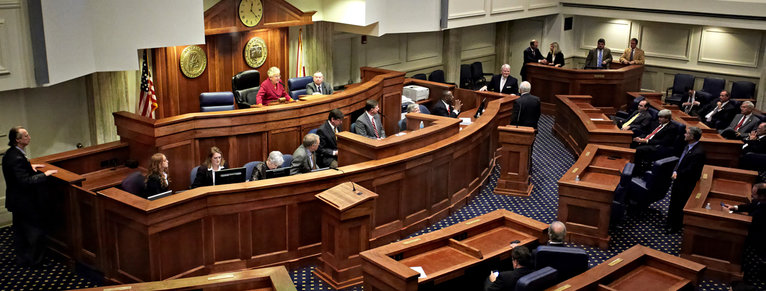
Every Alabamian can expect a tax increase of 98 cents per phone line if the Alabama Legislature and the governor signs legislation to raise a new tax to fund the Alabama Department of Mental Health (ADMH). Senate Bill 328 (SB328) is sponsored by State Senator Garlan Gudger. The controversial phone tax legislation was given a favorable report by the Senate Fiscal Responsibility and Economic Development Committee on Wednesday. The new tax would generate $69 million yearly in new revenues for the state. The money raised by the bill would go to the Alabama Department of Mental Health. Alabama started a 988 crisis phone line last year. The funding from the new phone tax would be used for call centers and an expansion in mental health services, including 988 call centers, mobile crisis services, and crisis centers. The funds would go directly into the non-reverting Alabama 988 Crisis Care Fund in the State Treasury to be managed by ADMH. This bill would also create the 19-member 988 Commission to study the impact of the crisis. Companion legislation in the House is sponsored by State Representative Rex Reynolds. House Bill 389 (HB389) was carried over by the House Ways and Means General Fund Committee on Wednesday. Since this is a tax increase, by rule, it should originate in the House rather than the Senate. An opponent of the legislation told Alabama Today that if you try to oppose this, they accuse you of being anti-mental health, which he is not, but feels that any additional funding for mental health comes from the state general fund (SGF) rather than by creating a new tax. The 98 cent per phone line tax is similar to the $1.88 tax that funds the 9-11 system. That tax originally was just 44 cents per line. Tax opponents oppose growing government by increasing the tax burdens imposed on the people of Alabama. Supporters argue that the high rates of suicide and mental health issues in the state justify the tax increase. SB328 could be considered by the Senate as early as Tuesday. Tuesday will be the 24th day of the 2023 Alabama Regular Legislative Session. To connect with the author of this story or to comment, email brandonmreporter@gmail.com.
Katie Britt: Long past time we talk about mental health
The subject of mental health has been all the buzz on news broadcasts, sports shows, and around dinner tables all over the world this past week. Frankly, it’s a conversation that is long overdue. As I travel our great state, I frequently hear from judges, circuit clerks, law enforcement officers, and health care workers that mental health issues are a root cause of a large percentage of crime, hard drug use, and violence that we experience in Alabama. A lack of adequate services, coupled with the stigma that is often attached to seeking mental health treatment, has led to a statewide – and nationwide – a crisis that is impacting our society on many levels. I believe that all Alabamians should have the opportunity to succeed, and that cannot occur if we do not prioritize mental health. The Alabama Department of Mental Health already serves over 200,000 of Alabama’s citizens today living with mental illnesses, developmental disabilities, or substance use disorders, but it is estimated that over one million Alabamians have a mental illness. Unfortunately, Alabama ranks 46th nationally when it comes to access to mental health services, and 56.5% of Alabamians with a mental illness receive no mental health treatment. To those facing these battles, you are not alone. One in five Americans experience mental illness in their lifetime, and it’s time we eliminate the stigma associated with it. We must ensure every single Alabamian has access to the resources and care they need to thrive. Thankfully, the Alabama Legislature and Gov. Kay Ivey’s administration have made strides in recent years to increase state investment in mental health services. This includes three new crisis centers in Mobile, Montgomery, and Huntsville, as well as five new rural crisis care projects with mobile crisis teams that will expand access to care for Alabamians across the state. An additional crisis center will be established in the Birmingham-Tuscaloosa region later this year. In the U.S. Senate, I’ll be a champion for measures that responsibly improve access to mental health resources and services, such as the Excellence in Mental Health and Addiction Treatment Act of 2021, the Mental Health Access Improvement Act of 2021, the Improving Access to Mental Health Act of 2021, and the Creating Opportunities Now for Necessary and Effective Care Technologies (CONNECT) for Health Act of 2021. I will work every day to ensure no Alabamian is forgotten or slips through the cracks of our system. This includes the people and communities of our state who have been ravaged by the opioid epidemic. In 2018, Alabama providers wrote 97.5 opioid prescriptions for every 100 people — the highest such rate in the United States and almost twofold greater than the national average. While elected officials on the state level have taken steps in recent years to move the needle in the right direction, we still have a long way to go. As we continue to combat this crisis, part of the effort must include holding bad actors responsible for their roles in creating this deadly problem. Nearly half of the 775 reported drug overdose deaths in Alabama involved opioids in 2018. That’s why I would support the Non-Opioids Prevent Addiction in the Nation (NOPAIN) Act in the U.S. Senate, which would promote non-addictive treatments for those recovering from surgery as an alternative to opioids. I will also support efforts to stem the rash of suicides facing Alabama and our nation as a whole. As of 2018, the suicide rate in Alabama was 16.8 per 100,000, which was higher than the national average of 14.2 per 100,000. This made suicide the 11th leading cause of death in our state, with 823 citizens lost to suicide compared to 567 deaths due to homicide. Suicide rates are also far greater among certain demographics in America and Alabama, including among our tremendous veterans. While supporting mental health efforts goes hand-in-hand with lowering the suicide rate, suicide is a complicated issue and is rarely caused by a single factor. CDC data has indicated that more than 50% of people who die by suicide are not known to have a mental illness. Factors such as substance abuse, physical health, job trouble, money, or legal difficulties can also contribute. My goal is to help build an Alabama in which increased opportunity and the proper safety net of resources combine to decrease these common suicide factors. While we have a lot of work to do long-term, we all need to begin addressing mental health as seriously and openly as we address all other physical health issues. Hopefully, this past week’s conversations can continue in the weeks and months ahead and lead to real, positive change. Resources are available for those battling mental illness via the National Alliance for Mental Illness here and the Alabama Department of Mental Health here. If you or someone you know is experiencing suicidal thoughts, please call the Suicide Prevention Hotline at 1-800-273-8255. Katie Britt is a Republican candidate to serve as the next U.S. Senator for Alabama. An Enterprise native, Katie resides in Montgomery with her husband, Wesley, and their two children, Bennett and Ridgeway.
Alabama celebrates diversity, encourages inclusion with Inclusive Schools Week

The State of Alabama has joined an initiative that seeks to increase awareness of students who are marginalized and of the importance of creating a school environment where every student feels included. Governor Kay Ivey signed a proclamation designating December 3-7, 2018, as Inclusive Schools Week (ISW) in Alabama. This official proclamation states, “The State of Alabama is committed to educating students in inclusive schools and classrooms, ones that are welcoming and that are capable of educating all children.” In doing so, Alabama joins a national effort to highlight and celebrate “the progress schools have made in providing a supportive and quality education to all students, including those who are marginalized due to disability, gender, ethnicity, geography and language. The celebration also provides an important opportunity for educators, students, and families to discuss what else needs to be done to ensure that schools continue to improve their ability to successfully educate all children.” According to the Alabama Department of Mental Health (ADMH), the celebration also provides an important opportunity for educators, students, and families to discuss what else needs to be done to ensure that schools continue to improve their ability to successfully educate all children. ISW 2018 is themed “Kaleidoscope of Friends” and it celebrates how schools can make progress on their journey and encourage everyone to build their own “Kaleidoscope of Friends.”
What Alabama is doing to combat suicide, and what you can do to help

With Mental Health Awareness month, and the heavily publicized suicide of Alabama Attorney General Steve Marshall‘s wife, only a few weeks behind us, we would be remiss not to keep the conversation about mental health going. “Often times we only talk about suicide in the case of celebrities… Robin Williams, Kate Spade, Anthony Bourdain, and others. But the fact is suicide affects so many more of us. More importantly, the underlining cause of suicide, untreated mental illness or mental illness not responsive to medications and treatment, affects nearly all of us in some shape or form,” wrote Alabama Today publisher Apryl Marie Fogel. “I don’t know a single person not touched by mental illness — either persistent and severe conditions that plague them on and off throughout their lives, or acute in response to major life changes.” Which is why the Commissioner of the Alabama Department of Mental Health, Lynn Beshear, does not take her job lightly. Since taking the position in 2017, she has been working tirelessly to educate the public, and raise funds for the department to address these issues within the state. Alabama Today asked her about the departments attempts to combat Mental Health issues, and what friends and family members can do to assist those they know who are struggling with mental illness: In light of the recent uptick in celebrity and influencer suicides, what is the Dept. of Mental Health doing to combat suicide rates in Alabama? Stigma is the greatest barrier to care and funding, so ADMH’s role is to acknowledge the elephant in the room and to educate tirelessly. According to the Suicide Prevention Resource Center in Washington, D.C., some risk factors and suicidal warning signs may include: A history of depression, bipolar disorder, or other mental illness diagnoses A serious personal loss or number of losses and defeats taken personally Low self-esteem and self-loathing Social isolation Believing there is no hope of feeling better Chronic alcohol or another drug use Easy access to the means for dying We often hear about mental health conditions as a cause of suicide, but suicide is rarely associated with any single factor. More than half of people who die by suicide did not have a known mental health condition, according to the National Alliance on Mental Illness. The Suicide Prevention Resource Center offers these myths and facts about suicide: MYTH: A person who talks about dying by suicide won’t do it. FACT: About 80 percent of people who complete a suicide express their intentions to one or more persons. MYTH: Talking about suicide to someone who is depressed may cause them to kill himself or herself. FACT: Asking someone if they are thinking about suicide does not increase suicidal thoughts, but, in fact, may reduce them. MYTH: If a person shows improvement after a crisis point, the risk has passed. FACT: Most suicides occur within three months after the onset of improvement. MYTH: Suicide usually occurs without warning. FACT: Many survivors of suicide report they had thoughts of suicide long before their attempt. In Alabama, a person dies by suicide every 11 hours. In 2016, it was the 11th leading cause of death, with 788 citizens lost to suicide, compared to 543 deaths due to homicide. The National Suicide Prevention Lifeline provides 24/7, free and confidential support for people in distress, prevention and crisis resources for you or your loved ones, and best practices for professionals. Call: 1-800-273-8255. What can friends and family do if they think they know someone who is struggling with a mental illness? One way to help is to learn Mental Health First Aid, which teaches how to and speak directly and with empathy to someone in need. Mental Health First Aid is an eight-hour course that gives people the skills to help someone who is developing a mental health problem or experiencing a mental health crisis. Be patient and calm while a suicidal or a person in a mental crisis is talking about his or her feelings and listen without expressing judgment and without agreeing or disagreeing with the person’s behavior or point of view. A safety plan, an agreement between the person and the first-aider, is a way to ensure that the person understands that someone is there for them. A safety plan should include actions to help keep a suicidal person safe, such as contact numbers the person agrees to call if feeling suicidal, for the person’s doctor or mental-health care professional, or a crisis helpline, or for friends and family members who would help in an emergency. The other very serious issue facing, not only Alabama but the entire US, is opioid addiction. I am the co-chair of Governor Ivey’s Alabama Opioid Overdose & Addiction Council to address this almost overwhelmingly complex issue that involves every sector of society, as well as law enforcement, the medical profession and an array of governmental departments and services.
Women of Influence: Commissioner of the Alabama Dept. of Mental Health Lynn Beshear
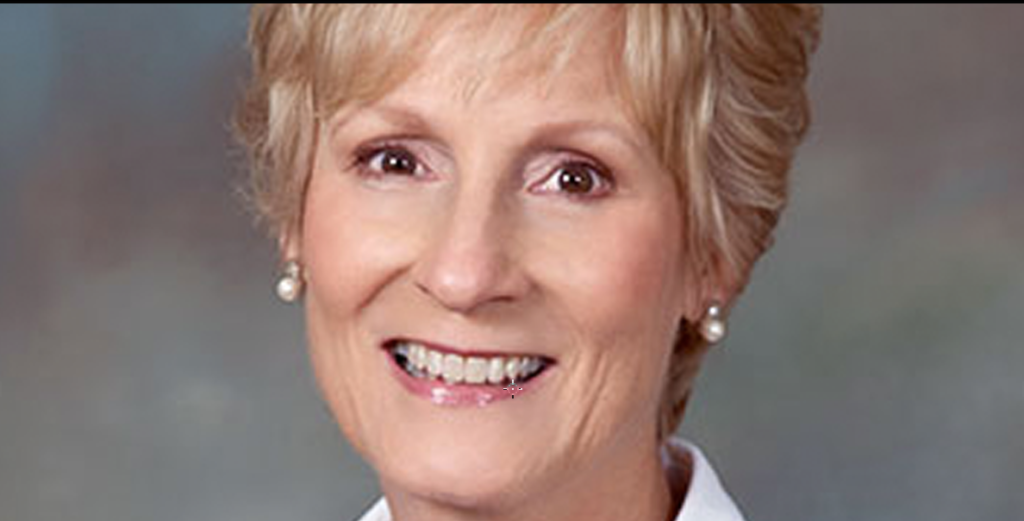
Alabama Department of Mental Health Commissioner Lynn Beshear is a force against the stigma and barriers against mental health issues few could reckon with. Beginning her career as a nurse in the Intensive Care Nursery at Duke University Medical Center, Beshear has continued her passion for serving others throughout her entire work history. In 1978, she moved to Montgomery, Ala. and began focusing her efforts on changing the lives of those in her community. She served on numerous boards, including the Junior League Advisory Board; Helping Montgomery Families Initiative; Medical AIDS Outreach Advisory Board; the Board of Directors of Hope Inspired Ministries; and many others. In 1999 Beshear, joined several Montgomery influencers; becoming a member of the Montgomery Campaign to Prevent Teen Pregnancy and the Alabama Campaign to Prevent Teen Pregnancy. Then in October of 2000, she became the only Executive Director for Envision 2020, “a community-driven strategic planning effort involving citizens and leaders in the central Alabama counties, designed to develop 25 shared goals related to the quality of life through the use of active partnerships to overcome challenges and increase opportunities,” according to the Department of Mental Health. Beshear held her position at Envision 2020 until July 2017 when Governor Kay Ivey appointed her as commissioner of the Alabama Department of Mental Health. “I am honored to appoint Lynn Beshear as Commissioner of the Department of Mental Health,” Ivey said. “Through active participation in securing mental health services in the River Region, Lynn understands the complexities of the Department, and the importance of its work on behalf of the people of Alabama.” Beshear is a woman of true passion for serving her community; an influencer and a changer of lives. She was also kind enough to answer some of Alabama Today’s questions about her life, work, and influences. How have other women influenced your success? My mother had three sisters and my father had two, so from my earliest memories caring women have been part of my life. My mother died just after my nineteenth birthday, meaning that, as an adult, I never knew her. But there have been and continue to be strong intelligent women from whom I learn. Indeed, all of us are role models for each other – either good ones or not. Here are a handful of my influencers: My mother-in-law Mary Elizabeth lived into her 90’s, so I knew her much longer than either of my parents. She lives on in her five children and in the memories of our three children. Mary Elizabeth had unending common sense and a wonderful sense of humor. My paternal grandmother lived well into her 80’s and is the only person I have known that never said one negative thing about anyone else. She would say about someone’s undesirable behavior, “We don’t know the pressures they are under”. She came to live with my father and sister Frances (Fra), who was still in high school when our mother died. My sister still lives in North Carolina (where we are from) and is a very kind and thoughtful person. A retired teacher, she has a master’s in early childhood education and, for our children, a visit from Aunt “Fra” was a special time. Another very important woman in my life was a neighbor, Jane, whom I first met while in junior high. She was ten years older than I, which is a tremendous gap when one is only 13 years old, but she was a mentor and role model that was a great stabilizing force during those awkward teen years and when my mother died. I am a nurse and a large part of our faculty in nursing school were women from whom I learned the art, science and spirit of nursing, which translates into every-day living. As a member of the Montgomery Junior League, I learned a tremendous amount about leadership, as well as from being in Leadership Montgomery, Leadership Alabama and on numerous boards of directors. Not every person in a position of leadership is an effective leader, but we also learn from them what not do to, which actually is a valuable lesson. It is fair to say that every phase of my life has been blessed by strong, intelligent and caring women – and men. What shaped your desire to work in the medical field? As a teenager, I did a great deal of babysitting for Duke medical students and residents, as well as doing some lab work for one of them. I used to read their medical textbooks and had endless questions. I was fascinated by the workings of the human body. For a couple of summers, I was a “candy-striper” at the local community hospital. What has been your favorite area of service, and what is your favorite thing about that position? To answer your specific question, the most captivating part of being executive director of Envision 2020 was the exhilarating work we did to educate the River Region about Smart Growth and New Urbanism. We conducted the first Smart Growth and New Urbanism conference in 2004 and the rest, as they say, is history. Jones School of Law, through Chad Emerson, reached out to us after that initial conference to partner in those endeavors and we conducted several more conferences. The Envision 2020 modus-operandi is to educate the “correct” people and then get out of the way. And just look at the results! I have enjoyed everything I have done – as a wife, mother, volunteer and in paid positions. It is very fortunate that I been recruited for every position. My life experiences affirm that everything we do prepares us for the next thing – and now as the commissioner of the Alabama Department of Mental Health, I daily use lessons learned in all past experiences. I would not have missed a single step along the way! What advice would you give to young women who want to pursue careers in the medical field or community leadership? Explore every opportunity that comes to you and “listen”
Lawmakers assign $11 million for behavioral health services
Gov. Kay Ivey said Alabama lawmakers have set aside $11 million in the recently passed budgets for behavioral health services for Medicaid-eligible children. The funding is aimed at expanding community and home-based services, Al.com reported. It’s being offered by the Alabama Department of Mental Health for children and youth with severe emotional disturbance and those with autism spectrum disorder. “These are needed services that I believe will help many of our children and youth live happier, more productive lives,” Ivey said in a statement. “At the same time, these services will help us save money in other areas. This proves that in Alabama, we can be both compassionate and good stewards of taxpayer dollars.” Vivian Spears’ adult son lives with autism spectrum disorder and intellectual disabilities. She said she is pleased with the additional funding. “It definitely should improve the quality of life for children and youth, and it brings hope to families and caregivers who are affected by autism spectrum disorder,” Spears said. Federal matching dollars will add another $25 million for a total of $36 million in available funding for the 2019 fiscal year, which begins Oct. 1. Two years ago, the Alabama Disability Advocacy Program and the Center for Public Representation filed a complaint with state officials alleging the state’s Medicaid program was violating federal law by not providing adequate screening and home or community-based services for more than 25,000 eligible children and youth with “behavioral, emotional and-or psychiatric disabilities.” “This funding will enable poor children with severe emotional disturbances and autism spectrum disorders to obtain life-altering services,” ADAP’s Legal Director Geron Gadd said. “These services are not only clinically-effective, they are cost-effective, and we are heartened that the state is acting to meet the long-unmet needs of these children.” Republished with the permission of the Associated Press.
Kay Ivey appoints Lynn Beshear Mental Health Commissioner; announces staff changes
Alabama Governor Kay Ivey appointed Lynn Beshear as Commissioner of the Alabama Department of Mental Health on Thursday. “I am honored to appoint Lynn Beshear as Commissioner of the Department of Mental Health,” said Ivey. “Through active participation in securing mental health services in the River Region, Lynn understands the complexities of the Department, and the importance of its work on behalf of the people of Alabama.” Beshear moved from Kentucky to Montgomery in 1978 and has been a key player in the city’s positive development ever since. She has previously served on the board of directors for organizations and establishments including Montgomery Academy, United Way, First United Methodist Church and others. She currently serves on the board of Joint Public Charity Hospital, Montgomery Metro YMCA, and the AUM School of Liberal Arts Advisory Board. She is a founding member of Envision 2020 and currently serves as its Executive Director. “I did not seek out this position, but I am honored to be chosen to serve my fellow Alabamians,”Beshear stated in a press release. “I am excited to work with Governor Ivey, her Cabinet, the Legislature, and the professionals within the Department of Mental Health, to provide excellent services for Alabamians with mental illness, those who are developmentally delayed, and those who struggle with substance abuse.” Among other honors, Beshear was named the Montgomery Advertiser Woman of Achievement in 1993, and received the Maury D. Smith Excellence in Professional Ethics Award in 2016. As Commissioner, Beshear will work toward developing new polices and strive to better existing programs. Ivey also accepted the resignations of Dr. Joanne Hale, as Acting Secretary of the Office of Information Technology, and Neal Morrison, as Commissioner of Senior Services on Thursday. The governor was also notified that Emergency Management Director Art Faulkner will retire effective September 5, 2017. Replacements for these positions have been identified and will be announced in the coming days. Additionally, she accepted the resignations of staff members, Director of Appointments and Scheduling Director. Daniel Sparkman, has been promoted to Press Secretary, replacing Eileen Jones. “I am thankful for the staff members who stayed on to help us make it through this quick transition,” Ivey added. “I am also especially thankful to Eileen Jones for her willingness to join my administration early on to help us get our feet on the ground and off to an effective start; I wish her well in her future endeavors.” The Governor’s Office said they do not anticipate any additional changes to the Cabinet or staff as the Ivey Administration finishes taking shape.
Robert Bentley announces new website to help Alabama veterans
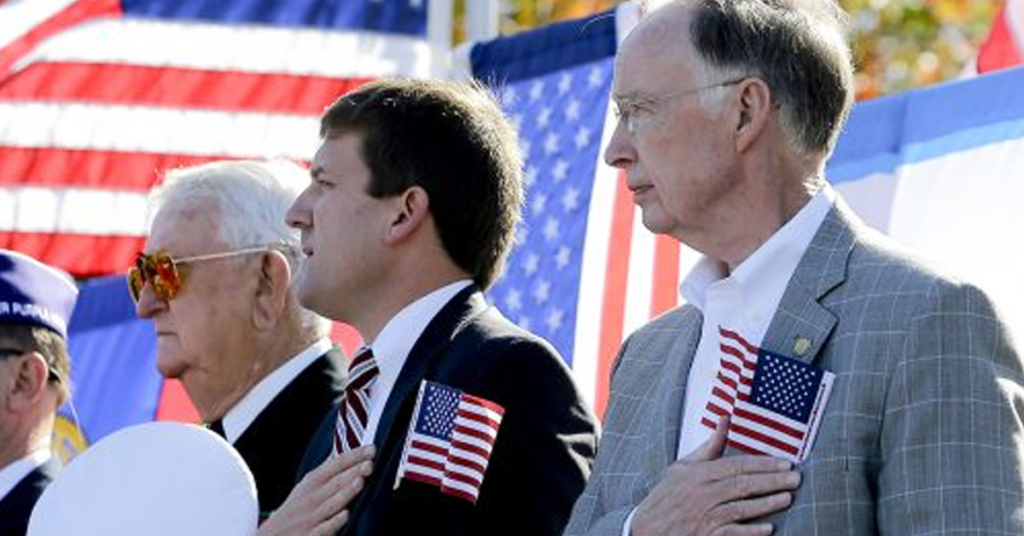
Gov. Robert Bentley announced a new online tool Tuesday for Alabama’s veterans and their families. The Alabama Executive Veterans Network (AlaVetNet) is comprehensive website that will serve as a hub for resources, providing a mechanism for veterans to find the services they need in a much faster and more user-friendly manner. “Alabama is a proud pro-military state, and we appreciate the sacrifice of our brave servicemen and women, and we owe it to them to ensure they are receiving the help they need in a timely manner,” said Bentley. “Eight percent of Alabamians serve in the military and the new AlaVetNet website will provide a one-stop-shop to assist veterans and their families in locating the variety of services available.” Bentley established AlaVetNet through Executive Order 42 in December 2013, which brought nonprofits, state agencies and businesses together in a central forum to collaborate and develop cohesive policies that best serve Alabama veterans. The goal of AlaVetNet is to use the existing resources and explore opportunities to expand the services. The committee developed a long-range plan for a unified, statewide system for the delivery of services aimed at helping those who served in the military. The AlaVetNet website is organized into six service areas: education, employment, homelessness, family services, legal, and behavioral health. Each committee is led by a chair and two co-chairs representing state agencies or well-established nonprofits. “I am really proud of the AlaVetNet team, and I am excited about this website as it will help better fulfill our primary goal of connecting veterans to available resources and services throughout our great veteran-friendly state,” said Alabama Department of Veterans Affairs Commissioner Clyde Marsh. “The importance of this website is that it contains useful information that is easy to access from the comfort of a home, office or mobile device such as medical care facilities, locations to file veterans claims, and points of contact for those that are in the most distress and need to reach a suicide hotline.”
Bentley Administration announces creation of Children’s Cabinet
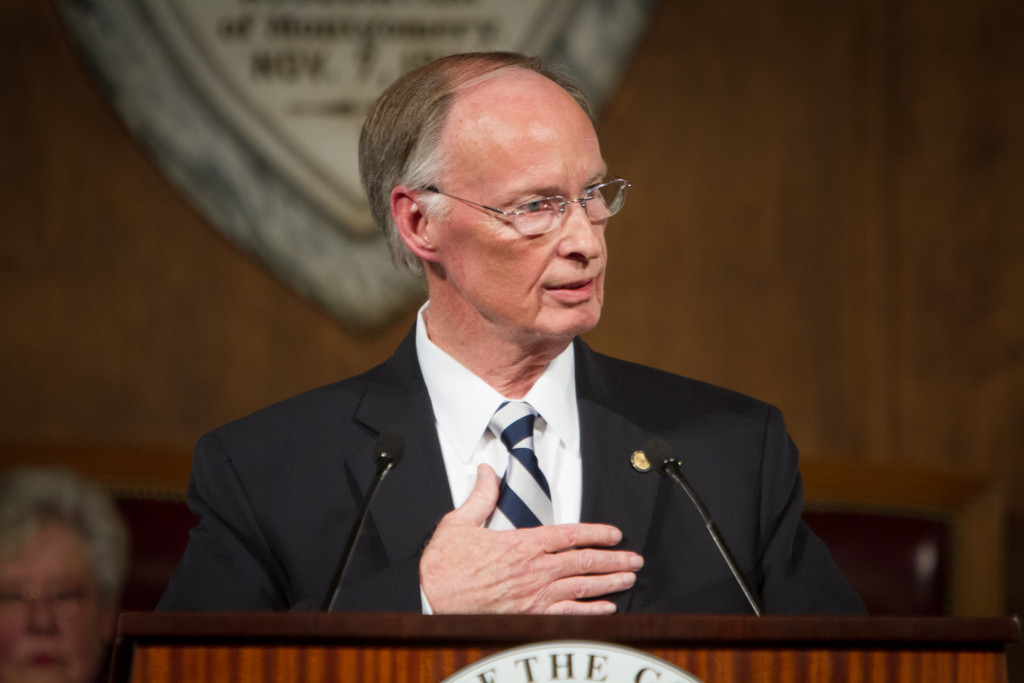
Alabama Governor Robert Bentley announced Tuesday afternoon the creation of the Alabama Children’s Cabinet. The Cabinet will include members of existing state agencies who will work together to “maximize efficiency in the use of state resources, reduce duplication of services and create a greater return of state tax dollars,” according to a press release from the governor’s office announcing the new body. “Alabama’s children are our future, and we must ensure that their needs are being met just as we do with adults,” said Bentley at the announcement of the Cabinet’s creation. “Whether it is education, health care, nutrition programs, or other needs, children need someone to advocate for what is best for them. We have put together a great group of individuals, already working hard on children’s issues, that has the knowledge and experience necessary to improve the lives of the children of Alabama. The Children’s Cabinet will be an important group dedicated to Alabama’s children” This group will work to develop measures of accountability to improve effectiveness in achieving positive outcomes for children. — Gov. Robert Bentley (@GovernorBentley) April 12, 2016 We’ve put together a great group of individuals that have the knowledge & experience necessary to improve the lives of Alabama children. — Gov. Robert Bentley (@GovernorBentley) April 12, 2016 The Cabinet will consist of the director, or an appointed delegate from the State Department of Education, Alabama Department of Human Resources, Alabama Medicaid Agency, Alabama Department of Public Health, Alabama Department of Mental Health, Alabama Department of Early Childhood Education, Alabama Department of Youth Services, Alabama Department of Rehabilitation Services, Alabama Department of Child Abuse and Neglect Prevention, and the Governor’s Office of Minority Affairs. The Cabinet, created by Executive Order 17, is created effective immediately, and must meet monthly, and is given authority to develop its own rules. According to the governor’s office, the members of the Children’s Cabinet will receive no additional compensation for the position.
Alabama Department of Mental Health requests increase in funding

During this week’s budget hearings, the Alabama Department of Mental Health (ADMH) made its case for “level funding” before members of the state legislature. “Level funding does not necessarily mean level services,” said A jDMH Commissioner James Perdue. Perdue noted that because the cost of doctor visits, medications and other services continue to increase, the reception of similar funding from last year may not provide services equivalent to the previous year. “Nobody in the House or Senate is unsympathetic,” Perdue said. “All of them are compassionate men and women, there’s just a limited amount of funds.” After last year’s budget struggles, Perdue’s department was forced to close facilities in Decatur, Montgomery and Mobile – facilities that provided beds to a number of mentally ill patients in the state – and there is “no hope” of those facilities being reopened. “It creates a very critical problem across the state,” Perdue said.”We’re busting at the seams, there’s a high demand for services and we’re just not able to serve everyone.” Currently the department cares for 6,000 people across the state with “intellectual or developmental disabilities” and another 3,500 are in need of service. Additionally, the department runs Taylor Hardin Hospital, a secure hospital for violent criminals who were released on grounds of insanity, and Bryce Hospital, a secure facility for patients who are considered potentially dangerous. Perdue doesn’t believe that there is an appetite for raising taxes to fill the possible budget gap and, for that reason, his department is striving to find creative ways to provide the services that Alabamians need to combat mental illness and its various manifestations. The department plans to collaborate with the Department of Corrections to serve the mentally ill currently incarcerated and address autism early with intense programming to avoid expensive rehabilitation later in patients’ lives. “We’re certainly going to need further funding,” Perdue relented. If the department receives less funding than it did last year, Perdue believes that many local programs designed to aid the mentally ill will have to be cut.
State mental health organizations rally to fight agency cuts
Mental-health service workers and recipients rallied across Alabama on Monday, asking lawmakers to not cut millions in funding for the Alabama Department of Mental Health. The department is at risk of losing $35.2 million in state funds and another $64 million in matching federal funds, which some say would be a severe setback for the thousands who depend on funding. Chris Stewart, president of The Arc of Jefferson County, a nonprofit organization working with the intellectually and developmentally disabled, told hundreds in Birmingham that Alabama ranks last in funding for the disabled. “How do you cut a percentage of a person’s health care? How do you cut a percentage of a person’s residential services? How do you cut a percentage of a person’s food? People are not something that can be dealt with in percentages,” Stewart said. The Legislature is considering a number of measures for how to fill a $290 million deficit in the state’s general fund budget. Gov. Robert Bentley has proposed a $541 million tax package to address both short-term and long-term budget issues, but lawmakers have been slower to consider raising new revenue. This past week, House Republicans unveiled their plan for new taxes that would raise less than a third of the revenue the governor has requested. In an April memo to legislators, Bentley said more than 24,000 people with mental illness would lose or experience reductions in services, and 1,080 community mental-health employees would lose their jobs. Speaking in Mobile at one of several rallies statewide, Bentley said outpatient mental-health services provide better and more financially efficient results than inpatient hospitals. However, many of those services would be reduced if budget cuts are enacted, he said. “People with intellectual disabilities should not be in institutions,” Bentley said. Cindy Smith, whose son Julian was diagnosed with schizophrenia at 19 during his first year at Brown University, said her son, now 43, depends on mental-health services from the state. He depends on funding from Medicare and Medicaid to pay for medication, which she said costs $5,000 a month. In an interview after the Birmingham rally, Smith said she worries what will happen to her son if he loses outpatient services: He would lose his place to live. He would lose his psychiatrist. He would be on his own, she said. “Hopefully he will come home and live with me, but what he does is, he goes in the front door and out the back door and I have no idea where he is,” she said. “And then he doesn’t take his medicine, and he would either be dead, in jail, in prison. It wouldn’t be good.” Republished with permission of The Associated Press.
