
Alabama lawmakers introduce bills aimed at expanding broadband in underserved areas of the state

Federal funds and other revenue sources could be tapped to address ongoing deficiencies in broadband infrastructure, based on a pair of duplicate bills working through both chambers of the Alabama legislature. As the 2022 legislative session is underway, state Rep. Randall Shedd, R-Fairview, and state Sen. Clay Scofield, R-Guntersville, have introduced the mirroring HB2 and SB3, respectively. The pair of bills in their draft state call for a constitutional amendment that, if ratified, would give each unit of government – the state, counties or municipalities – the authority to allocate financial resources toward broadband expansion under a mixture of different scenarios. The proposed constitutional amendment includes a clause, “The state, a county or a municipality is authorized to grant federal award funds or any other source of funding designated for broadband infrastructure by state law to any public or private entity for the purpose of providing or expanding broadband infrastructure.” Another passage within the amendment adds, “The granting of funds by a county or a municipality to a private entity pursuant to this section must be approved at a public meeting held by the appropriate county or municipality.” Deficiencies in broadband infrastructure – particularly in Alabama’s rural areas – has been an ongoing topic of discussion during the pandemic, where more adults and students have been taking classes and working virtually. Scofield and Shedd have been discussing broadband expansion this past year, in advance of introducing the legislation. Last summer, Scofield shared his views on the issue in a news release detailing his chairmanship of the Alabama Digital Expansion Authority. “Providing high-speed Internet to rural and unserved communities in Alabama has been one of my top priorities since I was first elected to the Senate over a decade ago,” Scofield said in a statement. He added, “We have witnessed our state transform into an economic powerhouse over the years, cultivating industrial expansion, job growth, technological advancements and much more.” In a radio interview in early December, Shedd shared his hope for allocating some of the federal COVID-19 relief funding toward broadband expansion. The goal, he said, “is to identify how we can remove some of the barriers and streamline some of the process. We’re not going to get it all out of the way, but if we can identify what those barriers are, and streamline the process and get it to people faster, it’s something we’d like to do.” With supply chain interruptions and labor shortages ongoing issues, Shedd conceded a full rollout of the expansion plan could take time. “We’ve got some challenges to try and deal with,” he said. “But we also have the opportunity of a lifetime.” HB2 currently is in the House Urban and Rural Development Committee. SB3 is under review in the Senate Finance and Taxation General Fund Committee. The bills were introduced on January 19. By Dave Fidlin | The Center Square contributor Republished with the permission of The Center Square.
Randall Shedd: Rural broadband expansion requires continued focus from Alabama lawmakers
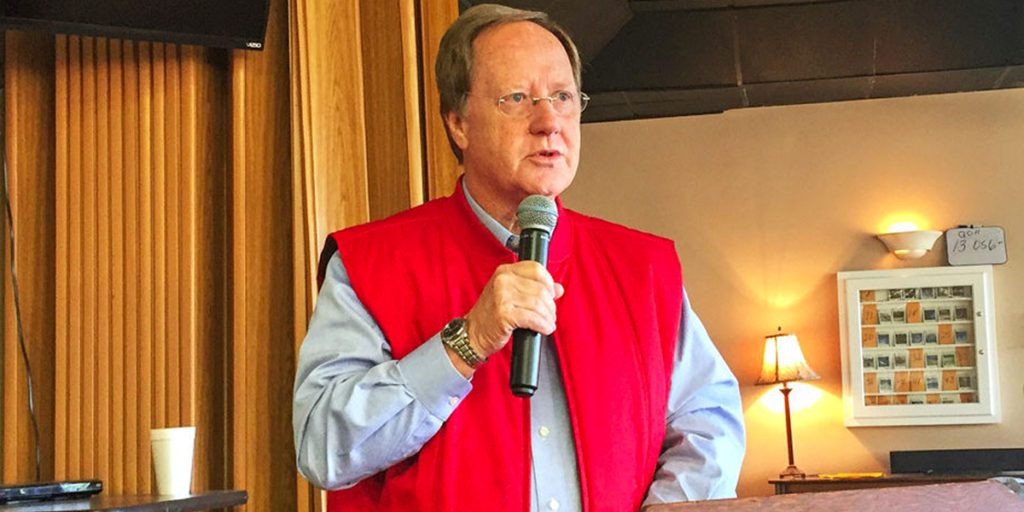
Consider for a moment the number of times each day that you access the Internet for business, school, and leisure. Many families and businesses have abandoned check-writing altogether in order to utilize quick and easy online bill pay and payroll services. At the height of the COVID-19 pandemic, schools across the state, both public and private, converted to virtual classrooms that required teachers and students to have fast and dependable Internet access in order to teach and learn. Many senior citizens and others with chronic conditions have increasingly relied upon telemedicine, which uses the Internet to link doctors and patients in “virtual office visits” that provide needed medical care without having to leave home. Now imagine that the high-speed, broadband Internet that makes all of this technology available to you was suddenly replaced with the beeps, blips, and dings of the telephone modem, dial-up service that was commonplace more than 25 years ago. For many Alabamians residing in rural and remote areas of the state, the archaic, temperamental, and frustratingly slow dial-up access is all they have ever known. The lack of broadband access and other infrastructure discourages industrial recruitment and economic development from taking place in areas of our state with the highest unemployment rates and the biggest needs. Businesses, industries, and manufacturing concerns simply cannot locate in areas that have not yet implemented 21st Century Internet technology. Recognizing the significant quality-of-life improvements that broadband access can bring and understanding that it is not economically feasible for service providers to build infrastructure and create fiber-optic networks in low-population areas that cannot realize a return on investment, the Alabama Legislature began focusing its attention on rural Internet needs a few years ago. In 2017, the Legislature took a firm first step toward addressing the issue by passing a measure that ensures every public school classroom in Alabama – whether urban or rural, rich, poor, or middle-class – has wireless broadband service. While that was significant, students need the same access at home in order to complete their assignments and continue their education on their own time. We continued our commitment the following year by creating a $20 million grant program designed to leverage federal funds and expand high-speed broadband Internet service in unserved and underserved portions of the state. The program, known as the Alabama Broadband Accessibility Fund, is administered by the Alabama Department of Economic and Community Affairs. It has since been amended to increase the minimum speeds supported by the program and to expand eligibility so that the funds can be used more effectively. Even more progress was made in 2019 when the Legislature passed a bill that I sponsored in the House, which allows broadband carriers to partner with electricity providers in rural areas by using their easements and existing infrastructure. Most recently, the Legislature created the Alabama Digital Expansion Authority, which is developing a statewide connectivity plan to expand high-speed Internet and determining which parts of the state may qualify as rural, underserved, or unserved. The authority also provides oversight of ongoing upgrades to networks, technological equipment, and end-user devices necessary to expand access, and it is seeking the most cost-effective way to expand fiber networks throughout the state. As the 2022 Regular Legislative Session approaches, lawmakers must be prepared to move quickly to appropriate funding that will enhance the successful public/private partnership that is helping expand broadband access in Alabama. The current grant program provides 35% public funding when 65% private funding is proposed for eligible broadband expansion projects. Under the current public/private partnership scenario, if private Internet providers spent $2 billion on expansion projects, $1 billion in public matching funds would be added for a total outlay of $3 billion. Current cost estimates for providing high-speed broadband to all Alabamians range from $4 billion to $6 billion. In order to keep Alabama economically stable and provide its citizens with the basic needs and comforts that are expected today, rural broadband expansion must remain a high priority. Without access to modern technology, our children and grandchildren upon graduation will continue abandoning their rural homes for more inviting, attractive, and promising areas to live. State Rep. Randall Shedd, who represents portions of Blount, Cullman, Morgan, and Marshall counties, serves as chairman of the House Urban and Rural Development Committee, co-chairs the Legislative Oversight Committee on Rural Broadband, and is vice-chair of the new Alabama Digital Expansion Authority.
