
Grandparents visitation bill clears the Alabama House

The Alabama House of Representatives on Tuesday passed HB334 from Rep. Mike Jones (R-Andalusia), which would provide the criteria by which grandparents may petition for visitation with their grandchildren. Jones noted that Alabama is one of only a handful of states that don’t already have such a law on the books. The bill faced difficulties last year after it was ruled unconstitutional and the Alabama Supreme Court’s decision earlier this year not to take up the bill seemed to stop it in its tracks. But significant work has been done since then by the Alabama Law Institute and others to ensure that the bill can withstand scrutiny. The bill went before committee in early March and drew the support of a wide array of Alabama parents and grandparents, though just as many showed up to oppose the measure. In today’s vote, which garnered an affirmative from 97 Representatives, only Rep. Juandalynn Givan (D-Birmingham) rose to voice concern over the legislation. Givan noted that she had opposed the legislation previously and wanted to ensure that the bill would not hamper Alabama parents from making decisions regarding the welfare of their children. Jones noted that changes were made to ensure the bill would be deemed constitutional, adding that the legislation was based off of a similar law passed in Arkansas. “We’re not reinventing the wheel,” Jones said. “We’re trying to learn from other states.” Jones noted that his bill creates a “narrow door” through which grandparents will have to pass to regain access to their grandchildren and said that Alabama’s law would be one of the most conservative in the country. He added that any decisions regarding reinstated visitation rights will start with the presumption that fit parents have made a decision in the best interest of their children – it will be up to grandparents to prove the opposite. With its passage in the House, the bill will go before a Senate committee before making it to the full Senate in the coming weeks.
Senate committee tackles several bills ranging from veterans to background checks
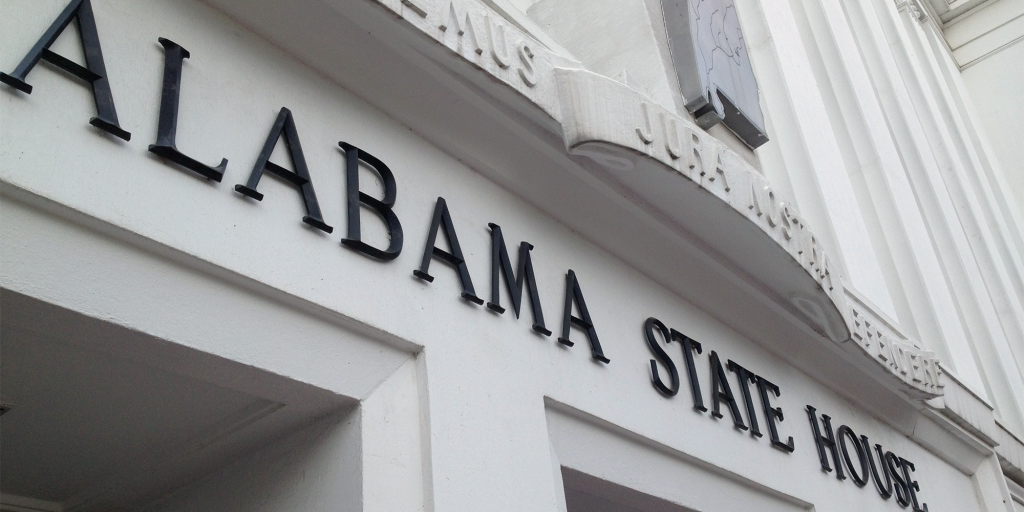
The Senate Committee on Governmental Affairs met shortly before the start of session Tuesday to move on a variety of bills. First on the committee’s agenda was SB325 from Sen. Gerald Dial (R-Lineville), which codifies the jobs of the newly formed Legislative Services Agency. Currently, three departments are responsible for various legislative tasks: the Alabama Law Institute, the Legislative Reference Service and the Legislative Fiscal Office. Dial’s bill would establish the Legislative Services Agency, which would oversee the operations of the three. Dial noted that the move would decrease future spending. Sen. Arthur Orr (R-Decatur) opposed the bill, noting that earlier discussions had decided that a codification of the agency wouldn’t happen until lawmakers were able to see how the changes worked, but the bill garnered a favorable report despite the opposition. Dial also brought SB161 before the committee, which would provide businesses owned by veterans of Operation Enduring Freedom (Afghanistan) and Operation Iraqi Freedom with preferred vendor status in competitive bids. Essentially, if a veteran-owned business is within 5 percent of another bidders offering, the veteran-owned operation is given preference. The committee gave the bill a favorable report with a unanimous vote. The committee also approved a bill from Sen. J.T. Waggoner, SB304, which will allow sheriff’s to issue pistol permits to residents of different counties. The National Rifle Association-drafted legislation is said to be for “convenience purposes” and would still allow sheriffs to revoke licenses provided to residents of their counties. The committee also approved a bill that would require polygraph examiners to pass a background check to attain their license, as well as a bill that would extend the renewal period for driver licenses to six months prior to expiration. Currently, residents receive a notification only 30 days prior to their license’s expiration. The bill would allow residents more time to renew their driver licenses.
Despite public outcry, House committee green lights liquor sales, lottery vote

In an overfilled room, the House Committee on Economic Development and Tourism met Wednesday to discuss two alcohol-related bills, one of which was carried over until next week’s meeting, and a bill that would put the issue of a state lottery up for a vote. HB83, a bill that would allow wineries to obtain permits to operate an additional “on-site tasting room,” was held so lawmakers could clear up unspecified issues with the legislation. Next on the agenda was HB46, a bill brought forth by Rep. Alan Boothe (R-Troy) to allow Alabama distilleries to sell one fifth of liquor to an individual customer each day. The bill had originally stated that only one fifth could be sold per year, but Rep. Alan Harper (R-Northport) added an amendment to change “year” to “day.” The amendment was approved and the committee began hearing feedback from the public. Joe Godfrey, executive director of the Alabama Citizen’s Action Program (ALCAP), spoke first in opposition to the bill. “You’re dealing here with an addictive and mind-altering drug,” Godfrey said. “Alcohol destroys lives, it destroys families. Every time we expand alcohol sales, you’re increasing the number of people who use alcohol, you’re increasing the amount that they drink.” Next to speak was John Sharp, owner of John Emerald Distilling Co. in Opelika, who was in support of the measure. “This bill, obviously, would help us compete with the large out-of-state distilleries,” Sharp said, noting the vast array of spirits being shipped in from Tennessee, Kentucky and elsewhere. “We’re not going to affect the amount of alcohol actually consumed in Alabama.” The committee voted and gave the bill a favorable report. The next item on the commission’s agenda was Harper’s lottery bill, HB13, the senate version of which did not reach a vote in this morning’s committee hearing. The bill only requests that residents be allowed to vote on whether or not a lottery should be allowed in Alabama, where the proceeds would go will be decided by the full Legislature at a later date. “Our vote today is on our citizen’s right to vote on a constitutional amendment,” Harper said. “It’s important that we hear the opinions of our citizens. You can never go wrong in doing that.” Harper also assured those in attendance that he and others had worked alongside the Alabama Law Institute to ensure the legislation left no room for casino-style gambling in the state. The opposition to Harper’s bill was widespread during the following public hearing, started first by Godfrey, who condemned the bill for preying on low-income families and claimed it “makes the government a bookie.” Rep. Rich Wingo (R-Tuscaloosa) also spoke out against the bill, saying that the creation of a lottery would only cost the state more in Medicaid costs “because instead of buying glasses for Junior, Medicaid will do it.” Rep. Arnold Mooney (R-Birmingham) spoke out against the bill. “I believe as a federalist, we were elected to come here and make decisions,” Mooney said. “Money spent on a lottery is money pulled from small business. We can’t grow our economy in that manner.” In all, nine people spoke out against the bill with only one person in support of it, Mac McArthur of the Alabama State Employees Association. “I don’t know how you could possibly draft a cleaner bill to get the issue before the people,” McArthur said. The committee began taking a vote when Rep. Ritchie Whorton (R-Scottsboro) asked for a role call vote. Because the vote had already begun, the committee continued and gave the bill a favorable report.
Mike Ball to introduce new bill aimed at decriminalizing marijuana medicinal oil

A new bill aimed at decriminalizing the possession of CBD oil will likely come up for discussion during the upcoming legislative session, according to the bill’s sponsor, GOP state Rep. Mike Ball of Huntsville). A previous bill, “Carly’s Law,” gave the University of Alabama – Birmingham the opportunity to research the use of CBD oil, a medicinal oil derived from marijuana but containing little of the “high-inducing” chemical THC, and eventually led to chemical trials for children and adults suffering from myriad ailments. However, after the U.S. Food and Drug Administration narrowed the margins for who could have access to the medicine, many of the state’s most needy were denied access to the program. Specifically Leni Young and her family, who fled to Oregon last year where access to the oil is more readily available. “They’re refugees,” Ball said. Leni’s parents fought tirelessly for “Carly’s Law,” only to see their daughter, who suffers from intractable complex epilepsy and a rare form of cerebral palsy, left out of the trials and following dispersion of medication. Since moving to Oregon and using “high CBD cannabis oil” regularly, Leni has gone from hundreds of seizures a day to one every four to six weeks and has had her cocktail of medication reduced by 20 percent with no adverse side effects. Further, Leni is using her hands for the first time, engaging with her family more thoroughly and able to sit on her own with minimal assistance. Thus, Ball will introduce “Leni’s Law” during the upcoming session. “This is a spiritual issue, not a political issue” Ball said. “It’s time to take this step.” To ensure that his bill is on legal footing, Ball had the bill drafted by the Alabama Law Institute and is planning to have it examined by district attorneys. Ball noted that the issue is complex – federal law has created a climate where doctors are afraid to prescribe the drug and desperate families are afraid to be in possession of it. For that reason, Ball believes a resolution should be drafted to petition the federal government to change its stance on marijuana policy, specifically as it pertains to the use and dispersion of CBD oil, and the Alabama legislature should eradicate fears of prosecution for potential patients. “These people are not criminals,” Ball said. “It’s just common sense. Leni is the catalyst for me, but there are lots of other families who need this medication and we have got to do something to help them.”
