
Election 2022: A comprehensive guide to the Alabama Constitutional Amendments
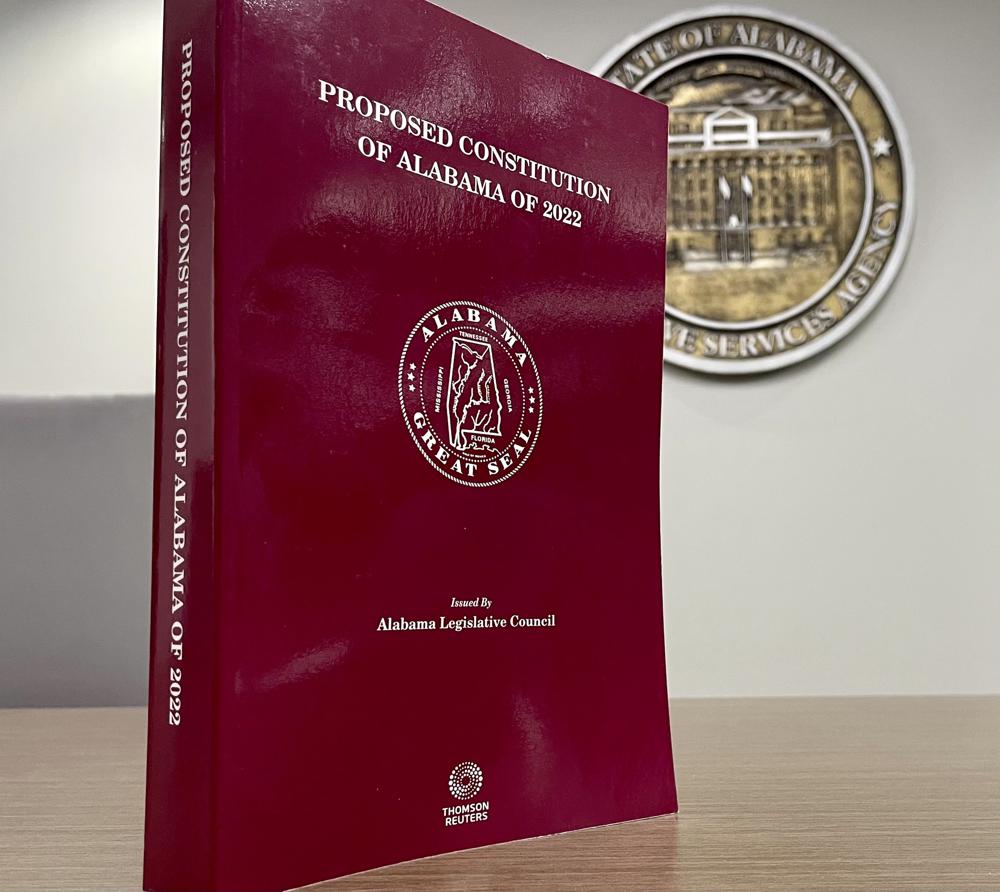
Tomorrow, unlike swing states like Georgia, Pennsylvania, and Arizona, it’s safe to say that the results of all statewide offices will be a foregone conclusion in Alabama. Alabama Daily News polling, released last week confirmed that republican candidates were favored in the state with 62.4 favorability. (Polling that was subsequently ripped off by AL.Com, who reproduced it in its entirety, without permission from behind the ADN Inside Alabama Politics paywall.) According to Secretary of State John Merrill as many as 45-50% of eligible voters are expected to turn out. In addition to statewide offices and legislative races, there will also be a vote on a new recompiled Constitution and ten new constitutional amendments. Here’s a brief look at those constitutional changes on the ballot with summaries from the Associated Press, The Alabama Policy Institute (API), and other sources. If you’re looking to verify your polling place or are looking for sample ballots you can visit AlabamaVotes.gov for you can also find the Fair Election Commission detailed summaries of at this link on the Secretary of State website. Ratification of the Constitution of Alabama of 2022 The Fair Ballot Commission describes this saying, “The Constitution of Alabama of 2022 will only do the following: (1) rearrange the constitution so that similar subjects are located together; (2) remove racist language; (3) delete repeated or repealed portions/language; (4) place all amendments which deal with economic development together; and (5) arrange local amendments by county. The reorganized constitution will make no changes other than those listed above and will not make any changes relating to taxes.” The recompiled document deletes racist language and repealed provisions. It also reorganizes the sprawling document and makes it more user-friendly. The Alabama 1901 Constitution is the longest constitution in the country. This ratification comes Amendment One: The Fair Ballot Commission describes this by saying, “This amendment will change Section 16 to add crimes for which bail can be denied, to include murder, kidnapping in the first degree, rape in the first degree, sodomy in the first degree, sexual torture, domestic violence in the first degree, human trafficking in the first degree, burglary in the first degree, arson in the first degree, robbery in the first degree, terrorism, and aggravated child abuse of a child under the age of six.” Amendment one would create Aniah’s Law, which would limit bail for individuals accused of specified violent crimes. It is named after Aniah Blanchard, who was murdered by a man out on bond for attempted murder. API stated, “While the sentiment for ratifying the law is understandable, it does raise due process concerns for those accused, but not yet convicted, of crimes.” Governor Kay Ivey and Attorney General Steve Marshall urged voters to vote yes for Aniah’s law. Marshall stated, “Aniah’s Law—which you will find on your ballot as Amendment 1—amends the state constitution to allow judges the discretion to deny bond to violent criminals like Aniah’s murderer. So, on Tuesday, be sure to vote “yes” on Amendment 1, which will keep dangerous criminals off the street and the public out of harm’s way. And thank you to Aniah’s family for leading the charge to make Alabama a safer place.” Apryl Marie Fogel, Alabama Today’s publisher and host of Straight Talk with Apryl Marie on News Talk 93.1 FM, said, “Voting yes on Amendment 1 is a no-brainer! This amendment gives judges the ability to use their discretion to deny bail to those who have no business out on our streets. It doesn’t say they must stay in jail, but it says that a judge has the discretion to keep them there. Imagine being a victim or the loved one of a victim of a violent crime, knowing that the person responsible is back out on the street immediately. That’s unacceptable. One of the few responsibilities of government is to ensure public safety. That’s what this does and why we should pass it.” John Eidsmoe and Roy Moore expressed their concerns about the proposed law. “I feel terrible about what happened to Anaiah Blanchard,” Moore said. “But that is not a reason to go and change the constitution.” The Southern Poverty Law Center opposes this amendment telling AL.Com that it could lead to people who are not yet convicted of a crime “languishing in Alabama’s jails for years at a time.” Amendment Two: Amendment two would allow the state, county, and municipal governments to spend federal stimulus funding through grants for broadband infrastructure projects. The state has already allocated money for this purpose. API stated, “The primary concern with this amendment is that Alabama needs it for local governments to be able to spend the money for its authorized purpose in the first place. The state should not control the ability of local governments to spend already allocated money for its intended purpose.” Moore and Eidsmoe said that they are strongly opposed to both Amendments 2. Amendment three would require the Governor to notify the state Attorney General and a victim’s family before postponing or commuting a death sentence. Because then Governor Fob James was hesitant to execute a woman, in 1999, he commuted the death sentence of convicted murderer Judith Ann Neeley before he left office. The family of 13-year-old Lisa Millican, who was brutally raped and murdered by Mrs. Neeley and her husband, were outraged by Gov. James’ actions. This amendment is the Legislature’s response to that decision over twenty years ago. API has no concerns with this amendment. Amendment four to the constitution would require that any law impacting a general election be passed at least six months before the election. API stated, “A potential concern with this amendment is that it could limit the Legislature’s ability to make a necessary change to election law if unexpected circumstances arise less than six months before the next election. It comes down to a question of do you have faith in the government to use this power responsibly, or would you rather them not have the power at all?” Former state representative and current Jefferson County GOP Chairman Paul DeMarco urged voters to support this amendment,
Justin Bogie: Gas, grocery taxes crushing Alabama families; is this the leadership we want?

Next week, Alabama voters will cast their votes for the 2022 Primary Election. While the races for U.S. Senate and Governor are getting most of the media attention, who walks the halls of the State House for the next four years will have just as much, if not more, impact on your life. As we prepare to elect the next Alabama Legislature, it’s important to look back at what our legislators did in the last four years. Did they represent and protect the values and principles that they promised to back in 2018? Has your life improved in the last four years? For many Alabamians, the unfortunate answer to both of those questions is no, and some of the blame lies with the current legislature. Many of those same legislators’ names will appear on the ballot next week. There are two missteps by the legislature that stick out when making the argument that life has gotten harder in the past four years: the passage of the $.10 gas tax increase in 2019 and the unwillingness of our lawmakers to repeal the state’s sales tax on groceries. What our governor and some legislators might consider to be the “crowning achievement” of the past four years is the passage of the Rebuild Alabama Act (RAA) back in 2019. It was one of the first actions of the newly elected legislature and passed by a wide 111-26 margin. The RAA implemented a $0.10 per gallon gas tax increase and, by the end of this year, is projected to generate more than $320 million annually. The state keeps about two-thirds of the new revenues while counties and municipalities get the rest. Nearly $12 million per year is set aside for the Port of Mobile. When the bill was being debated, the Alabama Policy Institute argued that the gas tax increase should only be approved if some other tax, such as the grocery tax, was repealed. That didn’t happen, and the tax burden on citizens has continued to climb, culminating in Alabama’s government taking more taxes than ever from Alabamians in 2021. That extra $0.10 may have seemed absorbable to some back in 2019. It isn’t anymore. When the RAA passed, gas prices were $2.25 per gallon. Today, AAA reports that the average gas price in Alabama is $4.24 per gallon, an 88% increase in just over three years and the highest at any point in state history. The $0.10 gas tax increase approved by the current legislature and signed by the governor is hurting many Alabamians. What’s more, with the passage of a massive federal infrastructure bill last fall, Alabama will see hundreds of millions of additional transportation dollars flowing into the state over the next five years. The RAA should be repealed. Doing so would provide at least some relief from the pain at the pump that we are all experiencing, but it seems no one in Montgomery is willing to give up the revenue that it provides. In March, our current governor was asked if she would even be willing to suspend the $.10 tax increase. She responded with a resounding no and instead blamed high energy costs on President Joe Biden. Alabamians may blame Biden for many things, but he had nothing to do with raising Alabama’s gas tax. The Alabama Legislature’s failure to repeal the sales tax on groceries is much like the imposition of the new gas tax. It is hurting citizens now more than ever. This is a bipartisan issue that would immediately help all Alabamians, yet in the past four years, Alabama’s Republican supermajority has never brought a bill to repeal the grocery tax to the Alabama House or Senate floor for a vote. Thus, Alabama remains one of three states that still fully taxes groceries. The cost of groceries is up 9.3% in the last year. The price of meat, poultry, fish, and eggs has increased by over 14%. Americans haven’t seen inflation like this in 40 years, and it is having a crushing effect on family budgets. Our state government began this year with a $1.5 billion revenue surplus. That’s on top of tens of billions of federal dollars that have flowed to the state in the form of COVID-19 relief since 2020. Yet they weren’t willing to give up around $500 million in revenue to help literally every resident of this state. The fact that the Alabama Legislature has done nothing about the grocery tax is indefensible. Combined with raising the gas tax, the effects are even more damaging. Is this the kind of leadership that we want for the next four years? Justin Bogie is the Senior Director of Fiscal Policy for the Alabama Policy Institute.
Caleb Crosby: Alabama Policy Institute’s 2022 legislative scorecard
Alabama’s state government should be representative, transparent, and accountable. In 2018, Alabamians elected what was at the time considered to be the most conservative legislature in state history. Our government should reflect the conservative principles of the people it represents. But is that what citizens have gotten over the past four years? While there have been victories for those of us who are socially conservative, the historic expansion of government is far from conservative. Over the past four years, Alabama’s government grew by more than a third. That’s a faster pace than states like California and New York. Meanwhile, our neighbors in Mississippi have increased spending by just 5.5 percent, and Georgia has actually reduced the size of its government. That’s not what voters expected or hoped for back in 2018, and it impacts all aspects of our lives. The API Watchlist is intended to be a tool for accountability. It’s a way for the people of Alabama to know if their lawmakers are striving toward the conservative principles that so many Alabamians stand for or if they are ignoring them willingly. Through the API policy platform released earlier this year, lawmakers were warned that they would be held accountable for their out-of-control spending habits. Alabama’s government started the 2022 Regular Session with a historic revenue surplus: 1.5 billion dollars. That’s on top of tens of billions of federal dollars that have flowed directly and indirectly to the state through bloated federal stimulus bills. What did they do with that money? They passed the largest budgets in state history. Despite taking more taxes than ever from Alabamians’ pockets in 2021, our governor and legislators only sacrificed 1.3 percent of that revenue towards targeted tax cuts. Other southern states are lowering the tax burden of citizens. Georgia is cutting taxes by 2 billion dollars over the next few years. Mississippi began the process of phasing out its state income tax and reduced the grocery tax during the 2022 legislative session. Our legislature did not do enough. Many of us will see no benefit from these woefully inadequate tax cuts. While certain bills are listed as “key votes,” they are not an exhaustive list of bills API supported. The Vulnerable Child Compassion Act and Fiscal Responsibility and Economic Development Act are important wins for Alabamians. Another bright spot was the passage of Constitutional Carry legislation, a popular issue with most Alabamians. Linked below are the results to this year’s Watchlist. API is hopeful that this scorecard will be helpful to the people of Alabama. As the 2022 primary and general election season draws near, we hope it will help you determine if your legislator is representing your values. If they are not, in just a few weeks, you have an opportunity to let your voice be heard and start the process of reshaping Alabama’s government to align with its people’s values more closely. That is what the principles of democracy and conservatism are all about. Caleb Crosby is President and CEO of Alabama Policy Institute.
API report accuses GOP of allowing ‘big government’
The Alabama Policy Institute (API) released a new report evaluating the current fiscal state and uninhibited growth of Alabama’s government. API is a non-profit, non-partisan educational and research organization committed to free markets, limited government, and strong families. API reaches its goal of sound public policy through research, advocacy, and public education efforts. The report entitled “Follow the Money and See Where It Goes: Alabama Citizens Pay for Big Government”, examines the rising tax revenue and spending from the state’s General Fund and Education Trust Fund budgets over the past several years. According to the API press release, the goal of the report is to inform the citizens of Alabama so that they will obtain a better understanding of the budgeting and financial processes of state government. In 2018, Alabama elected what was believed to be the most conservative legislature in state history. However, those same people have allowed state spending to rise by 17 percent in the last three years. According to the report, state government is taking in and spending more of Alabama citizens’ money than ever before. Much of the new revenue has been reinvested back into government, rather than directly benefiting the citizens and business owners. The federal government has awarded nearly $4 billion to mitigate the impact of the COVID-19 crisis. Only a small portion of the state funding has thus made it back into the private sector through grant programs. Lawmakers have continued to look for new revenue streams like raising the gasoline tax, allowing for the sale and taxation of medicinal marijuana, and attempting to legalize casino-style gambling and establish a state lottery. All of this is being done despite record state revenues over the last three years. The report states, “As Alabama begins fiscal year 2022 and begins planning for the 2023 budget cycle, there is an opportunity for the state to return to the limited government, fiscally responsible roots that flipped control of state government just a decade ago. But it will take strong leadership and courage from a coalition of current lawmakers or a generation of new lawmakers that want to change the status quo and transform state government to be less invasive in the lives of all citizens.”
Justin Bogie: State government takes more revenue from citizens than ever before
In 2021, Alabama’s state government took more money from taxpayers than ever before. The big question is, what will state government leadership do with it? It should be used to provide tax relief to citizens and businesses, not to continue to grow government. According to end of fiscal year, 2021 data from open.alabama.gov, the Education Trust Fund, and General Fund budgets took in a whopping $11.2 billion in revenue last year. That’s nearly $1.2 billion (11.6%) more than the state collected in the fiscal year 2020. Don’t forget, this is on top of nearly $4 billion that has and will continue to flow directly to state government because of a series of federal stimulus bills designed to help states recover from the COVID-19 pandemic. The state’s Legislative Services Agency recently estimated that almost $47 billion total has been given to the state from the federal government over the past two years. That includes money such as direct payments to individuals, payments to county and local governments, the Paycheck Protection Program for businesses, and expanded unemployment benefits, among others. While it is good that Alabama’s economy has seen a swift recovery from the pandemic, especially compared to states with more restrictive environments, much of that growth is coming directly out of your wallet. Individual income tax receipts rose by $631.6 million last year, an increase of 15 percent. Sales tax receipts rose by nearly 15 percent, or $372 million. The state’s recently implemented online sales tax had another big year, adding $72 million more in revenue, almost 40 percent growth. And it wasn’t just individuals bearing increased tax burdens. According to open.alabama.gov, corporate income tax receipts to the Education Trust Fund increased by 72.6 percent in 2021, more than $355 million in new revenue. While the numbers are important, don’t get lost in them. The point is that while the state is taking in record amounts of revenue, you, the citizen, as well as businesses that are the life-blood of the economy, are in turn paying more than ever before. 2021 is not an anomaly. Since the end of the Great Recession, Alabama’s economy has generally seen steady growth. Since fiscal year 2019 state government has enacted record-high budgets and seen more revenue each year. But what have lawmakers done for citizens and the business owners of Alabama? Instead of looking for ways to return their money to them, government has looked for new ways to tax and spend even more of your money. In 2019 the Legislature and Governor Kay Ivey enacted a gas tax that is projected to bring in over $300 million in new revenue this year. Lawmakers also allowed for the tax to be raised by an additional $.01 every two years without ever having to take another vote on the issue. The 2021 Regular Legislative Session was dominated by two other issues that are in no small part about bringing in more revenue. The Legislature was successful in legalizing medicinal marijuana, which could bring in tens of millions of dollars in sales tax revenue in the future. While combined gambling and lottery legislation failed again, its potential to bring hundreds of millions of dollars in annual revenue to the state means that it will likely come before lawmakers again. When asked recently about the latest revenue windfall, Senate education budget committee chairman Arthur Orr, R-Decatur, identified contributing to the education budget’s stabilization fund, teacher pay raises, bonuses for retired educators, and tax cuts for retirees and low-income families as priorities. While tax cuts should be the top priority, why not find a way to provide tax relief that will benefit almost all Alabamians, such as eliminating the sales tax on groceries? Alabama’s corporate income tax rate is higher than many neighboring states and is highly susceptible to changes in the federal tax code. Why not lower the rate and change the deduction structure so that Alabama’s business environment is more competitive with other southern states? Pay raises and bonuses are the default that lawmakers always seem to go to when there is extra money. This mentality is why state government continues to grow. When the state collects more revenue than projected, that means that it took more from your pocket than it needed. That money should be given back to you, not used to expand state government. Justin Bogie is the Senior Director of Fiscal Policy for the Alabama Policy Institute.
Alabama Policy Institute creates judicial support system, ACLL

Birmingham’s conservative nonprofit group the Alabama Policy Institute (API), announced the launch of the Alabama Center for Law & Liberty (ACLL). The ACLL will serve as API’s legal arm and help defend API’s policies in the courts. Founded in 1989, API is an independent, nonprofit group that researches and advocates for conservative policies, including defense of free markets, limited government, and strong families. However, the group much defend those policies in the courts. The ACLL will be the voice in the judicial system. Matthew Clark will serve as the Executive Director of ACLL. After graduating from Liberty University School of Law, he worked on the Alabama Supreme Court as a staff attorney. Since 2016 he has worked at the Foundation for Moral Law in Montgomery. Clark stated, “It is a great honor to serve as the ACLL’s first Executive Director. My vision for the ACLL is to ensure that Alabama remains an outpost of freedom in the United States by defending our constitutional rights in the courtrooms.” When asked about protecting limited government, Clark commented, “On the federal level, Congress is considering dangerous legislation, such as the Equality Act and the For the People Act, which would rob the people of freedom of conscience and the right to election integrity. On the state level, while we agree that COVID-19 is dangerous, we also believe that it is dangerous to let one person make all the decisions on how to deal with the crisis instead of letting the people’s representatives make the decisions. And on the local level, the ACLL is concerned about the Alabama cities that have enacted SOGI ordinances that force Christian small business owners to choose between their livelihoods and their consciences.” “The ACLL stands ready to defend Alabamians who have had their constitutional rights infringed, in hopes that Alabama remains an outpost of freedom in the United States,” Clark concluded. Phil Williams, Chief Policy Officer for the Alabama Policy Institute, posted on Twitter, “Very excited to announce that @alabamapolicy Institute just launched the Alabama Center for Law & Liberty! We’re going to fight for conservative values in every venue, including the Courts!” Very excited to announce that @alabamapolicy Institute just launched the Alabama Center for Law & Liberty! We're going to fight for conservative values in every venue, including the Courts! #alpolitics @AlabamaLaw https://t.co/pKqUYpBpzV — Phil Williams (@SenPhilWilliams) March 22, 2021
Email Insights: API’s Guide to the November 2020 Constitutional Amendments
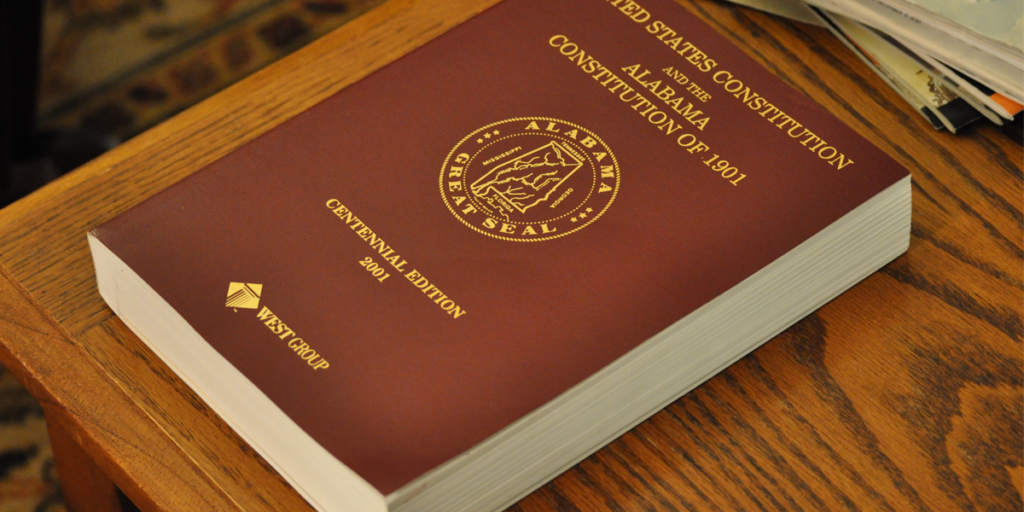
In a recent email, Alabama Policy Institute released a guide to the Constitutional Amendments that will be on the ballot for Alabama. According to its website, “API is a non-profit, non-partisan educational and research organization committed to free markets, limited government, and strong families. API reaches its goal of sound public policy through research, advocacy, and public education efforts.” In the guide, each of the proposed amendments is described and explained so that voters can make an informed decision. Here is the email below: In less than three weeks, Alabamians will go to the polls and vote in one of the most contentious presidential elections in recent history. What is lesser known is that Alabamians will also be voting on six statewide amendments to the Alabama Constitution. These amendments address the right to vote, the state’s judiciary system, “stand your ground” provisions in some counties, and more. The purpose of this Guide is to explain these six amendments in plain language so that voters may be well informed when they go to the polls on November 3rd, or when they mail in their absentee ballot. We recommend, in addition to reading this guide, printing off a sample ballot and filling out your selections beforehand and bringing it with you to the polls.
Dana Hall McCain: American institutions losing competence, losing trust

Dana Hall McCain discusses the state of American institutions, such as the Iowa caucuses.
Parker Snider: Why everyone, including limited-government conservatives, should participate in the Census

It’s September 5th, 2020. You, like most of Alabama, have been waiting months for this day. As summer slowly faded into autumn, the cool evenings punctuating the still-stifling afternoons, you took heart knowing the long months of faint interest in the NBA and baseball were almost gone. Today, after all this time, the drought is finally over: the first Saturday of college football season has arrived. Just as you’ve settled in, the doorbell rings. Wholeheartedly intending to ignore the unscheduled visitor, your heart sinks when one of your guests (a Tennessee fan) opens the door and calls for you. Confident you will not be inviting this particular friend over again next weekend, you begrudgingly make your way to the door to see a man with a clipboard and a bag with the words “United States Census Bureau” on both sides. You politely ask if you could respond later, perhaps online or via the mail. He kindly answers that, yes, that was an option, and then points to a stack of unopened mail on your front table that also reads “Census Bureau”. Point taken. Being the gracious Southerner you are, you answer his questions and are back watching the game in less than ten minutes. The truth is that this scenario will likely occur repeatedly during the 2020 Census. While most will comply with the requests of the Census Bureau, there are always those who successfully skirt the eye of the federal government. For limited-government conservatives, slamming your door on the person who says, “I’m with the federal government and I’d like to ask you a few questions” may indeed be a natural response. It is not, however, considerably helpful, especially to the conservative cause. In fact, Alabamians failing to be counted in the 2020 Census could fuel debilitating blows to the conservative movement, both in Alabama and across the nation. That’s because the Census is more than an arbitrary headcount. The Census totals, in fact, shape how billions of federal dollars every year are allocated to states for Medicare, SNAP (food stamps), highway construction, and more. In addition, businesses rely heavily on Census data to determine where to build factories, restaurants, and stores. Inaccurate data here could cost jobs and create unnecessary economic hardship. Perhaps most importantly, however, is that the Census determines how many seats in the U.S. House of Representatives each state gets and, with that number, how votes are allocated in the Electoral College. Unfortunately, most projections suggest that Alabama will lose a seat in the U.S. House as a result of the 2020 Census. That’s because, although Alabama is growing, it is not growing as fast as other states. The 435 seats in the House, as directed in the Constitution, must be allocated to each state so that each member of Congress represents roughly the same number of people. Since the population is increasing quickly in places like Texas, Oregon, and Florida, the reapportionment of congressional seats will likely benefit their interests over ours. Since states are given votes in the Electoral College by their number of Congressmen (Senate and House), losing a House district would also mean Alabama loses power to determine the U.S. President. This would be, perhaps, the most discouraging byproduct of a low Census count. Overall, the results of the 2020 Census could reduce Alabama to a state that has fewer voices in Congress, a lower rate of federal funding, and less power to choose the President. This version of Alabama is not good for the conservative cause. As one of the most conservative states in the nation, the conservative movement needs a healthy Alabama that has strong, multilayered representation and power in the Electoral College to push a conservative candidate to 270. The truth is that Alabama just might keep all seven of our congressional districts and all nine electoral college votes. To do so, however, we need a full count of everyone living in the state. Conservatives (really everyone for that matter), therefore, should make sure they and every person they know are counted in the 2020 Census. Complete it online, mail it in, or risk a Census worker interrupting your football Saturday. If that happens, you’d best respond. You (probably) won’t miss another Kick Six. Parker Snider is the Director of Policy Analysis at the Alabama Policy Institute.
J. Pepper Bryars: Like Chilton County’s peach trees, Alabama’s occupational license laws need regular pruning

Motorists who travel I-65 between Birmingham and Montgomery during summertime often enjoy the tradition of stopping in Clanton for a freshly-picked basket of Chilton County’s famous peaches. There’s something special about that part of Alabama, a Goldilocks zone that produces those thick, juicy, tasty treats. Not too cold. Not too hot. Just right. Well, that and an awful lot of pruning. Thing is, peach trees need to be cut back annually so that they can continually produce the best and most fruit. A snip here. A lop there. Just planting them and walking away isn’t enough. Kind of like laws, and there’s no better example of such a thing than those governing occupational licensing in Alabama. When we first began planting them decades ago, occupational licensing laws were meant to ensure that those who were practicing potentially dangerous professions were doing so safely. Those early measures covered around 5 percent of the U.S. labor force, according to a recent policy memo from the Cato Institute. But like an untended peach tree, they’ve been left to grow wild. “Alabama licenses a total of 151 occupations, covering over 432,000 Alabama workers, which represents over 21 percent of the state’s labor force,” wrote the authors of The Costs of Occupational Licensing in Alabama, a special report commissioned by the Alabama Policy Institute. The report found that the initial costs of occupational licensing are $122 million, with another $45 million for renewals plus $243 million in annual continuing education costs. Those costs are eventually passed along to consumers. Clearly, these laws are due for pruning, but Alabama’s lawmakers have taken an uneven approach to the orchard lately. Near the end of the last legislative session they passed a bill that doubled the license application for landscape architects to $150 and increased the maximum fine that could be imposed on them for violations from $250 to $2,500 per instance. But they allowed a bill to die that would have reformed the Alabama Sunset Committee, the body responsible for periodically reviewing state professional licensing boards, agencies, and commissions to ensure they’re operating effectively and ethically. The bill would have added a “sunrise” provision to the process so that when a new licensing requirement is proposed, lawmakers would have an objective set of thorough standards to judge its merits, like if licensing would create an unreasonable effect on job creation or place unreasonable access or restrictions on those seeking to enter the profession. Proponents would have also needed to demonstrate how the public would be harmed without the licensing measure, and how we couldn’t be protected by other means. In other words, it would have to be more about protecting the people than protecting the profession, used only as a last resort, and even then, it would be applied to the least degree possible, but the bill failed to even get a public hearing. Lawmakers did manage to do a little pruning, though, by providing a path to occupational licensing once denied to former convicted felons. “For people who have served their full sentence … they should be able to get a job to feed their family, contribute to society, and lessen the chance that they fall back into crime,” wrote State Sen. Cam Ward, Republican-Alabaster, who sponsored the reform. Former convicts can now petition a judge for an order of limited relief, which prohibits an occupational licensing board from automatically denying their application. “The board or commission must give the case a fair hearing,” Ward said, adding that the new law “recognizes the dignity of work.” Some of Alabama’s occupational licensing laws are good. Some are bad. But most are just in need of some regular pruning. Let’s hope our lawmakers bring a good pair of garden shears to next year’s legislative session so that Alabama’s laws, like Chilton County’s peach trees, can produce the best fruit. Pepper Bryars is a senior fellow at the Alabama Policy Institute and host of the 1819 podcast. Follow him on Twitter at @jpepperbryars. API is an independent, nonpartisan, nonprofit research and educational organization dedicated to strengthening free enterprise, defending limited government, and championing strong families. If you would like to speak with the author, please e-mail communications@alabamapolicy.org or call (205) 870-9900. Permission is hereby granted to display, distribute, and quote from this publication, provided that it is properly attributed to the Alabama Policy Institute and the author. For editorial questions, please contact communications@alabamapolicy.org.
J. Pepper Bryars: Time to stop daydreaming about a lottery

Lottery supporters were left saying “so close …” last week after the latest attempt to establish the game in Alabama collapsed under the weight of competing interests and power plays. It was reminiscent of the failed lotto player, successfully matching his numbers one-by-one until his hopes are dashed when that final digit proves ever elusive. But that’s what happens when you play a losing game. We’ve already heard the arguments against a lottery, from the financial risk of budgeting on a game of chance to the moral risk of a government enticing its citizens to play a game 99.9 percent of them will lose. I’ve written about it before, and the Alabama Policy Institute has a long history of opposing the lottery. But this time, the corrosive nature of gambling conspired to defeat itself.Here’s what happened. Vegas-style Casinos The lottery debate in recent years hasn’t centered on an actual lottery. That is, walking into a gas station and buying a paper ticket with a few numbers.No. There’s a strong pro-gambling lobby in Alabama that seeks to take advantage of any momentum behind a lottery proposal to include measures legalizing what’s known as Class III gaming – card tables, roulette wheels and slot machines. By including some specific language in a lottery bill, they could later artfully argue that expansion of gaming into Class III has already become law, thus giving them a green light to open casinos. And then there are those who have stakes in existing gaming facilities such as dog tracks and electronic bingo halls. They push hard to ensure that no legislation passes that could create competition. Point is, those who profit from the forms of gambling we have now, and who could profit from expanded forms in the future, see a simple lottery as a threat. They want to protect what they have, and then expand their offerings to keep existing customers and lure even more. Horse Trading Several lawmakers who favored a lottery in the past found themselves holding out for assurances that Alabama would adopt a key provision of Obamacare by expanding Medicaid, the insurance program for the poor and disabled. The issue here is that while the federal government pays for the first few years of the expansion, Alabama would eventually cough-up an increasingly higher percentage of an ever-growing expense. As the bill moved through the Legislature, it was reported that lawmakers were considering paying that additional cost with lottery revenue in a bid to collect more votes. Here’s the problem: the Legislative Service Agency estimated that the lottery would generate about $167 million a year in revenue after expenses and prizes were handed out, but estimates on the state’s share of expanding Medicaid range from $168 million to $250 million annually. So, we’d end up passing a lottery whose revenues could be swallowed up by Obamacare. How many politicians in Alabama want that etched into their electoral tombstone? Money Money Money Then there’s the question of how we’d spend whatever little is left. Some lawmakers wanted to send it all to the general fund. Others wanted some, if not most, to go toward education. And the teacher’s union, which remains a powerful force in Montgomery, wouldn’t budge. In the end, those who wanted more gambling, those who sought Medicaid expansion, and those aligned with the teacher’s union felt the status quo was preferable. Add them to traditional opponents of the lottery, and the bill died by a handful of votes. Let’s hope it stays that way. Alabama needs its leaders to focus their time on attainable solutions for problems that aren’t going away, and on opportunities that might if we refuse to focus. It’s about time they quit daydreaming about hitting the lottery. J. Pepper Bryars is a senior fellow at the Alabama Policy Institute and host of the 1819 podcast. Follow him on Twitter at @jpepperbryars.
J. Pepper Bryars: Alabama moves to protect free speech on campus
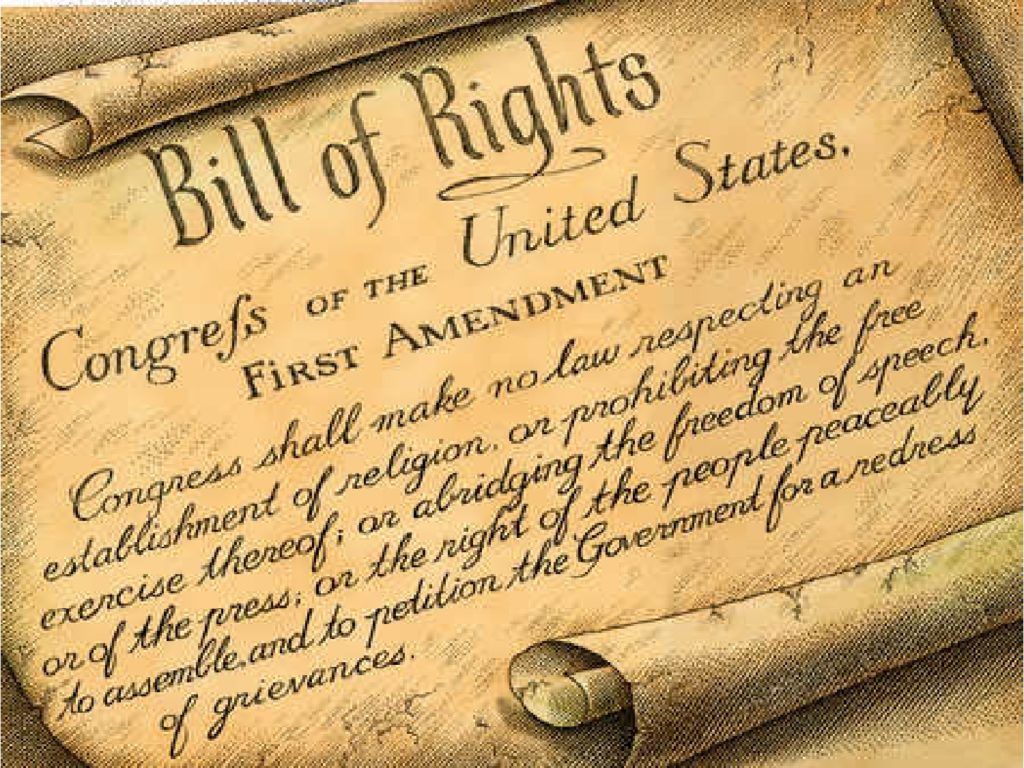
Free speech zones, meant to move certain discussions away from where they could offend listeners, or be heard at all. Speech codes, meant to limit acceptable topics to an ever-shrinking list of progressive-leaning beliefs. And heckler’s vetoes, meant to give the power of censorship to a loud minority. These tactics and others are part of a trend on college campuses that is chilling the free speech rights of faculty, students and visiting speakers who dare mention controversial or unorthodox ideas. Thankfully, lawmakers in Alabama have an opportunity to ensure the trend doesn’t take hold here by passing what is being called “one of the most comprehensive and effective campus free-speech laws in the country.” State Rep. Matt Fridy, Republican -Montevallo, has introduced House Bill 498 that would require the state’s public colleges and universities to adopt policies and procedures to protect free speech on campus. The bill was recently approved in committee and now awaits further action. “Freedom of expression is critically important during the education experience of students, and each public institution of higher education should ensure free, robust, and uninhibited debate and deliberation by students,” the bill states. It goes on to declare that it is not the proper role of these schools to “shield individuals from speech that is protected by the First Amendment to the United States Constitution, including ideas and opinions the individuals may find unwelcome, disagreeable, or offensive.” But is campus free speech really a problem in Alabama? Yes, at least according to one expert who has helped draft similar campus free speech laws in other states. “Although it’s sometimes argued that the campus free speech crisis only affects deep-dyed blue states like California and Massachusetts, the problem is national,” wrote Stanley Kurtz, a senior fellow at the Ethics and Public Policy Center. Kurtz noted how Alabama A&M near Huntsville recently made it on the “10 Worst Colleges for Free Speech” list maintained by the individual-rights advocacy group FIRE for having the most “red light” rated policies that, in their view, restrict free speech. The Washington Examiner published an article last year accusing the University of West Alabama in Livingston of having a “free speech zone” by limiting any demonstrations to a spot near its student union building. And at the University of South Alabama in Mobile, a pro-life student club founded by Katherine Sweet was told in 2013 that they had to set up their display on an arguably low-traffic portion of the campus that’s designated for free speech. “I went to South thinking it would be a place where I could debate freely with other students, engage in discourse, and ultimately learn from not only our professors, but each other,” Sweet wrote in an AL.com guest opinion article. “Aren’t universities supposed to be atmospheres that promote just that?” Yes, and Fridy’s bill seeks to ensure they do through various measures, including: • Ensuring that faculty and students are free to take political positions, to express themselves in outdoor areas of the campus, and to assemble, speak and pass out literature,• Prohibiting the establishment of any “free speech zones,”• Keeping the campus open to anyone invited by student groups to speak,• Forbidding the imposition of excessive security fees that discourage some speakers,• And potentially suspending those who disrupt the free speech of others.Voltaire’s beliefs in freedom of expression were once famously summarized with the phrase, “I disapprove of what you say, but I will defend to the death your right to say it.” But unless our lawmakers act now, what you may hear on your local college campus could someday be, “I disapprove of what yousay, so I will restrict your right to say it.” J. Pepper Bryars is a senior fellow at the Alabama Policy Institute. Follow him on Twitter at @jpepperbryars.
