
Fantasy sports, gambling could be big business for state

A slate of bills aimed at loosening Alabama’s gambling laws and setting the state up to benefit from the lucrative gaming industry have been slowly winding their ways through the legislative chambers this Session, but none have gained any real traction in a Legislative Session marred in controversy over ill-fated budgets and sexually explicit recordings. Despite that, the bills keep coming, aimed at regulating untapped gaming revenues and opening the doors to a state lottery and even full-on casino gambling. The first high-profile lottery bill was announced only days before the start of the Legislative Session. Sen. Jim McClendon (R-Springville) and Rep. Alan Harper (R-Northport) introduced SB19 and HB13, respectively, that offer a constitutional amendment to allow a state lottery to be established. The bill makes no mention of how the proceeds from such a lottery would be spent, it only allows for residents to vote on whether a lottery should be operated in the state. Legislators would be tasked with figuring out how to set up and allocate the proceeds next year. The Harper-McClendon legislation has passed hurdles in their respective committees, but so far has not come up for discussion on either floor Rep. Craig Ford (D-Gadsden) has offered four bills aimed at establishing the Alabama Lottery Commission and distributing the proceeds from the operation. HB10 would establish the commission, as well as the Lottery Trust Fund where profits would be stashed to fund college scholarships for qualifying students. HB208 establishes the Alabama Gaming Commission, which would oversee pari-mutuel wagering at county-approved racetracks and levy taxes on some establishments. HB209 is the meat and potatoes of 10 and establishes all of the commissions, corporations and funds required to oversee the proposed state lottery and gaming endeavors. HB278 allows the governor to negotiate a compact with the Poarch Creek Indians, who are currently the only operation allowed to offer slot-machine gaming in the state. Like the Harper-McClendon bills, Ford’s bills have gone before their required committees but have gained no real traction. Sen. Trip Pittman (R-Daphne) has offered his own lottery bill, SB232, which would allow Alabama to participate in other multistate lotteries and compel the legislature to establish rules regarding the enterprise. Pittman’s legislation has gone before committee but has not yet come out on the other side. Rep. John Knight (D-Montgomery) has offered HB263, which would simply repeal Alabama’s prohibition on a state lottery. Knight’s legislation was directed to committee in February but, so far, has gone nowhere. And while lottery and pari-mutuel gambling has long been a centerpiece of Alabama’s political discourse, a newcomer has made its way into the fold. Two bills have been filed to regulate fantasy sports contests in the state, possibly setting the state up to be involved in what has quickly become a multibillion operation. SB114 from Sen. Paul Sanford (R-Huntsville) and HB56 from Rep. Connie Rowe (R-Jasper) would both establish regulatory rules regarding fantasy contests in the state. The bills would require contest operators to institute procedures for consumer protection, require audits of operators and provide penalties for those operating outside of the established regulations. Further, the bill makes the industry immune from being considered a gambling operation in the state. Both have seemingly stalled in committee. Despite the fact Alabama could benefit greatly from the revenue that these types of gaming operations would generate – Missouri is expecting to generate “several million” dollars off of fantasy contest regulation (an industry slated to rake in about $20 billion by 2020) and South Dakota has raised nearly $2.5 billion through its state lottery – state lawmakers appear poised to avoid a vote on the topic and let another year tick by with no good answers on how to generate much-needed funding. Being in the Bible Belt may be the biggest reason Alabamians have long opposed such gaming operations, but it doesn’t hurt that organizations that run gambling enterprises, such as the Poarch Creek Indians, have funneled money into anti-gambling candidates’ campaigns. The New York Times reported in 2014 that the group had covertly spent $350,000 to fund anti-gambling candidates. And that wasn’t the first time. In the late 1990’s, Christian Coalition Chairman Ralph Reed was caught up in a scandal with GOP lobbyist Jack Abramoff. The duo funneled $1.3 million from the Choctaw Tribe to the Alabama Christian Coalition. The move was made to hide that the money had come from Choctaw gaming interests and used to fight video poker and a proposed lottery in the state.
Alabama legislative preview: March 21 – March 25, 2016
The Alabama House of Representatives will convene at 1 p.m. Tuesday, and the Senate an hour later, as state lawmakers gather for the 17th day of the regular session. This week, the Senate will take up SB89 from Sen. Arthur Orr (R-Decatur), which would require Alabama public school students to pass a civics test as a requirement for graduation. Orr’s legislation has been on the agenda for a while, but has likely been stalled due to a focus on more contentious issues. The body is also slated to take up SB148 from Sen. Jim McClendon (R-Springville), which would require all vehicle passengers to wear a safety belt, and SB114 from Sen. Paul Sanford (R-Huntsville), which would regulate fantasy contests and “exempt fantasy contests from certain criminal penalties associated with gambling activity.” The bill would increase spending by the Attorney General’s office, which would be responsible for overseeing such activities, by $1 million in the first year. Also on the Senate’s agenda this week are SB14 from Sen. Gerald Allen (R-Tuscaloosa), which would allow citizens to carry a firearm in their vehicle without a permit, and SB205 from Sanford, which would bar the Alabama Department of Human Resources from renewing health center licenses for an “abortion clinic or reproductive health center” within 2,000 feet of a school. In the House, lawmakers will take up HB46 from Rep. Alan Boothe (R-Troy), which would allow Alabama spirit makers to sell fifths for off-premise consumption. The body is also slated to debate HB13 from Rep. Alan Harper (R-Northport), which would allow citizens to vote on whether or not to allow a lottery in the state – the legislation provides no details on how proceeds from such an operation would be used, which is likely why it hasn’t been discussed thus far. HB218 from Rep. Dickie Drake (R-Leeds) is also on the agenda and would require that all elementary school students be instructed in cursive writing before the end of their third grade year. HB244 from Rep. Connie Rowe (R-Jasper) will also be taken up this week – the bill prohibits law enforcement from requiring victims of a sexual offense to take a polygraph examination. Committee hearings get underway Tuesday, though the vast majority take place on Wednesday, beginning with the Senate Judiciary Committee, which will take up SB237 from Sen. Quinton Ross (D-Montgomery). Ross’s legislation would make it unlawful for employers to request information regarding arrests and convictions on employment applications. The committee will also take up Sanford’s SB115, the Senate version of “Leni’s Law” from Rep. Mike Ball (R-Madison), which would decriminalize possession of the marijuana-based medicine cannibidiol. The Senate Committee on Constitution, Ethics and Elections will debate SB360 from Sen. Tom Whatley (R-Auburn), which would require voters to register as a Democrat or Republican before voting in a primary. Voters who do not will not be allowed to vote on party candidates, only on ballot measures and nonpartisan issues. The House Committee on Agriculture and Forestry will take up HB393 from Rep. Ken Johnson (R-Moulton), which would allow for the growing of industrial hemp in the state for use in a variety of products. The House Committee on Mobile County Legislation will mull over HB248 from Rep. Napoleon Bracy (D-Mobile), which would establish a $10.10 minimum wage in Mobile County. At the close of business this week, legislators will adjourn for spring break.
Alabama legislative preview: Mar. 14 – Mar. 18, 2016
The Legislative Session resumes Tuesday when the Alabama House of Representatives reconvenes at 1 p.m and the Senate an hour later. The Senate is slated to take up a slew of measures this week, including SB89 from Sen. Arthur Orr (R-Decatur) which would require all Alabama public school students to pass a civics test to graduate. SB148 from Sen. Jim McClendon (R-Springville), which would require all passengers in a vehicle to wear a safety belt, will also come up this week. The measure met with opposition when last it appeared on the floor, as lawmakers questioned the need for furthering meddling in people’s private matters. The “Fantasy Contests Act,” SB114 from Sen. Paul Sanford (R-Huntsville), will also come up for discussion this week, as well as SB14 from Sen. Gerald Allen (R-Tuscaloosa), which would authorize carrying weapons in vehicles without a permit. Over in the House, lawmakers will take up their version of the “Fantasy Contests Act,” as well as the lottery bill from Rep. Alan Harper (R-Northport). HB13 would allow people to vote on whether or not a lottery is allowed in the state, though it provides no details on how profits from such a lottery would be allocated. The body will also take up three bills from Rep. Mike Jones (R-Andalusia): HB332 which would abolish common law marriages; HB333, which would change laws related to judge’s ruling in divorce cases; and HB334, which would provide a process for grandparents to petition for visitation rights with their grandchildren. A slew of alcohol-related legislation is also scheduled to go before the House. The House was scheduled to take on the General Fund budget this week, but the activity calendar makes no mention of the legislation coming before the body. The Senate Committee on Agriculture, Conservation and Forestry is set to take up a bill that would legalize industrial hemp in the state on Wednesday and the Senate Judiciary Committee is slated to take up SB97 from Sen. Gerald Dial (R-Lineville), which would allow the Ten Commandments to be displayed on state and public school property. The Alabama Prison Transformation Initiative Act will once again appear before the Senate Committee on General Fund Finance and Taxation, where a vote is scheduled to take place. The House Committee on Public Safety and Homeland Security will take up HB98 from Rep. David Standridge (R-Hayden), which would provide a lifetime pistol permit to retired military veterans and the House Committee on Health will debate HB159 from Rep. Arnold Mooney (R-Birmingham), which would allow doctors to decline services that violates their conscience. The House Judiciary Committee will take up two marijuana-related bills: HB61, also known as “Leni’s Law,” from Rep. Mike Ball (R-Madison), which would decriminalize possession of the seizure-reducing medication cannabidiol, and HB257 from Rep. Patricia Todd (R-Birmingham), which would make possession of 1 ounce or less of marijuana punishable by only a fine.
Alabama legislative agenda preview: March 7 – March 11, 2016
Alabama lawmakers will return to Montgomery Tuesday as the legislative session resumes, with the House convening at 1 p.m. and the Senate an hour later. Both chambers are still planning to tackle the General Fund and Education Trust Fund budgets before spring break, as well as a host of issues slated to be taken up this week. The Senate will debate SB89 from Sen. Arthur Orr (R-Decatur), which would require all Alabama public school students to pass a civics test to graduate – private schools could opt-in if they chose to. Also on the Senate’s agenda is SB148 from Sen. Jim McClendon (R-Springville), which would require all passengers in a vehicle to wear a safety belt. The legislation came up in last week’s session but was stalled due to opposition regarding further legislation on people’s car-riding habits. The Senate will also take up SB114 from Sen. Paul Sanford (R-Sanford), which would regulate “fantasy contests” in the state, and SB14 from Sen. Gerald Allen (R-Tuscaloosa), which would allow people to carry a firearm in their vehicle without a permit. Allen’s legislation was hotly contested in a recent committee hearing, when state law enforcement officers argued that the bill would make their jobs more difficult and dangerous. The House will also take up a bill aimed at regulating so-called “fantasy contests,” as well HB2 from Rep. Tommy Hanes (R-Scottboro), which would require wireless communications providers to supply law enforcement agencies with location information upon request. Perhaps the bills with highest interest to be taken up in the House this week are HB46 from Rep. Alan Boothe (R-Troy), which would allow Alabama distilleries to begin selling bottles for off-premise consumption, and HB13 from Rep. Alan Harper (R-Northport), which would allow the public to vote on whether or not to institute a state lottery. Committee hearings will get underway Tuesday morning before the start of session, though the majority will take place on Wednesday. The Senate Committee on Health and Human Services will hear discussion on two bills that will likely attract the outrage of Democrats – HB45 from Rep. April Weaver (R-Alabaster), which would outlaw the already-illegal practice of selling fetal tissue, and SB9 from Allen, which would prohibit abortions if providers don’t first determine a fetal heartbeat. The Senate Committee on General Fund Finance and Taxation will hear from Sen. Vivian Figures (D-Mobile) regarding SB136, a bill which would put forth a constitutional amendment to add an additional 5-mill tax to state properties, with the proceeds going to help Medicaid. The House Economic Development and Tourism Committee will hold public hearings regarding two alcohol-related bills – SB219 from Sen. William Beasley (R-Clayton), which would allow retail licensees and state liquor stores to conduct liquor and wine tastings, and HB325 from Rep. James Buskey (D-Mobile), which would allow businesses with a building split between wet and dry counties to serve alcohol. The House Committee on General Fund Ways and Means will take up the General Fund via SB125, which has already passed the Senate,
Bill filed to bring state lottery to Alabama
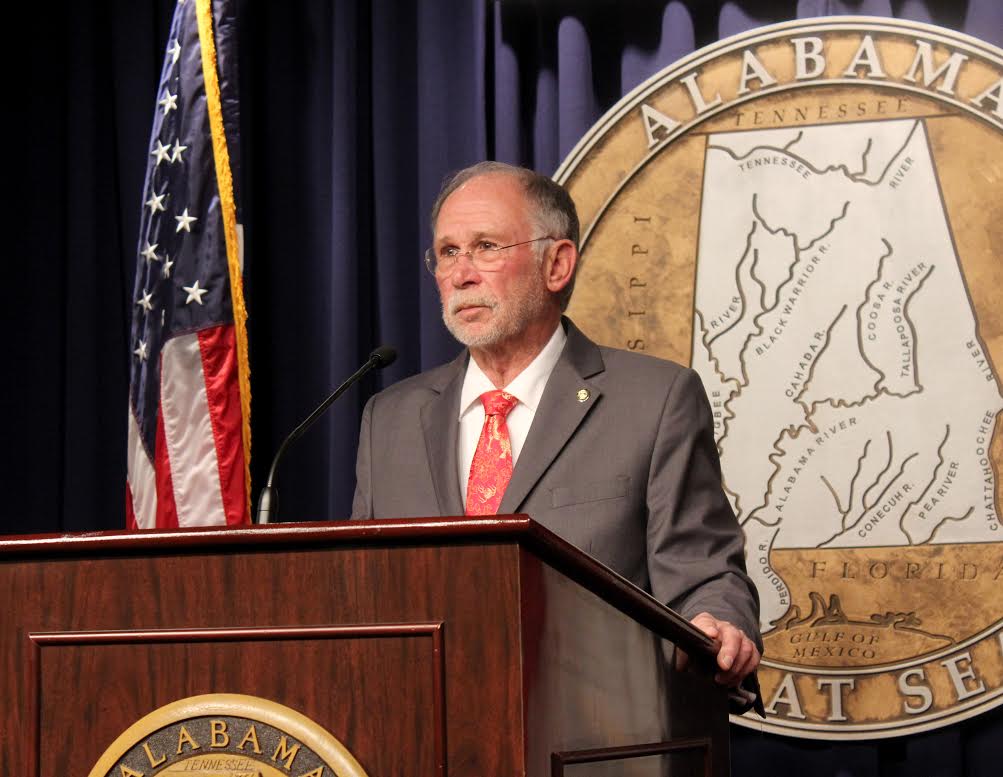
Republican state Sen. Jim McClendon of Springville held a news conference Tuesday morning to discuss legislation that would bring the question of a state lottery before Alabama voters. The legislation was co-sponsored by McClendon and state Rep. Alan Harper, a Republican of Northport, who was unable to attend the news conference. SB 19 was filed Tuesday morning and, according to McClendon, it’s a bill that simply provides state residents with the opportunity to vote on whether to have a state lottery in Alabama. “I came forward with this bill because of my constituents,” McClendon said. “This bill will give them the chance to express themselves.” McClendon noted that, because the bill does nothing more than provide people with the opportunity to vote on a lottery, details are unavailable on how the profits from a lottery would be allocated. McClendon hopes to see his bill passed during the upcoming Legislative Session, which will give voters the opportunity to cast a yay or nay ballot in November. If Alabama voters support the formation of a lottery, McClendon aims to have the details ironed out in the 2017 Legislative Session and predicts a lottery will be in operation by the beginning of 2018. McClendon noted that polling data has been overwhelmingly favorable toward a state lottery, adding that the lowest numbers he has seen are about 70 percent. Further, McClendon claims that the gross income from a state lottery would be between $285 million to 300 million a year. Concerns have been raised that establishing a state lottery would create “back doors” to other types of gambling in the state, but McClendon flatly rejected that assertion. “This bill is a lottery bill and it is nothing else,” McClendon said. “I believe there’s no way, even if somebody takes it to court, they’ll find an opportunity in here to justify gambling by any other entity that might be interested in having gambling in Alabama.” Though McClendon believes the odds of getting the bill passed are good, even while other legislators are rumored to be drafting their own lottery and gambling bills, he knows there will be issues that arise during the session. “There’s always hiccups,” McClendon said. “That is the nature of what we do here in the Alabama Legislature.”
Jim McClendon, Alan Harper to announce Alabama lottery bill

Republicans state Sen. Jim McClendon of Springville and Rep. Alan Harper of Northport plan a joint press conference Tuesday to discuss their legislation to allow the public to vote on a statewide lottery. The press conference will take place 10 a.m. in the Press Room on the third floor of the Alabama State House. Representatives in McClendon’s office were directed to inform anyone seeking information on the bill to attend Tuesday’s press conference. Harper was attending to a personal matter and unable to discuss the legislation in detail. A state lottery has been a divisive issue since former-Gov. Don Siegelman attempted to pass such legislation during his tenure. During last year’s budget struggles, when two Special Sessions were called to address a multimillion dollar hole in the state’s general fund, a proposal by Republican Sen. Paul Sanford of Huntsville to have Alabama join Powerball, Mega Millions and other state lotteries died in the Senate Committee on Tourism and Marketing. McClendon and Harper’s bill will be introduced in the 2016 Regular Session of the Alabama Legislature, which begins Feb. 2.
