
Steve Flowers: John Patterson
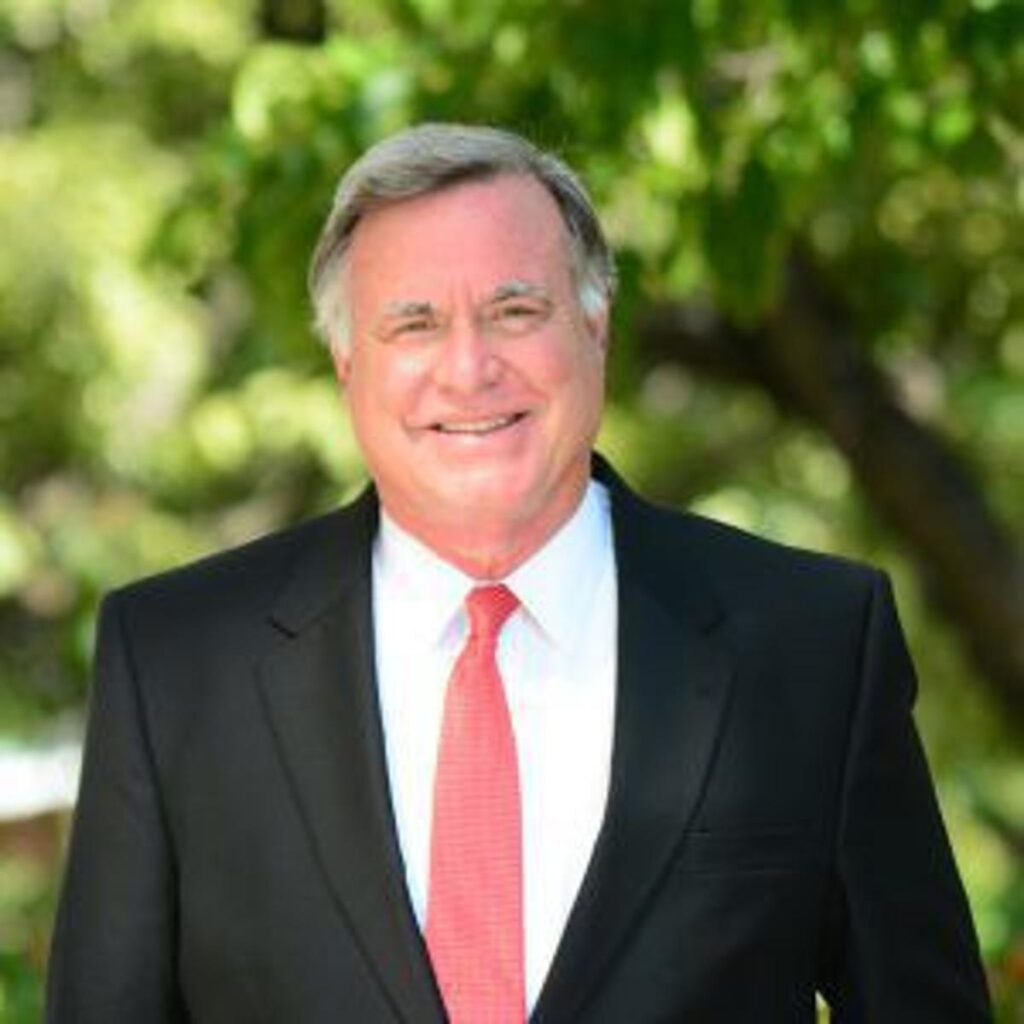
Alabama lost its oldest past Governor when John Patterson passed away last month. He died on the same land where he was born in rural Tallapoosa County. Patterson was 99 years old, and he would have been 100 in September. He was the epitome of the greatest generation. He was a veteran of World War II. He volunteered for the Army as a private and left the Army at the end of the war as a major. Patterson then came home and obtained his law degree, then joined his father in the practice of law. He soon thereafter became Attorney General of Alabama, then governor, then spent several decades as a Justice on the Alabama Court of Criminal Appeals. Patterson’s involvement with state government spanned half a century. John Patterson served as governor from 1959 to 1963. He holds the distinction of being the only person to ever beat George Wallace in a governor’s race. Patterson and Wallace were both making their first race for governor in 1958. Patterson beat Wallace soundly. Wallace never stood a chance. It would have been hard for anyone to beat a man in a race for Governor of Alabama, who had both the race issue and sympathy vote. Patterson had the Ku Klux Klan endorsement in that race. Wallace was actually considered a progressive and softer on the race issue than Patterson. Patterson had become Attorney General of Alabama at a very young age after his father, Albert Patterson, was assassinated just 16 days after winning the race for Alabama’s Attorney General in 1954. The elder Patterson had run with the promise to clean up Phenix City, which had been the most corrupt, sinful city in the South if not the nation. It was the redneck version of Las Vegas. However, unlike Las Vegas, everything they did in Phenix City was not legal or condoned. The east Alabama town near Ft. Benning and Columbus, Georgia, was run by a corrupt rural mafia. This mafia gunned down Albert Patterson in an alley behind his law office. The younger Patterson was then picked to replace his father as the Democratic Attorney General nominee. John Patterson became Alabama Attorney General at age 33. Just days after his election, a movie was made about the Phenix City saga. Between that and his well-publicized anti-civil rights actions, by the time John Patterson got ready to run for Governor of Alabama, he was a folk hero to Alabamians. Wallace thought he was going to win the governor’s race on his first try in 1958. However, when he got into the heat of the campaign, he realized that he was running against a legend. It seemed like everybody in the state had seen the movie “The Phenix City Story.” The sympathy for Patterson was too much to overcome. In addition, the race issue had become paramount, and Patterson owned it. After Wallace lost, he was in a deep depression for a few weeks, but finally got out of bed, shaved, and looked in the mirror and said aloud, “I got out segged, and I will never be out segged again.” A governor could not succeed himself at that time. He knew Patterson could not run again in 1962. He grabbed the race issue and ran nonstop for four years, and captured the governor’s office in 1962. Patterson did a good job as governor. He was governor during the beginning of the volatile first movements towards Civil Rights. A lot of it played out in plain view of his Governor’s Office looking down on Dexter Avenue. He took a very adamant, stringent position against integration and all of the protests. Governor Patterson wrote his biography published by New South Books in 2008 entitled Nobody but the People, which was, by the way, his campaign slogan in his 1958 race for governor. We visited at length during the year he was touring the state with his book. During our visits, he revealed remarkable stories surrounding the era when he was Attorney General and Governor of Alabama. In the last few years, we visited at his farm home in Goldville. He was amazingly sharp. His friends and relatives were surrounding him when he passed away. John Patterson has a special place in Alabama political history. See you next week. Steve Flowers is Alabama’s leading political columnist. His weekly column appears in over 60 Alabama newspapers. He served 16 years in the state legislature. Steve may be reached at www.steveflowers.
George Wallace Jr: A tribute to John Patterson and a life well lived
Since his passing last week at age 99, former Alabama Governor John Patterson, his character, and the deep and decades-long relationship he shared with my family have frequently been in my thoughts. I met John Patterson in 1958 when he was Alabama’s nationally-famous state attorney general and a candidate for governor against my late father, a former state representative and sitting circuit judge for Barbour and Bullock counties in the Third Judicial Circuit. As a six-year-old, I would stand on a chair and make political speeches on behalf of my father’s candidacy at political forums across Alabama. The crowds seemed to like the novelty of such a young boy campaigning for his parent, and it proved to be a valuable introduction to Alabama politics that served me well during my own campaigns years later. Gov. Patterson and I first shook hands at one of those forums, and he remained a welcome presence in my life for more than 60 years to follow. He and my father were friends before that campaign, and they maintained their friendship even after Patterson became the only man to defeat him in a gubernatorial campaign and later ran for governor against my mother, Lurleen, in 1966. In fact, their friendship grew and deepened as the years went by, and more and more of their colleagues, contemporaries, and political allies passed away. A World War II veteran who served on General Dwight Eisenhower’s staff, Gov. Patterson also saw action in the Korean Conflict before returning to Phenix City and opening a law practice with his father, Albert. Phenix City was known at the time as the “Wickedest City in America” because of the gambling, prostitution, and other vices that operated openly thanks to a complicit, wink-and-nod agreement with members of local law enforcement. Because so many of his soldiers were returning to base broke, beaten, and robbed after payday, General George Patton, while stationed at Fort Benning, once threatened to cross the Chattahoochee River and flatten Phenix City with his tanks. John’s father, Albert Patterson, a former member of the Alabama Senate who wished to restore law and order to the city, sought help from state officials in Montgomery, but he found that many of them, as well, had been co-opted by the Dixie Mafia when they refused his requests. Taking matters into his own hand, he ran a statewide campaign for attorney general on a platform of cleaning up Phenix City. Despite widespread vote fraud intended to rob him of victory, Albert Patterson won the Democratic primary, which was then tantamount to election, but he was assassinated outside his law office by the same criminal network he was working to destroy. John Patterson ran for attorney general in his father’s place, and he vindicated his murder with zeal. Working with the National Guard that Gov. Gordon Persons had called in after declaring martial law, Patterson secured almost 750 indictments against the local law enforcement officers, elected officials, and organized crime elements that operated the vices. He also successfully prosecuted the chief deputy sheriff for killing his father. Patterson became a national celebrity, and Hollywood even made a movie about the events titled “The Phenix City Story.” As a result, he was propelled into the governor’s office following the 1958 campaign. His term as governor was notable for a $100 million public school building program, increased services for the aged and infirmed, and opposition to loan-sharking operations that preyed on the poor, but most historians remember it for the early events that occurred during the struggle for Civil Rights. Yes, Gov. Patterson was controversial, as was my father early in his career, relative to the issue of segregation, but they were products of their era. As time passed, they saw the light, walked toward it, and embraced it while becoming advocates for brotherhood and understanding. In the end, they both got it right. One of the finest appointments my father ever made was placing John Patterson in an open seat on the Alabama Court of Criminal Appeals, a post he held until retiring in 1997. His work and influence are felt on that court even to this day, and it is notable that he always preferred to be addressed as ‘Judge Patterson” rather than “Governor Patterson” after stepping down from public life. I had the pleasure of serving with Judge Patterson for more than 20 years on the board of Lyman Ward Military Academy, and the keen insight and wisdom he brought to our proceedings were always impressive. Following our board meetings, we would always have lunch in the mess hall with the cadets. Judge Patterson and I would sit across from each other as we reminisced and told behind-the-scenes stories about the political events and larger-than-life personalities of a by-gone era. We were always amused that the other trustees would quietly ease their chairs closer to ours in order to eavesdrop on our conversations and get an insiders’ look at Alabama politics. When our father passed away in 1998 at age 79, my family immediately asked Judge Patterson to deliver his eulogy at the state funeral service held in the Alabama Capitol Building, and it remains a touching memory to this day. After sharing remarks that were all at once reflective, humorous, candid, and emotional, Judge Patterson ended his eulogy about my father by saying: “His passing marks the end of an era in our history. Alabama has lost its greatest son, and I have lost a dear friend.” Those words he spoke in tribute to my father express exactly how I feel about the loss of Judge John Patterson, a kind, decent, and honorable man who loved Alabama fiercely and leaves behind a life well lived. He will be missed. George Wallace Jr. is the son of Alabama Govs. George and Lurleen Wallace. He previously served two terms as Alabama State Treasurer and two terms as a member of the Alabama Public Service Commission.
Segregationist former Alabama Gov. John Patterson dies at 99
Former Alabama Gov. John Patterson, who entered politics as a reformer after his father’s assassination but was criticized for failing to protect the Freedom Riders from angry white mobs, has died. He was 99. He died Friday, his daughter, Barbara Patterson Scholl, confirmed. She said funeral arrangements are pending. “He died very peacefully at home. His family and friends were with him,” she said. Patterson’s involvement with state government spanned a half-century, beginning with his election as attorney general at 33 after violence in Phenix City, and later as a judge. A segregationist as governor, he drew criticism when Freedom Riders were attacked while in Alabama and Patterson did nothing to protect them. He later voiced regret for what happened. He ended his political career more serenely on the Court of Criminal Appeals, where he continued to write opinions into his 80s. Patterson also was involved in the disastrous Bay of Pigs invasion, helping the CIA get Alabama Air National Guard members to train Cuban exiles. Some Alabama pilots died when the 1961 invasion of Cuba failed. Patterson was born on his grandparents’ farm in the tiny Tallapoosa County community of Goldville but finished high school in Phenix City, where his father, Albert Patterson, was a lawyer. After serving on Gen. Dwight Eisenhower’s staff during World War II, Patterson returned home, got his law degree from the University of Alabama, and went into practice with his father, Albert Patterson. Albert Patterson ran for attorney general in 1954 on a platform of cleaning up the vice and illegal gambling that had turned his town into “Sin City, U.S.A.” He won the Democratic nomination to be the state’s top prosecutor but was gunned down in Phenix City on June 18. Democratic Party officials pressured his son to run for attorney general in his place. He did and won. In a 2003 interview, Patterson told The Associated Press he had no interest in politics until his father’s death. “If he hadn’t been killed, I never would have run for public office. Nobody would have ever heard of me outside legal circles,” Patterson said. As attorney general, Patterson kept his father’s campaign promise to clean up Phenix City. He also fought civil rights groups in court. In one case, he got a restraining order to keep the NAACP from operating in Alabama. The restraining order remained until 1964 when it was lifted by the U.S. Supreme Court. Patterson ran for governor in 1958, beating George Wallace in a Democratic primary that focused largely on Patterson’s pro-segregation stand. Patterson was the only person to beat Wallace in an Alabama election. Four years later, Wallace successfully claimed the segregationist banner to begin his dynasty. During Patterson’s term, Alabama launched a $100 million school building program, increased old-age pensions, returned the State Docks to profitability, and enacted a small loan law to curb loan sharks. But his term also saw attacks on the Freedom Riders who were seeking to integrate bus waiting rooms and lunch counters. Patterson said later he mistakenly trusted police in Birmingham and Montgomery to protect the Freedom Riders, but they didn’t. “I regret it, and it was bad for my administration,” Patterson said in 2003. Patterson said he knew segregation couldn’t be maintained under the Constitution, but he wanted to delay its end. He said he felt Alabamians would accept integration without violence if change occurred slowly. Exactly 50 years after the Freedom Riders were beaten by a white mob in Montgomery, Patterson welcomed 10 of them back to Montgomery on May 20, 2011, for the dedication of a museum honoring them. “It took a lot of nerve and guts to do what they did,” Patterson said. In a 2009 interview, Sam Webb, co-editor of the book “Alabama Governors,” said Patterson was “a brave and courageous” governor on many fronts, but those accomplishments were overshadowed by race issues. “Unfortunately what will stand out in John Patterson’s case is his vociferous opposition to civil rights and racial integration,” said Webb, a historian at the University of Alabama at Birmingham. During Patterson’s term as governor, the CIA began planning for Cuban exiles to invade Cuba and try to overthrow Fidel Castro. A CIA agent approached Patterson about getting members of the Alabama Air National Guard to help train the exiles. Patterson agreed after the agent assured him that President Eisenhower had approved the plan. About 300 Alabamians helped train Cuban exiles for the Bay of Pigs invasion, which was not carried out until President John Kennedy replaced Eisenhower in the White House in 1961. On the third day of the invasion, as it was failing, Alabama pilots flew the last bombing mission, and four died. Kennedy initially denied any U.S. involvement in the invasion, which was a shock to Patterson, who knew differently. Years later, Patterson disclosed that he had tipped off Kennedy about the invasion plans shortly before the November 1960 presidential election. Patterson, a Kennedy supporter, flew to New York to tell Kennedy out of concern that the Eisenhower administration would carry out the invasion just before the presidential election to boost Vice President Richard Nixon’s chances of beating Kennedy. Patterson couldn’t seek a second term in 1962 because Alabama law then prohibited consecutive terms. He tried a comeback in 1966, but lost to Wallace’s wife, Lurleen Wallace. He also ran unsuccessfully for chief justice of the Alabama Supreme Court in 1972. Patterson, who had been friends with Wallace before their bitter 1958 race, eventually renewed the friendship and helped Wallace in his later campaigns for president and governor. In 1984, Wallace appointed Patterson to a vacancy on the Alabama Court of Criminal Appeals. He won election to a full six-year term later that year and was reelected in 1990. In January 1997, he had to retire because the state constitution prohibits judges from running for another term after reaching 70. Still, Patterson continued to work for the court by helping write opinions because he said he enjoyed being a judge more
