
As Aleppo falls, Donald Trump faces test on posture toward Russia
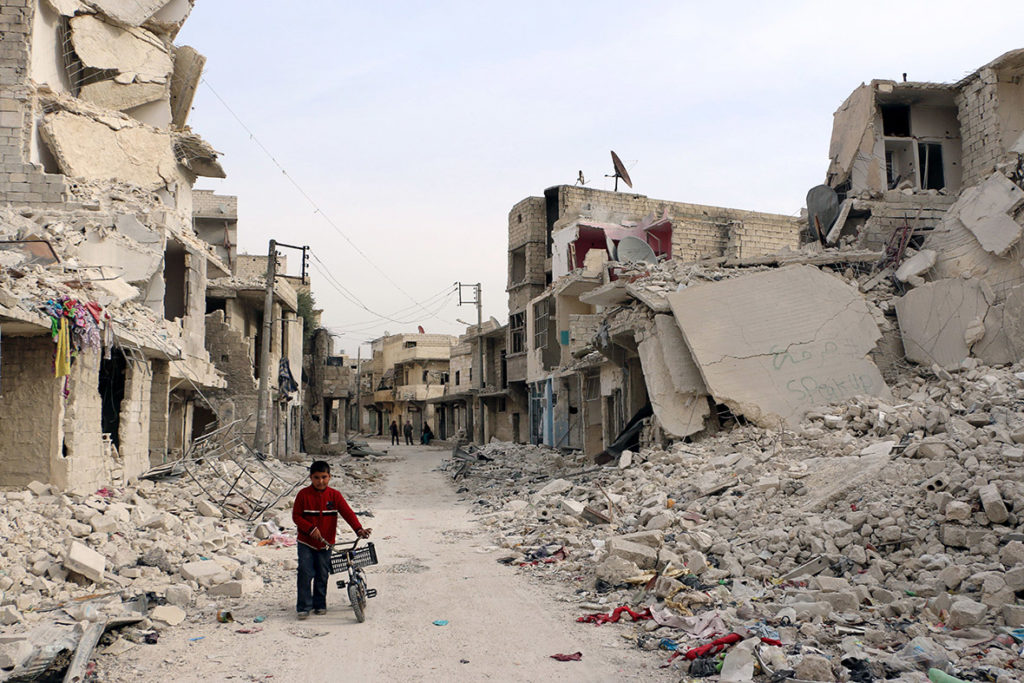
Aleppo’s fall to Syrian government forces is shaping up as the first major test of President-elect Donald Trump‘s desire to cooperate with Russia, whose military support has proven pivotal in Syria’s civil war. The death and destruction in the city is only renewing Democratic and Republican concern with Trump’s possible new path. Though Trump has been vague about his plans to address this next phase in the nearly six-year-old conflict, he’s suggested closer alignment between U.S. and Russian goals could be in order. His selection Tuesday of Exxon Mobil CEO Rex Tillerson, who has extensive business dealings with Russia and ties to President Vladimir Putin, fueled further speculation that Trump will pursue a rapprochement with Moscow. Indeed, Trump was already trying to portray Tillerson’s connections with Russia as a plus. In talking points circulated on Capitol Hill and obtained by The Associated Press, Trump’s transition team said Tillerson would “work closely” with Russia on “defeating radical Islam” but would “easily challenge Russia and other countries when necessary.” “President Putin knows Mr. Tillerson means what he says,” the talking points say. A warmer relationship could alter U.S. policy on nuclear weapons, sanctions, Ukraine and innumerable other issues – but none so clearly or quickly as Syria, where President Bashar Assad‘s defeat of U.S.-backed rebels in Aleppo is poised to be a turning point. Assad and Russia are expected seize the moment to try to persuade the U.S. to abandon its flailing strategy of trying to prop up the rebels in their battle to oust Assad. That decision will fall to Trump. The president-elect has not commented or tweeted about the crisis in Aleppo and widespread fears of humanitarian disaster. Yet his previous comments on the broader conflict suggest he’s more than open to a policy shift. During the campaign, Trump asserted that defeating the Islamic State group in Syria, not Assad, must be the top priority, a position that mirrors Russia’s. “I believe we have to get ISIS. We have to worry about ISIS before we can get too much more involved,” Trump said in October, using an acronym for the extremist group. Prioritizing the fight against IS could put the U.S. in closer alignment with Russia’s public position, in a Middle Eastern take on the adage that “the enemy of my enemy is my friend.” It’s a point Trump appeared to make during the second presidential debate when he noted that he didn’t like Assad, but added, “Assad is killing ISIS. Russia is killing ISIS.” And in his first days as the president-elect Trump suggested he might withdraw U.S. support for the various rebel groups that make up Assad’s opposition, telling a newspaper that “we have no idea who these people are.” Trump’s posture doesn’t just buck President Barack Obama‘s policy, it conflicts with his party’s stance, as well. Trump’s running mate, Vice President-elect Mike Pence, argued during the campaign that the U.S. should strike Assad’s forces if needed to prevent devastation in Aleppo. Trump took the remarkable step of contradicting him. “I disagree,” Trump said, and Pence quickly backed off the threat of military action. Both Democratic and Republican critics say Trump’s brushstroke analysis of Syria’s internal conflicts paints a far rosier picture of Russia’s aims than reality – and even endorses some of the propaganda Assad has used to delegitimize his opponents. “Putin is a thug, a bully and a murderer, and anybody else who describes him as anything else is lying,” Sen. John McCain, R-Ariz., said after word emerged that Trump was picking Tillerson as his chief diplomat. While Moscow has attacked IS at times, the U.S. and its allies say most Russian airstrikes have targeted rebel-dominated areas where IS isn’t active. American officials accuse Assad of a soft approach toward IS, and even of colluding with the group in hopes of marginalizing U.S.-backed rebels. Though the U.S. under Obama has tried to work diplomatically with Russia, Syria cease-fire deals have repeatedly collapsed, with the U.S. accusing Moscow of failing to use its influence to prevent Assad from violating them. Meanwhile, Russia’s military intervention has been successful in helping Assad reclaim the upper hand, making Putin a key player in Syria’s future. So closely aligned are Russia and Syria that it was Russia that negotiated a cease-fire to evacuate the last civilians and opposition fighters from eastern Aleppo, rebels said. The rebels had been squeezed for months into smaller and smaller areas of Aleppo. The city’s status as Syria’s commercial hub makes its capture a key victory for Assad. As world leaders debate what to do next, all eyes are on Trump, who takes office on Jan. 20. Robert Ford, the former U.S. ambassador to Syria and a Middle East Institute scholar, said the horrifying images of suffering emanating from Syria would force Trump to outline a more detailed response. “While the Trump administration may want to avoid getting into the business of regime change, it’s still going to have to address what it does about grotesque violations of international humanitarian law and war crimes,” said Ford. “Just saying ‘we’re not interested in regime change’ is not a response.” Aligning with Russia would make it harder for the U.S. to corral the rebels’ more strident supporters into supporting peace mediation. Assad foes like Turkey, Qatar and Saudi Arabia might become more inclined to give extremists advanced weaponry despite U.S. protestations. Concerns that Trump may soften U.S. policy toward Russia, currently under tough U.S. sanctions over its actions in Ukraine, burgeoned during the campaign amid signs of Russian hacking of political groups. U.S. intelligence agencies now say the hacking was intended to help Trump win. Those concerns grew louder still Tuesday when Trump tapped Tillerson for secretary of state despite his history of arguing against sanctions on Russia, which could affect Exxon’s joint ventures with Russia’s state oil company. In 2013, Putin awarded Tillerson the Order of Friendship in honor of his efforts to improve U.S.-Russia ties. Republished with permission of The Associated Press.
John Kerry: US, Russia studying new ideas to stop Syria fighting
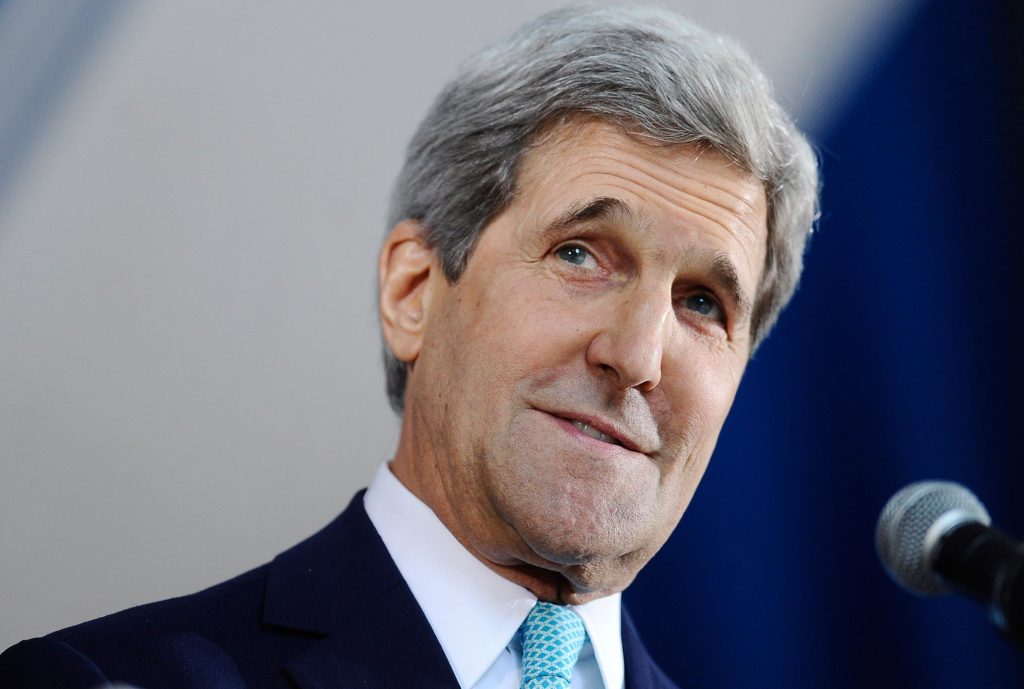
The United States and Russia are studying new ways to break a months-long diplomatic deadlock over how to stop the fighting in the Syrian city of Aleppo, U.S. Secretary of State John Kerry said Friday. He said the “ideas” will be tested in follow-up discussions between American and Russian diplomats next week. While Kerry didn’t elaborate on the substance of the fresh approaches being worked on with Russia, he stressed that the U.S. and Russia both see the situation as urgent and aren’t waiting for Donald Trump‘s presidency to begin on Jan. 20. But given the repeated failures of the former Cold War foes to halt Syria’s 5 ½-year civil war, it is unclear how much hope the new effort holds. “We have exchanged a set of ideas, which there will be a meeting on early next week in Geneva, and we have to wait and see whether those ideas have any legs to them,” Kerry said after meeting Russian Foreign Minister Sergey Lavrov in Rome. “I will say that both sides understand the importance of trying to continue the diplomacy and trying to see if something can be done. Nobody is waiting for the next administration. We both feel there is urgency.” Kerry said he will gauge progress with Lavrov when they meet again on the sidelines of a European security conference in Hamburg, Germany, on Wednesday. While the talks were going on, Syria showed off its recent gains in Aleppo, once the country’s largest city and commercial center. State media reported Friday from areas captured this week in a Russian-backed ground offensive, airing reports of roads being restored, debris removed and civilians resettled. The U.N. aid agency said an estimated 31,500 people have been displaced as a result of the recent fighting, which takes Syrian President Bashar Assad’s government closer to capturing the whole city and completing what would be perhaps a devastating blow to U.S.-backed rebel forces. The war has killed as many as half a million people since 2011, contributed to Europe’s worst refugee crisis since World War II and allowed the Islamic State group to emerge as a global terror threat. Friday’s diplomatic discussions took place in a hotel several stories above an Italian-hosted conference on the Mediterranean region, and Russia’s Lavrov emphasized that his country won’t allow Syria to follow the example of lawless Libya after NATO’s 2011 intervention that helped topple dictator Moammar Gadhafi. That country now is experiencing perhaps its worst violence in two years as rival militias and extremist groups such as IS continue to vie for power. While Washington has accused Moscow of war crimes and crimes against humanity in Syria, Lavrov blamed both the U.S. and United Nations for the current situation. He lamented that the U.S. has been unable to fulfill its commitment under several past cease-fire plans to separate the so-called “moderate” opposition groups from the al-Qaida-linked fighters that Russia says it is targeting. And he questioned why the U.N. isn’t restarting peace talks or rushing aid to areas of Syria in need, something the global body has been extremely reticent to do since a September convoy was hit by an airstrike. The U.S. has blamed Russia for that attack, a charge Moscow denies. “The time is ripe for compromise,” Lavrov said. Both diplomats met Friday with the U.N.’s envoy for Syria, Staffan de Mistura. As journalists were ushered into his meeting with Kerry, reporters could hear the peace mediator telling the U.S. secretary of state, “Anything but stalemate.” Republished with permission of The Associated Press.
