
Trendco investing $43 million in Macon County

On Thursday, Trendco USA announced plans to invest $43 million to launch a nitrile medical glove manufacturing operation in the new Regional East Alabama Logistics (REAL) Park in Macon County. The company plans to create 292 jobs over five years at its new facility. South Carolina-based Trendco also considered sites in Georgia and the Carolinas for the project. Darryl Hunter is the CEO of Trendco USA. “We are very excited about our move to Alabama and look forward to building our PPE manufacturing facility in Tuskegee,” said Hunter. “We believe the people of Tuskegee and the surrounding communities will play a vital role in our success in the medical technology sector.” Trendco is an early-stage company that has been producing medical-grade examination gloves in Louisiana through a partnership with another company. The company plans up to install as many as 10 glove production lines at the REAL Park location in Tuskegee. Once these lines are established, the company plans to expand production into masks and gowns, ensuring a reliable domestic source for these important PPE items to mitigate potential supply chain disruptions. The recent COVID-19 global pandemic and the global shortages in PPE that resulted “Trendco decided to locate its manufacturing facility in Tuskegee after considering many locations in other states, and I know that the company made the right choice by selecting Macon County for its investment project,” said Alabama Governor Kay Ivey. “I look forward to seeing the company grow and thrive in Sweet Home Alabama.” Economic developer Dr. Nicole Jones told Alabama Today, “When a company grows rapidly and needs to choose a new location to manufacture its product or provide services, having a building ‘ready’ is a tremendous advantage in the site selection process because it reduces or eliminates many of the unknowns associated with construction timelines. The initial 168,000 square foot, Class A warehouse, and manufacturing spec building (Building 100), part of a multi-phase project, helped make the site selection process more efficient. Trendco has signed an agreement to lease over 100,000 square feet of space in Building 100 in REAL Park. There the company will initially set up a distribution operation as it ramps up its new glove manufacturing lines. Trendco is seen as a catalyst project for the new 700-acre Class A industrial park located off Exit 42 on I-85. “REAL Park, located near the interstate, has a capacity to eventually expand into 6 million square feet. As qualified companies such as Trendco USA lease within the park, the long-term economic benefits for Macon County and our entire state will be profound,” Jones explained. Justin Patwin is a principal at Farpoint Development – the master developer leading the project. “REAL Park will eventually offer a combined 6.2 million square feet of space when the project’s three phases are completed in five to seven years,” Patwin said. “We and our partners at OPAL are very excited to welcome Trendco to REAL Park. They are making a significant commitment to Macon County and the State of Alabama to bring many new jobs to the community — we feel this is an incredible start to the overall economic impact REAL Park will have in the region.” Alex Flachsbart is the founder and CEO of Opportunity Alabama (OPAL) and the principal of the Opal Fund – the lead investor in Building 100. “We created The OPAL Fund to invest in catalytic projects that could produce compelling returns for both investors and communities across Alabama, and Building 100 is the perfect example of that thesis in action,” explained CEO Flachsbart. Greg Canfield is the Secretary of the Alabama Department of Commerce. “The park is perfectly positioned to capitalize on the growth of the I-85 corridor, and I believe other companies will be putting down roots there in the near future,” Canfield said. “We believe the people of Tuskegee and the surrounding communities will play a vital role in our success in the medical technology sector.” The Macon County Commission, Macon County Economic Development Authority, and other local institutions are supporting the Trendco project with utility upgrades and industrial access roads at the site worth $1.1 million, and other in-kind services. Joe Turnham is the director of the Macon County Economic Development Authority. “Trendco USA also chose our community, in part because of our community’s rich history and our local stakeholders’ spirit of enthusiastic partnership in assuring their company’s success,” Turnham said. AIDT, the state’s primary workforce development agency, is also providing services to advance the project. Brenda Tuck is the Rural Development Manager at the Alabama Department of Commerce. “We’re committed to seeing rural Alabama fully realize its growth potential, and this project headed to Tuskegee is another illustration of how we’re making progress on that front,” Tuck said. “Opportunities are flourishing in the state’s rural communities, and the business world is paying attention.” “Trendco USA is the only minority-owned medical glove and PPE manufacturer in America and is one of the few companies offering ‘Made in the USA’ medical glove products,” Turnham said. “Now, these gloves will also carry a ‘Made in Tuskegee’ label.” To connect with the author of this story or to comment, email brandonmreporter@gmail.com.
Alabama, Birmingham preparing for economic impact of Opportunity Zones
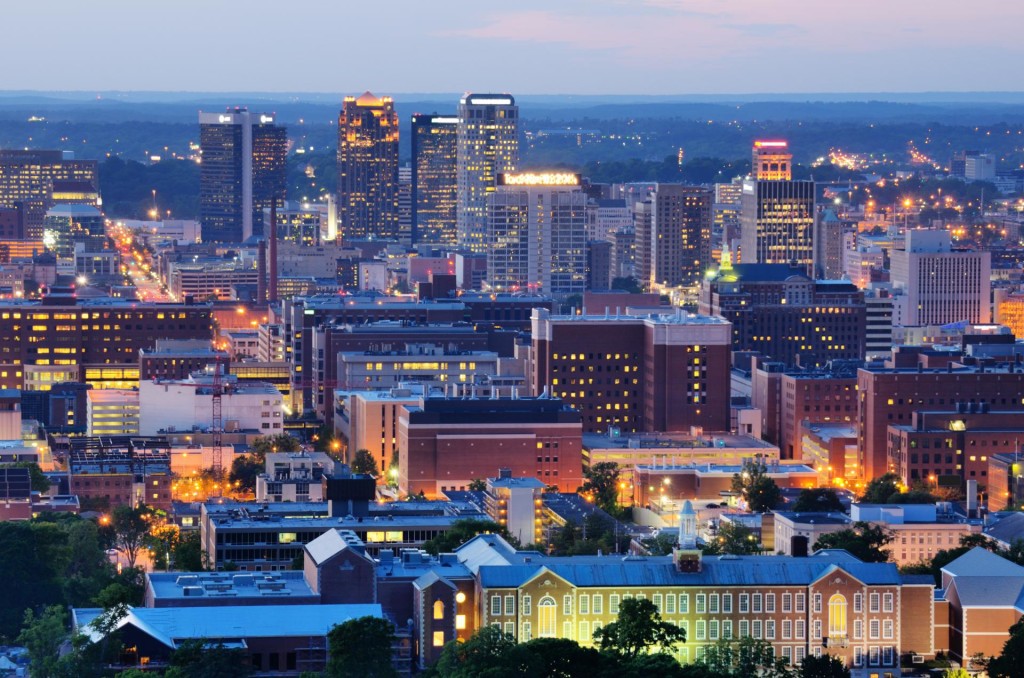
A new national tax incentive program that some believe could be the most transformative economic development tool ever has communities in Alabama, led by Birmingham, preparing to cash in on its share of potentially trillions of dollars in new investment. Opportunity Zones are low-income census tracts with a poverty rate of at least 20 percent and a median family income of less than 80 percent of the statewide or area median income. The program was established as part of the Tax Cuts and Jobs Act of 2017 in hopes of spurring new investment into these areas. Alex Flachsbart is an attorney with Balch & Bingham and an expert on Opportunity Zones. He recently presented on the subject to members of the Economic Development Association of Alabama. “What it does is provides people with capital gains an incentive to put those gains back into low-income communities, to redeploy that capital to places that really need it,” he said. Alabama Gov. Kay Ivey tasked the Alabama Department of Economic and Community Affairs with choosing the 158 Opportunity Zones that Alabama would designate from the 629 eligible census tracts. The guidelines for Opportunity Zones are still being written, with the initial regulations expected this month and proposed regulations in place by year’s end. What is known is that those who have capital gains from the sale of everything from stocks to businesses can reinvest those gains into qualified projects within designated Opportunity Zones and receive tax deferral and reduction benefits over time. Birmingham and other cities want to be prepared when investors are ready to put capital gains into approved projects like startup businesses and real estate developments. Alabama has designated 158 census tracts as Opportunity Zones. (ADECA) The city is creating the Birmingham Inclusive Growth (BIG) Fund to attract investments in Opportunity Zones in the city. Josh Carpenter, director of innovation and economic opportunity, said Birmingham has to be ready now because it will be competing with cities across the country for those dollars. “We’re excited because Birmingham was able to secure 24 Opportunity Zones and also because we have a lot of investable assets here,” he said. Carpenter said the city is prepared to lead, direct and maximize investments in Opportunity Zones. He and Birmingham Mayor Randall Woodfin see the city’s role as not only increasing quality of life and economic growth in neighborhoods but in helping investors. Carpenter said areas like the Innovation District, the Civil Rights District and the Fourth Avenue Business District, as well as the area around the Birmingham-Shuttlesworth International Airport, all stand to initially benefit from Opportunity Zone investments. David Fleming, CEO of REV Birmingham, said he envisions communities in downtown Birmingham but also neighborhoods like Avondale, Woodlawn, East Lake and others benefiting. “I think the Opportunity Zone incentive that’s been created holds tremendous potential for Birmingham, especially since most of the city was able to be designated an Opportunity Zone,” he said. “That means that this is not just an incentive for downtown, but it’s an incentive that could encourage business investment as well as physical redevelopment in a wide range of the territory of the city.” Fleming said the best incentives help attract new capital, leverage private sector dollars and can be combined with incentives that a district or community has in place. “When you talk about the scope of the market for Opportunity Zones, you’re talking about the potential for $6.1 trillion worth of capital gains that could be flowing into communities all over the country,” Flachsbart said. In Alabama, every county has an Opportunity Zone. Alabama is preparing to tap into potentially trillions of dollars across the country that may invest in Opportunity Zones. (Economic Innovation Group/Alabama Newscenter) “Across the state, this incentive will be available for investment, not just in urban communities but rural ones, too,” Flachsbart said. Active businesses, startups and business that have been around that comply with certain tax rules are potential investments. New real estate construction projects, as well as qualified rehabilitation of older buildings, will be among the investments. Investors get the most benefit by investing in an Opportunity Zone for the long haul, Flachsbart said. “There are a series of incentives to sort of help them do that, but the basic point is the longer you hold your investment in one of those distressed areas, the more incentive you get as an investor,” he said. “We’re hoping that this program will really catalyze getting investment off the coast and into places like Alabama.” Investors are anxious to put their capital gains into Opportunity Zones, Flachsbart said. “Interestingly, you’re already starting to see money flow through this program now,” he said. “That’s what’s amazing about this program is the level of excitement within the investor community around what’s going on.” Investors are putting money into one-off projects now but as regulations are approved, the expectation is that large, national funds will be created to invest in Opportunity Zones based on the best chance to enhance investment. “What we have to remember is, here in Alabama, while we’ve got 158 incredible Opportunity Zones, we’re competing with places all over the country,” Flachsbart said. “What we need here in Alabama is a strategy to ensure that we can get our share of that massive $6.1 trillion of potential dollars invested here.” Birmingham will be ready, Carpenter said. “We’re already putting things in place,” he said. Republished with the permission of the Alabama Newscenter.
