
Democrats kept the Senate this year, but 2024 may be harder
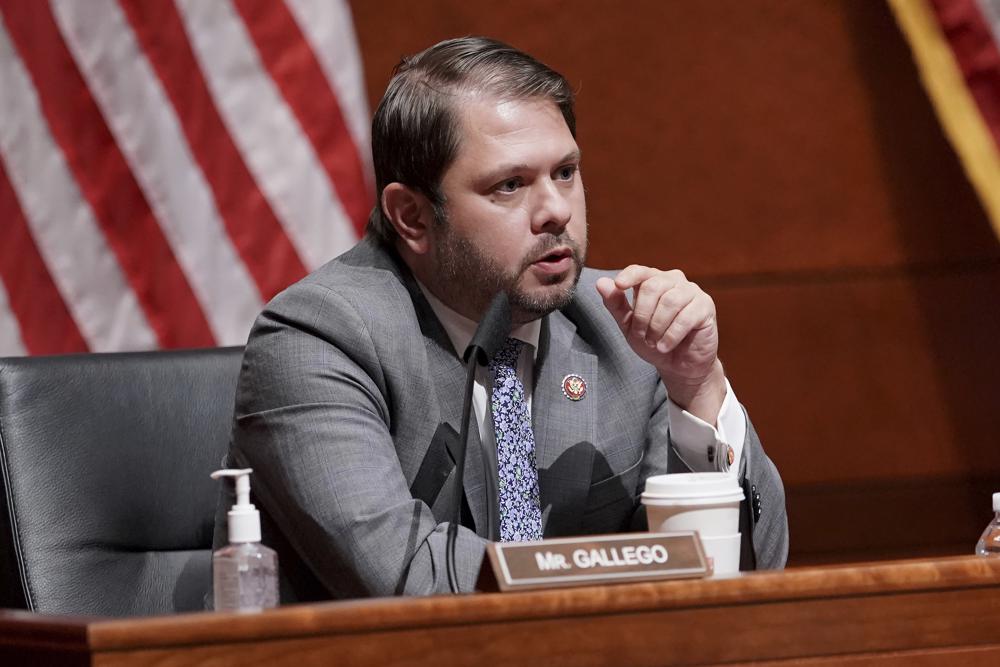
Democrats celebrating a successful effort to keep control of the U.S. Senate this year will soon confront a 2024 campaign that could prove more challenging. The party enters the next cycle defending 23 seats, including two held by independents who caucus with Democrats. That’s compared with just 10 seats that Republicans hope to keep in their column. Adding to the potential hurdles is that some 2024 contests are in states that have become increasingly hostile to Democrats, including Montana, Ohio, and West Virginia. Other Democratic-held seats are in some of the same hotly contested states that were at the center of this year’s midterms, such as Pennsylvania, Arizona, and Nevada. And while Democrats carried each of those races, they did so at great cost and with sometimes narrow margins. In Nevada, for instance, Democratic incumbent Sen. Catherine Cortez Masto won by less than 1 percentage point, or about 9,000 votes. For now, both parties insist they’re laser-focused on coming out on top in the December 6 Senate runoff in Georgia. But Democrats who are on the ballot in 2024 know that they could face fierce headwinds and are studying the results of this year’s election when the party outperformed expectations. For Nevada Sen. Jacky Rosen, a Democrat facing her first reelection campaign, that means staying focused on kitchen table issues and touting legislation like the infrastructure law and gun violence legislation signed by President Joe Biden. “We know that races are always close,” Rosen said in an interview. “We never take anything for granted.” The dynamics of the next Senate campaign could be influenced by a variety of outside factors, particularly the presidential election and the attention it generates. Biden, who turned 80 this month, has said his “intention” is to run for reelection and that he will make a final decision early next year. Former President Donald Trump has already announced a third White House bid, and multiple other Republicans are lining up to launch campaigns. The eventual nominee in each party could have a profound impact on down-ballot races, including those for Senate. But perhaps the biggest question for Senate Democrats seeking reelection will be who Republicans nominate as their opponents. The GOP lost several Senate elections this year, including those in Arizona, Pennsylvania, and Nevada, after Trump-backed candidates struggled to raise money and connect with a broader, more moderate range of voters during the general election. In Nevada, the Republican field to challenge Rosen has not begun to shape up but is expected to attract several contenders. One name receiving attention is Sam Brown, a former U.S. Army captain who was awarded a Purple Heart after being severely wounded in Afghanistan. Brown ran for Senate this year and put up a strong challenge in the Republican primary before losing to Adam Laxalt, who lost in the general election to Cortez Masto. Richard Hernandez, who was Brown’s campaign adviser, said, “He has committed to his supporters that he will never stop fighting for their issues, but he has not made any decisions as to whether that involves a future run for office.” Also in the southwest, Arizona Sen. Kyrsten Sinema, a centrist Democrat, will be up for reelection. The race, like other recent statewide contests in Arizona, is expected to be very competitive. But Sinema is likely to first face a well-funded primary challenger after angering much of the Democratic base by blocking or watering down progressive priorities like a minimum wage increase or Biden’s big social spending initiatives. She has not said whether she plans to run for reelection. Sinema’s most prominent potential primary challenger is U.S. Rep. Ruben Gallego, who has a long history of feuding with Sinema. Gallego has not announced his plans for 2024 but has made it no secret that he’s thinking about challenging Sinema. He even raised money on the prospect he might oppose Sinema. An independent expenditure group is also raising money, saying it will support grassroots organizations committed to defeating Sinema in a Democratic primary. Republicans hope a bruising Democratic primary might give them an opening to win the seat after losing Senate races in Arizona in three consecutive elections. Sinema is among a trio of moderate Senate Democrats who have sometimes used their leverage in an evenly divided chamber to block or blunt some of Biden’s plans and nominees. They will also be among the party’s most vulnerable incumbents in 2024. The other two senators, Joe Manchin of West Virginia and Jon Tester of Montana, will be running as Democrats in states that Trump handily carried in 2020. Manchin has already drawn a GOP challenger in U.S. Rep. Alex Mooney, who declared a week after winning reelection that he was setting his sights on higher office. Manchin has not yet said whether he’ll run for reelection. Republicans see Tester, a three-term senator, as vulnerable, and the opportunity to run for the seat could draw a fierce primary contest between former Interior Secretary Ryan Zinke and Rep. Matt Rosendale. Zinke, who won a House seat in this year’s midterm elections, said he will decide whether to run next year, and Rosendale declined to answer. Tester has not announced if he will seek another term but has said he anticipates 2024 will be just as tough as his last race in 2018, when he beat Rosendale in a close contest. In Pennsylvania, Democratic U.S. Sen. Bob Casey has not said whether he intends to run for a fourth term. Casey easily won reelection in 2018, but Pennsylvania has been competitive for Republicans, including in this year’s Senate race won by Democrat John Fetterman. One potential Republican challenger whose name has been floated in Pennsylvania is former hedge fund CEO David McCormick, who narrowly lost the Republican primary in this year’s race to celebrity heart surgeon Dr. Mehmet Oz. McCormick advisers declined to comment on that prospect. Conservative activist Kathy Barnette, who finished a close third in the Republican primary, didn’t respond to messages about whether she’s considering a 2024 campaign. Wisconsin, which saw Republican Sen. Ron Johnson narrowly win reelection this year, is also expected to have
Donald Trump’s clout factors into U.S. House races in West Virginia, Nebraska
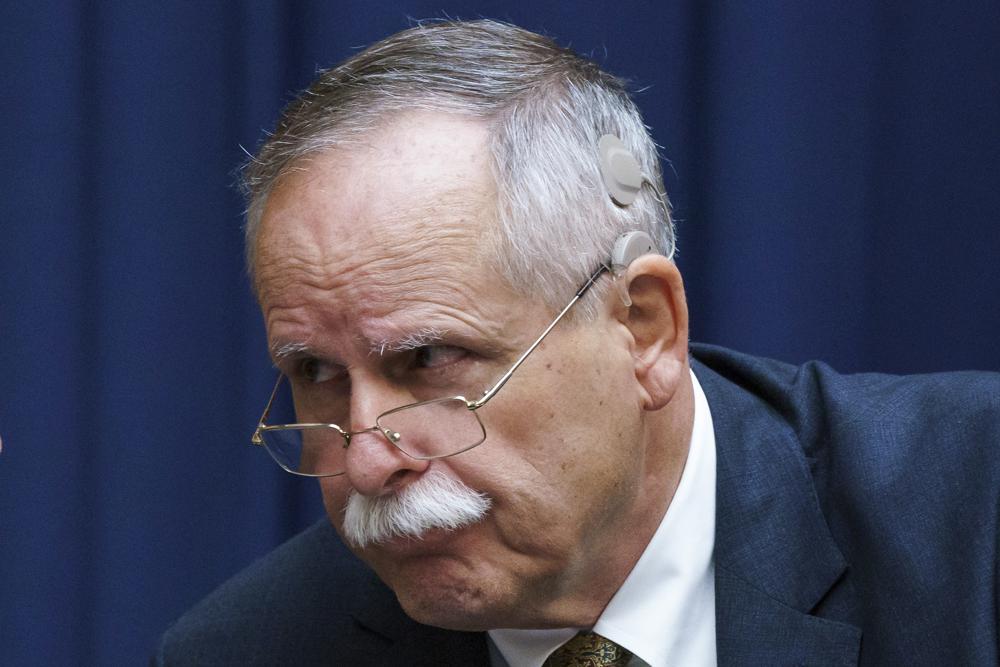
Roads, bridges, and former President Donald Trump are on West Virginia and Nebraska voters’ minds as they choose congressional candidates in Tuesday’s Republican primary elections. Two incumbent GOP congressmen who have taken dramatically different approaches to their time in office are facing off in West Virginia’s 2nd Congressional District, one of the most-watched U.S. House primaries on the day’s ballot. Reps. David McKinley and Trump-backed Alex Mooney were pitted against each other after West Virginia lost a congressional seat based on the results of the 2020 U.S. census. Throughout West Virginia on Tuesday, voters were heading to polling places at schools, churches, and public libraries. Susan Smith, a small business owner in Valley Grove, West Virginia, voted for Mooney at a local elementary school Tuesday morning. She lives in McKinley’s former district and said she always voted for him in the past. But not in this election. “When Mr. McKinley started voting with the Democrats and the current administration, that’s when things changed,” said Smith, who cited McKinley’s vote for President Joe Biden’s infrastructure bill and the January 6 commission. “I’m sorry to be losing a congressman, but we cannot have a Republican congressman voting with the Democrats. West Virginia did not need the money from this un-infrastructure bill.” Lowell Moore, a retired highways worker and county commissioner in rural Tucker County, said the choice was clear to support McKinley. He said he’s already seeing the benefit of federal infrastructure money in work being done to complete Corridor H, the last remaining section of the Appalachian Development Highway System in West Virginia. Moore said completing Corridor H will cut the response time for emergency services in half in Tucker County, which does not have a hospital and where first responders now have to travel on winding mountain roads. “The people he represents needed this so bad,” Moore said. “I’m a Republican, and I commend him for reaching across the aisle. It shouldn’t be about making the political decision — it should be about making the right decision.” West Virginia’s election is the first of five primaries in which two incumbent U.S. House members will face off. It will be followed by similar contests in Georgia and Michigan and in two Illinois districts. The primary comes on the heels of a victory by Trump-endorsed conservative JD Vance, author of the bestselling memoir “Hillbilly Elegy,” who defeated six other candidates to win the Ohio Republican primary for U.S. Senate last week. The West Virginia contest will once again test the former president’s clout when his own name isn’t on the ballot. Nebraska voters will nominate candidates on Tuesday to fill the seat abandoned by U.S. Rep. Jeff Fortenberry, a Republican who resigned from office and ended his reelection bid after he was convicted of lying to federal authorities about an illegal campaign contribution. Fortenberry’s name will still appear on the ballot for the 1st Congressional District because he withdrew after a deadline to certify the ballot, but Sen. Mike Flood, a former speaker of the Nebraska Legislature, appears to have the advantage over five other Republican candidates. Voters will also pick nominees for Nebraska’s 2nd Congressional District in the Omaha area. Three-term Republican Rep. Don Bacon faces a long-shot challenge from Steve Kuehl, an Omaha consultant who got a shoutout from Trump when the former president visited earlier this month. Trump blasted Bacon as a “bad guy” during a recent rally in the state and had criticized him previously for his support of a federal infrastructure bill that most GOP lawmakers opposed. Bacon also has been mildly critical of Trump in the past, saying the former president bore some responsibility for the January 6 riot at the U.S. Capitol. Trump stopped far short of officially endorsing Kuehl, however, saying: “I think Steve will do well. Good luck, Steve, whoever the hell you are.” Democrats in Nebraska will nominate either state Sen. Tony Vargas of Omaha or Alisha Shelton, an Omaha mental health therapist, to challenge Bacon in the 2nd, the state’s only competitive district. In the rural, geographically vast 3rd Congressional District, Republican U.S. Rep. Adrian Smith faces a challenger but is expected to win his party’s nomination. Two Democrats are vying for their party’s nomination within the district, which is overwhelmingly Republican. In West Virginia, incumbent Rep. Carol Miller is expected to hold her seat in the 1st Congressional District against four Republican challengers. In the state’s 2nd Congressional District, where McKinley and Mooney are battling each other for the GOP nomination, openly gay former Morgantown city councilor Barry Wendell is competing against security operations manager Angela Dwyer in the Democratic primary. Mooney has attacked McKinley for voting with 12 other House Republicans in favor of Biden’s $1.2 trillion infrastructure bill. Trump, who won every single county in West Virginia in two presidential elections and said Republicans who voted for the infrastructure bill should be “ashamed of themselves,” endorsed Mooney on the same day Biden signed the infrastructure law. Rep. David McKinley, a civil engineer by trade, received endorsements and praise from Democratic U.S. Sen. Joe Manchin and GOP Gov. Jim Justice over his infrastructure vote. He said it was time to put party politics aside to meet the needs of his constituents. “This wasn’t for Joe Biden — this was to help West Virginia,” he told The Associated Press. Republished with the permission of The Associated Press.
Barry Moore joins lawsuit to end mask mandate for air travel

Representative Barry Moore has joined sixteen of his colleagues in a lawsuit against the Centers for Disease Control and Prevention (CDC). The lawsuit, Massie et al v. Centers for Disease Control and Prevention, seeks to end the CDC’s mask mandate for individuals traveling on commercial airlines. Reports indicate the Biden Administration is extending the CDC’s mask mandate until April 18. Massie et al. v. Centers for Disease Control and Prevention was filed in the United States District Court for the Western District of Kentucky. The named defendants are Centers for Disease Control and Prevention, Rochelle P. Walensky in her official capacity as Director of the CDC, and Sherri A. Berger in her official capacity as Chief of Staff of the CDC. The lawsuit contains two primary claims: First, none of the statutes or regulations cited by the CDC for the authority to mandate that individuals wear masks on commercial airlines, conveyances, and at transportation hubs, permit the CDC to implement or enforce this mandate. Second, even if Congress had granted the CDC the authority to promulgate the mask mandate, the granting of this authority would violate a principle known as the “non-delegation doctrine.” Moore and his co-plaintiffs are asking a federal court to declare that “the mask mandate is beyond the CDC’s statutory authority or is unconstitutional.” The plaintiffs are also seeking an injunction that prohibits the CDC, or anyone acting on the CDC’s behalf, from enforcing the mask mandate. Rep. Thomas Massie argued that the CDC doesn’t have the authority to force people to wear masks on airplanes because Congress never passed a law requiring it. “The Centers for Disease Control and Prevention does not have the legal authority to force people traveling on commercial airlines to wear masks,” stated Massie. “Congress never passed a law requiring masks on commercial flights. This lawsuit targets the faceless bureaucrats who are behind the CDC’s unscientific regulation so that this illegal mask mandate can be brought to a permanent end.” Moore argued that the mandate should end immediately because it infringes on constitutional freedoms. “Government bureaucrats desperate for relevancy are waging a war against everyday American citizens and their constitutional freedoms,” stated Rep. Moore. “The unscientific mask mandate for commercial air travel should be ended immediately, and I am proud to join my friend Rep. Massie in this lawsuit to end this charade permanently.” Additional plaintiffs for the lawsuit include Reps. Thomas Massie, Rand Paul, Andy Biggs, Dan Bishop, Lauren Boebert, Andrew Clyde, Warren Davidson, Bob Good, Paul Gosar, Marjorie Taylor Greene, Brian Mast, Alex Mooney, Ralph Norman, Bill Posey, Matt Rosendale, and Chip Roy.
Reps. Barry Moore and Mo Brooks demand DOD halt involuntary discharges for vaccine refusal immediately
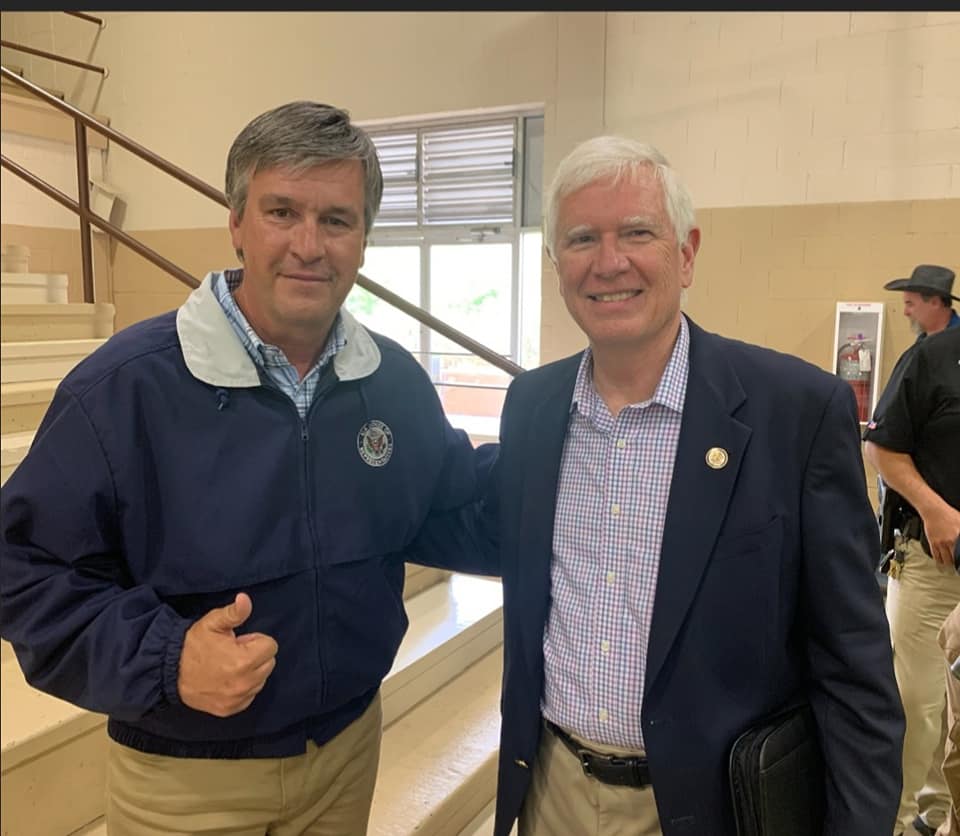
Reps. Barry Moore and Mo Brooks joined 40 of their colleagues in sending a letter to the Department of Defense (DOD) to demand that they halt efforts to involuntarily discharge members of the military who have refused COVID-19 vaccination. The letter requests that they stop until an in-depth review of natural immunity is complete, and the Department has issued uniform procedures for vaccine exemptions. According to Moore’s press release, Section 720 of the National Defense Authorization Act for Fiscal Year 2022 requires the DOD to establish uniform procedures for issuing exemptions and fully consider natural immunity. This includes eligibility timelines for consideration of exemptions for service members nearing separation and retirement in the development of uniform procedures relating to administrative exemptions. According to an NPR report, as of January 26, 96% of active troops had been completely vaccinated, while 3,350 soldiers had refused to get the vaccine. Nearly 5,900 have received temporary exemptions. “The DOD must immediately halt efforts to discharge our active-duty military members who refuse to get the vaccine just because overreaching politicians want to continue intervening in the private lives of the American people,” said Moore. “We must ensure that the DOD completes an in-depth review of natural immunity. I will continue to fight against the tyrannical vaccine mandate on our service members.” The letter states, “We are gravely concerned that the military services are proceeding with involuntary discharges when it is unclear to us whether uniform procedures have been issued by the Department of Defense. If the Department of Defense has not issued uniform procedures or reviewed the inclusion of natural immunity and the military services are moving forward with involuntary discharges, then we believe the Department is ignoring and violating Section 720. Congress included this language to protect our service members, and we expect the Department of Defense to abide by the law.” Additional members of Congress to sign the letter include Vicky Hartzler, Doug Lamborn, Elise Stefanik, Brian Mast, David McKinley, Darrell Issa, Kevin Hern, Rodney Davis, Bill Huizenga, Yvette Herrell, Michael Waltz, Bill Posey, Michael Guest, David Valadao, Thomas Tiffany, Pete Stauber, Mike Kelly, Andy Biggs, Neal Dunn, Gus Bilirakis, Dan Crenshaw, Randy Weber, Sr., Louie Gohmert, Lauren Boebert, Glenn Grothman, Alex Mooney, Joe Wilson, Scott DesJarlais, Jack Bergman, David Schweikert, Jeff Duncan, Ralph Norman, Bruce Westerman, Jim Banks, Rick Crawford, Jodey Arrington, Christopher H. Smith, Victoria Spartz, Ted Budd, and Gregory Steube.
Conservatives decry door-to-door vaccine checks

Two Alabama leaders, Mo Brooks and Barry Moore, and dozens of other members of Congress sent a joint letter to President Joe Biden last week regarding his decision to implement door-to-door checks on the American people to coerce them into receiving the COVID-19 vaccine: The letter states, “Your administration’s decision to go door-to-door to coerce individuals to receive a COVID-19 vaccine is deeply disturbing and violates the privacy of Americans. The private health information of millions of Americans should never be a matter of concern for the federal government. Americans must be free to make their own personal health choices.” The concern, coming mostly from Republicans, comes from a statement from President Biden on July 6, when he stated, “Now we need to go to community by community, neighborhood by neighborhood, and oftentimes, door to door – literally knocking on doors – to get help to the remaining people protected from the virus.” During the White House briefing, the president also called on providing vaccines to all healthcare providers, including pediatricians, and discussed providing mobile clinics that could be set up at events like sports events and festivals. Even though Alabama has one of the lowest rates of COVID-19 vaccinations in the country, there are no plans to start a door-to-door campaign. According to NBC15, Dr. Karen Landers commented that it was a strategy that was discussed but that the state is not adopting it. Dr. Landers stated, “No, we are not doing that in this point in time as far as going door to door.” “Persons just really not necessarily being receptive to persons coming on to their property or coming to their door with information,” she said. Jim Zeigler recently called on Governor Kay Ivey to ban what he called “door-to-door vaccine squads” in Alabama. Zeigler asked Ivey to “use the strongest steps to clearly direct federal agents and their recruits that their entry onto home properties in Alabama could legally be considered trespassing.” Arizona Rep. Andy Biggs said in a statement, “Door-to-door vaccine checks on Americans are a blatant abuse of government authority and a pure power play by the Biden administration. The federal government has no right to track the private health information of Americans or to intimidate people into getting the vaccine. Instead of meddling in private medical decisions, the Biden administration should focus on addressing the border crisis, the rampant rise in inflation, and the crime wave that is plaguing American cities – all crises it created. The door-to-door spying on Americans is one more example of the burgeoning surveillance state by the national government.” Biggs posted on Twitter, “I just sent a letter to Biden demanding answers on his door-to-door vaccine checks. The fed gov has no right to track the private health information of Americans or to intimidate people into getting the vaccine.” Other leaders that signed the letter include David Schweikert, Paul Gosar, Ralph Norman, Bob Good, Warren Davidson, Marjorie Taylor Greene, Thomas Tiffany, Jody Hice, Lauren Boebert, Alex Mooney, Chip Roy, Andy Harris, Scott DesJarlais, Andrew Clyde, Yvette Herrell, H. Morgan Griffith, Bill Posey, Randy Weber, Michael Cloud, Dan Bishop, Ben Cline, Mary Miller, Louie Gohmert, Debbie Lesko, Mike Garcia, and Matt Gaetz.
Barry Moore supports Lauren Boebert’s call to censure Joe Biden over border crisis
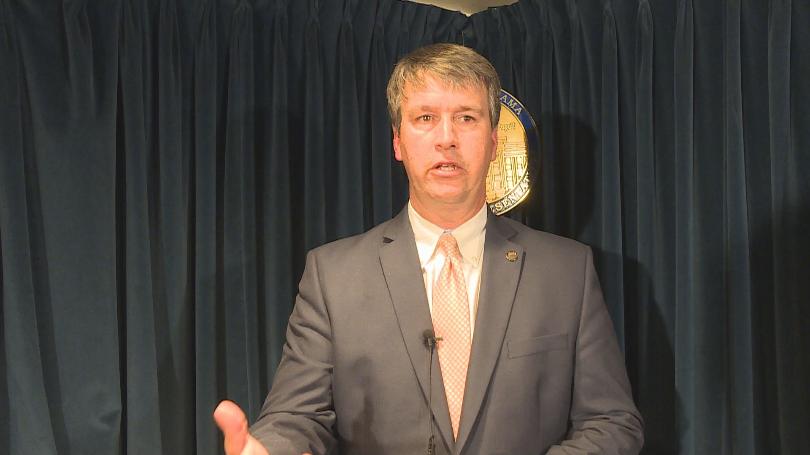
Rep. Barry Moore has joined other leaders to support Rep. Lauren Boebert’s bill to censure President Joe Biden over the border crisis. According to a press release, Moore joined Boebert and other leaders in a press conference to address the resolution. Moore has visited the southern border twice this year. President Biden has not visited the border yet. Some statistics Moore emphasized in his release include: Under President Trump, there were 1,400 children in HHS custody at the border. At one point in June, there were 22,000. Over 1 million illegal aliens have been encountered by CBP since Biden took office, including a record-breaking 180,000 illegal aliens in May. Since Biden took office, CBP arrested 1,413 alien drug smugglers—up from 386 last year. Since Biden took office, CBP arrested 40 alien murderers—up from 3 last year. Since Biden took office, CBP arrested 353 alien sex offenders—up from 156 last year. Since Biden took office, CBP arrested 1,118 aliens for DUIs—up from 364 last year. In just the first four months of Biden’s term, enough fentanyl to kill every American four times over has been interdicted by Border Patrol. Moore stated, “Ensuring the integrity of our borders is one of the most fundamental duties of a president, yet President Biden has destroyed four years of progress at the border to satisfy far-left activists and cheap labor-loving globalists. His reckless determination to reverse every Trump administration policy regardless of the outcome has put every American family and our economy at risk. We must hold President Biden to account for putting politics over the people he has sworn an oath to protect.” Moore stated on Twitter, “President Biden’s dereliction of duty at our southern border is completely unacceptable. Proud to join @RepBoebert in holding Biden accountable for putting politics over the people he has sworn an oath to protect.” President Biden's dereliction of duty at our southern border is completely unacceptable. Proud to join @RepBoebert in holding Biden accountable for putting politics over the people he has sworn an oath to protect. https://t.co/hXhV1H98uQ — Rep. Barry Moore (@RepBarryMoore) June 24, 2021 The bill is supported by: American Principles Project, Citizens for Renewing America, Eagle Forum, Federation for American Immigration Reform (FAIR), Heritage Action, and NumbersUSA. Along with Moore, 22 additional Members of Congress joined Boebert to introduce her bill including: Reps. Andy Biggs, Dan Bishop, Madison Cawthorn, Jeff Duncan, Pat Fallon, Matt Gaetz, Louie Gohmert, Bob Good, Paul Gosar, Morgan Griffith, Diana Harshbarger, Jody Hice, Ronny Jackson, Thomas Massie, Alex Mooney, Troy Nehls, Ralph Norman, Marjorie Taylor Greene, Bill Posey, Lance Gooden, Chip Roy, and Randy Weber.
