
Cash bail policies are under fresh scrutiny
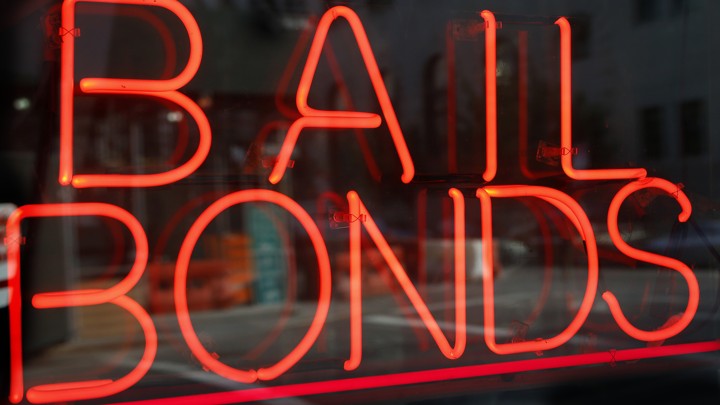
by Amanda Hernández, Alabama Reflector This story was originally published by Stateline. States can’t figure out what to do about cash bail. The system — in which an arrested suspect pays cash to avoid sitting in jail until their court date and gets the money back when they appear — is deeply entrenched in the nation’s history as a way to ensure defendants return to face justice. But cash bail is undergoing a reckoning as policymakers debate its disproportionate effects on underserved communities and people with low incomes who sometimes can’t afford bail — as well as just how much the system truly keeps the public safe. This year some states such as Illinois and jurisdictions such as Los Angeles County in California and Cuyahoga County in Ohio scaled back their bail systems, even eliminating cash bail entirely for low-level offenses in some cases. Policymakers in other places, meanwhile, are moving in the opposite direction. Republican lawmakers in at least 14 states — including Georgia, Indiana, Missouri, and Wisconsin — introduced about 20 bills this year aimed at increasing the number of non-bailable offenses and either encouraging or requiring judges to consider defendants’ criminal records when setting bail, according to an analysis by The Associated Press. And in New York state, where changes to curtail the use of bail took effect in 2020, lawmakers have made several rounds of rollbacks amid concerns about rising crime rates. Some bail policy advocates argue that these changes may contribute to racial and socioeconomic discrimination by relying on one’s ability to post bail and undermine the idea that those accused of a crime are presumed innocent until proven guilty. “There’s no single answer to effective bail reform,” Meghan Guevara, executive partner with the Pretrial Justice Institute, a criminal justice advocacy group, told Stateline. Measures to increase the use of cash bail or to include certain factors in assessing bail eligibility saw varying levels of success. In Wisconsin, voters approved a state constitutional amendment in April allowing judges to consider factors such as a defendant’s past convictions and the need to protect the public from bodily harm in “violent crime” cases. Missouri Republican Gov. Mike Parson signed legislation in July that requires judges who are setting bail to first consider factors such as a suspect’s flight risk, potential danger to others, past convictions for violent crimes, and previous failures to appear in court. In Indiana, lawmakers in April passed their first swipe at Senate Joint Resolution 1, which would amend language in the state’s constitution and enable judges to deny bail to those they consider a “substantial risk.” The bill must pass again in 2025 before appearing on the ballot in 2026. In Georgia, lawmakers considered legislation that sought to impose cash or property bail for dozens of additional crimes, including misdemeanors. It failed due to disagreements between the House and Senate, but Republican state Rep. Houston Gaines, who sponsored the measure in the House, expects the bill to pass in the next legislative session. Gaines, in an emailed statement, said: “Eliminating cash bail has been a disaster in places it’s been tried — even New York has reversed course on some of its radical policies. We can’t afford to create a revolving door of criminals who don’t show up for court and victimize other individuals.” Political backlash and rollbacks Between 2017 and 2019, a bipartisan movement for changes to bail systems gained momentum at both the local and state levels. Some states, such as New Mexico, New Jersey, and Kentucky, sharply curtailed their cash bail systems by almost entirely eliminating cash bail, expanding release programs, and moving toward risk-based assessments to determine pretrial release. In 2020, the COVID-19 pandemic strained crowded jails and detention centers, and agencies eased bail systems to reduce exposure. Between 2019 and 2020, homicide rates increased 30% — one of the largest year-over-year increases on record, according to data released by the FBI and the federal Centers for Disease Control and Prevention. Homicide gun deaths also surged 35% in 2020, the largest year-over-year increase recorded in more than 25 years. Despite these increases, the overall violent crime rate in the country did not increase during the pandemic, according to federal crime surveys. In California and New York, policymakers rolled back their pre-pandemic changes to cash bail. “Fears about public safety are in many ways greatly overblown and misplaced,” said Sharlyn Grace, a senior policy adviser at the law office of the Cook County Public Defender in Illinois. “It is exceedingly rare for someone who’s released pretrial to be arrested and accused of a new offense that involves violence against another person.” A report released by the New York City Mayor’s Office of Criminal Justice in 2021 found that about 95% of individuals arrested and released between January and September 2020 were not rearrested while awaiting trial, and there was a very little difference in rearrest rates before and after bail reform in the state. It is exceedingly rare for someone who’s released pretrial to be arrested and accused of a new offense that involves violence against another person. – Sharlyn Grace, senior policy adviser at the law office of the Cook County Public Defender in Illinois New York had passed a sweeping overhaul in 2019, largely ending the use of money bail for misdemeanors and lower-level felonies, with a focus on imposing the “least restrictive” release conditions. The state’s bail law has undergone multiple rounds of revisions since then, primarily driven by calls from Republicans to amend or completely reverse the law. In early 2020, New York expanded bail options, particularly in cases involving harm to a person or property. In 2022, the state further broadened the definition of “harm” and clarified factors judges must consider, such as criminal history, when setting release conditions. This year, negotiations over additional changes led to the removal of the requirement for the “least restrictive” release, a proposal announced by Democratic Gov. Kathy Hochul last spring. Some state Democrats and criminal justice advocacy groups have strongly
