Thousands converge on National Mall to mark the March on Washington’s 60th anniversary

Thousands converged Saturday on the National Mall for the 60th anniversary of Rev. Martin Luther King Jr.’s March on Washington, saying a country that remains riven by racial inequality has yet to fulfill his dream. “We have made progress, over the last 60 years, since Dr. King led the March on Washington,” said Alphonso David, president and CEO of the Global Black Economic Forum. “Have we reached the mountaintop? Not by a long shot.” The event was convened by the Kings’ Drum Major Institute and the Rev. Al Sharpton‘s National Action Network. A host of Black civil rights leaders and a multiracial, interfaith coalition of allies rallied attendees on the same spot where as many as 250,000 gathered in 1963 for what is still considered one of the greatest and most consequential racial justice and equality demonstrations in U.S. history. Inevitably, Saturday’s event was shot through with contrasts to the initial, historic demonstration. Speakers and banners talked about the importance of LGBTQ and Asian American rights. Many who addressed the crowd were women, after only one was given the microphone in 1963. Pamela Mays McDonald of Philadelphia attended the initial march as a child. “I was 8 years old at the original March, and only one woman was allowed to speak — she was from Arkansas where I’m from — now look at how many women are on the podium today,” she said. For some, the contrasts between the size of the original demonstration and the more modest turnout Saturday were bittersweet. “I often look back and look over to the reflection pool and the Washington Monument, and I see a quarter of a million people 60 years ago and just a trickling now,” said Marsha Dean Phelts of Amelia Island, Florida. “It was more fired up then. But the things we were asking for and needing, we still need them today.” As speakers delivered messages, they were overshadowed by the sounds of passenger planes taking off from Ronald Reagan National Airport. Rugby games were underway along the Mall in close proximity to the Lincoln Memorial while joggers and bikers went about their routines. Yolanda King, the 15-year-old granddaughter of the Rev. Martin Luther King, Jr., roused marchers with remarks delivered from the same spot her grandfather gave the “I Have A Dream” speech sixty years ago. “If I could speak to my grandfather today, I would say I’m sorry we still have to be here to rededicate ourselves to finishing your work and ultimately realizing your dream,” she said. “Today, racism is still with us. Poverty is still with us. And now, gun violence has come for places of worship, our schools, and our shopping centers.” From the podium, Sharpton promised more demonstrations to push back against injustices, new and old. “Sixty years ago, Martin Luther King talked about a dream. Sixty years later, we’re the dreamers. The problem is we’re facing the schemers,” Sharpton said. “The dreamers are fighting for voting rights. The schemers are changing voter regulations in states. The dreamers are standing up for women’s right to choose. The schemers are arguing whether they are going to make you stop at six weeks or 15 weeks.” After the speeches, the crowd marched to the Martin Luther King Jr. Memorial. Several leaders from groups organizing the march met Friday with Attorney General Merrick Garland and Assistant Attorney General Kristen Clarke of the civil rights division, to discuss a range of issues, including voting rights, policing and redlining. Saturday’s gathering was a precursor to the actual anniversary of the Aug. 28, 1963 March on Washington. President Joe Biden and Vice President Kamala Harris will observe the march anniversary on Monday by meeting with organizers of the 1963 gathering. All of King’s children have been invited to meet with Biden, White House officials said. Martin Luther King Jr.’s Washington remarks have resounded through decades of push and pull toward progress in civil and human rights. But dark moments followed his speech, too. Two weeks later, in 1963, four Black girls were killed in the 16th Street Baptist Church bombing in Birmingham, Alabama, followed by the kidnapping and murder of three civil rights workers in Neshoba County, Mississippi, the following year. The tragedies spurred passage of the Civil Rights Act of 1964. The voting rights marches from Montgomery to Selma, Alabama, in which marchers were brutally beaten while crossing the Edmund Pettus Bridge in what became known as “Bloody Sunday,” forced Congress to adopt the Voting Rights Act of 1965. Speakers warned that King’s unfinished dream was in danger of being further whittled away. “I’m very concerned about the direction our country is going in,” Martin Luther King III said. “And it is because instead of moving forward, it feels as if we’re moving back. The question is, what are we going to do?” Rosetta Manns-Baugh knew the answer: Keep fighting. “I think we have accomplished a lot, but I also think we lost.” said Manns-Baugh, who was a Trailways bus counter worker in 1963 when she left her seven children and husband at home in Virginia to come to D.C. Now she’s so disillusioned she’s stopped singing “We Shall Overcome,” the anthem of the civil rights movement. But even at age 92, she returned to Washington for the 60th anniversary, bringing three generations of her family, all the way down to her 18-month-old grandchild. “I think that’s why we all are here because we do expect the world to get better,” Manns-Baugh said. “We can’t stop working at it that’s for sure.” Republished with the permission of The Associated Press.
Transgender activists disappointed in lack of outrage for sports and medical treatment legislation
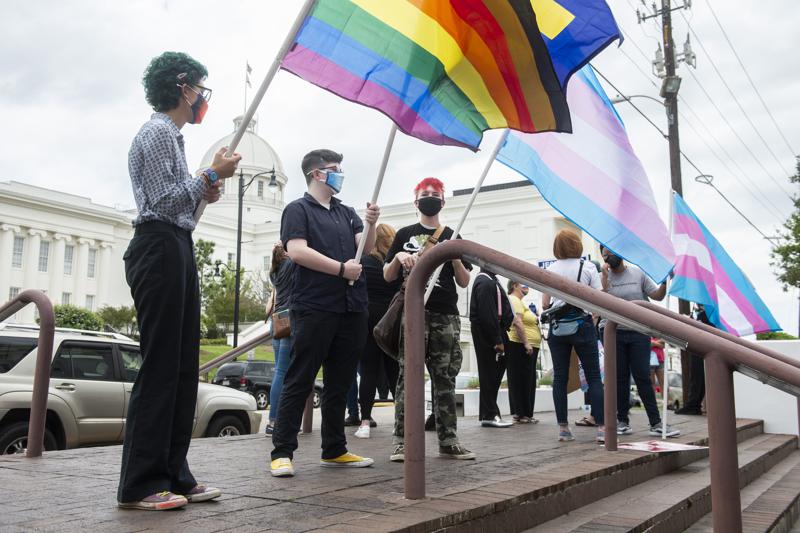
Five states have passed laws or implemented executive orders this year limiting the ability of transgender youths to play sports or receive certain medical treatment. There’s been a vehement outcry from supporters of transgender rights – but little in the way of tangible repercussions for those states. It’s a striking contrast to the fate of North Carolina a few years ago. When its Legislature passed a bill in March 2016 limiting which public restrooms transgender people could use, there was a swift and powerful backlash. The NBA and NCAA relocated events; some companies scrapped expansion plans. By March 2017, the bill’s bathroom provisions were repealed. So far this year, there’s been nothing comparable. Not even lawsuits, although activists predict some of the measures eventually will be challenged in court. Rodrigo Heng-Lehtinen, deputy executive director of the National Center for Transgender Equality, says he’s surprised by the lack of backlash, but believes it will materialize as more people learn details about the legislation being approved. “A lot of Americans are still getting to know trans people and they’re learning about these issues for the first time,” he said. “Over time, they get to know their trans neighbors, they get outraged by these bans, and corporations respond … It’s just a matter of time.” The president of a major national LGBTQ-rights organization, Alphonso David of the Human Rights Campaign, attributed the lack of backlash to a lack of awareness about the potential harm that these laws could cause to transgender young people. “Some people in this country have not come to terms with treating trans people like human beings,” David said. “It’s now coming to a head.” One batch of bills seeks to ban transgender girls from competing on girls’ sports teams in public schools. Such measures have been enacted in Alabama, Arkansas, Tennessee, and Mississippi, and implemented by an executive order from Gov. Kristi Noem in South Dakota. Another batch of bills seeks to ban gender-affirming medical treatments for trans minors – including the use of puberty blockers and hormone therapy. Arkansas legislators approved such a measure over the veto of Republican Gov. Asa Hutchinson, and similar measures are pending in Alabama, Tennessee, and Texas. Echoing concerns of major medical associations, Dr. Michele Hutchison – who runs a transgender medicine clinic at Arkansas Children’s hospital — says the ban in her state is raising the risk of suicide among some of her patients and forcing some families to wonder if they should move to another state. More than 400 companies __ including Tesla, Pfizer, Delta Air Lines, and Amazon __ have signed on to support civil rights legislation for LGBTQ people that is moving through Congress, advocates said Tuesday. And last week, the Human Rights Campaign took out a full-page ad in the New York Times appealing to corporations to denounce the anti-trans bills that have proliferated in Republican-controlled legislatures. The letter, signed by David, urged corporate leaders “to take action now by publicly denouncing state legislation that discriminates against people, refusing to advance new business in states that are hostile to corporate values and refusing to support sporting events where transgender athletes are banned.” More than 85 companies have signed a statement drafted by the HRC — including Amazon, American Airlines, Apple, AT&T, Facebook, IBM, Microsoft, PepsiCo, Pfizer, and Union Pacific. In polite language, the statement implies a threat: “As we make complex decisions about where to invest and grow, these issues can influence our decisions.” Overall, the corporate response remains “insufficient,” David said. “But I think we are seeing a turning of the tide as we put more pressure on companies.” One of the companies signing the HRC statement is the technology giant Oracle Corp., which is planning to bring 8,500 jobs and a $1.2 billion investment to Nashville, Tennessee, over the coming decade. Joe Woolley, who heads the Nashville LGBT Chamber of Commerce, has expressed hope that Oracle — which has not threatened to cancel its plans — might use its leverage to prompt reconsideration of Tennessee’s anti-transgender legislation. Woolley also says organizers of at least three conventions are considering pulling those events out of Nashville because of the bills, though he has declined to identify them. Thus far, Tennessee Gov, Bill Lee has signaled that any criticism from the business community won’t sway him. “Organizations have opportunities to weigh in on the legislative process but ultimately, Tennesseans, through their elected representatives, determine the law in our state,” said Casey Black, a spokesperson for Lee. In Texas, a coalition called Texas Competes released a letter on April 19 signed by more than 40 businesses and chambers of commerce in the state denouncing a batch of pending bills as “divisive, unnecessary and economically dangerous.” Specifically, the letter denounced “efforts to exclude transgender youth from full participation in their communities.” In Montana, where a transgender sports ban has won initial approval in the Republican-controlled House and Senate, lawmakers added an amendment stipulating that the measure would be nullified if the federal government withheld education funding from the state because of the policy. The concern stems from an executive order signed by President Joe Biden banning discrimination based on gender. Montana universities receive around $350 million annually in federal funding, of which $250 million goes towards student loans and grants to cover tuition costs — money that university officials say could be at risk if the administration deemed the sports ban to be unacceptable discrimination. The extent of any emerging backlash to the anti-trans laws will hinge in part on the NCAA, which played a pivotal role in the North Carolina case. The NCAA’s Board of Governors issued a statement April 12 expressing strong support for the inclusion of transgender athletes. “When determining where championships are held, NCAA policy directs that only locations where hosts can commit to providing an environment that is safe, healthy, and free of discrimination should be selected,” the statement said. “We will continue to closely monitor these situations to determine whether NCAA championships can be conducted
Alabama Gov. Ivey signs ban on transgender athletes
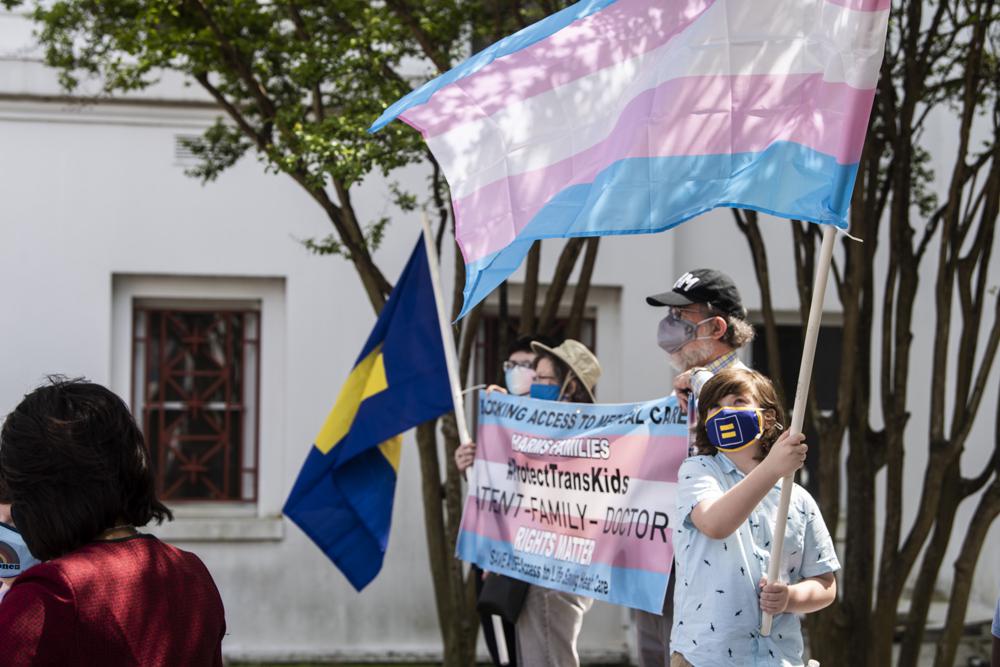
Republican Gov. Kay Ivey on Friday signed legislation restricting transgender students from participating in K-12 sports, making Alabama the latest conservative state to ban transgender girls from playing on female sports teams. Ivey’s office announced in an email that she had signed the bill that says a public K-12 school “may never allow a biological male to participate on a female team.” Asked if the governor had a comment on the decision, spokeswoman Gina Maiola said she could confirm the governor signed the bill but did not elaborate. Supporters of the bill, HB 391, say transgender girls are born bigger and faster and have an unfair advantage in competition. Opponents argue the bills are rooted in discrimination and fear and violate the federal law barring sex discrimination in education. “HB 391 is nothing more than a politically motivated bill designed to discriminate against an already vulnerable population. By signing this legislation, Gov. Ivey is forcefully excluding transgender children. Let’s be clear here: transgender children are children. They deserve the same opportunity to learn valuable skills of teamwork, sportsmanship, and healthy competition with their peers,” Human Rights Campaign President Alphonso David said in a statement. The Alabama House voted 74-19 for the bill sponsored by Republican Rep. Scott Stadthagen of Hartselle. The Alabama Senate voted 25-5 for the legislation. “I want to thank Governor Ivey for her leadership and for protecting the rights of Alabama’s female athletes. Standing up for what is right is not always easy, but it is always the right thing to do,” Stadthagen said Friday. During Senate debate on the bill last week, Republican Sen. Garlan Gudger of Cullman said it is “unfair for biological males to compete and beat females in high school sports.” He said the bill is needed to protect the integrity of female athletic programs. Across the country, Republican legislators have been hard-pressed to come up with actual instances in which a transgender girl’s participation has caused a problem on a girls sports team. The Associated Press recently reached out to two dozen state lawmakers sponsoring such measures around the country as well as the conservative groups supporting them and found only a few times it’s been an issue among the hundreds of thousands of American teenagers who play high school sports. Mississippi Republican Gov. Tate Reeves last month signed a bill to ban transgender athletes from competing on girls or women’s sports teams. Idaho last year became the first state to pass such a ban, but it faces a legal challenge. Kansas Gov. Laura Kelly on Thursday vetoed a bill banning transgender students from girls and women’s school sports. She said the GOP-backed measure is a jobs killer that harms children. Critics of such bills are worried that the measures could cost states from hosting sporting events. Senate Minority Leader Bobby Singleton said last week that the bill will give Alabama a “black eye” as the state tries to recruit industries and sporting events to the state. “We are spending too much time on craziness like this,” Singleton said. As similar bills crop up across the county, the NCAA, which regulates college athletics in the U.S., expressed support for transgender athletes and warned that championships will only be held in locations “free of discrimination.” “We will continue to closely monitor these situations to determine whether NCAA championships can be conducted in ways that are welcoming and respectful of all participants,” the NCAA statement read. The NCAA currently requires transgender women to get drug treatment to lower their testosterone levels before they can compete in women’s sports. Republished with the permission of the Associated Press.