
Alabama’s new transgender care felony faces federal test
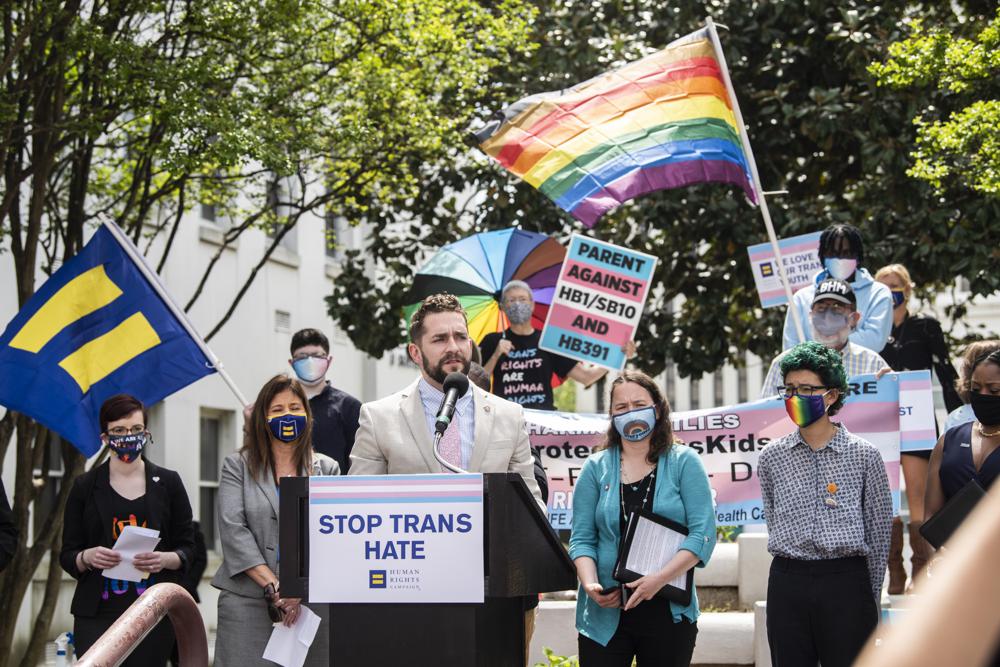
A doctor testified Thursday that there will be devastating consequences for transgender adolescents if Alabama outlaws the use of gender-affirming medications for them, and that their medical providers would face jail time for providing standard care. The testimony came in a federal court hearing as families with transgender children seek to block enforcement of the Alabama law banning the treatments. The Alabama Vulnerable Child Compassion and Protection Act, which is set take effect on Sunday, makes it a felony punishable by up to 10 years in prison for medical providers to give puberty blockers and hormones to people under age 19 to help affirm their gender identity. Lawmakers, who approved the bill this spring, said it is needed to protect children and that decisions on the medications should wait until adulthood. The legislation is part of a wave of bills in Republican-controlled states regarding transgender minors, but it is the first law to put criminal penalties on the doctors who provide the treatments to them. Dr. Morissa Ladinsky, a pediatrician who founded a Birmingham medical team that treats children with gender dysphoria, testified that the medications are part of well-established standards of care. She said her clinic is one of about 55 such clinics across the country. “This will force us into a place of risking a felony conviction for providing evidence-based care,” Ladinsky said of the impact on doctors. Ladinsky, who is not a plaintiff in the case, was testifying as a witness for families and other doctors challenging the law. Hormones, she said, are only given to older teens after a lengthy evaluation and input from multiple medical professionals. She described seeing teens transform from being sullen, and sometimes suicidal, to confident individuals ready to “join the world in ways they haven’t done before.” She testified that taking the medications away could cause an increase in mental health problems and suicidal thoughts in these youngsters. “That will take these youth to very dark places,” she said. An attorney for the state of Alabama asked Ladinsky if teens were able to comprehend the risks of the treatments. She replied that there is a lengthy conversation with teens and their parents about possible risks. The Alabama attorney general’s office, in defending the law, has argued that the treatments are motivated by ideology and that the science is unsettled. “If the court enjoins this act, Alabama children face irreversible damage from unproven, sterilizing, and permanently scarring medical interventions pushed by ideological interest groups,” lawyers for the state wrote. Twenty-three medical and mental health organizations, including the American Academy of Pediatrics, have asked to file a brief in the case urging the judge to enjoin the law. “Gender-affirming medical care is the well-recognized, accepted standard of care for adolescents at risk of or suffering from gender dysphoria,” an attorney wrote in the motion. Linda Hawkins, a counselor who co-founded the Gender and Sexuality Development Program at The Children’s Hospital of Philadelphia, testified that the treatments have shown clear benefits for children with gender dysphoria. “It would be like removing somebody’s cancer treatment and expecting them to be OK,” Hawkins testified, according to news outlets, on the impact of taking the medications away. A federal judge is hearing evidence on a request to block enforcement of the law while it’s challenged in court. The hearing will continue Friday. The judge has not indicated if he will rule before the law’s effective date. A parent of a transgender child and another doctor, both plaintiffs in the case, were set to testify Thursday afternoon, and the judge closed the courtroom for privacy reasons.
Bill to raise tobacco age has unlikely allies: Altria, Juul
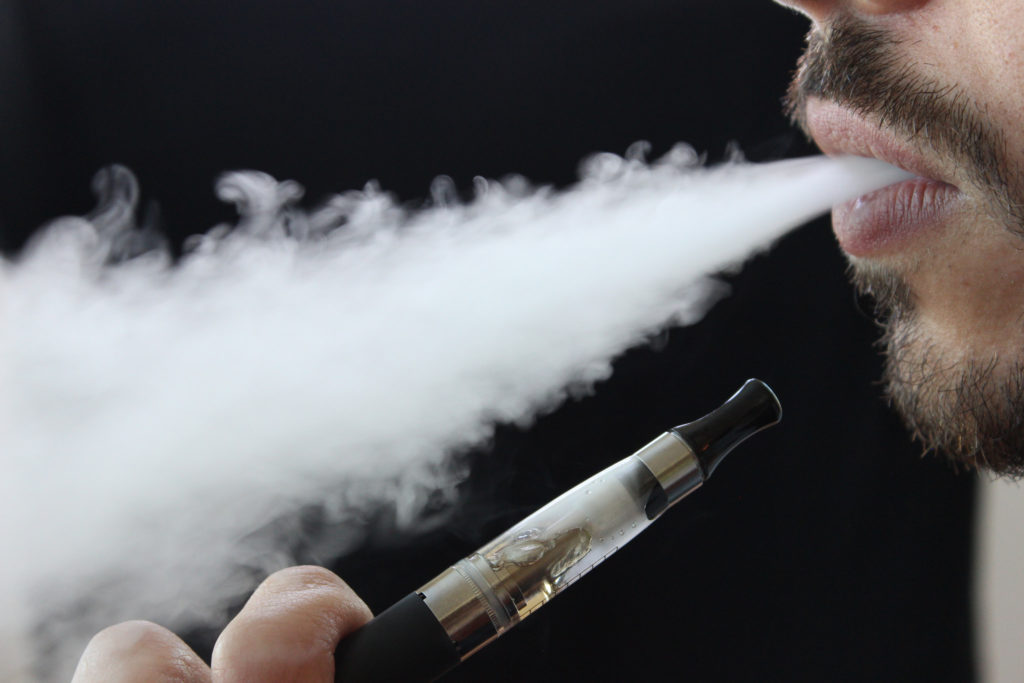
Congress is moving to pass the biggest new sales restrictions on tobacco products in more than a decade, with support from two unlikely backers: Marlboro-cigarette maker Altria and vaping giant Juul Labs. The legislation would raise the minimum age to purchase all tobacco products, including electronic cigarettes, from 18 to 21 nationwide, a step long-sought by health advocates. But in the past year Juul and Altria have emerged as the biggest supporters of the measure, blanketing Capitol Hill with lobbyists and advertisements touting their support for a national “Tobacco 21” law. Tobacco critics contend the companies’ support is calculated to head off even harder-hitting government action: a ban on all flavored tobacco products, including fruit and dessert e-cigarettes. Their stance puts them in the unusual position of criticizing a move they long supported, arguing that the sales restriction isn’t enough. “Altria and Juul clearly support this in order to argue that no other action is necessary,” said Matthew Myers of the Campaign for Tobacco-Free Kids. “If you don’t eliminate the flavors that the industry has used to fuel the epidemic, you won’t solve the youth e-cigarette crisis.” The bipartisan legislation, supported by Senate Majority Leader Mitch McConnell of Kentucky, has been attached to a package of must-pass spending bills that will keep the government running into next year. Juul and Altria — the vaping company’s biggest investor — threw their support behind the bill earlier this year amid a backlash against e-cigarettes at the local, state and national levels. E-cigarettes are battery-powered devices that typically heat a flavored nicotine solution into an inhalable aerosol. Current federal law prohibits sales of e-cigarettes and all other tobacco products to those under 18. But more than one in four high school students report vaping regularly, according to the latest government figures. And health officials have called the vaping trend an “epidemic.” Until September, Juul argued that its sweet flavors — including mango, mint and fruit — could help adult smokers switch from traditional cigarettes to vaping. But the company dropped that message as President Donald Trump announced plans to remove virtually all vaping flavors from the market, due to their appeal to children. The Silicon Valley company has halted sales of all but two of its flavors, menthol and tobacco, and pledged not to oppose Trump’s plan. But momentum for the nationwide ban has faded amid push-back from vaping advocates and some conservative groups. And Trump has voiced support for alternative approaches to keep e-cigarettes away from kids, including raising the purchase age to 21. The age hike is expected to limit the supply of all vaping and tobacco products in high schools by putting them out of reach to 12th graders. Myers’ group and other health advocates say Congress should both raise the age limit and ban all “kid-friendly” flavors. Even with most of Juul’s flavors off the market, smaller companies continue to market an array of flavored products, including “grape slushie,” “strawberry cotton candy” and “sea salt blueberry.” And the industry’s main trade association is suing to keep e-cigarettes, including flavors, widely available. Altria, the nation’s largest tobacco company, said it supports a “clean” Tobacco 21 bill — focused exclusively on raising the age limit — because it is the “quickest and most effective” way to address the recent surge in teen vaping. For decades previously, Altria and other tobacco companies aggressively defended the 18-year-old minimum purchase age. Juul has similarly supported legislation that raises the purchase age without touching flavors. And while the companies say they lobby separately, both quickly backed the Tobacco 21 bill introduced in May by McConnell and Virginia Democratic Sen. Tim Kaine. The companies’ support sapped attention away from other proposals that would have gone much further. For example, a bill from New Jersey Democratic Rep. Frank Pallone would have raised the purchase age to 21 and banned flavors from all vaping and tobacco products — including menthol cigarettes — and prohibited online sales. The bill was endorsed by a dozen health groups including the American Academy of Pediatrics, the American Cancer Society and the American Lung Association. “Flavors attract kids and kids are the tobacco industry — including the e-cigarette industry’s — future,” said Erika Sward, a vice president with the American Lung Association. But efforts to advance flavor restrictions in the Senate fell flat, including a bill sponsored by Sen. Lisa Murkowski, Republican-Alaska, and Sen. Dick Durbin, Democrat-Illnois, that was withdrawn from committee consideration at the last minute. “Because I wasn’t certain that I had the votes at the time,” Murkowski told The Associated Press. “You don’t want to lose.” The logic for hiking the purchase age for cigarettes is clear: most underage teens who use tobacco get it from older friends. An estimated 90 percent of smokers start before age 18. Delaying access to cigarettes is expected to produce major downstream health benefits, with one government-funded report estimating nearly 250,000 fewer deaths due to tobacco over several decades. Still, anti-tobacco experts say age restrictions are only effective when they are vigorously enforced, and tobacco sales can fall through the cracks amid a patchwork of local, state and federal law enforcement. They point to underage drinking as an example of the limited impact of age-based restrictions. State laws banning tobacco sales to those under 18 evolved over several decades and were reinforced by a federal law in 2009. The same law banned all flavors from traditional cigarettes except menthol, which received a special exception at the behest of tobacco lobbyists. More than a third of U.S. states — including California, Illinois, New York and Texas — and the District of Columbia have already raised their minimum purchase age to 21. Anti-smoking groups have tracked the trend with measured support, noting the role of Juul and Altria lobbyists behind many of the efforts. In several cases, anti-tobacco advocates have flagged provisions that they say undercut the state laws’ effectiveness. These provisions, known as pre-emption, can stop city and county officials from imposing stricter tobacco
Alabama Department of Public Health urges vaccination against HPV

The human papillomavirus – or HPV – is the most common sexually transmitted infection in the world. With more than 170 types of HPV, roughly a dozen strands are linked to cancer. And according to the Centers for Disease Control and Prevention (CDC), more than half of all sexually active people will contract one of the viruses during their lifetime. Which is why the Alabama Department of Public Health (ADPH), Immunization Division, wants to increase awareness about a cancer-prevention vaccine, human papillomavirus (HPV) vaccine. “HPV is such a common virus, and nearly all men and women contract it at some point in their lives. The danger of HPV is the nine different types of strains of infection it causes, seven of which are cancer causing,” said Dr. Karen Landers, District Medical Officer. The HPV vaccine has been approved by the U.S. Food and Drug Administration (FDA) and is recommended by the CDC for both males and females to protect young children from cancer. The vaccine is routinely given at 11 or 12 years of age, but it may be given beginning at age 9 years through age 26 years. Since its introduction in 2006, HPV vaccine has consistently demonstrated effectiveness by decreasing the number of infections and HPV precancers in young people. The vaccine underwent years of extensive safety testing before being licensed by the FDA. According to the National Cancer Institute, the HPV vaccine is highly effective in preventing infection when given before initial exposure to the virus. Video contest to increase awareness In an effort to increase awareness of the HPV vaccine and its benefits, ADPH is conducting a video contest in partnership with the Alabama Chapter of the American Academy of Pediatrics (AAP) that will be open to teenagers who reside in Alabama, ages 15-19. Videos should focus on the occupations or activities they would like to have in the future without the threat of cancers caused by HPV. A panel of judges comprised of ADPH Immunization staff, Cancer Prevention staff, and the AAP will review the video submissions and select the winning video. Submissions are due by Dec. 15, 2017, and the winning video will be announced on Dec. 29, 2017. “Our goal is to educate both young children and parents about the importance of getting vaccinated,” said Dr. Landers. “This is a vaccine that can save lives and allow young Alabamians to have a healthier future.” The winner of the contest will receive a $250 gift card from Target, as well as be promoted on the ADPH website.
Senate committee hears arguments over decriminalization of cannabis oil

The Senate Judiciary Committee met Wednesday in a room filled to the brim with desperate families and ailing children. The contingent was on hand to hear the committee discuss SB115 from Sen. Paul Sanford (R-Huntsville), which would decriminalize possession of the seizure-reducing drug cannabidiol (CBD). The bill is the Senate version of HB61 from Rep. Mike Ball. Ball brought forth the legislation, also known as “Leni’s Law,” after the previously passed “Carly’s Law” left many needy children out of the CBD studies. Ball’s legislation is named for Leni Young, a 4-year-old Alabama girl whose family was forced to move to Oregon to gain access to the medicine after she was excluded from the CBD study. According to Amy Young, Leni’s mother, access to the marijuana-derived medication has allowed Leni to improve by leaps and bounds. The little girl is now verbal and able to sit on her own, two things she was not able to do before moving across the country. Ten minutes after the meeting was set to begin, the contingent was told to move to the seventh floor. Sanford introduced the legislation, referencing Leni and the failures of “Carly’s Law” to include more families. “Basically, an Alabama family has turned into refugees,” Sanford said. “I believe government is basically standing in the way right now.” Sanford said the new law would provided families with an “affirmative defense” against prosecution for possession of the medicinal oil. “These parents are not criminals,” Sanford said. “They’re trying to help their children.” Despite a public hearing being scheduled and there being no plans for a vote on the bill, Sen. Bobby Singleton (D-Greensboro) immediately called for a vote on the legislation. “We’re talking about the lives of children,” Singleton said, noting his disdain for opponents of the measure. “I think we need to go and vote on this bill and get it out of committee and give these children what they need.” Committee chairman Sen. Cam Ward (R-Alabaster) noted Singleton’s suggestion, but added that each side has a right to plead its case. One of the opponents was Dr. Roxanne Travelute, president of the Jefferson County Medical Society. Travelute contended that the bill’s allowance of CBD oil containing as much as 3-percent THC, the psychoactive chemical in marijuana, would cause addiction and neurological disorders, as well as widespread use for illnesses the drug was not designed to treat. Another opponent was Dr. Shannon Murphy, speaking on behalf of the American Academy of Pediatrics (AAP), who opposed the bill on the basis that CBD oil attained by parents may not be safe for patients. “We all sympathize greatly with these families,” Murphy said. “But as physicians, our Hippocratic Oath requires that we first do no harm.” Dr. Gina Dawson spoke in favor of the bill, saying that many of the claims made by opponents are patently false. Dawson noted that the AAP opposes legalization but has said exceptions should be made for “compassionate use.” She cited drugabuse.gov, which says that abuse of CBD oil is almost nonexistent, and remarked that the Epilepsy Foundation has called for legislation providing access to CBD oil to be passed. Dawson also noted that CBD oil is expensive and has no street value. Parents would willingly be on the hook for the cost of the medicine, but drug dealers would not be interested in a high-cost, low-potency drug for sale on the black market. Another proponent, Joe Church, noted that the ingredients in Tylenol or Ibuprofen are more dangerous than CBD oil, as are the mind-numbing drugs these children must take every day. He also alleged that much of the opposition to Leni’s Law comes from GW Pharmaceuticals, which has $1.1 billion invested in its stranglehold over the manufacturing of the oil. The committee is scheduled to take the legislation up again after spring break.
