
Alabama House delays vote on riot legislation
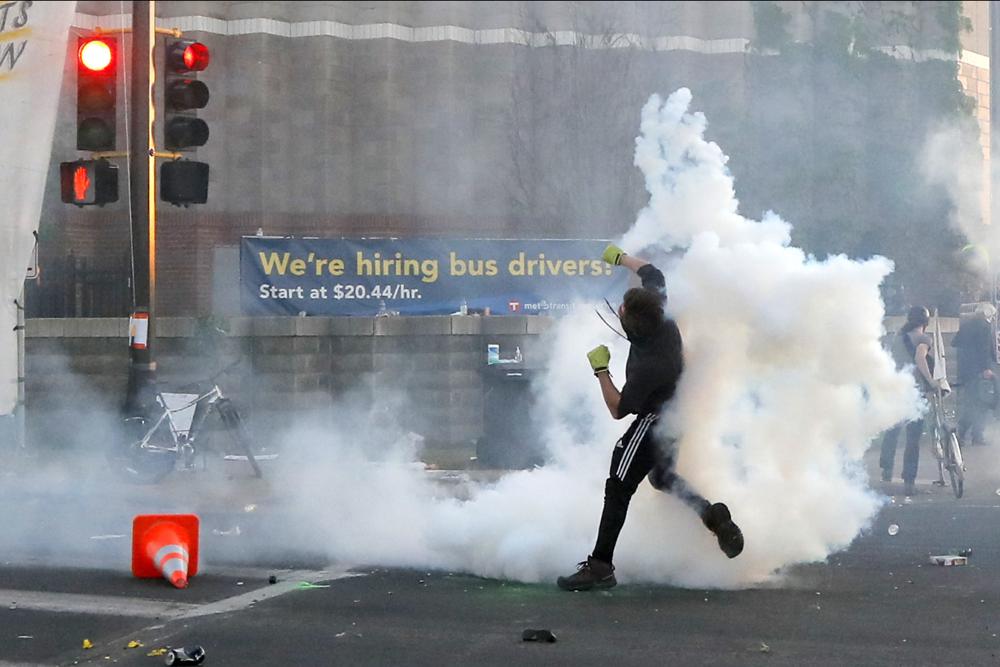
The Alabama House of Representatives on Wednesday night delayed a vote on legislation that would create a new definition of riot and increase the penalties for participating in one. Republican Rep. Allen Treadaway, noting the late hour and the number of lawmakers who wanted to speak on the bill, asked to carry the bill over to the call of the chair. It was not immediately clear when it would be back for a vote. The measure is expected to spark a filibuster by House Democrats. Republicans supporting the bill said it is needed to combat violent protests that cause injuries and property damage. But critics argued it would have a chilling effect on protests and that the definition of riot could allow an officer to make arrests based on presumptions, and prejudices, about the people involved. The bill, as amended by the House Judiciary Committee, defines a riot as, “the assemblage of five or more persons engaging in conduct which creates an immediate danger of and/or results in damage to property or injury to persons.” Attending such a gathering after an order from police to disperse would be a misdemeanor punishable by a mandatory 30 days in jail. Treadaway, a retired Birmingham assistant police chief, proposed the bill after a summer protest in Birmingham in the wake of George Floyd’s death in Minneapolis. The protest turned destructive. “Buildings were burning. Stores were being looted,” Treadaway, a Republican from Morris, told the committee last week. During the committee vote last week, several lawmakers who are Black expressed concern that the bill’s definition of a riot is subjective. Rep. Merika Coleman said her 21-year-old son, a college student and football player, is “one of the sweetest people you will ever meet.” But she said some people make assumptions when they see a group of young Black men. “They make an assumption about who they are, and they make an assumption about what they are about to do,” said Coleman, a Democrat from Pleasant Grove. A federal judge blocked a similar Florida statute from taking effect. The American Civil Liberties Union of Alabama has said it would seek a similar injunction in that state if the bill were to become law. Republished with the permission of the Associated Press.
Alabama riot bill heads under criticism toward a House vote
A divided committee on Wednesday advanced legislation that would mandate jail time for participating in a riot which the bill defines as a gathering that creates a danger of injuries and property damage Republicans supporting the bill said it is needed to combat violent protests that cause injuries and property damage. But critics said the legislation’s definition of riot is vague and would allow an officer to make arrests based on presumptions about the people in the demonstration. The House Judiciary approved the bill on a 10-4 vote. It now moves to the Alabama House of Representatives. Republican Rep. Allen Treadaway, a retired Birmingham assistant police chief, proposed the bill after a summer protest in Birmingham in the wake of George Floyd’s death in Minneapolis. The protest turned destructive and led to multiple businesses being burned and damaged. “Buildings were burning. Stores were being looted. Pawnshops were being looted for weapons,” Treadaway, a Republican from Morris, told the committee. The former assistant police chief said he believed the local chapter of Black Lives Matter had planned a peaceful protest, but that it was “hijacked” by organized people who wanted violence. Several lawmakers who are Black expressed concern that the bill’s definition of a riot is subjective. They said an officer could make arrests based on his or her presumptions about the people involved. The bill, after it was amended by the committee, defines riot as, “the assemblage of five or more persons engaging in conduct which creates an immediate danger of and/or results in damage to property or injury to persons.” Attending such a gathering after an order from police to disperse would be a misdemeanor punishable by a mandatory 30 days in jail. The bill also would require a mandatory 24-hour hold without bail for anyone who is arrested for rioting. Rep. Merika Coleman, said her 21-year-old son, a college student and football player, is “one of the sweetest people you will ever meet.” But she said some people make assumptions when they see a group of young Black men. “They make an assumption about who they are, and they make an assumption about what they are about to do,” said Coleman, a Democrat from Pleasant Grove. “How do we make sure bad actors don’t use this provision in the law disproportionately against communities of color who they make an assumption are thugs, criminals because of their perception of what a thug and criminal looks like.” Rep. Chris England said the proposal allows a law enforcement officer to make arrests based on presumptions. “It appears to me the definition of riot and legitimate political discourse appears to be who is participating,” England said, adding that some people get the benefit of the doubt while others carry a presumption. “People who look like me carry presumption. People who don’t look like me carry the benefit of the doubt,” England, a Democrat from Tuscaloosa, said. Treadaway responded that he didn’t think they could reach a “perfect definition” but “you have to put trust in the law enforcement officers and in the court system.” “It was pretty clear to law enforcement what happened in Birmingham was rioters, looters, and criminals,” Treadaway said. A federal judge blocked a similar Florida statute from taking effect. The American Civil Liberties Union of Alabama has said it would seek a similar injunction in Alabama if the bill were to become law. Republished with the permission of the Associated Press.
Texas-like abortion bill would let citizen sue providers
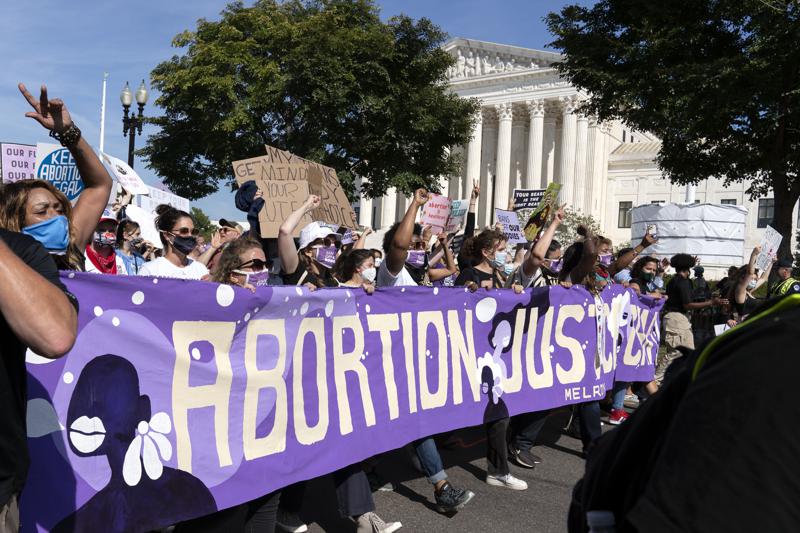
A group of Alabama lawmakers have proposed legislation similar to a Texas law that would ban most abortions and allow anyone to file civil lawsuits against violators and collect damages. Alabama is the latest GOP-led state to see lawmakers propose legislation to mimic the Texas law and its novel citizen-enforcement provision. The U.S. Supreme Court on Friday left in place Texas’ ban on most abortions but said providers could sue to challenge the ban. A Texas judge on Thursday ruled the citizen enforcement mechanism is unconstitutional but left the near-total ban on abortions in place. The bill titled the “Alabama Heartbeat Act” was filed ahead of the 2022 legislative session. It would prohibit medical providers from performing an abortion once cardiac activity is detected, usually around six weeks and before some women know they are even pregnant. The measure would allow private citizens to file civil lawsuits against anyone who “aids or abets” an abortion and to collect at least $10,000 in damages for each performed abortion. Providers in Texas say abortions have become virtually inaccessible since the law was signed. Republican Rep. Jamie Kiel of Russellville, the primary sponsor of the legislation, said the bill mirrors the Texas law, noting that it has not been struck down yet. “A recent (National Public Radio) article reported that in the 101 days since the law was enacted, 75-100 babies are now being saved every day in Texas. That’s what I want for Alabama. To protect the right to life of the 16 babies who are murdered here daily,” Kiel said. Twenty-three Republicans in the 105-member House of Representatives have signed on as sponsors of the bill. Kaitlin Welborn, a reproductive rights attorney with the American Civil Liberties Union of Alabama, urged lawmakers to reject the proposal and said it will be quickly challenged if it passes. “Alabama legislators have filed a bill that bans abortion at 6 weeks of pregnancy and pits neighbor against neighbor in an illegal bounty-hunting scheme. HB 23 mirrors the anti-abortion legislation that most recently passed in Texas, even though their abortion ban is deeply unpopular and blatantly unconstitutional,” Welborn said in a statement. Alabama Gov. Kay Ivey in 2019 signed into law a near-total ban on abortion in the state, with no exceptions for rape and incest, but the law was blocked from taking effect by a federal judge. The legislative session begins January 11. Republished with the permission of the Associated Press.
Injunction blocking abortion ban not appealed

Alabama’s near-total abortion ban will remain blocked by a federal judge as a lawsuit over the ban plays out in court. Alabama did not appeal the court injunction that blocked the state’s near-total abortion ban from taking effect last month, according to the attorney general’s office. The state has previously acknowledged the ban is likely unenforceable unless the U.S. Supreme Court makes a major shift on abortion rights. The preliminary injunction by U.S. District Judge Myron Thompson temporarily stopped the ban from taking effect Nov. 15 while he hears a lawsuit challenging the ban as unconstitutional. The 2019 law would make performing an abortion a felony in almost all cases. Alabama Attorney General Steve Marshall has said the state’s objective is to get the case to the U.S. Supreme Court to try to get justices to reconsider rulings such as Roe v. Wade and Planned Parenthood v. Casey. Roe legalized abortion nationwide. Casey affirmed abortion rights, but said that the states could enact limited restrictions. Mike Lewis, a spokesman for the attorney general, confirmed the state is not appealing the temporary injunction. “It will take time to develop a record in support of our arguments that Roe and Casey were wrongly decided and should be overruled. We hope to have a chance to build that record before any appeal. And for that reason, we have not appealed the preliminary injunction,” Lewis said. The appeal deadline was Nov. 29, according to Randall Marshall, executive director of the American Civil Liberties Union of Alabama. Alabama has acknowledged in court filings that its attempted abortion ban conflicts with current U.S. Supreme Court rulings that say abortion is legal. State lawyers wrote in a filing this summer that current precedent “regrettably requires” a judge to block enforcement. This story has been corrected to fix the name of the Supreme Court case. Republished with the Permission of the Associated Press.
ACLU of Alabama sues Sec. of State John Merrill for blocking constituents on personal Twitter
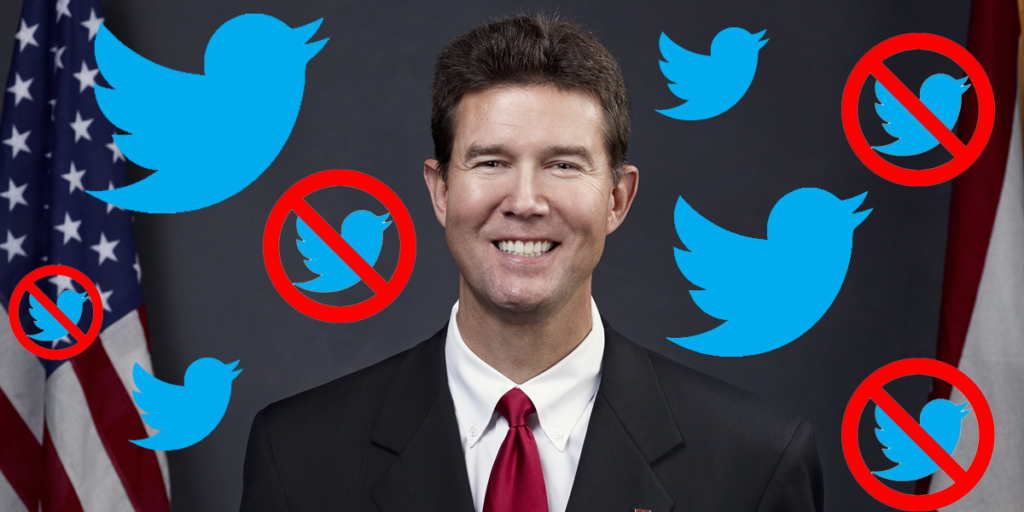
President Donald Trump made headlines last summer for blocking American on Twitter for the political views they have expressed, which ultimately resulted in a successful plaintiff’s lawsuit on grounds that the action was unconstitutional and a violation of the First Amendment. Now a similar case has made its way to the Yellowhammer State. On Wednesday, the American Civil Liberties Union of Alabama filed a lawsuit on behalf of three Alabama citizens challenging Secretary of State John Merrill for blocking them on his @JohnHMerrill Twitter account, claiming as an elected government official, his actions violate the First Amendment to the United States Constitution. The plaintiffs in the suit are: Kimberly Fasking: a law student at the University of Alabama, was blocked after asking about crossover voting. Heather Melvin Boothe: was blocked for stating “Good point! Ballot has major typo.” Herbert Hicks: a farmer and educator, who was blocked after asking Merrill about a speaking engagement. “It is upsetting to me that the Secretary of State, who primarily uses his Twitter account to disseminate information on issues related to his office, has also weaponized that account by blocking those with whom he disagrees politically,” said Fasking. “It is not the Secretary of State’s job to communicate only with those who agree with him, but with all of the people of the State of Alabama. I am disappointed that I no longer have ready access to information from the Secretary of State’s office in a way that allows me to engage meaningfully on topics that I find incredibly important.” Not his official account But Merrill’s office explained to Alabama Today that the @JohnHMerrill account is in fact not the Secretary’s official Twitter account. Rather, it’s his personal account that he maintains from personal devices. While Merrill does use the account to discuss state business, such as election law, information about his duties as Alabama Secretary of State, reminders to the public about upcoming elections, he maintains the @alasecofstate account for actual, official business. John Bennett, Deputy Chief of Staff and Press Secretary for Merrill confirmed the official account has never blocked any constituents. He further shared an example of why some people were blocked on Merrill’s personal account, saying that when he shared that his father died they celebrated the news. Merrill himself weighed-in on the lawsuit Wednesday afternoon calling it a “political hack-job.” “The lawsuit filed today by the ACLU of Alabama is an attempted political hack-job,” Merrill posted on Facebook. “Members of this liberal group are attempting to create an issue concerning lack of access to public officials that simply does not exist. As every member of the media and general public who interacts with this office knows, the most important thing for an elected official to do is to remain accessible to the people of this state. That is why I always make my cell number 334.328.2787 available to all Alabamians.” He also confirmed the account noted in the suit is his personal Twitter account. “The account in question @JohnHMerrill is exclusively my account, while the account @alasecofstate is the state’s public account, and this account has never blocked anyone from viewing any of the posts on its page. The @JohnHMerrill account has remained a personal account since its creation, in October 2009,” Merrill added. “I am recognized as one of the most accessible and personally available elected officials in the history of the state of Alabama, which is why I visit all 67 counties each year. It is my desire to continue to be recognized in that way as long as I have the privilege to continue to serve in public office.” Nevertheless the ACLU contends constituents should have access to that personal account because Merrill holds a state office. “In the digital age that we live in, John Merrill as a government official does not get to pick and choose who receives information on Twitter just like he can’t kick out his constituents for their beliefs at a town hall,” stated ACLU of Alabama attorney Brock Boone. “This is a violation of the First Amendment. It is worrisome that the individual in charge of free and fair elections chooses to discriminate against individuals on social media. As the Secretary of State, Merrill should be using his platform to inform the public, not censure them. The lawsuit seeks to stop Merrill from blocking plaintiffs or others based upon whether he agrees or disagrees with their viewpoint. The case, Fasking v. Merrill, was filed in the U.S. District Court for the Middle District of Alabama on September 19, 2018. *4:35 p.m. CT: This story has been updated with Merrill’s statement.
Lethal injection or gas? Alabama’s death row gets to choose
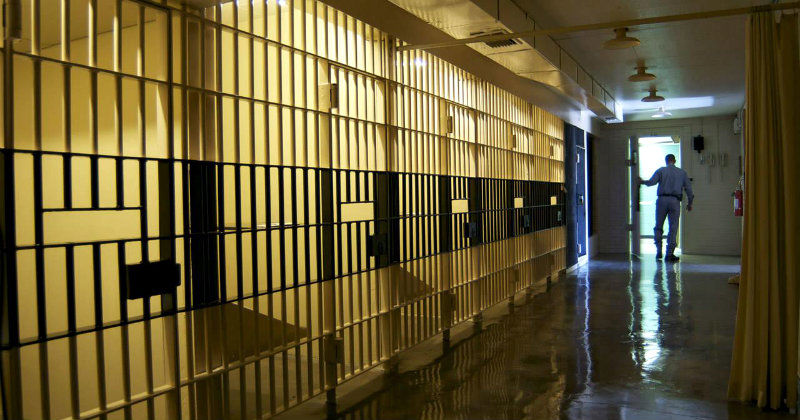
Some say inhaling nitrogen gas would be like dying on a plane that depressurizes in flight, swiftly killing all aboard. Now more than a quarter of Alabama’s death row inmates have signed statements saying they would prefer that gas over lethal injection or the electric chair when facing execution. No inmate in the U.S. has been put to death with nitrogen gas before, and critics suspect at least some inmates are simply hoping to delay a date with the death chamber through the inevitable legal challenges ahead. State corrections officials say 51 of Alabama’s 180 inmates have chosen nitrogen hypoxia, allowed a choice after Alabama lawmakers voted this year to authorize that alternative execution method. With difficulties obtaining execution drugs and litigation arising over claims of botched and horribly painful chemical injections this decade, Alabama is not alone as it joins Oklahoma and Mississippi in exploring that as a potential alternative. John Palombi, an attorney with the Federal Defenders Program, said his group advised inmates to request the uncertainties of nitrogen gas over what he called the known “torture” of Alabama’s three-drug cocktail. They had a June 30 deadline to make a choice. “Our decision to have our clients opt into use of nitrogen hypoxia was based on our belief that a three drug lethal injection protocol … is torturous and has tortured our clients,” Palombi wrote in an email, citing last year’s execution of Torrey McNabb and Ronald Smith Jr.’s the year before. While being sedated in the death chamber for the 1994 killing of a convenience store clerk, Smith coughed and heaved repeatedly for 13 minutes. His attorneys witnessed the execution and said his movements showed he was “not anesthetized at any point during the agonizingly long procedure.” Lawyers for McNabb said his final moments were inhumanely painful as he rolled his head back and forth while being executed for a police officer’s 1997 slaying. State officials disputed that anything went wrong either time. Bob Horton of the Alabama Department of Corrections gave no time estimate for when the alternative method would be ready. But the spokesman assured in an email that the department “will have a protocol in place before the state carries out executions by nitrogen.” Republican state Sen. Trip Pittman, sponsor of Alabama’s legislation, believes nitrogen will prove more humane. He spoke of how aircraft passengers have passed out and died from a sudden plane depressurization. While nitrogen gas isn’t itself poisonous, anyone breathing it without breathing oxygen will lose consciousness and die from lack of oxygen. “The person will pass out and ultimately pass,” said Pittman. Much of what is known about death by nitrogen comes from research, industrial accidents and suicides. It’s not even clear how nitrogen would be delivered, whether via some type of mask or breathing apparatus. “This is entirely experimental,” said Randall Marshall, legal director of the American Civil Liberties Union of Alabama. “It is the epitome of cruel and usual punish because it is experimenting on human beings.” State Sen. Cam Ward said he thinks some inmates signed for nitrogen gas because lengthy challenges are foreseen. “Some of them, not all of them, are probably litigating this to avoid the death penalty,” said Ward, who chairs Alabama’s legislative committee that oversees state prisons. But he added other inmates probably believe inhaling nitrogen gas could be a better way to die: “I think they’ve seen stories of where the three-drug cocktail lethal injection has failed and there’s that fear of it being a botched process as opposed to nitrogen.” In neighboring Mississippi, officials have authorized nitrogen hypoxia for executions in the event lethal injection is held unconstitutional or becomes “unavailable.” No actual plans to begin using gas have been announced, however, and the state hasn’t executed anyone since 2012, partly because a legal challenge to its lethal injection procedure continues. Elsewhere, Oklahoma officials announced in March that the state will develop protocols to use nitrogen gas to execute inmates because of the problems obtaining lethal injection drugs. Oklahoma Attorney General Mike Hunter said at the time that, “we can no longer sit on the sidelines and wait on the drugs.” Litigation over Alabama’s lethal injection method ended as the inmates opted for nitrogen. Alabama last month agreed to dismiss a lawsuit challenging lethal injection as cruel and unusual punishment because the eight inmate plaintiffs in the case had opted for nitrogen gas. The claims challenging the state’s lethal injection process as inhumane are now moot, “because their executions will be carried out at the appropriate time by nitrogen hypoxia,” attorneys wrote in a motion to the court. However, Robert Dunham, executive director of the Death Penalty Information Center, said he expects litigation over the use of nitrogen gas. He said Oklahoma’s execution process is currently subject to a federal court order. He noted that Alabama prisoners who selected nitrogen didn’t relinquish rights to challenge nitrogen gas or any other execution method. “Execution by nitrogen hypoxia has never been tried before and there are different potential dangers … I think it is highly likely that there will be challenges,” Dunham said. Republished with the permission of the Associated Press.
Birmingham church may soon be allowed to have its own police force
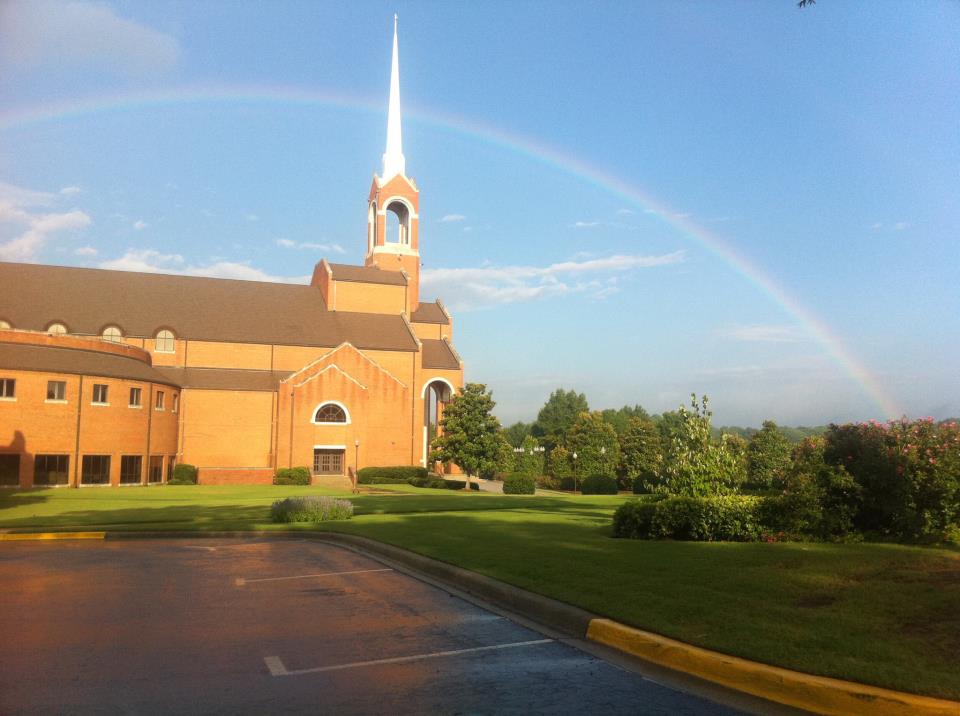
Alabama lawmakers are mulling over the idea of allowing a church to form its own police force. Briarwood Presbyterian Church, a megachurch in Birmingham, is hoping to establish its own police department of fully deputized officers who would be armed and have the authority to make arrests in order to keep it growing congregation of over 4,000 people safe. Last week, the Alabama Senate approved SB.193 by a vote of 24-4, which would allow just that. The state House is now considering an identical version of the bill that was sent to the Public Safety and Homeland Security committee in February. Officers hired by the church would need to be certified by the Alabama Peace Officers Standards and Training Commission and their law enforcement authority would be restricted to the church’s campuses and properties. Previously, the state has allowed a few private universities the authority to have their own police force, but has yet to give church or non-school entity the same rights. The Legislature passed the Briarwood bill during the 2016 legislative session, but former Gov. Robert Bentley failed to sign it into law. If the bill becomes law under Gov. Kay Ivey, it will likely to face a legal challenge from the American Civil Liberties Union of Alabama (ACLU-Alabama) who says it’s unconstitutional.
ACLU-Alabama files lawsuit for Christian woman’s right to headscarf in license photo

When Yvonne Allen of Tuskegee, Ala., went to renew her license in December, she was reportedly forced to remove the headscarf she wears for religious reasons. The clerk explained to her only Muslim women were allowed to cover their hair in the photos. On Tuesday, the American Civil Liberties Union of Alabama filed a lawsuit on her behalf. “I was devastated when they forced me to remove my headscarf to take my driver’s license photo,” Allen said in a statement released by the ACLU. “Revealing my hair to others is disobedient to God. I should have the same right as people of other faiths to be accommodated for my religious beliefs.” Lee County’s refusal to grant Allen a religious accommodation contradicts state rules and violates her rights under the First Amendment to the U.S. Constitution and the Alabama Constitution, according to the lawsuit. On Wednesday, the Alabama chapter of America’s largest Muslim civil liberties and advocacy organization, the Council on American-Islamic Relations (CAIR) showed their support for the suit, saying that Christian women in Alabama should be able to wear a headscarf for a driver’s license photo, just as Muslim women and Sikh men are allowed to wear religious head coverings. “Alabamans of all faiths should have the right to wear religious apparel in driver’s license photos,” said CAIR-Alabama Executive Director Khaula Hadeed. “The right to practice one’s faith is a universal right, one that should not be limited to Muslims and Sikhs.” In 2004, Alabama changed a policy that prohibited the wearing of head scarves and turbans in driver’s license photos. The new policy allowed head coverings for religious and medical reasons.
Bill passed to keep abortion clinics 2,000 feet from Alabama schools

An Alabama House committee has passed a bill to keep abortion clinics at least 2,000 feet away from public schools. The House Health Committee voted Wednesday in favor of HB 301 sponsored by Rep. Ed Henry, a Decatur Republican. The bill directs the Alabama Department of Public Health not to reissue licenses for any clinic within 2,000 feet of a school. The bill passed the state Senate in March by a vote of 27-6, and will now move to the full House for a vote. “If we currently protect a physical buffer between students and liquor stores, it is common sense that we would protect them from attending school near an abortion clinic,” Sen. Paul Sanford of Huntsville said upon the Senate’s passage of the bill. “This will not mandate any abortion clinic to shut down, but I have no problem if it forces a clinic or two to move away from our kids.” If signed into law, the bill would force two abortion clinics in the state to close, including one in Huntsville stationed across the street from Edward H. White Middle School, which was forced to move to its current location near a public school after the state mandated new facility requirements in 2013. The American Civil Liberties Union (ACLU) of Alabama has vowed to challenge the restrictions in court if it clears the House, which would be the fourth lawsuit in the last three years challenging abortion restrictions in Alabama. “We all agree that protecting our children is a top priority. But this law isn’t about protecting Alabama’s children,” stated Susan Watson, Executive Director of the ACLU of Alabama in March when the bill passed the state Senate. “It’s about making a sure a woman who has decided to have an abortion can’t get one.” “And make no mistake about it: If the legislature passes this bill, the ACLU will challenge this law in court,” Watson stated. If the bill is signed into law, Alabama will become one of the first states in the nation to have a school proximity provision for abortion clinics.
Jim Belyeu: “The mother only contributes the egg and the incubator”

The House Health Committee met Wednesday to take up HB300 from Rep. Ed Henry (R-Decatur). The bill proposes a constitutional amendment that would “include all humans from the moment of fertilization” in the legal definition of “persons.” If the bill clears both Alabama houses of government, and goes on to be approved by Alabama voters, it will effectively outlaw abortions in Alabama. Similar amendments have failed in other states and, if approved, would likely be overturned by the U.S. Supreme Court. During the meeting, Henry claimed that “science makes it clear” that life begins at fertilization. People on both sides of the issue spoke during the hearing, though Brock Boone of the American Civil Liberties Union of Alabama was the only one to speak against the legislation. Boone noted that the legislation makes no exception for victims of rape and incest or mothers who might die as a result of giving birth. Further, he remarked that the bill would effectively outlaw many forms of contraception and put mothers suffering from a miscarriage under legal scrutiny. Boone also noted that if proponents of the legislation truly cared about children they would pass legislation to ensure that children born as a result of the ban were provided proper care for their children. Jim Belyeu, an Alabaster obstetrician, agreed with Henry’s claim that life begins at the moment of fertilization and a mother and fetus are separate from one another. “”The mother only contributes the egg and the incubator,” Belyeu said. “The mother provides only nutrition and protection.” A representative from Personhood Alabama also spoke in favor of the legislation, saying that the law would put the rights of unborn children on an even keel with the rights of the mother. Lawmakers did not take a vote on the bill and will likely take it up again after spring break.
Arnold Mooney introduces bill to protect education privacy

On Wednesday, Alabama Rep. Arnold Mooney of Birmingham held a news conference at Jefferson State Community College in Birmingham to announce a bill aimed at protecting the privacy of parents and students across the state. Mooney worked hand-in-hand with a number of organizations to create the bill, including the Eagle Forum of Alabama, the American Civil Liberties Union of Alabama, the Southeast Law Institute, and Education Liberty Watch. The bill sets limits on what data may be collected and shared, what data may be used on a local level for specific academic purposes and on state government and data collection systems in order to “protect students and parents from invasive practices.” “It protects the civil liberties of students and parents, which are foundational to strong academics, freedom of speech and progress,” Mooney said during his announcement. “It limits the collection of certain sensitive information and the disclosure of personally identifiable student information to third parties and provides for enforcement and penalties.” Mooney noted that there’s a lack of sufficient privacy protections for students in Alabama’s public schools on the state and federal level. As technology has progressed at a rapid pace, legislation has not kept up in order top protect the privacy of vulnerable users. “Students are being used as pawns in experimental programs, tracked by the government and tracked by corporations tracking these students to sell and research their products,” Mooney said. “Parents who send their children to public school should not have to give up their privacy rights to receive an education in Alabama’s public schools.” The Student and Parent Privacy Protection Act seeks to keep data and student information on the local level, prohibit the broad sharing of personal data, prohibit the collection of “highly sensitive information” and the “invasive overreach of outside parties,” provides parents and students access to monitor their personal records. “Our houses of learning should be places where freedom of thought and creativity are celebrated to the highest degree,” said Deborah Love, executive director for the Eagle Forum of Alabama. “This liberty and creativity in education cannot be respected and maintained today without privacy protections.” “Every person should have the right to decide who they want to share personal, private information with,” said Susan Watson, executive director of the American Civil Liberties Union of Alabama. “Privacy is not about keeping secrets, it is about maintaining control over our own lives.”
Judge blocks Ala. from ending Planned Parenthood funding
A federal judge has blocked Alabama’s effort end Medicaid funding to Planned Parenthood dealing a setback to Republican Gov. Robert Bentley. Wednesday morning U.S. District Judge Myron Thompson issued the 66-page decision directing the state to restore funding to the embattled group, stating the governor’s letter terminating the contract with Planned Parenthood Southeast (PPSE) failed to include a reason for the cancellation. In August, Bentley sent a letter terminating the state’s Medicaid contract with Planned Parenthood after the legitimacy of using any taxpayer dollars to fund the nation’s largest abortion provider was called into question after the pro-life group Center for Medical Progress (CMP) released of a series of undercover videos detailing Planned Parenthood’s harvest and sale of fetal organs and body parts after abortions. Following receipt of the letter, PPSE took the state to federal court, arguing the state didn’t have solid legal reason to end the Medicaid provider agreements with the two state clinics. Today’s ruling is the latest victory for Planned Parenthood in recent clashes with Republicans over funding. Susan Watson, Executive Director of American Civil Liberties Union of Alabama said, “Judge Thompson has rightly recognized that the State of Alabama’s termination of the Medicaid provider agreement is a violation of federal law. The State of Alabama cannot impermissibly target abortion providers for unfair treatment. Today’s ruling is a victory for the women of Alabama.” Following the order, Governor Bentley weighed in, “For the last two months, Alabama has denied payment to Planned Parenthood Southeast. The good news is that as a result of the strong opposition by Alabama and a few other states to the practice of accepting reimbursement for harvesting fetal organs, the national Planned Parenthood organization has changed course and will no longer continue this deplorable practice. I am disappointed, and vehemently disagree with the Court’s ruling today. We are reviewing the opinion and will determine the next legal steps within the appeal period.”
