
Alabama joins 13 other states in pledge to address chronic absenteeism crisis in public schools

Alabama is one of fourteen states that have joined an effort to cut chronic student absenteeism by 50% over the next five years. According to Attendance Works, a national and state initiative that pushes for better policy and practice to improve school attendance, chronic school absence rates almost doubled from one out six to almost one out of three students during the COVID-19 pandemic. And post-pandemic absenteeism rates remain higher than before the pandemic. Chronic absenteeism is defined as missing 10% of school for any reason, whether the absence is excused or unexcused, and is affecting students from every economic level and ethnicity. Education advocates from Attendance Works, The Education Trust and the American Enterprise Institute came together earlier this summer to challenge state and policy leaders to sign onto the pledge to cut the chronic absentee rates in half by 2029. According to AEI, districts with lower achievement and higher poverty have the highest rates of chronic absenteeism. AEI reports that in 2022 16% of Asian students and 24% percent of white students were chronically absent, compared to 36% of Hispanic students and 39% of Black students. The 14 states that have signed the pledge as of last week represent all regions of the country where more than 9 million students are enrolled in public schools. Those states are Alabama, Arkansas, Colorado, Connecticut, Iowa, Maryland, Nebraska, Nevada, New Mexico, Ohio, Rhode Island, Virginia, Washington and West Virginia. Some 29.7% of the nation’s students – nearly 14.7 million – were chronically absent in the 2021-2022 school year, according to federal data. About 6.5 million more students fall into this category than before the pandemic, according to Attendance Works. Denise Forte, president and CEO of EdTrust, said in a news release, “The reasons for chronic absenteeism are varied, from health and transportation challenges to harmful discipline practices to a lack of authentic and culturally responsive family engagement. Students and families need education leaders to make chronic absenteeism a top priority this year.” Katy Payne, spokesperson for the Washington State Office of Superintendent of Public Instruction, sent The Center Square an email in response to a request for comment about joining the effort. “Mirroring the rest of the nation, student attendance rates decreased during the pandemic as students navigated illness and family needs, and attendance has been on the rise since that initial drop,” she said. “Now, while we have seen an increase in the percentage of students who are absent from school for 18 days per year or more (defined as ‘chronically absent’), what we are seeing is more students staying home when sick. In Washington state, we are always seeking ways to improve, and we are excited to join this effort.” A worksheet prepared by Attendance Works is offered for teachers to gauge why individual students are chronically absent. It includes the following questions: Is the student struggling academically? Does the student have language or communication challenges? Have there been any reports of bullying? Do the parents/guardians recognize the importance of and support regular school attendance? Regardless of the reasons for being absent, missing school impacts academic progress, and impacts classmates and educators who struggle to play catch up for students missing class. According to the 2022 National Assessment of Educational Progress, 22% of fourth-graders reported they were absent five or more days in the previous month. That is double the percentage who reported that in 2019. The results were similar for eighth-graders. In Washington state, 9% of eighth-graders reported being absent five or more days in a month in 2019. In 2022, that figure was 19%. Attendance Works initially plans to develop resources to assist states that are participating, encouraging state leaders and policy makers to raise awareness of the dire nature of student attendance in schools across their state, mobilize resources to improve engagement and attendance and address barriers to getting to school. Republished with permission from The Center Square. The Center Square is a project of the 501(c)(3) Franklin News Foundation, headquartered in Chicago.
Daniel Sutter: How far should we take equal pay?
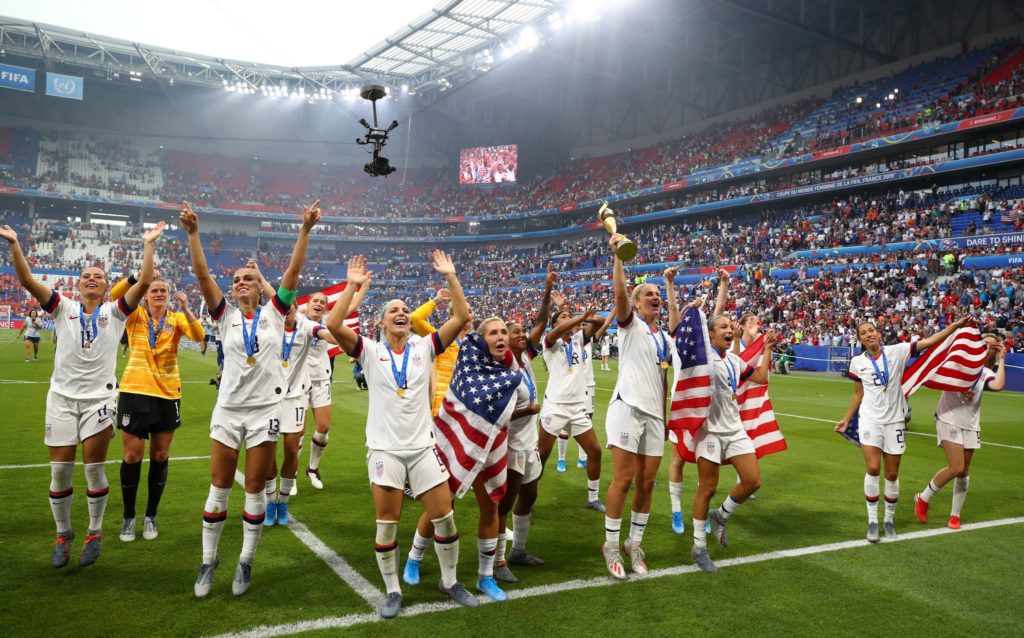
Whether the U.S. Women’s Soccer team should be paid the same as (or more than) the U.S. Men’s team is one part of gender pay equity. The debate highlights how determinants of pay in markets do not align with our notions of fairness and equity. In the labor market, supply and demand set wages and salaries. Potential employers (the demanders of labor) make offers to potential workers them (the suppliers). The two sides must reach mutually agreeable terms. Economists recognize that factors like the number of people with a given talent or the ability to learn a craft and the potential for machines to replace workers affect wages. Many of these factors, however, do not seemingly justify people earning different amounts of money. For instance, LeBron James’s and Steph Curry’s unique basketball talents allow them to earn over $30 million a year. More people watch the Men’s World Cup than the Women’s World Cup, resulting in prize pools of $400 million and $30 million for the most recent tournaments. But we consider hard work, conscientiousness, and honesty as reasons why one person should earn more than another. Do women make less than men? One widely reported statistic is that women make only 77 percent as much as men. Yet economists know that earnings depend on education, experience, and hours worked among other factors. Controlling for these factors eliminates most of the pay gap. Yet the absence of a pay gap does not leave us without concerns. Differences in educational attainment by gender, particularly in science and technology, may reflect biases. And women are less likely to leave the labor force to have and raise children, which may reflect stereotypes. The interpretation of pay gaps, when they exist, is also complicated. The determinants of supply include personal values and decisions. The American Enterprise Institute’s Mark Perry and Andrew Biggs note that men hold 94 percent of jobs in the 20 professions with the highest on-the-job fatality rates. These dangerous jobs pay higher wages to compensate workers. Is it gender bias if women are less willing than men, on average, to take dangerous jobs? The absence of a pay gap when controlling for relevant factors may seem surprising, but the profit motive can explain this. Suppose that airlines preferred hiring men over women as pilots. If pilots earned $150,000 a year, equally skilled female pilots shut out of the market might be willing to work for only $100,000 a year. A high-minded airline might break the gender barrier and hire women. But so would a greedy airline, to save $50,000 per pilot. Until the pay gap disappears, profit-seeking businesses should prefer hiring women. What if bias affected access to education and training? Consider medicine, where arguably women were steered (or forced) into nursing, while men were encouraged (or allowed) to go to medical school. A nurse does not have all the skills of a doctor, but if not for bias, many women nurses would have become doctors. Comparable worth laws mandate equal pay for jobs requiring comparable skill and responsibility. Some free market economists worry that firms cannot afford the mandated higher pay for women. Yet married men’s earnings premium demonstrates that employers typically have some discretion on pay. They can give a raise to a married man to help support his family instead of a single man looking to buy a fancier car. A bigger problem, I think, is that comparable worth changes the salary setting process. The labor market balances supply and demand; no one person or entity sets pay. Any gender pay gaps result from decisions by thousands of people. Enacting comparable worth requires a government expert to determine which professions deserve equal pay. Once the government decides some wages, any group of workers can demand that the government boost their pay. Women have faced discrimination and restriction of their right to earn a living. This is unfortunate. Gender bias is, I think, disappearing, and where pay gaps still exist, greed in the market will help equalize pay. Daniel Sutter is the Charles G. Koch Professor of Economics with the Manuel H. Johnson Center for Political Economy at Troy University and host of Econversations on TrojanVision. The opinions expressed in this column are the author’s and do not necessarily reflect the views of Troy University.
Phil Kerpen: Farm bill should reform more than food stamps

Republicans are set to move landmark welfare reform in this year’s farm bill, which includes language requiring able-bodied adults to work or participate in a job training program to be eligible for food stamps. Democrats in Congress, however, have decided to litmus test opposition to work requirements and have therefore walked away en masse from supporting the usually bipartisan farm bill. That gives conservatives leverage to push for free-market reforms to the other 20 percent of the bill – and they should. The food stamp program accounts for about 80 percent of the cost of the farm bill, and work requirements are overwhelmingly popular with the public. They enjoy a robust 82 percent approval among all voters and are supported by even 71 percent of Democrats according to a recent poll commissioned by the Foundation for Government Accountability. If the farm bill accomplished nothing else, it would be worth supporting for this popular, critical reform that would incentivize Americans to reenter the workforce and get back on the ladder of economic opportunity – while helping grow an economy that is being held back by chronic shortages of workers in many industries. But a farm bill that reforms the food stamp program while reauthorizing farm welfare programs without reforms – and in some cases even with expansions – is an unnecessary political gift to Democrats, who can spin their opposition to sensible work requirements by accusing Republicans of hypocrisy. The bill loosens the loophole that allows non-farmers to collect agricultural subsidies of up to $125,000 per year. Current law allows immediate family members of farmers to collect even if they don’t live on the farm – the proposed farm bill expands the definition to include urban-dwelling cousins, nieces, and nephews. And they aren’t required to work to collect the money. And commodity support programs are available for couples making up to $1.8 million per year – hardly the needy – rather than following the much more sensible proposal in President Trump’s budget to cap eligibility at $500,000. The bill also reauthorizes the Soviet-style sugar program, which the great anti-cronyism writer Tim Carney has accurately identified as a test of whether Republicans “understand the distinction between pro-business and pro-market.” The sugar program is a hidden tax of $2.4 to $4 billion per year according to an analysis by the American Enterprise Institute – and it pushes candy companies to move to Mexico so they can buy sugar at the much lower world price. Census Bureau estimates show the sugar program has destroyed about 123,000 American jobs. But it continues because the sugar industry is politically powerful, especially in the key state of Florida. There might be enough votes in the House to reform the sugar program, but we won’t find out unless leadership allows a vote. Ultimately, conservatives may find it impossible to resist voting for a bill with a key policy reform (work requirements) applied to the single program (food stamps) that accounts for 80 percent of farm bill spending. But if they can use the leverage gained from Democrats walking away from the table to force reforms on the farm side of the bill they will achieve an even bigger victory while saving leadership from an obvious political vulnerability created by the current bill. ### Philip Kerpen is an American free-market policy analyst and political organizer, president of American Commitment, a conservative organization he founded in 2012.
Katherine Robertson: Legislative session postmortem: three themes
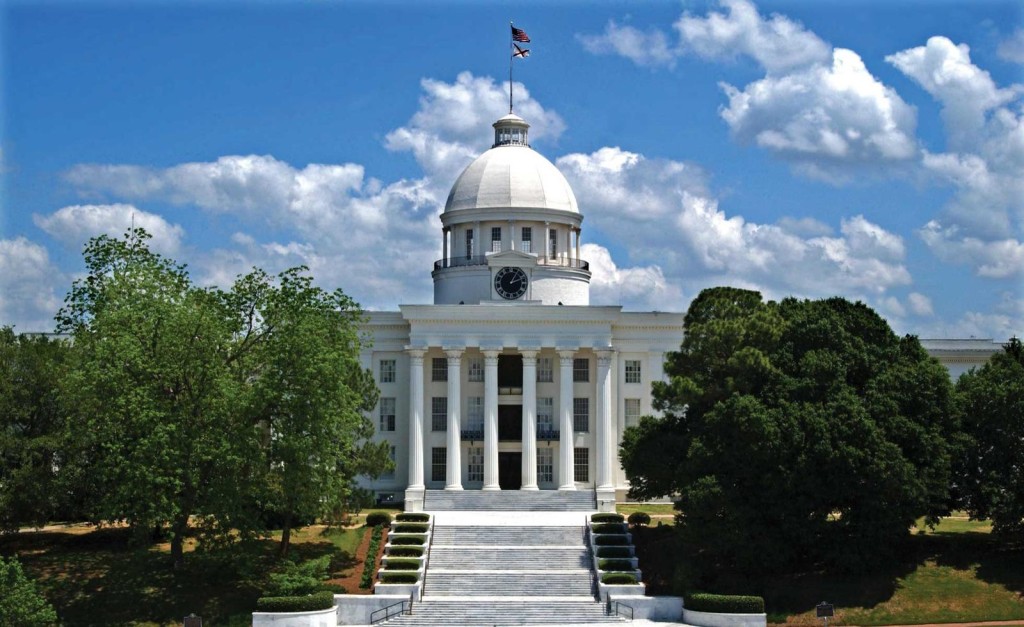
It’s only been a few days since Governor Bentley signed the General Fund budget for fiscal year 2016 into law. We don’t yet know what the fallout, if any, will be from the cuts, taxes, and transfers that were made to make up the revenue shortfall. What we can identify at this juncture are at least three key themes of this nearly seven-month-long debate that shape the way the state spends your money. Bifurcated Brawl Particularly throughout the two special sessions, much ado was made about the Education Trust Fund’s health versus the General Fund’s maladies. Transferring the state’s use tax revenues from the Education Trust Fund to the General Fund, first proposed at the end of the regular session, ended up being a key piece of the final solution–although the exact amount was haggled over until the very last days of the session. The resolve of General Fund agency heads to receive level funding was matched only by the state’s education entities’ tenacious defense. The infighting among the two factions, at times, led many newly elected legislators to question why the state has two budgets in the first place. As the public and private squabbling dragged on, it was hard to miss the irony that Alabama is one of the only states in the Union where members of one budget committee would be pitted against their counterparts in the other. Alabama’s bifurcated, two-sided budget system leads many to adopt a one-sided mentality. Looking at the services our government provides and determining how to fund the growing list of “top priorities” at an appropriate level is the responsibility of all legislators–not just those assigned to the budget committee with the problem. Federal Fixation Federal matching dollars were mentioned countless times during the budget debate. Whether in the context of Medicaid, public health, or education, cuts to these and other programs were forbidden by those who warned that Alabama would lose federal dollars in the process. A recent report comparing states’ dependence on the federal government listed Alabama as the fourth most reliant state on federal funds, behind New Mexico, Kentucky, and Mississippi. In Montgomery, far too often, federal dollars are viewed as free money and provide another alternative to restraint and reform. A vast disconnect exists between the duties owed to state versus federal taxpayers (though they are the same group). The two provider tax increases that passed in the second special session are further evidence of this–a strategic maneuver to get more federal dollars through the door at “no cost” to state taxpayers. The free market American Enterprise Institute has called provider tax funding schemes “a distortionary but legal means by which a state can artificially inflate medical costs to extract additional Medicaid funding from the federal government.” In Montgomery, far too often, federal dollars are viewed as free money This chronic reliance on federal money is problematic, of course, given that Congress has a harder time passing budgets than the Alabama Legislature–and a government that’s $18 trillion in debt is a risky funding source to count on. With all of this uncertainty, Alabama lawmakers would be wise to wean the state off of these dollars, rather than grow this dependency to the detriment of our state sovereignty. Echo Chambers It is widely understood that when lawmakers arrive in Montgomery, they leave their constituents behind and are greeted by a bevy of lobbyists and state-agency representatives working tirelessly and aggressively for or against particular matters. This year, legislators were also subjected to not-so-veiled threats from the governor and, at times, painful arm-twisting by their leadership. All the while, those who wanted to raise taxes claimed that they were not hearing any opposition from their constituents. Those who wanted to slash government said their position had largely been met with silence at home. Still, seemingly exaggerated polling data was cited when convenient to show that “most Alabamians” support this or that. (Apparently, somewhere in the state, Alabamians were begging for their taxes to be raised.) Maybe the theme most important for the general public to understand is that there are people speaking on your behalf that you may or may not agree with. All politicians are susceptible to follow the loudest voice, even when it conflicts with their instincts. If we sit back and let a few voices dominate important statewide debates in the name of “popular opinion,” we should not be surprised to find that the end result is not what we wanted. Montgomery is not Washington, D.C.– legislators are accessible and they expect to hear from you. Now is the time to talk to them about their decision-making over the past seven months and what you hope to see them accomplish over the next three years. Pushing for serious reforms to contain our state spending might be a good place to start, lest the taxman returneth. Katherine Robertson is vice president for the Alabama Policy Institute (API), an independent non-partisan, non-profit research and education organization dedicated to the preservation of free markets, limited government and strong families.
