Katie Britt and four AL House members sign letter opposing EPA emissions mandates

U.S. Senator Katie Britt joined Representatives Barry Moore, Gary Palmer, Jerry Carl, and Robert Aderholt, joined more than 150 of their colleagues, in a bicameral letter to U.S. Environmental Protection Agency (EPA) Administrator Michael Regan urging the Biden Administration to overturn its de facto electric mandate on trucks, tractors, buses, and semis. The final rule, “Greenhouse Gas Emissions Standards for Heavy-Duty Vehicles – Phase 3,” was published on April 22, 2024. According to the Rule Summary on EPA website, “The new standards will be applicable to HD vocational vehicles (such as delivery trucks, refuse haulers, public utility trucks, transit, shuttle, school buses, etc.) and tractors (such as day cabs and sleeper cabs on tractor-trailer trucks).” Numerous consumer and trade groups oppose the rule. The American Trucking Associations Chief Advocacy and Public Affairs Officer Ed Gilroy said, “The American Trucking Associations opposes EPA’s GHG3 rule in its current form because the post-2030 targets remain entirely unachievable given the current state of zero-emission technology, the lack of charging infrastructure and restrictions on the power grid.” The bicameral letter warned, “This rule will harm our families and businesses, increases our gas prices, and makes us more dependent on foreign supply chains – particularly China.” “Our farmers and agricultural industry will be especially hurt by this new mandate. According to the latest agriculture census by the U.S. Department of Agriculture, there are 3,161,820 trucks (including pickups) on over 1.4 million farms and 3,784,743 tractors on over 1.5 million farms that would see higher equipment costs and tighter margins due to this misguided rule. These numbers also do not account for the small, independent truckers, trucking companies, and truck dealerships throughout the U.S. that will be impacted. Not only would this rule harm consumers, but it would also exacerbate consolidation by effectively forcing our small trucking companies out of business that cannot afford this hasty transition to electric or hydrogen powered trucks,” the lawmakers wrote. “[W]e urge you to withdraw your final rule that is both unrealistic and burdensome,” the lawmakers continued. “This rule will only further increase costs for American families, businesses, and rural communities while fueling more inflation. We need to give Americans a choice in the cars and trucks that they drive, and affordability and performance for the trucking industry is paramount.” Britt’s office released a statement calling her a “strong proponent of preserving consumers’ freedom to choose gas-powered vehicles.” Earlier this year, Britt joined Senator Tommy Tuberville and another large bicameral group of lawmakers in a letter calling for the National Highway Traffic Safety Administration (NHTSA) Deputy Administrator to rescind the Biden Administration’s proposed Corporate Average Fuel Economy (CAFE) standards for passenger cars and light-duty trucks. This rule sought to phase out gas-powered vehicles and mandate the mass production of electric vehicles. Britt’s statement noted that she has cosponsored several bills addressing the Biden administration’s vehicle mandates including Senator Crapo’s Choice in Automobile Retail Sales (CARS) Act to prohibit the EPA from moving forward with its EV mandate for passenger cars and trucks or any similar future rules that would limit the availability of new motor vehicles based on that vehicle’s engine type as well as being a cosponsor of Senator Markwayne Mullin’s the Preserving Choice in Vehicle Purchases Act.
Dan Sutter: The great truck driver shortage
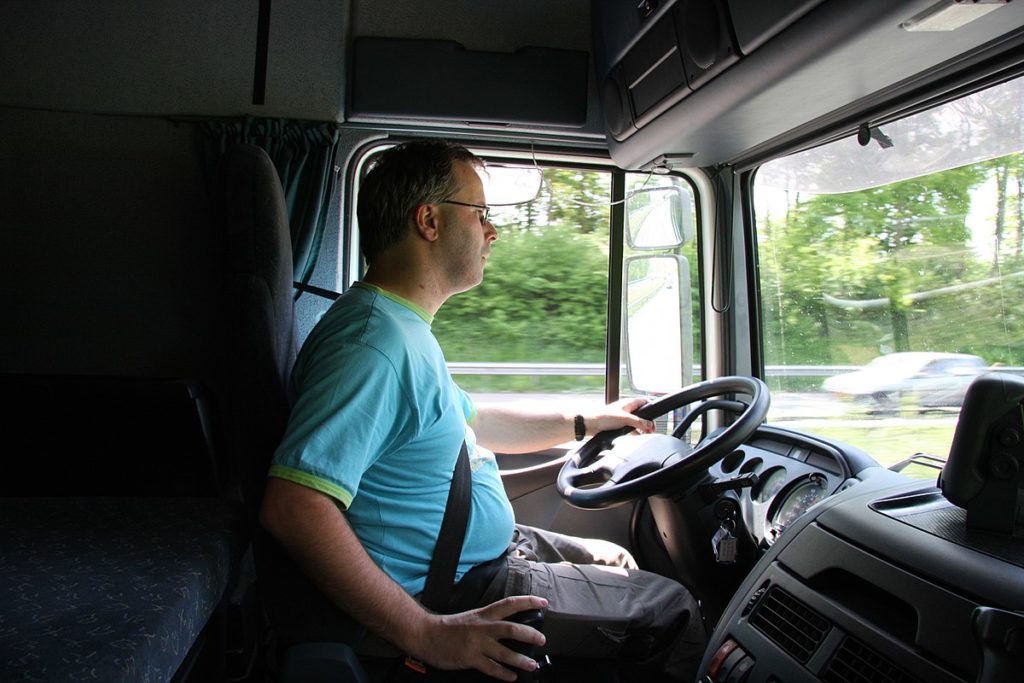
The Alabama legislature lowered the minimum age for a truck driver’s (CDL) license to 18 for within-state transport (the minimum age remains 21 in interstate trucking) to help alleviate a driver shortage the American Trucking Associations (ATA) says has existed since 2005. Trucking has long been a major employer in Alabama and Pike County. What are the economics of this shortage and the future of trucking? Trucking contributes enormously to our economy. Seventy percent of freight, over 10 billion tons annually, ships via trucks. Our modern economy could not exist without reliable truck transportation; any uncertainty would render just-in-time production impractical. News reports for years have noted trucking companies’ struggles to hire drivers. The most visible have been ads on tractor-trailers encouraging drivers to switch jobs for better pay and working conditions. Our economy shows few signs of a shortage of transport, as stores have remained stocked and factories operating. About 1.7 million people drive “heavy” trucks requiring CDLs, while 1.3 million more drive light delivery trucks. About half of the heavy truck drivers work for trucking companies serving many customers. Most of the remaining drivers work for companies which ship a great deal of freight. Some drivers work as independent owner-operators. According to the Bureau of Labor Statistics, heavy truck drivers earn $44,000 per year. But experienced CDL drivers earn more than $60,000 and team drivers over $70,000. These are solid salaries for “blue collar” jobs requiring only a high school degree. Why then is there a shortage of truck drivers? As an economist, I find the ATA’s claim of a fifteen year shortage noteworthy. Economists expect that prices or salaries will rise to quickly eliminate shortages and fall to eliminate surpluses. What’s going on? Part of the answer may arise from different uses of the term shortage. A recent economic analysis finds that the market for heavy truck drivers has been tight but not in shortage. The ATA estimates the shortage at around 50,000 drivers, or just three percent of all heavy truck drivers. A trucking company can lose business if ever short on drivers and may perceive difficulty hiring as a serious shortage. Truck driver salaries have risen, as we would expect in a shortage, 25 percent between 2005 and 2016, versus a 19 percent increase for all other blue collar jobs. Yet this is a modest increase relative to oil industry salaries during the shale boom. The 14 percent decline in employment during the 2008 recession shows that there were more drivers than loads during a portion of the driver shortage. The training drivers require could potentially limit the supply. Aspiring truckers can learn driving by paying (or borrowing) up to $7,000 for a truck driving school or signing on for training from a trucking company paid for through a lower first year salary. Access to training seems unlikely to significantly limit supply. Long hours and extensive travel constitute a more significant limit. Days on the road make having a life, and particularly a family, difficult. Truckers must be paid extra to accept these undesirable working conditions. And factoring in the unpleasant conditions makes the good pay more apparent than real. Truckers create tremendous value, but the demands of the job heavily burden people. Self-driving trucks might resolve this dilemma. Robot drivers will not miss being away from their family. Artificial intelligence will likely automate jobs people find particularly unpleasant. Self-driving technology could be a boon to truckers. Experts suggest that the technology will be operational on rural interstates long before for urban driving. If so, trucks could drive autonomously between cities, with truckers driving across urban areas. A trucker driving rigs across Birmingham all day could go home every night. Autonomous trucks may not initially reduce the number of drivers, rather change driving arrangements. Efficient, reliable truck transport has enabled America’s prosperity and lifted millions of families into the middle class. Yet the burdensome job conditions make finding drivers difficult. Automation could make both truckers and our economy better off and end the great truck driver shortage. Daniel Sutter is the Charles G. Koch Professor of Economics with the Manuel H. Johnson Center for Political Economy at Troy University and host of Econversations on TrojanVision. The opinions expressed in this column are the author’s and do not necessarily reflect the views of Troy University.
Rollback of truck safety rules may be just the beginning

The trucking industry scored a victory this week when Republican lawmakers effectively blocked Obama administration safety rules aimed at keeping tired truckers off the highway. But there’s more coming down the road. The American Trucking Associations is pledging to come back next month, when Republicans will control the White House and Congress, and try to block state laws that require additional rest breaks for truckers beyond what federal rules require. The group says there should be one uniform national rule on work hours for interstate truckers. The trucking industry’s latest triumph has caused concern among safety advocates that it may signal the start of a broad rollback of transportation safety regulations once there’s no longer a Democratic president to check the tendency of Republican lawmakers to side with industry. “Unfortunately, it’s going to be an open season on safety in this coming Congress,” said Jim Hall, chairman of the National Transportation Safety Board during the Clinton administration. Shippers and some segments of the trucking industry probably will also push for long-sought goals of increasing the weight limit on trucks to more than 90,000 pounds and increasing the length of individual trailers in double-trailer combinations from 28 feet to 33 feet, safety advocates said. “It’s going to be very tough because the companies really care about the cost. They don’t care about the safety no matter what they say,” said safety advocate Joan Claybrook. The provision Republicans added to a must-pass government spending bill this week suspends regulations issued by the Obama administration requiring truckers to take two nights off to rest after a work week of up to 75 hours. Truckers are required to take a 35-hour break after at the end of a work week. But the trucking industry objected to requirements that the 35 hours include two periods from 1 am to 5 am. Sleep scientists say rest during the early morning hours is critical for people to feel refreshed. The suspension means truckers can head out on the road again during those hours if the 35-hour break has elapsed. Another regulation that prevents truckers from working 75 hours, followed by a 35-hour break, and then resume driving again in the same week was also suspended. Truck driver Bill Varnado, 66, of Dallas, Georgia, said he likes the sleep requirement because it ensures that drivers are well-rested. He said it’s hard to find places to sleep in one’s rig on the road, so drivers sometimes keep going. “Sometimes you’re forced to drive fatigued because you can’t find anywhere to park,” said Varnado, who drives for Pro Trucking Inc. of Acworth, Georgia, during a truck-stop break along Interstate 81 here. But self-employed trucker George Lafferty, 61, of Henry, Illinois, said Congress should repeal the rule. “I don’t see how the government can tell you when to sleep and when not to,” Lafferty said during a truck-stop interview along Interstate 81 after dropping off a load of yeast at a livestock-feed plant. “A driver should know when he’s fatigued or not,” he said. “If you’re fatigued, take a half-hour, hour nap.” Besides truck safety, Congress is also likely to be asked to deal with a wide range of other transportation safety concerns. The auto and technology industries, for example, are telling Congress that they fear a “patchwork” of state safety laws will hinder the deployment of self-driving cars. National Highway Traffic Safety Administration officials have developed voluntary guidelines for the safe design, development, testing and deployment self-driving cars that they want automakers to follow. But California’s Department of Motor Vehicles wants to make the guidelines mandatory. Some industry officials have complained the guidelines go too far and may stifle innovation. Safety advocates say they don’t go far enough. “We think it would be completely inappropriate for Congress to pre-empt the states without strong federal safety standards in place for automated vehicles,” said William Wallace, a policy analyst for Consumers Union, the policy and mobilization arm of Consumer Reports. “States are the ones that make the final call on whether automated vehicles should be allowed on the roads,” he said. “We think citizens of those states have the right to take action to keep their roads safe.” Republished with permission of The Associated Press.