
Darryl Paulson: Amnesty Don
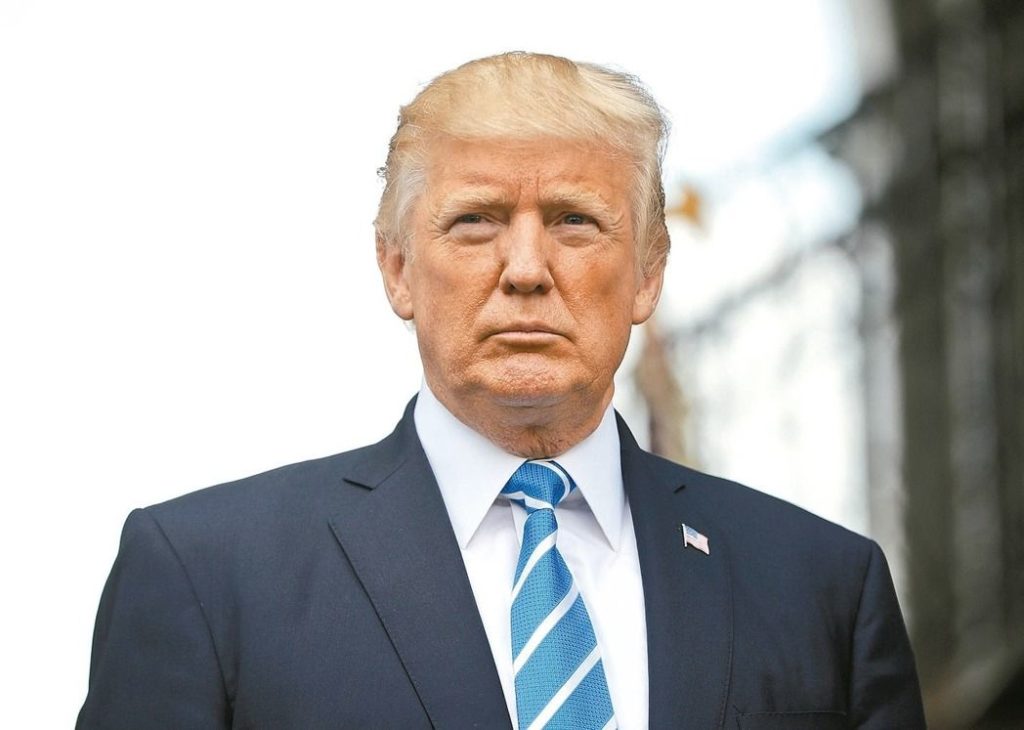
Amnesty Don. That’s what Steve Bannon and Breitbart News called President Donald Trump after news came out that the president and the Democratic leadership of congress brokered a deal concerning the Dreamers. According to reports, Trump struck a deal with Democratic leader of the Senate Chuck Schumer and Democratic House leader Nancy Pelosi. The supposed deal was to grant work visas and a pathway to citizenship for the children of illegal immigrants. Democrats agreed to bolster the number of immigration agents, but refused to support building a wall on the Mexican border. After conservative critics ranging from Laura Ingraham, Ann Coulter, Congressman Steven King and others attacked Trump for striking an amnesty deal with Democrats, Trump denied that any deal had been reached. Immigration policy has always been one of the most divisive issues in America. Much of the early controversy centered around the Irish and German immigrants, both associated with the Catholic Church. The attack on the Irish and German Catholics led to the formation of the “Know-Nothing Party in the 1850s. The party derived its name when members were asked about their beliefs, they were told to respond, “I know nothing.” Founded after the collapse of the Whig Party, the Know-Nothing Party swept Massachusetts elections in 1854. In the 1856 presidential election, their candidate was former Whig president Millard Fillmore, who won 21.5 percent of the vote. The party collapsed after the 1856 elections. Many critics of current anti-immigrants attempt to link their views to the Know-Nothing Party. In a 2006 editorial in The Weekly Standard, editor William Kristol attacked populous Republicans for “turning the GOP into an anti-immigrant, Know-Nothing Party.” In addition to the attacks on the Irish and Germans, later attacks focused on Southern Europeans, Africans and Asians. Congress passed the Chinese Exclusion Act in the 1880s, which completely stopped the flow of Chinese immigrants. The Simpson-Mazzoli Act of 1986 granted amnesty to illegal workers who resided continuously in the United States since Jan. 1, 1982, and paid a fine and back taxes. It was passed by the Democrat controlled House, the Republican Senate and signed into law by Republican Ronald Reagan. A flood of illegal immigrants since Simpson-Mazzoli has led to more recent efforts to grant permanent status to the most recent wave of illegals. In 2010, Congress considered the Dream Act which would have granted work permits to the children of illegal immigrants and create a pathway to citizenship. Although it passed the Democratic controlled House, the Senate was not able to get the 60 votes needed to stop a Republican filibuster. Because of the failure of Congress to pass the Dream Act, President Obama signed an executive order in 2012 to protect the Dreamers. The Deferred Action for Childhood Arrivals (DACA), was praised by the Democrats, but attacked by Republicans who argued the president lacked the authority to unilaterally change immigration policy. DACA became a focal point of the 2016 presidential campaign when candidate Donald Trump promised to end DACA on “Day One.” He also promised to build a wall on the Mexican border. Instead of “Day One,” it took Trump eight months to rescind DACA. There are currently four major legislative proposals before Congress to reform immigration. The Dream Act, sponsored by Democrat Dick Simpson of Illinois and Republican Lindsay Graham of South Carolina, would codify DACA, impose educational, work and military requirements and create a path to citizenship after 13 years. Florida Republican Congressman Carlos Curbelo has introduced the Recognizing America’s Children Act. This bill codifies DACA, imposes work and educational requirements, and creates a path to citizenship after 10 years. The American Hope Act sponsored by Democratic Representative Luis Gutierrez of Illinois, has 112 Democratic co-sponsors. There are no work or military requirements and Dreamers may apply for citizenship after five years. Finally, Republican House member Mike Coffman of Colorado has introduced the Bar Removal of Individuals [who] Dream and Grow our Economy (Bridge Act). Coffman is seeking to obtain 218 signatures and force DACA to the floor for a vote. Will President Trump’s negotiations with the Democratic leadership force Republicans to act, or will it alienate them from their president by shutting out Republicans from the negotiations? Will Republican leaders Mitch McConnell and Paul Ryan schedule a floor vote on DACA, especially if most Democrats support the bill and most Republicans oppose the bill? Will Democrats offer concessions to the president and Republicans in exchange for supporting DACA? Will Democrats agree to build a birder wall? Will Democrats support E-Verify to enforce immigration law? Will Democrats agree to hire more immigration agents? At this point, there are a lot more questions than there are answers. ••• Darryl Paulson is Emeritus Professor of Government at the University of South Florida in St. Petersburg specializing in Florida politics and elections.
Mo Brooks introduces legislation to reform TPS immigration program
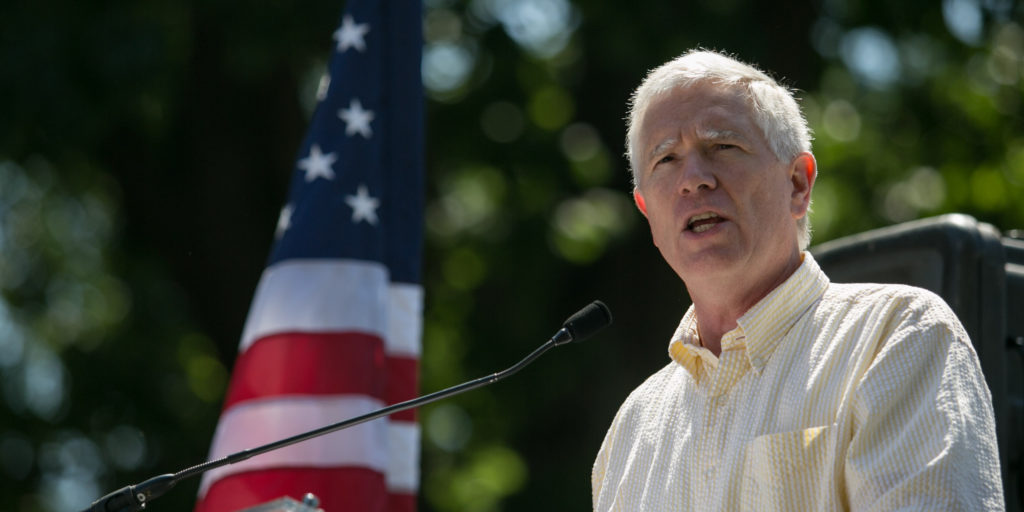
Congressman Mo Brooks this week introduced a bill that would tighten-up an oft “abused” immigration program that lends itself to de facto amnesty. Established in 1990 as a temporary immigration status — granted to eligible nationals of a country as a result of a natural disaster, civil violence, or other extraordinary conditions making the country “unable, temporarily, to adequately handle the return of its nationals” — the Temporary Protected Status (TPS) program is essentially a nascent green-card program of sorts providing recipients a work permit, Social Security number, driver’s license, and access to certain welfare benefits. While it’s not an immediate path to citizenship, under current law “Temporary” Protected Status is de facto permanent and is often renewed time and again, permanently extending the TPS status. Meaning hundreds of thousands of illegal aliens from countries across the globe, who would otherwise be deported, spend years, even decades, enjoying the protections and benefits of the program, even well-past the time the extraordinary conditions which qualified them for it had dissipated due to this never-ending “temporary” measure. Which is why Brooks introduced H.R. 2604: the Temporary Protected Status Reform Act of 2017. The TPS Reform Act would shift authority from the Executive and empower Congress to designate a nation’s participation in the TPS program. Further, it would set strict, clear time limitations for TPS duration, aiming to make the law, which was designed to be inherently temporary, temporary once more. “The United States provides Temporary Protected Status (TPS) to more than 300,000 foreign residents. As the name implies, the TPS statute purports to provide temporary relief to foreign residents for a period of 6 to 18 months. However, the Executive repeatedly renews protected status, effectively providing a free and permanent pass into America – including all the benefits that come with it,” said Brooks. “My bill, the TPS Reform Act would ensure that ‘temporary’ means temporary by establishing clear time limitations and creating statutory tests that must be met to grant the TPS designation. This legislation provides the needed reform for what has become a long-running amnesty program.” Among the supporters of the bill is the Federation for American Immigration Reform (FAIR), a non-profit that advocates for immigration reform based out of Washington, DC, who claim TPS is “misnamed.” “By now, we should have learned from experience that TPS is misnamed—what we offer as ‘temporary’ protection is rarely, if ever, temporary,” Federation for American Immigration Reform Executive Director, Dan Stein noted. “Most often, unfortunately, it’s used by aliens residing in the United States as a foot in the door to permanent residence. They are certainly happy to receive TPS because it apparently never expires. The true test of TPS as a policy tool is if it ever is, truly temporary. Our laws should not reward illegal immigrants to the United States regardless of the political or natural upheavals in their homelands. Otherwise, experience shows that we will encourage further illegal immigration.” The Executive Director of the Center for Immigration Studies, Mark Krikorian, agreed. “It’s long past time to fix the TPS statute so that ‘temporary’ no longer means permanent,” said Krikorian. “Past administrations have been abusing this temporary, humanitarian program for 27 years, using it as a de facto amnesty program,” Rosemary Jenks, Director of Government Relations at NumbersUSA added. “This bill would restore critical oversight by Congress.” Original cosponsors of the TPS Reform Act include: Texas-Republicans Louie Gohmert and Michael McCaul, and Iowa-Republican Steve King. NumbersUSA and FAIR both endorsed the bill.
Ted Cruz-Marco Rubio feud flares in Iowa closer

As if hearing Marco Rubio’s footsteps creeping up on him, Ted Cruz directed much of his final advertising against the Florida senator in the frenzied weekend prelude to the Iowa caucuses, feeding a Republican feud that turned increasingly bitter before voters have their first say in the 2016 presidential race. Considered to be vying with front-runner Donald Trump for Iowa victory Monday, Cruz denounced the next in line, according to polls, sharply challenging Rubio’s conservative credentials on the airwaves while ignoring him face to face with Iowans. One ad said darkly of Rubio: “Tax hikes. Amnesty. The Republican Obama.” “The desperation kicks in,” Rubio said in response to Cruz. “From my experience, when people start attacking you it’s because you’re doing something right.” On the Democratic side, Bernie Sanders implored Iowa supporters Saturday to get on their feet in two days and convert their monthslong infatuation with his upstart campaign against Hillary Clinton into actual votes. That call to action was echoed by Democratic and Republican hopefuls alike as they worked to motivate Iowans to attend the caucuses. Trump, the showman of the Republican race and its front-runner, made a dramatic entrance to a Dubuque rally as his jet flew low over a hangar half-filled by the waiting crowd and music played from the movie “Air Force One.” There was more drama inside, as a small group of protesters interrupted him and Trump joined the crowd in chanting “USA” to drown out the discord. He asked security to “get them out” but “don’t hurt them.” Iowa offers only a small contingent of the delegates who will determine the nominees, but the game of expectations counts for far more than the electoral math in the state. Campaigns worked aggressively to set those expectations in their favor (meaning, lower them) for Iowa, next-up New Hampshire and beyond. Asked whether Rubio could win or come second, his senior strategist Todd Harris laughingly responded with an obscenity and said the goal in Iowa is third, behind the flamboyant Trump and the highly organized Cruz. “There’s no question we are feeling some wind at our back,” he told The Associated Press. But, he added, “It’s very hard to compete with the greatest show on earth and the greatest ground game in Iowa history. So we feel very confident that what we need to do here is finish a strong third. I don’t care what any of the polls say, Ted Cruz is going to win this caucus.” With that, he tried to set expectations so that if Rubio finishes better than third, it can be proclaimed a great performance and if Cruz doesn’t win, it will be seen as a great failure. In the last major preference poll before the caucuses, Trump had the support of 28 percent of likely caucus-goers, with Cruz at 23 percent and Rubio at 15 percent. The Iowa Poll, published by The Des Moines Register and Bloomberg, also found Clinton with 45 percent support to Sanders’ 42 percent. The poll of 602 likely Republican caucus-goers and 602 likely Democratic caucus-goers was taken Tuesday to Friday and has a margin of error of plus or minus 4 percentage points. Cruz’s campaign was challenged by Iowa Secretary of State Paul Pate over a mailer sent to potential voters that seemed designed to look like an official notice warning recipients about “low expected voter turnout in your area.” The mailer refers to a “voting violation” and grades the recipient’s voting history and that of several neighbors, citing public records. Pate said Cruz’s campaign “misrepresents Iowa election law.” There’s “no such thing as an election violation related to frequency of voting,” he said, and insinuating otherwise is “not in keeping in the spirit of the Iowa caucuses.” Cruz brushed off the fuss. “I will apologize to nobody for using every tool we can to encourage Iowa voters to come out and vote,” he said. In Charles City, Iowa, a testy Sanders accused Clinton of misrepresenting his positions. He cited an ad from her campaign that says she would defend Planned Parenthood, “not attack it,” and implies he has taken on the organization that offers contraceptive and abortion services. The ad, without naming him, also says she would “build on Obamacare,” not start over, and stand up to the gun lobby, “not protect it,” all swipes at the senator. Sanders slammed the “idea that I am attacking Planned Parenthood when I have a 100 percent lifetime voting record for Planned Parenthood” and bristled at the implication that he’s not for tougher gun laws. “Let’s debate those differences of opinion, but let’s not go around distorting a record that I am very proud of,” he said. Clinton has worked assiduously to avoid a repeat of 2008, when then-Illinois Sen. Barack Obama scored a surprise win in Iowa, she dropped to third and her days as the prohibitive favorite for the nomination faded. She faced the prospect of escalating political heat from revelations Friday that the private email server she used when she was Obama’s first secretary of state contained top-secret messages that should have remained within proper, secured channels. That heat was coming from Republicans; Sanders earlier declared the email flap a nonissue in his mind. But at a Sanders rally in Manchester, Iowa, Ruth Lewin, a retired grocery store clerk and child care provider, said the latest news about Clinton’s emails reinforced why she will be caucusing for Sanders on Monday. “It’s a matter of honesty, integrity along with other issues I have about her,” Lewin said. “When you get $600,000 for a speaking engagement, I mean that’s more than I’ve made in my entire lifetime.” And Sanders? “I believe he’s like we are,” she said. Republished with permission of the Associated Press.
Ted Cruz clarifies immigration stance in renewed Southern offensive
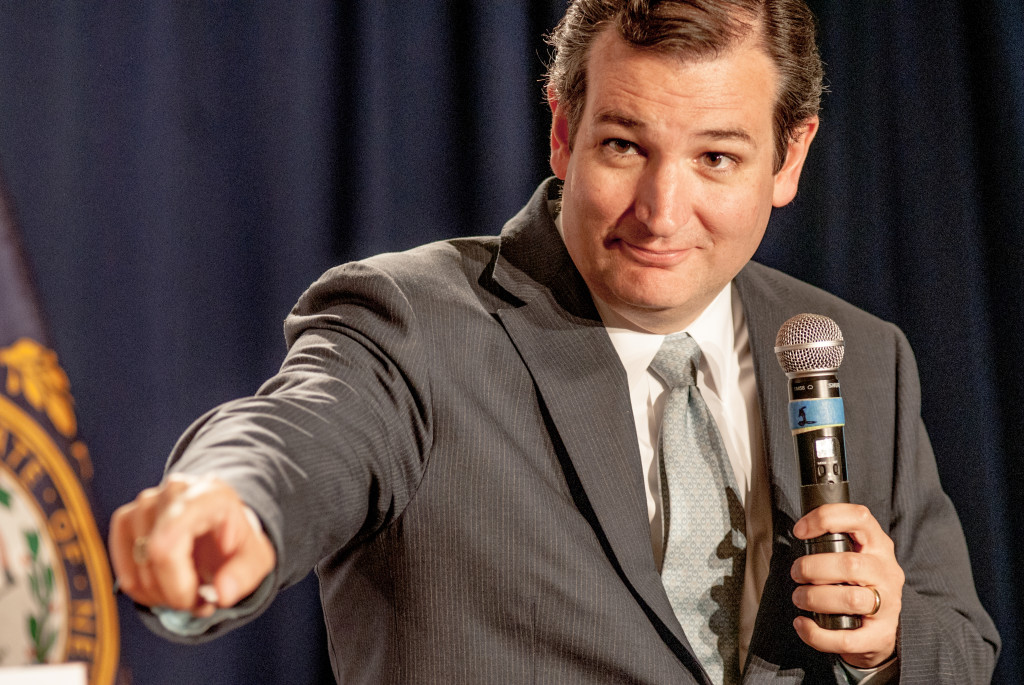
Ted Cruz, facing increased scrutiny as he rises in national polls, is taking to the campaign trail this week with a renewed effort to remind his base of just how deep a conservative he is. As reported by Katie Glueck in POLITICO, Cruz began a swing throughout the South this weekend, starting with a fiery speech in Alabama to more than 1,300 supporters. It was the start of a 12-day 12-city tour throughout the Southern states, an area where Cruz is thought to have the best organization of any candidate. Saturday’s performance focused on an attempt to backtrack comments Cruz made during last week’s Republican Party debate, insisting to the raucous crowd he “never” supported the legalization of undocumented immigrants, something at odds with comments he made during an attempted Senate immigration reform bill in 2013. “One of the things you’ve been hearing about is criticism of Ted and what he did with regard to the massive immigration bill they tried to ram through in 2013,” said Alabama Republican Sen. Jeff Sessions at the event. Sessions, one of the party’s leading immigration hard-liners, has been considered a potential Cabinet member in a Cruz administration. “Let me tell you, I was there every step of the way,” Sessions said. “Ted Cruz was on my side, he fought this legislation all the way through.” Cruz’s Alabama stump speech, made in what is considered one of the most conservative states in the country, had much of the conservative talking points he used elsewhere in the country, but seemed to resonate a little more with the crowd there than elsewhere. Glueck writes that many in the audience responded with cheers and shouts of “amen.” However, talking about immigration drew the loudest cheers, especially after Cruz had sparred with Marco Rubio over the issue during the most recent Republican Party debate. Cruz attempted to explain away his rhetoric in 2013 by saying it was all part of a larger plan to stop comprehensive immigration reform proposal the Gang of Eight — which included Rubio — tried to push through the Senate. Since then, Rubio and Cruz have been battling it out, with the Texas senator trying to portray his rival from Florida as a supporter of “amnesty” — a word frowned upon in Republican Party circles — as well as someone tied to liberal Democratic Sen. Chuck Schumer from New York. That led to Cruz, on defense from the Rubio campaign, having to explain intricate procedural matters and rhetoric that appears, at least at face value, contradictory. For his part, Rubio has been attempting to portray Cruz as “inconsistent” in his immigration stance. In addition, a New York Times story published Friday showed Cruz, as a domestic policy adviser for George W. Bush’s presidential campaign, taking a much more conciliatory tone than the hard-line stance he embraces today. If that narrative gains traction, it could hurt Cruz in the eyes of his conservative base. “My gut is, people see Ted Cruz as so far to the right, a really far-right conservative guy, and people see Rubio as conservative but a little more mainstream, more moderate, so when this immigration thing is thrown at both of them, it’s much more likely to stick to Rubio than to Cruz,” one Republican source told POLITICO. “Cruz had an awful interview with [Fox News’s] Bret Baier, but he’s going to fix that.” Nevertheless, Glueck says Cruz continues to wow Southern audiences with tailor-made stump speech lines such as: The “single biggest difference” between himself and his debate opponents is that “with me, when I tell you I’m going to do something, I’m going to do exactly what I said I’m going to do.” And the Southern crowd eats it up.
Mo Brooks secures commitment from Paul Ryan: No amnesty bills
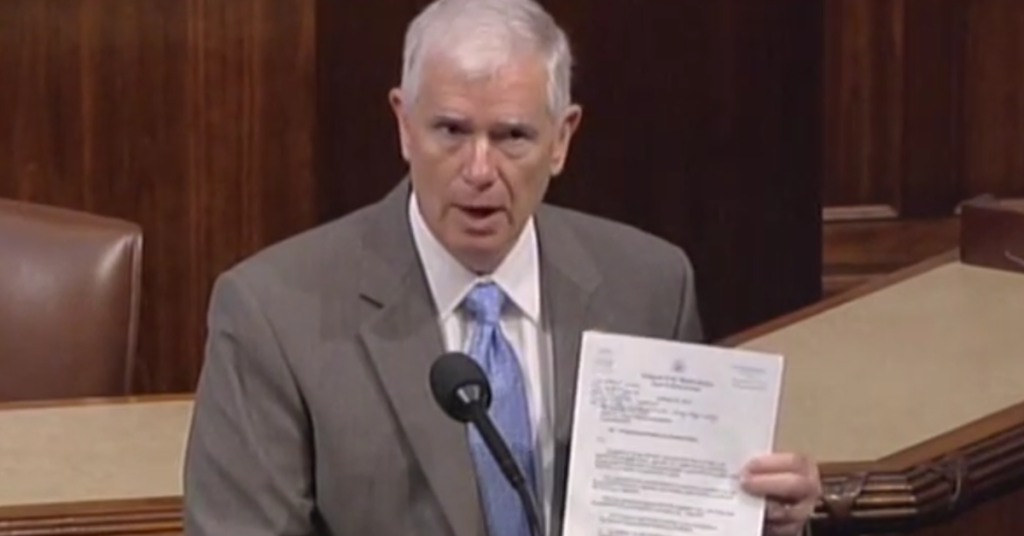
Rep. Paul Ryan (WI-01) has formally agreed to a letter committing to members of the House Freedom Caucus (HFC) he won’t bring amnesty or immigration-reform legislation to the House floor while President Barack Obama is still in office unless it is supported by a majority of Republican House Members. This past Thursday Brooks and other members of the HFC met with Ryan regarding his candidacy for Speaker where they discussed border security. According to a statement released by Brooks, he and other House Freedom Caucus members had concerns Ryan may use the role of Speaker to push through immigration policies that will suppress the wages of and take even more jobs from struggling American families. After the meeting, Brooks hand-delivered a formal letter to Ryan on the House floor detailing what he believed were his immigration representations. “I need your assurance that you will not use the Speaker’s position to advance your immigration policies … because there is a huge gap between your immigration position and the wishes of the American citizens I represent,” Brooks wrote in the letter. “Your words yesterday constitute the needed assurance.” “If my portrayal of your words errs in any respect, please deliver to me… a written communication correcting my errors,” Brooks continued. Less than two hours later, Ryan called Brooks confirming the accuracy of his letter, giving his word to keep his commitments. Tuesday morning Rep. Mo Brooks (AL-05) addressed the U.S. House of Representatives telling of them of Ryan’s agreed-upon commitment and submitted the letter for Congressional Record. You can watch the video of Brooks floor speech here:
