
Ex-sheriff gets probation in tax case
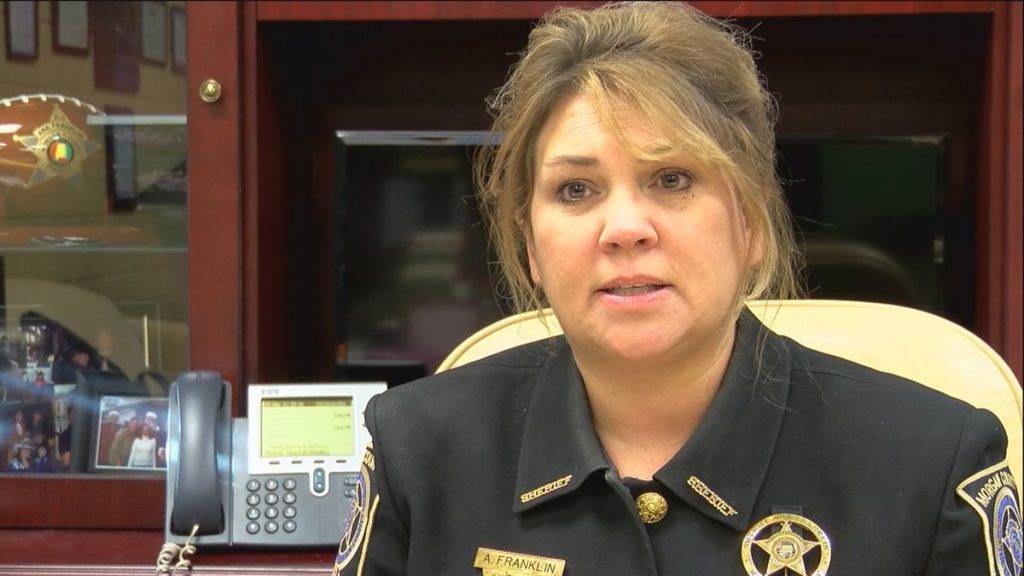
A former Alabama sheriff will avoid going to prison after pleading guilty to failing to file tax returns. News outlets report a federal magistrate sentenced former Morgan County Sheriff Ana Franklin to two years on probation during a hearing in Huntsville on Thursday. The 55-year-old Franklin also must perform 300 hours of community service. Franklin faced a maximum sentence of six months in prison for failing to file tax returns for 2015. That same year she had taken $160,000 from a jail food account and provided it to a car lot. Franklin and her lawyer had argued the money was a loan, but a judge concluded it was personal income. Franklin didn’t seek re-election to a third term last year. She told reporters the episode is behind her now. Republished with the permission of the Associated Press.
Morgan County Sheriff Ana Franklin sued for using office to target local blogger and former jail warden
In an explosive lawsuit, Morgan County Sheriff Ana Franklin is facing accusations that she and her deputies systematically used the sheriffs office to target personal and political opponents. This is just the latest in a series of lawsuits and charges involving Franklin and her office over the last 2-3 years. The lawsuit was filed by Leon Bradley, who served as the Morgan County jail warden from 2003 until he was fired in October 2016. Bradley’s sour relationship with the sheriff’s office and numerous deputies from it reads like a movie script. After he was fired Bradley faced several criminal charges of document tampering which according to an April 2018 WHNT news report, were dismissed after several days of motions. With a scathing report by Morgan County Circuit Judge Glenn Thompson said, “the sheriff and an investigator misled the court to get a search warrant and that they encouraged the illegal entry to blogger Lockhart’s Morgan County business, by a confidential informant.” During the hearing that lead to the charges against Bradley being dropped, WHNT reported: Testimony Friday contained a number of major surprises: The confidential informant used in the case is the grandson of the Morgan County blogger Glenda Lockhart, who Sheriff Ana Franklin has long feuded with. The young man was paid $500 to enter the business and gather materials that were the basis for the search warrant; Two Morgan County investigators said they drove around the FBI office parking lot Huntsville, looking for cars they recognized in order to find out what Morgan County Sheriff’s Office employees had been talking to the FBI. One of the investigators said they heard 30 to 40 sheriff’s office employees had spoken to the FBI; An Etowah County Sheriff’s investigator testified they came in to assist on the Bradley case, but based on what they’ve learned, they felt Morgan County investigators lied to them, used them and they wouldn’t have taken the case given what they know now Glenda Lockhart is a blogger for the Morgan County Whistle Blowers website who said this in a Saturday post that included the new lawsuit in its entirety, “In their official and individual capacity; and THE MORGAN COUNTY SHERIFF’S OFFICE. WOW! It feels as if Warden Bradley’s Attorneys summed up in 56 pages exactly the who, what, when, where, and why of what Ana Franklin, Bones Wilson, Blake Robinson, Justin Powell, and others did to us to cover their sorry butts.” Al.com covered the filing by Bradley in a lengthy expose, reporting: Bradley’s allegations against the sheriff and deputies include: Violating his First Amendment Rights to free speech Violating his Fourth Amendment right against unreasonable search, seizure and false arrest Violating his Fifth and Fourteenth Amendments rights Conspiracy to deprive his constitutional rights Conspiracy to engage in a pattern of racketeering activity Violation of the Electronic Communications Privacy Act Invasion of privacy Malicious prosecution Conspiracy to violate civil rights The Sheriff’s office told AL.Com they had yet to review the lawsuit. Ana Franklin, who is Alabama’s only female sheriff announced earlier this year she would not be running for reelection. AL.Com reported at the time, “Franklin’s seven years in office haven’t come without controversy. Most notably, Franklin was found in contempt of court last year because she loaned $150,000 of the jail’s inmate feeding funds to a crooked used car lot. She’s the subject of a federal investigation, as reported recently in the New York Times. The sheriff and her office have been blasted by the local Morgan County Whistleblower blog.”
Judge: Morgan Co. sheriff, deputies broke law and lied in court

Morgan County Circuit Judge Glenn Thompson ruled on Friday that Sheriff Ana Franklin and three of her deputies acted criminally and lied to the court about it. In a testimony given during a hearing in the criminal case of Leon Bradley on April 20, it was revealed Franklin lied about how her offices obtained the information that authorized a search warrant for a local blogger Glenda Lockhart. Bradley, a longtime Morgan County warden was fired in 2016 after Franklin accused him of leaking information to Lockhart to use on her blog, the Morgan County Whistleblower. For years, the blog has been critical of Franklin and her office. Lockhart was the first to show evidence that Franklin used the Morgan County jail’s food fund to invest $150,000 in a crooked car lot. She published the cashier’s checks showing where Franklin withdrew the $160,000, and a deposit slip showing where the used car lot put more than $150,000 in its bank account a few days later. Franklin herself testified saying she gave Lockhart’s grandson, Daniel Lockhart, $500 to work as a “confidential informant” and provide evidence to the sheriff’s office. However, Daniel said that we was approached by Sgt. Blake Robinson, who told him he would pay him to gather information about any sheriff’s office employees who were providing information to the blog. Daniel, not knowing his grandmother was the target of the investigation, hacked into his grandmother’s e-mail and her blog, taking pictures of the emails between his grandmother and Bradley. Robinson said Daniel’s actions were lawful, but Stephen McGlathery; an Investigator from the Etowah County Sheriff’s Office who was sent to take over the case, disagreed. “From the way it sounds, they paid him a substantial amount of money and he did go into the property he didn’t authority to and took items that did not belong to him,” McGlathery testified. Judge Thompson’s ruling given on Friday states that Franklin, Robinson, Robert Wilson and Justin Powell “endeavored to hide or cover up their deception and criminal actions under the color of law,” also ruling that the search warrants were invalid, all evidence gathered must be returned or destroyed, and that the state’s filing for nolle prosequi on March 9 is moot. Read the full documents of the case here.
Enjoying leftovers: Sheriffs feed inmates, keep extra cash
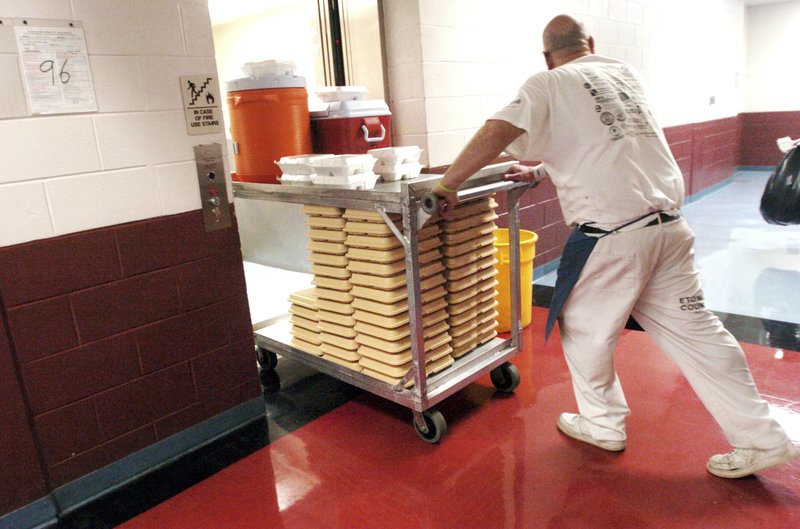
In Alabama, the less sheriffs spend on feeding inmates, the more money they get to put in their pockets. For decades, sheriffs have made extra money – sometimes hundreds of thousands of dollars – under a Depression-era system by feeding prisoners for only pennies per meal. Critics say the meals can be unhealthy, and a lawsuit against dozens of sheriffs combined with media reports about the practice threaten to end the one-of-a-kind system. Legislators this year approved potential changes that would prevent sheriffs in two counties from keeping the excess money — including one where a former sheriff was jailed after feeding prisoners corndogs while pocketing more than $200,000 — and wider change is possible. “I think everyone agrees that something needs to be done,” said Sonny Brasfield, executive director of the Association of County Commissions of Alabama. Republican Sen. Arthur Orr said he is working on a bill to abolish the practice. “This law is from the 1930s. Times change. It’s time we move on into the 21st century,” said Orr. Back when chain gangs were common in the late 1920s, Alabama passed a law that gave sheriffs $1.75 a day from the state to feed each prisoner, and sheriffs got to pocket anything that was left over. Jails in most of Alabama’s 67 counties remain on the system generations later. Sheriffs also get small payments from the state per jail. Some also receive payments from cities and the federal government for holding prisoners, further boosting income. Add up all the money and a dash of frugality, like purchasing low-cost grub and accepting donated food, and sheriffs can wind up with large profits from jailhouse kitchens. Attorney Aaron Littman, who helped sue earlier this year trying to find out how much sheriffs are making off jail food, said lawyers regularly hear complaints about poor living conditions and lousy food in jails. “It’s no way to run government,” said Littman, of the Atlanta-based Southern Center for Human Rights. Alabama is the only state with such a setup, he said. Littman questions the legality of sheriffs pocketing the money. The Southern Center, which advocates for change in the criminal justice system, sued with the nonprofit Alabama Appleseed for Law and Justice in January to make 49 sheriffs release information that would show how much they are making off jail food. Sheriffs have refused, arguing in court that the numbers are personal and private. Some of the amounts have been revealed. Monroe County Sheriff Tom Tate collected “excess” jail feeding funds of $110,458 over three years ending in 2016 — a tidy amount for a south Alabama county with only 22,000 residents and a median family income estimated at $42,335 annually by the Census Bureau, according to an accounting turned over to a plaintiff’s lawyer. In mid-sized Etowah County, where the jail holds 900 people on average, Sheriff Todd Entrekin recently released tax forms showing he made a profit of $672,392 from the jail kitchen in 2015 and 2016. Entrekin made the documents public during a news conference where he denied malnourishing prisoners and denied news reports linking food profits and a beach condominium he and his wife purchased for $740,000 last year. “Nobody here is underfed. Nobody here is mistreated. I will say it’s not the Ritz, so you won’t be treated like a king. You will be treated like someone who has broken the law, which means you won’t get your choice about what or when you eat,” Entrekin told reporters. Last year, a federal judge held Morgan County Sheriff Ana Franklin in contempt and fined her $1,000 because she took $160,000 from a jail food account. She used to make a personal car loan that later failed, court documents showed. The judge ruled Franklin’s actions violated an agreement reached by former Morgan County Sheriff Greg Bartlett, who was briefly held in his own jail in 2009 after a federal judge held him in contempt for feeding skimpy meals to boost his profit, which Bartlett said was $212,000 over three years. Bartlett went in with another sheriff to purchase a truckload of corndogs for $1,000 and fed them to prisoners for weeks, evidence showed. Franklin argued she wasn’t bound by Bartlett’s agreement, but a court disagreed. Sheriffs in Morgan and neighboring Cullman County in coming years would be required to spend any excess food money on police needs under proposed constitutional amendments approved this year by lawmakers, but voters still must OK the measures. It’s unclear how much is at stake since they, like most other sheriffs, haven’t publicly released detailed information about their operations. Sheriffs’ responses to the suit seeking financial information have been coordinated in part by the Alabama Sheriff’s Association, where longtime executive director Bobby Timmons did not return a message seeking comment. Republished with the permission of the Associated Press.
