
Mexico’s president offers to buy U.S. company’s coastal property for $375 million to end dispute

Mexico’s president said Thursday that he has offered to buy an American company’s Caribbean coast property for about $385 million to end a bitter, years-long dispute. President Andrés Manuel López Obrador said a formal offer would be presented to Alabama-based Vulcan Materials. The company operated gravel extraction pits at the Yucatan peninsula site before López Obrador’s administration closed them. The company said it had not yet received the president’s proposal or responded to the idea. In papers filed for a case before an international arbitration panel, Vulcan Materials valued the almost 6,000-acre (2,400-hectare) property, located just south of the resort town of Playa del Carmen, at $1.9 billion. López Obrador said his much lower offer was fair and based on a government assessment. He said the most attractive part of the property was the freight shipping dock, which he plans to turn into a dock for cruise ships. As the only significant port facility on that stretch of the Caribbean coast, the dock would also be useful for transporting gravel and cement for the president’s massive train construction project, known as the Maya Train. López Obrador said he also wants to use the flooded gravel pits that the company dug out of hundreds of acres of the limestone soil as “swimming pools” or an “ecotourism” area that would be operated as a concession by a private operator. The huge pits are inhabited by crocodiles, which are a protected species in Mexico. López Obrador left open a vague threat of seizing the property if the offer wasn’t accepted by the time he leaves office in September 2024. “Before I leave (office), this is going to be resolved, one way or another,” he said, adding that the company would have to agree to drop its damages-seeking cases before the arbitration panel as part of the deal. In 2021, Mexico’s environment ministry closed Vulcan’s limestone quarry and forbade the company from exporting stone that was long used in U.S. and Mexican building projects. The president accused the company of extracting rock and exporting it without proper permits. Vulcan said it had the needed permits. In March, the U.S. State Department said it was “concerned about the fair treatment of our companies in Mexico” after Mexican police seized the cargo terminal on Vulcan’s property. Police held the port and used it to unload cargo from a Mexican cement and aggregates company, Cemex. The president has publicly sparred with Vulcan for over a year. The dock at Punta Venado would allow cement, crushed stone and other materials to complete the Maya Train project to reach the area. Because there aren’t any local supplies of crushed stone needed to stabilize the tracks, López Obrador has been forced to import the stone, known as ballast, from Cuba. Ships carrying the Cuban ballast have had to dock at the port of Sisal, on the Gulf of Mexico side of the Yucatan peninsula, and have their cargo trucked about 180 miles (300 kilometers) to some train construction sites. The only private freight dock on the Caribbean side that could handle the Cuban shipments, and other shipments of cement and steel, is the one owned by Vulcan. The 950-mile (1,500-kilometer) Maya Train line is meant to run in a rough loop around the Yucatan Peninsula, connecting beach resorts and archaeological sites. López Obrador touts the train as a way to bring some of Cancun’s tourism income to inland communities that haven’t shared in the wealth. But there are no credible feasibility studies showing tourists would want to use the train. Republished with the permission of The Associated Press.
Gary Palmer and Tommy Tuberville condemn Mexican takeover of Vulcan Materials Port
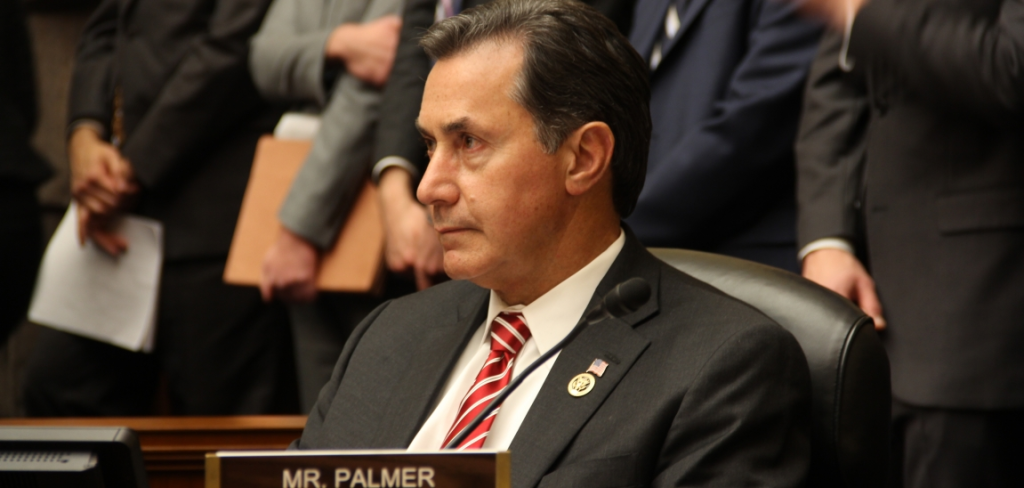
U.S. Senator Tommy Tuberville and Congressman Gary Palmer both Tuberville and Palmer both issued statements on Monday denouncing the Mexican military’s takeover of a Vulcan Materials port in the Yucatan. The Mexican Navy and police forces seized the Vulcan Materials Company owned port facility in Mexico’s Quintana Roo state last week. Both Tuberville and Palmer condemned the seizure that has been ruled illegal by a Mexican District Court. “This armed takeover of Vulcan’s property shows just how corrupt the Mexican government has become,” said Rep. Gary Palmer. Birmingham-based Vulcan Materials Company is America’s largest supplier of construction aggregates, including gravel, sand, and crushed stone. The company also markets ready-mix cement products and asphalt. Most of the company’s quarries are in the United States, but it also owns a facility in Quintana Roo, Mexico, and one in Canada. “For more than 30 years, Vulcan Materials Company has operated a limestone quarry in Mexico that has created good jobs both in Mexico and in Alabama,” Sen. Tuberville explained. “Yet time and again, President [Andrés Manuel] López Obrador and the Mexican government have undermined Vulcan’s ability to operate in Mexico. Last year, I urged President [Joe] Biden to confront President López Obrador about the Mexican government’s aggression toward Vulcan Materials. As usual, President Biden buried his head in the sand. President Biden’s failure of leadership has only emboldened Mexico to continue taking hostile action against Vulcan that puts employees at risk and jeopardizes our supply chains in the southeast region of the United States. The illegal seizure of Vulcan’s port facility is just the latest example of the Mexican government exploiting President Biden’s weakness, and the situation will only get worse until the President addresses it head on.” Last May, Sen. Tuberville sent a letter urging President Biden to take action against aggression from Mexican President López Obrador after the Mexican government ordered Vulcan to shut down quarrying and extraction operations on one of its three active mining parcels, despite its owning the property and possessing all the necessary permits for lawful operation. Tuberville also spoke about the issue on the floor of the U.S. Senate, where he warned how the Mexican government’s actions against Vulcan Materials Company could potentially disrupt international supply chains. “This is a gross abuse by the Mexican government to which President Biden must immediately respond in the strongest possible terms,” Rep. Palmer stated. The unjust takeover of a private American enterprise should cause every American company to reconsider locating in Mexico. If the Mexican government can do this to one company, they can do it to all. The Biden Administration should immediately respond to this assault against an American company and demand the Mexican government withdraw from the Vulcan Materials facility. It is essential the Biden Administration acts to protect America’s interests, or it will risk other actions against American companies.” The armed takeover of the Vulcan facility last Tuesday stems from a dispute between Vulcan and Mexican-based cement company CEMEX over use of the facility. The agreement for CEMEX to use the facility expired in December. CEMEX employees accompanied the security forces last week during the unlawful takeover of the Vulcan port terminal. CEMEX needed to use the facility to unload one of its ships. “We are shocked in Cemex and in the Mexican government entities that supported this reckless and reprehensible armed seizure of our private property,” Vulcan said in a statement. The Mexican government shut down Vulcan’s Mexican quarries last May, claiming ecological damage. While headquartered in Monterrey, Mexico, CEMEX operates on four continents and in 50 countries, including the U.S. Sen. Katie Britt (R-Alabama) denounced the actions of the Mexican government in a statement on Sunday. Congressman Palmer is in his fifth term representing Alabama’s Sixth Congressional District. Tuberville is in his first term in the U.S. Senate. To connect with the author of this story or to comment, email brandonmreporter@gmail.com.
U.S. company says Mexican police illegally seized property
A U.S. company said Monday that Mexican police and soldiers have illegally entered and seized a cargo port it operates on land it owns on Mexico’s Caribbean coast. Alabama-based Vulcan Materials said police forced their way into the Caribbean coast dock at Punta Venado, near Playa del Carmen, last week. “It should be clear that the rule of law is no longer assured for foreign companies in Mexico,” the company said in a statement. “This invasion, unsupported by legal warrants, violates Vulcan’s commercial and property rights.” Police and marines first occupied the property last Tuesday night, and they were still there as of Monday, according to the company. President Andrés Manuel López Obrador has been in a dispute with Vulcan for several years. López Obrador needs the dock to get cement, crushed stone, and other materials into the area to finish his pet project, a tourist train known as the Train Maya. The president shut down Vulcan’s stone quarries last May, arguing the company had extracted or exported stone without approval. Video from the incident showed a long line of police and military patrol trucks open a locked gate and enter the property. Vulcan said they did not present any legal paperwork to justify their actions. The company said the police officers then oversaw the unloading of cement at the port facility. The cement was apparently destined for the Maya Train project, which the president has vowed to open by December, despite the fact it is well behind schedule. U.S. Sen. Katie Britt, a Republican from Alabama, released a statement saying that “this forcible seizure of private property is unlawful and unacceptable.” “It is shameful that this Mexican presidential administration would rather confiscate American assets than the fentanyl killing hundreds of Americans per day,” Britt wrote. “Mexico should be more focused on going after the cartels than law-abiding businesses and hardworking people.” While the cement company in question, Mexico’s Cemex, had once had an agreement with Vulcan to use the port, Vulcan said that agreement had ended. Cemex said in a press statement that it had a long had a contract with a Vulcan subsidiary to use the port and that it had held months of negotiations with the subsidiary but failed to reach an agreement. Cemex said it filed a criminal complaint and was granted “injunctive relief and a legal warrant to access the property and continue operating” by the state prosecutor’s office. The wording is odd, since such injunctions are normally issued by Mexico’s federal courts rather than prosecutors, and such disputes are seldom resolved through criminal complaints. Cemex did not specify what crime it alleged had been committed. López Obrador’s office did not immediately respond to requests for comment on the situation. Because there aren’t any local supplies of crushed stone needed to stabilize the train’s tracks, López Obrador has been forced to import the stone, known as ballast, from Cuba. Even so, ships carrying the Cuban ballast have to land at the port of Sisal, on the other side of the Yucatan peninsula, and be trucked about 180 miles (300 km) to some train construction sites. The only private Caribbean coast freight dock that could handle the Cuban shipments — and other shipments of cement and steel — is owned and operated by Vulcan. López Obrador has offered to buy the property, but talks have apparently not gone well. “That (port) would be ideal, it is deep enough, but relations are not good” with the company, López Obrador said in November. In May, the Environment Department closed Vulcan’s limestone quarry and forbade the company from exporting stone that has long been used in U.S. and Mexican building projects. López Obrador wants the water-filled quarry to be used as a theme park to rival the nearby XCaret park. He also wants Vulcan to build a cruise ship dock at the freight terminal. He has pressured the Alabama-based aggregates company to sell the property to the government, or open a water park itself. The water park idea has complications. The water-filled sections of the quarry, while they might look inviting, are populated by crocodiles. The 950-mile (1,500-kilometer) Maya Train line is meant to run in a rough loop around the Yucatan Peninsula, connecting beach resorts and archaeological sites. López Obrador touts the train as a way to bring some of Cancun’s massive tourism income to inland communities that haven’t shared in the wealth. But there are no credible feasibility studies yet showing tourists will want to use the train. Moreover, with no prior environmental studies, the president decided to cut down a swath of low jungle between the resorts of Cancun and Tulum. Republished with the permission of The Associated Press.
