
Senators eye $579B in new infrastructure spending, $1T plan
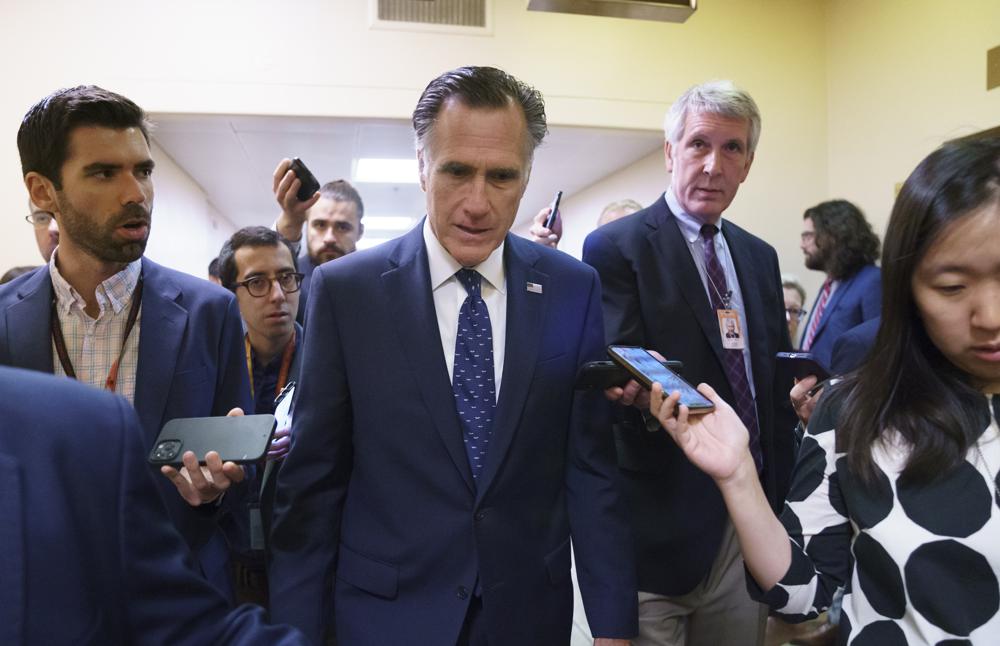
A bipartisan group of senators is eyeing an infrastructure deal with $579 billion in new spending as negotiators try to strike a nearly $1 trillion deal on President Joe Biden’s top priority, according to those briefed on the plan. The 10 senators have been huddling behind closed doors, encouraged by Biden to keep working on the effort after he walked away from a Republican-only proposal this week, unable to resolve differences. The senators are briefing their colleagues privately and cautioned changes could still be made. “Our group – comprised of 10 Senators, 5 from each party – has worked in good faith and reached a bipartisan agreement on a realistic, compromise framework to modernize our nation’s infrastructure and energy technologies,” the senators said in a joint statement. “This investment would be fully paid for and not include tax increases,” they added. “We are discussing our approach with our respective colleagues and the White House and remain optimistic that this can lay the groundwork to garner broad support from both parties and meet America’s infrastructure needs.” The White House said Democratic senators briefed the administration on the emerging plan, but questions remain. “The President appreciates the Senators’ work to advance critical investments we need to create good jobs, prepare for our clean energy future, and compete in the global economy,” said deputy press secretary Andrew Bates. “Questions need to be addressed, particularly around the details of both policy and pay-fors, among other matters.” The president and Congress have been straining to reach an agreement on his ideas for infrastructure investment, stuck over the scope of the package of road, highway, and other projects and how to pay for it. Lawmakers say the group’s tentative agreement represents important progress in fashioning a bill that can pass such an evenly divided Congress this year, but they are also aware that it could easily unravel. A person familiar with the negotiations but unauthorized to discuss them publicly said the cost would be $974 billion over five years, as is standard for highway spending, or $1.2 trillion if spread over eight as Biden proposes. At that size, the new package would be more than the previous Republican-only effort of $330 billion in new spending in a $928 billion package, but still short of the $1.7 trillion over eight years Biden is seeking. It appears the group is running into the same problems that Biden and lead Republican negotiator Sen. Shelley Moore Capito confronted in agreeing on how to pay for it. Sen. Bill Cassidy, R-La., a lead negotiator, would not disclose the final tab. Asked if the new spending was at $600 billion, he said, “the president said that was his goal. So I don’t think anybody felt like they had to exceed his goal.” Another member of the group, Sen. Jon Tester, D-Mont., said they are “fairly close” on a topline amount but are still debating how to pay for it. One option is to include potential revenue from uncollected income taxes, he said. “We still have to talk,” Tester said. One Republican not in the group, Sen. Mike Braun of Indiana, said he was told the package would provide nearly $1 trillion — including $579 billion in new spending over the baseline for transportation projects. Braun also said parts of it would be paid for with untapped COVID-19 relief funds, which has been a nonstarter for the White House. “They have come up with similar to what I think Capito was working on, but my understanding is it would be a little more money,” he said. Biden tasked the senators to keep working as he set out for his first overseas trip after talks collapsed this week with Capito and the GOP senators. The president is seeking a sweeping investment in not just roads, highways, and bridges but also broadband, electric vehicle charging stations, and other aspects of what he views as the new economy paid for with a hike in the corporate tax rate from 21% to 28%. Republicans prefer a more narrow focus on fixing existing transportation systems, with more modest investments elsewhere. They oppose any tax hikes to pay for the new spending. With the Senate narrowly split, 50-50, and most legislation requiring 60 votes to advance past a filibuster, Biden is seeking a bipartisan agreement to ensure passage. At the same time, he is also instructing Democrats who control the House and Senate to prepare to pass portions of the package on their own, under special budget rules that enable approval with 51 votes in the Senate. In the evenly-divided Senate, Vice President Kamala Harris serves as a tie-breaking vote. Meanwhile, a House panel advanced legislation early Thursday that serves as an important building block for that chamber’s infrastructure efforts. The bill aims to boost federal spending on roads, bridges, transit, and rail. The $547 billion package passed mostly along party lines by a vote of 38-26 and will likely be considered by the full House later this month. Republished with the permission of the Associated Press.
Joe Biden’s attorney general search is focused on Doug Jones, Merrick Garland

Alabama Sen. Doug Jones and federal appeals court judge Merrick Garland are emerging as the leading contenders to be nominated as President-elect Joe Biden’s attorney general, three people familiar with the matter told The Associated Press. A decision hasn’t been finalized and the dynamics could shift in the coming days as Biden builds out his Cabinet with an eye to ensuring diverse leadership in the top ranks of his administration. But Jones, who lost reelection last month, and Garland, whose Supreme Court nomination was snubbed by Republicans, appear increasingly well-positioned ahead of other rivals. Democrats are particularly concerned about the prospect of Biden nominating former Deputy Attorney General Sally Yates, fearing she could face a difficult confirmation in the Senate because of her role in issues related to the Russia investigation. Biden’s thinking was described by people with knowledge of the presidential transition’s internal thinking who were not authorized to speak publicly. Andrew Bates, a representative for the transition, did not comment for this story. The president-elect is facing pressure to ensure that Black and Latino leaders are prominently positioned in his administration. He selected retired Army Gen. Lloyd Austin this week to become the first Black secretary of defense. Jones, who is white, has had a long-standing personal relationship with Biden dating back to Biden’s first presidential campaign in 1988. The former U.S. attorney prosecuted members of the Ku Klux Klan who were responsible for a 1963 church bombing in Birmingham, Alabama, and later served as the U.S. attorney there from 1997 until 2001. Biden met with civil rights activists on Tuesday to discuss diversity in his Cabinet. The Rev. Al Sharpton, who attended the meeting, encouraged Biden to select a Black attorney general but gave him room to select someone of another race as long as they had a background in civil rights. “I said the least we could have is someone that has a proven civil rights background that’s someone that’s going to handle this heightened racist bigoted atmosphere,” Sharpton told reporters. It’s unclear whether Garland would fit that standard as easily. He is an experienced judge with a reputation for moderation who held senior positions at the Justice Department decades ago, including as a supervisor of the prosecution of the 1995 Oklahoma City bombing. Garland was put forward by President Barack Obama for a seat on the Supreme Court in 2016 following the death of Justice Antonin Scalia, but Republicans refused to hold hearings in the final year of Obama’s term. The vacancy was later filled by Justice Neil Gorsuch during the Trump administration. The incoming attorney general would inherit a Justice Department that has endured a tumultuous four years and would likely need to focus on not only civil rights issues and an overhaul of national policing policies after months of mass protests over the deaths of Black Americans at the hand of law enforcement, but also on concerns from Democrats about politicization of the department in the Trump administration. Biden has said he will not be involved in Justice Department investigative decisions even as some Democrats have openly wished for probes into President Donald Trump and his associates after he leaves office. Supporters of Yates view her nearly 30-year Justice Department career in both Democratic and Republican administrations, and experience ranging from civil rights cases to national security matters, as making her uniquely qualified to lead the department as it looks to move on from the Trump era. Still, Republican senators would be likely to focus a Yates confirmation hearing on her final year at the department, when the FBI closed out the Hillary Clinton email investigation and opened an investigation into whether the Trump campaign was coordinating with Russia, which later morphed into special counsel Robert Mueller’s investigation. Yates has repeatedly discussed both, including before the Senate committee that has oversight of the confirmation process. She has made clear that she disagreed with the way the FBI conducted some of the most heavily scrutinized actions of both investigations, including the decision to hold a press conference about the Clinton probe and then to alert Congress days before the election that it had been reopened. Even so, Republicans would nonetheless press Yates on problems with the Russia probe that were revealed by a Justice Department inspector general investigation, including errors and omissions in applications to surveil a former Trump campaign aide, and about how she would handle a special counsel inquiry focused on the FBI’s actions in that case. Yates has said that she would not have signed off on the surveillance had she known of the problems in the applications. But the appointment of John Durham as a special counsel to review the Russia probe suggests the inquiry is likely to endure into the Biden administration, creating a backward-looking focus for a new attorney general just as Yates would try to turn the page from the issue. Jones would not comment Tuesday on the possibility of a nomination as attorney general. “They have a process and we’ll let that process play,” he told reporters on Capitol Hill. The Biden team has also been considering a number of other potential candidates for the post, including former Justice Department official Lisa Monaco. Republished with the permission of the Associated Press.
Donald Trump — ‘No Mr. Nice Guy’ — shows softer side to win voters
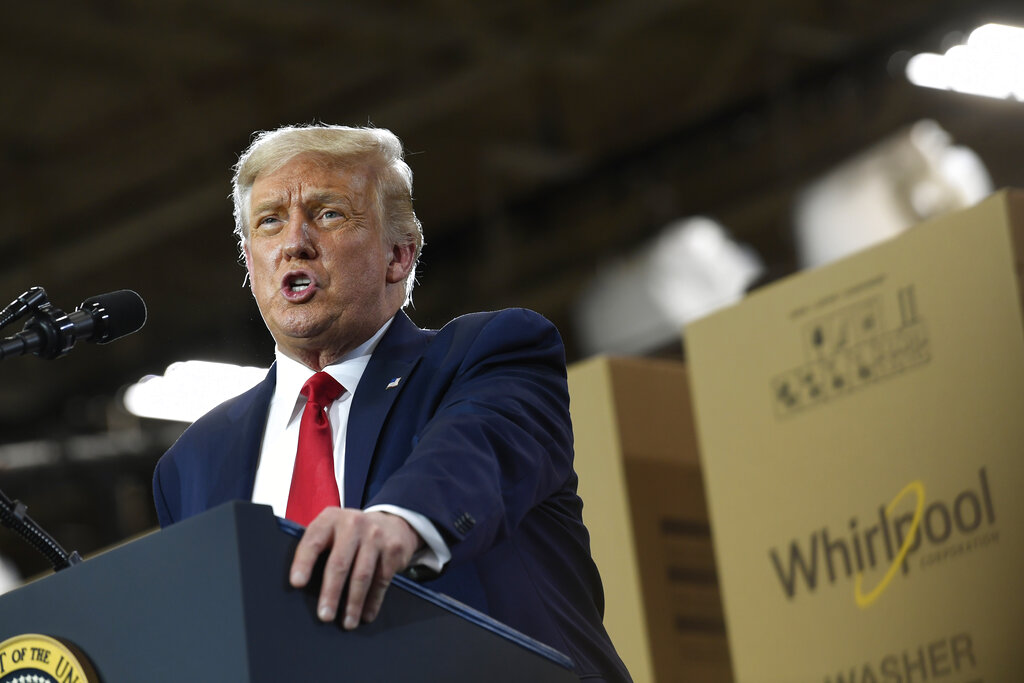
Competing depictions of the president come after the Democrats spent last week showcasing the compassion of Joe Biden.
Democrats propose sweeping police overhaul; Donald Trump criticizes

Before unveiling the package, House and Senate Democrats held a moment of silence at the Capitol’s Emancipation Hall.
Donald Trump, GOP launch broad attack on Russia probe foundations

Trump and his Republican allies are pushing to reframe the Russia investigation as a “deep state” plot to sabotage his administration.
