US COVID-19 deaths hit 600,000, equal to yearly cancer toll
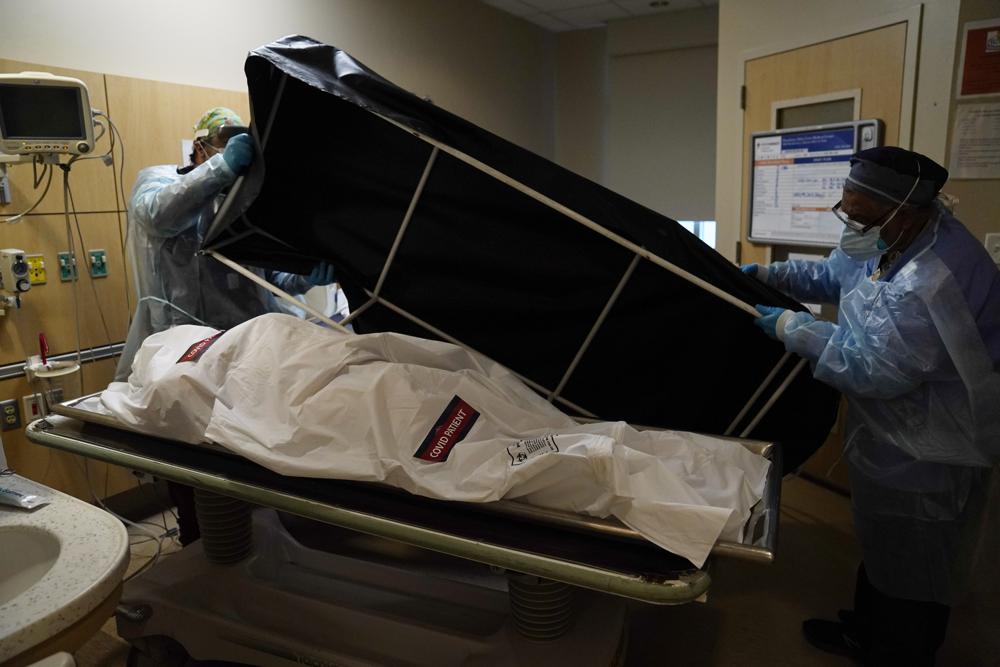
The U.S. death toll from COVID-19 topped 600,000 on Tuesday, even as the vaccination drive has drastically brought down daily cases and fatalities and allowed the country to emerge from the gloom and look forward to summer. The number of lives lost, as recorded by Johns Hopkins University, is greater than the population of Baltimore or Milwaukee. It is about equal to the number of Americans who died of cancer in 2019. Worldwide, the COVID-19 death toll stands at about 3.8 million. The milestone came the same day that California and New York lifted most of their remaining restrictions, joining other states in opening the way, step by step, for what could be a fun and close to normal summer for many Americans. “Deep down, I want to rejoice,” said Rita Torres, a retired university administrator in Oakland, California. But she plans to take it slow: “Because it’s kind of like, is it too soon? Will we be sorry?” With the arrival of the vaccine in mid-December, COVID-19 deaths per day in the U.S. have plummeted to an average of around 340, from a high of over 3,400 in mid-January. Cases are running at about 14,000 a day on average, down from a quarter-million per day over the winter. The real death tolls in the U.S. and around the globe are thought to be significantly higher, with many cases overlooked or possibly concealed by some countries. President Joe Biden acknowledged the approaching milestone Monday during his visit to Europe, saying that while new cases and deaths are dropping dramatically in the U.S., “there’s still too many lives being lost,” and “now is not the time to let our guard down.” The most recent deaths are seen in some ways as especially tragic now that the vaccine has become available practically for the asking. More than 50% of Americans have had at least one dose of vaccine, while over 40% are fully vaccinated, according to the Centers for Disease Control and Prevention. But demand for shots in the U.S. has dropped off dramatically, leaving many places with a surplus of doses and casting doubt on whether the country will meet Biden’s target of having 70% of American adults at least partially vaccinated by July 4. The figure stands at just under 65%. As of a week ago, the U.S. was averaging about 1 million injections per day, down from a high of about 3.3 million a day on average in mid-April, according to the CDC. At nearly every turn in the outbreak, the virus has exploited and worsened inequalities in the United States. CDC figures, when adjusted for age and population, show that Black, Latino, and Native American people are two to three times more likely than whites to die of COVID-19. Also, an Associated Press analysis found that Latinos are dying at much younger ages than other groups. Hispanic people between 30 and 39 have died at five times the rate of white people in the same age group. Overall, Black and Hispanic Americans have less access to medical care and are in poorer health, with higher rates of conditions such as diabetes and high blood pressure. They are also more likely to have jobs deemed essential, less able to work from home, and more likely to live in crowded, multigenerational households. With the overall picture improving rapidly, California, the most populous state and the first to impose a coronavirus lockdown, dropped state rules on social distancing and limits on capacity at restaurants, bars, supermarkets, gyms, stadiums, and other places, ushering in what has been billed as its “Grand Reopening” just in time for summer. Disneyland is throwing open its gates to all tourists after allowing just California residents. Fans will be able to sit elbow-to-elbow and cheer without masks at Dodgers and Giants games. Gov. Gavin Newsom celebrated by hosting a drawing in which 10 people won $1.5 million each simply for being vaccinated. In New York, Gov. Andrew Cuomo said Tuesday that 70% of adults in the state have received at least one dose of the vaccine, and he announced that the immediate easing of many of the restrictions will be celebrated with fireworks. “What does 70% mean? It means that we can now return to life as we know it,” he said. He said the state is lifting rules that had limited the size of gatherings and required some types of businesses to follow cleaning protocols, take people’s temperature or screen them for COVID-19 symptoms. Businesses will no longer have to restrict how many people they can allow inside based on the 6-foot rule. For the time being, though, New Yorkers will have to keep wearing masks in schools, subways, and certain other places. Massachusetts on Tuesday officially lifted a state of emergency that had been in effect for 462 days, though many restrictions had already been eased, including mask requirements and limits on gatherings. Republican lawmakers in Kansas decided to let a state of emergency expire Tuesday. And Maryland’s governor announced that the emergency there will end on July 1, with the state no longer requiring any masks. The first known deaths from the virus in the U.S. were in early February 2020. It took four months to reach the first 100,000 dead. During the most lethal phase of the disaster, in the winter of 2020-21, it took just over a month to go from 300,000 to 400,000 deaths. With the crisis now easing, it took close to four months for the U.S. death toll to go from a half-million to 600,000. Republished with the permission of the Associated Press.
Fear, lack of funding hurt census in Sunbelt, advocates say; Alabama keeps seats
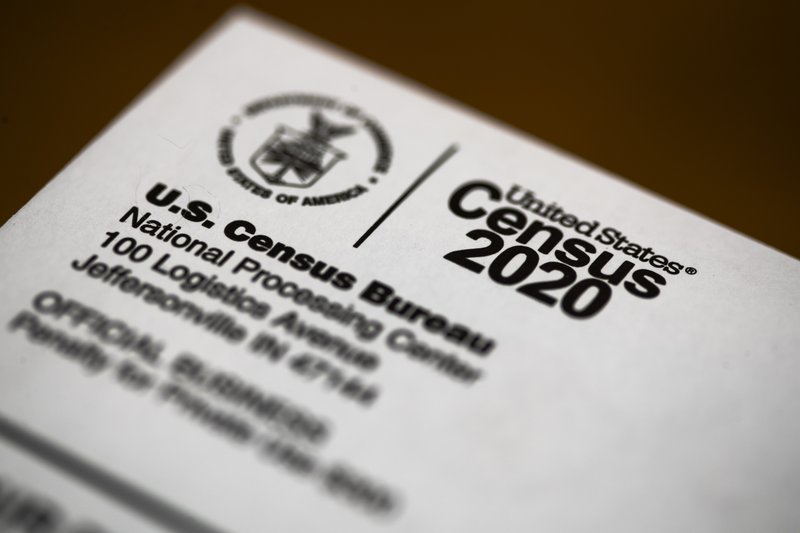
According to the new census, the booming Sunbelt isn’t booming quite like the experts thought. Population counts released Monday came as a shock to many demographers and politicians who expected to see growth that could add numerous congressional seats to a region that’s apparently been gaining people rapidly all decade. Instead, the census found more modest growth that added only three seats total in Florida and Texas. Arizona, the second-fastest growing state in 2010, didn’t add a seat at all. The questions that advocacy groups and officials are now asking are whether all the new subdivisions and shopping centers are a mirage; whether those states erred in not investing more in encouraging residents to fill out census forms — and whether Latinos in particular were reluctant to trust the Trump administration with their information. Many demographers caution it’s too early to conclude that the nation’s once-a-decade count missed any specific population groups. That won’t be known until more local data is released later this year and the Census Bureau has completed an independent survey measuring the accuracy of the 2020 head count. But one thing is indisputable — when compared to the most recent population estimates, the three Sunbelt states underperformed during the count used for determining how many congressional seats and Electoral College votes each state gets. Texas got two extra seats instead of three; Florida added only a single new seat instead of two, and Arizona failed to gain the seat it was expecting to add. All three states are led by Republican governors who devoted less resources than other states to encouraging participation in the 2020 census. And in all three states, Hispanics have accounted for about half of the population growth over the decade, according to American Community Survey data. In Arizona, activists blamed Gov. Doug Ducey for supporting the Trump administration’s failed effort to add a citizenship question to the 2020 census questionnaire. Those efforts intimidated Latinos and kept them from fully participating in the census, they said. “What we saw from the government, Ducey and the Trump administration, was intimidation from Day 1 on the census,” said Eduardo Sainz, national field director for Mi Familia Vota, a political advocacy group. “Because of this narrative of fear and this narrative of not funding, we lost that seat.” The Ducey administration released a statement from the state demographer saying that more data is needed to determine why the count fell short of estimates of Arizona’s growth. During outreach efforts to get people to fill out their census forms, Hispanic residents would ask Adonias Arevalo about Donald Trump’s push on citizenship. Arevalo, state director for Poder Latinx in Phoenix, said, ”Despite the fact that we said a citizenship question will not be present, folks didn’t trust the Trump administration.” He said Arizona’s undercount is partly the legacy of Republican leaders, including former Sheriff Joe Arpaio, and anti-immigration laws. “For years, people have distrusted the system,” Arevalo said. “People fear to participate in these processes due to years of criminalization.” Arizona, Florida, and Texas were laggards compared to other states in efforts to form statewide committees aimed at driving census participation. Arizona only named members to its committee in August 2019, and Florida set one up in January 2020, just weeks before the national headcount began in a rural Alaska village. Texas never even set up a statewide committee, which some census activists attributed to Texas lawmakers not wanting to take a stand on the citizenship question by promoting the census. Democrats slammed the GOP for those moves. “From the very beginning, we knew our state was particularly at risk of undercounting our neighbors,” State Rep. Chris Turner, the Texas House’s Democratic Caucus Chair, said in a statement. “A concerted, organized outreach effort is essential to ensuring maximum participation in the census and getting the most accurate count,” he added in an interview. But state demographer Lloyd Potter in an interview contended there’s little evidence that massive state spending increases census accuracy. Instead, he said, Texas has a lot of the types of people who routinely get undercounted — rural citizens and African-Americans and Latinos. “Those are factors for all states and may have been more of a factor for Texas,” Potter said. “We have a lot of rural areas in Texas, we have a very significant and growing Latino population.” Texas Republicans released a statement after the census count that said: “Representation in Texas must be based upon citizenship, and strategically we can ascertain why the left wants to flood Texas with thousands of illegals.” In Florida, a spokeswoman for Gov. Ron DeSantis didn’t respond to an email inquiry. Paul Mitchell, a redistricting expert in California, a state that spent $187 million on census outreach, said there was a clear pattern in the numbers. States that funded major census-participation campaigns did well, while Republican-led ones, who viewed efforts like that as criticisms of then-President Donald Trump, did not, he said. “Texas, Florida, Arizona, they didn’t do big outreach efforts to improve the count,” Mitchell said. “In Texas, particularly, it was anathema to say anything in the Legislature that could be seen as critical of Trump.” Mitchell said the dynamic with Latinos seems clear given the populations of the underperforming states. He noted that some states that did comparatively better, like his own California, promised to protect their immigrants while low-spending GOP ones did not. “It does just kind of stare you in the face,” Mitchell said of the pattern. The actual population count from the 2020 census for Arizona was 3.3% short of what previous population estimates had shown. Florida and Texas were short by 0.7% and 0.5%, respectively. On the flipside, the population counts in two states that had been expected to lose seats, Alabama and Rhode Island, exceeded their estimates by 2% or more. During this census cycle, Rhode Island for the first time devoted $1.5 million in public and private money on census outreach efforts. That, along with the fact that Rhode Island hosted the only test run
Expanded vaccine rollout in U.S. spawns a new set of problems
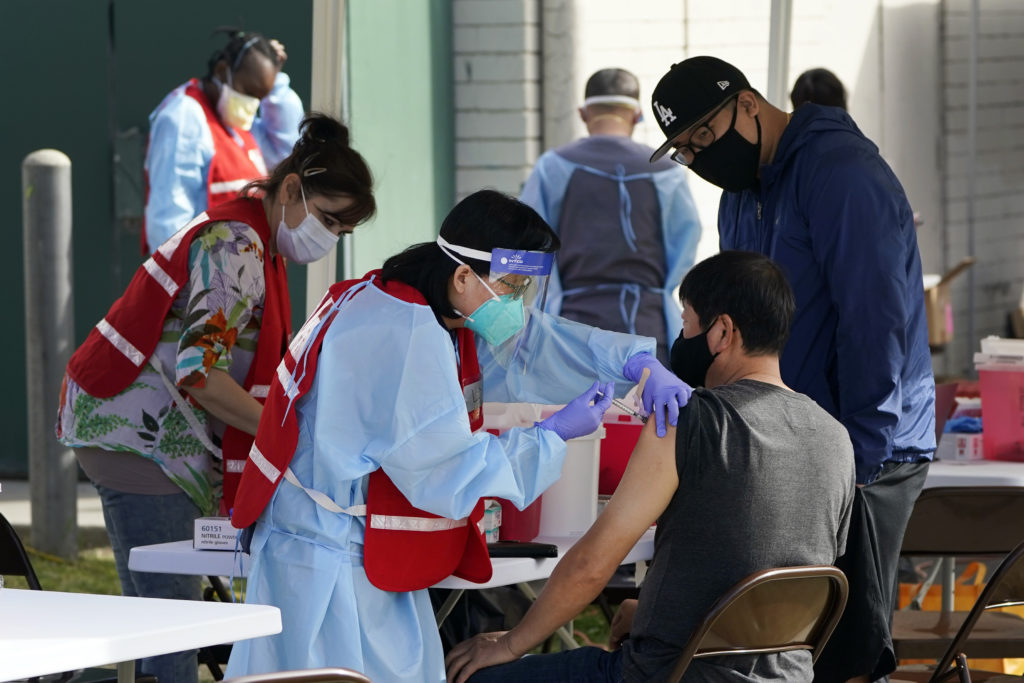
The rapid expansion of COVID-19 vaccinations to senior citizens across the U.S. has led to bottlenecks, system crashes, and hard feelings in many states because of overwhelming demand for the shots. Mississippi’s Health Department stopped taking new appointments the same day it began accepting them because of a “monumental surge” in requests. People had to wait hours to book vaccinations through a state website or a toll-free number Tuesday and Wednesday, and many were booted off the site because of technical problems and had to start over. In California, counties begged for more coronavirus vaccines to reach millions of their senior citizens. Hospitals in South Carolina ran out of appointment slots within hours. Phone lines were jammed in Georgia. “It’s chaos,” said New York City resident Joan Jeffri, 76, who had to deal with broken hospital web links and unanswered phone calls before her daughter helped her secure an appointment. “If they want to vaccinate 80% of the population, good luck, if this is the system. We’ll be here in five years.” Up until the past few days, health care workers and nursing home patients had been given priority in most places around the U.S. But amid frustration over the slow rollout, states have thrown open the line to many of the nation’s 54 million senior citizens with the blessing of President Donald Trump’s administration, though the minimum age varies from place to place, at 65, 70, or higher. On Thursday, New Jersey expanded vaccinations to people between 16 and 65 with certain medical conditions — including up to 2 million smokers, who are more prone to health complications. The U.S., meanwhile, recorded 3,848 deaths on Wednesday, down from an all-time high of 4,327 the day before, according to Johns Hopkins University. The nation’s overall death toll from COVID-19 has topped 385,000. President-elect Joe Biden unveiled a $1.9 trillion coronavirus plan Thursday that includes speeding up vaccinations. Called the “American Rescue Plan,” the legislative proposal would meet Biden’s goal of administering 100 million vaccines by the 100th day of his administration. More than 11.1 million Americans, or over 3% of the U.S. population, have gotten their first shot of the vaccine, a gain of about 800,000 from the day before, the Centers for Disease Control and Prevention said Thursday. The goal of inoculating anywhere between 70% and 85% of the population to achieve herd immunity and conquer the outbreak is still many months away. Hard-hit Los Angeles County, the nation’s most populous county with 10 million residents, said it couldn’t immediately provide shots to the elderly because it had inoculated only about a quarter of its 800,000 health care workers. “We’re not done with our health care workers, and we actually don’t have enough vaccine right now to be able to get done more quickly,” Public Health Director Barbara Ferrer said. “We haven’t heard back from the state about vaccine availability and how it would be distributed.” Santa Clara County health officials said the county of 2 million people had only enough vaccine to inoculate people 75 and older, not the 65-and-older crowd. “It’s almost like a beauty contest. And this should not be a beauty contest,” County Supervisor Cindy Chavez said. “This is about life and death.” In Mississippi, officials said new appointments will probably have to wait until a hoped-for shipment of the vaccine in mid-February. In South Carolina, Kershaw Health in Camden implored people not to call its hospitals or doctors to schedule vaccination appointments after receiving more than 1,000 requests in two days. State health authorities said their hotline got 5,000 calls on Wednesday. Francis Clark said she tried repeatedly to schedule an appointment for her 81-year-old mother, who lives alone outside Florence, South Carolina, and doesn’t have internet access. But the local hospital had no openings on Wednesday, Clark said, and the other vaccination sites are too far away. “My mom can’t drive to Charleston,” Clark said. “She’s too old.” Allison Salerno, an audio producer from Athens, Georgia, said she spent the better part of a day calling her state’s health department to get a vaccine appointment for her 89-year-old mother. “I started calling at 8:30 a.m. and on the 67th call I was finally put on hold,” Salerno said. “I had already pre-registered her two weeks before online, but I never received a confirmation.” After Salerno had spent 65 minutes on hold, someone finally came on the line and gave her mother a Saturday appointment. “My mother has not been out since the beginning of the pandemic,” Salerno said. “She’s a very healthy woman and she wants to go to the grocery store, she wants to get her hair done.” Meanwhile, some states, like Minnesota, are waiting before throwing open the doors. “As we learn more, we will work to make sure everyone who is eligible for a vaccine knows how, where, and when they can get their shots,” the state Health Department said in an email. “Everyone’s opportunity to get vaccinated will come; it will just take some time.” Arizona, which had the nation’s highest COVID-19 diagnosis rate over the past week, will start signing up people 65 and older next week. It also plans to open a vaccination site at Phoenix Municipal Stadium in addition to the one dispensing thousands of shots daily at the home of the NFL’s Arizona Cardinals. To step up the pace of vaccinations, South Carolina made a rule change allowing medical students, retired nurses, and other certain professionals to administer the shots. California lawmakers are increasing the pressure on Gov. Gavin Newsom to likewise expand authorization for who can give injections to include nursing students, retired medical workers, firefighters, and National Guard members with medical training. Newsom said the state’s priority is to deliver vaccines “as quickly as possible to those who face the gravest consequences.” He urged patience for those not yet eligible, saying: “Your turn is coming.” Jeffri, the New Yorker, spent several days trying to book a vaccination and once actually received a slot, only
Bradley Byrne: A timely victory for the right to freely exercise our faith
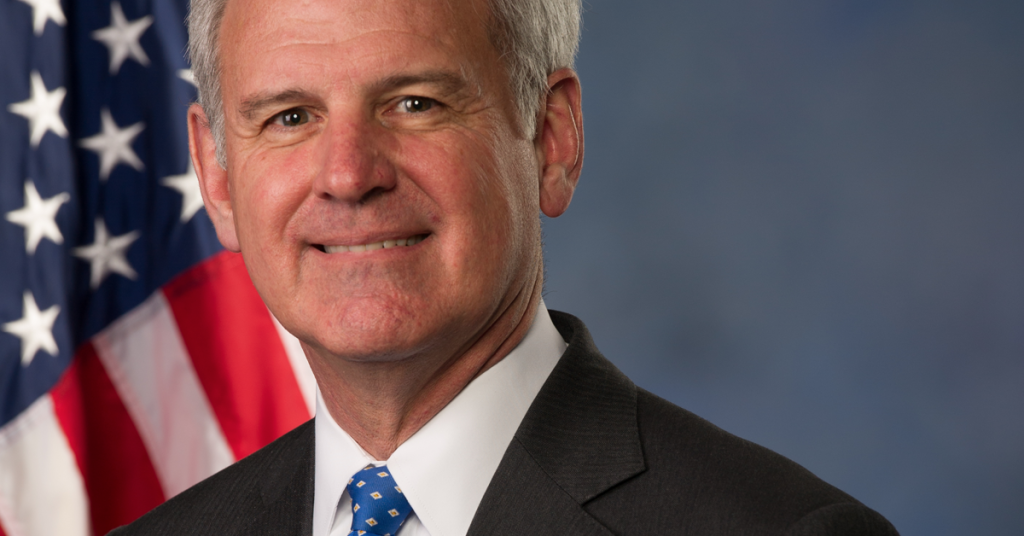
On the Wednesday night before Thanksgiving, the U.S. Supreme Court issued a ruling, which is a very positive signal for the rights of people of faith to freely exercise that faith. New York Governor Andrew Cuomo had issued a “Cluster Initiative” which used color-coded restrictions on large gatherings in certain parts of New York City. These restrictions were challenged in court by the Catholic Diocese of Brooklyn and Jewish synagogues as an invalid restriction on citizens’ rights under the Free Exercise Clause of the First Amendment to the Constitution. The Supreme Court issued an injunction against applying Governor Cuomo’s order to gatherings at houses of worship. Justice Neil Gorsuch wrote a scathing concurring opinion in which he said, “there is no world in which the Constitution tolerates color-coded executive edicts that reopen liquor stores and bike shops but shutters churches, synagogues and mosques.” Much of the press focused on the fact that this was the first case in which Justice Amy Coney Barrett’s vote was necessary to achieve a majority because Chief Justice John Roberts joined with the dissenters as he believed the ruling was premature. His decision was unsurprising as he had voted with the liberals on the Court against acting on earlier COVID restrictions. It was also in keeping with his preference to avoid judicial intervention in matters which he doesn’t consider to be procedurally ripe. I have great respect for Justice Roberts but disagree with his decision in this case and am glad the majority saw fit to issue the injunction. When President Donald Trump nominated Justice Brett Kavanaugh, and Justice Barrett, liberals and their news media allies howled that these new justices’ presence on the Court would provide the votes to strike down the Affordable Care Act and reverse Roe v. Wade. I never bought that line, and it appears from oral arguments in the Affordable Care Act case presently before the Court that there is not a majority to do the former. I did believe that these two new justices, along with other Republican nominated justices, would take a much broader view of the Free Exercise Clause and a much narrower view of the statutory authorization for government regulation. This new case confirms that the Court has indeed adopted an expanded application of the Free Exercise Clause. Why is this so timely and so important? America’s cultural elites have adopted a hostility to faith, people of faith, and people acting out their faith. They used to be willing to let people do as they pleased in their houses of worship while jumping at the chance to criticize and restrict them if they actually attempted to exercise their beliefs outside of worship. Governor Cuomo’s order, and those of many other Democrat governors and mayors, demonstrate that the elites now want to regulate what happens inside houses of worship. The First Amendment, like the other nine amendments in the Bill of Rights, was passed by the First Congress in 1789, and the states ratified them in 1791. Passage of these amendments was demanded by several of the states in the ratification conventions on the original Constitution. These amendments comprise fundamental law, conferring primary rights on the people of this nation. As to religion, the First Amendment states, “Congress shall make no law respecting the establishment of religion, or prohibiting the free exercise thereof.” It was applied to state and local governments in the 20th century by courts invoking the Fourteenth Amendment. The first clause, known as the Establishment Clause, was intended as a prohibition on a government established church as the Church of England was at the time of the Revolution and is today. That clause has been expanded judicially to prohibit any government action favoring a particular religious view. Until recently, the Free Exercise Clause has been rarely invoked. But actions by state and local governments in more recent times to control people of faith in their efforts to live out their faith have made the Free Exercise Clause a new judicial battleground, and this new majority on the Supreme Court has arrived just in time to deliver last week’s important opinion. I predict more decisions in the future, applying the clause to inappropriate government action. Note the use of the word “exercise.” It denotes action and not just belief. That First Congress was acutely aware of the limitations on worship and action by the British government on behalf of the Church of England. Indeed, many of their ancestors fled to America to escape government dictates on religion. They also knew the ugly history of the Puritan Protectorate government in 17th century England which tried to limit all sorts of conduct – even celebrating Christmas. Congress and the ratifying states made it clear in the Free Exercise Clause that government in this country has no such power. As I have seen in the Congresses I have served in over the last several years, many members have lost that understanding. Indeed, they have attempted to repeal the Religious Freedom Restoration Act, which passed with near unanimity in the 1990s. They see religious rights as secondary, not primary. Governor Cuomo and his Democrat colleagues in statehouses and mayors’ offices around the U.S. do too. Now, the new majority on the Supreme Court has stepped up to stop the slide away from religious freedom. It’s about time, and I trust they will continue to do so. Congressman Bradley Byrne currently represents Alabama’s 1st congressional district.
Democrats claim ‘big tent’ for first convention in pandemic
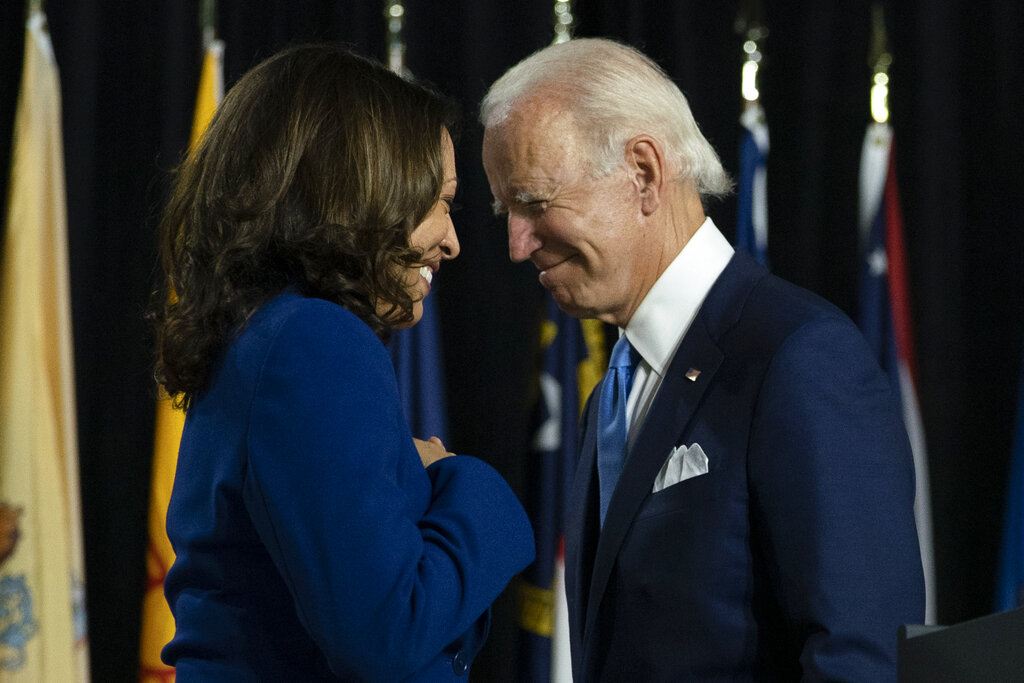
The extraordinary ideological range of Biden’s many messengers on the opening night of the 2020 Democratic National Convention was perhaps best demonstrated by former presidential contenders from opposing parties.
US governors feel heat to reopen from protesters, president
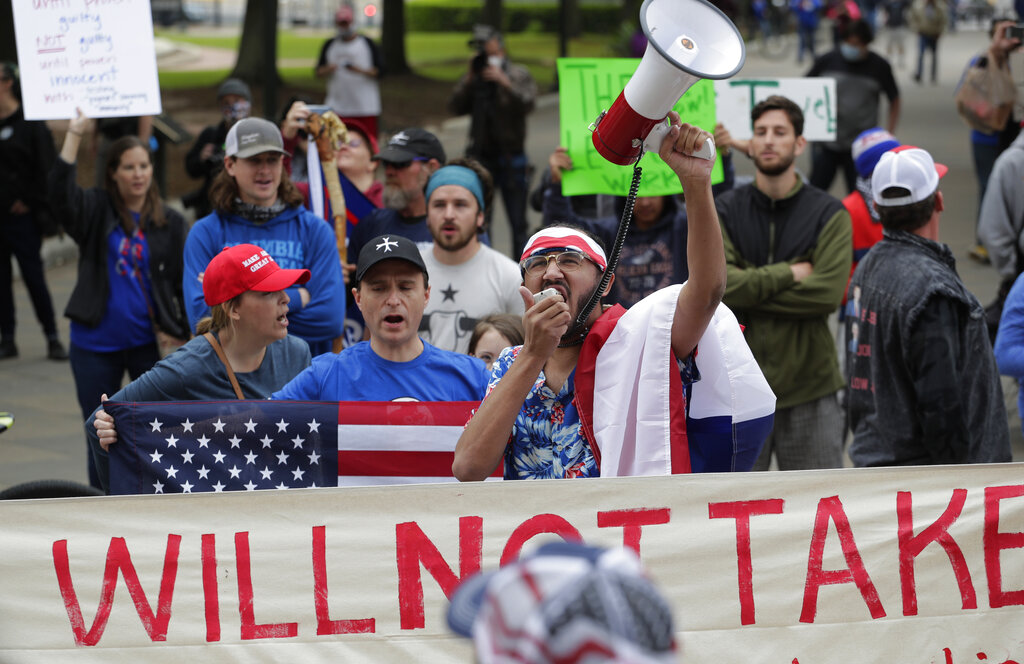
Adding to the pressure are protests against stay-at-home orders organized by small-government groups and Trump supporters.
US relief checks begin arriving as economic damage piles up
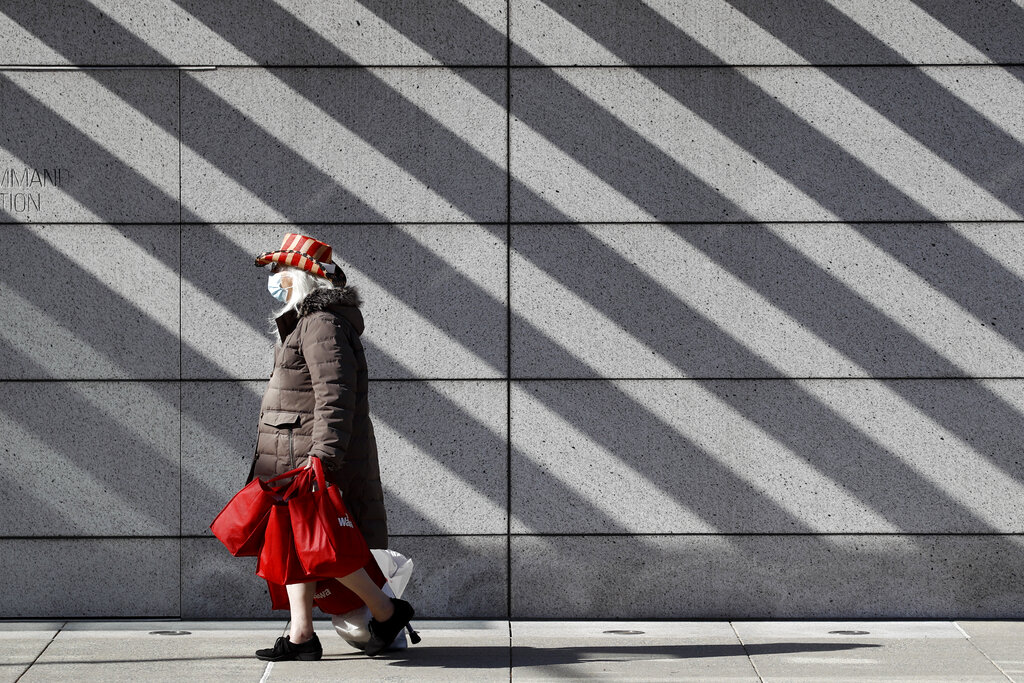
The U.S. government began issuing one-time payments this week to tens of millions of people.
States confront practical dilemmas on reopening economies
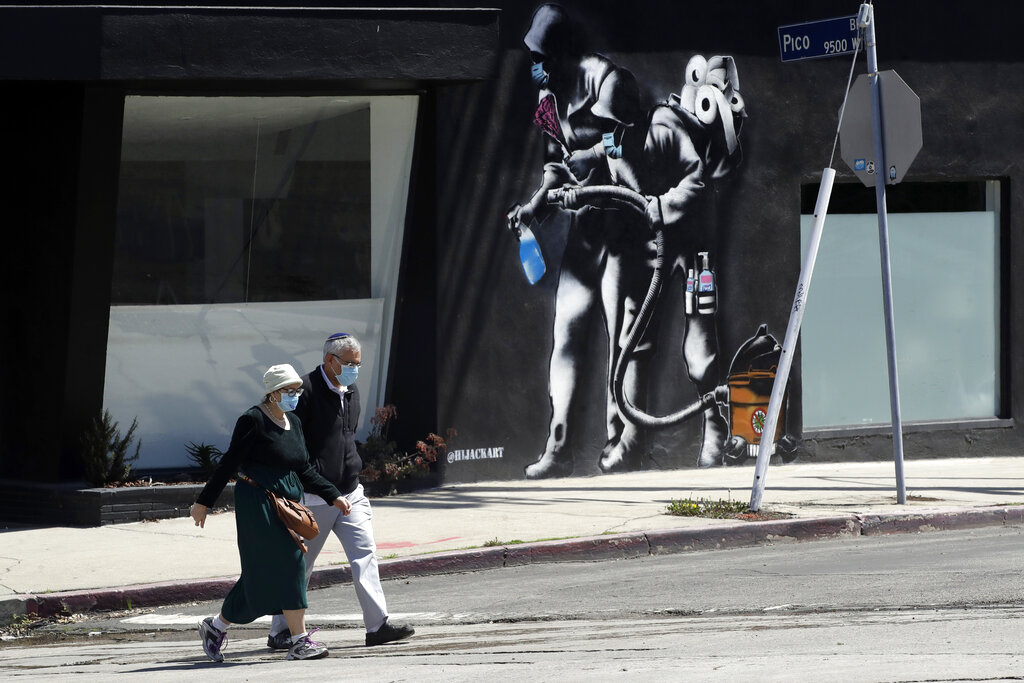
There isn’t a consensus on how to reopen economies.
U.S. states share, get creative in hunt for medical supplies

The U.S. Department of Health and Human Services confirmed Wednesday that the federal stockpile is officially bare.
Countries start thinking about easing up on restrictions

Deaths, hospitalizations and new infections are leveling off in places like Italy and Spain.
Donald Trump says ‘toughest’ weeks ahead as coronavirus spreads
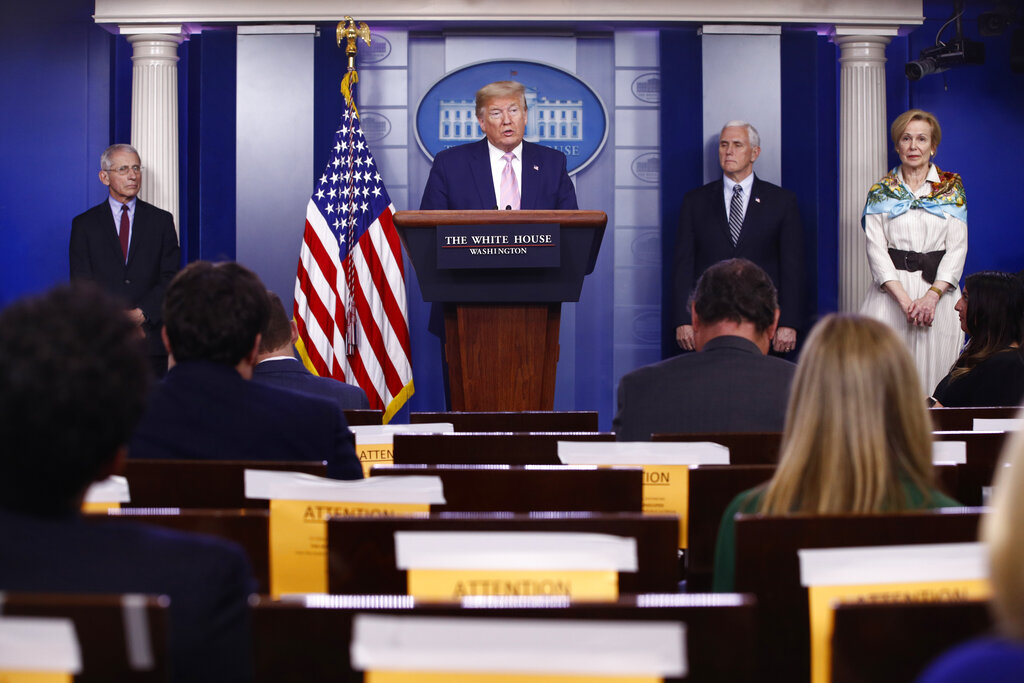
The number of people infected in the U.S. has exceeded 300,000.
Senate passes coronavirus rescue package on unanimous vote

The unanimous vote came despite misgivings on both sides.