
Why are gas prices rising? Experts point to extreme heat and oil production cuts
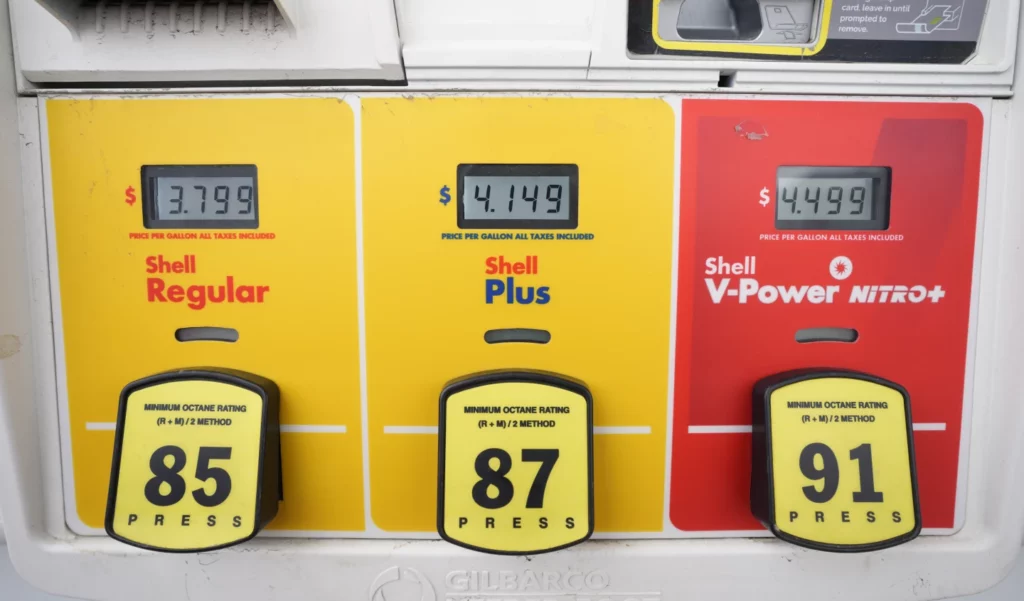
Drivers are in for another headache at the pump as U.S. gas prices continue to rise. The national average for gas prices stood at about $3.78 a gallon on Tuesday — about 25 cents higher than that seen one month ago, according to motor club AAA. While today’s prices at the pump remain far lower than they were last year, when energy costs soared worldwide in the months following Russia’s invasion of Ukraine, experts say such a jump is unusual. “Usually it takes a hurricane to move prices that much,” said AAA spokesperson Andrew Gross, who said the rise is especially interesting as “fewer people are fueling up” their cars this summer compared to years past. In the U.S., gasoline prices are highly dependent on crude oil. West Texas Intermediate crude, the U.S. benchmark, has stayed above $80 per barrel since Thursday, standing at over $81 as of Tuesday afternoon. That marks a $12 jump since July 3, according to OPIS global head of energy analysis Tom Kloza. There are a few factors causing oil prices to rise, Gross and Kloza say, including global supply production cuts and impacts of this summer’s extreme heat on refineries. Here’s what you need to know. WHY ARE GAS PRICES RISING? BLAME THE HEAT AND PRODUCTION CUTS This summer’s record temperatures are partly to blame for the rising gas prices. “While the heat may be keeping people home, it also keeps refineries from making refined product,” Gross explained, noting that refineries are typically designed to operate between 32 and 95 degrees Fahrenheit (0 and 35 degrees Celsius). “They don’t like temperature extremes because they’re inherently dangerous places… So they dial back the production for safety purposes, but that then constrains supply.” According to Kloza, there are about 10 million daily barrels of U.S. refining capacity on the Gulf Coast. The heat wave has caused those refineries to operate below normal capacity — resulting in a loss of hundreds of thousands of barrels each day, he said. Still, “the fact that some refineries are struggling has meant that the ones who are able to operate are making really nice profits,” he said. Today’s U.S. domestic demand is about 9 million barrels a day, about half a million below expectations for peak summer months, but the country is exporting a lot of gasoline, he added. Beyond the heat, Kloza pointed to crude supply cuts from major producing countries in the OPEC+ alliance. In July, for example, Saudi Arabia started reducing how much oil it sends to the global economy by 1 million barrels each day. Russia is also exporting less, he said. The cuts aren’t OPEC-wide, Gross noted. As inflation eases, he suspects that better economic prospects may also be putting pressure on oil worldwide. WHICH STATES HAVE THE HIGHEST GAS PRICES TODAY? As always, certain parts of the U.S. are facing high gas prices than others — due to factors ranging from routine maintenance at regional refineries to limited supplies in some states. On Tuesday, according to the AAA, California had the highest gas prices in the nation at an average of $5.01 a gallon. Washington and Oregon followed at $4.96 and $4.92, respectively. Mississippi had the lowest average at about $3.29 per gallon, followed by $3.39 in Louisiana and $3.40 in Alabama. WILL GAS PRICES CONTINUE TO CLIMB? It’s hard to know what gas prices will look like in the coming weeks, experts say. While relief from the heat can hopefully be expected as we enter the fall, both Gross and Kloza pointed to risk of hurricanes — which, of course, leads refineries to power down. “If you could guarantee we’re not going to have tropical storm force or hurricane winds in the Gulf of Mexico, I’d say it’s going to be clear sailing for the rest of the year. But that’s a real fly in the ointment,” Kloza said, pointing to the unprecedented water temperatures the region has seen recently. HOW CAN I SAVE GAS? If you’re looking to save money and cut back on trips to the pump, there are a few ways you can maximize your mileage per gallon. One important habit is staying on top of getting your tire pressure checked, Gross said. In addition to safety risks, low tire pressure is “not maximizing your fuel efficiency,” costing you more money down the road, he said. AAA offers additional gas-saving tips — which include using cruise control when possible, not overfilling your tank at the pump, and removing unneeded items in your car’s trunk to cut down on excess weight. Republished with the permission of The Associated Press.
Gas prices down 3 cents from month ago, third-lowest in nation
Alabama’s gasoline prices are down 3 cents from one month ago and nationally are the third-lowest at $3.08 for a gallon of regular unleaded gasoline, according to Friday morning updates. That’s down 29.1% from the same time last year, when prices soared to $4.35 per gallon, says data from the American Automobile Association. Among county averages, the highest ($3.18) are Coosa County in the northern part of the state and Winston County in the northwestern area. Marshall County, in the northeast, is lowest ($2.94). Among metros, the highest are Daphne-Foley ($3.15), Muscle Shoals ($3.12), Mobile ($3.11), and Huntsville ($3.10). The lowest are Gadsden ($2.98), Decatur ($3.02), Auburn ($3.04), and Birmingham and Tuscaloosa ($3.05 each). “Gas prices may rise over the next few days based on slightly higher demand,” AAA spokesman Andrew Gross said in a release. “But it could be more of a blip than a trend, and demand may retreat once the holiday is further in the rearview mirror.” Saudi Arabia and Russia have announced production cuts, with the Saudis extending their July cutback of 1 million barrels per day through August and the Russians saying they’ll cut production by 500,000 barrels a day in August. According to the American Petroleum Institute, Alabama taxes and fees add up to 31.31 cents per gallon, higher than Mississippi (18.79 cents per gallon) and Tennessee (27.4 cents), but lower than Georgia (37.55 cents) and Florida (43.55 cents). Mississippi has the lowest average at $2.97 per gallon of regular unleaded. Louisiana ($3.08), Arkansas ($3.10), and Tennessee ($3.11) join Alabama in the lowest five. The highest as of Friday morning are Washington ($4.97), California ($4.85), Hawaii ($4.72), Oregon ($4.62) and Alaska ($4.31). Republished with the permission of The Center Square.
Less demand fuels national gas price drop to below $4 per gallon
The national average price for a gallon of gas fell below $4 on Thursday for the first time since March, according to AAA, in large part because of decreased demand as motorists drive less. After hitting an all-time high of $5.02 per gallon in June, the national average price has now fallen just below $4 to $3.99, marking 58 consecutive days of declining gas prices. According to the U.S. Energy Information Association, however, the gasoline demand is about 3% lower than it was a year ago, indicating that the decrease in gas prices has failed to draw consumers back to the pump after many have shifted driving habits. A survey by AAA reports that almost a third (64%) of U.S. adults have changed their driving habits since March. The top three changes made were deciding to drive less (88%), combining errands (74%), and reducing shopping or dining out (56%). At the same time, the total gasoline supply in the U.S. has fallen to 220.3 million barrels from the previous week. AAA attributes the decline in gas prices, in part, to the decrease in demand as well as a decrease in the price of oil. “Oil is the primary ingredient in gasoline, so less expensive oil is helpful in taming pump prices,” said Andrew Gross, AAA spokesperson. “Couple that with fewer drivers fueling up, and you have a recipe for gas prices to keep easing.” Although the average national price for gas has fallen, prices vary from state to state, with California’s average price per gallon sitting at $5.34. Many other states, too, have gas prices over $4, including Hawaii, Illinois, Nevada, Oregon, Washington, and New York. President Joe Biden celebrated the continual decline of gas prices last week and said that he is doing everything he can to keep bringing them down. “I’m doing everything I can to bring down the cost of gas at the pump,” Biden said. “And today, America hit 50 days straight of falling gas prices – the fastest decline in over a decade.” Some say, however, that the U.S. should not celebrate yet. Daniel Turner, founder and executive director at Power The Future, a non-profit organization focused on energy research, said that prices are down because the economy is in a recession and that the U.S. needs to expand its domestic supply of oil. “While gas prices falling from their all-time high is a good thing, this is no time for the Biden Administration to take a victory lap. Joe Biden’s recession is the reason for the price drop, and our families are still paying too much because of his energy failures,” Turner said. “Winter is coming, and the drain from the Strategic Petroleum Reserve will end in October. To meet this rising demand in the long term, we must increase domestic supply, something the Biden Administration is unwilling to do.” Republished with the permission of The Center Square.
