
Supreme Court preserves access to abortion pill for now
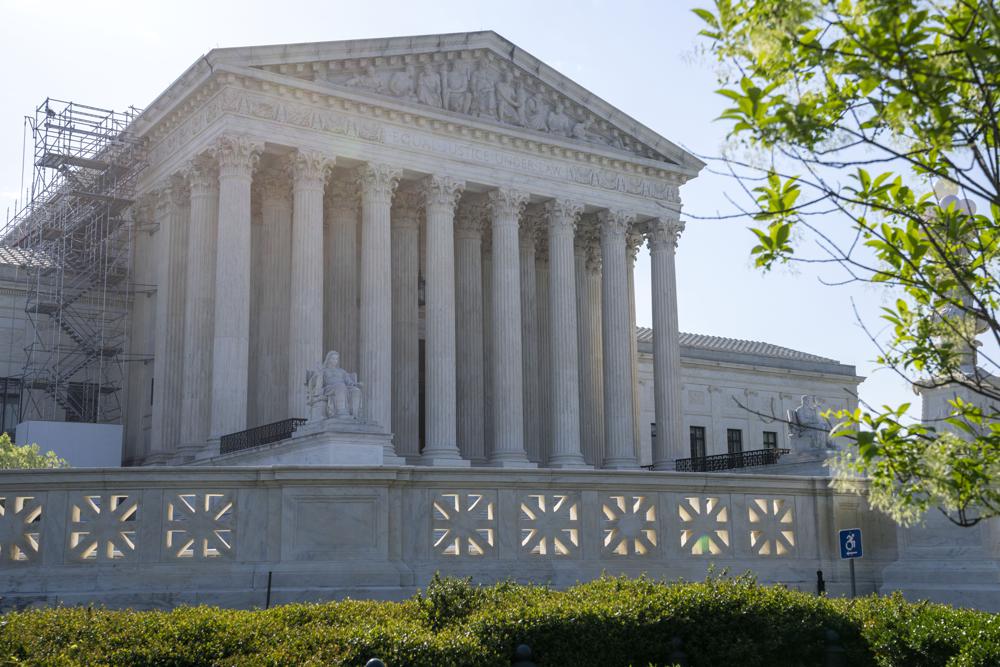
The Supreme Court on Friday preserved women’s access to a drug used in the most common method of abortion, rejecting lower-court restrictions while a lawsuit continues. The justices granted emergency requests from the Biden administration and New York-based Danco Laboratories, maker of the drug mifepristone. They are appealing a lower court ruling that would roll back the Food and Drug Administration’s approval of mifepristone. The drug has been approved for use in the U.S. since 2000, and more than 5 million people have used it. Mifepristone is used in combination with a second drug, misoprostol, in more than half of all abortions in the U.S. The court’s action Friday almost certainly will leave access to mifepristone unchanged at least into next year, as appeals play out, including a potential appeal to the high court. The next stop for the case is at the New Orleans-based U.S. Court of Appeals for the 5th Circuit, which has set arguments in the case for May 17. Two of the nine justices — Samuel Alito, the author of last year’s decision overturning Roe v. Wade, and Clarence Thomas — voted to allow restrictions to take effect, and Alito issued a four-page dissent. No other justices commented on the court’s one-paragraph order, and the court did not release a full vote breakdown. President Joe Biden praised the high court for keeping mifepristone available while the court fight continues. “The stakes could not be higher for women across America. I will continue to fight politically-driven attacks on women’s health. But let’s be clear — the American people must continue to use their vote as their voice and elect a Congress who will pass a law restoring the protections of Roe v. Wade,” Biden said in a statement. Alliance Defending Freedom, representing abortion opponents challenging the FDA’s approval of mifepristone, downplayed the court’s action. “As is common practice, the Supreme Court has decided to maintain the status quo that existed prior to our lawsuit while our challenge to the FDA’s illegal approval of chemical abortion drugs and its removal of critical safeguards for those drugs moves forward,” ADF lawyer Erik Baptist said in a statement. The justices weighed arguments that allowing restrictions contained in lower-court rulings to take effect would severely disrupt the availability of mifepristone. The Supreme Court had initially said it would decide by Wednesday whether the restrictions could take effect while the case continues. A one-sentence order signed by Alito on Wednesday gave the justices two additional days, without explanation. The challenge to mifepristone is the first abortion controversy to reach the nation’s highest court since its conservative majority overturned Roe v. Wade 10 months ago and allowed more than a dozen states to effectively ban abortion outright. In his majority opinion last June, Alito said one reason for overturning Roe was to remove federal courts from the abortion fight. “It is time to heed the Constitution and return the issue of abortion to the people’s elected representatives,” he wrote. But even with their court victory, abortion opponents returned to federal court with a new target: medication abortions, which make up more than half of all abortions in the United States. Women seeking to end their pregnancies in the first 10 weeks without more invasive surgical abortion can take mifepristone, along with misoprostol. The FDA has eased the terms of mifepristone’s use over the years, including allowing it to be sent through the mail in states that allow access. The abortion opponents filed suit in Texas in November, asserting that the FDA’s original approval of mifepristone 23 years ago and subsequent changes were flawed. They won a ruling on April 7 by U.S. District Judge Matthew Kacsmaryk, an appointee of former President Donald Trump, revoking FDA approval of mifepristone. The judge gave the Biden administration and Danco Laboratories a week to appeal and seek to keep his ruling on hold. Responding to a quick appeal, two more Trump appointees on the 5th U.S. Circuit Court of Appeals said the FDA’s original approval would stand for now. But Judges Andrew Oldham and Kurt Engelhardt said most of the rest of Kacsmaryk’s ruling could take effect while the case winds through federal courts. Their ruling would have effectively nullified changes made by the FDA starting in 2016, including extending from seven to 10 weeks of pregnancy when mifepristone can be safely used. The court also would have halted sending the drug in the mail or dispensing it as a generic, and patients who seek it would have had to make three in-person visits with a doctor. Women also might have been required to take a higher dosage of the drug than the FDA says is necessary. The administration and Danco have said that chaos would ensue if those restrictions were to take effect while the case proceeds. Potentially adding to the confusion, a federal judge in Washington has ordered the FDA to preserve access to mifepristone under the current rules in 17 Democratic-led states and the District of Columbia that filed a separate lawsuit. The Biden administration has said the rulings conflict and create an untenable situation for the FDA. Alito questioned the argument that chaos would result, saying the administration “has not dispelled doubts that it would even obey an unfavorable order in these cases.” And a new legal wrinkle threatened even more complications. GenBioPro, which makes the generic version of mifepristone, filed a lawsuit Wednesday to preemptively block the FDA from removing its drug from the market, in the event that the Supreme Court doesn’t intervene. The Supreme Court was only being asked to block the lower-court rulings through the end of the legal case. The appeals court has sped up its review, but there is no timetable for a ruling. Any appeal to the Supreme Court would follow within three months of a ruling, but with no deadline for the justices to decide whether to review the case. Republished with the permission of The Associated Press.
Revival sought for pastor’s lawsuit over COVID restrictions
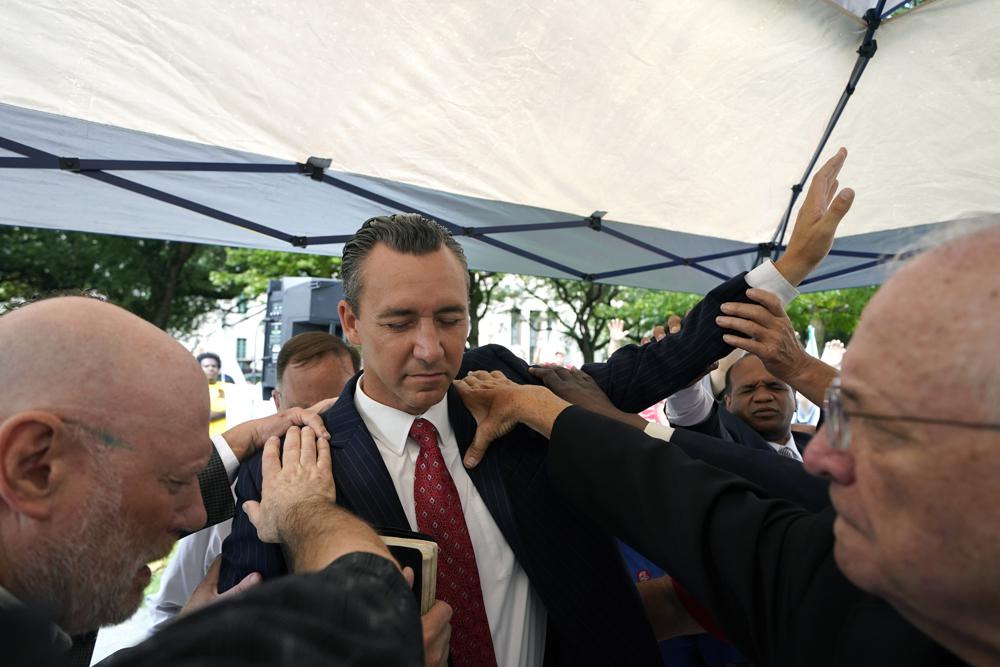
An outspoken Christian conservative attorney from Alabama has asked a federal appeals court to revive a Louisiana pastor’s damage claims against state officials over long-expired COVID-19 restrictions. A federal judge this year dismissed minister Tony Spell’s lawsuit against Gov. John Bel Edwards and others over enforcement of the ban. Spell drew national attention for his flouting of the restrictions early in the pandemic at his church in Central, near Baton Rouge. One of Spell’s attorneys is Roy Moore, the former Alabama Supreme Court justice and Senate candidate. Moore insisted in arguments this week before a panel of judges from the 5th U.S. Circuit Court of Appeals that the state had no authority whatsoever to restrict church gatherings. Panel members appeared skeptical of that claim in arguments recorded as they were held Monday in Fort Worth, Texas. But they raised the question of whether Spell’s church was unfairly restricted, compared with other public gathering places, such as shopping mall food courts. “They have treated us differently,” Moore said. “But the basis of our argument is there is no jurisdiction to limit a church attendance.” Spell has had legal victories in his fight with the state. Louisiana’s Supreme Court, in May, threw out state charges against him, ruling 5-2 that Edwards’ restrictions in place at the time violated Spell’s freedom of religion. But his lawsuit that includes claims for damages over the gathering restrictions was thrown out by U.S. District Judge Brian Jackson in Baton Rouge. Jackson ruled in January that the lawsuit was moot because the restrictions expired long ago. And Jackson rejected Spell’s request for damages from state and local officials, ruling that “there is not now, and never has been, a ‘clearly established’ right to unrestricted religious assembly, and at all relevant times Defendants reasonably believed that they were acting within the constitutional limits set by the Supreme Court and the Fifth Circuit.” The appellate judges on Monday closely questioned Josh Force, an attorney arguing for the Edwards administration, on whether church assemblies were treated unfairly when compared with other public gatherings, including crowds at shopping malls and Black Lives Matter protests. “Isn’t the food court at the mall at least as dangerous as the worship center?” Judge Jennifer Walker Elrod asked. Force argued that Edwards was acting under the best advice of public health officials at the time as to what types of gatherings were safe. Hearing the case was Elrod and 5th Circuit Chief Judge Priscilla Richman, both nominated to the circuit by President George W. Bush, and Judge Andrew Oldham, nominated by President Donald Trump. Republished with the permission of The Associated Press.
Supreme Court orders ‘Remain in Mexico’ policy reinstated

The Supreme Court on Tuesday said the Biden administration likely violated federal law in trying to end a Trump-era program that forces people to wait in Mexico while seeking asylum in the U.S. With three liberal justices in dissent, the high court refused to block a lower court ruling ordering the administration to reinstate the program informally known as Remain in Mexico. It’s not clear how many people will be affected and how quickly. Under the lower court ruling, the administration must make a “good faith effort” to restart the program. There also is nothing preventing the administration from trying again to end the program, formally called Migrant Protection Protocols. A federal judge in Texas had previously ordered that the program be reinstated last week. Both he and the 5th U.S. Circuit Court of Appeals refused the administration’s request to put the ruling on hold. Justice Samuel Alito ordered a brief delay to allow the full court time to consider the administration’s appeal to keep the ruling on hold while the case continues to make its way through the courts. The 5th Circuit ordered expedited consideration of the administration’s appeal. The court offered little explanation for its action, although it cited its opinion from last year rejecting the Trump administration’s effort to end another immigration program, Deferred Action for Childhood Arrivals. In that case, the court held that the decision to end DACA was “arbitrary and capricious,” in violation of federal law. The administration has “failed to show a likelihood of success on the claim that the memorandum rescinding the Migrant Protection Protocols was not arbitrary and capricious,” the court wrote Tuesday in an unsigned order. The three dissenting justices, Stephen Breyer, Elena Kagan, and Sonia Sotomayor, did not write an opinion expressing their views of the case. In a statement, the Department of Homeland Security said it regrets that the high court declined to issue a stay. The department said it would continue to challenge the district court’s order. The American Civil Liberties Union called on the administration to present a fuller rationale for ending Remain in Mexico that could withstand court scrutiny. “The government must take all steps available to fully end this illegal program, including by re-terminating it with a fuller explanation. What it must not do is use this decision as cover for abandoning its commitment to restore a fair asylum system,” said Omar Jadwat, director of the ACLU’s immigrant rights project. During Donald Trump’s presidency, the policy required tens of thousands of migrants seeking asylum in the U.S. to turn back to Mexico. It was meant to discourage asylum seekers, but critics said it denied people the legal right to seek protection in the U.S. and forced them to wait in dangerous Mexican border cities. The judge, U.S. District Judge Matthew J. Kacsmaryk in Amarillo, Texas, ordered that the program be reinstated in response to a lawsuit filed by the states of Texas and Missouri, whose governors have been seeking to reinstate some of the hard-line anti-immigration policies of the Trump administration. The Biden administration argued in briefs that the president has “clear authority to determine immigration policy” and that Homeland Security Secretary Alejandro Mayorkas had discretion in deciding whether to return asylum seekers to Mexico. The policy has been dormant for more than a year, and the administration argued that abruptly reinstating it “would prejudice the United States’ relations with vital regional partners, severely disrupt its operations at the southern border, and threaten to create a diplomatic and humanitarian crisis.” The Trump administration largely stopped using the “Remain in Mexico” policy at the start of the pandemic, at which point it began turning back virtually everyone crossing the Southwest border under a different protocol — a public health order that remains in effect. President Joe Biden suspended the program on his first day of office, and the Homeland Security Department ended it in June. Kacsmaryk was nominated to the federal bench by Trump. The 5th Circuit panel that ruled Thursday night included two Trump appointees, Andrew Oldham and Cory Wilson, along with Jennifer Walker Elrod, nominated to the appeals court by President George W. Bush. At the high court, at least five of the six conservative justices, including three Trump appointees, voted for the restart of the program. Under the court’s opaque treatment of emergency appeals, the justices don’t always say publicly how they voted. Republished with the permission of the Associated Press.
