
Donald Trump impeached by U.S. House on 2 charges
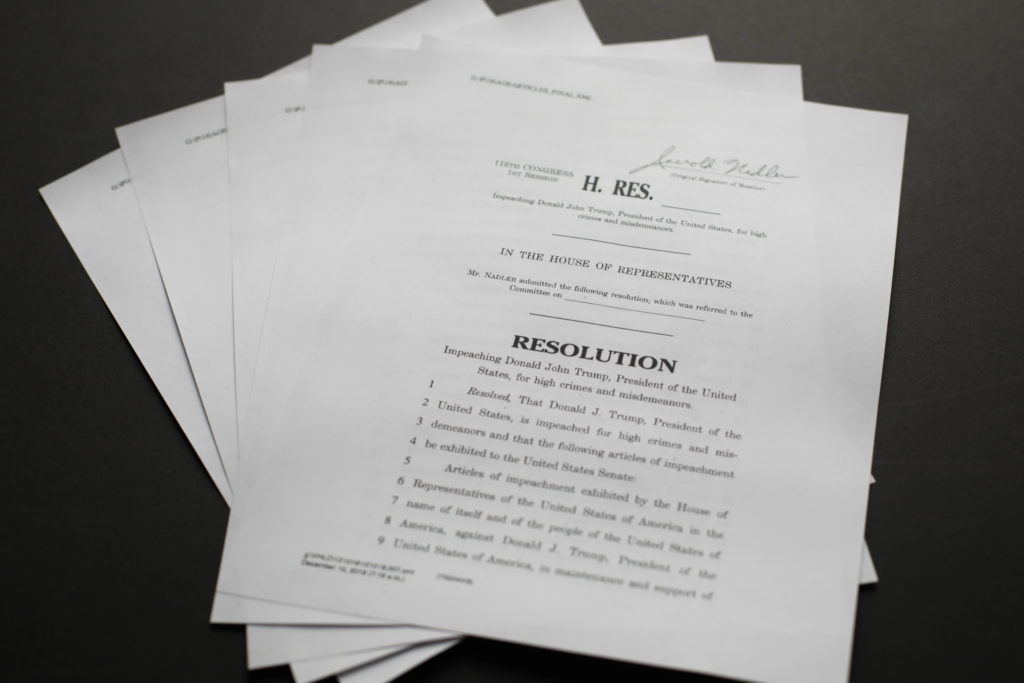
President Donald Trump was impeached by the U.S. House of Representatives Wednesday night, becoming only the third American chief executive to be formally charged under the Constitution’s ultimate remedy for high crimes and misdemeanors. The historic vote split along party lines, much the way it has divided the nation, over a charge that the 45th president abused the power of his office by enlisting a foreign government to investigate a political rival ahead of the 2020 election. The House then approved a second charge, that he obstructed Congress in its investigation. The articles of impeachment, the political equivalent of an indictment, now go to the Senate for trial. If Trump is acquitted by the Republican-led chamber, as expected, he still would have to run for reelection carrying the enduring stain of impeachment on his purposely disruptive presidency. He saw the blame flowing the other direction. He told a political rally in Michigan that “crazy Nancy Pelosi’s House Democrats have branded themselves with an eternal mark of shame.” The votes were 230 for impeachment and 197 against on the first count, 229-198 on the second. Democrats led Wednesday night’s voting, framed in what many said was their duty to protect the Constitution and uphold the nation’s system of checks and balances. Republicans stood by their party’s leader, who has frequently tested the bounds of civic norms. Trump called the whole affair a “witch hunt,” a “hoax” and a “sham,” and sometimes all three. The trial is expected to begin in January in the Senate, where a vote of two-thirds is necessary for conviction. While Democrats had the majority in the House to impeach Trump, Republicans control the Senate and few if any are expected to diverge from plans to acquit the president ahead of early state election-year primary voting. Pelosi, once reluctant to lead Democrats into a partisan impeachment, gaveled both votes closed, risking her majority and speakership to follow the effort to its House conclusion. “Today we are here to defend democracy for the people,” she said earlier during floor debate. Trump, who began Wednesday tweeting his anger at the proceedings, pumped his fist before an evening rally in Battle Creek, Michigan, boasting of “tremendous support” in the Republican Party and saying, “By the way it doesn’t feel like I’m being impeached.” No Republicans voted for impeachment, and Democrats had only slight defections on their side. Voting was conducted manually with ballots, to mark the moment. On the first article, abuse of power, two Democrats, Rep. Jeff Van Drew of New Jersey, who is considering switching parties to become a Republican, and Rep. Collin Peterson of Minnesota voted against impeaching Trump. On the second article, obstruction, those two and freshman Rep. Jared Golden of Maine voted against. Democratic Rep. Tulsi Gabbard of Hawaii, who is running for president, voted “present” on both. What Pelosi called a sad and solemn moment for the country, coming in the first year that Democrats swept control of the House, unfolded in a caustic daylong session that showcased the nation’s divisions — not only along party lines, but also by region, race and culture. The House impeachment resolution laid out in stark terms the two articles of impeachment against Trump stemming from his July phone call when he asked the Ukraine president for a “favor” — to announce it was investigating Democrats ahead of the 2020 election. He also pushed Ukrainian President Volodymyr Zelenskiy to probe unsubstantiated corruption allegations against Joe Biden, the former vice president and 2020 White House contender. At the time, Zelenskiy, a young comedian newly elected to politics, was seeking a coveted White House visit to show backing from the U.S. ally as it confronts a hostile Russia at its border. He was also counting on $391 million in military aid already approved by Congress. The White House delayed the funds, but Trump eventually released the money once Congress intervened. Narrow in scope but broad in its charge, the resolution said the president “betrayed the nation by abusing his high office to enlist a foreign power in corrupting democratic elections,” and then obstructed Congress’ oversight like “no president” in U.S. history. “President Trump, by such conduct, has demonstrated that he will remain a threat to national security and the Constitution if allowed to remain in office,” it said. Republicans argued that Democrats are impeaching Trump because they can’t beat him in 2020. “This vote is about one thing, and one thing only: They hate this president,” said Rep. Chris Stewart, R-Utah. “They want to take away my vote and throw it in the trash.” But Democrats warned the country cannot wait for the next election to decide whether Trump should remain in office because he has shown a pattern of behavior, particularly toward Russia, and will try to corrupt U.S. elections in 2020. “The president and his men plot on,” said Chairman Adam Schiff, Democrat-California, of the Intelligence Committee that led the inquiry. “The danger persists. The risk is real.” The outcome brings the Trump presidency to a milestone moment that has building almost from the time the New York businessman-turned-reality-TV host unexpectedly won the White House in 2016 amid questions about Russian interference in the U.S. election — and the rise of the “resistance.” Democrats drew from history, the founders and their own experiences, as minorities, women and some immigrants to the U.S., seeking to honor their oath of office to uphold the constitution. Rep. Lou Correa, Democrat-California, spoke in Spanish asking God to unite the nation. “In America,” said Rep. Hakeem Jeffries, Democrat-New York, “no one is above the law.” Republicans aired Trump-style grievances about what Arizona Rep. Debbie Lesko called a “rigged” process. “We face this horror because of this map,” said Rep. Clay Higgins, Republican-Alabama, before a poster of red and blue states. “They call this Republican map flyover country, they call us deplorables, they fear our faith, they fear our strength, they fear our unity, they fear our vote, and they fear our president.” The political fallout from the
Democrats, White House forge new North American trade deal
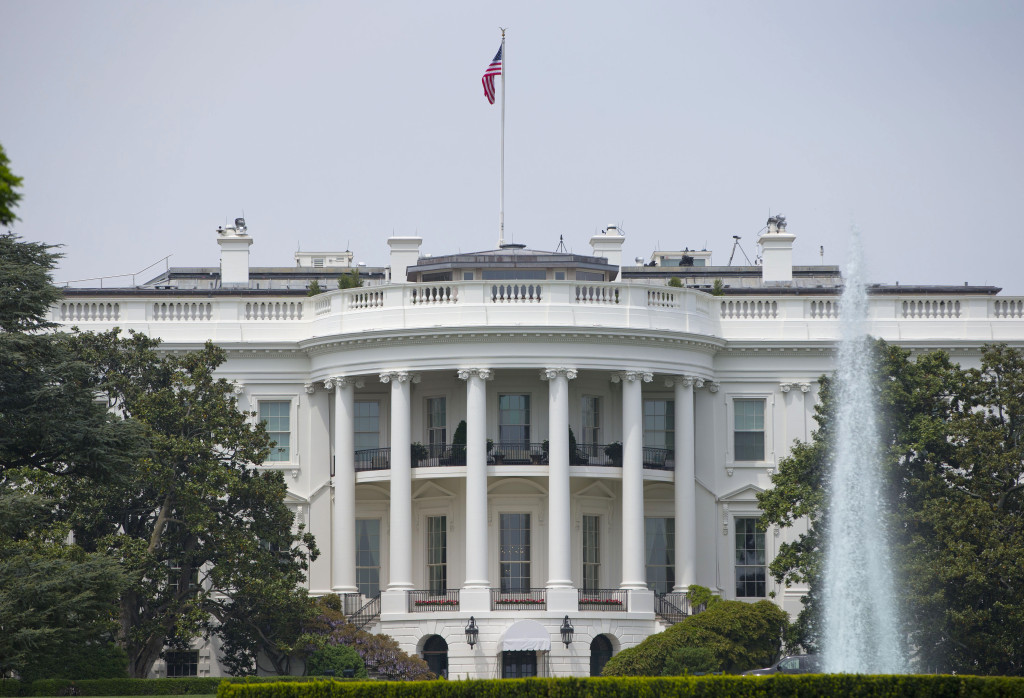
House Democrats and the White House announced a deal on a modified North American trade pact, handing President Donald Trump a major Capitol Hill win Tuesday on the same day that impeachment charges were announced against him. Both sides hailed the deal as a win for American workers. They said the revamped U.S.-Mexico-Canada Agreement was a significant improvement over the original North American Free Trade Agreement, with Democrats crowing about winning stronger provisions on enforcing the agreement while Republicans said it will help keep the economy humming along. “There is no question of course that this trade agreement is much better than NAFTA,” House Speaker Nancy Pelosi, Democrat-California, said in announcing the agreement, saying the pact is “infinitely better than what was initially proposed by the administration.” Trump said the revamped trade pact will “be great” for the United States. “It will be the best and most important trade deal ever made by the USA. Good for everybody – Farmers, Manufacturers, Energy, Unions – tremendous support. Importantly, we will finally end our Country’s worst Trade Deal, NAFTA!,” the president said in a tweet. The deal announcement came on the same morning that Democrats outlined impeachment charges against Trump. The trade pact is Trump’s top Capitol Hill priority along with funding for his long-sought border fence. In Mexico City, President Donald Trump’s son-in-law and senior adviser, Jared Kushner, U.S. Trade Representative Robert Lighthizer and Canadian Deputy Prime Minister Chrystia Freeland joined Mexican officials to sign the updated version of the United States-Mexico-Canada trade agreement, or USMCA, at a ceremony in Mexico City’s centuries-old National Palace. Mexican Foreign Minister Marcelo Ebrard congratulated the negotiators for reaching a second set of agreements to answer U.S. concerns about labor rights in Mexico, and regional content. “Mission accomplished!” Ebrard told the gathered officials. Lighthizer praised the joint work of the Trump administration, Democrats, business and labor leaders to reach an agreement, calling it “nothing short of a miracle that we have all come together.” “This is a win-win-win agreement which will provide stability for working people in all three countries for years to come,” Freeland said. “That is no small thing.” A U.S. House vote is likely before Congress adjourns for the year and the Senate is likely to vote in January or February. Pelosi was the key congressional force behind the deal, which updates the 25-year-old NAFTA accord that many Democrats — especially from manufacturing areas hit hard by trade-related job losses — have long lambasted. She and Ways and Means Committee Committee Chairman Richard Neal, Democrat-Massachusetts, forged a positive working relationship with Lighthizer, whom they credited with working in good faith. “Thanks to President Trump’s leadership, we have reached an historic agreement on the USMCA. After working with Republicans, Democrats, and many other stakeholders for the past two years we have created a deal that will benefit American workers, farmers, and ranchers for years to come,” Lighthizer said. “This will be the model for American trade deals going forward.” NAFTA eliminated most tariffs and other trade barriers involving the United States, Mexico and Canada. Critics, including Trump, labor unions and many Democratic lawmakers, branded the pact a job killer for the United States because it encouraged factories to move south of the border, capitalize on low-wage Mexican workers and ship products back to the U.S. duty free. Weeks of back-and-forth, closely monitored by Democratic labor allies such as the AFL-CIO, have brought the two sides together. Pelosi is a longtime free trade advocate and supported the original NAFTA in 1994. Trump has accused Pelosi of being incapable of passing the agreement because she is too wrapped up in impeachment. The original NAFTA badly divided Democrats but the new pact is more protectionist and labor-friendly, and Pelosi is confident it won’t divide the party, though some liberal activists took to social media to carp at the agreement. “There is no denying that the trade rules in America will now be fairer because of our hard work and perseverance. Working people have created a new standard for future trade negotiations,”said AFL-CIO President Richard Trumka. “President Trump may have opened this deal. But working people closed it.” Business groups like the U.S. Chamber of Commerce also chimed in to support the long-delayed agreement. “We are optimistic this development will open the door to final approval of USMCA on a bipartisan basis by the end of the year, which will especially benefit American farmers, manufacturers, and small businesses,” Thomas Donohue, CEO of the U.S. Chamber of Commerce, said in a statement. “This agreement has been the result of painstaking bipartisan negotiations over the past year, and would not have been possible if not for the willingness of President Trump to work patiently with Democrats to get something done that he knew was in the best interests of American workers, farmers and manufacturers,” said Sen. Rob Portman, Republican-Ohio, a former U.S. trade representative. Republicans leaders and lawmakers have agitated for months for the accord but Pelosi has painstakingly worked to bring labor on board. Democrats see the pact as significantly better than NAFTA and Trumka’s endorsement is likely to add to a strong vote by Democrats that have proven skeptical of trade agreements. “I think the vote’s going to be pretty good,” said No. 2 House Democrat Steny Hoyer, D-Md., a veteran party whip. “There’s a general agreement — not total agreement, it’s not unanimity — that USMCA is better. It’s an improvement. And to the extent that Trumka and labor comes out and says that this is an improvement, I think that that will be unifying.” The pact contains provisions designed to nudge manufacturing back to the United States. For example, it requires that 40 percent to 45 percent of cars eventually be made in countries that pay autoworkers at least $16 an hour — that is, in the United States and Canada and not in Mexico. The trade pact picked up some momentum after Mexico in April passed a labor-law overhaul required by USMCA. The reforms are meant
Fiery disagreements as Donald Trump impeachment hearing opens
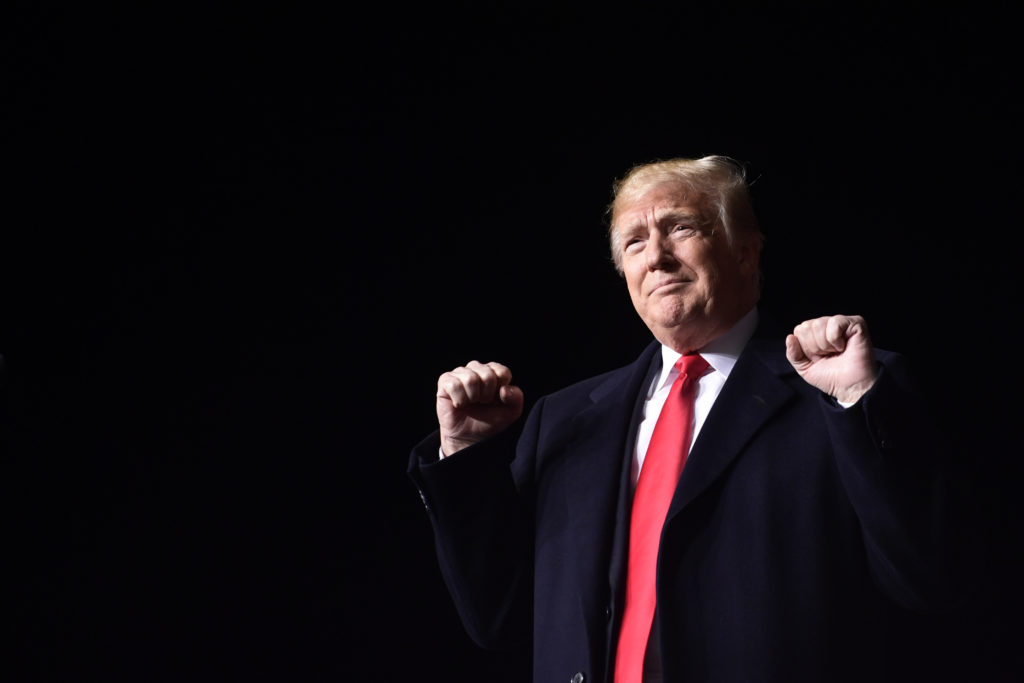
The House Judiciary Committee’s first impeachment hearing quickly burst into partisan infighting Wednesday as Democrats charged that President Donald Trump must be removed from office for enlisting foreign interference in U.S. elections and Republicans angrily retorted there were no grounds for such drastic action. The panel responsible for drafting articles of impeachment convened as Trump’s team was fanning out across Capitol Hill. Vice President Mike Pence met behind closed doors with House Republicans, and Senate Republicans were to huddle with the White House counsel as GOP lawmakers stand with the president and Democrats charge headlong into what has become a one-party drive to impeach him. Chairman Jerrold Nadler, Democrat-New York, gaveled open the hearing saying, “’The facts before us are undisputed.” Nadler said Trump’s phone call with Ukraine’s president last July wasn’t the first time Trump sought a foreign power to influence American elections, after Russian interference in 2016, and if left unchecked he could do again in next year’s campaign. “We cannot wait for the election to address the present crisis,” Nadler said. “The president has shown us his pattern of conduct. If we do not act to hold him in check, now, President Trump will almost certainly try again to solicit interference in the election for his personal political gain.” Republicans protested the proceedings as unfair to the president, the dredging up of unfounded allegations as part of an effort to undo the 2016 election and remove Trump from office. “You just don’t like the guy,” said Rep. Doug Collins of Georgia, the top Republican on the panel. He called the proceedings a “disgrace” and a “sham.” Several Republicans immediately objected to the process, interjecting procedural questions, and they planned to spend much of the session interrupting, delaying and questioning the rules. House Speaker Nancy Pelosi said Democrats “haven’t made a decision” yet on whether there will be a vote on impeachment. She also meeting privately with the Democratic caucus. But a vote by Christmas appears increasingly likely with the release of a 300-page report by Democrats on the House Intelligence Committee that found “serious misconduct” by the president. Intelligence Committee Chairman Adam Schiff, Democrat-California, told The Associated Press. “Americans need to understand that this president is putting his personal political interests above theirs. And that it’s endangering the country.” The Judiciary Committee heard Wednesday from legal experts, delving particularly into the issue of whether Trump’s actions stemming from the July 25 phone call with Ukraine’s president rose to the constitutional level of “bribery” or “high crimes and misdemeanors” warranting impeachment. The report laid out evidence that the Democrats say shows Trump’s efforts to seek foreign intervention in the U.S. election and then obstruct the House’s investigation. Trump told reporters in London, where he was attending a NATO meeting, that he doubted many people would watch the live hearing “because it’s going to be boring.” Trump did phone in to the House GOP’s morning meeting with Pence to talk with House Minority Leader Kevin McCarthy. The California Republican said impeachment didn’t come up. “The unity has been very positive,” he said. New telephone call records released with the report deepen Trump lawyer Rudy Giuliani’s known involvement in what House investigators called the “scheme” to use the president’s office for personal political gain by enlisting a foreign power, Ukraine, to investigate Democrats including Joe Biden, and intervene in the American election process. Trump told reporters he really doesn’t know why Giuliani was calling the White House’s Office of Management and Budget, which was withholding $400 million in military aid to the ally confronting an aggressive Russia at its border. “’You have to ask him,” Trump said. “Sounds like something that’s not so complicated. … No big deal.” At the hearing, the three legal experts called by Democrats backed impeachment. Noah Feldman, a Harvard Law School professor, said he considered it clear that the president’s conduct met the definition of “high crimes and misdemeanors/” Pamela Karlan, a Stanford Law School professor and former Obama administration Justice Department official, said the president’s action constituted an especially serious abuse of power “because it undermines democracy itself.” Republican witness Jonathan Turley, a law professor at George Washington University, said that the Democrats were bringing a “slipshod impeachment” case against the president, but he didn’t excuse the president’s behavior. “It is not wrong because President Trump is right,” according to Turley. “A case for impeachment could be made, but it cannot be made on this record,” he said. The political risks are high for all parties as the House presses only the fourth presidential impeachment inquiry in U.S. history. Based on two months of investigation sparked by a still-anonymous government whistleblower’s complaint, the Intelligence Committee’s Trump-Ukraine Impeachment Inquiry Report relies heavily on testimony from current and former U.S. officials who defied White House orders not to appear. The inquiry found that Trump “solicited the interference of a foreign government, Ukraine, to benefit his reelection,” Schiff wrote in the report’s preface. In doing so, the president “sought to undermine the integrity of the U.S. presidential election process, and endangered U.S. national security,” the report said. When Congress began investigating, it added, Trump obstructed the investigation like no other president in history. Along with revelations from earlier testimony, the new phone records raised fresh questions about Giuliani’s interactions with the top Republican on the intelligence panel, Rep. Devin Nunes of California. Nunes declined to comment. Schiff said his panel would continue its probe. Republicans defended the president in a 123-page rebuttal claiming Trump never intended to pressure Ukraine when he asked for a “favor” — investigations of Democrats and Biden and his son. They say the military aid the White House was withholding was not being used as leverage, as Democrats claim — and besides, the $400 million was ultimately released, although only after a congressional outcry. For Republicans falling in line behind Trump, the inquiry is simply a “hoax.” Trump criticized the House for pushing forward with the proceedings while he was overseas, a breach of political decorum that traditionally leaves partisan
Time running short, showdown looms over border aid package

It took last-minute changes and a full-court press by top Democratic leaders, but the House passed with relative ease a $4.5 billion emergency border aid package to care for thousands of migrant families and unaccompanied children detained after crossing the U.S.-Mexico border. The bill passed along party lines Tuesday night after House Speaker Nancy Pelosi quelled a mini-revolt by progressives and Hispanic lawmakers who sought significant changes to the legislation. New provisions added to the bill were more modest than what those lawmakers had sought, but the urgent need for the funding — to prevent the humanitarian emergency on the border from turning into a debacle — appeared to outweigh any lingering concerns. The 230-195 vote sets up a showdown with the Republican-led Senate, which may try instead to force Democrats to send President Donald Trump a different, and broadly bipartisan, companion measure in coming days as the chambers race to wrap up the must-do legislation by the end of the week. “The Senate has a good bill. Our bill is much better,” Pelosi, Democrat-California, told her Democratic colleagues in a meeting Tuesday morning, according to a senior Democratic aide who spoke on condition of anonymity to describe the private session. “We are ensuring that children have food, clothing, sanitary items, shelter and medical care. We are providing access to legal assistance. And we are protecting families because families belong together,” Pelosi said in a subsequent floor speech. The bill contains more than $1 billion to shelter and feed migrants detained by the border patrol and almost $3 billion to care for unaccompanied migrant children who are turned over the Department of Health and Human Services. It seeks to mandate improved standards of care at HHS “influx shelters” that house children waiting to be placed with sponsors such as family members in the U.S. Both House and Senate bills ensure funding could not be shifted to Trump’s border wall and would block information on sponsors of immigrant children from being used to deport them. Trump would be denied additional funding for Immigration and Customs Enforcement detention beds. “The President’s cruel immigration policies that tear apart families and terrorize communities demand the stringent safeguards in this bill to ensure these funds are used for humanitarian needs only — not for immigration raids, not detention beds, not a border wall,” said House Appropriations Committee Chairwoman Nita Lowey, Democrat-New York. Three moderates were the only House Republicans to back the measure. The only four Democratic “no” votes came from some of the party’s best-known freshmen: Reps. Alexandria Ocasio-Cortez of New York, Ihan Omar of Minnesota, Ayanna Pressley of Massachusetts and Rashida Tlaib of Michigan. The White House has threatened to veto the House bill, saying it would hamstring the administration’s border security efforts, and the Senate’s top Republican suggested Tuesday that the House should simply accept the Senate measure — which received only a single “nay” vote during a committee vote last week. “The idea here is to get a (presidential) signature, so I think once we can get that out of the Senate, hopefully on a vote similar to the one in the Appropriations Committee, I’m hoping that the House will conclude that’s the best way to get the problem solved, which can only happen with a signature,” said Senate Majority Leader Mitch McConnell, Republican-Kentucky. A handful of GOP conservatives went to the White House to try to persuade Trump to reject the Senate bill and demand additional funding for immigration enforcement such as overtime for border agents and detention facilities run by Immigration and Customs Enforcement, according to a top GOP lawmaker who demanded anonymity to discuss a private meeting. Trump was expected to reject the advice. House Democrats seeking the changes met late Monday with Pelosi, and lawmakers emerging from the Tuesday morning caucus meeting were generally supportive of the legislation. Congress plans to leave Washington in a few days for a weeklong July 4 recess, and pressure is intense to wrap up the legislation before then. Agencies are about to run out of money and failure to act could bring a swift political rebuke and accusations of ignoring the plight of innocent immigrant children. Longtime GOP Rep. Tom Cole of Oklahoma said Democrats were simply “pushing partisan bills to score political points and avoiding doing the hard work of actually making law,” warning them that “passing a partisan bill through this chamber won’t solve the problem.” Lawmakers’ sense of urgency to provide humanitarian aid was amplified by recent reports of gruesome conditions in a windowless Border Patrol station in Clint, Texas, where more than 300 infants and children were being housed. Many were kept there for weeks and were caring for each other in conditions that included inadequate food, water and sanitation.By Tuesday, most had been sent elsewhere. The incident was only an extreme example of the dire conditions reported at numerous locations where detainees have been held, and several children have died in U.S. custody. The Border Patrol reported apprehending nearly 133,000 people last month — including many Central American families — as monthly totals have begun topping 100,000 for the first time since 2007. Federal agencies involved in immigration have reported being overwhelmed, depleting their budgets and housing large numbers of detainees in structures meant for handfuls of people. Changes unveiled Tuesday would require the Department of Homeland Security to establish new standards for care of unaccompanied immigrant children and a plan for ensuring adequate translators to assist migrants in their dealings with law enforcement. The government would have to replace contractors who provide inadequate care. Many children detained entering the U.S. from Mexico have been held under harsh conditions, and Customs and Border Protection Chief Operating Officer John Sanders told The Associated Press last week that children have died after being in the agency’s care. He said Border Patrol stations are holding 15,000 people — more than triple their maximum capacity of 4,000. Sanders announced Tuesday that he’s stepping down next month amid outrage over
