
Bernie Sanders edges Pete Buttigieg in NH, giving Dems 2 front-runners
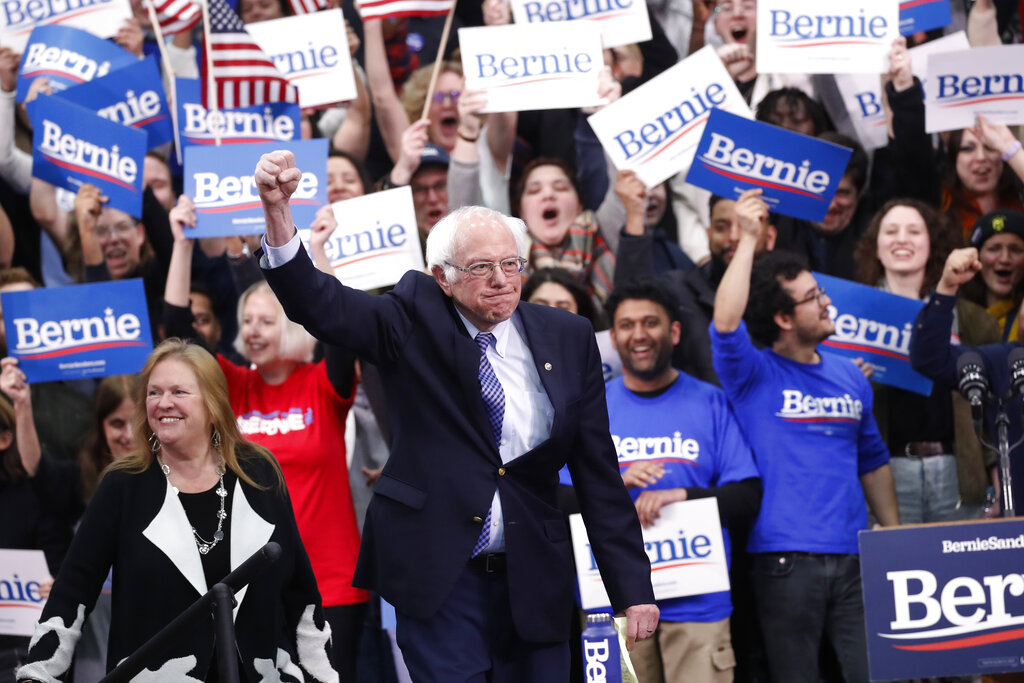
The dueling Democrats represent different generations, see divergent paths to the nomination and embrace conflicting visions of America’s future.
In embarrassing twist, Democrats have no Iowa caucus results
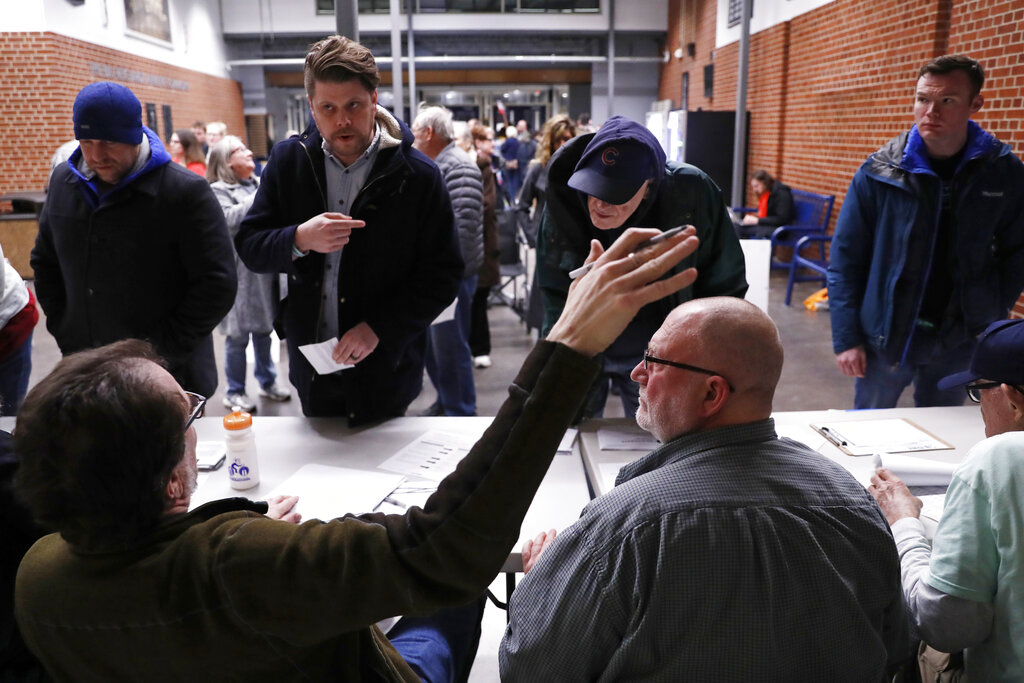
The candidates didn’t wait for the party to resolve its issues before claiming, if not victory, progress and moving on to next-up New Hampshire.
Iowa a carnival of democracy for media — until it went sour

Unlike in past election cycles, Iowa seemed to sneak up on television viewers, despite nearly a year’s worth of debates and campaigning.
Iowans head to caucuses, may clarify Democratic field
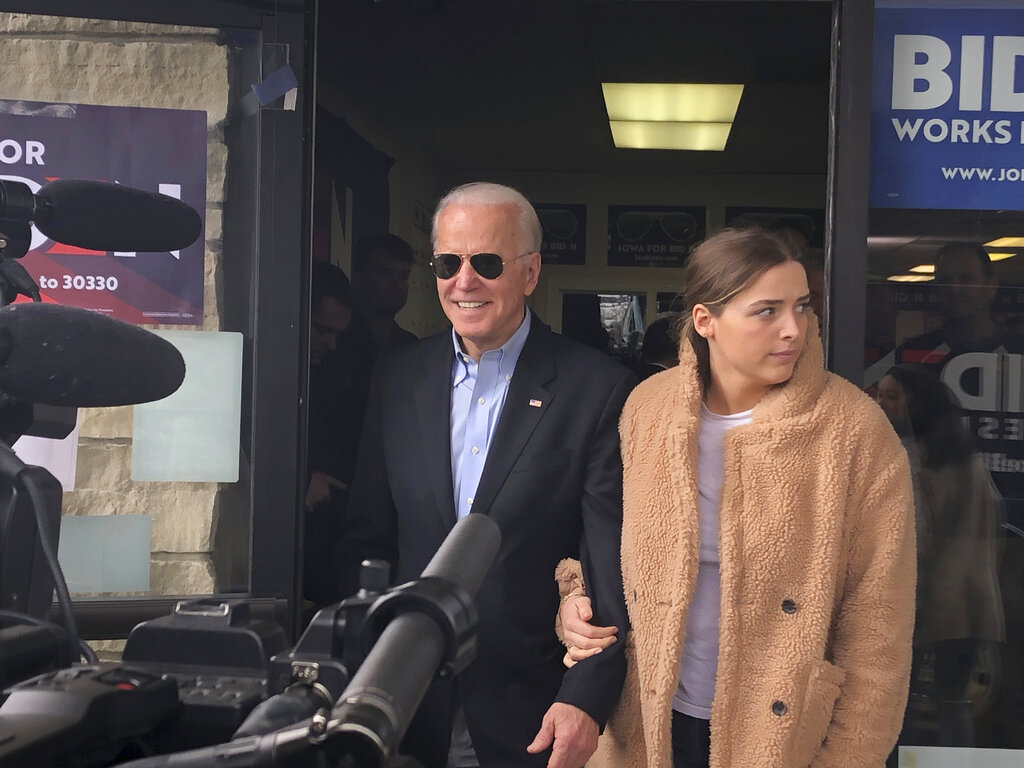
Candidates gave last-minute pep talks and pitches, while hundreds of volunteers activated statewide to win the famed Iowa caucuses.
In Iowa, anxiety and unpredictability cloud caucus finish
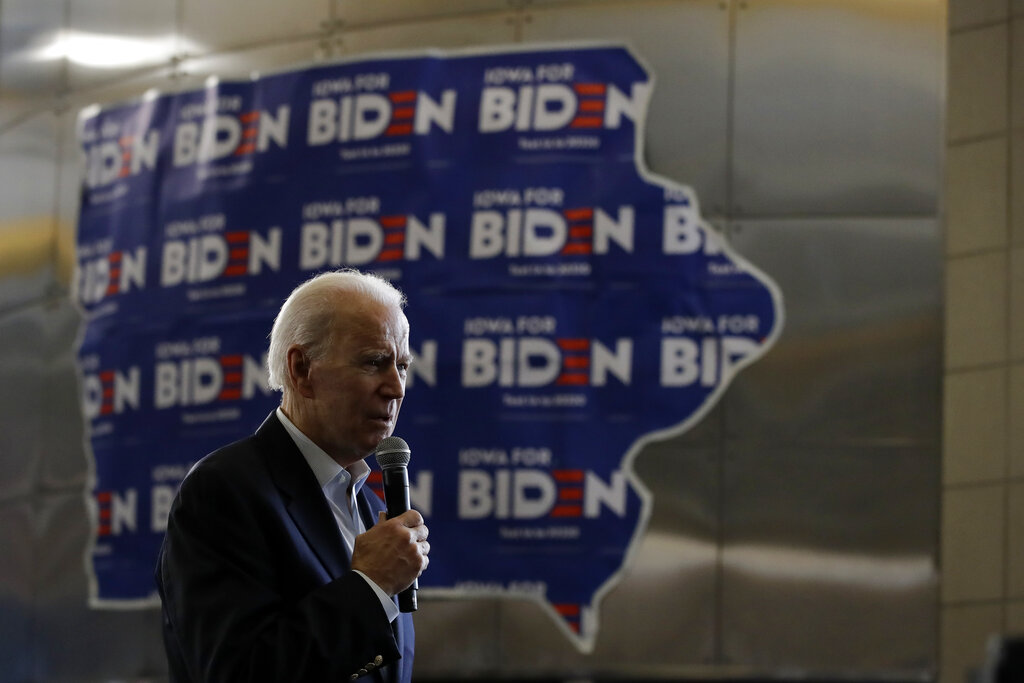
The Democratic race is unusually large and jumbled heading into Monday’s caucus.
Democrats focus on unity as tensions from 2016 linger

Democrats are trying to avoid the divides that some say helped Donald Trump win the presidency in 2016.
Aiming at Donald Trump, Joe Biden says a president’s character matters
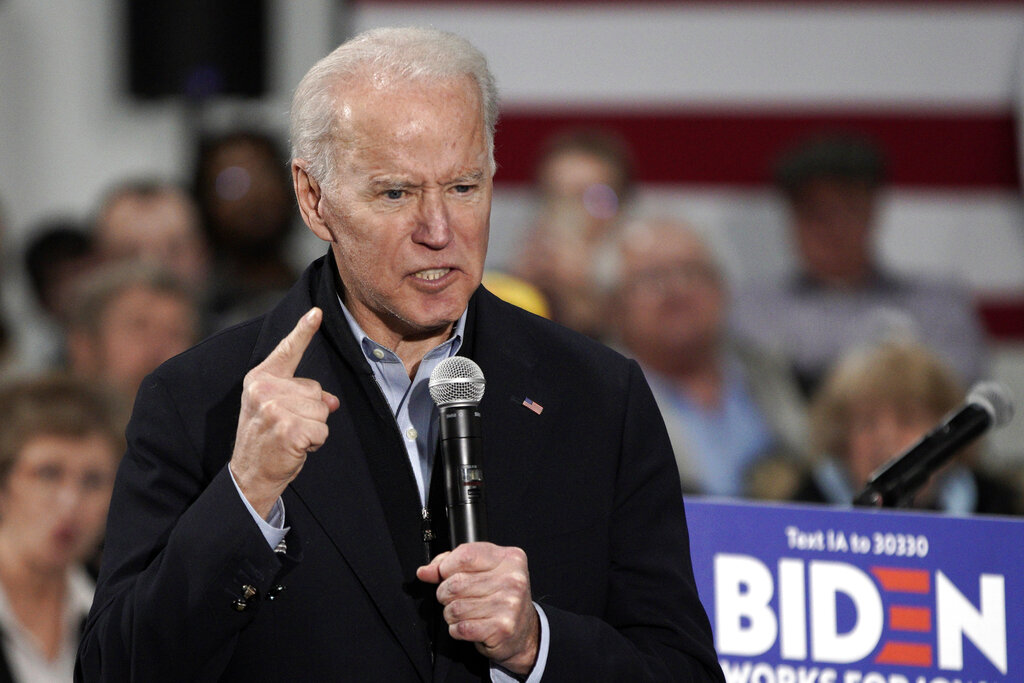
In his final Iowa tour this week, Biden has opted to embrace the GOP offensive.
Organization becomes critical in final week before Iowa vote
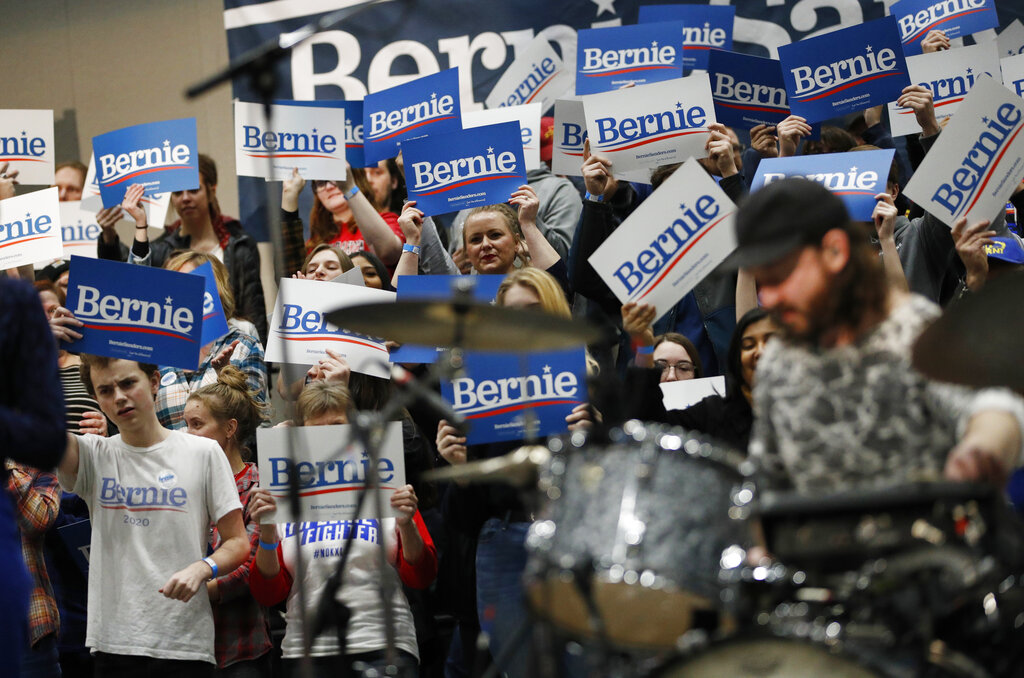
Some candidates have as many as 150 staffers on the ground.
Only 7 democrats will be on the stage for the last presidential debate of 2019
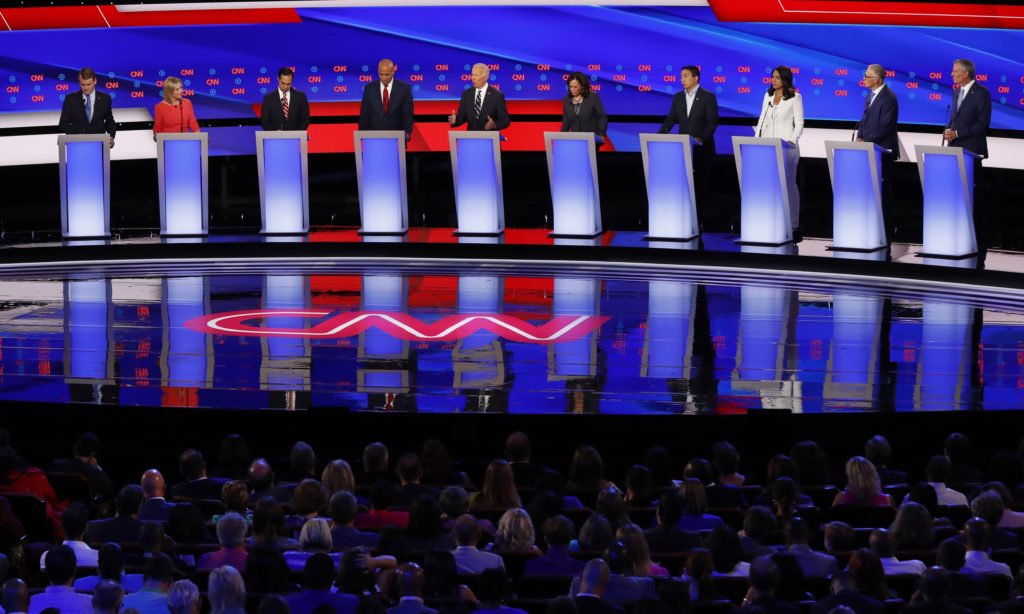
A winnowed field of Democratic presidential contenders takes the debate stage for a sixth and final time in 2019, as candidates seek to convince anxious voters that they are the party’s best hope to deny President Donald Trump a second term next year. Thursday night’s televised contest ahead of Christmas will bring seven rivals to heavily Democratic California, the biggest prize in the primary season and home to 1 in 8 Americans. And, coming a day after a politically divided House impeached the Republican president, the debate will underscore the paramount concern for Democratic voters: Who can beat Trump in November? With voters distracted by the holidays and the impeachment proceedings in Washington, the debate in Los Angeles could turn out to be the least watched so far. Viewership has declined in each round though five debates, and even campaigns have grumbled that the candidates would rather be on the ground in early voting states than again taking the debate stage. The lack of a clear front-runner reflects the uncertainty gripping many voters. Would Trump be more vulnerable to a challenge from the party’s liberal wing or a candidate tethered to the centrist establishment? Should the pick be a man or a woman, or a person of color? The Democratic field is also marked by wide differences in age, geography and wealth, and the party remains divided over issues including health care and the influence of big-dollar fundraising. There will be a notable lack of diversity onstage compared to earlier debates. For the first time this cycle, the debate won’t feature a black or Latino candidate. The race in California has largely mirrored national trends, with former Vice President Joe Biden, Vermont Sen. Bernie Sanders and Massachusetts Sen. Elizabeth Warren clustered at the top of the field, followed by South Bend, Indiana, Mayor Pete Buttigieg, Minnesota Sen. Amy Klobuchar, businessman Andrew Yang and billionaire philanthropist Tom Steyer. Conspicuously missing from the lineup at Loyola Marymount University on Thursday will be former New York City Mayor Michael Bloomberg, a billionaire who is unable to qualify for the contests because he is not accepting campaign donations. But even if he’s not on the podium, Bloomberg has been felt in the state: He’s running a deluge of TV advertising in California to introduce himself to voters who probably know little, if anything, about him. Bloomberg’s late entry into the contest last month highlighted the overriding issue in the contest, electability, a sign of the unease within the Democratic Party about its crop of candidates and whether any is strong enough to unseat an incumbent president. The eventual nominee will be tasked with splicing together the party’s disparate factions — a job Hillary Clinton struggled with after defeating Sanders in a long and bitter primary fight in 2016. Biden adviser Symone Sanders said to expect another robust exchange on health care. “This is an issue that is not going away and for good reason, because it is an issue that in 2018 Democrats ran on and won,” she said. Jess O’Connell with Buttigieg’s campaign said the candidate will “be fully prepared to have an open and honest conversation about where there are contrast between us and the other candidates. This is a really important time to start to do that. Voters need time to understand the distinctions between these candidates.” The key issues: health care and higher education. The unsettled race has seen surges at various points by Biden, Warren, Sanders and Buttigieg, though it’s become defined by that cluster of shifting leaders, with others struggling for momentum. California Sen. Kamala Harris, once seen as among the top tier of candidates, shelved her campaign this month, citing a lack of money. And Warren has become more aggressive, especially toward Buttigieg, as she tries to recover from shifting explanations of how she’d pay for “Medicare for All” without raising taxes. In a replay of 2016, the shifting race for the Democratic nomination has showcased the rift between the party’s liberal wing, represented in Sanders and Warren, and candidates parked in or near the political center, including Biden, Buttigieg and Bloomberg. Two candidates who didn’t make the stage will still make their presence felt for debate watchers with ads reminding viewers they’re still in the race. New Jersey Sen. Cory Booker and former Housing Secretary Julián Castro are airing television ads targeted to primary voters during the debate. Booker’s is his first television ad, and in it he says even though he’s not on the debate stage, “I’m going to win this election anyway.” It’s airing as part of a $500,000 campaign, running in Iowa, New Hampshire, Nevada and South Carolina, as well as New York, Washington, D.C., and Los Angeles. A pro-Booker super PAC is also going up with an ad in Iowa highlighting positive reviews of Booker’s past debate performances. Meanwhile, Castro is running an ad, in Iowa, in which he argues the state should no longer go first in Democrats’ nominating process because it doesn’t reflect the diversity of the Democratic Party. Both candidates failed to hit the polling threshold to qualify for the debates and have in recent weeks become outspoken critics of what they say is a debate qualification process that favors white candidates over minorities. By Kathleen Ronayne and Michael R. Blood Associated Press Associated Press writer Michelle L. Price in Las Vegas contributed to this report. Catch up on the 2020 election campaign with AP experts on our weekly politics podcast, “Ground Game.” Republished with the Permission of the Associated Press.
7 questions heading into the 2020 democratic debate
New uncertainty hangs over the Democratic presidential primary as 10 candidates meet on the debate stage once again. No longer is there a clear front-runner. The fight for African American voters is raging. And there are growing concerns that impeachment may become a distraction from the primary. Those issues and more will play out Wednesday night when the Democratic Party’s top 10 face off in Atlanta just 75 days before primary voting begins. Seven big questions heading into the debate, to be carried on MSNBC: WHO IS THE FRONT-RUNNER? Turbulent polling across the early voting states has created a murky picture of the top tier of the 2020 class. As much as Joe Biden is still a front-runner, so are Elizabeth Warren, Pete Buttigieg and Bernie Sanders. The question is who gets the front-runner treatment in Wednesday’s debate. Warren was under near-constant attack last month as a new leader. Will Warren continue to face the heat, or will the ascendant Buttigieg or weakening Biden take more hits? HOW WILL OBAMA PLAY? Former President Barack Obama, the most popular Democrat in America, inserted himself into the 2020 primary in recent days by warning candidates against moving too far to the left. His comments create a challenge for Warren and Sanders and an opening for moderates Buttigieg, Biden and Amy Klobuchar to attack. At the same time, Obama’s involvement offers a powerful reminder of the massive role African Americans will play in the presidential nomination process. As we know, all candidates not named Biden have serious work to do when it comes to winning over the black vote. Race and Obama’s legacy could play a major role in shaping the action. WHAT SAY YOU, IMPEACHMENT JURY? They have all come out in favor of impeachment — some more aggressively than others — but it’s noteworthy that five of the 10 Democrats onstage will serve as jurors in the Senate impeachment trial should the House vote to impeach President Donald Trump. It’s a complicated topic for Democrats. Some senators worry that a prospective impeachment trial will interfere with their ability to court voters early next year. Others fear that impeachment could hurt their party’s more vulnerable candidates in down-ballot elections next year. Either way, what the prospective jurors do or don’t say on the debate stage could be relevant if and when the Senate holds an impeachment trial, which is increasingly likely. WILL THEY BASH THE BILLIONAIRES? Never before has wealth been under such aggressive attack in a presidential primary election. And with one billionaire onstage and another likely to join the field in the coming days, the billionaire bashing could reach new heights. Tom Steyer has largely gone under the radar, but the even wealthier Michael Bloomberg has generated tremendous buzz as he steps toward a run of his own. Of the two, only Steyer will be onstage, but expect Bloomberg’s shadow in particular to generate passionate arguments about wealth and the role of money in politics. WILL SOMEONE STAND UP FOR THE ESTABLISHMENT? Biden continues to be the favorite of many establishment Democrats, but his underwhelming candidacy has created an opening for another pragmatic-minded Democrat to step up. That’s why former Massachusetts Gov. Deval Patrick and Bloomberg are moving into the race. Buttigieg stepped aggressively into the establishment lane in the last debate, but many donors and elected officials remain skeptical of the 37-year-old small-city mayor’s chances. The opportunity is there for lower-tier candidates including Kamala Harris, Klobuchar and Steyer. DOES SHE HAVE A PLAN FOR THAT? No single issue has dominated the initial Democratic primary debates more than health care, and it’s safe to assume that will be the case again Wednesday night. And no one has more riding on that specific debate than Warren, who hurt herself last month by stumbling through questions about the cost of her single-payer health care plan. Given that policy specifics make up the backbone of her candidacy, she can’t afford another underwhelming performance on the defining policy debate of the primary season. Expect the policy-minded senator to have a new strategy this time around. CAN THEY SAVE THEMSELVES? New Jersey Sen. Cory Booker, Hawaii Rep. Tulsi Gabbard, businessman Andrew Yang and Steyer are under enormous pressure to break out given their status as the only candidates onstage who haven’t yet qualified for the December debate. They likely won’t have the same number of opportunities to speak as their higher-polling rivals, but these are dire times for the underdogs. They need to do something if they expect to stay relevant in the 2020 conversation. By Steve Peoples AP National Political Writer. Catch up on the 2020 election campaign with AP experts on our weekly politics podcast, “Ground Game.” Republished with the permission of the Associated Press.
Democratic debate: Top 2020 contenders finally on same stage
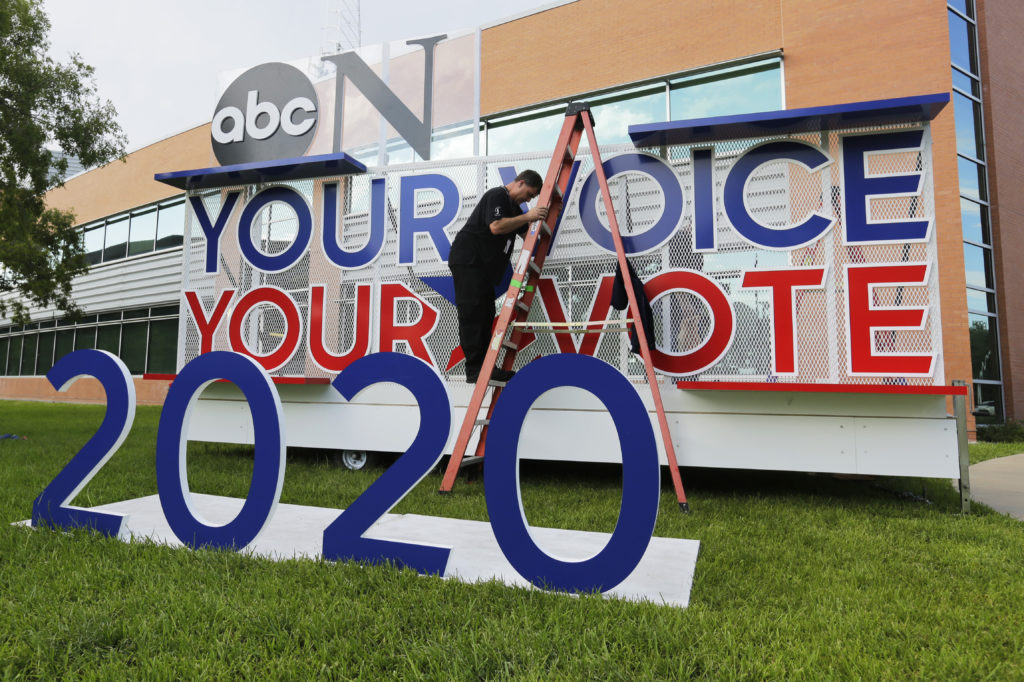
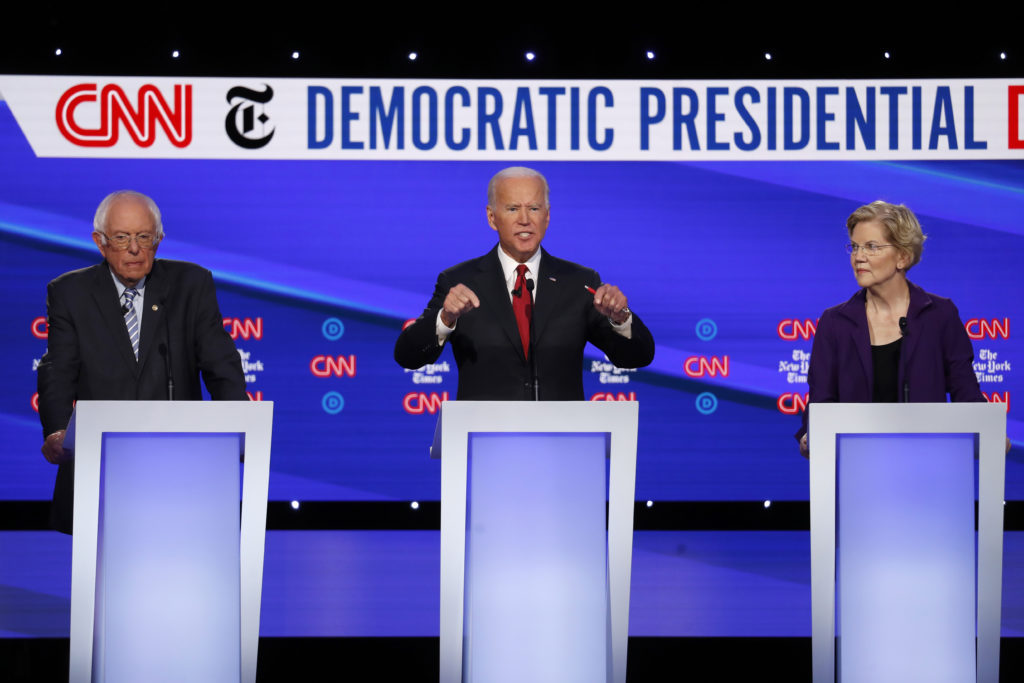
Progressive Democrats Elizabeth Warren and Bernie Sanders share the debate stage for the first time with establishment favorite Joe Biden Thursday night in a prime-time showdown displaying sharply opposing notions of electability in the party’s presidential nomination fight. Biden’s remarkably steady lead in the crowded contest has been built on the idea that the former vice president is best suited to defeat President Donald Trump next year — a contention based on ideology, experience and perhaps gender. Sanders and Warren, meanwhile, have repeatedly criticized Biden’s measured approach, at least indirectly, by arguing that only bold action on key issues like health care, the economy and climate change can build the coalition needed to win in 2020. The top-tier meeting at center stage has dominated the pre-event talk, yet each of the other seven candidates hopes for a breakout moment with the attention of the nation beginning to increase less than five months before the first primary votes are cast. “For a complete junkie or someone in the business, you already have an impression of everyone,” said Howard Dean, who ran for president in 2004 and later chaired the Democratic National Committee. “But now you are going to see increasing scrutiny with other people coming in to take a closer look.” The ABC News debate is the first limited to one night after several candidates dropped out and others failed to meet new qualification standards. A handful more candidates qualified for next month’s debate, which will again be divided over two nights. Beyond Biden and Sens. Warren and Sanders, the candidates on stage Thursday night include Minnesota Sen. Amy Klobuchar, New Jersey Sen. Cory Booker, South Bend, Indiana, Mayor Pete Buttigieg, California Sen. Kamala Harris, New York businessman Andrew Yang, former Texas Rep. Beto O’Rourke and former Obama administration Housing chief Julian Castro. Viewers will see the diversity of the modern Democratic Party. The debate, held on the campus of historically black Texas Southern University, includes women, people of color and a gay man, a striking contrast to the Republicans. It will unfold in a rapidly changing state that Democrats hope to eventually bring into their column. Perhaps the biggest question is how directly the candidates will go after one another. Some fights that were predicted in previous debates failed to materialize with candidates like Sanders and Warren in July joining forces. The White House hopefuls and their campaigns are sending mixed messages about how eager they are to make frontal attacks on anyone other than Trump. That could mean the first meeting between Warren, the rising progressive calling for “big, structural change,” and Biden, the more cautious but still ambitious establishmentarian, doesn’t define the night. Or that Harris, the California senator, and Buttigieg, the mayor of South Bend, Indiana, look to reclaim lost momentum not by punching rivals but by reemphasizing their own visions for America. Biden, who has led most national and early state polls since he joined the field in April, is downplaying the prospects of a clash with Warren, despite their policy differences on health care, taxes and financial regulation. “I’m just going to be me, and she’ll be her, and let people make their judgments. I have great respect for her,” Biden said recently as he campaigned in South Carolina. Warren says consistently that she has no interest in going after Democratic opponents. Yet both campaigns are also clear that they don’t consider it a personal attack to draw sharp policy contrasts. Warren, who as a Harvard law professor once challenged then-Sen. Biden in a Capitol Hill hearing on bankruptcy law, has noted repeatedly that they have sharply diverging viewpoints. Her standard campaign pitch doesn’t mention Biden but is built around an assertion that the “time for small ideas is over,” an implicit criticism of more moderate Democrats who want, for example, a public option health care plan instead of single-payer or who want to repeal Trump’s 2017 tax cuts but not necessarily raise taxes further. Biden, likewise, doesn’t often mention Warren or Sanders. But he regularly contrasts the price tag of his public option insurance proposal to the single-payer system that Warren and Sanders back. In a pre-debate briefing, Biden campaign officials said he would reject the premise that he’s an incrementalist, either in his long career as a senator and vice president or in his proposals for a would-be presidency. In an apparent rebuke of Warren, known for her policy plans, the advisers said Biden will hit on the idea that “we need more than just plans, we need action, we need progress.” Health care will top the list of examples, they said. They note that Biden’s proposal for a government-run “public option” to compete with private insurance still would be a major market shift, even if it stops short of Sanders’ and Warren’s proposal for a government insurance system that would effectively end the existing private insurance system. And, by extension, the difference may make Biden’s plan more likely to make it through Congress, they contend. There are indirect avenues to chipping away at Biden’s advantages, said Democratic consultant Karen Finney, who advised Hillary Clinton in 2016. Finney noted Biden’s consistent polling advantages on the question of which Democrat can defeat Trump. A Washington Post-ABC poll this week found that among Democrats and Democratic-leaning voters, 45 percent thought Biden had the best chance to beat Trump, though just 24 percent identified him as the “best president for the country” among the primary field. “That puts pressure on the others to explain how they can beat Trump,” Finney said.Voters, she said, “want to see presidents on that stage,” and Biden, as a known quantity, already reaches that threshold. “If you’re going to beat him, you have to make your case.”Harris, said spokesman Ian Sams, will “make the connection between (Trump’s) hatred and division and our inability to get things done for the country.” Buttigieg, meanwhile, will have an opportunity to use his argument for generational change as an indirect attack on the top
