
Steve Flowers: Alabama has a host of outstanding political leaders under 45
It may appear to you and most casual observers of Alabama politics that our Alabama elected officials are old. That observation is accurate when you observe our current leaders in the highest offices. The governor’s office has been held by mature folks in recent years. Our current Governor, Kay Ivey, is 78 and has been the object of national media humor for appearing to be a pistol-toting great-grandmother. Dr. Robert Bentley, her predecessor, was in his 70’s, but he may have been sprier than he appeared. Bob Riley was no spring chicken while governor at age 65, although he looked younger. Our iconic senator, Richard Shelby, retired in January at 88 after a record-breaking 36 years in the U.S. Senate. Our new Senior Senator, Tommy Tuberville, is 68. This was not always the case in the Heart of Dixie. In the period from 1930 through 1970, we elected the youngest political leaders in the nation, beginning with our legendary tandem of United States Senators Lister Hill and John Sparkman, who served together close to 30 years. Lister Hill was elected to Congress from Montgomery in 1923 at age 29 and was elected to the U.S. Senate at age 44. John Sparkman was elected to the U.S. Senate in 1946 at 46 after serving as the Congressman for the Tennessee Valley. If you think Hill and Sparkman were young when they went to Washington, you have not seen anything like the governors we elected from 1946 -1966. James E. “Big Jim” Folsom was 38 when he was elected in 1946. John Patterson was 37 when he was elected in 1958. Patterson was referred to as the “Boy Governor.” When George Wallace was elected to his first term in 1962, he was only 43. When his wife Lurleen Wallace was elected in 1966, she was 40. She died in office of cancer less than two years later at 41. Lurleen Wallace was succeeded by Lt. Governor Albert Brewer, who had been Speaker of the Alabama House at 34, Lt. Governor at 38, and was 39 when he became governor. Bill Baxley was the youngest Attorney General in America when he was elected Attorney General of Alabama at 29 years old in 1970. He had been a 25-year-old District Attorney in Houston and Henry Counties. Baxley still practices law in Birmingham at 81. Well, folks, a cursory look at our current top elected officials may appear old. However, we have a generation of young political leaders arriving on the scene in Alabama. We already have superstars on the horizon and already on the scene who are under 45. Our new United States Senator, Katie Britt, is only 40 years old. She has the ability and youthfulness to be one of Alabama’s greatest senators. She has gotten to the Senate at a younger age than Hill, Sparkman, or Shelby. Marshall County has become the hotbed and breeding ground for the next generations of Alabama political leaders. This beautiful pristine lake area of North Alabama lays claim to Lt. Governor Will Ainsworth, age 41, State Senate Majority leader Clay Scofield, age 42, and State Representative Wes Kitchens, who is 35 and is Vice Chairman of the House Republican Caucus. Andrew Sorrell, the newly elected State Auditor, is only 37. He has a bright future. The brightest star in the Democratic ranks is Huntsville State Representative Anthony Daniels. At age 40, Daniels is a superstar. He is in his third term in the House from Huntsville. He is the Minority Leader in the House. This gentleman is also a successful high-tech businessman in Rocket City. There are several other stars under 45 in the Alabama House of Representatives besides Daniels and Kitchens, including Kyle South of Fayette, Matt Simpson of Daphne, Joe Lovvorn of Auburn, Ben Robbins of Sylacauga, Scott Stadthagen of Madison, Corey Harbison of Cullman, and very young newcomers James Lomax of Huntsville and Brock Colvin of Albertville. Joining the affable and accomplished 42-year-old Senate Majority Leader, Clay Scofield in the powerful State Senate in the under 45 superstar group are Senator Chris Elliott, 42, of Baldwin, Senator Andrew Jones, 38, of Cherokee, and newly elected Senator Josh Carnley from Coffee County who is 44. Alabama has a host of under 45 political leaders. See you next week. Steve Flowers is Alabama’s leading political columnist. His weekly column is seen in over 60 Alabama newspapers. Steve served 16 years in the legislature. He may be reached at: www.steveflowers.us.
Legislature passes bill to prevent municipalities from adding to state building codes

On Thursday, the Alabama Legislature passed legislation that would prevent municipalities from adding additional requirements for homebuilders that are not found in the state building code. Senate Bill 40 (SB40) is sponsored by State Senator Chris Elliott. The legislation was carried in the Alabama House of Representatives by State Representative Reed Ingram. Rep. Ingram told the Legislature that extra demands from municipalities were driving up the cost of new home construction. “A lot of municipalities are making them do extra work,” Ingram said. “They are making that add extra support for roof solar panels and add extra wiring for electric stoves in homes in a subdivision that are built for gas stoves.” SB40 prohibits the adoption or enforcement of certain building codes requiring the installation of certain latent, non-operable features in a residential structure.” “It is not what the builder wants or what the homeowners want,” Ingram explained. “They are making them run a 220 line and do a lot of extra work for electric stoves that are not needed. It affects every home in the entire subdivision. You have never had to do that before.” “This is a bill from the Homebuilders Association,” Ingram explained. “This is happening all over the state. It is adding extra cost for the homeowner.” Rep. Laura Hall asked if the League of Municipalities opposed this. Ingram said, “It came through my committee, and we had no group opposition.” “Some are also requiring to wire for electric cars,” Ingram said. “The homeowner may not want an electric car. You can always go back and wire in for electric cars.” “When you are building a spec home, if a builder wants to have all gas or electric, that is his choice,” Ingram added. Rep. Scott Stadthagen said, “I want to thank you for your efforts on behalf of the homebuilding industry. Rep. Brett Easterbrook said, “I have been a home builder for 38 years. We are probably spending $25,000 and $30,000 extra on a house in Mobile and Baldwin Counties because of this.” Rep. Curtis Travis said, “I want to thank you for bringing this bill to give some control over the arbitrary decisions of local governments.” Rep. Anthony Daniels said,” This is a good bill that will help consumers. I am supportive of this bill.” Rep. Mack Butler said, “This is a liberty issue.” SB40 passed the House of Representatives 104 to 0 without amendment. It has already passed the Senate, so it now goes to the Governor for her consideration. Tuesday will be Day 14 of the 2023 Alabama Regular Legislative Session. The Alabama Constitution of 1901 limits the Legislature to no more than thirty days in a regular session. To connect with the author of this story or to comment, email brandonmreporter@gmail.com.
Susan Dubose briefs Birmingham Young Republicans on Legislative session
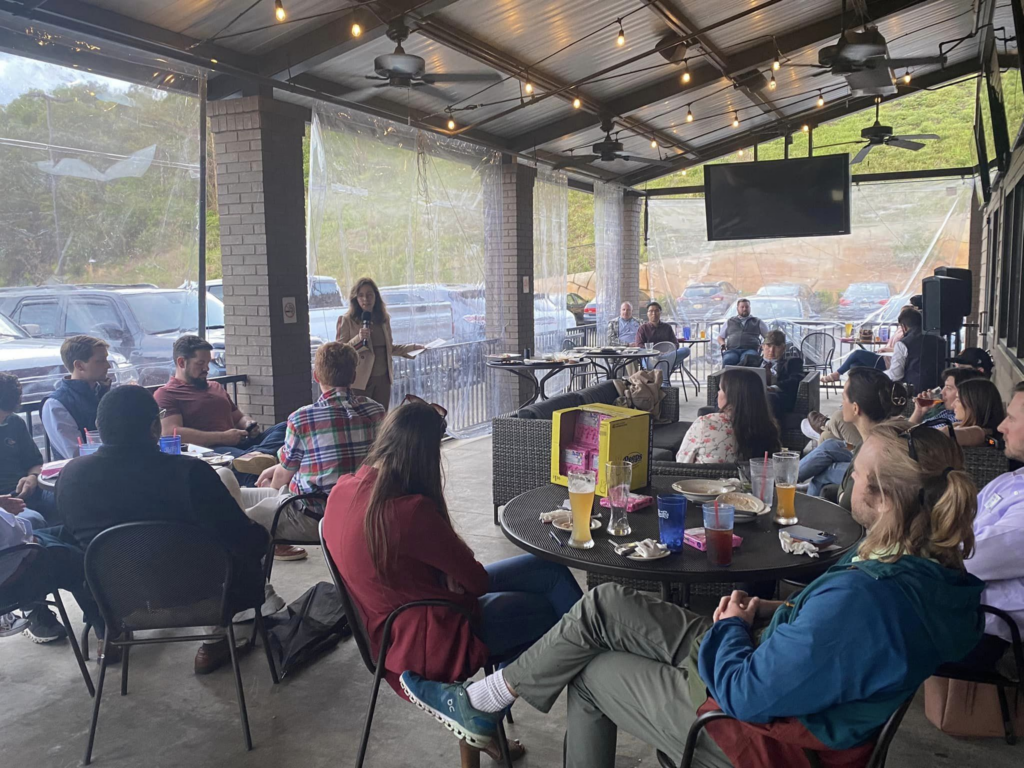
The Greater Birmingham Young Republicans (GBYR) met on Thursday in Vestavia Hills to hear State Representative Susan Dubose discuss legislation being considered by the Alabama Legislature during the ongoing 2023 Alabama Regular Legislative Session. GBYR President Stephanie Petelos said that Dubose is a first-term member of the Alabama House and is the former head of the North Shelby County Republican Women, which meets monthly to full meetings at a country club. It was announced at the meeting that a Shelby County Young Republicans chapter is being organized. “I am excited about the Shelby County chapter,” Dubose said. “I represent District 45, which includes parts of Jefferson, Shelby, and St. Clair Counties.’ Dubose said the legislation to ban holding a cell phone while driving, essentially requiring hands-free devices, is likely dead for the session. “That was tabled,” Dubose said. “There were problems with that bill. It got too much overreach for me. I don’t think it is coming back.” “I passed my first bill out of committee,” Dubose said. “It is a women’s sports protection bill. It is to protect women college athletes.” “It passed unanimously,” Dubose said. “It (House Bill 261) will be on the House floor on Tuesday.” “April Weaver is running it through the Senate so it could become law,” Dubose said. “The attorney general really wants this passed.” “I am working on an age of majority law,” Dubose said. “14-year-olds are allowed to make medical decisions,” Dubose explained, saying that the age limit should be raised and that parents should be able to have the final say on their children’s medical decisions. “I would like to eliminate the grocery tax,” Dubose said. “Anthony Daniels is for it.” Dubose said, “It is not an exact loss.” Dubose explained that when you give that four percent back to the people, they are going to spend it on other things we collect sales taxes on. “I am a big believer in supply-side economics that Reagan did.” “One of the votes that we had, Vestavia Hills came to our county delegation,” Dubose said. “They wanted to raise their ad valorem taxes by 9.8 mills. They are very proud of their school system there. Many people move to Vestavia for the schools. Our entire Jefferson County Delegation voted yes unanimously.” Dubose told Alabama Today, “Regarding Vestavia Hills, the Vestavia Hills city council unanimously supports letting their residents vote on the 9.8% increase in ad valorem tax. Our Jefferson County House of Representatives delegation voted unanimously by voice vote to move the bill to the floor of the House, where it passed. I believe the people of Vestavia Hills should have a right to vote and make decisions for their own community. Vestavia Hills has a reputation for excellent schools. As a legislative body, we have given the residents the opportunity for a yes or no vote on the property tax increase.” “Another vote where I got real criticism for was the adoption bill,” Dubose said. Dubose said the criticism was for voting down an amendment to the bill that would have blocked any vaccine requirements for adoptive or foster parents. “That should be a personal choice, but that amendment came up at the last minute,” Dubose said. The Senate did add a vaccination amendment when that legislation passed on Thursday. The House will consider Senate changes to the bill as soon as Tuesday. “I do not believe in COVID vaccine mandates at all. That should be a personal choice,” Dubose told Alabama Today. “I voted to table the amendment on the floor because we didn’t have time to research the amendment and vet any unintended consequences. I am happy to hear that the Senate did pass the adoption bill with a slightly different amendment so that an option with exemptions from vaccines will be available for potential parents. I will happily support the adoption bill when it comes back to the House with the vaccine exemption amendment.” “That particular bill was not taking amendments on it at all,’ Dubose explained. “I knew it was going to fail. I try to vote with the Speaker when I can. “ Dubose said the House passed legislation limiting good time incentives for Alabama prisoners. “Bibb County deputy Brad Johnson was shot and killed by a felon who had been out of prison only three days after serving only a third of his sentence,” Dubose said. “Russell Bedsole carried that in the House, and then April Weaver carried that in the Senate.” “Dubose said that the Legislature also voted to outlaw exhibition driving. “This is something that the Mayor of Birmingham and the Mayor of Hoover asked us to support,” Dubose said. “We have had 16 persons and a baby killed by a Dodge Charger that was doing donuts with a crowd watching.” Dubose said the state’s economic incentives were renewed and passed out of the House on Thursday. “Surrounding states are spending a lot of money on incentives,” Dubose explained. “I support the economic incentive package “The Game Plan” proposed by our governor,” Dubose said. “This passed out of the House on Thursday.” “Where are our workers going to come from,” Dubose said of the state’s labor force participation rate. “Only 56.7% of people are in the labor force. We need them to come back to work.” “I do still worry about our workforce participation rate in Alabama, which keeps going down,” Dubose said. Dubose said the Legislature also passed DRAM shop reform legislation so that bars and restaurants that serve alcohol can get liability insurance for when a person leaves their premises and is intoxicated and is involved in a wreck. Dubose said that the Legislature also passed legislation to guarantee that patients of hospitals and nursing homes would be able to receive visitors in the future. “During COVID, so many people died alone,” said Dubose. “The bill sponsor, Debbie Wood – We sit next to each other, and she explains everything to me. Her mother actually starved to death in a nursing home.” Dubose said patients “can appoint a designated person who can visit two hours a day even if there is a crisis situation.” Dubose
Alabama legislature advances Governor’s “Gameplan” economic incentives package
On Thursday, both the Alabama House of Representatives and the Senate voted in favor of portions of Alabama Governor Kay Ivey’s “Game Plan” legislative package. “The Game Plan will position Alabama for a new era of vigorous growth, allowing us to continue our record-breaking economic development success while providing new levels of support for the state’s innovation economy,” said Gov. Ivey. “This package will benefit all Alabamians, those living in both urban centers and rural areas, and ensure our citizens are ready for high-paying careers.” “The Game Plan — our plan for Alabama’s continued economic success — had great momentum today in the Alabama Legislature,” Ivey wrote on Twitter. “I commend both the Senate and House for their work on this package of bills and look forward to their final passage. Let’s keep Alabama winning!” The House passed four-game plan bills on Thursday, while the Senate passed two more. The legislation from each now has to be considered by the second House. House Bill 257 (HB257) is sponsored by State Rep. Danny Garrett. HB257 creates the Alabama Site Development Fund. This legislation authorizes the State Industrial Development Authority to make site assessment grants and site development grants to private companies. The bill also provides for the criteria that must be met for grant approval, including changes to criteria based on economic conditions. It limits the funding that may be received by any site under the grant program. HB257 passed the House 105 to 0. HB257 has been referred to the Senate Fiscal Responsibility and Economic Development Committee, which is chaired by Sen. Garlan Gudger. Senate Bill 165 is sponsored by State Sen. Arthur Orr. It also addresses the creation of the Alabama Site Development Fund. SB165 appears to be the Senate version of HB257. SB165 passed the Senate by a vote of 30 to 0. The legislation has been referred to the House Ways and Means Education Committee – which Garrett chairs. House Bill 241 (HB241) is also sponsored by Garrett. HB241 extends the Alabama Jobs Act sunset date to July 31, 2028. It also increases the annualized cap on outstanding Alabama Jobs Act incentives by $25 million yearly for five up to $475 million. The bill increases the investment tax credit transfer time to provide that the first five years of the investment credit may be transferred by the incentivized company and applied by another person or company under the Alabama Jobs Act. It also extends the Growing Alabama Act sunset date to July 31, 2028, while increasing the annual cap on funding approved pursuant to the Growing Alabama Act incrementally to $35 million. The legislation transfers certain programs from the Growing Alabama Act to Innovate Alabama and creates the Sweet Home Alabama Tourism Investment Act. The Alabama Tourism Department is tasked with developing standards for the review and approval of certified tourism destination projects. HB247 passed the House 105 to 0. It has been referred to the Senate Finance and Taxation Education Committee, which Sen. Orr chairs. Senate Bill 151 (SB151) is sponsored by Sen. Garlan Gudger. SB151 would amend existing law on economic development to authorize the Joint Legislative Advisory Committee on Economic Development to conduct an economic incentive evaluation. It would also require the Department of Commerce to publish certain information regarding economic development incentives awarded under the Alabama Jobs Act. SB151 Passed the Senate 30 to 0. The legislation has been referred to the House Ways and Means Education Committee. House Bill 247 is sponsored by House Minority Leader Anthony Daniels. Under existing law, the Alabama Innovation Corporation is a public corporation created to support, financially and otherwise, growth in technology, innovation, and entrepreneurship sectors in the state. HB247 would change that to Innovate Alabama. Under existing law, the Alabama Innovation Corporation is also authorized to make Small Business Innovation Research and Small Business Technology Transfer Research matching grants to certain entities. To receive a grant, the entity must make its primary place of business in Alabama. The location of residency of one top executive must be in Alabama, and 75 percent of its employees must reside in Alabama for five years. This bill would add a one-year time frame for making Alabama the principal place of business, requiring the majority of top executives to reside in Alabama and a majority of employees to live in Alabama as a condition for receiving a grant. This bill would create the Innovating Alabama tax credit program to allow certain economic development organizations that create, operate, or support certain programs relating to technology accelerators and underrepresented companies to claim specified tax credits. This bill would also exempt working groups, task forces, and subcommittees of the Alabama Innovation Corporation from the Alabama Open Meetings Act. HB247 passed the Alabama House of Representatives 105 to 0. The bill has been referred to the Senate Finance and Taxation Education Committee. House Bill 240 is sponsored by State Rep. Cynthia Almond. HB240 requires the Alabama Department of Commerce to publish on its website certain information about economic development incentives awarded under the Alabama Jobs Act. It provides transparency to the awarding of incentives. HB240 passed the Alabama House of Representatives 105 to 0. It has been referred to the Senate Fiscal Responsibility and Economic Development Committee. Following passage of the six bills in their respective Houses of origin, Speaker of the House Nathaniel Ledbetter posted on Twitter. “The state’s economy is stronger than at any other time in our history, and we have an abundance of long-lasting, good-paying jobs,” Ledbetter said. “But while our state has already achieved remarkable milestones, Alabama is on the cusp of transforming its economy for generations.” “Growing Alabama’s economy through increased incentives and industry expansion is imperative to keeping our state the best place to live and work for its citizens,” Ledbetter added. “The Legislature is working for you, and we look forward to building on our progress.” As of Thursday, 542 bills have been filed in the 2023 Alabama Regular Legislative Session. Tuesday will be day 11 of the regular session. The Alabama Constitution limits the Legislature to no more
Alabama House passes bill to cut back ‘good time’ incentives for inmates
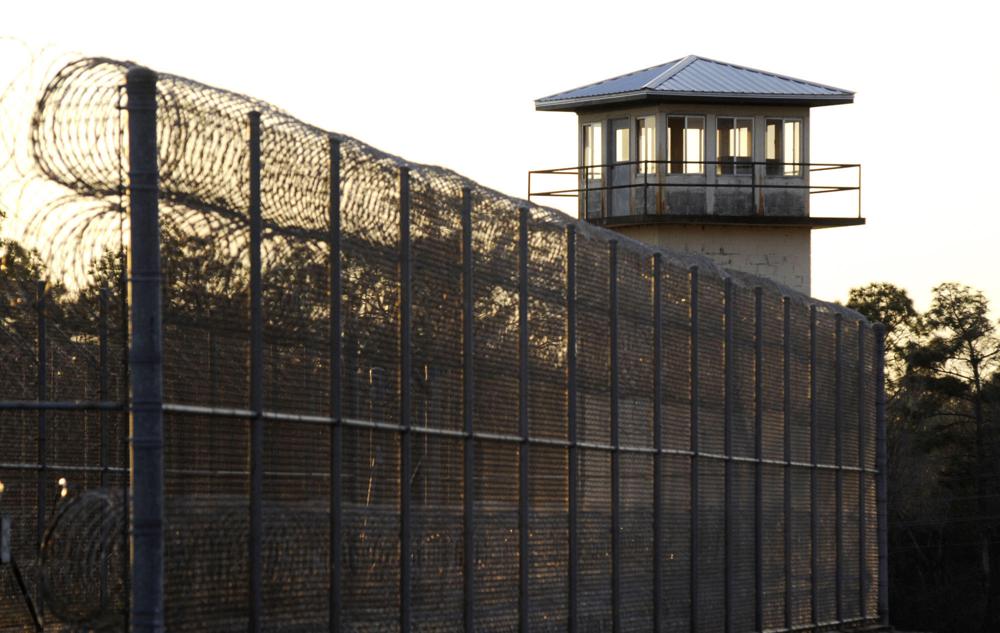
On Tuesday, the Alabama House of Representatives voted to pass legislation that would decrease the amount of time inmates of Alabama’s prisons can get reduced from their sentences for good behavior while incarcerated. It also further limits which prisoners are eligible for good time incentives. Senate Bill 1 (SB1) – the Deputy Brad Johnson Act – is sponsored by State Sen. April Weaver. The legislation was carried in the House by State Rep. Russell Bedsole. SB1 is titled in remembrance of Bibb County Sheriff’s Deputy Brad Johnson – who was gunned down by a dangerous felon released by the Alabama Department of Corrections (ADOC) on good time. Bedsole – a Shelby County Deputy – said that passage of SB1 would make Alabama communities safer. “We know that we can’t totally solve crime in our communities. Just incarceration alone is not the answer.” SB1 reduces the number of reductions in sentences served that a prisoner can earn for good behavior, further limits the number of prisoners eligible for good time incentives, and requires ADOC to make reports on the application of good time incentives. “The reporting will come back to the legislature,” Bedsole explained. “We are not putting a mandate on them to go out and buy new reporting software.” House Minority Leader Anthony Daniels said that the abuses in the system occurred during the previous ADOC leadership. “It is not fair to hold the current leadership responsible for the failings of the past leadership,” Daniels said. State Rep. Phillip Pettus told Bedsole, “I appreciate what you have done on this. I hope that we don’t have another picture up here of another law enforcement officer up here.” State Rep. John Rogers called the bill “Overkill.” Rogers said the real problem is the lack of rehabilitation of prisoners in ADOC custody. “You have countries all over the world that rehabilitate prisoners, but we do not do it here in Alabama,” Rogers said. “Why would you punish the entire system? I hope that you pull this bill.” “You have got one guard for every 200 prisoners,” Rogers said. “We have had four women get pregnant in prison in a women’s prison. How does a woman get pregnant in all women’s prison?” “We need new prisons, but you have to have money to pay guards a decent wage,” Rogers said. Bedsole said, “Did you know that a person who commits a murder in prison can still get good time?” Rep. Christopher England said, “For 100 and some years, Democrats controlled the Legislature. You know one thing that Democrats absolutely screwed up? Prisons and justice. Then Republicans got in there. For six years, we created class D felonies – everybody doesn’t like that now – Community corrections, drug courts, and we worked on releasing prisoners. You know what happened? Crime went down, and the number of prisoners went down. We had a horrible tragedy happen in Marshall County (the Jimmy Spencer slayings of three people while on parole). In November 2019, we reformed the parole system. Now we aren’t letting anybody out. The new Republicans that are here have completely unraveled how we deal with prisons. The prison population has also skyrocketed. You know what also happened: crime skyrocketed. Now it has gotten to the opposite extreme where we don’t let anybody out. The parole board is only giving parole to ten percent of prisoners eligible for parole.” “You know what else has happened – crime has gone up,” England said. “We need all the space and resources we can get, and we are wasting it on people who are no danger to the community.” England said that releasing prisoners on parole where they are under supervision is better than waiting for the end of their sentence and then releasing them with no supervision requirements. “Over 90% of the people that go into the prison system get out,” England said. “Would you rather them get out with supervision or with no supervision?” Rep. A.J. McCampbell said, “As a former law enforcement officer, we recognize that every day we are putting our lives on the line. I hate what happened to Officer Johnson. I really do.” “We have got a lot of calamity and failure of our whole (prison) system,” McCampbell continued. “We don’t have any real solutions.” “It is unreal how many people have been denied,” McCampbell said. “Parole is supposed to be at a time where we have an opportunity to look at people while they are out in the community.” “The mistreatment that they receive in these institutions dehumanizes these people,” said Rep. Mary Moore. Bedsole said that SB1, “Revises our good time statute that has been in place since 1980. We are changing the amount of good time days we are offering. We are lowering them.” After a lengthy debate, the House of Representatives passed SB1. As it has already passed the Senate, it now has gone to the Governor’s office for her consideration. According to the synopsis, SB1 would, “Reduce the amount of correctional incentive time a prisoner receives; to require a prisoner to remain in a certain classification for a longer period of time before moving up to a higher classification; to provide for additional circumstances in which a prisoner may be required to forfeit his or her correctional incentive time; and to require the Department of Corrections to provide annual reports to the Legislature, the Governor, and the Attorney General regarding correctional incentive time. Thursday will be day 10 of the 2023 Alabama Regular Legislative Session. The Alabama Constitution limits the Legislature to no more than thirty legislative days during a regular session. To connect with the author of this story or to comment, email brandonmreporter@gmail.com.
Gov. Kay Ivey to announce launch of economic development agenda
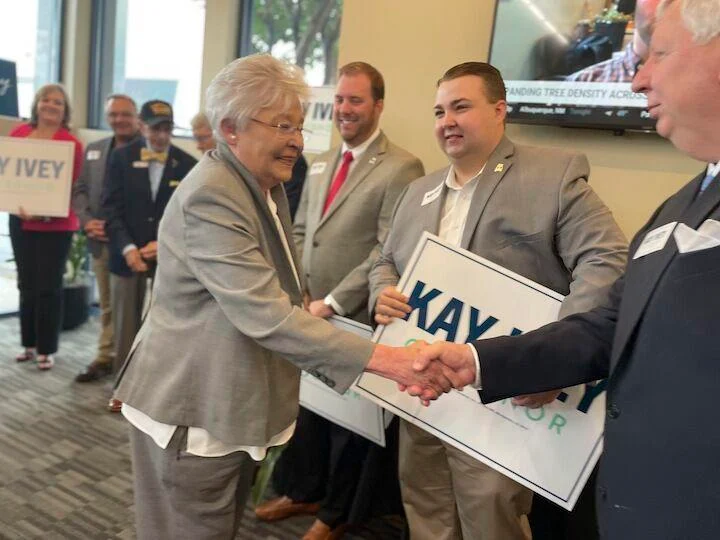
On Monday, Alabama Governor Kay Ivey will officially launch her push to pass economic development bills at an announcement event in Montgomery. Ivey will present “The Game Plan,” her plan for Alabama’s continued economic success. “The Game Plan” is a proposed package of four economic development bills that Ivey insists will strengthen the state’s competitiveness for job-creating projects. Ivey will be joined by Alabama Department of Commerce Secretary Greg Canfield, Senate President Pro Tempore Greg Reed, Speaker of the House Nathaniel Ledbetter, Senate Minority Leader Bobby Singleton, House Minority Leader Anthony Daniels, and Lieutenant Governor Will Ainsworth. Ivey has made renewing the state’s economic incentives a key goal of her administration this legislative session. “I am proud of the successful track record we have had in recruiting business and industry to both the rural parts of Alabama and the larger cities,” Ivey said in her state of the state address. “Since I’ve been governor, more than $42 billion have been invested in our state, which has created some 78,000 new jobs. For most of those, we can thank the Alabama Jobs Act. And any good coach knows when you have a play that’s working, the team needs to keep running it. Today, we have to look ahead and create an economic development strategy for the 2030s. I assured you we would have a winning game plan here at home, and tonight, I am calling on you to get behind our playbook for economic success, what I am calling The Game Plan. We will ensure stability and growth by renewing and improving the Alabama Jobs Act and the Growing Alabama Act.” Speaker Ledbetter has said that renewing the Alabama Jobs Act would be one of the legislature’s first priorities. “(The Alabama Jobs Act) is going to be priority No. 1 coming back after break. I think you’ll see a big push for that,” Ledbetter stated. “They’ve been very positive for our state. We’ve seen the job growth has been tremendous because of it. We’ve looked at the numbers; we got a return on the investment of 173% over a 20-year period.” Ledbetter believes legislation on this needs to be done quickly. The Alabama Jobs Act, created in 2015 and set to expire this year, has netted $256.8 million in incentives, Sec. Canfield reported in 2022. This amount outpaced the department’s benchmark of $164.6 million. The Joint Study Commission on Renewing Incentives has discussed extending the Jobs Act through 2028 with a higher payout cap. Legislation has not been filed yet. The Jobs Act created two separate incentives: The Alabama Jobs Credit and Alabama Investment Credit. The Jobs Credit gives companies cash rebates on their previous year’s payroll for qualified employees, and companies can get higher rebates if they locate in rural parts of the state or hire veterans. The Investment Credit addresses a company’s capital investment and can be applied to several taxes, including income. Companies can receive incentives for up to 10 years. The incentives are currently capped at $350 million annually. Canfield said the Jobs Act has helped the state recruit 217 projects creating more than 38,000 jobs, and he believes the $350 million cap should be increased. During her state of the state address, Ivey also proposed a plan to dole out $200 million in direct cash payments to Alabama businesses. “I am also proposing we invest even more into our locally owned businesses – the ones engrained into the DNA of our communities – through a $200 million grant program known as our Main Street Program,” Ivey said. “These competitive grants will help revitalize our small cities and towns. When folks think of main streets, they should think of rural Alabama!” Unemployment has dropped to just 2.5%, and state revenues have soared under Ivey. The state is so flush with cash that on September 30, it rolled $3 billion in surpluses from the 2022 fiscal year into the 2023 budget year. Renewing economic incentives is also a priority of Alabama’s Big Ten Mayors. The Mayors of Alabama’s ten biggest municipalities support the reauthorization and accompanying expansion of the Alabama Jobs Act and the Growing Alabama Act. The Mayors claim that the incentive programs established by these bills are critical to keeping Alabama’s economy globally competitive as we work to attract new businesses and jobs to our communities. Some fiscal conservatives have criticized the push to renew incentives. “Economic incentives should be Alabama’s last resort in securing new businesses,” the Alabama Policy Institute’s Justin Bogie argued recently. “Lower tax rates and a better-educated workforce will be enough incentive. It will also improve the lives of all Alabamians.” At this point, it appears that the Governor’s plan, with perhaps some minor alterations in the legislative process, will pass the Alabama Legislature with broad bipartisan support. To connect with the author of this story or to comment, email brandonmreporter@gmail.com.
372 bills have been filed in Alabama legislative session
Only four legislative days have passed in the 2023 Alabama Regular Legislative Session, but already 372 bills have been filed by legislators. Alabama Today has worked on writing about as many of these as possible so that our readers stay informed on issues before the Alabama Legislature. Two hundred bills were filed in the last week alone. Below is a short recap of 15 of these. Senate Bill 143 (SB143) by State Senator Will Barfoot targets youth gangs. The legislation seeks to identify members of criminal gangs. SB143 would enhance penalties for any criminal activity that benefits, promotes, or furthers the interest of a gang. The bill would establish mandatory consecutive penalties for any individual who knowingly possesses, uses, or carries a firearm during the commission of any act intended to benefit, promote, or further the interest of a gang. This bill would require any juvenile 16 or older to be tried as an adult for any gang-related criminal activity. State Representative Allen Treadaway has introduced similar legislation in the House – HB191. House Bill 217 (HB217) is sponsored by State Rep. Anthony Daniels. It would exempt overtime from state income taxes and a substantial tax cut for many hardworking hourly workers. Under existing law, gross income is defined for state income tax. Also, the existing law exempts certain amounts from the calculation of gross income. This bill would exclude work performed in excess of 40 hours in any week from being included in the gross income calculation. Daniels, the House Minority Leader, has some powerful cosponsors on this legislation, which has just dropped, including Speaker of the House Nathaniel Ledbetter and education fund budget Chairman Danny Garrett. Sen. Sam Givhan has introduced similar legislation in the Senate – SB137. House Bill 115 (HB115) by Rep. Danny Garrett would lower the top state income tax rate. Under existing law, Alabama levies an individual income tax at rates ranging from two percent on taxable income to a top rate of five percent on taxable income. This bill would phase in a reduction in the top tax rate from five percent to four and ninety-five hundredths percent. House Bill 181 (HB181) by Rep. Mack Butler would prohibit financial institutions from disclosing certain customer financial records of firearms transactions. HB181 would allow the Department of Finance to disqualify a financial institution from any selection process for state contracts for violation of this prohibition and to provide civil penalties and criminal penalties for violation of the act. Butler told Alabama Today that he did not believe that credit card companies need to be tracking customers’ gun and ammunition purchases. “That’s too much information for the credit card companies or the government to have,” said Butler. “The Sons of liberty would have had a big problem with that.” Senate Bill 144 (SB144) by Barfoot would address the shortage of judges by creating three additional circuit judgeships and two additional district judgeships to be funded out of the State General Fund in Fiscal Year 2024. House Bill 209 (HB209) by Rep. Jamie Kiel would effectively outlaw ballot harvesting in Alabama. This bill would prohibit any person from distributing, ordering, requesting, collecting, completing, obtaining, or delivering an absentee ballot application or absentee ballot of another person in certain circumstances and would provide for exceptions. This bill would prohibit any person from receiving a payment or providing payment to another person for distributing, ordering, requesting, collecting, completing, obtaining, or delivering an absentee ballot application or absentee ballot of another person in certain circumstances. This bill would also establish criminal penalties for violations. HB209 already has 42 House cosponsors. Senate Bill 141 (SB141) by Sen. Linda Coleman-Madison lowers the crime of chemical endangerment of a child to a misdemeanor under some circumstances. Under existing law, a person commits the crime of chemical endangerment of a child if the child is exposed to a controlled substance, chemical substance, or drug paraphernalia. A violation is a Class C felony. This bill would provide that chemical endangerment of a child where the child is exposed to marijuana or drug paraphernalia is a Class A misdemeanor. This bill would also provide that a confirmatory positive drug test must be obtained before an agency or law enforcement initiates any action for a violation. Senate Bill 127 (SB127), sponsored by Sen. Merika Coleman, would expand the statute of limitations on civil suits for alleged sexual misconduct, and it would be retroactive. Under existing law, a civil action for an injury to an individual that involves certain sex offenses must be brought within six years. This bill would expand the statute of limitations for certain sex offenses. Senate Bill 130 (SB130), sponsored by Sen. Vivian Figures, would move the official state celebration of Confederate General Robert E. Lee’s birthday as a state holiday observed on the third Monday in January to the second Monday in October. Currently, the state celebrates Robert E. Lee’s birthday on the same day as Martin Luther King Jr.’s birthday. SB130 would move Robert E. Lee’s birthday to Columbus Day, so Robert E Lee Day would remain a state holiday but would not add a new state holiday. House Bill 187 (HB187), sponsored by Rep. Chip Brown, would require parental or guardian’s consent for a minor to get a vaccine. Under existing law, a minor 14 years of age or older may give consent for medical, dental, and mental health services for themselves without parental consent. HB187 would require consent of a parent or a legal guardian for any minor to receive a vaccination. This became an issue during the recent COVID-19 global pandemic. House Bill 186 (HB186), also by Brown, would allow a parent to opt their child out of any school policy requiring students to wear a face covering at school, at a school function, a school bus, or at a school bus stop. Many parents were upset that their schools required face masks during the pandemic. House Bill 182 (HB182), sponsored by Rep. Traci Estes, would expand the definition of a dependent to include an unborn child. Under current law, taxpayers are allowed a dependent exemption for a son or daughter for
House passes ARPA funding legislation
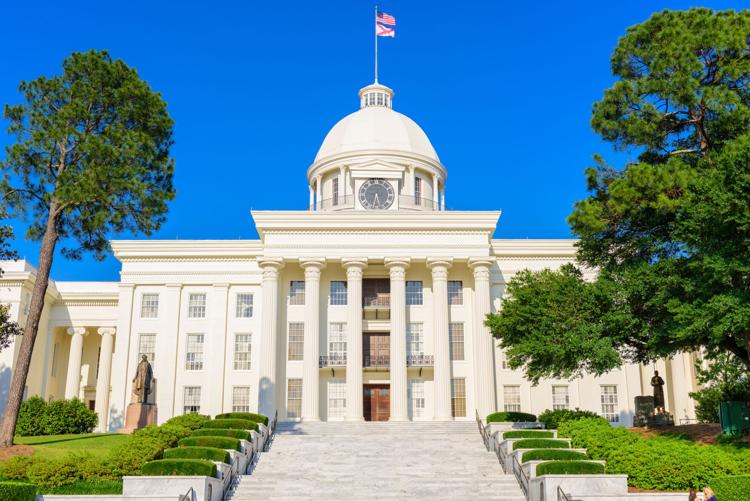
On Tuesday, the Alabama House of Representatives passed the American Rescue Plan Act (ARPA) appropriations legislation – House Bill 1. The legislation, House Bill 1, is sponsored by State Rep. Rex Reynolds, who chairs the powerful House Ways and Means General Fund Committee. Reynolds explained that the state had received approximately $2.1 billion in ARPA funding from the federal government. Half of that money has already been appropriated by the Legislative and is in the process of being allocated by the executive branch to projects across Alabama. This tranche of ARPA money is about $1,060,000. $339,175,000 will go for healthcare needs, including $25 million for Mental health and $9 million for the expansion of telemedicine. $260 million will be used for broadband, including a cybersecurity component. $395 million will go to water and sewer projects. $55 million will be used to compensate state agencies for the negative impacts of the COVID-19 pandemic. The Alabama Department of Labor will get $5 million to recover some of their costs for dealing with the surge in unemployment applications and other costs. $1,179,000 will go for administrative costs of overseeing and allocating the money. Rep. Mary Moore asked if there was sufficient legislative oversight in place. Reynolds said, “The Legislative Oversight Committee gives this body oversight in case they may need to reallocate those funds when the Legislature is not in session.” “There might be a project in my district that is not reallocated,” Moore said. House Minority Leader Anthony Daniels said to Reynolds, “I just came down to give you a compliment, and I appreciate all the hard work you have done in this bill. This has been a great process, and everybody has had an opportunity to be involved in this process.” State Rep. John Rogers expressed concern that a project in his district might be reallocated when he is unavailable. “I may be in Alaska – I may be in Florida laying on a beach drinking a martini,” Rogers said. Reynolds replied, “As part of the ARPA funds when the ARPA funds were allocated, that legislation created that Oversight Committee for the ARPA funds. I think you can feel comfortable in the authority given to that committee.” Reynolds explained, “Executive Budget Office would have to come back in and exercise the executive authority they have under that bill,” if insufficient funds are allocated to a project. “You can go to their website and see the progress of individual projects.” “Huntsville is like Birmingham – they got money coming in that we don’t know about,” Rogers said. “What I want to know is how much they really got that didn’t come through us?” Reynolds said the Oversight Committee “is a 14-member body including budget chairs. It is spelled out in the 2022 legislation that we passed last year.” State Rep. Juandalynn Givan asked, “Could you give me a breakdown of how much is coming to Jefferson County?” “No, I do not have access to that,” Reynolds said. “This legislation we are asking you to pass does not break that down by county.” 63 of the 67 counties have received money already, but four have not. “We have language in this bill that says that those applications should have priority,” Reynolds said. “We would not want to preset that based on county, because you want to prioritize that by need, and one county would not have the same need as another need.” Givan replied, “My folks don’t really care how much went to this or that county. What they want to know is how much of the bacon is coming back to the district. We need to be able to report that back to our people.” Reynolds replied, “The money will not be allocated until after we pass this bill.” Givan said, “I was here in another session, and we appropriated over a billion dollars, including ARPA dollars, for prisons that still are not built yet.” Givan was angry that no ARPA money was appropriated to bail out Birmingham Southern College – a private college in financial distress. “We can’t figure out how to find $37 million for ARPA money for an educational institution, but we could find money to build prisons. Lord knows we don’t need to lose another educational institution in the state of Alabama,” Givan said. Givan complained that public housing communities in Alabama, even in urban areas, still do not have broadband. HB1 passed the House 102 to 3. 71 members cosponsored the resolution. Reynolds was also the sponsor of House Bill 2. This bill appropriates money from supplemental 2022 funds to spend $59,997,772 to pay off the remaining debt owed to the Alabama Trust Fund during the previous decade. “This is a good bill. This body knew that this was the time to pay those bills,” Reynolds said. The House passed HB2 104 to 0. 94 members cosponsored HB2. Both bills now go to the Alabama Senate for their consideration. Speaker of the House Nathaniel Ledbetter told the members before the House adjourned, “Good work today, a great investment in our state. Congratulations.” The Legislature is currently in a special session called by Alabama Governor Kay Ivey last week to address the issue of the ARPA funds. To connect with the author of this story or to comment, email brandonmreporter@gmail.com.
Alabama lawmakers turn attention to $1 billion relief funds
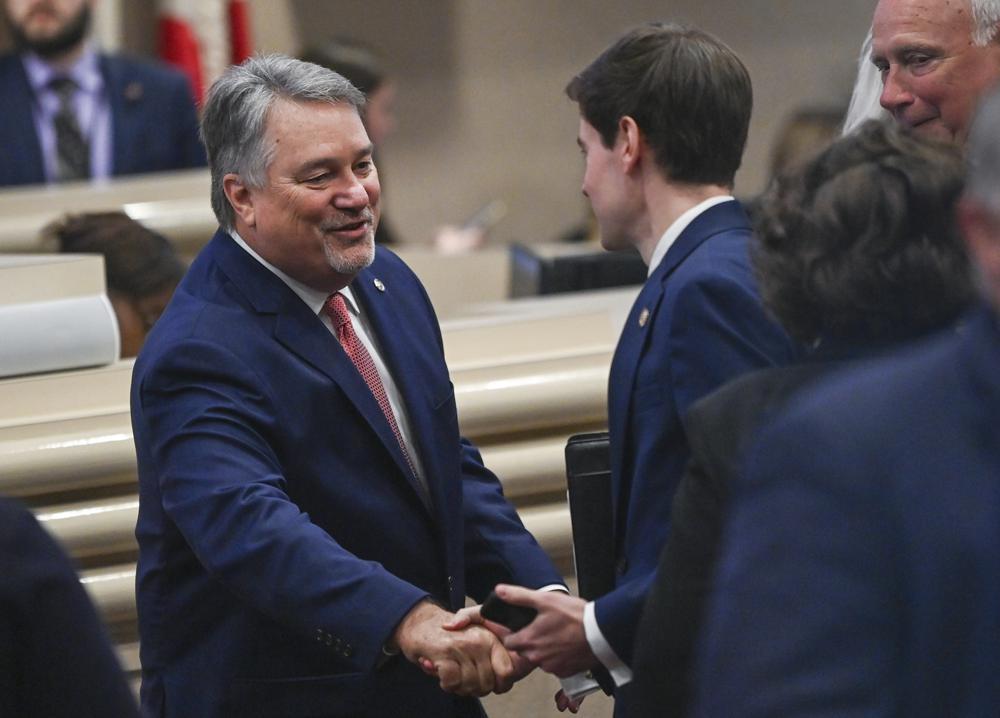
Alabama lawmakers returned to Montgomery Tuesday with a focus on how to use the state’s remaining $1 billion in pandemic relief funds, with disagreements surfacing as the federal windfall comes to an end. Alabama Gov. Kay Ivey is expected to call a special session, beginning Wednesday, to isolate the issue, lawmakers said. Legislative leaders adjusted their meeting schedule Tuesday to accommodate the expected special session. Lawmakers will decide how to use the remaining $1 billion from the American Rescue Plan Act — the sweeping $1.9 trillion relief plan approved by Congress to help the country climb out of the coronavirus crisis. Republican Sen. Greg Albritton of Atmore said more disagreements have surfaced this time “because it’s the last batch.” “It has been impossible for us to satisfy everybody. We have been successful at making everyone mad,” Albritton said. Senate President Pro Tempore Greg Reed, a Republican from Jasper, said he believes lawmakers have a “good starting place” with a planned focus on water and sewer projects, broadband expansion, and healthcare needs. He said a personal priority for him is also to establish an avenue for grants for local pandemic-related needs that lawmakers want funded. “One of the attitudes that we’ve had from the beginning is making sure that we’re using these funds — one-time funds — for things that really will make a difference long into the future as an investment for the people of Alabama,” Reed said. He said water and sewer projects, for example, “will still be serving members in those communities” for decades to come. The American Rescue Plan steered $2.1 billion to Alabama. Alabama lawmakers used the first half of the funds for water and sewer projects, broadband expansion, and healthcare costs, as well as a controversial prison construction plan. Lawmakers in 2021 approved the plan to use $400 million of the relief funds to help build two super-size prisons, brushing off criticism from congressional Democrats that the money was not intended for such projects. Asked if divisions had arisen this time between Republicans and Democrats over the use of the funds, Democratic House Minority Leader Anthony Daniels said, “There’s not a uniform agreement on the other side on how to spend the money.” Daniels, of Huntsville, said House Democrats are interested in making sure funds are directed to housing needs in the state. Ivey will address lawmakers Tuesday evening in her annual State of the State address. Republished with the permission of The Associated Press.
Steve Flowers: Legislature organizes for Quadrennium
The legislature had their every four-year organizational session earlier this month. It is exactly what the title states. They are organizing for the next quadrennium of lawmaking. They officially chose their leadership and adopted the rules for the two chambers. The 105-member House of Representatives and 35-member State Senate are elected for four-year terms, the same as the governor and other constitutional offices. However, unlike the governor, who was sworn in on Monday, January 16, as set out in the state constitution, the legislature takes office the day after they are elected in November. The state House of Representatives will have 77 Republicans and 28 Democrats. That is a veto-proof, bulldozer-shoving, anything-you-want supermajority. The Democrats have very little say with those overwhelming numbers. Two days after they were elected in November, the 77-member Republican majority met in a private caucus meeting in Montgomery and selected their leadership. Therefore, the vote for Speaker of the House two weeks ago was simply a formality. The House has chosen Representative Nathaniel Ledbetter to be the Speaker of the House. Speaker Ledbetter hails from Rainsville in DeKalb County. He is a former Mayor of Rainsville. He has only been in the House of Representatives for eight years, having been first elected in 2014. He was chosen to be the majority leader in the House in his freshman year. He was close to the former Speaker Mac McCutcheon, and he served on both the powerful agenda-setting Rules Committee, as well as the Ways and Means Education Budget Writing Committee. Representative Chris Pringle of Mobile has been chosen to be Speaker Pro Tem of the House, which is the second highest position within the body. He has served previously for 16 years in the House from the Port City. He succeeds fellow Mobilian Victor Gaston in this post. There are two young stalwarts who will be serving in Republican Party positions within the House. Representative Scott Stadthagen of Decatur will be the new House Majority Leader. Representative Wes Kitchens of Arab will serve as the Republican Leadership Caucus Vice Chair. Representative Debbie Wood from the Valley will serve as the Republican Caucus Secretary/Treasurer. The three most powerful posts in the House are the chairmanships of the two money committees and the agenda-setting Rules Committee. Representative Danny Garrett of Trussville in Jefferson County will continue to Chair the Ways and Means Education Budget Committee. Representative Rex Reynolds of Huntsville will be the General Fund Ways and Means Chairman. Reynolds replaces longtime Ways and Means Chairman Steve Clouse of Ozark. Representative Joe Lovvorn of Auburn will be the new Rules Committee Chairman. Representative Jim Hill of St. Clair will chair Judiciary. He is a former circuit Judge and a veteran of the House. All of these House leadership positions are held by Republicans. To the victor goes the spoils. The Democrats have a veteran and sterling team heading their Caucus Leadership in the House. Anthony Daniels of Huntsville will be the Democratic Minority Leader. Barbara Drummond of Mobile will be the Caucus Chair. Mary Moore of Birmingham will be the Vice Chair, and Kelvin Lawrence of Hayneville will be Secretary/Treasurer of the Democratic Caucus. The 35-member Alabama State Senate returns almost intact with their continuity and quality leadership. They will dominate and provide a stable State of Ship to help lead the state. Republicans control this upper chamber to the same degree that the GOP members do in the House. Republicans outnumber Democrats 28 to 7 in the Senate. State Senator Jabo Waggoner of Jefferson County begins his 50th year in the legislature. This is a state record. He is definitely destined for the state history books. Jabo will continue to Chair the powerful Rules Committee. Greg Reed of Walker County will be Pro Tem of the Senate again. The Majority Leader will again be Clay Scofield of Marshall County. The two money committee chairmen will continue to be in charge of how the state revenues are spent. Senator Arthur Orr of Decatur will chair Finance and Taxation/Education. Senator Greg Albritton of Escambia will chair Finance and Taxation/General Fund. These two men will be very powerful. Popular state Senator Will Barfoot of Pike Road will chair Judiciary in the Senate. Senator Clyde Chambliss of Prattville has become a stalwart leader in the Senate. He will be Majority Whip. Lieutenant Governor Will Ainsworth presides over the Senate. The Regular Session begins in early March. See you next week. Steve Flowers is Alabama’s leading political columnist. His weekly column appears in over 60 Alabama newspapers. He served 16 years in the state legislature. Steve may be reached at www.steveflowers.us.
Nathaniel Ledbetter and Greg Reed to lead Alabama Legislature moving forward

On Tuesday, Gov. Kay Ivey congratulated State Rep. Nathaniel Ledbetter and State Sen. Greg Reed for their elections to the top two leadership positions in the Alabama Legislature. “Congratulations to our state’s new Speaker of the House @RepLedbetter24, and to @SenatorGregReed on his re-election as Senate President Pro Tem,” Gov. Ivey said on Twitter. “I look forward to working with both of you to serve the people of Alabama in the days and years ahead.” Ledbetter is the former Mayor of Rainsville. He was first elected to the House of Representatives in 2014. He was elected with broad bipartisan support with 102 votes in an uncontested election in the Alabama House of Representatives during Tuesday’s organizational session of the Alabama Legislature. Former Speaker of the House Mac McCutcheon presided over the election of his successor. McCutcheon did not seek re-election. “With 102 votes, the honorable Nathaniel Ledbetter is elected Speaker,” McCutcheon said. Then he administered the oath of office to Ledbetter. “First of all, I would like to thank my wife of 42 years,” Ledbetter said. “I would like to thank my two sons.” He also acknowledged his grandchildren. “One thing I want to recognize is that we have so many people from DeKalb County. I think thirty or forty drove four hours to be here today.” “I pledge to you to work as hard as I am able,” Ledbetter said. “We have some of the finest people in the world serving in this body, working for our shared goal to make an already great state even greater.” “From time to time, we will have different ideals,” Ledbetter said. “But I understand that the speaker’s gavel is not a weapon but a tool.” “When I was growing up in DeKalb County, I did not even know that the Speaker of the House was, but I know now,” Ledbetter said. “This was probably the greatest honor I have ever received in my life.” Greg Reed was first elected to the Alabama Senate as part of the 2010 Republican wave election that took control of the Alabama Legislature after 135 uninterrupted years of Democratic Party domination. Reed was elected to the Alabama Senate in 2021 and was re-elected to the position by the members of the Senate on Tuesday. State Rep. Chris Pringle (R-Mobile) was elected Speaker Pro Tem 103 to 0 in an uncontested election. Pringle served as an aide to both Congressmen Jack Edwards and Sonny Callahan. He was first elected to the Alabama House of Representatives in 1994 and served through 2002. He returned in 2014 and is now serving in his fifth term. “It has been a long time, a long journey, but I can tell you that I have enjoyed every minute of it,” Pringle said. Republicans have commanding supermajorities in both Houses of the Alabama Legislature. Pringle was joined by his mother and his girlfriend. John Treadwell was selected as the new Clerk of the House on Tuesday. State Rep. Anthony Daniels returns as the House Minority Leader. State Rep. Scott Stadthagen replaces Ledbetter as the House Majority Leader. State Sen. Clay Scofield returns as the Senate Majority Leader. Both bodies passed rules for their individual bodies to operate under for the next four years. The two Houses will meet in a joint meeting on Wednesday to pass joint rules. The Legislature will return in March for the 2023 regular session, where the Legislature will pass the 2024 budgets and consider new legislation. To connect with the author of this story, or to comment, email brandonmreporter@gmail.com.
Alabama Legislature to hold organizational session Tuesday
The Alabama Legislature will be in session on Tuesday. This two-day session is not to pass legislation but rather to organize for this new quadrennium. Both bodies will pass rules for the Legislature to operate under moving forward and set their leadership. Most attention is focused on the Alabama House of Representatives, where a number of changes are coming. Both Speaker of the House, State Rep. Mac McCutcheon, and Speaker Pro Tem. State Rep. Victor Gaston did not run for re-election in 2022. The House is expected to elect state Rep. Nathaniel Ledbetter as the new Speaker and State Rep. Chris Pringle as the new Pro Tem. During the last legislative session, Republicans had a 77 to 28 filibuster-proof supermajority over Democrats. That is unchanged in 2023, so the Republican choices for the top leadership positions in the House are virtually a lock to be elected on Tuesday. Ledbetter is the former Mayor of Rainsville and was the Majority Leader during the previous quadrennium. He is in his third term in the state legislature. State Rep. Scott Stadthagen will be the new Majority Leader. He is serving in his second term in the Legislature. State Rep. Anthony Daniels will return as the House Minority Leader. Ledbetter has already announced his staff hires and committee chairs. This is one of the least experienced groups of House members in many years. Two-thirds of the House members are in their first or second term. This is the biggest change in the body since Republicans took control of the Legislature in 2010 after 135 straight years of Democratic Party domination. In the Alabama Senate, Lieutenant Governor Will Ainsworth was re-elected in a landslide. Ainsworth serves as President of the Senate as one of his office’s primary responsibilities. The inauguration for his second term will be on Monday. State Sen. Greg Reed will return as Senate President Pro Tempore. State Sen. Clay Scofield was also re-elected and likely will continue as the Senate Majority Leader. Republicans had a filibuster-proof 27 to 8 supermajority in the Alabama Senate during the last legislative session, and that supermajority returns. Both Reed and Scofield are returning for their fourth term in office. State Sen. James T. “Jabo” Waggoner returns as the dean of the Legislature. Waggoner was first elected to the Legislature in 1966. He is expected to continue to chair the powerful Senate Rules Committee. Both the House and the Senate will update their rules for the next four years. This is just an organizational session, and no actual legislation will be introduced or passed during these anticipated two days. The state legislature will return on March 7 for the 2023 regular legislative session. A regular legislative session is constitutionally limited to just 30 days. To connect with the author of this story, or to comment, email brandonmreporter@gmail.com.
