
Government blesses omitting race from admissions, enrollment
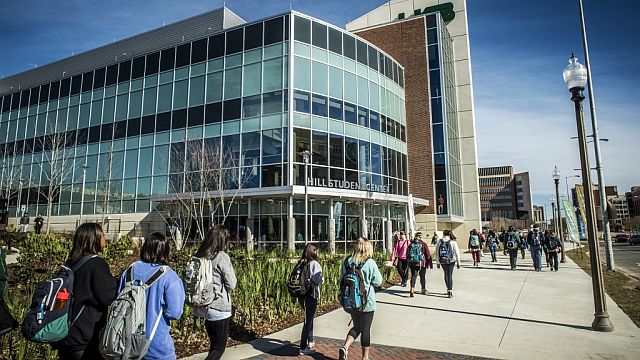
The Trump administration said the government would no longer encourage schools to use race as a factor in the admissions process, rescinding Obama-era guidance meant to promote diversity among students. The shift announced Tuesday gives colleges the federal government’s blessing to leave race out of admissions and enrollment decisions and underscores the contentious politics that for decades have surrounded affirmation action policies, which have repeatedly been challenged before the Supreme Court. The Obama administration memos encouraging schools to take race into account were among 24 policy documents revoked by the Justice Department for being “unnecessary, outdated, inconsistent with existing law, or otherwise improper.” Attorney General Jeff Sessions called the changes an effort to restore the “rule of law,” though civil rights groups decried the move and some universities said they intended to continue their diversity efforts as before. The action comes amid a high-profile court fight over Harvard University admissions that has attracted the government’s attention, as well as Supreme Court turnover expected to produce a more critical eye toward schools’ race-conscious admissions policies. The court’s most recent significant ruling on the subject bolstered colleges’ use of race among many factors in the admission process. But the opinion’s author, Anthony Kennedy, announced his retirement last week, giving President Donald Trump a chance to replace him with a justice who may be more reliably skeptical of admissions programs that take race and ethnicity into account. The new policy dramatically departs from the stance of the Obama administration, which said schools could consider race in admissions decisions. In one 2011 policy document, the administration said courts had recognized schools’ “compelling interest” in ensuring racially diverse populations on campuses. “Institutions are not required to implement race-neutral approaches if, in their judgment, the approaches would be unworkable,” the guidance said. “In some cases, race-neutral approaches will be unworkable because they will be ineffective to achieve the diversity the institution seeks.” That guidance has now been rescinded, as have about a half-dozen similar documents, including some that sought to explain court rulings affirming the use of race to make admissions decisions. In one such document, the Obama administration stated, “As the Supreme Court has recognized, diversity has benefits for all students, and today’s students must be prepared to succeed in a diverse society and an increasingly global workforce.” The Trump administration’s announcement is more in line with Bush-era policy that discouraged affirmative action and instead encouraged the use of race-neutral alternatives, like percentage plans and economic diversity programs. Though such guidance doesn’t have the force of law, schools could presumably use it to defend themselves against lawsuits over admission policies. The Trump administration’s Justice Department had already signaled concern about the use of race in admissions decisions. The department, for instance, sided this year with Asian-American plaintiffs who contend in a lawsuit against Harvard that the school unlawfully limits how many Asian students are admitted. Students for Fair Admissions, the group suing Harvard, is led by Ed Blum, a legal strategist who also helped white student Abigail Fisher sue the University of Texas for alleged discrimination in a case that reached the Supreme Court. Blum said Tuesday the organization “welcomes any governmental actions that will eliminate racial classifications and preferences in college admissions.” Harvard, meanwhile, said it would continue considering race as an admissions factor to create a “diverse campus community where students from all walks of life have the opportunity to learn with and from each other.” Civil rights groups criticized the Trump administration’s announcement, saying it went against decades of court precedent permitting colleges to take race into account. “We condemn the Department of Education’s politically motivated attack on affirmative action and deliberate attempt to discourage colleges and universities from pursuing racial diversity at our nation’s colleges and universities,” Kristen Clarke, president and executive director of the Lawyers’ Committee for Civil Rights Under Law, said in a statement. Lily Eskelsen García, president of the National Education Association, said “affirmative action has proven to be one of the most effective ways to create diverse and inclusive classrooms.” She said the announcement underscored the stakes surrounding the upcoming Supreme Court appointment. The high court has been generally accepting of considering race in admissions decisions to achieve diversity. In a 2016 opinion written by Kennedy, the court granted affirmative action policies a victory by permitting race to be among the factors considered in the college admission process. The ruling bitterly disappointed conservatives who thought Kennedy would be part of a Supreme Court majority to outlaw affirmative action in education. Justice Antonin Scalia died after the court heard arguments in the case but before the decision was handed down. The new affirmative action guidance may add to an already contentious fight over the next justice. With Trump expected to announce his nominee next week, the issue should be a central part of any confirmation process, said Howard University law school dean Danielle Holley-Walker. She called the new guidance “highly unfortunate and counterproductive” and said the decision is another indication that the Justice Department under Sessions is likely to be aggressive toward schools that do continue to factor in race in admissions decisions. “People have been talking about precedent in regard to Roe. v. Wade” — the landmark 1973 ruling affirming a woman’s right to abortion — “but it’s important to remember that affirmative action has been a precedent for the past 40 years,” she said. “This is a clear attack on precedent. Any Supreme Court nominee needs to be asked if they support precedent related to affirmative action.” Republished with the permission of the Associated Press.
GOP lawmakers floated for Trump’s Supreme Court opening

As President Donald Trump considers his next Supreme Court pick, some Republicans in Congress want him to consider pulling from their ranks on Capitol Hill. GOP Sen. Ted Cruz of Texas suggests his conservative ally, Sen. Mike Lee of Utah, would be “the single best choice” Trump could make to fill the vacancy. Republican Sen. Tim Scott is making a pitch for his best friend in Congress, Rep. Trey Gowdy, a fellow South Carolinian. “I hope that the president will be open to that,” Scott said on CNN. Nominating a lawmaker and seeing him or her confirmed would be unusual. A veteran of either the House or the Senate hasn’t joined the court for nearly 70 years. Only a couple dozen members of Congress also served on the court in its history. But for now, only one lawmaker — Lee — is on the list of 25 names Trump is working from to fill the seat of retiring Justice Anthony Kennedy. Cruz says unlike other Republican nominees who have proven to be liberal “train wrecks,” he’s confident Lee, among his favorite colleagues in the Senate, “would be faithful to the Constitution and the Bill of Rights.” Lee is also staunchly opposed to abortion. But even though Lee is championed by conservatives as a strict constitutionalist, he could face obstacles to winning the president’s favor. Chief among them is that he never backed Trump for president during the 2016 campaign. There have been no indications from the White House that Lee is among the handful of top names receiving serious consideration. The same goes for his brother, the Utah Supreme Court justice Thomas Lee, who was also on Trump’s initial list of possible court nominees. Trump on Monday interviewed four prospective nominees for the court and said he expected to speak with a few more. The White House did not provide their names. The president said the candidates he met with are “outstanding people and they are really incredible people in so many different ways, academically and in every other way.” Sen. Lee’s office would not say if he was among the candidates who met with the president. Nevertheless, Lee, who started watching court proceedings on TV as a 10-year old and went on to clerk for Justice Samuel A. Alito, has made clear he wouldn’t dismiss an overture to join the court. “If somebody asked me if I would consider that, I would not say no,” he said. Trump plans to announce his nominee on July 9. The quick timetable could help Senate Republicans confirm a justice before the court’s term begins in October. While Lee has been floated as a nominee for some time, the same cannot be said for Gowdy, who is chairman of the House Oversight Committee. Scott, in making the case for Gowdy, said the former prosecutor is so fair that he has angered both Democrats and Republicans. “A guy who will call balls and strikes and not choose a side, even when he’s an elected member at this time in our nation’s history, that’s hard to find,” Scott said. Scott and Gowdy are close friends who have dinner together several nights a week. They also wrote a book about their friendship, “Unified,” that was released earlier this year. Gowdy led the congressional investigation into Hillary Clinton’s handling of the Benghazi attack in Libya and more recently distanced himself from Trump’s characterization of the Russia probe into election interference as “spygate.” Fellow lawmakers are rooting for their Capitol Hill colleagues. Sen. Marco Rubio, R-Fla., told reporters last week he was personally hoping Trump chooses Lee. “He’d be great,” Rubio said. Republished with the permission of the Associated Press.
Trump administration to rescind Obama-era guidance on affirmative action
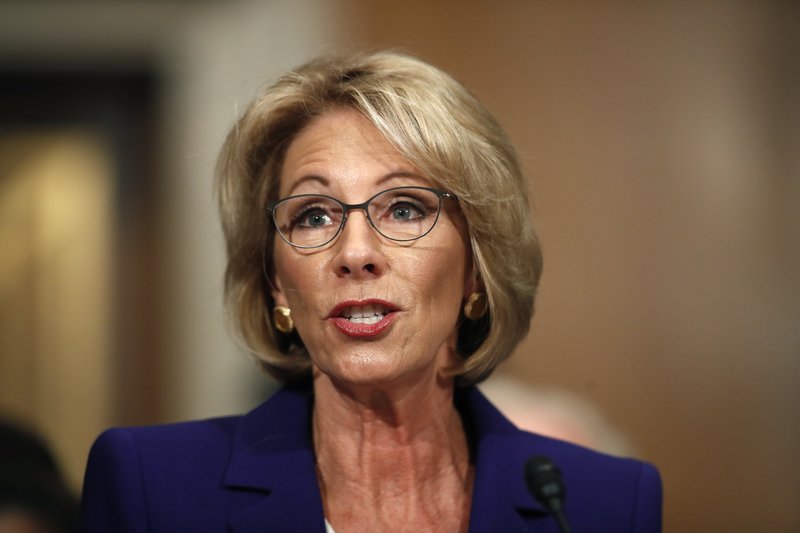
The Trump administration is rescinding Obama-era guidance that encouraged schools to take a student’s race into account to encourage diversity in admissions, a U.S. official said Tuesday. The shift would give schools and universities the federal government’s blessing to take a race-neutral approach to the students they consider for admission. Such guidance does not have the force of law, but schools could use it to help defend themselves against lawsuits over their admission policies. The action comes amid Supreme Court turnover expected to produce a more critical eye toward schools’ affirmative action policies. The high court’s most recent significant ruling on the subject bolstered colleges’ use of race among many factors in the college admission process. But the opinion’s author, Anthony Kennedy, announced his resignation last week, giving President Donald Trump a chance to replace him with a justice who will be more reliably skeptical of affirmative action. A formal announcement was expected later Tuesday from the Justice and Education departments, according to the official, who spoke on condition of anonymity because the official was not authorized to speak on the record. The guidance from the Obama administration gave schools a framework for “considering race to further the compelling interests in achieving diversity and avoiding racial isolation.” In a 2011 policy document, the administration said schools have a “compelling interest” in ensuring a diverse student body, and that while race should not be the primary factor in an admission decision, schools could lawfully consider it in the interest of achieving diversity. “Institutions are not required to implement race-neutral approaches if, in their judgment, the approaches would be unworkable,” the guidance said. “In some cases, race-neutral approaches will be unworkable because they will be ineffective to achieve the diversity the institution seeks.” The administration issued a similar guidance document in 2016 aimed at giving schools a framework for “considering race to further the compelling interests in achieving diversity and avoiding racial isolation.” The Obama approach replaced Bush-era policy from a decade earlier that discouraged affirmative action programs and instead encouraged the use of race-neutral alternatives, like percentage plans and economic diversity programs. The Trump administration signaled Tuesday that it planned to reinstate the Bush administration’s philosophy. Civil liberties groups immediately decried the move, saying it went against decades of court rulings that permit colleges and universities to take race into account. “We condemn the Department of Education’s politically motivated attack on affirmative action and deliberate attempt to discourage colleges and universities from pursuing racial diversity at our nation’s colleges and universities,” Kristen Clarke, president and executive director of the Lawyers’ Committee for Civil Rights Under Law, said in a statement. In 2016, the Supreme Court, in an opinion written by Kennedy, granted affirmative action policies a narrow victory by permitting race to be among the factors considered in the college admission process. Kennedy wrote that the University of Texas’ admission plan was in line with past court decisions that allowed for the consideration of race to promote diversity on college campuses. The ruling bitterly disappointed conservatives who thought that Kennedy would be part of a Supreme Court majority to outlaw affirmative action in education. Justice Antonin Scalia died after the court heard arguments in the case but before the decision was handed down. Eight states already prohibit the use of race in public college admissions: Arizona, California, Florida, Michigan, Nebraska, New Hampshire, Oklahoma and Washington. The Wall Street Journal first reported the move. Republished with the permission of the Associated Press.
Donald Trump interviews with possible Supreme Court nominees begin
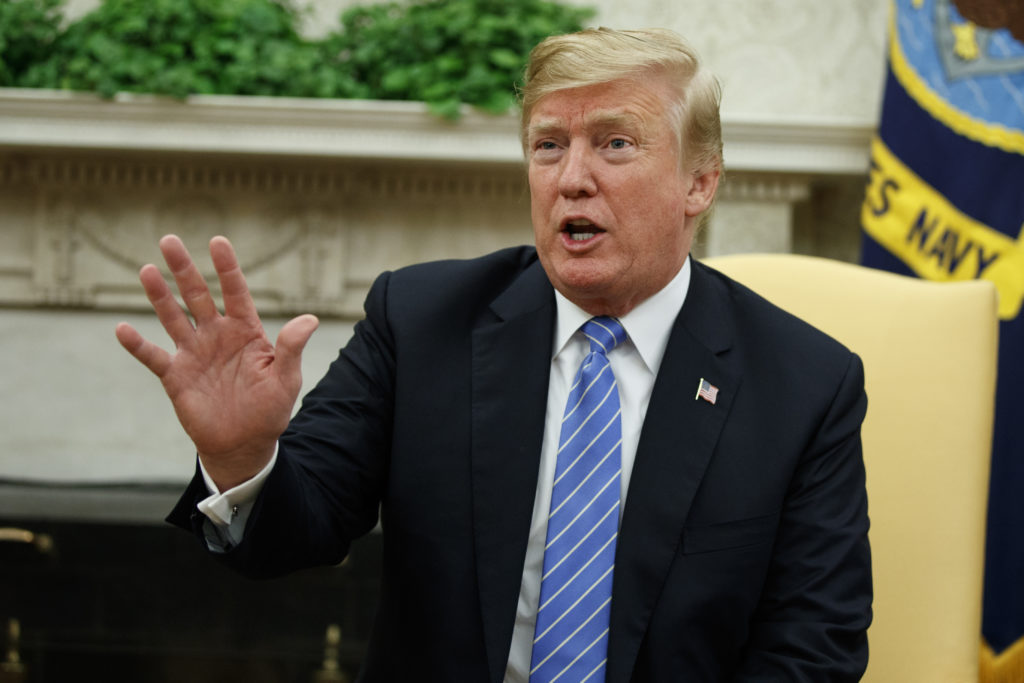
President Donald Trump has interviewed four prospective Supreme Court justices and had plans to meet with a few more as his White House aggressively mobilizes to select a replacement for retiring Justice Anthony Kennedy. Eager to build suspense, Trump wouldn’t divulge whom he’s talking to in advance of his big announcement, set for July 9. But he promised that “they are outstanding people. They are really incredible people in so many different ways, academically and in every other way. I had a very, very interesting morning.” Spokeswoman Sarah Huckabee Sanders said Trump met with four people for 45 minutes each Monday and will continue meetings through the rest of the week. The interviews were with federal appeals judges Raymond Kethledge, Amul Thapar, Brett Kavanaugh and Amy Coney Barrett, said a person with knowledge of the meetings who was not authorized to speak publicly about them. The Washington Post first reported the identities of the candidates Trump spoke with. The president spent the weekend at his Bedminster golf club, consulting with advisers, including White House counsel Don McGahn, as he considers his options to fill the vacancy with a justice who has the potential to be part of precedent-shattering court decisions on abortion, health care, gay marriage and other issues. McGahn will lead the overall selection and confirmation process, the White House said Monday, repeating the role he played in the successful confirmation of Justice Neil Gorsuch last year. McGahn will be supported by a White House team that includes spokesman Raj Shah, taking a leave from the press office to work full time on “communications, strategy and messaging coordination with Capitol Hill allies.” Justin Clark, director of the Office of Public Liaison, will oversee White House coordination with outside groups. Trump’s push came as the Senate’s top Democrat tried to rally public opposition to any Supreme Court pick who would oppose abortion rights. Senate Minority Leader Chuck Schumer issued a campaign-season call to action for voters to prevent such a nominee by putting “pressure on the Senate,” which confirms judicial nominees. With Trump committed to picking from a list of 25 potential nominees that he compiled with guidance from conservatives, Schumer said any of them would be “virtually certain” to favor overturning Roe v. Wade, the 1973 case that affirmed women’s right to abortion. They would also be “very likely” to back weakening President Barack Obama‘s 2010 law that expanded health care coverage to millions of Americans, he said. Schumer said that while Democrats don’t control the Senate — Republicans have a 51-49 edge — most senators back abortion rights. In an unusually direct appeal to voters, he said that to block “an ideological nominee,” people should “tell your senators” to oppose anyone from Trump’s list. “It will not happen on its own,” the New Yorker wrote in an opinion column in Monday’s New York Times. “It requires the public’s focus on these issues, and its pressure on the Senate.” Schumer’s column appeared a day after Sen. Susan Collins, R-Maine, said she would oppose any nominee she believed would overturn Roe v. Wade. Collins, who appeared on ABC’s “This Week” and CNN’s “State of the Union,” said she would only back a judge who would show respect for settled law such as the Roe decision, which has long been anathema to conservatives. Senate Majority Leader Mitch McConnell told reporters in Ashland, Kentucky, on Monday that “it’s probably going to be close; I think there will be a big, national campaign rage. But in the end, I’m confident we’ll get the judge confirmed.” During his 2016 campaign and presidency, Trump has embraced anti-abortion groups and vowed to appoint federal judges who will favor efforts to roll back abortion rights. But he told reporters on Friday that he would not question potential high-court nominees about their views on abortion, saying it was “inappropriate to discuss.” Without Kennedy, the high court will have four justices picked by Democratic presidents and four picked by Republicans, giving Trump the chance to shift the ideological balance toward conservatives for years to come. Both Chief Justice John Roberts and Gorsuch, Trump’s first pick to the high court, have indicated more broadly that they respect legal precedent. Trump has said he is focusing on up to seven potential candidates, including two women, to fill the vacancy being left by Kennedy, a swing vote on the nine-member court. Currently the court has three women justices, all appointed by Democrats. Court watchers have been discussing the prospect of a conservative woman on the bench. Carrie Severino, chief counsel and policy director of the Judicial Crisis Network, said she did not think picking a woman was “the top concern” of Trump, stressing judicial philosophy and experience. But she added, “If he does end up nominating a woman, she can stand on her own accomplishments.” Anna Chu, vice president for strategy and policy at the National Women’s Law Center, said she was concerned that a female pick could be a kind of “Trojan horse.” “What’s important in addition to increasing diversity is how that person would actually interpret law,” Chu said. “There are real stakes here. You could be a woman and not be fair minded.” Republished with permission from the Associated Press.
Justice Anthony Kennedy retiring; Donald Trump gets 2nd Supreme Court pick
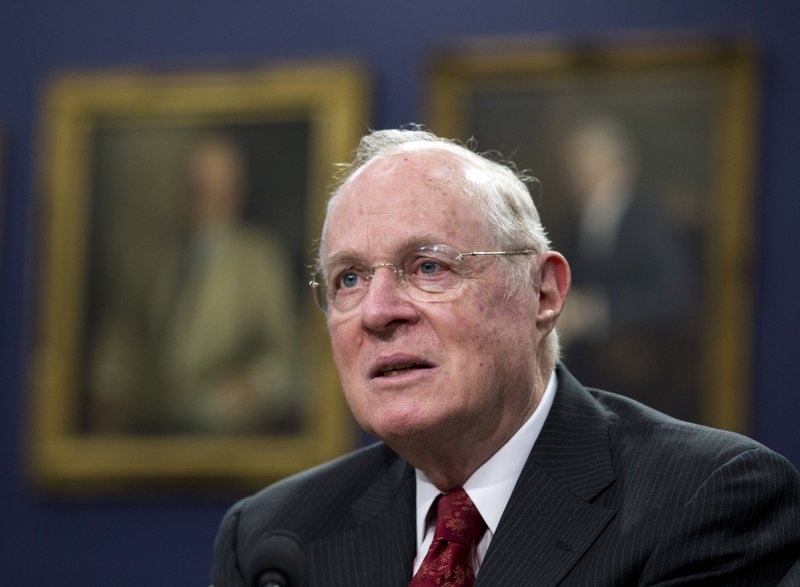
Supreme Court Justice Anthony Kennedy announced his retirement Wednesday, giving President Donald Trump the chance to cement conservative control of the high court. The 81-year-old Kennedy said in a statement he is stepping down after more than 30 years on the court. A Republican appointee, he has held the key vote on such high-profile issues as abortion, affirmative action, gay rights, guns, campaign finance and voting rights. Kennedy said he has informed his colleagues and Trump of his plans, and that his retirement will take effect at the end of July. Without him, the court will be split between four liberal justices who were appointed by Democratic presidents and four conservatives who were named by Republicans. Trump’s nominee is likely to give the conservatives a solid majority and will face a Senate process in which Republicans hold the slimmest majority, but Democrats can’t delay confirmation. Trump’s first high court nominee, Justice Neil Gorsuch, was confirmed in April 2017. If past practice is any indication, Trump will name a nominee within weeks, setting in motion a process that could allow confirmation of a new justice by early August. Trump already has a list of 25 candidates — 24 judges and Utah Sen. Mike Lee — from which the White House has previously said he would choose a nominee. Prominent on that list are Judges Thomas Hardiman of Pennsylvania and William Pryor of Alabama, seriously considered for the seat eventually filled by Justice Neil Gorsuch, and Judge Brett Kavanaugh, who serves on the federal appeals court in Washington, DC. Kavanaugh is a longtime Washington insider, having served as a law clerk to Kennedy and then as a key member of independent counsel Kenneth Starr’s team that produced the report that served as the basis for President Bill Clinton’s impeachment. In October, Kavanaugh dissented when his court ruled that an undocumented teen in federal custody should be able to obtain an abortion immediately. Abortion is likely to be one of the flash points in the nomination fight. Kennedy has mainly supported abortion rights in his time on the court, and Trump has made clear he would try to choose justices who want to overturn the landmark abortion rights case of Roe v. Wade. Such a dramatic step may not be immediately likely, but a more conservative court might be more willing to sustain abortion restrictions. Interest groups across the political spectrum are expected to mobilize to support and fight the nomination because it is so likely to push the court to the right. Republicans currently hold a bare 51-49 majority in the Senate, although that includes the ailing Sen. John McCain of Arizona. If Democrats stand united in opposition to Trump’s choice, Senate Majority Leader Mitch McConnell of Kentucky can lose no more than one vote. If the Senate divides 50-50, Vice President Mike Pence could break a tie to confirm the nominee. Regardless of who replaces him, Kennedy’s departure will be a massive change for the high court, where he has been the crucial swing vote for more than a decade. He has sided with the liberal justices on gay rights and abortion rights, as well as some cases involving race, the death penalty and the rights of people detained without charges at the Guantanamo Bay naval base. He has written all the court’s major gay-rights decisions, including the 2015 ruling that declared same-sex marriage is a constitutional right nationwide. He also has been a key vote when conservatives have won major rulings on the outcome of the 2000 presidential election in favor of George W. Bush, gun rights, limiting regulation of campaign money and gutting a key provision of the landmark federal Voting Rights Act. There were no outward signs that Kennedy was getting ready to retire. He had hired his allotment of four law clerks for the term that begins in October and he is planning to spend part of the summer as he typically does, teaching a law school class in Salzburg, Austria. But several former law clerks said that Kennedy, a nominee of President Ronald Reagan, prefers to be replaced by a Republican. Control of the Senate is at stake in the November elections, and if Democrats capture the majority, Trump could find it difficult to get his choice confirmed. Few obstacles seem to stand in the way of confirming Kennedy’s replacement before the court reconvenes in October. Republicans changed the rules during Gorsuch’s confirmation to wipe out the main delaying tactic for Supreme Court nominees, the filibuster, and the need for 60 votes to defeat it. The other two older justices, Ruth Bader Ginsburg, 85, and Stephen Breyer, 79, are Democratic appointees who would not appear to be going anywhere during a Trump administration if they can help it. Republished with permission from the Associated Press.
More LGBT issues loom as justices near wedding cake decision

A flood of lawsuits over LGBT rights is making its way through courts and will continue, no matter the outcome in the Supreme Court’s highly anticipated decision in the case of a Colorado baker who would not create a wedding cake for a same-sex couple. Courts are engaged in two broad types of cases on this issue, weighing whether sex discrimination laws apply to LGBT people and also whether businesses can assert religious objections to avoid complying with anti-discrimination measures in serving customers, hiring and firing employees, providing health care and placing children with foster or adoptive parents. The outcome of baker Jack Phillips’ fight at the Supreme Court could indicate how willing the justices are to carve out exceptions to anti-discrimination laws; that’s something the court has refused to do in the areas of race and sex. The result was hard to predict based on arguments in December. But however the justices rule, it won’t be their last word on the topic. Religious conservatives have gotten a big boost from the Trump administration, which has taken a more restrictive view of LGBT rights and intervened on their side in several cases, including Phillips’. “There is a constellation of hugely significant cases that are likely to be heard by the court in the near future and those are going to significantly shape the legal landscape going forward,” said Shannon Minter, legal director of the National Center for Lesbian Rights. Several legal disputes are pending over wedding services, similar to the Phillips case. Video producers, graphic artists and florists are among business owners who say they oppose same-sex marriage on religious grounds and don’t want to participate in same-sex weddings. They live in the 21 states that have anti-discrimination laws that specifically include gay and lesbian people. In California and Texas, courts are dealing with lawsuits over the refusal of hospitals, citing religious beliefs, to perform hysterectomies on people transitioning from female to male. In Michigan, the American Civil Liberties Union filed suit against the state’s practice of allowing faith-based child placement agencies to reject same-sex couples. Advocates of both sides see the essence of these cases in starkly different terms. “What the religious right is asking for is a new rule specific to same-sex couples that would not only affect same-sex couples but also carve a hole in nondiscrimination laws that could affect all communities,” said Camilla Taylor, director of constitutional litigation at Lambda Legal, which supports civil rights for LGBT people. Jim Campbell of the Christian public interest law firm Alliance Defending Freedom said the cases will determine whether “people like Jack Phillips who believe marriage is the union of a man and a woman, that they too have a legitimate place in public life. Or does he have to hide or ignore those beliefs when he’s participating in the public square?” ADF represents Phillips at the Supreme Court. The other category of cases concerns protections for LGBT people under civil rights law. One case expected to reach the court this summer involves a Michigan funeral home that fired an employee who disclosed that she was transitioning from male to female and dressed as a woman. The 6th U.S. Circuit Court of Appeals ruled that the firing constituted sex discrimination under federal civil rights law. That court is one of several that have applied anti-sex discrimination provisions to transgender people, but the Supreme Court has yet to take up a case. The funeral home argues in part that Congress was not thinking about transgender people when it included sex discrimination in Title VII of the 1964 Civil Rights Act. A trial judge had ruled for the funeral home, saying it was entitled to a religious exemption from the civil rights law. “Congress has not weighed in to say sex includes gender identity. We should certainly make sure that’s a conscious choice of Congress and not just the overexpansion of the law by courts,” Campbell said. ADF also represents the funeral home. In just the past week, two federal courts ruled in favor of transgender students who want to use school facilities that correspond to their sexual identity. Those cases turn on whether the prohibition on sex discrimination in education applies to transgender people. Appeals in both cases are possible. In the past 13 months, federal appeals courts in Chicago and New York also have ruled that gay and lesbian employees are entitled to protection from discrimination under Title VII. Those courts overruled earlier decisions. Title VII does not specifically mention sexual orientation, but the courts said it was covered under the ban on sex bias. The Obama administration had supported treating LGBT discrimination claims as sex discrimination, but the Trump administration has changed course. In the New York case, for instance, the Trump administration filed a legal brief arguing that Title VII was not intended to provide protections to gay workers. It also withdrew Obama-era guidance to educators to treat claims of transgender students as sex discrimination. There is no appeal pending or expected on the sexual orientation issue, and there is no guarantee that the court will take up the funeral home’s appeal over transgender discrimination. The trend in the lower courts has been in favor of extending civil rights protections to LGBT employees and students. Their prospects at the Supreme Court may be harder to discern, not least because it’s unclear whether the court’s composition will change soon. Justice Anthony Kennedy, 81, has been the subject of retirement speculation, though he has not indicated he is planning to retire. When Justice Stephen Breyer turns 80 in August, he will join Kennedy and Justice Ruth Bader Ginsburg, 85, as octogenarians on the bench. If President Donald Trump were to replace any of those justices, the court probably would be much less receptive to LGBT rights. Even the landmark gay marriage ruling in 2015 that Kennedy wrote was a 5-4 decision. “We’re very concerned about the composition of the federal bench. Under the Trump administration, we’ve seen a
Annual Supreme Court guessing game: Will Anthony Kennedy stay or go?

Justice Anthony Kennedy has his law clerks lined up for next year. He plans to teach in Salzburg, Austria, in July, as he has done almost every summer for more than two decades. In short, there are no outward signs that the 81-year-old justice is in his final months on the Supreme Court. So why are liberals in a state of heightened anxiety that Kennedy might leave? And why are some conservatives hopeful that, appearances aside, Kennedy could step down after more than 30 years on the high court? Because if he goes, President Donald Trump gets to nominate his successor, whom a slim Republican Senate majority is likely to confirm. The replacement justice would be more conservative than Kennedy and the right would have a solid working majority of the nine justices. The speculation reflects the darkest fears and fondest wishes of people who care about the court on both sides of the political spectrum. As the justice closest to the middle on an otherwise starkly divided court, Kennedy controls the outcome of a disproportionate share of big-ticket cases. That divide allows Kennedy to decide how far to the right or left the court moves on a range of issues, including abortion, gun rights, capital punishment, affirmative action, and voting rights. Filling the vacancy could be as contentious as it was when Justice Lewis Powell, Kennedy’s predecessor, retired in 1987 and President Ronald Reagan settled on Kennedy only after his first two choices for the seat failed, said David Yalof, chairman of political science at the University of Connecticut. “The difference is that in 1987 you had a Democratic Senate face off against a Republican president in his final two years in office. Here, you have a Republican Senate and a Republican president in his first two years in office,” Yalof said. The concern among liberals is palpable. Kennedy is nearly 82 and the average retirement age of the last 15 justices who retired is just over 77 years. That includes John Paul Stevens, who was 90 when he retired in 2010 and 58-year-old Abe Fortas, who left the court amid revelations of financial improprieties in 1969. If Kennedy were to announce his retirement this spring, it would inject the court into the middle of the midterm congressional elections and put his “critical fifth vote in the hands of perhaps the least competent president in modern history to manage and value it,” said Elizabeth Wydra, president of the liberal Constitutional Accountability Center. The New York Times editorial board penned an open letter to Kennedy on Sunday, imploring him to hang on. “How can we put this the right way? Please don’t go,” it said. The two older justices, Ruth Bader Ginsburg, 85, and Stephen Breyer, 79, are Democratic appointees who are unlikely to go anywhere during a Trump administration if they can help it. The pleas for Kennedy to stay come in a term when he could side with conservative justices to erode the power of labor unions for government workers, give the upper hand to employers who want to prevent workers from banding together to complain about pay and workplace conditions, side with Texas in a dispute over electoral districts that were struck down by a lower court for being discriminating against black and Hispanic voters, limit state efforts to regulate anti-abortion pregnancy centers and uphold Trump’s ban on travel from several majority Muslim countries. Kennedy’s vote also is likely to be decisive in two other high-profile issues, a Colorado baker’s objection to creating a wedding cake for a same-sex couple and efforts to rein in the drawing of electoral districts for partisan gain. A retirement announcement could come at any time, and perhaps sooner rather than later if Kennedy is interested in the relatively quick and smooth confirmation of the next justice. Stevens and Justice David Souter, the last two retirees, revealed their intentions in April 2010 and May 2009, respectively. That enabled President Barack Obama to announce his choices in time for final Senate action by early August. By contrast, in 1987, Powell waited until late June to say he was retiring. When the Senate voted down Robert Bork, Reagan’s first choice, and Douglas Ginsburg withdrew as Reagan’s second pick, the court began its next term with just eight justices on the bench. Kennedy, Reagan’s third choice, did not join them until February 1988. The timing of his announcement also might influence the effective date of his retirement. The soonest Kennedy would leave is at the end of June, after all the court’s current cases have been decided. Some justices step down immediately. Others stay until their successor is confirmed, sometimes reflecting a worry that the court might start its term short-staffed. Those concerns probably are not very serious at the moment because Republicans have every incentive and few procedural impediments to confirming a new justice. “I think it will be very difficult to defeat any Trump nominee for that seat unless of course there are character issues or that sort of thing,” said Richard Arenberg, a longtime Democratic Senate aide who now teaches political science at Brown University. They probably would not want to chance waiting for the election results and the possibility of losing control of the Senate. Even in that circumstance, however, Senate Majority Leader Mitch McConnell still could push for a confirmation between the election and the start of the next Congress in January, Yalof said. But if Kennedy decides to serve another a year or two and Democrats win the Senate in November, it could be considerably harder for Trump to get a nominee confirmed, especially since McConnell refused to act on Merrick Garland’s nomination in the last year of Obama’s presidency. Republished with the permission of the Associated Press.
Is Donald Trump right about judges’ leanings? Maybe, review shows
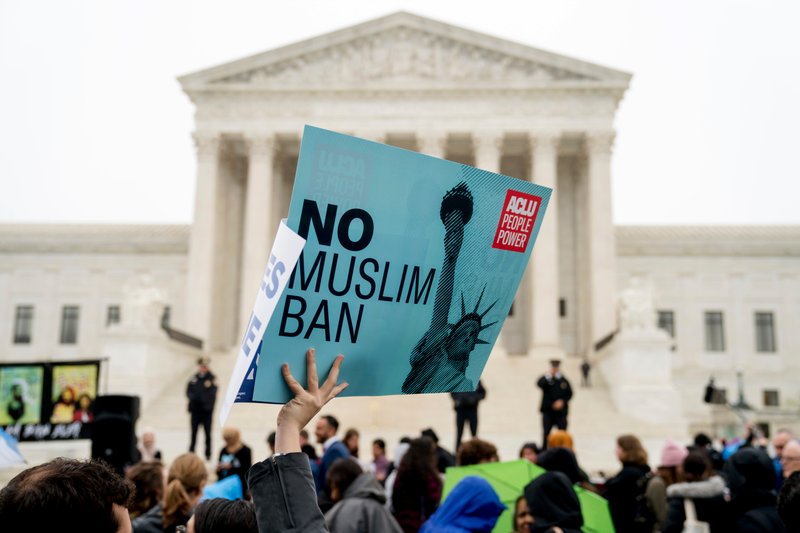
President Donald Trump has called courts unfair and political and repeatedly assailed the 9th Circuit, the U.S. court system’s westernmost division, where some of his key immigration policies have stalled. Other observers describe America’s judges as conservative or liberal, implying they bring an ideology to their decision-making that goes beyond a careful assessment of law and precedent. That view has made the U.S. Senate’s confirmation of federal judges fraught, with each party battling to block nominees they view as unsympathetic to their positions. But is there any evidence politics plays a role in judicial opinions? An Associated Press review suggests it might. The AP looked at opinions by nearly 40 federal district court and appellate judges about Trump’s ban on travelers from mostly Muslim countries. It found only one judge nominated by a Democratic president has supported Trump’s authority to keep out all travelers or deport those who arrived just as the first ban took effect. With some exceptions, Republican nominees have taken a broader view of presidential power and rejected limits on the executive orders. The travel ban is now in its third iteration and under consideration by the U.S. Supreme Court. HOW HAS THIS SPLIT PLAYED OUT IN THE COURTS? One of the first federal judges to consider the ban gave it the all-clear, saying Trump provided a legitimate reason for his January 2017 executive order and that a lawsuit challenging it was likely to fail. The decision by U.S. District Judge Nathaniel Gorton in Boston came days after a federal judge in Los Angeles, Andre Birotte, reached the opposite conclusion and ordered the administration to allow immigrants with valid visas into the U.S. The judges considered different lawsuits in different courts 3,000 miles (4,830 kilometers) apart. But they were also nominated to the bench by presidents from different parties — Gorton by Republican George H.W. Bush and Birotte by Democrat Barack Obama. For the most part, the judicial split along party lines has continued as the ban’s various versions have made their way through federal courts. The three bans have had a tortuous legal journey that has taken them before dozens of district court and appellate judges nominated by presidents from both major parties. The AP completed an extensive review of that journey, examining 26 decisions by 38 judges. The two key findings: — A majority of the judges — 24 — were nominated by Democratic presidents. Only one of those judges supported Trump’s power to block all travelers. In February, 4th U.S. Circuit Court of Appeals Judge William Traxler, nominated by President Bill Clinton, said in a dissenting opinion that the administration provided “logical conclusions and rationale” for the third ban and addressed his earlier concerns that it was motivated by anti-Muslim bias. — In contrast, 10 of the 14 Republican judges in the group sided with the administration and moved to uphold restrictions on foreign travelers. One of the notable exceptions is James Robart in Seattle — a nominee of President George W. Bush —, who issued a nationwide order blocking the first ban. AREN’T JUDGES SUPPOSED TO BE APOLITICAL? The code of conduct for federal judges says they should not allow “family, social, political, financial or other relationships to influence” their judgment. Judges generally refrain from overt partisanship and often hold themselves up as neutral arbiters of law. But the law can be unclear and open to varying interpretations. In a widely cited 2006 book, “Are Judges Political,” Harvard University’s Cass Sunstein and other researchers studied thousands of decisions by three-judge federal appellate court panels. Some areas of the law — such as appeals of criminal convictions — produced no significant difference in the decisions of Republican and Democratic judicial nominees. But in other areas, political affiliations were good predictors of judges’ rulings. Affirmative action and environmental regulations were among the issues on which Republican nominees were more likely to take a conservative view, while their Democratic counterparts were more likely to go in a liberal direction, the researchers found. “The reality is, there are certain hot button issues where you’ve got these splits, and there’s not that many people in the middle,” said David Levine, a professor at the University of California, Hastings College of the Law who has followed the travel ban cases. WHERE DO REPUBLICAN AND DEMOCRATIC NOMINEES DIFFER ON THE TRAVEL BAN? Democratic nominees have pointed to the president’s campaign rhetoric about barring Muslims from entering the country as evidence the bans are illegally motivated by religious prejudice. They said the administration provided insufficient evidence for its claim that the bans are needed for U.S. security. “The ‘initial’ announcement of the Muslim ban, offered repeatedly and explicitly through President Trump’s own statements, forcefully and persuasively expressed his purpose in unequivocal terms,” U.S. District Judge Theodore Chuang in Maryland, who was nominated by Obama, said in an October ruling blocking the third ban. Republican judicial nominees have assailed their Democratic counterparts for second-guessing the president’s national security claims by looking beyond his order to campaign statements. “Even if we have questions about the basis for the President’s ultimate findings — whether it was a ‘Muslim ban’ or something else — we do not get to peek behind the curtain,” 9th U.S. Circuit Court of Appeals Judge Jay Bybee, a President George W. Bush nominee, said in March 2017. Bybee was dissenting from the 9th Circuit’s decision not to revisit its ruling keeping the first travel ban on hold. Four other judges — all Republican nominees — signed the dissent. WHAT’S NEXT? The U.S. Supreme Court will have the final word. It heard arguments April 25 about the ban’s latest version, which restricts travel to the United States by residents of five majority-Muslim countries — down from seven in the first ban — as well as North Korea. It also restricts travelers from Venezuela. The justices in December allowed that version to take full effect even as the legal fight over it continued. They appeared split during the hearing, though it
Donald Trump hails border wall start, but it’s not quite true
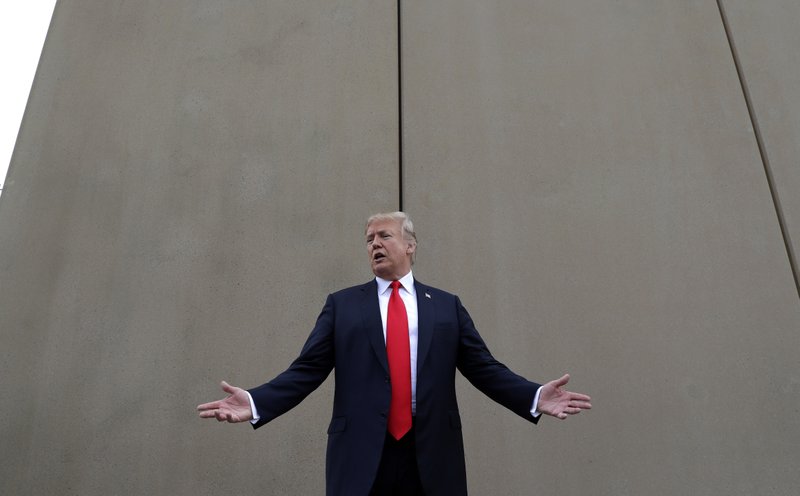
President Donald Trump hailed the start of his long-sought southern border wall this past week, proudly tweeting photos of the “WALL!” Actually, no new work got underway. The photos showed the continuation of an old project to replace two miles of existing barrier. And on Saturday, he ripped Amazon with a shaky claim that its contract with the post office is a “scam.” Trump and his officials departed from reality on a variety of subjects in recent days: the census, Amazon’s practices and the makeup of the Supreme Court among them. Here’s a look at some statements and their veracity: TRUMP: “Great briefing this afternoon on the start of our Southern Border WALL!” — tweet Wednesday, showing photos of workers building a fence. TRUMP: “We’re going to be starting work, literally, on Monday, on not only some new wall — not enough, but we’re working that very quickly — but also fixing existing walls and existing acceptable fences.” — Trump, speaking the previous week after signing a bill financing the government. THE FACTS: Trump’s wrong. No new work began on Monday or any other time this past week. And the photos Trump tweeted were misleading. They showed work that’s been going on for more than a month on a small border wall replacement project in Calexico, California, that has nothing to do with the federal budget he signed into law last week. The Calexico project that began Feb. 21 to replace a little more than 2 miles (3.2 kilometers) of border wall was financed during the 2017 budget year. A barrier built in the 1990s mainly from recycled metal scraps is being torn down and replaced with bollard-style barriers that are 30 feet (9.1 meters) high. Ronald D. Vitiello, acting deputy commissioner of U.S. Customs and Border Protection, defended the president’s statements, saying Friday “there’s construction” underway. TRUMP: “If the P.O. ‘increased its parcel rates, Amazon’s shipping costs would rise by $2.6 Billion.’ This Post Office scam must stop. Amazon must pay real costs (and taxes) now!” — tweet Saturday. TRUMP: “I have stated my concerns with Amazon long before the Election. Unlike others, they pay little or no taxes to state & local governments, use our Postal System as their Delivery Boy (causing tremendous loss to the U.S.), and are putting many thousands of retailers out of business!” — tweet Thursday. THE FACTS: Trump is misrepresenting Amazon’s record on taxes, the U.S. Postal Service’s financial situation and the contract that has the post office deliver some Amazon orders. Federal regulators have found that contract to be profitable for the Postal Service. People who buy products sold by Amazon pay sales tax in all states that have a sales tax. Not all third-party vendors using Amazon collect it, however. As for the post office, package delivery has been a bright spot for a service that’s lost money for 11 straight years. The losses are mostly due to pension and health care costs — not the business deal for the Postal Service to deliver packages for Amazon. Boosted by e-commerce, the Postal Service has enjoyed double-digit increases in revenue from delivering packages, but that hasn’t been enough to offset declines in first-class letters and marketing mail, which together make up more than two-thirds of postal revenue. While the Postal Service’s losses can’t be attributed to its package business, Trump’s claim that it could get more bang for its buck may not be entirely far-fetched. A 2017 analysis by Citigroup concluded that the Postal Service was charging below-market rates as a whole for parcels. The post office does not use taxpayer money for its operations. Trump is upset about Amazon because its owner, Jeff Bezos, owns The Washington Post, one of the targets of his “fake news” tweets. TRUMP: “Because of the $700 & $716 Billion Dollars gotten to rebuild our Military, many jobs are created and our Military is again rich. Building a great Border Wall, with drugs (poison) and enemy combatants pouring into our Country, is all about National Defense. Build WALL through M!” — tweets Sunday and Monday. THE FACTS: Trump is floating the idea of using “M″ — the Pentagon’s military budget — to pay for his wall with Mexico. Such a move would almost certainly require approval from Congress and there’s plenty of reason to be skeptical about the notion of diverting military money for this purpose. Only Congress has the power under the Constitution to determine federal appropriations, leaving the Trump administration little authority to shift money without lawmakers’ approval. Pentagon spokesman Chris Sherwood referred all questions on the wall to the White House. Spokeswoman Sarah Huckabee Sanders declined to reveal specifics, but said Trump would work with the White House counsel to make sure any action taken was within his executive authority. DAVID SHULKIN, citing reasons Trump fired him as veterans affairs secretary: “I have been falsely accused of things by people who wanted me out of the way. But despite these politically based attacks on me and my family’s character, I am proud of my record and know that I acted with the utmost integrity.” — op-ed Thursday in The New York Times. THE FACTS: His statement that he and his family were subjected to politically based attacks is disingenuous, though politics contributed to his dismissal. White House support for Shulkin eroded after a blistering report in February by VA’s internal watchdog, a non-partisan office. The inspector general’s office concluded that he had violated ethics rules by accepting free Wimbledon tennis tickets. The inspector general also said Shulkin’s chief of staff had doctored emails to justify bringing the secretary’s wife to Europe with him at taxpayer expense. It is true, though, that Shulkin had encountered resistance from about a half-dozen political appointees at the VA and White House who rebelled against him. In an extraordinary telephone call, John Ullyot, a top communications aide, and VA spokesman Curt Cashour asked the Republican staff director of the House Veterans Affairs Committee to push for Shulkin’s
Key redistricting case goes in front of The Supreme Court
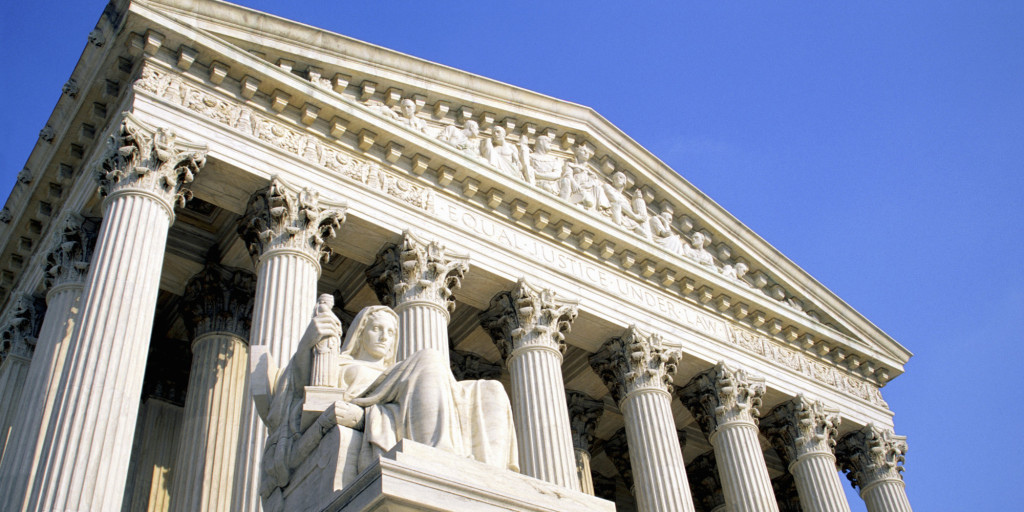
The Supreme Court has already heard a major case about political line-drawing that has the potential to reshape American politics. Now, before even deciding that one, the court is taking up another similar case. The arguments justices will hear Wednesday in the second case, a Republican challenge to a Democratic-leaning congressional district in Maryland, could offer fresh clues to what they are thinking about partisan gerrymandering, an increasingly hot topic before courts. Decisions in the Maryland case and the earlier one from Wisconsin are expected by late June. The arguments come nearly six months after the court heard a dispute over Wisconsin legislative districts that Democrats claim were drawn to maximize Republican control in a state that is closely divided between the parties. The Supreme Court has never thrown out electoral districts on partisan grounds and it’s not clear the justices will do so now. But supporters of limits on partisanship in redistricting are encouraged that the justices are considering two cases. “In taking these two cases, the Supreme Court wants to say something about partisan gerrymandering. It’s clear the Supreme Court is not walking away from the issue,” said Michael Li, senior counsel at the New York University law school’s Brennan Center for Justice. The justices’ involvement in partisan redistricting reflects a period of unusual activity in the courts on this topic. Over the past 16 months, courts struck down political districting plans drawn by Republicans in North Carolina, Pennsylvania and Wisconsin. Federal judges threw out a state legislative map in Wisconsin and a congressional plan in North Carolina. In Pennsylvania, the state Supreme Court invalidated the state’s congressional districts and replaced them with a court-drawn plan. When the Supreme Court heard Wisconsin’s appeal, the court appeared to be split along familiar lines. Four liberal justices seemed inclined to strike down the legislative map and four conservatives appeared more favorable to it. That left Justice Anthony Kennedy seemingly in control of the outcome. A relatively quick resolution of the case also appeared likely, based on the way the court handled the case. A lower court had earlier struck down the districts and ordered new ones drawn. The justices blocked the drawing of a new map last summer, but set the case for arguments in the first week of its new term in October. Then in December, the court said it would hear the case about Maryland’s 6th congressional district, but provided no further explanation about why it was adding a second redistricting case. Democrats who controlled redistricting in Maryland in 2011 made a conscious decision to try to increase the party’s control of congressional districts from 6-2 to 7-1, said Michael Kimberly, the lawyer representing the Republican challengers. They took a district that had been centered in rural, Republican-leaning northwestern Maryland, where a longtime Republican incumbent won by 28 percentage points in 2010 and turned it into a district that took in some Democratic Washington, D.C., suburbs and elected a Democrat who won by 21 percentage points in 2012. The change violated the First Amendment rights of the Republican voters, Kimberly said. Maryland Attorney General Brian Frosh, a Democrat, said in defending the district that it is competitive for both parties and has elected a moderate Democrat. In 2014, a friendlier year for Republican candidates, Democratic Rep. John Delaney’s victory margin dropped to less than 2 points, though it rose again in 2016. In some ways, the Wisconsin and Maryland cases complement each other. In Wisconsin, the justices have a broad theory about partisan line-drawing. The lower court that ruled for the Democratic challengers concluded that the districting plans were drawn to discriminate against Democrats, the Republicans’ advantage would endure even in the face of a strong Democratic showing at the polls and the plans could not be explained by other, non-partisan reasons. In Maryland, the single-district approach looks a lot like the way civil rights groups try to prove that race played too large a role in the drawing of districts. It would be both a more limited approach than the Wisconsin case, but also feel more familiar to justices who have decided many claims of racial bias in redistricting. With two cases before them, the justices now have one in which each party is complaining about the other. That could be significant based on Chief Justice John Roberts’ stated distaste for putting the court’s credibility at stake in politically charged cases. “We’ll have to decide in every case whether the Democrats win or the Republicans win,” Roberts said in the Wisconsin arguments. Another possibility is that the justices could already have decided that there’s a procedural problem in the Wisconsin case, limiting their ability to address the merits of the Democratic voters’ claim. However the court views the two cases, it seems increasingly likely that a decision striking down districts won’t result in any changes this year. The court frowns on making these sorts of changes so close to an election. The deadline to get on the primary ballot in Wisconsin is June 1. Maryland’s deadline was last month. The court also has blocked new congressional districts in North Carolina. Only in Pennsylvania, where the state Supreme Court invoked the state constitution to strike down the congressional map, has a new map been put in place. The Supreme Court refused an emergency request from Pennsylvania Republicans to block it. Republished with the permission of the Associated Press.
Travel ban, church-state case await action by Supreme Court
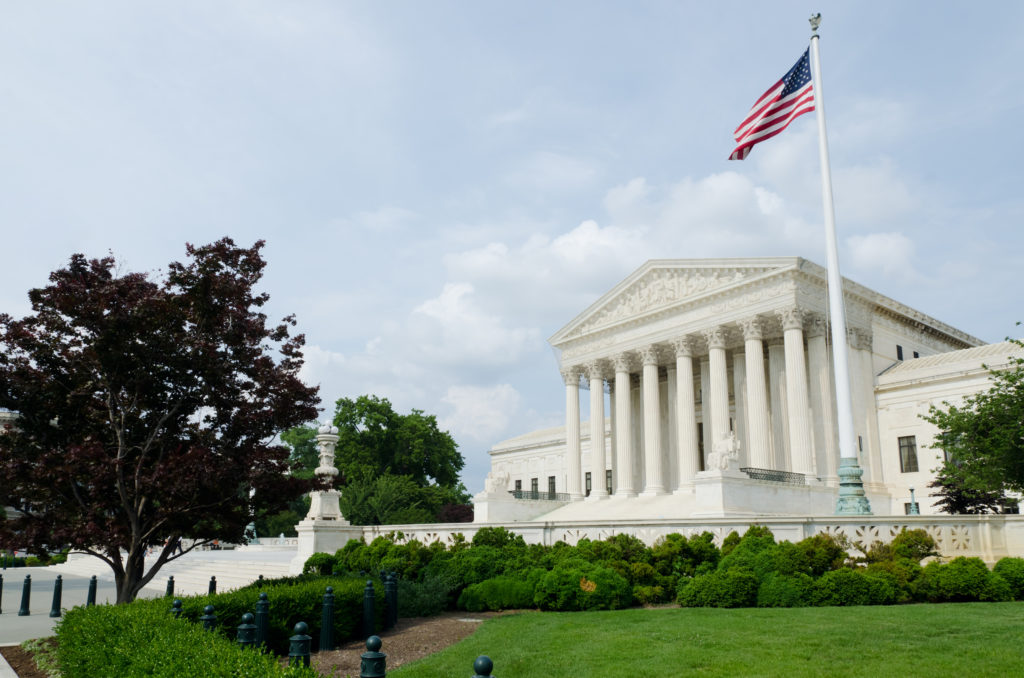
Before taking their long summer break, the Supreme Court justices are poised to act on the Trump administration’s travel ban and a separation of church and state dispute involving a Missouri church playground. But something could overshadow rulings in those high-profile cases: If Justice Anthony Kennedy were to use the court’s last public session on Monday to announce his retirement. Kennedy has given no public sign that he would step down this year and give President Donald Trump his second high court pick in the first months of his administration. Kennedy’s departure would allow conservatives to take firm control of the court. But Kennedy turns 81 next month and has been on the court for nearly 30 years. Several of his former law clerks have said they think he is contemplating stepping down in the next year or so. Kennedy did not address the retirement rumors when he and his clerks gathered over the weekend for a reunion, according to three clerks who were there. The decision to push up the reunion by a year helped spark talk he might be leaving the court. The justices on Monday were expected to decide the case of Trinity Lutheran Church of Columbia, Missouri, which was excluded from a state grant program to pay for soft surfaces on playgrounds run by not-for-profit groups. The case was being closely watched by advocates of school vouchers, who hope the court will make it easier to use state money to pay for private, religious schooling in states that now prohibit it. Missouri has since changed its policy under Republican Gov. Eric Greitens so that churches may now apply for the money. Also expected in the next few days, though there’s no deadline by which the court must decide, was a ruling on whether to allow the administration to immediately enforce a 90-day ban on visitors from six mostly Muslim countries. Justice Neil Gorsuch, Trump’s first Supreme Court nominee, could play a pivotal role in both the travel ban and church playground cases. In all, six cases that were argued between November and April remain undecided. Three of those, all involving immigrants or foreigners, were heard by an eight-justice court, before Gorsuch joined the bench in April. If the eight justices are evenly divided, those cases could be argued a second time in the fall, with Gorsuch available to provide the tie-breaking vote. Republished with permission of The Associated Press.
Rumors surround Justice Anthony Kennedy exit, but he’s not talking
As one justice settles into his new job at the Supreme Court, is another about to leave? Eighty-year-old Justice Anthony Kennedy is so far refusing to comment on speculation that he may soon retire after 29 years on the court. But that hasn’t stopped President Donald Trump and, obliquely, the Republican senator in charge of high court confirmation hearings from weighing in on the prospect that Kennedy could step down as soon as this spring or summer. If not this year, several former law clerks said they would not be surprised to see the justice retire in 2018. “I’ve heard the same rumors that a lot of people have heard. And I have a lot of respect for that gentleman, a lot,” Trump told The Washington Times in an interview published Sunday. Sen. Chuck Grassley of Iowa, chairman of the Senate Judiciary Committee, told reporters last month, “I would expect a resignation this summer.” He did not name any names but cited a “rumored” retirement. Kennedy’s departure would give Trump a second Supreme Court vacancy and the chance to cement conservative control of the court for a decade or more. Justice Neil Gorsuch, Trump’s first nominee, joined the court last month. Trump said he would choose from the same list of candidates he unveiled during the campaign from which he plucked Gorsuch. Kennedy has been the crucial swing vote on the high court for more than a decade. He has sided with the liberal justices on gay rights and abortion rights, as well as some cases involving race, the death penalty and the rights of people detained without charges at the Guantanamo Bay naval base. He has written all the court’s major gay-rights decisions, including the 2015 ruling that declared same-sex marriage is a constitutional right nationwide. He also has been a key vote when conservatives have won major rulings on the outcome of the 2000 presidential election in favor of George W. Bush, gun rights, limiting regulation of campaign money and gutting a key provision of the landmark federal Voting Rights Act. There are few outward signs that Kennedy is getting ready to retire. He has hired his allotment of four law clerks for the term that begins in October and he is planning to spend part of the summer as he typically does, teaching a law school class in Salzburg, Austria. But Kennedy scheduled his reunion of law clerks a year earlier than usual, on the last weekend in June. That change, first reported by the Above the Law legal blog, first fueled speculation that Kennedy is considering retirement. Kennedy sent his former clerks an invitation in September, two months before the election. Supreme Court spokeswoman Kathy Arberg explained the earlier reunion as a chance to mark Kennedy’s 80th birthday before the justice turns 81 in July. Some of the roughly 100 clerks who have worked for Kennedy at the Supreme Court thought there might be more to the change. One former clerk, speaking on condition of anonymity in adherence to long-held court tradition on clerk-justice relationships, said he thought the reunion was scheduled in that manner because of the thought that Kennedy would be retiring. The same clerk said he also would not be surprised if Kennedy remains on the bench for another year. Other clerks, who also would not agree to be named, said Kennedy naturally is considering retirement because he is past his 80th birthday and thinks that some of his colleagues remained in their jobs too long. A nominee of President Ronald Reagan, Kennedy also would prefer to be replaced by a Republican, those clerks said. It is unclear how Trump’s election may have shaped Kennedy’s thinking. But he appears to have a warmer relationship with Trump and his family than was known or necessarily expected. Kennedy invited Ivanka Trump to a February argument at the court, where she and her daughter sat in a section reserved for justices’ guests. Kennedy’s younger son, Gregory, spent time on the Trump team that worked at NASA beginning with Trump’s inauguration. Trump and Kennedy themselves had a brief but warm exchange on the floor of the House of Representatives following Trump’s first address to Congress in February. Few obstacles seem to stand in the way of confirming a new justice this year or next. Republicans control the Senate, and after changing the rules, have wiped out the filibuster for Supreme Court nominees and the need for 60 votes to defeat it. Among the reasons Kennedy could remain on the bench are the chance to continue to serve with Gorsuch, his onetime clerk; put some space between vacancies that can upset the settled ways of the court, and control the decisive vote on a court that is split between liberals and conservatives on a range of high-profile issues. The other two older justices, Ruth Bader Ginsburg, 84, and Stephen Breyer, 78, are Democratic appointees who would not appear to be going anywhere during a Trump administration if they can help it. “I love my job,” Ginsburg told a Georgetown University audience last week. Republished with permission of The Associated Press.
