
Donald Trump weighs 2 or 3 candidates for court, to meet with Mike Pence
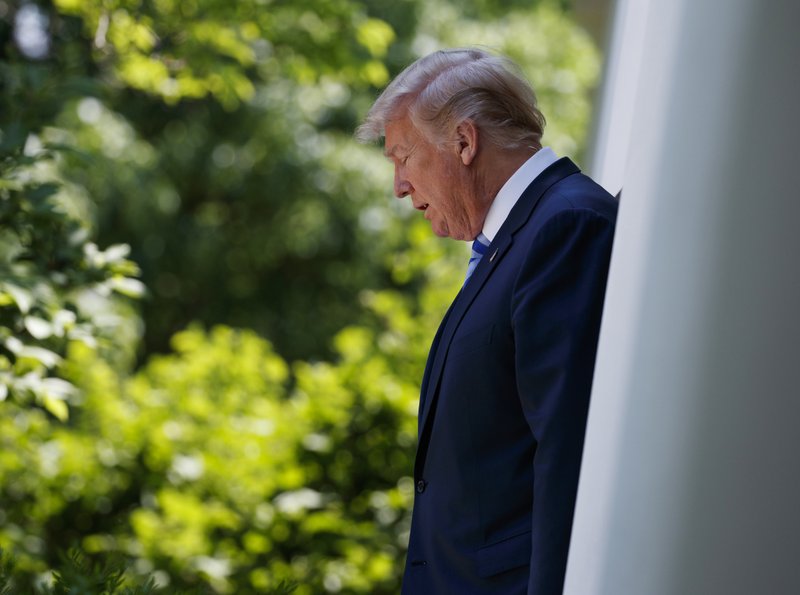
President Donald Trump is closing in on his choice to fill a Supreme Court vacancy created by Justice Anthony Kennedy’s retirement, telling reporters that he’s focused on two or three people ahead of his Monday announcement. “I think I have it down to four people. And I think of the four people I have it down to three or two,” Trump told reporters aboard Air Force One Thursday, as he traveled to a campaign rally in Montana. Trump was at his private golf club in New Jersey Friday and planned to spend the weekend there, consulting with advisers as he picks his court nominee amid intense jockeying from various factions seeking to influence the choice. The president planned to have dinner Friday night with Vice President Mike Pence, who has also been meeting with candidates as part of the vetting process. The president’s top contenders include federal appeals court judges Amy Coney Barrett, Brett Kavanaugh and Raymond Kethledge, with federal appeals court judge Thomas Hardiman still considered in the mix. As part of the roll-out process, the White House has been preparing information packages on all four, said two people familiar with the process who were not authorized to speak publicly. Starting from a list of 25 names vetted by conservative groups, Trump has also given serious consideration to federal appeals court judges Amul Thapar and Joan Larsen, and it’s possible the White House will prepare materials for more people. The president enjoyed the suspenseful process leading up to his announcement last year that he would nominate Justice Neil Gorsuch and is hoping to keep the guessing game going until he announces his pick Monday night. Trump’s social media director Dan Scavino tweeted Friday that the announcement would be at 9 p.m. from the East Room in the White House. Pence met in person with Kethledge and Barrett while he was vacationing in Indiana earlier this week and met with Kavanaugh at the Naval Observatory on July 4, said a person familiar with the process who was not authorized to speak publicly. Pence has also spoken to Republican senators, including Senate Majority Leader Mitch McConnell, Sen. Ted Cruz and Sen. Rand Paul about the process. As the president builds suspense for his second court pick in two years — a nominee who could tip the balance toward conservatives and revisit landmark rulings on abortion access, gay marriage and other issues — momentum is also growing among GOP supporters and detractors of the top contenders. Conservatives and some libertarian-leaning Republicans, including Paul of Kentucky, have raised concerns about Kavanaugh, warning he could disappoint Republicans if his past decisions are a guide. Paul and another Republican, Cruz of Texas, are supporting fellow Sen. Mike Lee, R-Utah, who is not said to be under serious consideration by the White House but is the only lawmaker Trump has considered for the position. To counter that, Kavanaugh’s allies have begun pushing back, reaching out to influential Republicans to ward off potential criticisms, according to one conservative who was the recipient of such outreach and spoke on condition of anonymity Thursday to discuss the situation. The senior administration official, though, said the administration is feeling less heat than earlier in this week over the choices, particularly Kavanaugh, and believes the jockeying in general has calmed somewhat. With the Senate narrowly divided, 51-49, in favor of Republicans, Trump’s announcement will launch a contentious confirmation process as Republicans seek to shift the court to the right and Democrats strive to block the effort. Any GOP defections could begin to doom a nominee. Senate Minority Leader Chuck Schumer, D-N.Y., told the president this week that nominating someone hostile to abortion access, or the 2010 health care law, would tarnish his legacy. Schumer told Trump that such a choice would be “cataclysmic” and create more division than the country has seen in years, according to a person familiar with the conversation who said Trump called Schumer on Tuesday. McConnell said Thursday at an event in Louisville he believes “the president will make a very high-quality appointment.” He acknowledged that his fellow Kentuckian, Judge Amul Thapar, is a finalist, but noted, “The competition at this level is pretty intense.” Trump conducted interviews Monday and Tuesday. Lee, R-Utah, is not viewed as a top prospect, but has consistent support among conservative and libertarian activists, including some Republicans who worry about a nominee not upholding their principles and who say the Utah senator could bring more certainty. Paul has told colleagues he may not vote for Kavanaugh if the judge is nominated, citing Kavanaugh’s role during President George W. Bush’s administration on cases involving executive privilege and the disclosure of documents to Congress, said a person familiar with Paul’s conversations who spoke on condition of anonymity. Some conservatives have pointed to Kethledge as a potential justice in the mold of Gorsuch. Both Kethledge and Gorsuch once served Kennedy as law clerks, as did Kavanaugh. Kethledge, a Michigan Law graduate, would add academic diversity to a court steeped in the Ivy League. Since Trump said his short list includes at least two women, speculation has focused on Barrett, a former law clerk to Justice Antonin Scalia and a longtime Notre Dame Law School professor who serves on the 7th U.S. Circuit Court of Appeals. Conservative groups rallied around Barrett after her confirmation hearing last year featured questioning from Democrats over how her Roman Catholic faith would affect her decisions. Trump’s choice to replace Kennedy — a swing vote on the nine-member court — has the potential to remake the court for a generation as part of precedent-shattering decisions. Recognizing the stakes, many Democrats have lined up in opposition to any Trump pick. Republished with the permission of the Associated Press.
Government blesses omitting race from admissions, enrollment
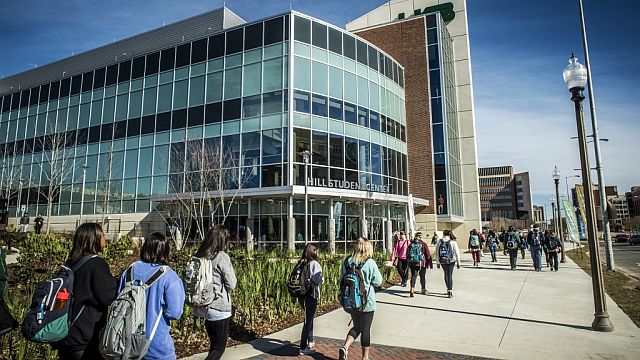
The Trump administration said the government would no longer encourage schools to use race as a factor in the admissions process, rescinding Obama-era guidance meant to promote diversity among students. The shift announced Tuesday gives colleges the federal government’s blessing to leave race out of admissions and enrollment decisions and underscores the contentious politics that for decades have surrounded affirmation action policies, which have repeatedly been challenged before the Supreme Court. The Obama administration memos encouraging schools to take race into account were among 24 policy documents revoked by the Justice Department for being “unnecessary, outdated, inconsistent with existing law, or otherwise improper.” Attorney General Jeff Sessions called the changes an effort to restore the “rule of law,” though civil rights groups decried the move and some universities said they intended to continue their diversity efforts as before. The action comes amid a high-profile court fight over Harvard University admissions that has attracted the government’s attention, as well as Supreme Court turnover expected to produce a more critical eye toward schools’ race-conscious admissions policies. The court’s most recent significant ruling on the subject bolstered colleges’ use of race among many factors in the admission process. But the opinion’s author, Anthony Kennedy, announced his retirement last week, giving President Donald Trump a chance to replace him with a justice who may be more reliably skeptical of admissions programs that take race and ethnicity into account. The new policy dramatically departs from the stance of the Obama administration, which said schools could consider race in admissions decisions. In one 2011 policy document, the administration said courts had recognized schools’ “compelling interest” in ensuring racially diverse populations on campuses. “Institutions are not required to implement race-neutral approaches if, in their judgment, the approaches would be unworkable,” the guidance said. “In some cases, race-neutral approaches will be unworkable because they will be ineffective to achieve the diversity the institution seeks.” That guidance has now been rescinded, as have about a half-dozen similar documents, including some that sought to explain court rulings affirming the use of race to make admissions decisions. In one such document, the Obama administration stated, “As the Supreme Court has recognized, diversity has benefits for all students, and today’s students must be prepared to succeed in a diverse society and an increasingly global workforce.” The Trump administration’s announcement is more in line with Bush-era policy that discouraged affirmative action and instead encouraged the use of race-neutral alternatives, like percentage plans and economic diversity programs. Though such guidance doesn’t have the force of law, schools could presumably use it to defend themselves against lawsuits over admission policies. The Trump administration’s Justice Department had already signaled concern about the use of race in admissions decisions. The department, for instance, sided this year with Asian-American plaintiffs who contend in a lawsuit against Harvard that the school unlawfully limits how many Asian students are admitted. Students for Fair Admissions, the group suing Harvard, is led by Ed Blum, a legal strategist who also helped white student Abigail Fisher sue the University of Texas for alleged discrimination in a case that reached the Supreme Court. Blum said Tuesday the organization “welcomes any governmental actions that will eliminate racial classifications and preferences in college admissions.” Harvard, meanwhile, said it would continue considering race as an admissions factor to create a “diverse campus community where students from all walks of life have the opportunity to learn with and from each other.” Civil rights groups criticized the Trump administration’s announcement, saying it went against decades of court precedent permitting colleges to take race into account. “We condemn the Department of Education’s politically motivated attack on affirmative action and deliberate attempt to discourage colleges and universities from pursuing racial diversity at our nation’s colleges and universities,” Kristen Clarke, president and executive director of the Lawyers’ Committee for Civil Rights Under Law, said in a statement. Lily Eskelsen García, president of the National Education Association, said “affirmative action has proven to be one of the most effective ways to create diverse and inclusive classrooms.” She said the announcement underscored the stakes surrounding the upcoming Supreme Court appointment. The high court has been generally accepting of considering race in admissions decisions to achieve diversity. In a 2016 opinion written by Kennedy, the court granted affirmative action policies a victory by permitting race to be among the factors considered in the college admission process. The ruling bitterly disappointed conservatives who thought Kennedy would be part of a Supreme Court majority to outlaw affirmative action in education. Justice Antonin Scalia died after the court heard arguments in the case but before the decision was handed down. The new affirmative action guidance may add to an already contentious fight over the next justice. With Trump expected to announce his nominee next week, the issue should be a central part of any confirmation process, said Howard University law school dean Danielle Holley-Walker. She called the new guidance “highly unfortunate and counterproductive” and said the decision is another indication that the Justice Department under Sessions is likely to be aggressive toward schools that do continue to factor in race in admissions decisions. “People have been talking about precedent in regard to Roe. v. Wade” — the landmark 1973 ruling affirming a woman’s right to abortion — “but it’s important to remember that affirmative action has been a precedent for the past 40 years,” she said. “This is a clear attack on precedent. Any Supreme Court nominee needs to be asked if they support precedent related to affirmative action.” Republished with the permission of the Associated Press.
Who are the four Supreme Court contenders Donald Trump has met so far?
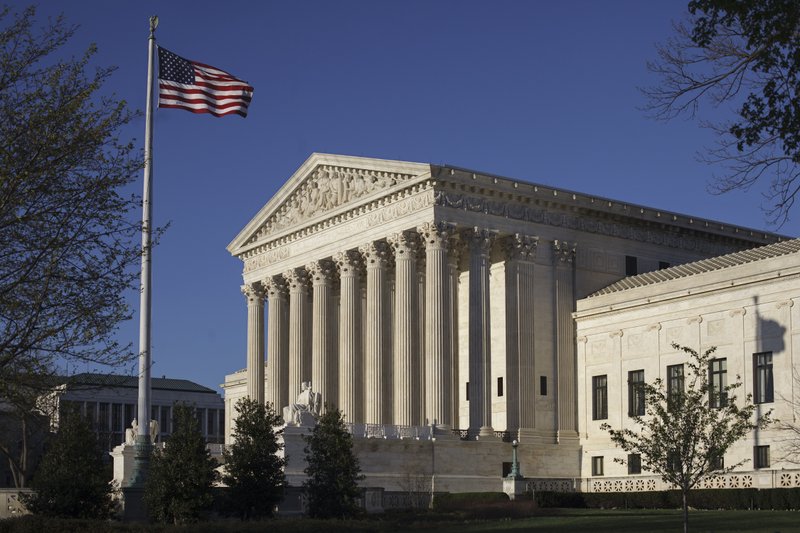
President Donald Trump has interviewed four prospective Supreme Court justices so far. Who are they? Amy Coney Barrett Barrett, 46, was a former law clerk to Justice Antonin Scalia and a longtime Notre Dame Law School professor. At her confirmation hearing last fall to become an appellate court judge, Democrats peppered Barrett on whether her Roman Catholic faith would interfere with her work. Democrats cited a 1998 paper in which she argued that Catholic judges might need to recuse themselves in death penalty cases. Democratic Sen. Dianne Feinstein of California told Barrett that dogma and law are two different things and she was concerned “that the dogma lives loudly within you.” Barrett was eventually confirmed to the U.S. Court of Appeals for the Seventh Circuit in Chicago after telling senators that her views had since broadened. She said it was never permissible for a judge to “follow their personal convictions in the decision of a case, rather than what the law requires.” Brett Kavanaugh Kavanaugh, 53, is a Yale-educated appellate court judge for the District of Columbia who recently wrote a dissent when his colleagues allowed an immigrant teen in U.S. custody to have an abortion. But he’s probably best known for helping independent counsel Kenneth Starr during the impeachment probe of President Bill Clinton and his ties to President George W. Bush. A former clerk to Justice Anthony Kennedy, Kavanaugh worked on behalf of the Bush campaign during the 2000 election recount, later taking a job in the White House counsel office and as staff secretary. When he was confirmed to the federal appeals court in D.C. in 2006, Bush took the unusual step of hosting a Rose Garden swearing-in ceremony with 120 guests to celebrate. At the time, Democrats panned Kavanaugh as a political operative who was being elevated to the court to provide a rubber stamp for Bush’s executive actions. Raymond Kethledge Kethledge, 51, is a former Kennedy law clerk and appeals court judge who graduated from the University of Michigan and its law school. He serves as a judge on the U.S. Court of Appeals for the 6th Circuit in Cincinnati, Ohio. He co-authored a book with Army veteran Michael Erwin of The Positivity Project published last year called “Lead Yourself First: Inspiring Leadership Through Solitude” in which he describes himself as an introvert. In an interview with the legal news site “Above the Law,” Kethledge said “I love to write” and prefers working from his barn office in northern Michigan overlooking Lake Huron without an internet connection. He said he found it “distracting” to his work in 2016 when he found himself on Trump’s short list of nominees to replace Scalia, a job that eventually went to Justice Neil Gorsuch. In the 1990s, Kethledge was counsel to Republican Sen. Spencer Abraham of Michigan, who became Bush’s energy secretary. Kethledge eventually founded a boutique litigation firm with two partners in Troy, Michigan. He was nominated to the 6th Circuit Court of Appeals in 2006 and confirmed in 2008. Amul Thapar Thapar, 49, is a federal appeals court judge from Kentucky who is close to Senate Majority Leader Mitch McConnell. He was Trump’s first judicial nomination to a district or appeals court, and on Trump’s short list to replace Scalia last year, losing out to Gorsuch. In one of his more interesting court cases, Thapar in 2014 as a district court judge in Kentucky sentenced an elderly nun to almost three years in prison for breaking into a U.S. storehouse for bomb-grade uranium and splashing blood on the walls of the bunker. She argued she was acting as a follower of Jesus Christ; Thapar said that provided no excuse for breaching the Y-12 National Security Complex in Oak Ridge, Tennessee. (An appeals court later threw out the sabotage charge, leaving the lesser charge of injuring government property and releasing her from prison early.) An alumnus of Boston College and the University of California, Berkeley, law school, Thapar was nominated by Trump to the 6th Circuit Court of Appeals. Republished with the permission of the Associated Press.
Trump administration to rescind Obama-era guidance on affirmative action
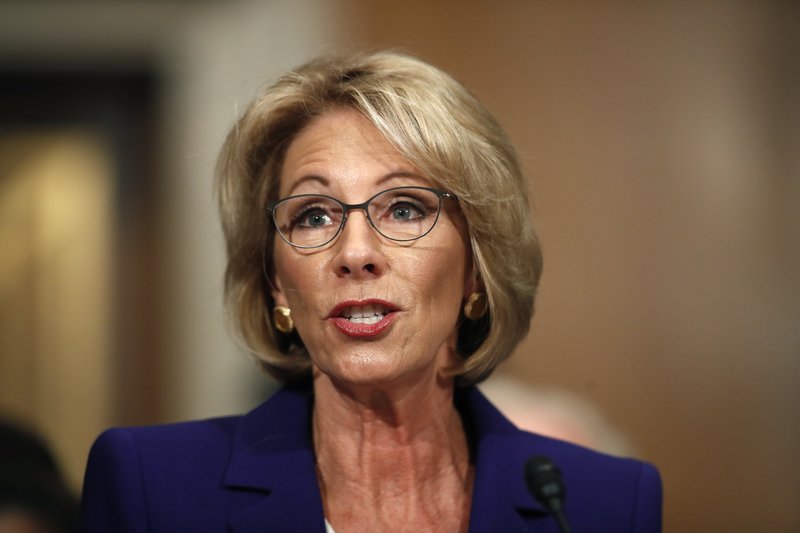
The Trump administration is rescinding Obama-era guidance that encouraged schools to take a student’s race into account to encourage diversity in admissions, a U.S. official said Tuesday. The shift would give schools and universities the federal government’s blessing to take a race-neutral approach to the students they consider for admission. Such guidance does not have the force of law, but schools could use it to help defend themselves against lawsuits over their admission policies. The action comes amid Supreme Court turnover expected to produce a more critical eye toward schools’ affirmative action policies. The high court’s most recent significant ruling on the subject bolstered colleges’ use of race among many factors in the college admission process. But the opinion’s author, Anthony Kennedy, announced his resignation last week, giving President Donald Trump a chance to replace him with a justice who will be more reliably skeptical of affirmative action. A formal announcement was expected later Tuesday from the Justice and Education departments, according to the official, who spoke on condition of anonymity because the official was not authorized to speak on the record. The guidance from the Obama administration gave schools a framework for “considering race to further the compelling interests in achieving diversity and avoiding racial isolation.” In a 2011 policy document, the administration said schools have a “compelling interest” in ensuring a diverse student body, and that while race should not be the primary factor in an admission decision, schools could lawfully consider it in the interest of achieving diversity. “Institutions are not required to implement race-neutral approaches if, in their judgment, the approaches would be unworkable,” the guidance said. “In some cases, race-neutral approaches will be unworkable because they will be ineffective to achieve the diversity the institution seeks.” The administration issued a similar guidance document in 2016 aimed at giving schools a framework for “considering race to further the compelling interests in achieving diversity and avoiding racial isolation.” The Obama approach replaced Bush-era policy from a decade earlier that discouraged affirmative action programs and instead encouraged the use of race-neutral alternatives, like percentage plans and economic diversity programs. The Trump administration signaled Tuesday that it planned to reinstate the Bush administration’s philosophy. Civil liberties groups immediately decried the move, saying it went against decades of court rulings that permit colleges and universities to take race into account. “We condemn the Department of Education’s politically motivated attack on affirmative action and deliberate attempt to discourage colleges and universities from pursuing racial diversity at our nation’s colleges and universities,” Kristen Clarke, president and executive director of the Lawyers’ Committee for Civil Rights Under Law, said in a statement. In 2016, the Supreme Court, in an opinion written by Kennedy, granted affirmative action policies a narrow victory by permitting race to be among the factors considered in the college admission process. Kennedy wrote that the University of Texas’ admission plan was in line with past court decisions that allowed for the consideration of race to promote diversity on college campuses. The ruling bitterly disappointed conservatives who thought that Kennedy would be part of a Supreme Court majority to outlaw affirmative action in education. Justice Antonin Scalia died after the court heard arguments in the case but before the decision was handed down. Eight states already prohibit the use of race in public college admissions: Arizona, California, Florida, Michigan, Nebraska, New Hampshire, Oklahoma and Washington. The Wall Street Journal first reported the move. Republished with the permission of the Associated Press.
Payton Alexander: Neil Gorsuch confirmation would be great for Latinos
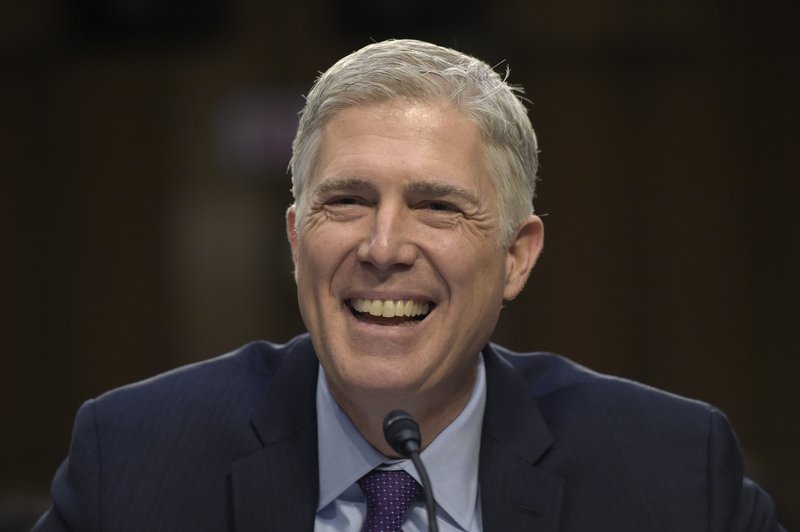
Supreme Court nominee Judge Neil Gorsuch is coming up for a vote in the Senate this month, with lawmakers debating the nomination of the Colorado judge to the highest court in the country. Like the late Justice Antonin Scalia, Judge Gorsuch has a track record of interpreting the Constitution as written and intended by the founders. He also served in the Justice Department, and clerked for Supreme Court Justices Byron White and Anthony Kennedy. For Latinos that value individual rights and the rule of law, there’s a lot to be excited about in his selection to fill the Supreme Court vacancy. Judge Gorsuch is an excellent pick to strengthen the free and open society that makes that dream possible. With millions of Latinos across the United States who value entrepreneurship and the American Dream, this is welcome news. Judges have a responsibility to protect our liberties from government meddling, and Judge Gorsuch has demonstrated that he will uphold Constitutional limits on government power no matter who is in charge — the foundation of a free and prosperous society. Far beyond his record as a defender of individual liberty, Judge Gorsuch’s career reflects a solid understanding of the way that progressive interpretations of regulatory and criminal codes have hurt the least fortunate and contributed to the two-tiered society that is emerging in this country. As a Supreme Court Justice, Judge Gorsuch shows promise that he would uphold the rights of all people — immigrants and native-born citizens alike. All of these issues disproportionately impact the Latino community. More than two hundred years of growing the size and scope of our government have taken their toll on the Constitution. If confirmed to the Supreme Court, Judge Gorsuch will interpret the law and the Constitution faithfully, rather than seeking to erode the checks on government power that it provides. An originalist interpretation of the Constitution, as championed by the late Justice Scalia, prevents judges from legislating from the bench and serves as a vital check against lawmaking by judicial fiat. Judge Gorsuch will help ensure that our constitutional rights are protected, while advancing the foundations of a free society through the rule of law. There are good reasons for Senators in both parties to support the confirmation of Judge Neil Gorsuch to the Supreme Court, and, in fact, he was unanimously approved to serve on the Court of Appeals — we encourage the Senate to show him the same wide support now. ___ Payton Alexander serves as a policy analyst for The LIBRE Initiative.
Darryl Paulson: On Neil Gorsuch; both parties should just grow up!
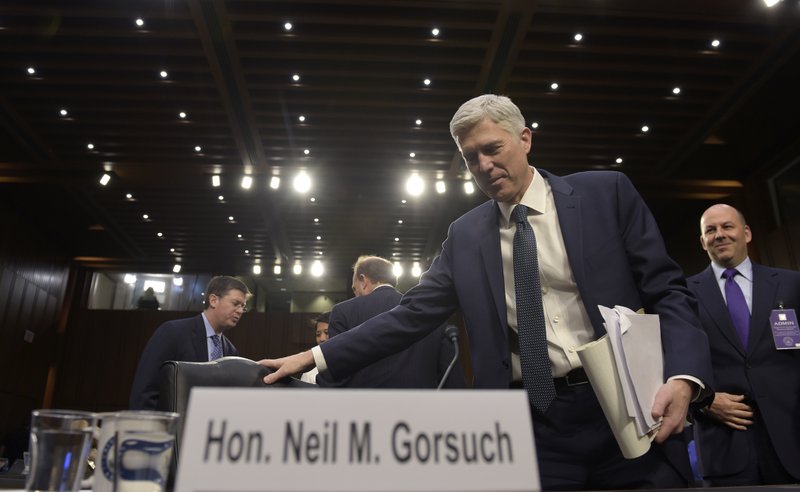
Until 1987, presidential nominees to the U.S. Supreme Court were respectfully received and reviewed by the U.S. Senate. In 1986, Antonin Scalia, a judicial conservative and constitutional originalist, was nominated by President Ronald Reagan to a vacancy on the court. He was confirmed 98 to 0 by the U.S. Senate. The confirmation process imploded in 1987 when another Reagan nominee to the court, Robert Bork, was subject to such a vicious attack concerning his record and judicial temperament, that the word “borking” became part of the political lexicon. To be “borked” was to be the subject of a public character assassination. Since the defeat of Judge Bork in 1987, the confirmation process for Supreme Court nominees has become bitter and brutal. In 2016, President Barack Obama nominated the highly-qualified jurist Merrick Garland to fill the vacancy due to the death of Scalia. The Republican-controlled Senate refused to hold hearings on the Garland nomination, arguing that it should be left to the next president. Democrats were outraged by the treatment of Garland and are taking out their anger by attempting to defeat President Donald Trump‘s nomination of Neil Gorsuch. Democrats contend that Gorsuch’s views are out of the mainstream and accuse him of favoring corporations over workers. They also argue that he fails to fully defend the right to vote and favors the “powerful candidate interests over the rights of all Americans.” Republicans respond by asking how, if Gorsuch’s views were so extreme, did he win confirmation on a 98 to 0 vote 10 years ago, when he was seated on the 10th Circuit Court of Appeals in Denver, Colorado. Would not some of those senators have opposed his extreme views when first nominated? Not only that, but the American Bar Association (ABA) told the Senate Judiciary Committee that Judge Gorsuch received its “well qualified” rating, the highest rating available from the ABA. Nancy Scott Dogan of the ABA said, “We do not give the “well qualified” rating lightly.” So, why does the ABA see Judge Gorsuch in such a different light than Democrats in the Senate? Republicans want to confirm Gorsuch for several reasons. With the death of Justice Scalia, Gorsuch would likely carry on his conservative views. For quite some time, the court has been divided between four conservatives, four liberals and the swing vote of Justice Kennedy. The Republicans and Trump also need a political victory. The Republican failure to “repeal and replace” Obamacare was a deep political blow to the party and its president. President Trump, who promised his supporters that they would “get tired of winning,” are beginning to wonder what happened to all those promised wins. Democrats want to defeat Gorsuch as political payback for the treatment of Garland, and also to make amends for Trump’s surprise victory over Hillary Clinton. In addition, Democrats want a second major defeat of Trump after he failed to secure passage of the Republican health care plan. Democratic activists do not want their elective officials to give 1 inch to the Republicans. In 2005, the “Gang of 14” senators from both parties reached an agreement to prevent an impasse over judicial nominations. The filibuster and 60 vote requirement would continue for Supreme Court nominees, but a simple majority would be needed for other nominations. Since Republican outnumber Democrats 52 to 48 in the Senate, eight Democrats must support Gorsuch for him to be confirmed. So far, no Democrat has indicated support for Gorsuch. As a result, Republican Majority Leader Mitch McConnell is threatening to use the “nuclear option.” The “nuclear option” would allow the Senate to approve a change in the filibuster rule to require a simple majority of the Senate, or 51 votes, to confirm a Supreme Court appointee. To change the filibuster rules only requires 51 votes. If Democrats are successful in their filibuster against Gorsuch, it will be the first successful filibuster of a Supreme Court nominee in over 50 years when the Senate rejected President Lyndon Johnson‘s selection of Abe Fortas to be Chief Justice. According to Republican Sen. Lindsey Graham of South Carolina, a successful Democratic filibuster would mean “that qualifications no longer matter.” A candidate unanimously confirmed to the Court of Appeals a decade ago and one who has received the highest rating from the ABA is not suitable for the court. Republican Sen. Susan Collins of Maine, one of only three senators still left who brokered the “Gang of 14” deal, is keeping the door open to use the nuclear option. As a firm believer in the rules and traditions of the Senate, Collins argues that “it would be unfair if we cannot get a straight up-or-down vote on Judge Gorsuch.” But then, it was only a year ago, that Obama and the Democrats were making the same argument on behalf of Merrick Garland. If only one of the two parties could grow up! ___ Darryl Paulson is Emeritus Professor of Government at USF St. Petersburg.
Neil Gorsuch: A high court pick whose writing is down to earth
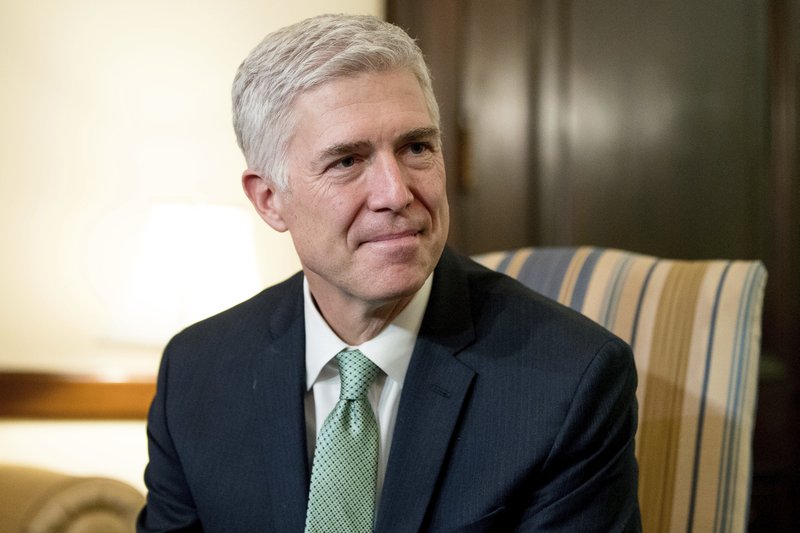
When Justice Antonin Scalia backed out of a book project with writing partner Bryan Garner, the justice recommended who might take his place. Neil Gorsuch was first on this list. Experts who spend time examining the writing of the nation’s top judges say it’s not hard to see why the veteran jurist would recommend the man whom President Donald Trump would later nominate to fill the Supreme Court seat Scalia held for nearly 30 years. “He has a great facility with ideas and with words,” Garner said. An examination of Gorsuch’s writings shows he can be breezy with the written word. He can be jocular. He invokes myth and literature and even sports. And you don’t have to agree with his opinions as a judge on the 10th U.S. Circuit Court of Appeals in Denver to appreciate the final product. “He has a knack for narrative, he’s clever, he has an appealing style,” said Ross Guberman, the author of “Point Taken: How to Write Like the World’s Best Judges.” Justice Ruth Bader Ginsburg also has called Gorsuch a good writer, and legal writing coaches and experts agree. And that’s more than casual praise: Writing opinions that explain the law is the main part of a justice’s job. Part of Gorsuch’s appeal is that he explains himself using words you don’t need to be a lawyer to understand. Gorsuch has likened a legal notice to a basketball bank shot, referenced ghosts and goblins in a lawsuit over injuries suffered at a haunted house and invoked Sisyphus’ eternal quest to push a boulder uphill in an opinion about a decades-long legal dispute. The bank shot reference came in in Gorsuch’s opinion in favor of a Colorado couple who faced a claim that prints that echoed images created by the artist Erte and that they sold on eBay violated the copyright of the company that held rights to the images. The issue before the 10th Circuit was whether the couple could seek a ruling in Colorado that they did nothing wrong, or instead had to sue in California. That’s where the company sent California-based eBay a demand that it block the couple from taking bids on and selling the prints. The action in California was done “with the ultimate purpose of canceling plaintiffs’ auction in Colorado,” Gorsuch wrote in 2008. The company’s aim “thus can be said to have reached into Colorado in much the same way that a basketball player’s express aim in shooting off of the backboard is not simply to hit the backboard, but to make a basket.” Tim Meyer was fairly new to Gorsuch’s office in Denver when he read an early draft of the judge’s opinion. At first, Meyer thought the basketball reference didn’t belong in a judicial opinion. But Meyer came to believe it was an effective way to explain the law to the couple, who represented themselves in court. “He really was trying to speak to litigants who were not educated or trained in the law,” said Meyer, now a Vanderbilt University law professor. A prison inmate’s defamation lawsuit showcased another strength in Gorsuch’s writing, Garner said. “Can you win damages in a defamation suit for being called a member of the Aryan Brotherhood prison gang on cable television when, as it happens, you have merely conspired with the Brotherhood in a criminal enterprise? The answer is no,” Gorsuch wrote in 2011. Garner said he liked the “down-to-earth, practical, fully understandable questions” that Gorsuch sometimes asks at the start of his opinions. Gorsuch is among 13 state and federal judges who joined as co-authors, with Garner, of “The Law of Judicial Precedent,” the book about judges’ opinions that Garner originally hoped to write with Scalia. In another case, Gorsuch disagreed with colleagues who dismissed a mother’s lawsuit claiming her son had been subjected to false arrest and excessive force stemming from incidents at an Albuquerque middle school. “If a seventh grader starts trading fake burps for laughs in gym class, what’s a teacher to do? Order extra laps? Detention? A trip to the principal’s office? Maybe. But then again, maybe that’s too old school,” he wrote. With Scalia’s death last year, Chief Justice John Roberts and Justice Elena Kagan are widely regarded as the two most engaging — and at times entertaining — writers on the court. Roberts began a dissenting opinion in October 2008 with a few hard-boiled paragraphs straight out of crime fiction. “Narcotics Strike Force, North Philly, May 4, 2001. Officer Sean Devlin, Narcotics Strike Force, was working the morning shift. Undercover surveillance. The neighborhood? Tough as a three-dollar steak,” Roberts wrote, describing a drug bust that Roberts thought was mistakenly thrown out by the Pennsylvania Supreme Court. In April 2012, Kagan invoked her favorite team’s batting woes as she explained that the meaning of a phrase can vary, depending on context. “And if a sports-fan friend bemoans that ‘the New York Mets do not have a chance of winning the World Series,’ you will gather that the team has no chance whatsoever (because they have no hitting),” she wrote, unimpressed with the team’s strong 7-3 start. (Turns out, she was right. The Mets were 10th in the 16-team National League in hitting and 12th in runs scored that year.) Kagan is in a class by herself at the moment because her entire opinions, not just the opening sentences, read well, Guberman said. “In my line of work, you have to look past the first paragraph,” Guberman said. Kagan often is clever and witty, he said, “but when she gets to the drier, more systematic legal analysis, she is still an extraordinarily good writer.” Gorsuch has yet to reach his full potential as a writer, said Guberman, who considers the 49-year-old’s prose “a little more uneven.” A justice’s ability to write well improves the chances that the other judges, lawyers and anyone else who reads opinions will understand what the law is. Justices who write poorly tend to have little lasting influence
Conservative Neil Gorsuch emulates Antonin Scalia minus the rough edges
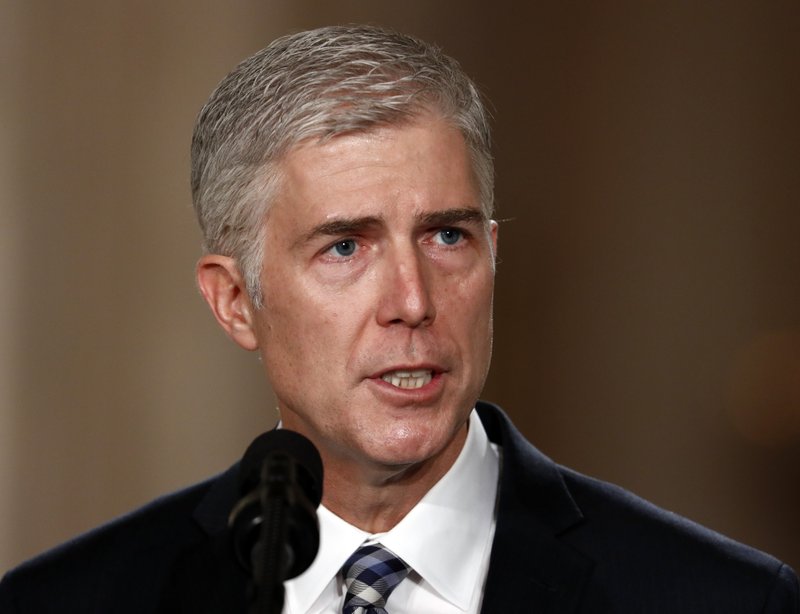
If confirmed by the Senate to the Supreme Court, Neil Gorsuch would fill the seat of the man he seeks to emulate as a judge. He would be the first justice to serve alongside a colleague for whom he worked. Gorsuch described his former boss, Justice Anthony Kennedy, Tuesday as one of the judges who brought him up in the law. President Donald Trump nominated Gorsuch to fill the seat of Justice Antonin Scalia, who died nearly a year ago. Trump said he was delivering on his pledge to choose someone in Scalia’s mold. Gorsuch, a federal appeals court judge in Denver for the past 11 years, said he adheres to Scalia’s approach to the law, evaluating the Constitution and laws by how they were understood when they written. He also shares with Scalia a flair for writing. But unlike the sometimes irascible Scalia, Gorsuch approaches his work with a courtly manner more reminiscent of Kennedy. Jeffrey Rosen, president and CEO of the bipartisan National Constitution Center in Philadelphia, has known Gorsuch since they worked as clerks on the federal appeals court in Washington, though for different judges. “His opinions stand out for his prose and analysis and he gets along really well with both sides,” Rosen said. While abortion rights groups immediately criticized the nomination, Rosen said Gorsuch’s record on the issue is sparse. In a book Gorsuch wrote laying out the case against assisted suicide and euthanasia, Rosen said, Gorsuch was careful to avoid making a religious case for his views, focusing instead on philosophy. “He has been careful not to say what he thinks about abortion or marriage equality,” Rosen said. In any event, with Kennedy remaining on the court, there are five votes to preserve abortion rights and gay rights, no matter Gorsuch’s views. Should Kennedy, 80, or liberal justices Ruth Bader Ginsburg, 83, or Stephen Breyer, 78, leave the court in the next four years, Trump then would have a chance to appoint a justice whose vote could perhaps flip the court on abortion, gay rights and a range of hot-button issues. It’s unclear how quickly majority Republicans might be able to move Gorsuch’s nomination through the Senate or whether Democrats will try to block him. Gorsuch could join the court in time for the last arguments of the term in the spring. The court currently has before it a case about the rights of transgender students, though the case could end up being returned to a lower court without a full hearing in the high court. Next term’s big issue could be whether some partisan redistricting violates the Constitution. Critics of labor unions also are likely to bring before the court a case that could damage the financial viability of unions that represent government workers, an issue on which the court split 4-4 after Scalia’s death. From his time on the appeals court, Gorsuch’s notable opinions include defense of religious freedom. In two cases that involved the contraception mandate under the Obama health care law, Gorsuch sided with businesses and non-profit groups that voiced religious objections to the requirement that they provide cost-free contraception to women covered under their health plans. Gorsuch also has written opinions that question 30 years of Supreme Court rulings that allow federal agencies to interpret laws and regulations. Gorsuch has said that federal bureaucrats are allowed to accumulate too much power at the expense of Congress and the courts. Those rulings “permit executive bureaucracies to swallow huge amounts of core judicial and legislative power and concentrate federal power in a way that seems more than a little difficult to square with the Constitution of the framers’ design,” he wrote last year. Justice Clarence Thomas has raised similar concerns. Notre Dame law professor John Copeland Nagle said he sees an irony in Trump’s selection of Gorsuch. “Who would have guessed that President Trump’s most important decision in his first weeks in office would be to limit his own power?” Nagle said. The choice of Gorsuch “does just that.” In background and style, Gorsuch resembles the group he may soon join. He would be the sixth member of the bench to have attended Harvard Law School; the other three have law degrees from Yale. Seven of the eight justices previously served as appeals court judges, Gorsuch’s current job. He was a Supreme Court law clerk, along with three other justices. While he is a native Coloradan, Gorsuch spent his high school years in Washington because his mother, Anne Gorsuch, was EPA administrator in the Reagan administration. At 49 years old, he’s the youngest nominee since Thomas, who was 43 when he joined the court more than 25 years ago. Gorsuch differs from his prospective colleagues in one respect. On a court with five Catholics and three Jews, he would be the lone Episcopalian. Republished with permission of The Associated Press.
Year’s top news filled with division — and no middle ground

Fed up with Europe’s union across borders? Reject it. Disgusted with the U.S. political establishment? Can it. The news in 2016 was filled with battles over culture and territory that exposed divisions far deeper than many realized. But people confronting those divides repeatedly rejected the prospect of middle-ground solutions and the institutions put in place to deliver them. While the headlines told many different stories, the thread connecting much of the news was a decisive torching of moderation, no matter how uncertain the consequences. “You’re not laughing now, are you?” Nigel Farage, a leader of the Brexit campaign, told the European Parliament after voters in Great Britain spurned membership in the continental union. “What the little people did … was they rejected the multinationals, they rejected the merchant banks, they rejected big politics and they said, ‘Actually, we want our country back.’” Farage was speaking only about the United Kingdom. But his observation that many people well beyond Britain shared that disdain for working within the system was borne out repeatedly in the year’s biggest headlines. In a U.S. presidential campaign fueled by anger and insults, in Syria’s brutal war and Venezuela’s massive protests, in fights over gay rights and migration, opposing sides rejected not just compromise but also the politics of trying to forge it. That was clear from the year’s first days, when armed activists took over a national wildlife refuge in Oregon’s high desert, opposing the federal government’s control of public lands. “It needs to be very clear that these buildings will never, ever return to the federal government,” LaVoy Finicum, an Arizona rancher among the activists, told reporters. Weeks later, federal agents stopped vehicles outside the refuge, arresting eight of the activists and fatally shooting Finicum when he reached into a jacket that held a loaded gun. Even in the rare cases when compromise prevailed, it was viewed with suspicion. When a deal took effect in January limiting Iran’s nuclear program in exchange for relief on sanctions, it marked the culmination of prolonged negotiation by President Barack Obama‘s administration. But the pact was repeatedly attacked by critics in both countries, including Donald Trump, saying it gave the other side too much. “The wisest plan of crazy Trump is tearing up the nuclear deal,” a leading Iranian hard-liner, Hossein Shariatmadari, told his country’s news agency. In mid-February, U.S. Supreme Court Justice Antonin Scalia died in his sleep, leaving a vacuum on a court where he had long been the leading conservative voice. Barely an hour after Scalia’s death was confirmed, Senate Majority Leader Mitch McConnell staked out an uncompromising position on what lay ahead. “The American people should have a voice in the selection of their next Supreme Court justice,” McConnell said, disregarding the fact that U.S. voters had twice elected Obama. “Therefore, this vacancy should not be filled until we have a new president.” North Carolina lawmakers prompted protests and counterprotests when they rushed through House Bill 2, voiding local gay-rights ordinances and limiting bathroom access for transgender people. Companies, the NBA and others followed through on threats to move jobs, games and performances out of the state, amplifying the division. Tensions over U.S. policing bled into a third year. In July, a sniper killed five Dallas police officers during a protest over shootings of black men by police in Louisiana and Minnesota. A South Carolina jury failed to reach a verdict in the trial of a white officer caught on video fatally shooting a black man fleeing a traffic stop. Division, though, was hardly limited to the U.S. In Venezuela, triple-digit inflation and shortages of food and medicine fueled 6,000 protests throughout the year that brought millions into the streets. But the government of President Nicolas Maduro, blamed by many voters for the chaos, blocked a recall campaign. “If you’re going to shoot me because I’m hungry, shoot me!” a young man shouted at a soldier during one protest in Caracas. In Colombia, voters narrowly rejected a deal between the government and a guerrilla group to end a 52-year civil war. Even when lawmakers approved a renegotiated deal, the peace remained fragile. In Brazil, senators impeached President Dilma Rousseff for manipulating budget figures, though many of the lawmakers were, themselves, tarred by accusations of corruption. South Korean President Park Geun-hye was stripped of power in December amid allegations she let a close friend use the government for financial gain. Meanwhile, Syria’s war entered its sixth year. But despite pressure by the U.S. and its allies, Russia and the government of President Bashar Assad unleashed an assault on Aleppo to wipe out rebels, driving up the toll in a conflict that has already claimed as many as 500,000 lives. “This is a targeted strategy to terrorize civilians and to kill anybody and everybody who is in the way of their military objectives,” U.S. Secretary of State John Kerry said, accusing Syria and Russia of war crimes. “As long as war crimes are at question,” a Russian government spokeswoman said, “the Americans should start with Iraq.” In Yemen, cease-fires broke down, extending a nearly two-year civil war. But with Syria capturing most international attention, a famine resulting from the turmoil was mostly overlooked. As the fighting continued, terrorist strikes spread fear well beyond the Middle East. A bombing at a Brussels airport in March and another attack in June at Istanbul’s airport by gunmen with explosives killed a total of nearly 80 people. More than 70 died when a bomb went off in a park in Pakistan, with a faction of the Pakistani Taliban claiming responsibility. In July, a terrorist drove a truck into a Bastille Day crowd in Nice, France, killing 86 and injuring more than 400 others. The Islamic State group claimed responsibility. In June, security guard Omar Mateen opened fire inside a gay nightclub in Orlando, Florida, in the deadliest mass shooting ever in the U.S. In a call to police during the attack, which killed 49, Mateen — a U.S. citizen born
U.S. election voted top news story of 2016
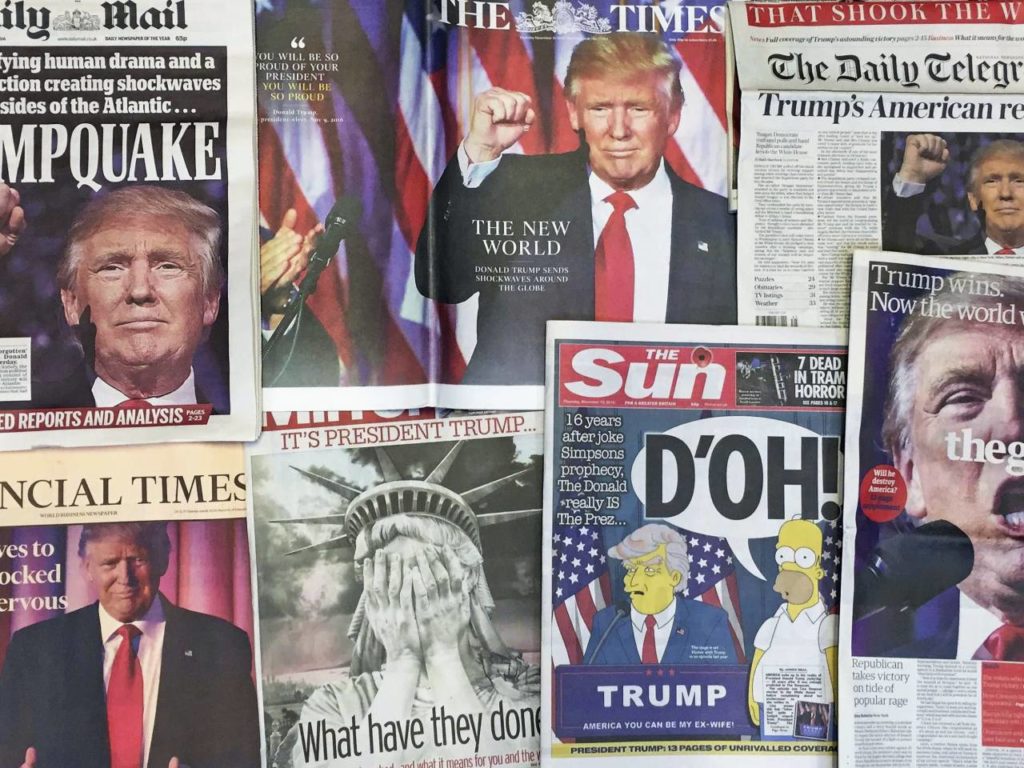
The turbulent U.S. election, featuring Donald Trump‘s unexpected victory over Hillary Clinton in the presidential race, was the overwhelming pick for the top news story of 2016, according to The Associated Press’ annual poll of U.S. editors and news directors. The No. 2 story also was a dramatic upset — Britons’ vote to leave the European Union. Most of the other stories among the Top 10 reflected a year marked by political upheaval, terror attacks and racial divisions. Last year, developments related to the Islamic State group were voted as the top story — the far-flung attacks claimed by the group, and the intensifying global effort to crush it. The first AP top-stories poll was conducted in 1936, when editors chose the abdication of Britain’s King Edward VIII. Here are 2016’s top 10 stories, in order: 1. US ELECTION: This year’s top story traces back to June 2015, when Donald Trump descended an escalator in Trump Tower, his bastion in New York City, to announce he would run for president. Widely viewed as a long shot, with an unconventional campaign featuring raucous rallies and pugnacious tweets, he outlasted 16 Republican rivals. Among the Democrats, Hillary Clinton beat back an unexpectedly strong challenge from Bernie Sanders, and won the popular vote over Trump. But he won key Rust Belt states to get the most electoral votes, and will enter the White House with Republicans maintaining control of both houses of Congress. 2. BREXIT: Confounding pollsters and oddsmakers, Britons voted in June to leave the European Union, triggering financial and political upheaval. David Cameron resigned as prime minister soon after the vote, leaving the task of negotiating an exit to a reshaped Conservative government led by Theresa May. Under a tentative timetable, final details of the withdrawal might not be known until the spring of 2019. 3. BLACKS KILLED BY POLICE: One day apart, police in Baton Rouge, Louisiana, fatally shot Alton Sterling after pinning him to the ground, and a white police officer shot and killed Philando Castile during a traffic stop in a suburb of Minneapolis. Coming after several similar cases in recent years, the killings rekindled debate over policing practices and the Black Lives Matter movement. 4. PULSE NIGHTCLUB MASSACRE: The worst mass shooting in modern U.S. history unfolded on Latin Night at the Pulse, a gay nightclub in Orlando. The gunman, Omar Mateen, killed 49 people over the course of three hours before dying in a shootout with SWAT team members. During the standoff, he pledged allegiance to the Islamic State. 5. WORLDWIDE TERROR ATTACKS: Across the globe, extremist attacks flared at a relentless pace throughout the year. Among the many high-profile attacks were those that targeted airports in Brussels and Istanbul, a park teeming with families and children in Pakistan, and the seafront boulevard in Nice, France, where 86 people were killed when a truck plowed through a Bastille Day celebration. In Iraq alone, many hundreds of civilians were killed in repeated bombings. 6. ATTACKS ON POLICE: Ambushes and targeted attacks on police officers in the U.S. claimed at least 20 lives. The victims included five officers in Dallas working to keep the peace at a protest over the fatal police shootings of black men in Minnesota and Louisiana. Ten days after that attack, a man killed three officers in Baton Rouge, Louisiana. In Iowa, two policemen were fatally shot in separate ambush-style attacks while sitting in their patrol cars. 7. DEMOCRATIC PARTY EMAIL LEAKS: Hacked emails, disclosed by WikiLeaks, revealed at-times embarrassing details from Democratic Party operatives in the run-up to Election Day, leading to the resignation of Democratic National Committee chair Debbie Wasserman Schultz and other DNC officials. The CIA later concluded that Russia was behind the DNC hacking in a bid to boost Donald Trump’s chances of beating Hillary Clinton. 8. SYRIA: Repeated cease-fire negotiations failed to halt relentless warfare among multiple factions. With Russia’s help, the government forces of President Bashar Assad finally seized rebel-held portions of the city of Aleppo, at a huge cost in terms of deaths and destruction. 9. SUPREME COURT: After Justice Antonin Scalia‘s death in February, President Obama nominated Merrick Garland, chief judge of the U.S. Court of Appeals, to fill the vacancy. However, majority Republicans in the Senate refused to consider the nomination, opting to leave the seat vacant so it could be filled by the winner of the presidential election. Donald Trump has promised to appoint a conservative in the mold of Scalia. 10. HILLARY CLINTON’S EMAILS: Amid the presidential campaign, the FBI conducted an investigation into Clinton’s use of a private computer server to handle emails she sent and received as secretary of state. FBI Director James Comey criticized Clinton for carelessness but said the bureau would not recommend criminal charges. Stories that did not make the top 10 included Europe’s migrant crisis, the death of longtime Cuban leader Fidel Castro, and the spread of the Zika virus across Latin America and the Caribbean. Republished with permission of The Associated Press.
Darryl Paulson: Donald Trump goes a-courting

On May 18, 2016, Republican presidential nominee Donald Trump released a list of 11 judges that he would “most likely” use to select his appointees to the Supreme Court. The list of 11 names included 11 whites and eight males. Six of the 11 were appointees of George W. Bush, and the other five are currently serving on their states’ supreme court. The average age of the potential nominees is 50, compared to the average age of 68.75 on the current court. The youngest nominee is David Stras of the Minnesota Supreme Court. Stras, if nominated, would be the youngest candidate put forward for the court since the FDR administration. The response to Trump’s list of potential nominees was as expected. On the political left, Nan Aron of the Alliance for Justice Action Campaign, said the nominees “reflect a radical-right ideology that threatens fundamental rights.” Ilyse Hogue, president of NARAL Pro-Choice America, called the list “a woman’s nightmare,” and said the judges would overturn Roe vs. Wade. Conservative attorney John Woo praised Trump for starting to unify the party. “Everyone on the list,” noted Woo, “is an outstanding legal scholar.” Woo called the selections a Federal Society all-star list of conservative jurisprudence.” Carrie Severino of the Judicial Crisis Network, said the nominees have “a record of putting the law and Constitution ahead of their political preferences.” The Trump campaign said the list was “compiled, first and foremost, based on constitutional principles, with input from highly respected conservatives and Republican Party leadership.” The following is a quick summary of Trump’s potential nominees to the Supreme Court: Stephen Colloton: Member of the Court of Appeals 8th Circuit since 2003. Clerked for Chief Justice William Rehnquist. Allison Eid: Colorado Supreme Court justice since her 2006 appointment by Republican Governor Bill Owens. Clerked for Clarence Thomas. Raymond Gruender: Appointed to Court of Appeals for 8th Circuit by George W. Bush in 2004. On the Heritage Foundation list of possible conservative appointees to the Supreme Court. Thomas Hardiman: On the Court of Appeals for 3rd Circuit since 2007. Appointed by George W. Bush and unanimously confirmed. Clerked for Antonin Scalia. Raymond Kethledge: On the Court of Appeals for 6th Circuit since appointed by George W. Bush in 2008. Clerked for Justice Anthony Kennedy. Joan Larson: Appointed to Michigan Supreme Court in 2015 by Republican Governor Rick Snyder. Clerked for Scalia. Thomas Lee: Associate Justice on Utah Supreme Court since 2010. Brother of Utah U.S. Sen. Mike Lee, a Trump critic, and backer of Ted Cruz. William Pryor: On Circuit Court of Appeals for 11th Circuit since 2004. On Heritage Foundation list of conservative appointees to the Supreme Court. David Stras: On the Minnesota Supreme Court since 2010. Appointed by Republican Governor Tim Pawlenty. Clerked for Clarence Thomas. Diane Sykes: On Circuit Court of Appeals for 7th Circuit since 2004. Previously on the Wisconsin Supreme Court. Ex-wife of conservative radio host Charlie Sykes, who was an outspoken critic of Trump during the campaign. Don Willett: Appointed to Texas Supreme Court by Republican Governor Rick Perry in 2005. Willett was a frequent Twitter critic of Trump during the campaign. Among his Tweets: Can’t wait till Trump rips his face Mission Impossible-style & reveals a laughing Ruth Bader Ginsburg (Aug. 27, 2015). Low-energy Trump University has never made it to #MarchMadness. Or even the #NIT. Sad! (March 15, 2016). We’ll rebuild the Death Star. It’ll be amazing, believe me. And the rebels will pay for it (April 8, 2016). Whenever lists are announced, there is an interest in both who is on the list and who has been left off. Missing from Trump’s list of possible court nominees are Judge Brett Kavanaugh of the DC Circuit Court and former Bush Administration Solicitor General Paul Clement. Both Kavanaugh and Clement appear on most lists of conservative court nominees. It is unusual to put out such a list before assuming office. Why would Trump put out such a lengthy list at this time? First, it is an attempt to solidify support among the Republican base, in particular among those who are skeptical of Trump’s conservative credentials. Second, Trump may be trying to show he is open-minded by selecting several individuals who clearly were not Trump supporters during the campaign. Finally, several of Trump’s nominees come from battleground states such as Colorado, Minnesota, Michigan and Texas that Trump needs to win if he hopes to get elected. Although many conservatives and Republicans were pleasantly surprised by the names on Trump’s list, some are still skeptical. Conservative writer Charles Krauthammer noted that Trump said that nominations “would most likely be from the list.” “Most likely” leaves too much wiggle room for many of Trump’s critics, who note he has flip-flopped on many issues during the campaign and, sometimes, on the same day. ___ Darryl Paulson is professor emeritus of government at USF St. Petersburg.
Email insights: Former Alabama Attorney General makes Donald Trump’s Supreme Court short-list
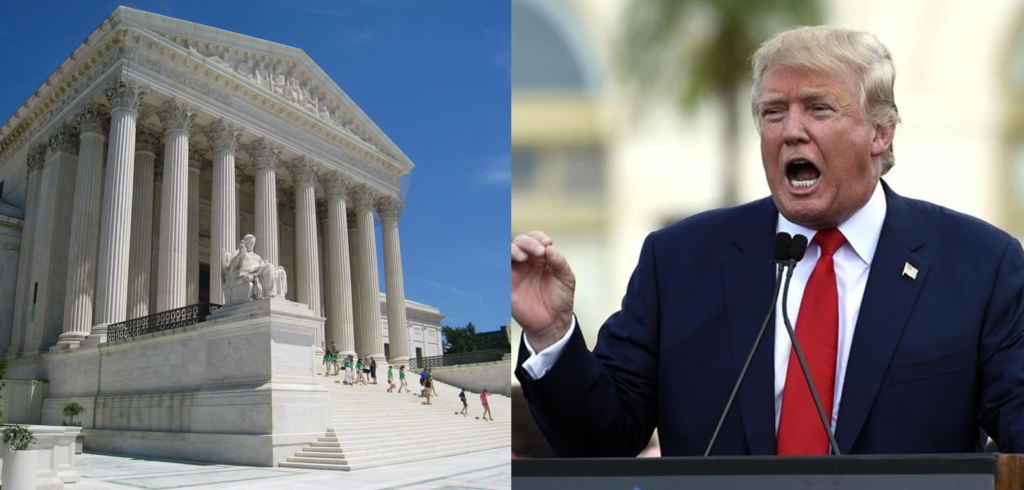
Presumptive Republican presidential nominee Donald Trump unveiled a list Wednesday of 11 federal and state judges he would consider nominating to fill the vacant seat of late Justice Antonin Scalia on the Supreme Court, including former Alabama Attorney General William Pryor. The list also includes: Steven Colloton of Iowa, Allison Eid of Colorado, Raymond Gruender of Missouri, Thomas Hardiman of Pennsylvania, Raymond Kethledge of Michigan, Joan Larsen of Michigan, Thomas Lee of Utah, David Stras of Minnesota, Diane Sykes of Wisconsin and Don Willett of Texas. A highly unusual move for a presidential candidate, the announcement comes as Trump is working to unite a highly fractured Republican Party and win over conservatives still skeptical of his candidacy and views. Trump told Fox News Wednesday: “I have a lot of people that are conservative that really like me, love everything I stand for, but they really would like to know my view, because perhaps outside of the defense of our country, perhaps the single most important thing the next president is going to have to do is pick Supreme Court justices.” In the announcement, Trump said he planned to use the list “as a guide to nominate our next United States Supreme Court Justices” and said the names are “representative of the kind of constitutional principles I value.” Read Trump’s full email announcement below: (New York, NY) May 18, 2016 — Today Donald J. Trump released the much-anticipated list of people he would consider as potential replacements for Justice Scalia at the United States Supreme Court. This list was compiled, first and foremost, based on constitutional principles, with input from highly respected conservatives and Republican Party leadership. Mr. Trump stated, “Justice Scalia was a remarkable person and a brilliant Supreme Court Justice. His career was defined by his reverence for the Constitution and his legacy of protecting Americans’ most cherished freedoms. He was a Justice who did not believe in legislating from the bench and he is a person whom I held in the highest regard and will always greatly respect his intelligence and conviction to uphold the Constitution of our country. The following list of potential Supreme Court justices is representative of the kind of constitutional principles I value and, as President, I plan to use this list as a guide to nominate our next United States Supreme Court Justices.” Steven Colloton Steven Colloton of Iowa is a judge of the U.S. Court of Appeals for the Eighth Circuit, a position he has held since President George W. Bush appointed him in 2003. Judge Colloton has a résumé that also includes distinguished service as the U.S. Attorney for the Southern District of Iowa, a Special Assistant to the Attorney General in the Justice Department’s Office of Legal Counsel, and a lecturer of law at the University of Iowa. He received his law degree from Yale, and he clerked for Chief Justice William Rehnquist. Judge Colloton is an Iowa native. Allison Eid Allison Eid of Colorado is an associate justice of the Colorado Supreme Court. Colorado Governor Bill Owens appointed her to the seat in 2006; she was later retained for a full term by the voters (with 75 percent of voters favoring retention). Before her judicial service, Justice Eid served as Colorado’s solicitor general and as a law professor at the University of Colorado. Justice Eid attended the University of Chicago Law School, and she clerked for Justice Clarence Thomas. Raymond Gruender Raymond Gruender of Missouri has been a judge of the U.S. Court of Appeals for the Eighth Circuit since his 2004 appointment by President George W. Bush. Judge Gruender, who sits in St. Louis, Missouri, has extensive prosecutorial experience, culminating with his time as the U.S. Attorney for the Eastern District of Missouri. Judge Gruender received a law degree and an M.B.A. from Washington University in St. Louis. Thomas Hardiman Thomas Hardiman of Pennsylvania has been a judge of the U.S. Court of Appeals for the Third Circuit since 2007. Before serving as a circuit judge, he served as a judge of the U.S. District Court for the Western District of Pennsylvania since 2003. Prior to his judicial service, Judge Hardiman worked in private practice in Washington, D.C. and Pittsburgh. Judge Hardiman was the first in his family to attend college, graduating from Notre Dame. Raymond Kethledge Raymond Kethledge of Michigan has been a judge of the U.S. Court of Appeals for the Sixth Circuit since 2008. Before his judicial service, Judge Kethledge served as judiciary counsel to Michigan Senator Spencer Abraham, worked as a partner in two law firms, and worked as an in-house counsel for the Ford Motor Company. Judge Kethledge obtained his law degree from the University of Michigan and clerked for Justice Anthony Kennedy. Joan Larsen Joan Larsen of Michigan is an Associate Justice of the Michigan Supreme Court. Justice Larsen was a professor at the University of Michigan School of Law from 1998 until her appointment to the bench. In 2002, she temporarily left academia to work as an Assistant Attorney General in the Justice Department’s Office of Legal Counsel. Justice Larsen received her law degree from Northwestern and clerked for Justice Antonin Scalia. Thomas Lee Thomas Lee of Utah has been an Associate Justice of the Utah Supreme Court since 2010. Beginning in 1997, he served on the faculty of Brigham Young University Law School, where he still teaches in an adjunct capacity. Justice Lee was Deputy Assistant Attorney General in the Justice Department’s Civil Division from 2004 to 2005. Justice Lee attended the University of Chicago Law School, and he clerked for Justice Clarence Thomas. Justice Lee is also the son of former U.S. Solicitor General Rex Lee and the brother of current U.S. Senator Mike Lee. William Pryor William H. Pryor, Jr. of Alabama is a judge of the U.S. Court of Appeals for the Eleventh Circuit. He has served on the court since 2004. Judge Pryor became the Alabama Attorney General in 1997 upon Jeff Sessions’s election to the U.S. Senate. Judge Pryor
