
1st appeals court to weigh Donald Trump’s decision to end DACA
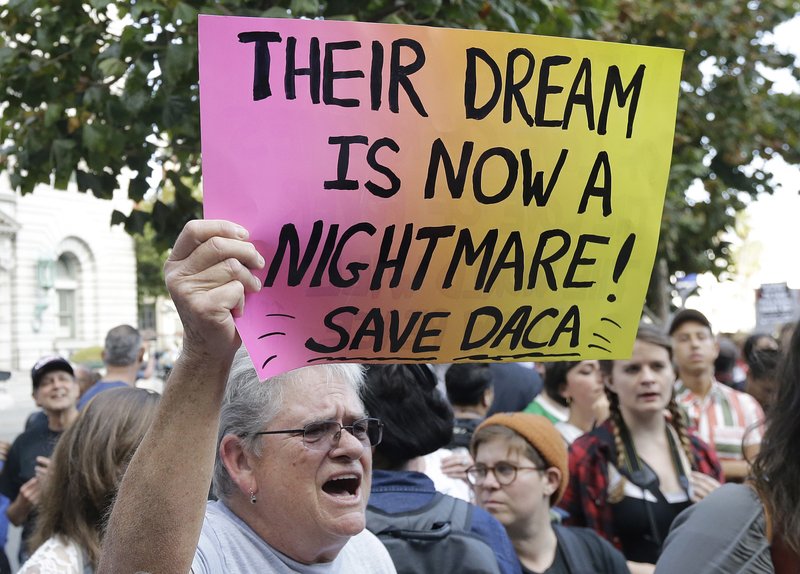
The Trump administration will try to convince a U.S. appeals court Tuesday that it was justified in ending an Obama-era immigration policy that shielded hundreds of thousands of young immigrants from deportation. The 9th U.S. Circuit Court of Appeals will be the first federal appeals court to hear arguments about President Donald Trump’s decision to phase out the Deferred Action for Childhood Arrivals program. DACA has protected some 700,000 people who were brought to the U.S. illegally as children or came with families that overstayed visas. A federal judge in San Francisco in January blocked the Trump administration’s decision to end DACA, reinstating the program in a decision that applied nationwide. U.S. District Judge William Alsup rejected the argument that President Barack Obama exceeded his power in implementing DACA and said the Trump administration failed to consider the disruption that ending the program would cause. “This has become an important program for DACA recipients and their families, the employers who hire them, for our tax treasuries, and for our economy,” the judge said. The Trump administration said it was forced to act because Texas and other states threatened to sue, raising the prospect of a chaotic end to the program. It wants the 9th Circuit to throw out Alsup’s ruling along with the five lawsuits he considered, including one by the state of California and another by the University of California’s governing body. “The rescission of DACA is based on what appears to be an argument that DACA was illegal when it was enacted, but that’s just wrong,” Jeff Davidson, an attorney representing UC regents, said on a recent conference call with reporters. Federal judges in New York and Washington, D.C., also have ruled against the Trump administration on DACA. The 2nd U.S. Circuit Court of Appeals is expected to hear arguments this summer on an appeal of the New York judge’s ruling. The DACA decision appears likely to end up before the U.S. Supreme Court eventually. The administration has been critical of the 9th Circuit and took the unusual step of trying to sidestep the appeals court and have the California DACA cases heard directly by the Supreme Court. The high court in February declined to do so. The 9th Circuit has ruled against Trump’s travel bans and is also considering the president’s executive order to cut off funding from so-called sanctuary cities that limit cooperation with federal immigration authorities. Trump has said he has considered breaking up the court, which is widely considered the most liberal of the U.S. appeals courts. Republished with permission from the Associated Press.
Appeals court rules Donald Trump’s travel ban doesn’t include grandparents, other extended family
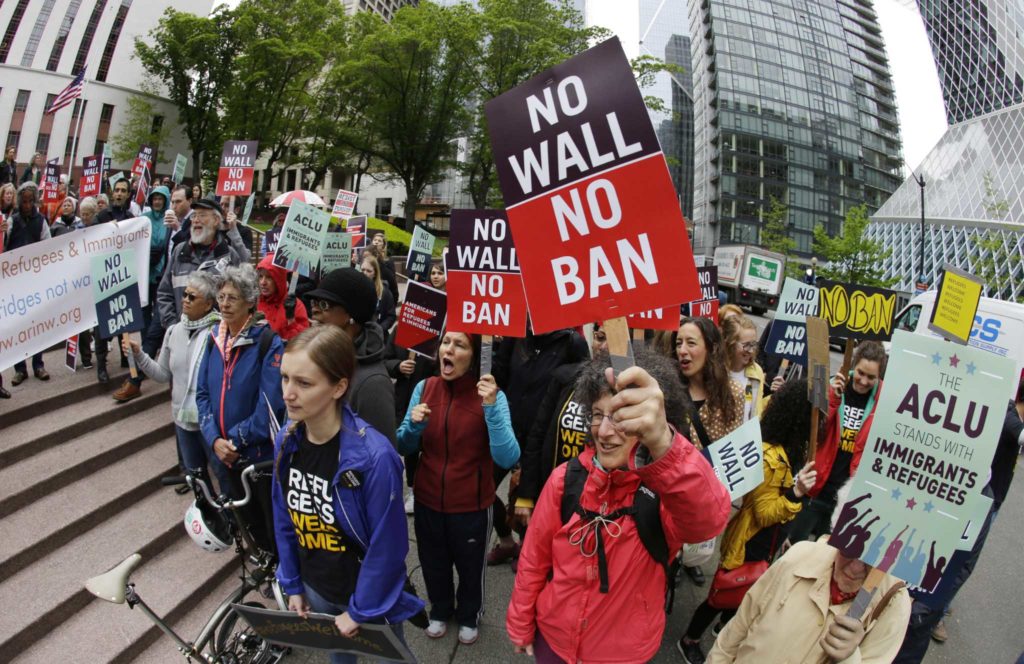
Grandparents, cousins and similarly close relations of people in the United States should not be prevented from coming to the country under President Donald Trump‘s travel ban, a federal appeals court has ruled in another legal defeat for the administration on the contentious issue. The decision Thursday from three judges on the 9th U.S. Circuit Court of Appeals upheld a ruling by a federal judge in Hawaii, who found the administration’s view of who should be allowed into the country under the ban is too strict. The unanimous ruling also said refugees accepted by a resettlement agency should not be banned. “Stated simply, the government does not offer a persuasive explanation for why a mother-in-law is clearly a bona fide relationship, in the Supreme Court’s prior reasoning, but a grandparent, grandchild, aunt, uncle, niece, nephew, or cousin is not,” the 9th Circuit said. The appeals panel wrote that under typical court rules, its ruling would not take effect for at least 52 days. But in this instance, the judges said, many refugees would be “gravely imperiled” by such a delay, so the decision will take effect in five days. “Refugees’ lives remain in vulnerable limbo during the pendency of the Supreme Court’s stay,” they wrote. “Refugees have only a narrow window of time to complete their travel, as certain security and medical checks expire and must then be reinitiated.” The Justice Department said it would appeal. “The Supreme Court has stepped in to correct these lower courts before, and we will now return to the Supreme Court to vindicate the executive branch’s duty to protect the nation,” the agency said in a statement. The U.S. Supreme Court said in June that President Donald Trump’s 90-day ban on visitors from Iran, Libya, Somalia, Sudan, Syria and Yemen can be enforced pending arguments scheduled for October, partially overturning lower-court rulings. But the justices said it should not apply to visitors who have a “bona fide relationship” with people or organizations in the U.S., such as close family ties or a job offer. That set the stage for much disagreement over what constitutes a bona fide relationship. The government interpreted such family relations to include immediate family members and in-laws, but not grandparents, cousins, aunts and uncles. The judge in Hawaii overruled that interpretation, expanding the definition of who can enter the country to the other categories of relatives. He also overruled the government’s assertion that refugees from those countries should be banned even if a resettlement agency in the U.S. had agreed to take them in. The administration argued that resettlement agencies have a relationship with the government, not with individual refugees. The appeals court rejected that, saying the Supreme Court was concerned with any harm the travel ban might impose on people or organizations in the U.S. Resettlement agencies have spent time and money securing rental housing, buying furniture and performing other tasks that would be in vain if the refugees were blocked, the 9th Circuit said. They also would lose out on government funding for the resettlement services. Lawyers for the government and the state of Hawaii, which challenged the travel ban, argued the case in Seattle last week. Deputy assistant attorney general Hashim Mooppan ran into tough questions as soon as he began arguing the government’s case, with Judge Ronald Gould asking him from “what universe” the administration took its position that grandparents don’t constitute a close family relationship. Mooppan conceded that people can have a profound connection to their grandparents and other extended relatives, but from a legal perspective, the administration had to draw the line somewhere to have a workable ban based largely on definitions used in other aspects of immigration law, he said. Hawaii is also one of 15 states that sued the Trump administration Wednesday over its plans to end the Deferred Action for Childhood Arrivals program that protects young immigrants from deportation. “Today’s decision by the 9th Circuit keeps families together. It gives vetted refugees a second chance,” state Attorney General Douglas Chin said in a statement. “The Trump administration keeps taking actions with no legal basis. We will keep fighting back.” Republished with permission from the Associated Press.
Appeals court: Energy officials missed in pipeline review

A Washington appeals court says federal energy regulators fell short in evaluating the environmental impact of a natural gas pipeline that’s carrying gas through Alabama, Georgia and Florida. The U.S. Court of Appeals for the District of Columbia Circuit on Tuesday agreed with the Sierra Club in ruling that officials needed more detail in their environmental study of the Southeast Market Pipelines Project. The court said the Federal Energy Regulatory Commission should have attempted to quantify the greenhouse gas emissions that will result from burning the gas transported by the pipelines. The project includes the Sabal Trail pipeline, which runs for more than 500 miles through Alabama, Georgia and Florida. Sierra Club attorney Elly Benson says the group is discussing its next steps Republished with permission of The Associated Press.
Appeals court to weigh challenge to revised Donald Trump travel ban
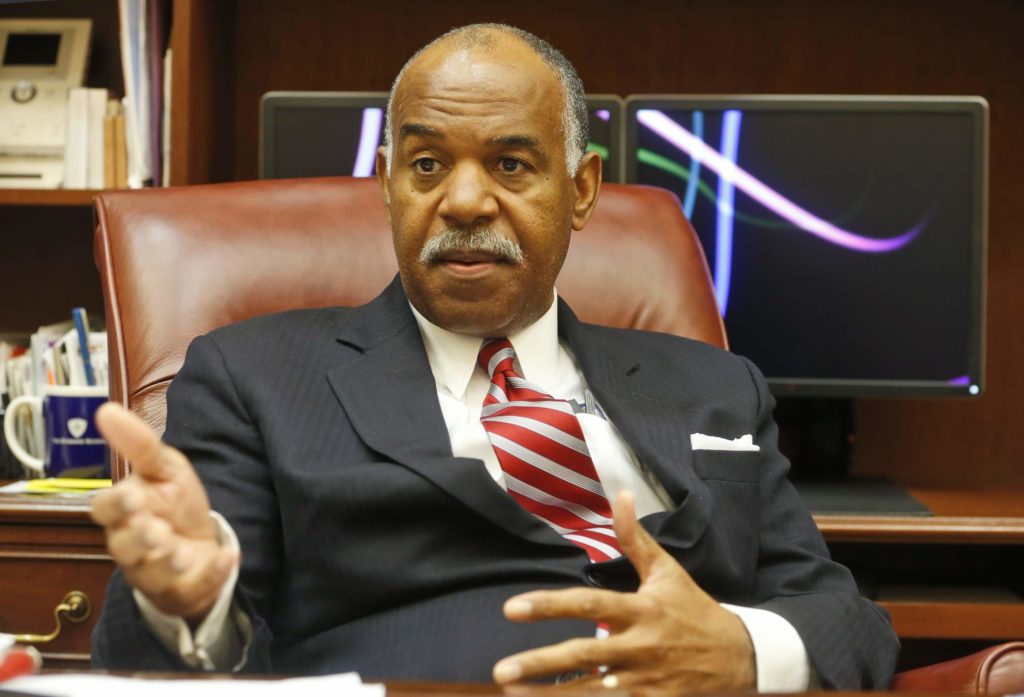
After a series of stinging legal defeats, President Donald Trump‘s administration hopes to convince a federal appeals court that his travel ban targeting six-Muslim majority countries is motivated by national security, not religion. The 4th U.S. Circuit Court of Appeals on Monday will examine a ruling that blocks the administration from temporarily barring new visas for citizens of Iran, Libya, Somalia, Sudan, Syria and Yemen. It’s the first time an appeals court will hear arguments on the revised travel ban, which is likely destined for the U.S. Supreme Court. Pointing to the Republican’s promises on the campaign trail to bar Muslims from entering the country, a federal judge in Maryland found in March that the policy appeared to be driven primarily by religious animus. Attorneys for the U.S. Justice Department say the court shouldn’t rely on Trump’s statements, but on the text of the policy, which they say is necessary to protect the country from terrorism. The banned countries represent just a fraction of the predominantly Muslim countries worldwide, they note. “The court should have focused on official acts, not perceived subjective motivations,” the attorneys say in court documents. The American Civil Liberties Union and National Immigration Law Center say Trump wants the courts to “blind themselves to the ample, public, and uncontested evidence” that the policy targets Muslims. “The basic question in this case is whether the mountain of evidence that exists as to the improper motive is going to be looked at by this court or swept under the rug,” said Omar Jadwat, director of the ACLU’s Immigrants’ Rights Project, who will argue the case Monday. In an extraordinary move signifying the importance of the case, the 4th Circuit decided to bypass the three-judge panel that typically first hears appeals and go straight to the full-court hearing. While the 4th Circuit was long considered one of the most conservative appeals courts in the country, it moved to the center under President Barack Obama, who appointed six of the 15 active judges. Now, nine judges are Democratic appointees and five judges are Republican appointees. Chief Judge Roger Gregory was given a recess appointment to the court by President Bill Clinton and was reappointed by President George W. Bush. It will likely be weeks before the 4th Circuit issues a decision. And even if the court sides with Trump, the travel ban will remain blocked unless the president also wins in another appeals court. A federal judge in Hawaii has also blocked the six-country travel ban as well as the freeze on the U.S. refugee program. A three-judge panel of the 9th U.S. Circuit Court of Appeals will meet next Monday to hear arguments in that case. Audio of the 2:30 p.m. EDT 4th Circuit will be broadcast live on C-SPAN. The court will also provide a link to the audio feed on its website. Republished with permission of The Associated Press.
Federal appeals court will hear April arguments in Alabama’s refugee lawsuit

A federal appeals court will hear oral arguments in April on Alabama’s lawsuit against the federal government over refugee placement. The Montgomery-based 11th Circuit Court of Appeals announced a tentative argument session set for the week of April 24. The arguments were scheduled for appeal after a federal judge dismissed the state’s lawsuit that claimed the federal government didn’t ask for Alabama officials’ input about the settlement of Syrian refugees. The consultation is a requirement of the Refugee Act of 1980, according to Gov. Robert Bentley. Bentley announced his refusal to relocate the refugees following the Paris attacks in November 2015. Stating that unless federal officials provided background check and medical information to the state, they were not welcome in the Yellowhammer State. In July 2016, Chief United States Magistrate Judge John E. Ott ruled the state’s claims were too vague, and issued the dismissal, writing that the Refugee Act of 1980 did not allow states a right to a cause of action to enforce the law. “As your governor, I will not stand complicit to a policy that places the citizens of Alabama in harm’s way,” Bentley said in a news release. “The District Court based its dismissal on a technicality, a finding that Alabama may not sue to enforce the Refugee Act; the District Court did not find that the federal government was fulfilling its obligations under the Act.” The state filed the appeal in August 2016.
